
If you want to help your pet bird settle down and sleep at bedtime, you can do that safely at home by dimming the lights, covering the cage, sticking to a consistent evening routine, and handling your bird calmly and gently. If you are dealing with a stressed or injured wild bird, the safest move is to place it in a dark, quiet box and contact a wildlife rehabilitator. What you should never do is attempt to sedate a bird yourself or use any medication, whether a human drug or a home remedy, without direct instruction from a licensed avian vet. That distinction matters a lot, so let's start there.
How to Put a Bird to Sleep Safely at Home: Humane Guide
Clara Hayes
27 Apr 2026
First: what do you actually mean by "put a bird to sleep"?
The phrase means very different things depending on the situation, and getting that right before you do anything is the most important step. There are three common scenarios people are actually asking about, and each one has a completely different answer.
- Helping a pet bird settle into its normal nightly sleep: this is something you can absolutely do at home, and most of this guide covers exactly that.
- Calming a frightened, injured, or found wild bird so it can rest safely: this is also manageable at home in the short term, but it usually requires handing the bird off to a rehabilitator quickly.
- Sedating a bird for a medical procedure, or euthanizing a suffering bird: this must only be done by a licensed veterinarian or wildlife rehabilitator. There is no safe DIY version of this, and attempting it can cause significant suffering or a drawn-out death.
If your bird is suffering and you believe euthanasia is the right call, please contact an avian vet or your nearest wildlife rehabilitation center today. If you are searching because you are curious about sedation techniques, the topic of sedating a bird at home gets covered more thoroughly in a companion article, but the short version is: do not try it without a vet's direct guidance and a prescribed medication in hand. If you are wondering how to sedate a bird at home, this article recommends avoiding it and following an avian vet’s guidance instead. This guide focuses on what you can and should do at home to help a bird rest comfortably.
Quick safety check before you do anything else
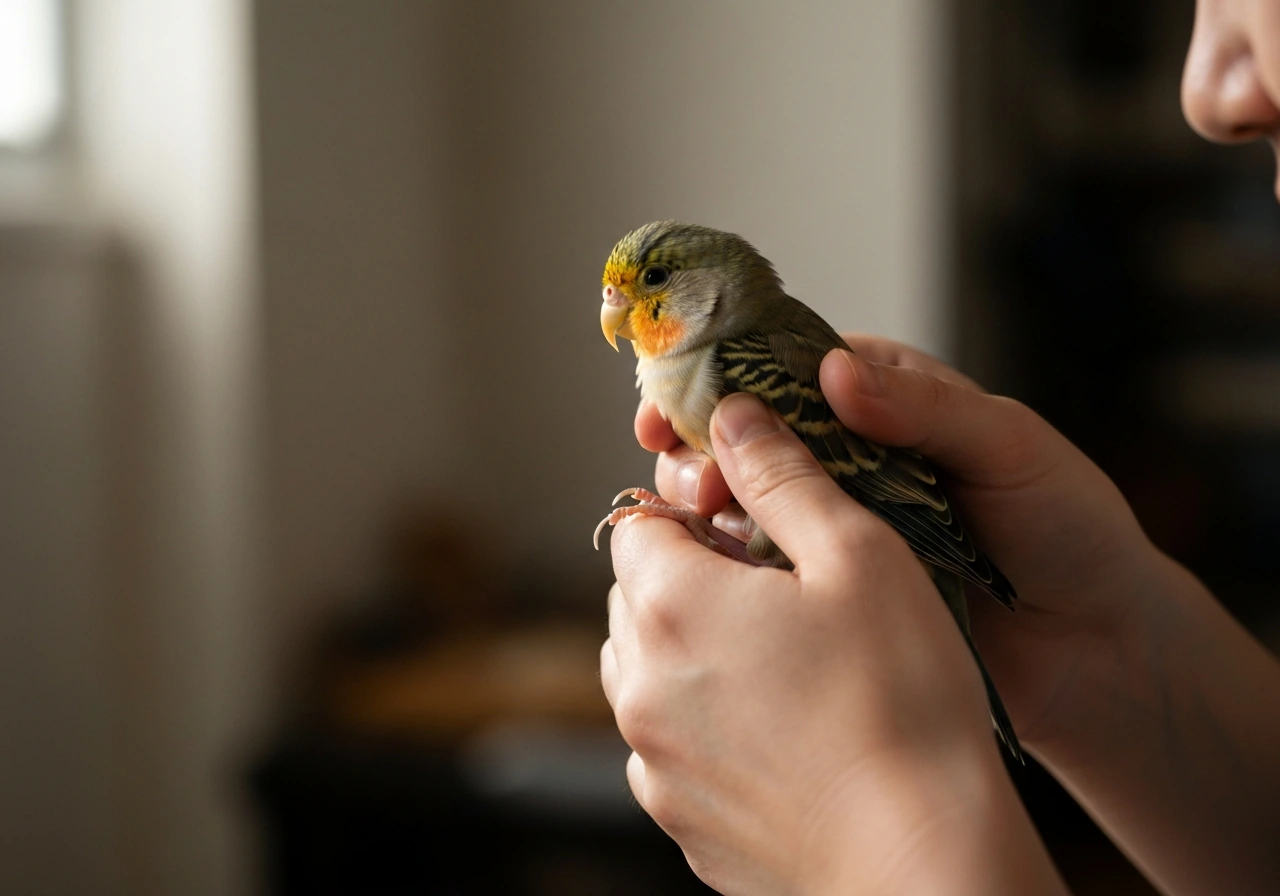
Before you work on getting a bird to sleep, spend two minutes observing it. A bird that looks sleepy or lethargic might just be tired, but it might also be sick, overheated, or in pain. Catching this early changes everything you do next.
Signs that require an avian vet or rehabilitator right now
- Open-mouth breathing or panting at rest: this is one of the clearest signs of a respiratory emergency in birds and should not be ignored.
- Tail bobbing up and down with every breath: this signals significant respiratory distress and is a veterinary emergency.
- Fluffed feathers combined with eyes closed during the day and no interest in food or surroundings: healthy birds only sleep during the night and may nap briefly; a bird that is huddled and drowsy during the day is usually unwell.
- Discharge from the nostrils or eyes, or wet or crusty feathers around the face.
- Loss of balance, falling off the perch, or seizure-like trembling.
- A wild bird that allows you to pick it up without much struggle: wild birds almost never let humans approach them unless they are seriously ill or injured.
- Any bird that feels very hot or cold to the touch, especially under the wings.
If you see any of those signs, stop trying to settle the bird to sleep and get veterinary help. For a pet bird, call an avian vet. For a wild bird, call your local wildlife rehabilitation center or check the National Wildlife Rehabilitators Association directory. Do not offer food or water to a severely compromised bird before speaking to a professional, as aspiration is a real risk.
Signs the bird is probably fine and just needs help winding down
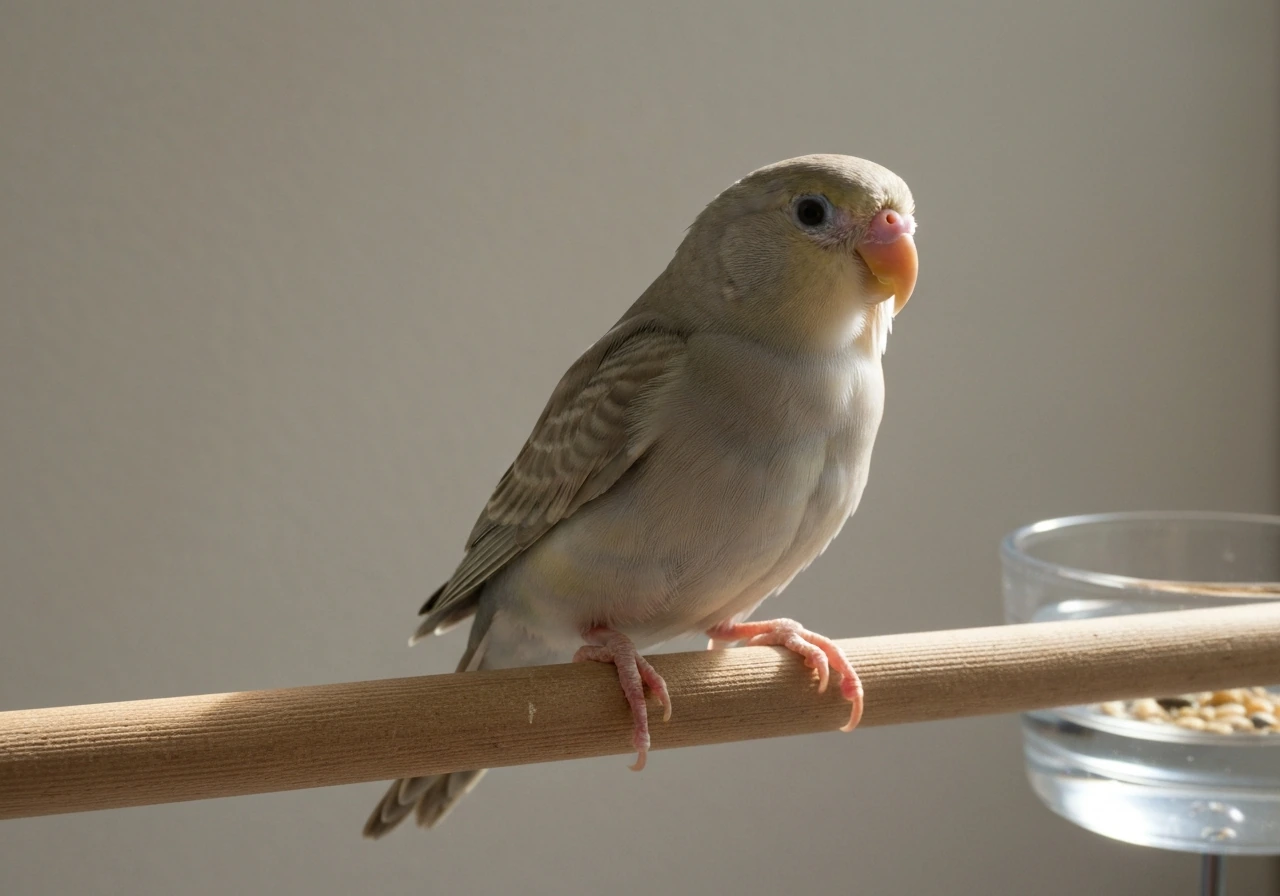
- Alert eyes, responsive to your movement and voice.
- Normal droppings (firm dark part, white urate, small amount of clear liquid).
- Eating and drinking within the last few hours.
- Feathers are smooth and held close to the body, not puffed out dramatically.
- The bird is active during the day and you are simply trying to get it settled for the night.
How to help a pet bird settle into sleep at home
Pet birds are creatures of habit. The single most powerful thing you can do is build a predictable evening routine and stick to it every single day. Birds that have a consistent schedule fall asleep faster, sleep more deeply, and are calmer overall during the day too.
Set up the environment right
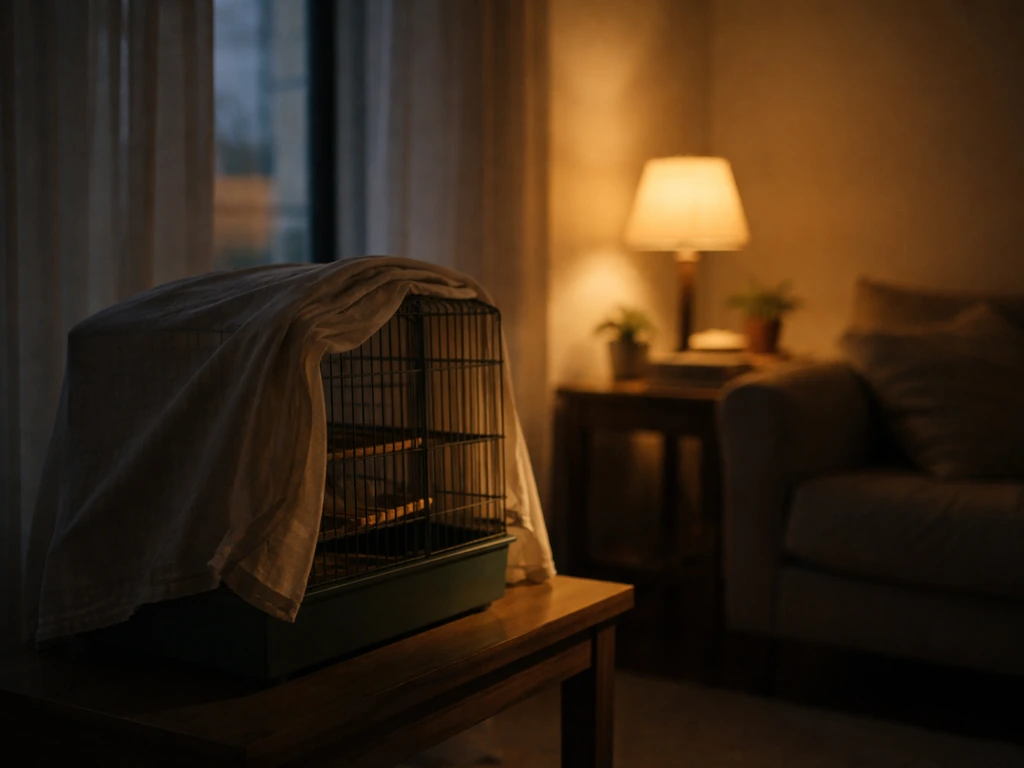
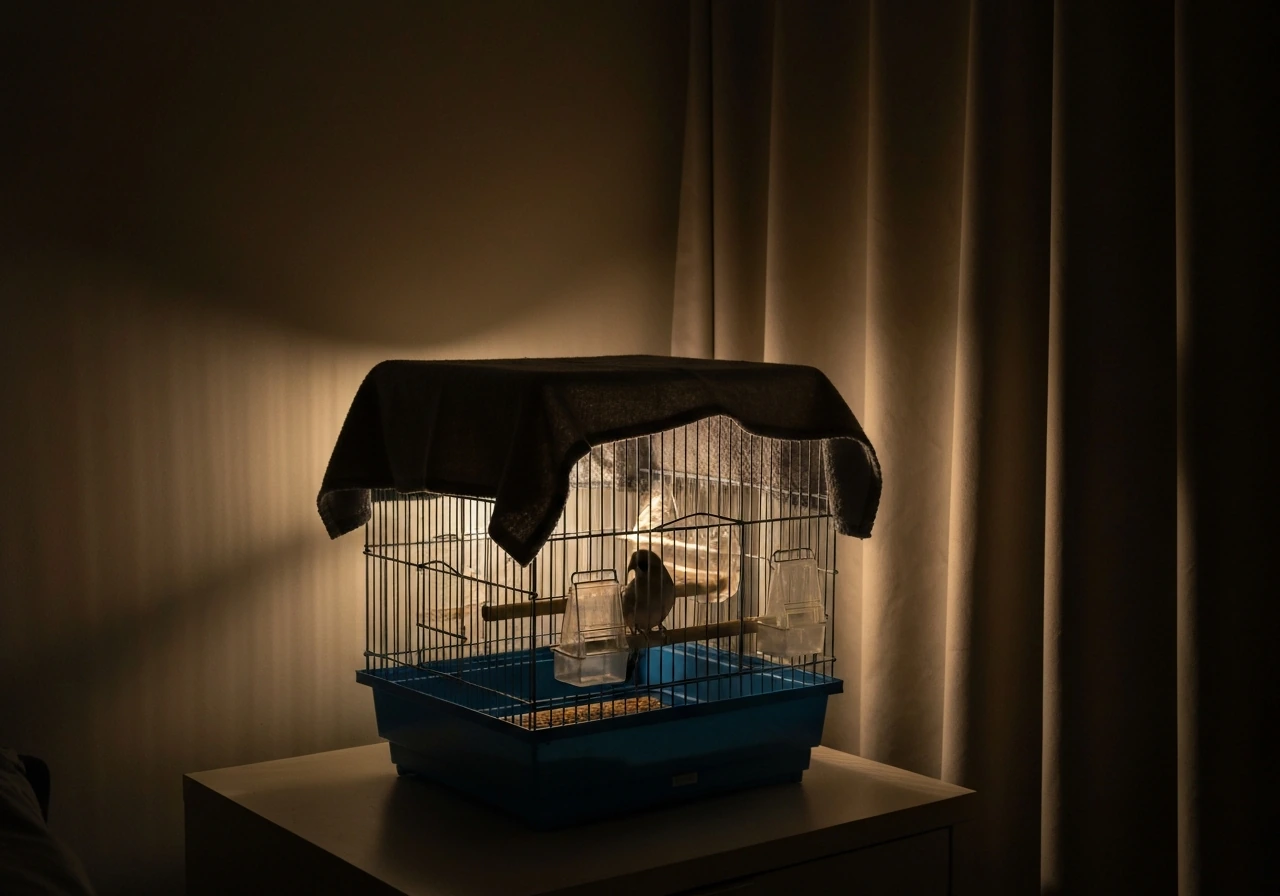
- Dim the lights in the room about 30 minutes before you want the bird to settle. Abrupt darkness startles birds; a gradual fade signals that night is coming.
- Cover the cage with a breathable cage cover or a light cotton sheet. Leave one small gap near the bottom for air circulation. The cover blocks visual stimulation, reduces drafts, and creates a den-like feeling that most pet birds find calming.
- Lower the noise in the room. Turn off loud TV, stop playing music, and ask household members to keep voices down. Even white noise from a fan at a moderate volume is fine, but sudden sharp sounds will disrupt sleep.
- Keep the temperature between 65 and 80 degrees Fahrenheit (18 to 27 degrees Celsius). Avoid placing the cage near air conditioning vents, heating registers, or windows with cold drafts at night.
- Make sure there are no hazards the bird could interact with overnight: no open water containers it could fall into if it leaves the perch, no toxic plants nearby, no fumes from non-stick cookware still being used in the kitchen.
Build a consistent bedtime routine
Birds thrive on roughly 10 to 12 hours of darkness and quiet each night. If your household runs late, consider moving the cage to a quieter room for sleeping. The routine itself matters as much as the timing: a light snack of something familiar like a small piece of leafy green or a seed or two, a soft goodnight word or whistle in the same tone every night, then cover and dim. After a week or two of this, most birds will start yawning and fluffing their feathers the moment they see you reach for the cover.
Calm handling before bed
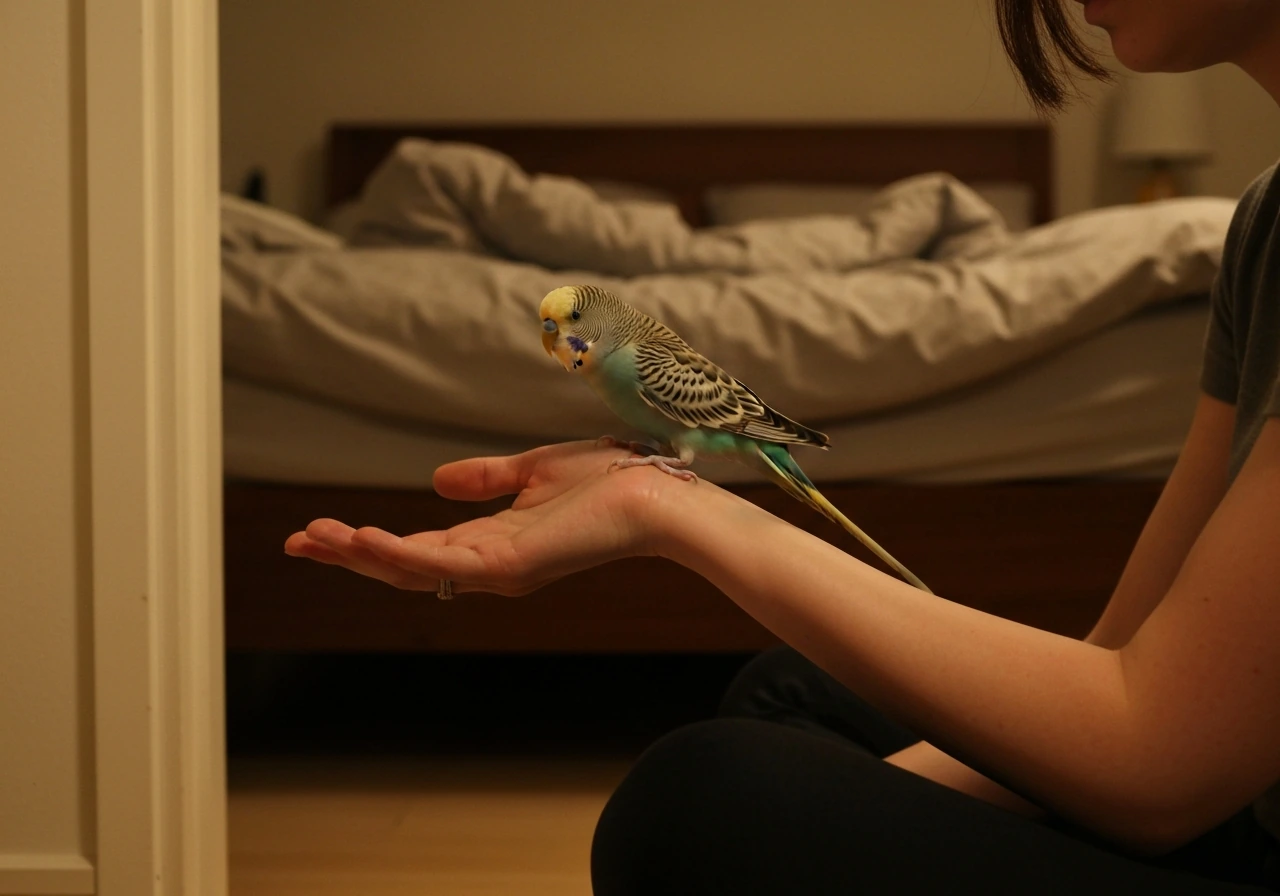
If your bird is still wound up, gentle handling can help. Sit down so you are at a lower, less threatening height. Let the bird step onto your hand on its own terms rather than grabbing it. Hold it close to your body so it feels the warmth and the slow rhythm of your breathing. Keep your movements slow and deliberate. Some birds will tuck their head and begin dozing within minutes of being held this way. Once the bird is visibly relaxed (eyes half-closed, feathers slightly softened), transfer it gently back onto its perch inside the cage, cover, and leave it alone.
Species-specific tips: parrots, cockatiels, budgies, and finches
Different species have genuinely different sleep needs and temperaments. What works beautifully for a budgie can actually backfire with a large parrot. Here is what to know for each.
| Species | Sleep needs | What helps most | What to avoid |
|---|---|---|---|
| Parrots (African Greys, Amazons, Conures, Macaws, etc.) | 10-12 hours of darkness | Consistent routine, separate sleep cage in a dark quiet room, gentle voice cues | Forcing handling, leaving stimulating TV on, abrupt cage covering without warning |
| Cockatiels | 10-12 hours; prone to night frights | Dim nightlight near cage, soft covering, calm pre-bed talk | Complete sudden darkness (triggers night frights); loud activity in room after covering |
| Budgies | 10-12 hours; socially reassured by flock sounds | Cage cover, consistent dim-down time, placing paired birds together | Isolation from cage-mate without reason; cold drafts at night |
| Finches | 12 hours; minimal handling preferred | Consistent light cycle, cover cage fully, no handling before bed | Handling at bedtime (causes stress); bright artificial light late into evening |
Parrots
Larger parrots are intelligent enough that they will test your routine, especially if they have been allowed to stay up late in the past. If you have been inconsistent, expect a week or two of protest vocalizations when you first start enforcing an earlier bedtime. Do not go back and let the bird out when it calls: that teaches it that calling works. Some parrot owners keep a separate sleep cage in a bedroom or quieter room to give the bird a true rest environment away from household noise. Conures in particular are prone to night frights and benefit from a small night light left on low nearby.
Cockatiels
Cockatiels are famous for night frights, where they thrash around the cage in a panic after being startled in the dark. If your cockatiel has a history of this, a small, low-wattage night light near the cage is one of the most effective solutions available. Do not cover the cage in complete darkness if night frights are an ongoing issue. A soft pre-bed routine, like a quiet whistle or a gentle "goodnight" phrase repeated each evening, helps cockatiels associate bedtime with safety.
Budgies
Budgies are flock birds and do well when they can hear or see a cage-mate settling down at the same time. A consistent dim-down followed by covering works reliably. They are small and lose heat quickly, so make sure the room temperature stays stable through the night and there are no cold drafts hitting the cage. Budgies housed alone may take a little longer to settle because there is no social cue from a flock-mate, so your own calm, consistent routine becomes even more important as a signal.
Finches
Finches are not hands-on birds for the most part, and handling them before bed is usually counterproductive. They settle best when the light dims on a consistent schedule. A full cage cover that blocks out light entirely works well. If you use artificial lighting, put it on a timer so the light-dark cycle is predictable every day. Finches are highly sensitive to disruption, so once the cage is covered for the night, leave them alone.
Helping a wild backyard bird rest safely
If you have found a wild bird that appears injured, stunned (perhaps from a window strike), or sick, your goal is to keep it calm and safe until you can hand it off to a rehabilitator. You are not trying to care for it long-term. In most countries, including the United States, keeping a wild bird in your possession beyond a brief stabilization period is illegal under the Migratory Bird Treaty Act unless you are a licensed rehabilitator.
The safe stabilization method for a found wild bird
- Put on gloves if you have them (protects both you and the bird). Gently scoop the bird up by cupping both hands around it, keeping its wings tucked against its body. Do not squeeze.
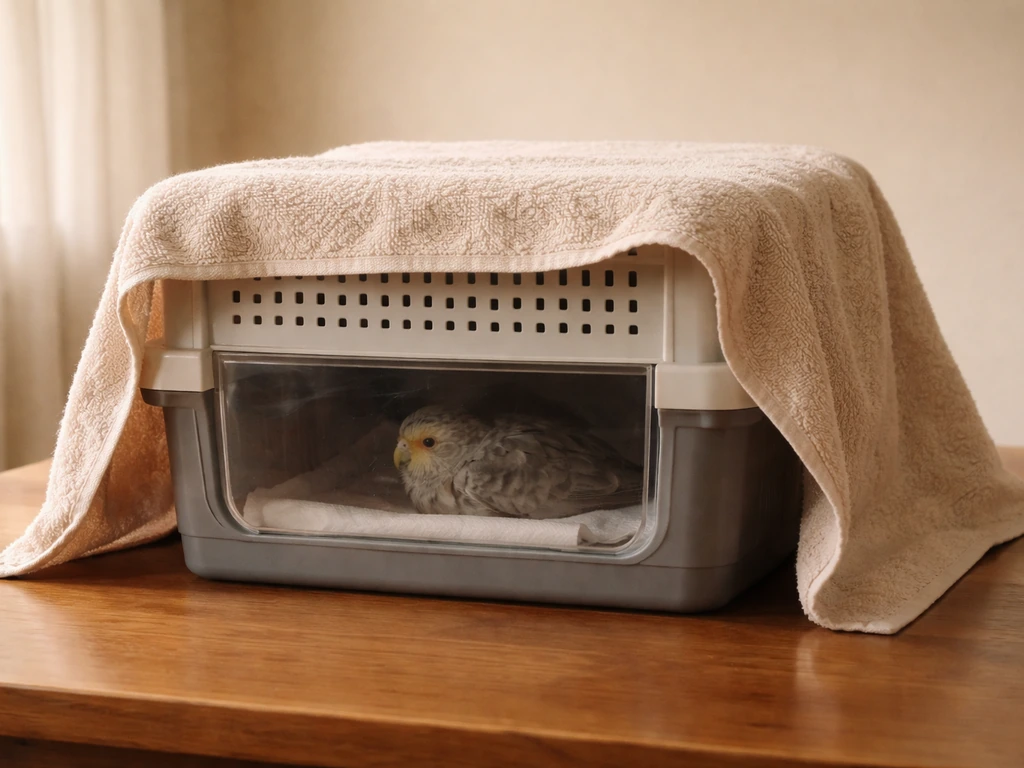
- Place it in a small cardboard box or paper bag with air holes punched in the top. Line the bottom with a soft, unfrayed cloth or paper towels. Do not use terry cloth or anything with loops the bird's feet can get caught in.
- Close the box. Darkness immediately lowers a wild bird's heart rate and reduces panic. This alone is one of the most effective calming tools available.
- Place the box in a quiet, room-temperature location away from pets, children, and noise. Do not put it outside in direct sun or somewhere cold.
- Do not offer food or water unless a rehabilitator specifically tells you to. Do not handle the bird again unless necessary.
- Call a wildlife rehabilitator or avian vet immediately. The sooner a professional takes over, the better the bird's chances.
For a window-strike bird that was just stunned and seems otherwise healthy, the dark-box method often works within 20 to 30 minutes and the bird flies away on its own when you open the box outdoors. If it is not improving within an hour, treat it as an injury case and call for help. Do not attempt to hypnotize a wild bird or use tonic immobility as a prolonged restraint technique. While tonic immobility (where a bird goes limp when placed on its back) can briefly occur, it is a fear response, not genuine calm, and it can mask the bird's deterioration.
What you must never try at home

This section might be the most important one. Birds have extremely fast metabolisms and highly sensitive respiratory systems. Methods that seem harmless or that you might have read about in a forum can kill a bird in minutes.
- Human medications: Never give a bird any over-the-counter sleep aid, antihistamine, melatonin supplement, or prescription sedative unless an avian vet has prescribed a specific dose for that specific bird by body weight. Even a fraction of a human dose can be fatal.
- Covering the bird's head or restricting breathing: Sometimes referenced online as a "calming" trick. It is not. It is suffocation.
- Cold exposure: Putting a bird in a cold room or refrigerator to make it sluggish is cruel and can cause hypothermia, organ failure, and death.
- Heat lamps without veterinary guidance: A heat lamp placed too close can cause rapid overheating. If a vet recommends supplemental heat for an ill bird, follow their exact distance and wattage specifications.
- Alcohol or essential oils: Both are toxic to birds. Even diffusing essential oils in the same room as a bird can cause respiratory distress.
- DIY gas exposure: Never attempt to sedate a bird using any gas or fume at home. Isoflurane and other veterinary anesthetic gases require specialized equipment, precise dosing, and immediate reversal capability. Without those tools, you will kill the bird.
- Prolonged forced restraint: Holding a bird so tightly or for so long that it cannot move is a welfare issue and can cause capture myopathy, a serious condition where muscle damage occurs from extreme stress.
If you are reading this because you need to calm a bird for a medical reason, the right path is always a phone call to an avian vet first. Many vets will talk you through a safe short-term handling method over the phone for free.
Troubleshooting: what to do when nothing is working
Realistic timelines for trust and routine
If your bird has never had a consistent sleep routine, expect one to two weeks before you see a real change in behavior. A newly adopted bird may take four to six weeks to feel secure enough to sleep deeply in a new home. Do not measure success night by night. Measure it week by week.
A bird that was screaming for 40 minutes at bedtime two weeks ago and is now quiet within 15 minutes is making genuine progress, even if it does not feel like it in the moment. If your goal is to stop noisy behavior, the same quiet routine approach can help you figure out what to adjust so your bird stays calm.
If your bird is screaming at bedtime, these same routine steps can be adapted to support how to train a bird not to scream.
Common problems and fixes
| Problem | Likely cause | What to try |
|---|---|---|
| Bird screams when cage is covered | Inconsistent past routine or fear of the dark | Use a night light, dim gradually before covering, give a verbal cue every time so covering becomes a predictable signal |
| Bird seems sleepy during the day | Not enough nighttime darkness, illness, or boredom | Check for 10-12 hours of darkness nightly; if daytime lethargy persists more than a day or two, call an avian vet |
| Bird wakes repeatedly at night (cockatiels especially) | Night frights triggered by shadows or sounds | Add a small nightlight, move cage away from windows and air vents, check for household pets approaching cage at night |
| New bird won't settle at all for the first few nights | Normal adjustment stress in a new environment | Keep the environment very quiet and predictable; do not rush handling; give it one to two weeks |
| Wild bird is not recovering after 30 minutes in a dark box | Likely injured or ill beyond a simple stun | Contact a wildlife rehabilitator or avian vet immediately; do not continue to wait |
Your plan for the next 24 hours
Tonight: dim the lights 30 minutes before your target bedtime, offer a small familiar snack, use a consistent verbal cue, cover the cage, and leave the room. That is your whole job for tonight. Tomorrow: observe the bird during the day for any signs of illness listed earlier in this article. If everything looks normal, repeat the same routine tomorrow evening. After one week: assess whether bedtime protests are getting shorter. They almost always will be.
If you have a wild bird in a box right now, stop reading and make the call to a rehabilitator. The Wildlife Rehabilitators directory through the National Wildlife Rehabilitators Association and the ASPCA Animal Poison Control line (for toxic ingestion) are good starting points. For a pet bird showing any of the respiratory or distress signs listed earlier, call an avian vet today, not tomorrow.
For concerning signs in pet birds such as limping, abnormal discharge, abnormal droppings, or decreased activity, the Merck Veterinary Manual advises seeking veterinary advice promptly For a pet bird showing any of the respiratory or distress signs listed earlier. Most cities have at least one emergency vet that will see birds after hours if your regular vet is closed.
Being cautious now is always easier than dealing with a crisis later.
Once your bird is sleeping well on a reliable schedule, you will likely notice improvements in its daytime behavior too. Rested birds are calmer, more receptive to training, and far less likely to scream or bite. Getting the sleep routine right is genuinely one of the highest-value things you can do for a pet bird's overall wellbeing, and it costs nothing but consistency.
FAQ
Can I use over-the-counter sleep aids or calming drops to help my bird rest?
No. Even “calming” products for humans and pets can depress breathing, alter blood pressure, or interact with your bird’s metabolism. If a vet tells you to use a specific medication, they should provide a dose for your bird’s species, weight, and medical status.
What if my bird is fully awake but seems stressed, should I still cover the cage?
Covering is appropriate when your bird is safe, normal breathing, and not showing illness or injury signs. If the bird is panting, wheezing, tail-bobbing, collapsed, bleeding, or unusually lethargic, stop the bedtime routine and seek avian care instead.
How can I tell the difference between normal “bedtime protest” and a health problem?
Protest usually looks like alert calling or pacing while breathing is steady and the bird will relax once the routine starts. Concerning signs include open-mouth breathing, clicking/wheezing sounds, fluffed-and-still posture, disorientation, or sudden weakness. Those require a vet call rather than more routine.
Is it safe to put a bird in a separate room, like a sleep cage in the bedroom?
It can help, especially for parrots that respond to household activity. The key is stable temperature, no drafts, no strong odors, and no additional lights after covering. For night frights, a low, dim night light can be safer than a totally dark room.
My cockatiel has night frights even with a bedtime routine, what else can I do?
Reduce surprise stimuli, keep the room steady (avoid sudden noises or light changes), and ensure the cage is positioned where it cannot be startled by passing traffic. Avoid complete darkness if it reliably triggers panic, and keep the pre-bed verbal cue consistent so the bird associates your approach with safety.
Should I offer food or water right before covering the cage?
A small familiar snack can be part of bedtime for pet birds, but do not force feeding or give water to a bird that seems compromised. If a bird might be aspirating risk, such as with weakness, coughing, or abnormal breathing, you should get professional guidance before offering anything.
What temperature issues can affect sleep for small birds like budgies?
Budgies lose heat quickly and can become uncomfortable in cool rooms, which can look like restlessness. Use a steady overnight room temperature and prevent cold drafts from air vents or windows. Sudden temperature drops can also trigger agitation even if the routine is perfect.
How long should it take before bedtime settling gets better?
If your bird has never had a consistent schedule, plan for one to two weeks for noticeable improvement, and a newly adopted bird may take four to six weeks to feel secure. Evaluate progress week to week, look for shorter protests and quicker settling after the routine begins.
What should I do if a wild bird does not improve after dark-boxing for 20 to 30 minutes?
Treat it as an injury case and contact a wildlife rehabilitator if it is not clearly improving within an hour. Don’t try prolonged restraint techniques or “make it calm,” because fear responses can mask deterioration.
Can I keep a wild bird overnight until I can get help in the morning?
If it is injured or stunned, you should use a dark, quiet container only as a short stabilization step, then hand it off as soon as a rehabilitator is available. Laws commonly restrict possession of wild birds beyond brief care, and delayed handoff increases risk of shock or respiratory worsening.
Are there any bird species where handling at bedtime is a bad idea?
Yes. For many finches, handling before bed can be counterproductive. They typically settle best with a predictable dim-down and light-dark cycle, then being left alone once the cage is covered.
What’s the safest way to “try again” after a failed bedtime night?
Return to the same quiet routine the next evening, but first confirm you are not missing health cues. If you observe abnormal breathing, sudden lethargy, injury signs, or persistent inability to settle, skip troubleshooting at home and call an avian vet or rehabilitator.
Next Articles
How to Calm a Bird Like It’s Hypnotized Safely
Humane step-by-step calm training using trust, treats, slow approach and body language so birds stay relaxed like hypnot
How to Get Your Bird to Sleep: Night Routine Guide
Humane bedtime routine for pet and backyard birds, with setup checklist, species tips, troubleshooting, and next steps t
How to Sedate a Bird at Home Safely: Humane Alternatives
Humane, safe bird handling at home: calm capture and environment tweaks, no DIY drugs or natural sedatives