
Most birds need 10 to 12 hours of uninterrupted sleep every night, and if yours is restless, noisy, or just won't settle, the fix is usually simpler than you think. Nine times out of ten, the problem comes down to too much light, too much noise, an uncomfortable perch, or a routine that hasn't been consistent enough.
How to Get Your Bird to Sleep: Night Routine Guide
Clara Hayes
20 Apr 2026
This matches findings from reviews on diurnal birds, where predictable light-dark cycles support circadian entrainment and artificial light at night can reduce sleep intensity and restfulness [too much light can disrupt sleep](https://pmc. ncbi. nlm. nih.
gov/articles/PMC7931117/). This guide walks you through exactly what healthy bird sleep looks like, how to set up a proper sleep environment tonight, and how to tell the difference between a bird that just needs a better routine and one that genuinely needs a vet.
What normal bird sleep actually looks like
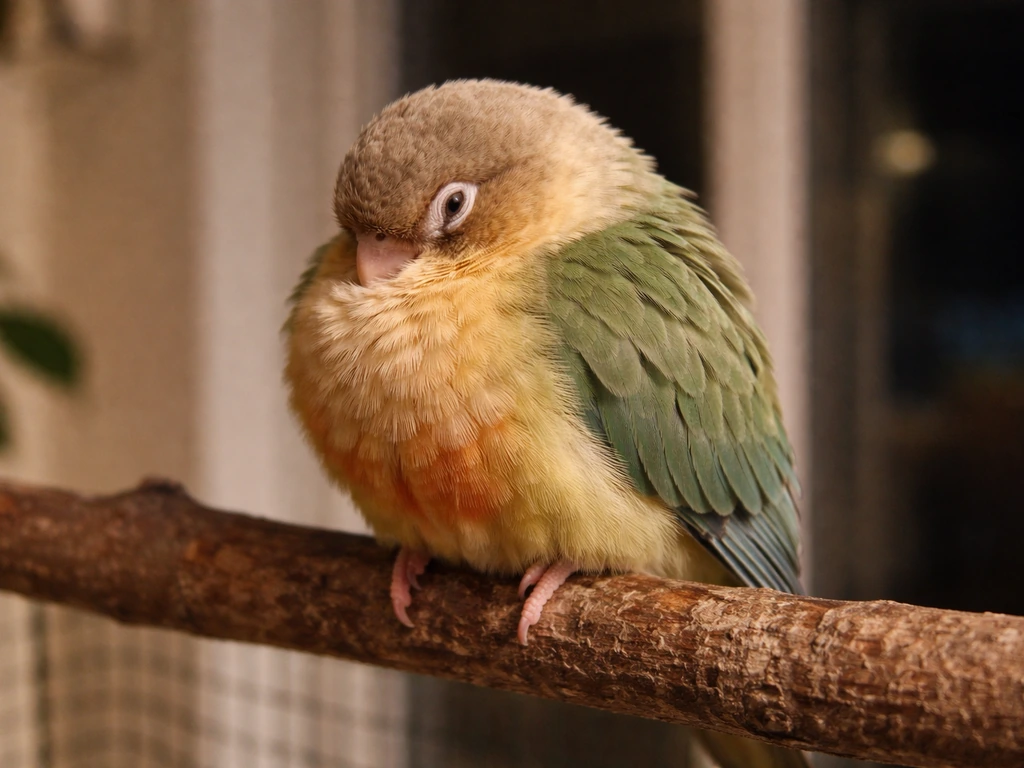
Birds don't sleep the way mammals do. Your parrot or cockatiel isn't going to lie down and close both eyes for eight hours straight. Instead, they roost, which means they tuck into a stable perch position, often fluff their feathers slightly for warmth, may tuck one foot up into their belly feathers, and rest with one or both eyes closed. Some species, especially parrots, will tuck their beak into the feathers along their back. Light sleep phases mean they may open one eye briefly if they hear something, which is completely normal.
What's not normal: constant shifting on the perch, repeated vocalizations throughout the night, falling off the perch, heavy breathing, or acting disoriented in the morning. If you're seeing any of those, keep reading because the troubleshooting section later in this guide covers each one specifically.
Why your bird won't settle at night
Before you try to fix anything, it helps to understand what's actually disrupting your bird. The most common culprits are light exposure, household noise, an inconsistent schedule, perch discomfort, temperature swings, and stress or fear. Hormonal behavior is a less obvious but surprisingly common cause in certain species, especially cockatiels and smaller parrots. And occasionally, persistent sleep disruption is the first sign of an illness, which is why it's worth knowing what those signs look like early.
- Light from TVs, phones, lamps, or streetlights bleeding into the sleep area
- Household noise (conversations, TV audio, appliances) after the bird has been put to bed
- No consistent bedtime, so the bird's internal clock is never set
- Perch surface that's damaged, too narrow, too wide, or slippery
- Room temperature dropping too sharply at night
- Startling sounds outside (wildlife, traffic, neighbors) triggering night frights
- Hormonal restlessness in breeding condition birds
- Underlying illness or pain making the bird unable to rest comfortably
Set up a bird-safe sleep environment
The single most impactful thing you can do tonight is control the light and sound in your bird's sleep space. If your goal is to make a bird quiet at night, start by controlling the light and sound in its sleep space. A quiet, dark room is the baseline. If your bird lives in the main living area where the TV is on until midnight, that's almost certainly the problem. The goal is to mimic a natural light-dark cycle as closely as possible: lights out, noise down, and the same schedule every night.
Light
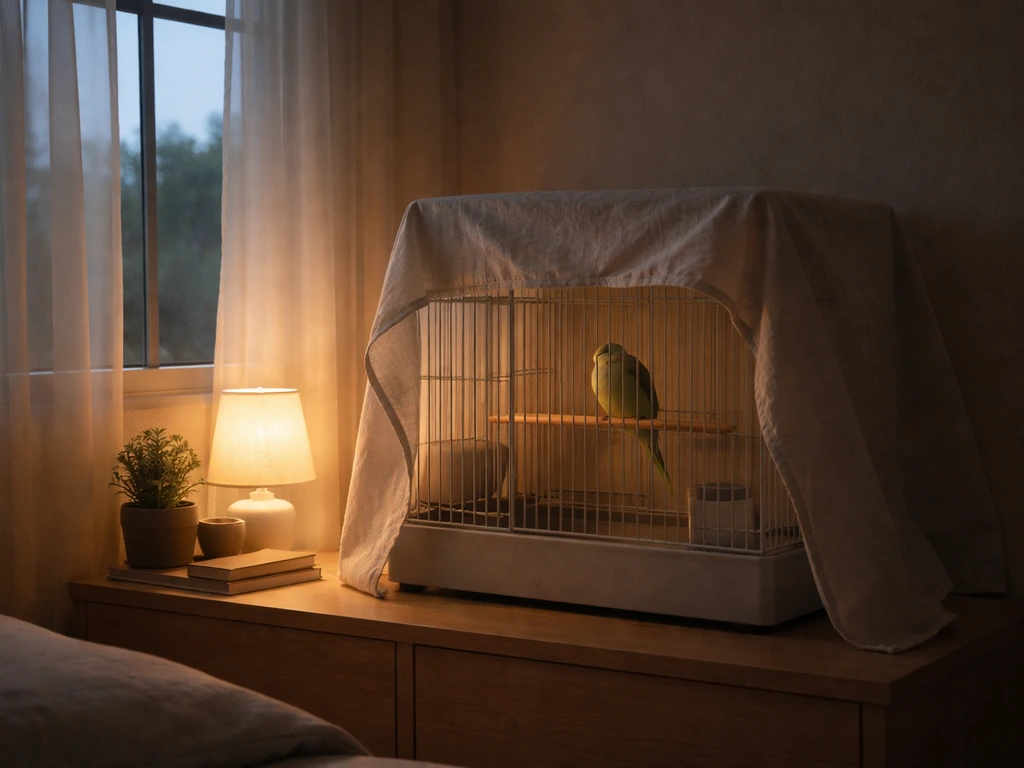
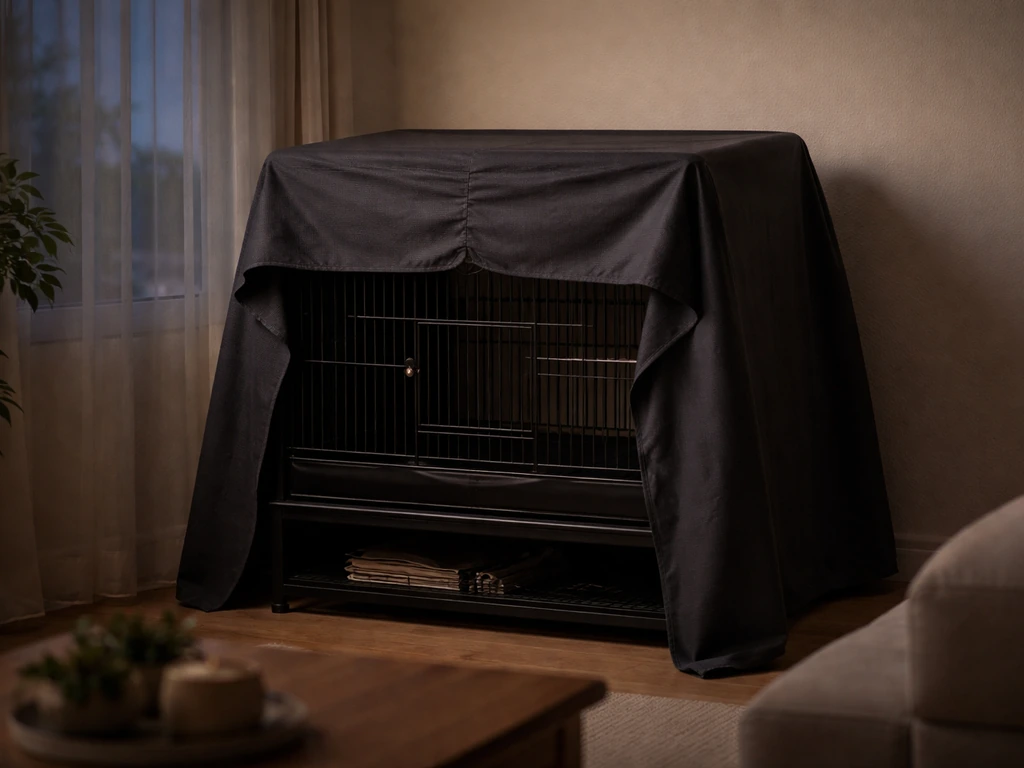
Your bird's sleep area needs to be genuinely dark, not just dim. Even a TV in the same room, a gap under a door letting in hallway light, or a streetlamp shining through a window can disrupt sleep. The simplest solution is to either move the cage to a dedicated sleep room (a spare bedroom or bathroom works well if it's quiet) or use a cage cover made of breathable fabric. If you use a cover, make sure it's not too tightly woven, as trapped dust and dander can contribute to respiratory irritation over time. Remove the cover promptly when morning light starts or when you turn lights on, and don't leave it on past natural wake time.
Noise
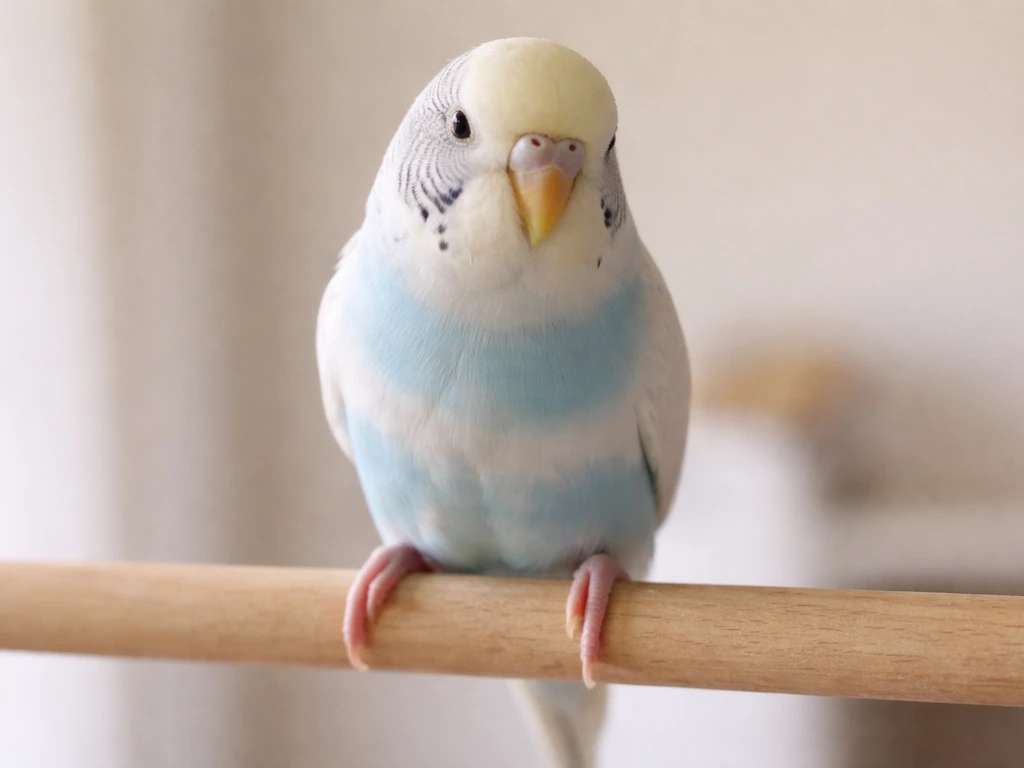
Silence is ideal, but low-level consistent sound (like a white noise machine or a quiet fan) can actually help buffer against sudden startling noises, which are a primary cause of night frights in cockatiels and budgies. What you want to avoid is intermittent unpredictable noise: TVs, loud conversations, music with sudden volume changes, or pets moving around in the same room.
Perch
A bird that's uncomfortable on its perch will not sleep well. The perch diameter should roughly match the bird's foot size so that when the bird grips it, its toes wrap about three-quarters of the way around. A perch that's too thin causes the bird to grip too tightly and fatigue quickly; one that's too wide puts stress on the tendons. Check perch surfaces for splintering or heavy chewing damage, both of which can cause foot injuries and should prompt an immediate replacement. Natural wood perches of varying diameter are generally preferred over uniform dowel rods because they give the foot muscles a chance to flex differently.
Temperature
Most pet birds are comfortable between 65 and 80 degrees Fahrenheit (18 to 27 degrees Celsius). Sharp temperature drops at night, especially from air conditioning cycling on or a drafty window near the cage, can cause restlessness and stress. If your bird is fluffed up more than usual in the morning, that's a classic sign it was cold during the night. A simple solution is to partially cover one side of the cage nearest the draft, or move the cage a few feet away from the window or vent.
Sleep needs by species
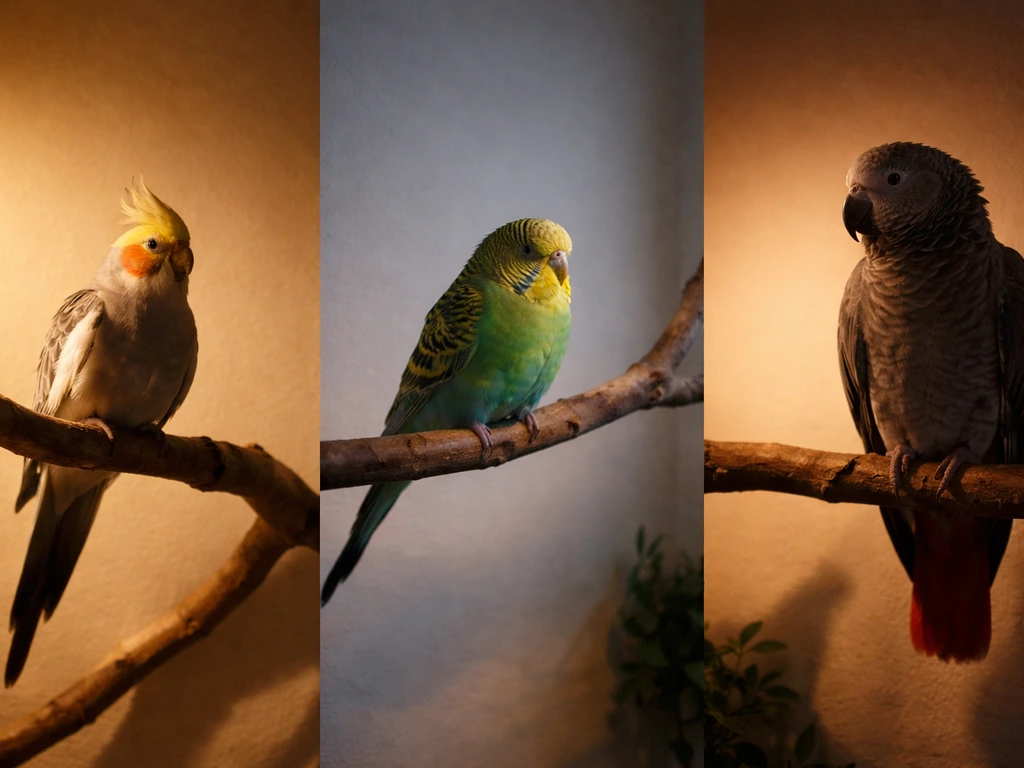
All the species in the parrot family and their relatives need roughly 10 to 12 hours of sleep per night, but their temperaments and sensitivities differ quite a bit. Here's what to know for each common pet bird type, and a note on wild birds for backyard observers.
Parrots (larger species: African Greys, Amazons, Cockatoos, Macaws, Conures)
Larger parrots tend to be louder and more persistent when their sleep needs aren't met. They vocalize at dawn and at dusk as a flock-contact behavior, and that's normal. What's not normal is screaming or contact calls throughout the night. If your bird is screaming at night, focus on a consistent dark, quiet sleep setup and adjust routines to reduce the triggers how to train a bird not to scream.
These birds are highly attuned to changes in household routine, so the most effective thing you can do is pick a consistent bedtime (7 to 8 PM works well in most households) and stick to it seven days a week. Move the bird to a dedicated sleep cage or sleep room if the main living area is active in the evenings.
Full darkness is especially important for parrots already showing hormonal or nesting behavior, as inconsistent low light can actually stimulate reproductive cycles.
Cockatiels
Cockatiels are one of the most night-fright-prone species. A sudden noise or a shadow moving across the room at night can send a cockatiel into a panic, causing it to thrash around the cage. If this happens, the quickest and most effective response is to turn on a light immediately so the bird can orient itself, then speak to it in a calm, quiet voice from nearby until it settles.
Do not reach in and grab the bird unless it's injured. Cockatiels also benefit enormously from a white noise machine placed at low volume near their sleep area. For consistent sleep, cockatiels need 10 to 12 hours of dark quiet, and sleep disruption in this species can lead to chronic stress fairly quickly.
Budgies (budgerigars)
Budgies are social birds that sleep better with a companion, but if yours is solo, a small mirror or a quiet, consistent environment goes a long way. They are sensitive to light and will often chatter and be active as long as there is light in the room. Dimming or eliminating light is usually enough to settle a budgie quickly. They're also small and lose heat faster than larger birds, so make sure there are no drafts. Budgies typically wake at first light, so if your room gets early morning sun, a cover or blackout curtain can help prevent a 5 AM wake-up call.
Finches and canaries
Finches are highly light-responsive and will quiet down almost immediately when the room goes dark. They don't require the same degree of handling or routine-building that parrots do, but they do need a consistent 10 to 12 hour dark period. Unlike parrots, finches rarely have the kind of complex emotional or behavioral sleep disruptions you see in psittacines. Their most common sleep problem is simply too much light for too long. A lightweight breathable cage cover or a dimmer switch in their room is usually all it takes.
Wild birds in your yard
If you're a backyard birder noticing wild birds roosting near your property, the most helpful thing you can do is get out of their way. Wild birds roost instinctively and don't need human intervention to sleep. What they do need is for blank" rel="noopener noreferrer">artificial light not to disorient them. Outdoor floodlights, interior lights visible through large windows, and decorative landscape lighting all contribute to disorientation, collision risk, and disrupted migration patterns.
Turn off non-essential exterior lights after dark, close blinds or curtains on brightly lit rooms, and if you have lights on upper floors, make a habit of turning those off at night during migration seasons. The U. S.
Fish & Wildlife Service recommends closing blinds or curtains at night and using automatic controls for interior lights, and also notes that turning lights off for 15 to 20 minutes can help birds escape disorienting light if lights cannot be turned off permanently close blinds or curtains on brightly lit rooms. You're not putting wild birds to sleep, but you are removing obstacles that prevent them from doing it naturally.
A bedtime routine you can start tonight
Consistency is the engine that makes any bird bedtime routine work. Birds thrive on predictability, and once your bird learns that a certain sequence of events means sleep is coming, it will often start to settle on its own before you even finish the routine. Here's a straightforward sequence to follow each evening.
- About 30 minutes before bedtime, start lowering stimulation: turn down the TV volume, reduce the brightness of lights in the room, and avoid exciting play or handling.
- Offer a small amount of food or a favorite calming food (like a warm piece of sweet potato or a small bit of whole grain) as a consistent pre-bed signal. Not every bird needs this, but a routine food cue can become a reliable settling trigger.
- Move the bird to its sleep cage or sleep perch in its designated sleep space if it's different from the daytime cage.
- Say a consistent goodnight phrase in a calm, quiet voice. It sounds simple, but birds pick up on verbal cues surprisingly fast and a repeated phrase signals routine.
- Dim or turn off lights in the sleep area. If using a cage cover, put it on at the same time every night.
- Leave the bird alone. Avoid returning to the room to check on it, as this resets the settling process.
- In the morning, remove the cover or turn on the light at a consistent time, ideally within a 15 to 30 minute window of the same time each day.
The first few nights of a new routine can be bumpy. Your bird may vocalize more than usual as it adjusts. Stay consistent and resist the urge to go back in or give attention for vocalizing, as that teaches the bird that noise brings you back.
Covering, handling at night, and mistakes to avoid
Cage covers are a useful tool but they're not a cure-all, and they come with a few caveats worth knowing. A cover works well for birds in rooms that can't be fully darkened, or for blocking drafts from one side. However, covers that are too thick or synthetic can trap dander and dust near the bird's face, which over time can irritate the respiratory system. Stick to breathable natural-fiber covers and wash them regularly. If your bird is already showing hormonal behavior (excessive regurgitation, aggression, nesting behavior), a fully dark room is actually a better approach than relying on a cover, because the enclosed cave-like space a cover creates can sometimes reinforce nesting instincts.
Night handling is something most birds don't enjoy and most owners should avoid. Taking a bird out of its cage at night when it's disoriented or drowsy is stressful for the bird and can make night-time disturbances worse over time. The exception is a genuine night fright emergency, when a bird has thrashed in the cage and may be injured. In that case, turn on a light first, give the bird a few minutes to orient, and only handle if you need to check for injury. If your goal is to sedate a bird at home, it is safest to avoid trying and instead contact an avian vet or an experienced bird behavior professional for guidance.
Here are the most common mistakes to avoid when trying to get your bird to sleep.
- Inconsistent bedtime: varying the schedule by more than 30 minutes regularly undermines the routine
- Responding to vocalizations at night by returning to the room or talking to the bird
- Leaving the TV on in the sleep room even at low volume
- Using a thick, non-breathable cage cover or leaving it on past natural wake time
- Placing the sleep cage near a window with streetlight exposure or morning sun without a blackout curtain
- Handling the bird at night unnecessarily
- Covering a bird that is already in hormonal or nesting condition without also controlling for dark-room nesting stimulation
When something else is going on: troubleshooting persistent sleep issues
If you've fixed the environment and established a consistent routine and your bird still isn't sleeping well after two to three weeks, something else is driving the problem. The most important thing here is to distinguish between behavioral causes and medical ones, because they need very different responses.
Signs of illness that need a vet, not a routine adjustment
Breathing difficulty in a bird is always an emergency. If you see open-mouth breathing, rapid breathing at rest, wheezing, tail bobbing with each breath, neck stretching, or a fluffed and lethargic bird that's not eating, don't wait. Call an avian vet immediately. These are signs of respiratory distress and they can escalate very quickly in birds because birds mask illness until they physically can't anymore. Other red flags that warrant prompt veterinary attention include a bird that keeps falling off its perch at night, significant weight loss, discharge from the nostrils or eyes, or a drastic and sudden change in droppings.
Fear and night frights
Night frights are most common in cockatiels but can happen in any species. If your bird has repeated night frights (more than once a week), audit the sleep environment for triggering sounds or lights. A white noise machine is often the most effective single intervention. Some birds also benefit from a very dim night light (barely visible, not a standard lamp) so they're not in complete blackness if they do startle. Experiment to find what works for your individual bird.
Hormonal behavior
Hormonal birds, especially in spring, can be restless, aggressive at bedtime, and inclined to seek out dark enclosed spaces. If your bird is also regurgitating at you, becoming territorial around the cage, or crouching in a solicitation posture, hormones are likely a factor. The approach here is to reduce overall daylight exposure to 10 to 12 hours strictly, avoid petting the bird in areas other than the head and neck, and remove any items in the cage that could be used as a nest. Avoid using a cover that creates a dark enclosed space in this situation, and lean toward a fully dark room instead.
Stress and environmental anxiety
A new bird in the household, rearranged furniture near the cage, a new pet, or even a change in your own schedule can cause a bird to be restless at night. This kind of stress-related disruption usually resolves within one to two weeks as the bird adjusts, as long as you keep the routine consistent. If it persists beyond three weeks without improvement, it's worth a vet check to rule out a physical cause.
| Symptom | Likely Cause | Action |
|---|---|---|
| Restless but no physical signs | Light, noise, or inconsistent routine | Adjust environment, fix schedule |
| Night frights once or twice a week | Startling sounds, darkness anxiety | Add white noise, consider dim night light |
| Excessive sleeping during the day | Boredom, illness, or prior sleep deprivation | Enrich daytime, monitor for illness signs |
| Fluffed, lethargic, not eating | Possible illness | Contact avian vet promptly |
| Open-mouth breathing, tail bobbing, wheezing | Respiratory emergency | Emergency vet visit immediately |
| Restlessness with nesting behavior, aggression | Hormonal behavior | Reduce light exposure, remove nesting stimuli |
| Persistent sleep disruption after 3 weeks of good routine | Unknown, possibly medical | Schedule avian vet exam |
How long this actually takes and how to track progress
Be honest with yourself about the timeline. Most birds with a simple light or noise problem start settling noticeably better within three to five nights of a corrected environment. Birds that need a full routine established from scratch usually show real improvement within two to three weeks. If your bird has had a chaotic sleep history for months or years, it can take four to six weeks of consistent routine before you see reliable settling behavior. That's not a failure, that's just how birds build new habits.
Tracking progress doesn't need to be complicated. A simple note in your phone each morning is enough. Record what time the bird went to bed, whether it vocalized, any night disturbances, and how it looked and behaved in the morning. After two weeks, patterns become obvious: you'll see exactly which nights were rough and what happened differently on those nights versus the good ones.
Use this checklist to assess where you are each week.
- Bird is going to sleep within 20 to 30 minutes of lights out
- No vocalizations after the first 15 minutes of settling
- No night frights in the past 7 days
- Bird is alert, active, and eating well in the morning
- Consistent bedtime maintained within 30 minutes every night
- Sleep area is dark and quiet with no environmental disturbances
- Perch is in good condition with no damage or splintering
- No signs of illness (see troubleshooting section above)
If you're checking every item on that list consistently and your bird still isn't sleeping well, an avian vet visit is your next step, not another routine adjustment. Some birds have underlying health conditions that surface first as sleep disruption, and catching those early makes a real difference.
If you've been wondering whether something more sedating or calming is needed, it's worth knowing that there are no safe at-home sedation methods for birds, and anything along those lines should only ever be handled by a licensed avian vet. If you need to put a bird to sleep for a medical or emergency reason, use only an avian vet-approved plan, not DIY methods.
Because of that, there are no safe at-home sedation methods for birds, which is covered in our guide on how to sedate a bird at home. There are no safe at-home sedation methods for birds, and any sedating or calming should only be done by a licensed avian vet how to sedate a bird at home.
FAQ
Can I cover my bird’s cage every night, or will it cause problems?
Blackout covers and room darkening can help, but make sure your bird can still breathe comfortably and that the fabric is breathable. If you see more coughing, frequent tail-bobbing, or persistent open-mouth breathing after using a cover, remove it and switch to a fully dark, draft-free room or a better-ventilated setup, and contact an avian vet if symptoms persist.
Is white noise safe for birds, and how loud should it be?
Yes, but only if it stays steady and low. Keep the sound consistent (avoid music or anything that changes volume), and place it close enough to buffer sudden noises but far enough that the bird is not directly in a “hot spot” of airflow from a fan.
How should I handle morning wake-up if my bird startles easily?
For most birds, use a gradual “wake up” by turning lights on first, then any household sounds, rather than doing the reverse. If you routinely start with loud music or sudden conversation right when lights come on, some birds interpret that as a startle signal and repeat the pattern the next night.
Should I leave toys, mirrors, or nesting items in the cage overnight?
Remove mirrors and anything that encourages nesting during bedtime hours, especially for hormonally driven species. If your budgie or parrot becomes more excited at night (chattering, mounting behavior, or aggressive territorial responses), the “calm” item may actually be feeding behavior that prevents sleep.
What if my household schedule changes, how can I keep the bedtime routine consistent?
Ideally, set bedtime for the same 30 to 60 minute window each night, then keep that window consistent for at least two weeks. If your schedule shifts, adjust gradually over several nights rather than switching bedtime by many hours at once, because abrupt changes often trigger vocalizing and night restlessness.
How do I tell when my bird’s sleep issues are behavioral versus urgent?
A single night of poor sleep is common when you change the environment, but if your bird is falling off the perch, breathing oddly, acting disoriented, or looks fluffed and lethargic in the morning, treat it as more than a routine issue. Those signs are not “training problems,” they can indicate injury, temperature stress, or illness.
Is it okay to take my bird out of the cage when it won’t settle?
Skip night handling except for a clear emergency. Grabbing or moving a drowsy bird at night can make them more fearful the next time, which often increases night frights and perching instability.
Could cage placement or wobbling affect how well my bird sleeps?
In general, you want a perched sleep surface that matches your bird’s grip and comfort, and you should also check that the cage placement is stable. If the cage wobbles or the perch is on the edge of a higher-traffic area, micro-vibrations can repeatedly startle birds overnight.
My bird has night frights, what should I change first without making things worse?
If a bird repeatedly startsle-thrashes, you can try a reliable intervention before changing multiple variables at once: ensure true darkness, remove visual triggers (like window glare), and use white noise as the first-line tool. Only after you’ve stabilized the environment for several nights should you adjust lighting or cover type.
What should I do if my bird still can’t sleep after I fix the routine, can I sedate them?
No. There are no safe at-home sedation or “calming” methods for birds. If sleep disruption persists despite fixing light, noise, temperature, and perch comfort, schedule an avian vet appointment rather than trying supplements or sedatives not specifically prescribed for birds.
What progress details should I track to figure out the real cause?
Track a few specific markers rather than only “did they sleep.” Note time of bedtime, whether they vocalized during the night, morning posture (normal alert versus fluffed and lethargic), and whether there was any perch slipping or falling. If the pattern always correlates with a particular household event (TV, footsteps, doorway light), that points to the trigger faster than general trial-and-error.