Yes, you can make a noisy bird quieter, but the fastest path there is figuring out exactly why it's screaming in the first place. A hungry bird, a bored bird, a hormonal bird, and a sick bird all make noise for completely different reasons, and the fix for one won't work for another. This guide walks you through a quick triage to nail down the trigger, then gives you concrete, humane steps you can start today, whether you're dealing with a parrot, cockatiel, budgie, finch, or wild birds taking over your yard.
How to Make a Bird Quiet: Humane Steps That Work
Clara Hayes
13 Apr 2026
Safety first: why birds get noisy (and what not to do)
Before you try anything, understand one critical rule: never yell back at a screaming bird. If you're tempted to go beyond simple responses, keep in mind related options like how to hypnotize a bird should only be considered with strong caution and clear context, not as a first fix never yell back at a screaming bird. The Association of Avian Veterinarians is clear that reacting vocally to a bird's screaming can unintentionally reinforce the behavior, because from the bird's perspective, the noise worked and got your attention. This is probably the single most common mistake owners make, and it's why many people feel like nothing they try is working.
Also rule out anything harmful immediately. Do not cover a bird tightly, use sprays near it, expose it to loud noise as punishment, or try any sedation without veterinary guidance. If you've been wondering about stronger measures, it's worth reading up on how to sedate a bird at home to understand why that's almost never the right first step and when it might be appropriate medically. The goal here is humane behavior change, not silencing a bird by force.
Birds are vocal by nature. Contact calls, morning greetings, flock-bonding sounds, and alarm calls are all normal. What you're trying to reduce is excessive, distress-driven, or attention-seeking screaming, not all vocalization. Keeping that distinction in mind helps you set realistic expectations and avoid punishing normal behavior.
Quick triage: what's actually setting your bird off

Run through this checklist before doing anything else. Most noise problems become obvious once you match the screaming pattern to a trigger.
- Morning calls: Does the noise start at first light and settle after 15–30 minutes? This is a normal flock contact call. It can be managed with light control but won't disappear entirely.
- Boredom: Is the bird screaming during long stretches when nobody is around, or when it has nothing to do? Boredom-related screaming tends to be repetitive and rhythmic.
- Fear or alarm: Is the noise sudden, high-pitched, and linked to something in the environment, like a new object, a pet walking by, or a shadow outside? Fear calls are usually short bursts, not sustained screaming.
- Hunger: Does the screaming stop the moment you refill food or water? Check that food bowls aren't just topped with seed hulls that look full but are actually empty.
- Attention-seeking: Does the bird quiet down the second you enter the room or look at it? This is the most trainable trigger and also the easiest one to accidentally reinforce.
- Hormonal or territorial behavior: Is the bird fluffed, regurgitating, guarding a corner of the cage, or acting aggressive? Hormonal screaming tends to peak seasonally and is often louder and more persistent.
- Possible illness: Is the bird screaming at unusual times, looking fluffed or lethargic, or making sounds that are different from its normal calls? Noise combined with physical changes is a red flag that needs a vet, not training.
Once you've identified the most likely trigger (or the top two), move to the matching section below. If you're not sure, start with environment fixes, since those help regardless of cause.
Humane techniques to reduce noise in pet birds
The approach you use depends on species and trigger, but the foundation is the same for parrots, cockatiels, budgies, and finches: address the root cause, reinforce quiet behavior, and never reward screaming with attention.
Parrots (African greys, macaws, conures, amazons, cockatoos)
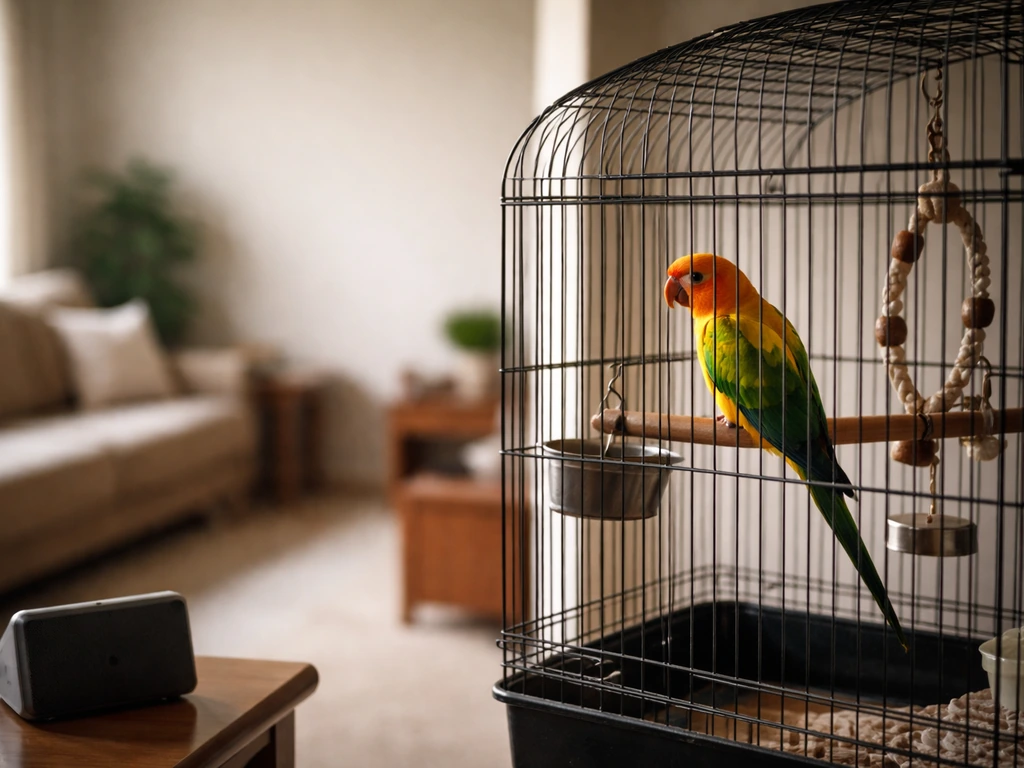
Parrots are the loudest and most socially demanding pet birds, and their screaming is almost always about communication. The key training move is the ignore-and-reward loop: completely withdraw attention the moment screaming starts (no eye contact, no talking, leave the room if needed), then immediately return and reward as soon as there's even a two-second pause in the noise. The window for reward is very short at first, so be ready. Over days and weeks, you extend the quiet period required before you return. This is exactly what training a bird not to scream looks like in practice, and it genuinely works if you're consistent.
For boredom-driven screaming in parrots, enrichment is your best tool. Rotate foraging toys every few days, hide food in different locations, and provide puzzle feeders that require problem-solving. Background radio or TV (at a moderate volume, nothing with sudden loud sounds) can also reduce screaming during alone time. The goal is giving the bird something to do with its brain.
Cockatiels
Cockatiels are flock birds and contact-call constantly, but excessive screeching is often hormonal. Lafeber's guidance links cockatiel screaming directly to hormonal triggers, especially when there's a bonded companion nearby or when nesting items are present in the cage. If your cockatiel is screeching persistently, remove any hut, tent, box, or soft fabric it might be treating as a nest. Moving the cage to a different spot in the room (about once a week if nesting behavior is present) can interrupt territorial fixation without stressing the bird severely.
For contact-calling cockatiels, a simple and effective technique is to call back softly once to acknowledge the bird, then go quiet. This mimics flock behavior: you've answered the contact call, so the bird has no reason to escalate. If you never respond at all, many cockatiels will get louder trying to reach you.
Budgies
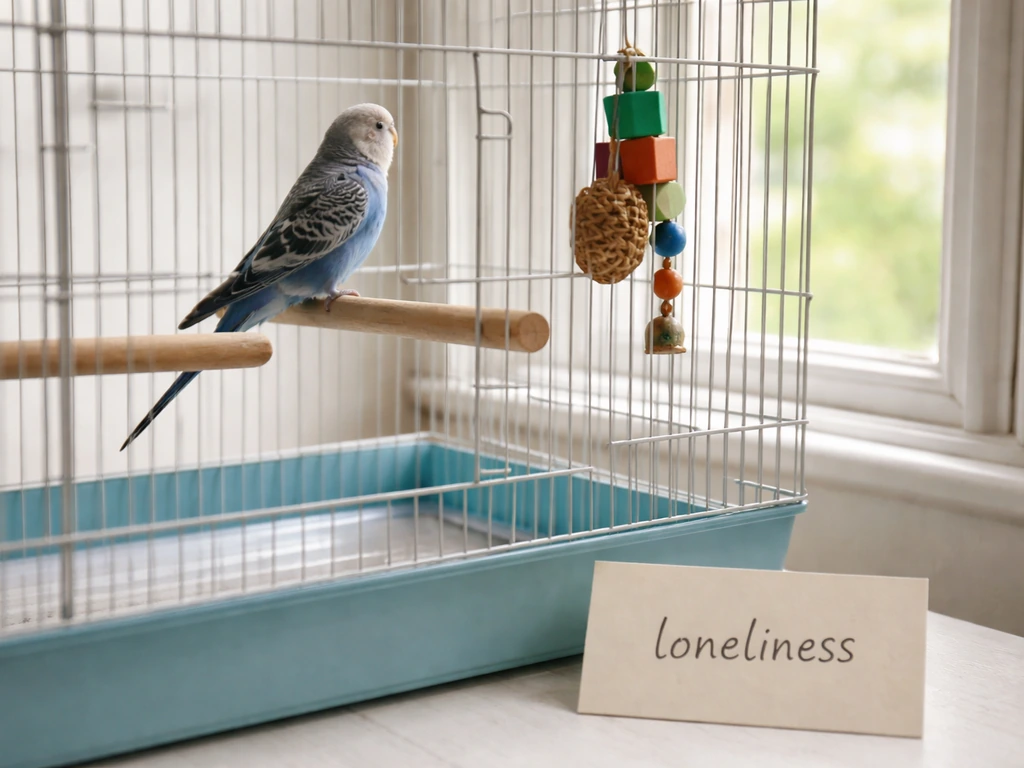
Budgies are naturally chatty but rarely scream at parrot volumes. When a budgie is louder than usual, the most common culprits are loneliness (single budgies need a lot of human interaction), fear from something in the environment, or hormonal behavior. The same attention-management rule applies: don't rush to the cage every time the budgie calls, or you'll teach it that noise summons you. Instead, build regular, predictable interaction times so the bird learns its needs will be met on a schedule.
Finches
Finches are not typically trained the same way parrots are, since they're not as interactive with humans. Their noise is almost always social, territorial, or a response to environmental stress. Keeping finches in pairs or small groups reduces lone-bird anxiety calls. If noise is the issue, check for overcrowding, check that there are enough perches and feeding stations for all birds, and make sure the cage isn't in a high-traffic, stressful location.
Managing noisy wild birds in your yard
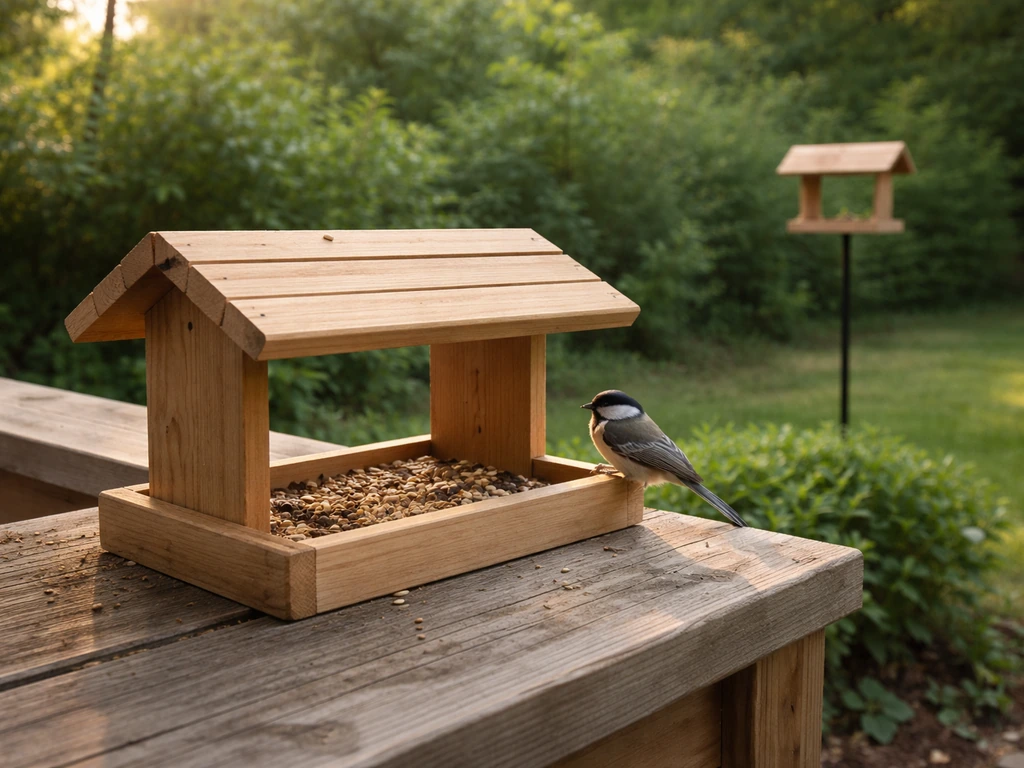
Wild bird noise is a different situation entirely. You can't train a wild bird, and in most countries wild birds are protected by law, so harmful deterrents are off the table. What you can do is modify the environment to make your yard less attractive or shift where and when birds congregate.
Feeding management is one of the most effective tools. The Academy of Natural Sciences notes that where, when, and what you offer at feeders directly influences which birds show up and in what numbers. If you're dealing with a large, noisy flock at dawn, try moving feeders farther from the house, switching to feeders that accommodate fewer birds at once, or temporarily stopping feeding for a week or two to break the habit. This isn't cruel, it's just redirecting where the birds congregate.
For birds making noise near windows (especially during breeding season when territorial males attack reflections), the Audubon Society's guidance on bird-friendly building design is relevant: covering or breaking up the reflection with window tape, decals, or exterior screens removes the visual trigger that's driving the territorial response. Audubon also recommends using bird-safe window decals or other treatments, and pairing them with additional steps like turning off lights at night and relocating or screening feeders covering or breaking up the reflection with window tape, decals, or exterior screens removes the visual trigger. The noise often stops within days once the reflection is eliminated.
The Houston Humane Society Wildlife Center recommends removal of attractants and making areas less comfortable as the humane approach to deterrence, with a firm line against anything that injures or poisons wildlife. Practical options include removing standing water sources that concentrate birds near the house, trimming dense shrubs close to windows, or using physical barriers like bird netting on specific plants. Houston Humane Society Wildlife Center also recommends removing attractants like standing water sources and making yards less comfortable for birds near the house removing standing water sources that concentrate birds near the house. What you're doing is humane habituation: changing the environment so the birds naturally redistribute, rather than forcing them away.
Environment tweaks that lower your bird's baseline noise
Regardless of the specific trigger, these environmental changes reduce the overall stress level that makes birds more reactive and loud. Think of them as the foundation everything else is built on.
Sleep and light
This is the single biggest lever most owners aren't using. Pet birds need 10 to 12 hours of uninterrupted darkness every night, and most household birds get far less because of evening light, TV, and irregular schedules. The Georgia Aviary recommends a consistent bedtime and wake time aligned with the light schedule, especially for hormonal management. A cage cover that blocks light completely, or moving the bird to a dark, quiet room at the same time each night, makes a noticeable difference in morning screaming and overall noise levels within one to two weeks. If you're unsure how to build a sleep routine your bird will actually stick to, the practical side of how to get your bird to sleep covers this in detail.
Light management also matters during the day. Birds near windows that receive strong, direct morning light will start calling earlier and more intensely. Diffusing light with a sheer curtain, or positioning the cage slightly away from direct sun exposure, can shift the internal clock enough to reduce those 5 AM wake-up calls.
Cage placement and sound exposure
Place the cage against a wall rather than in the center of a room. Birds feel more secure with a solid wall behind them and are less likely to alarm-call at every movement. Avoid placing cages near exterior doors, high-traffic hallways, or in rooms where the TV runs all day at high volume.
Moderate, consistent background sound (soft music, talk radio at low volume) can actually reduce noise by giving the bird ambient company without overstimulating it. Sudden loud sounds, on the other hand, trigger alarm calls, so avoid placing the cage in a kitchen near appliances or in a room where people frequently slam doors.
Enrichment
A mentally occupied bird is a quieter bird. Rotate toys every three to five days so the cage doesn't get stale. Use foraging opportunities: wrap treats in paper, stuff food into holes in a wooden toy, or scatter seeds at the bottom of the cage to encourage natural foraging behavior. For parrots especially, an enriched environment directly addresses boredom-driven screaming without any formal training required.
Reinforcing calm behavior: the practical training process
Training a bird to be quieter is less about suppressing noise and more about actively rewarding silence and calm behavior so those states become the bird's default. Here's how to do it effectively.
- Choose a marker. A clicker or a short verbal marker like 'yes' works equally well. The key is consistency: use the same sound every time. The marker tells the bird exactly which behavior earned the reward.
- Time the marker precisely. Click or say 'yes' the instant the bird is quiet, not a second or two later. Marker training literature is very clear that timing is everything. A delayed marker teaches the bird the wrong thing.
- Follow the marker immediately with a reward. This should happen within one to two seconds. Use the bird's highest-value treat: a small piece of fruit, a nut, a favored seed. The reward must follow the marker every time in early training.
- Start with very short quiet intervals. If your bird screams constantly, reward a two-second pause. Gradually extend the required quiet time over days and weeks.
- Ignore the screaming completely. Any reaction, including negative attention, resets the learning. The bird must experience that noise produces nothing and quiet produces good things.
- Build a predictable daily schedule. Birds are creatures of routine. Feed, interact, and cover at the same times each day. Predictability reduces anxiety, and reduced anxiety means less noise.
Realistic timelines: for attention-seeking screaming with consistent training, most owners see meaningful improvement within two to four weeks. Hormonal or fear-based noise takes longer, often six to eight weeks, and may have seasonal relapses. Boredom-driven screaming often improves within days once enrichment is added, which is encouraging for new owners.
One technique worth knowing about is tonic immobility, which can sometimes help calm a highly agitated bird in a crisis moment, though it should be used carefully and sparingly. Understanding how to hypnotize a bird gives you context for when this might be appropriate and how to do it without causing stress. It is not a substitute for the routine training described above.
When you need the bird quiet for a specific short period, such as a work call or a sleeping household member, the most humane approach is a combination of cage covering in a quiet room and timing it with the bird's natural post-activity calm window, usually mid-morning after the initial wake-up frenzy. For more on managing those specific moments, how to put a bird to sleep has practical guidance on calming techniques that are safe and ethical.
Comparing your main options for reducing bird noise
| Approach | Best for | Time to results | Effort level | Works without training? |
|---|---|---|---|---|
| Sleep/light schedule fix | Morning screaming, hormonal noise | 1–2 weeks | Low (once set up) | Yes |
| Enrichment and foraging toys | Boredom-driven screaming | Days to 1 week | Low–medium | Yes |
| Ignore-and-reward training | Attention-seeking screaming | 2–4 weeks | Medium–high (consistency required) | No |
| Cage placement change | Fear/alarm calls, stress noise | Days | Low | Yes |
| Hormonal management (remove nests, move cage, adjust light) | Seasonal hormonal screaming | 2–6 weeks | Medium | Partly |
| Feeding/habitat modification | Wild yard birds | 1–2 weeks | Low–medium | Yes |
| Clicker/marker training | All attention or reinforced behaviors | 2–8 weeks | High (precise timing needed) | No |
If you're deciding where to start, the sleep schedule and cage placement changes are the easiest wins with the least effort. Layer enrichment on top of those, then add formal training for persistent attention-seeking screaming. Don't skip straight to training if the bird is sleep-deprived or bored, because those underlying states will undermine your training results.
When noise is a warning sign, not a behavior problem
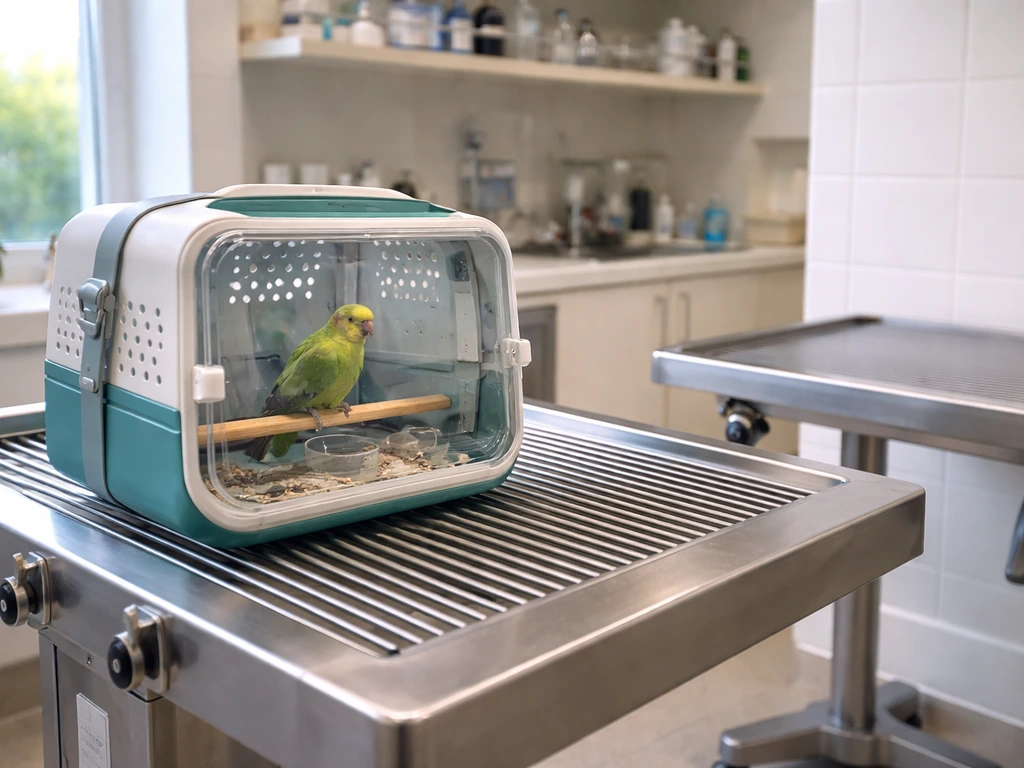
Not all screaming is behavioral. Sometimes a bird is telling you it's in pain or physical distress, and training won't help. Know when to stop troubleshooting at home and contact an avian vet.
- Open-mouth breathing or tail bobbing alongside screaming: this is a respiratory emergency. Birdclinic.net and The Gabriel Foundation are both explicit that open-mouth breathing and tail bobbing are urgent signs that need same-day veterinary evaluation.
- Sudden change in the sound or character of the vocalizations: if a bird that normally sounds a certain way starts producing hoarse, weak, or unusual sounds, that's worth a vet call.
- Screaming combined with fluffed feathers, eyes half-closed, or sitting on the cage floor: these are signs of a sick bird, not a behavioral problem.
- Feather destruction alongside increased noise: PetMD links both behaviors to metabolic stressors, nutritional deficiencies, and psychological distress. A vet can rule out physical causes.
- Noise that started suddenly after a dietary change, new household chemical, new pet, or changes in environment: sudden-onset screaming with no obvious behavioral trigger warrants a vet check to rule out toxin exposure or illness.
- No improvement after six to eight weeks of consistent training: if you've genuinely been consistent and nothing has improved, an avian behaviorist or avian vet can assess whether there's an underlying cause you've missed.
Finding an avian vet can take some effort depending on where you live. Look for a vet listed with the Association of Avian Veterinarians (AAV) or one who specifically advertises avian practice experience. General small-animal vets often have limited bird experience, so it's worth making a few calls to confirm expertise before an appointment.
The bottom line is this: most pet bird noise problems are solvable with a combination of better sleep, smarter enrichment, and consistent attention management. Start with the triage checklist, fix the obvious environmental issues first, and then layer in formal training if you need it. If you're dealing with wild birds, modify the habitat rather than chasing the birds themselves. And when in doubt about whether the noise is behavioral or medical, a call to an avian vet is always the right move.
FAQ
What should I do in the first 24 hours after I hear my bird screaming a lot?
Do a quick log (time of day, what the bird was doing, what changed right before the noise, and who was nearby). Then immediately check for the top drivers you can control quickly, sleep timing and light leaks, boredom (no foraging options), and attention patterns (did you respond when the screaming started). Use the log to pick the most likely trigger before changing multiple things at once.
Is it ever okay to give a bird a reward while it is still screaming?
Usually no. Wait for a tiny break in the noise, even 1 to 2 seconds, then reward immediately. If the reward happens mid-scream, many birds learn that screaming is the behavior that earns treats, which undermines the ignore-and-reward loop.
My cockatiel keeps making contact calls constantly, how do I tell normal calls from excessive noise?
Normal contact calling often matches routines (waking, flock separation, settling) and the bird can be soothed or quiets after acknowledgment. Excessive screaming tends to be persistent, escalates quickly, and continues despite consistent calm responses. If you see nesting-like behavior, reduced eating, or aggressive lunging, treat it as a hormonal or stress trigger rather than simple flock communication.
What if I live in a small home, and ignoring my bird means it gets more attention because people are always around?
Ignore does not mean the bird gets zero social exposure, it means you stop providing a direct response to screaming. Keep interactions scheduled (for example, brief check-ins at set times), keep eye contact and talking minimal during noise, and avoid sudden movements toward the cage until there is quiet.
How long should I give training before deciding it is not working?
If the issue is attention-seeking and you are consistent, look for noticeable improvement in about two to four weeks. If the noise is hormonal, fear-based, or triggered by nesting items or territorial reflections, expect six to eight weeks and possible seasonal relapses. If there is no change after this window, reassess the root trigger rather than increasing punishment or changing rewards randomly.
Can too much enrichment actually make a bird louder?
Yes. If new toys, frequent changes, or high-energy activities overstimulate the bird, it may scream more. Rotate toys gradually (every few days as a general guide), keep enrichment aligned with calm times, and introduce one change at a time so you can tell what helps versus what excites.
My bird screams when I leave the room. Should I stop leaving entirely?
Not necessarily. Use controlled departures so the bird learns you will return, but you do not reinforce screaming. Start with very short absences, return during a quiet moment, then gradually increase time away. If the bird panics or shows distress signs, pause and get an avian vet opinion to rule out pain or fear.
Do cage covers for sleep help with daytime noise too?
Cage covers are mainly for fixing the nighttime schedule and reducing morning screaming driven by poor sleep or light timing. For daytime noise, use environment adjustments (placement away from traffic, less direct sun, calmer background sound at moderate volume) and targeted attention management. Covering during the day can backfire by increasing stress or reducing normal stimulation.
What are danger signs that mean the bird’s noise is medical, not behavioral?
Stop troubleshooting at home if you notice labored breathing, sitting fluffed for long periods, discharge from the eyes or nostrils, sudden appetite changes, weight loss, bleeding, limping, a drop in activity, or persistent screaming that does not match time-of-day triggers. In those cases, contact an avian vet promptly instead of escalating training.
How can I reduce wild bird noise near my house without breaking any laws or harming birds?
Focus on habitat and timing changes, remove attractants (standing water, dense cover near windows), and use physical barriers like netting on specific plants where appropriate. Avoid lethal or injurious deterrents, and if birds are nesting, wait for the nesting period or consult local wildlife guidance before changing landscaping.
Should I use bird repellent sprays, spikes, or other deterrents on pet birds or inside the home?
Do not use sprays, aerosols, or physical deterrents around a pet bird. Many of these products are irritating or unsafe for avian lungs and can worsen distress. For indoor pet birds, use humane changes, sleep schedule, enrichment, placement, and training, and reserve deterrents only for targeted outdoor habitat modifications.