
You cannot safely sedate a bird at home. That is the short, direct answer. Sedation requires monitoring equipment, reversal agents, and clinical training because birds can stop breathing under sedation with almost no warning. What you almost certainly need right now is a safe, low-stress way to catch, contain, or transport your bird without drugs. That is completely doable, and the step-by-step instructions below will walk you through it.
How to Sedate a Bird at Home Safely: Humane Alternatives
Clara Hayes
16 Apr 2026
Why at-home sedation is genuinely dangerous
Sedation is not the same as calming a bird down. Medical sedation suppresses the central nervous system, which in birds directly threatens breathing. Avian anesthesia research also notes that inhalant anesthetics and inspired oxygen can contribute to hypoventilation from CNS depression and respiratory muscle effects, and that birds may be more sensitive than mammals threatens breathing. Birds have a unique respiratory system with rigid lungs and air sacs, and sedative agents can cause hypoventilation, respiratory depression, or complete apnea. Even licensed avian vets keep emergency oxygen and intubation equipment on hand during sedation because the line between sedated and in cardiopulmonary arrest is very narrow. At home, you have none of that backup.
Hypothermia is the other hidden threat. Birds lose body heat fast under sedation, and without active warming and monitoring, body temperature drops to dangerous levels before you notice anything is wrong. This is a major concern even in clinical settings with trained staff actively watching.
Beyond the physiology, using any medication on a bird without veterinary direction is a serious welfare and legal risk. Drugs like diphenhydramine (Benadryl) are sometimes mentioned online as options, but their use in birds depends on species and clinical context, and dosing errors are easy to make and difficult to reverse. The rule from avian veterinary professionals is simple: never give your bird medication unless a vet has specifically directed you to do so for that bird.
If you have already given your bird a substance, call an avian vet or a pet poison control line immediately. Do not wait to see how the bird responds. Time matters.
What to do instead: humane alternatives that actually work
The reason most people search for sedation is because they need to get something done: a vet visit, a nail trim, moving the bird to a carrier, or safely catching a wild bird that got into the house. Every one of these situations can be handled with environment control, timing, and calm technique. Here is where to start.
Control the environment first
Dim the lights. A darker room immediately reduces a bird's arousal level because low light mimics dusk and triggers a calmer state. Close windows and doors to eliminate escape routes and reduce outside noise. Turn off fans, TVs, and anything else that creates unpredictable sound. Remove other pets from the room completely.
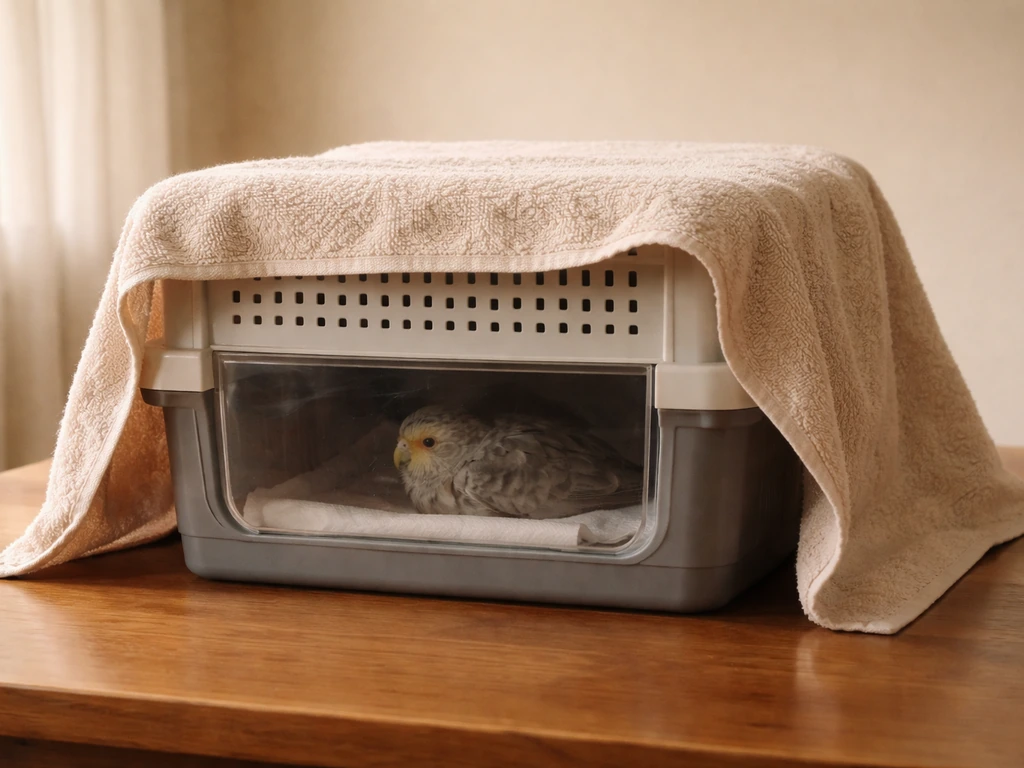
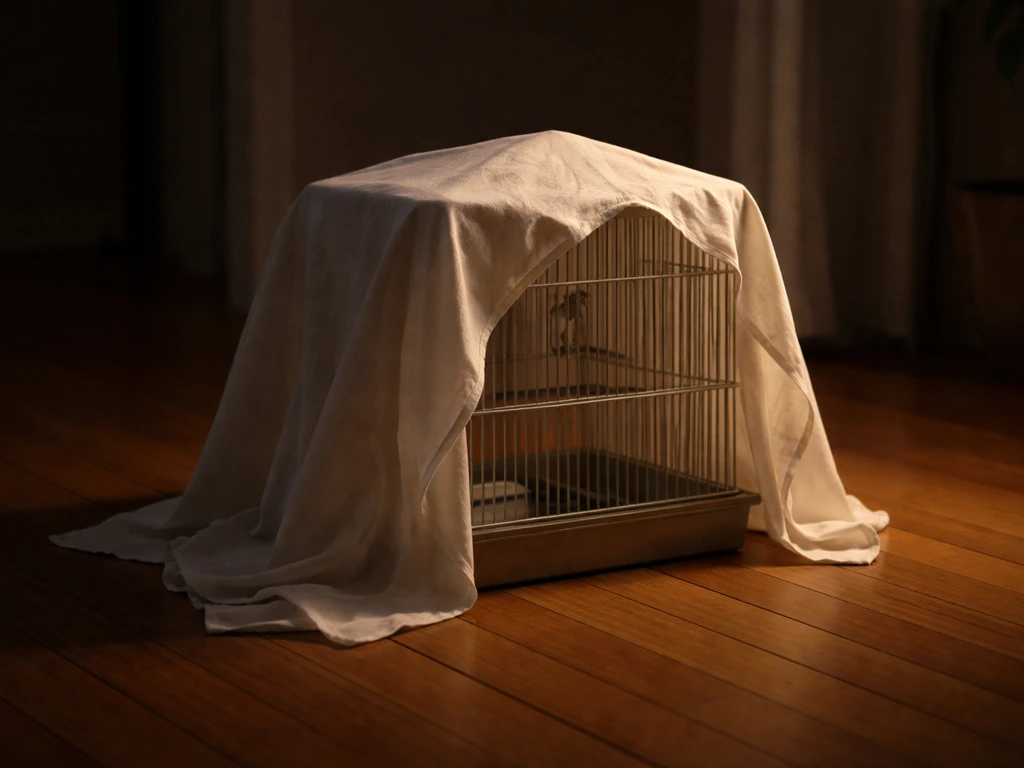
Cover the cage with a light cloth before you do anything else. A covered cage signals nighttime to the bird and lowers baseline stress before handling begins. This alone can make a significant difference, especially for birds that are cage-territorial.
Timing matters more than people realize
Handle birds in the early morning or just after dusk when they are naturally calmer. Avoid handling a bird that has just been startled, is actively screaming, or is in the middle of a hormonal cycle. If you know a vet visit is coming up, do short daily handling sessions for several days beforehand so the bird is not experiencing restraint for the first time on the day it matters most.
Building that kind of trust over time is genuinely the most effective "calming" tool you have. If your bird tends to panic during any kind of handling, it is worth spending a few weeks working on step-up training and desensitization before your next appointment. A bird that trusts you is a bird that is far easier to manage safely.
Skip the essential oils and diffusers
Essential oils and aromatherapy diffusers are sometimes recommended online as natural bird calming agents. They are not safe. Birds have a highly efficient respiratory system that makes them more vulnerable to airborne compounds than mammals, and essential oils can cause serious respiratory distress. Diffusers and vaporizers should not be used in the same space as a bird, period. The same goes for scented candles, aerosol sprays, and anything with a strong fume.
Step-by-step: how to capture, contain, and transfer a bird safely
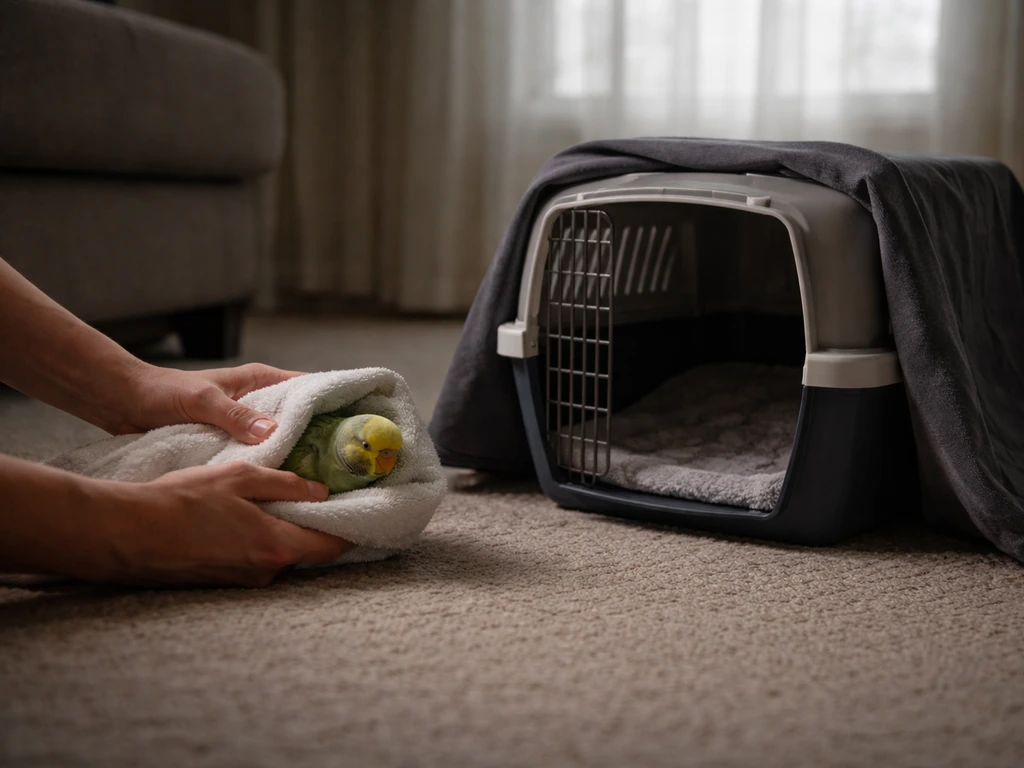
Whether you are catching a pet bird that escaped its cage or a wild bird that flew through an open door, the basic approach is the same. Work slowly, keep your own energy calm, and do as little as possible.
- Dim the room. Turn off overhead lights and close blinds so the room is twilight-level dark. This is the single most effective step.
- Clear the space. Remove other pets, close doors, and clear surfaces the bird might fly toward. If possible, remove items the bird could become entangled in.
- Give the bird a moment. Do not rush straight in. Stand still, lower your body height by crouching, and let the bird settle for 30 to 60 seconds.
- Prepare your towel before approaching. Use a clean, lightweight towel (a thin hand towel or washcloth works well for small birds). Keep it out of the bird's line of sight until you are ready to use it, since some birds associate towels with stressful handling and will panic at the sight of one.
- Approach from the side, not head-on. Move slowly and steadily. Sudden movements or direct eye contact feel threatening. Talk quietly as you move.
- Drape or wrap gently. For a pet bird, drape the towel over the bird and cup both hands around its body from above and behind, securing the wings gently against the body. Your grip should be firm enough to prevent wing-flapping but not compress the chest. Birds breathe by expanding their chest and keel, so never squeeze the torso.
- Control the head. Slide your thumb and forefinger to either side of the bird's head at the base of the skull to prevent biting, without restricting the throat. Your other fingers support the body.
- Transfer quickly to the carrier or container. Place the bird inside, face it toward the back, and close the carrier before removing the towel. The less time in open-air restraint, the better.
- Place the carrier in a dark, quiet spot. Cover it with a light cloth and leave the bird alone for at least 10 to 15 minutes before transport.
One important note on towel use: towel restraint can cause a bird to overheat if the room is warm or if you hold it for more than a few minutes. Keep handling time under two minutes when possible, and never wrap a towel tightly around the full body.
Species-specific tips
The same general technique applies across species, but size, temperament, and beak strength make a real difference in how you approach each bird.
Parrots (conures, Amazons, African greys, macaws, cockatoos)
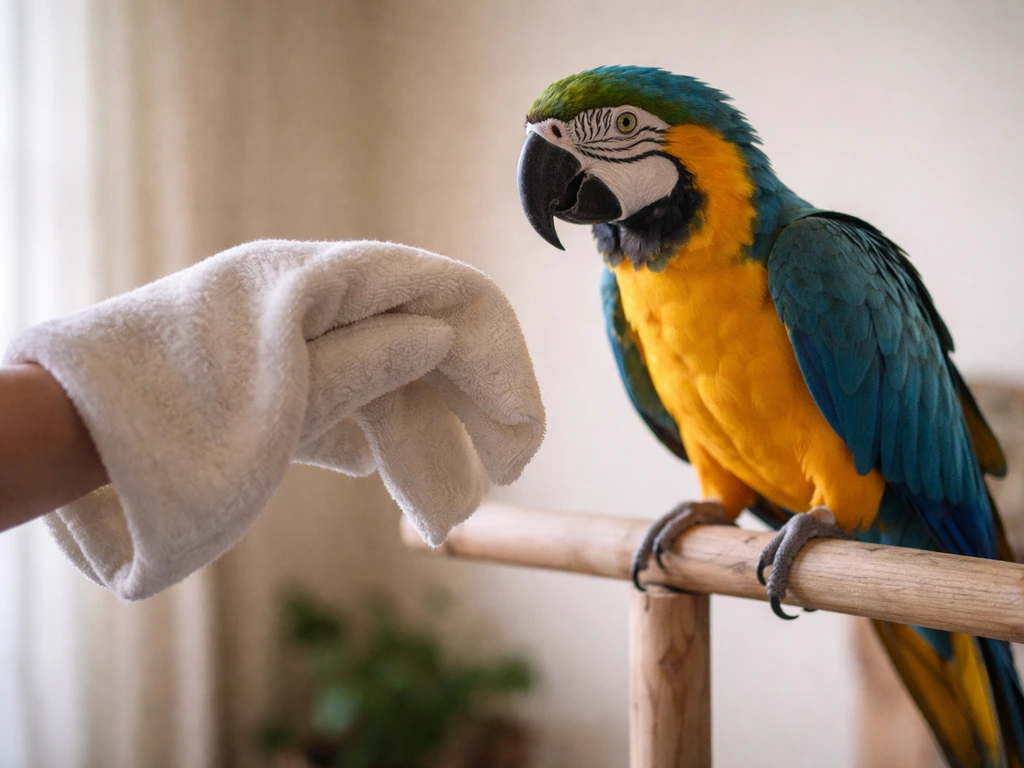
Larger parrots are strong, smart, and often have a history of associating handling with stressful events. Approach with the towel draped over your hand like a glove so your skin is not exposed to a powerful bite. Control the head firmly, as a large parrot's beak can cause serious injury. Use a large bath towel for macaws and cockatoos.
If your parrot is harness-trained, that is a much better option than towel restraint for transport. Some parrots will step up calmly into a carrier if they are familiar with it and have been trained to do so, which is always the first choice. You can also use a familiar perch held steady to encourage a step-up transfer when the bird is in an accessible position.
Cockatiels
Cockatiels are prone to night frights and can injure themselves flailing in the dark, so dim the room but do not go completely dark. A small hand towel is the right size. Cockatiels tend to bite less powerfully than larger parrots but can still give a good pinch. The crest position tells you a lot: flattened against the head means scared or aggressive, raised straight up can mean excited or alarmed. Wait for the crest to relax slightly before attempting to handle. Many tame cockatiels will step up readily if approached calmly.
Budgies
Budgies are small and fast, and they startle easily. A washcloth is large enough. The main risk with budgies is not the bite but the bird itself, as they can injure a wing or leg thrashing if the room is not properly cleared. For a tame budgie, a gentle cup of both hands works better than a towel. For an untamed bird, dim the room fully, let it land or perch naturally, and then cup it with hands or a small cloth. Move slowly and deliberately. Budgies tire quickly and will usually still themselves within 30 seconds if held with steady, calm hands.
Finches and small birds
Finches are fragile and extremely fast. They do not typically form handling bonds with their owners, so restraint is always somewhat stressful for them. For a finch, the goal is to use the smallest possible intervention: dim the room, let the bird land somewhere accessible, and cup it gently with both hands. Some handlers use a soft paper towel rather than a cloth towel for finches because it gives enough grip without bulk. Keep hold time under one minute whenever possible. If you need to transfer a finch to a carrier, use a small box with ventilation holes rather than an open carrier.
Wild yard birds
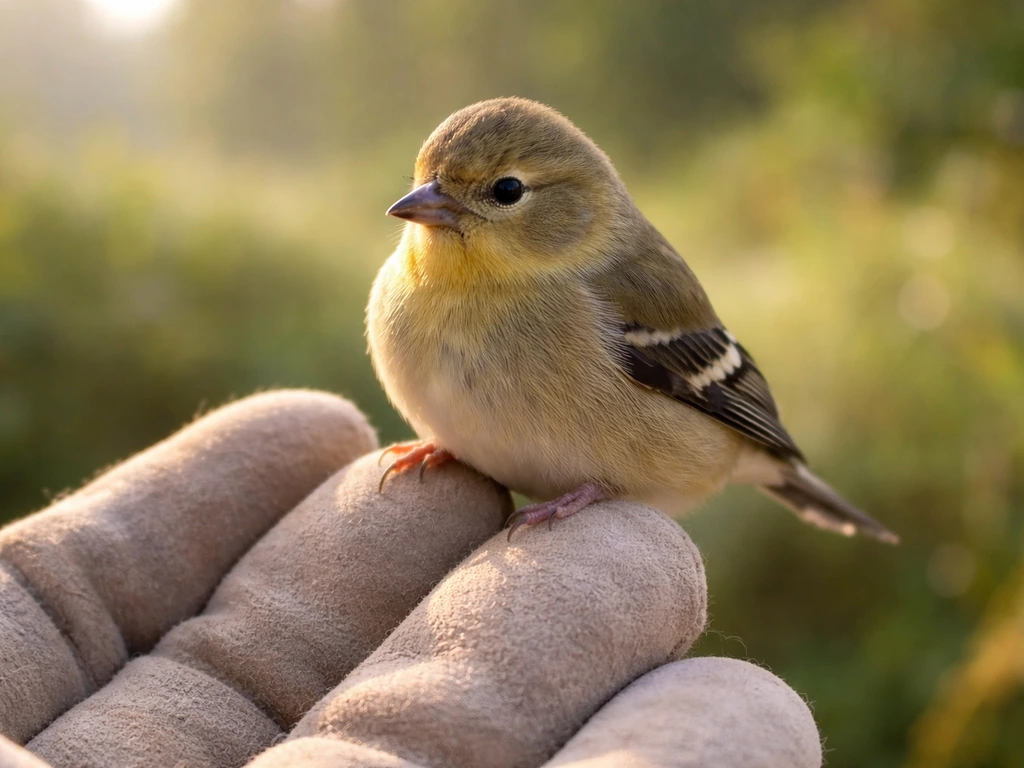
If a wild bird has hit a window or flown into your home, the handling rules change significantly. Under U.S. federal law, most wild birds are protected, and taking one into extended care without a wildlife rehabilitation permit is illegal. You can legally provide very short-term emergency containment while you contact a licensed rehabilitator, but that is the extent of your legal role.
For a window-strike bird, pick it up with a light towel (wear gloves if you can), place it gently in a shoebox with ventilation holes and a small piece of towel on the bottom, close the lid, and put it in a warm, quiet, dark spot away from pets and children. Do not give it food or water. [Do not try to assess injuries yourself. ](https://www.
reddit. com/r/WildlifeRehab/comments/1t5pzw9/alreadycalledlocalrescuelikelywindowstrike/) Call a licensed wildlife rehabilitator right away. Call a licensed wildlife rehabilitator promptly, because injured wild birds need professional, properly licensed care rather than home medication or treatment [Call a licensed wildlife rehabilitator right away. ](https://www.
eastsideaudubon. org/bird-emergencies). Most birds that have hit a window just need 15 to 30 minutes in quiet darkness before they recover enough to release. If the bird is not alert and upright within an hour, it needs professional care.
Natural calming vs. drugs: what you can and cannot do
There is a meaningful difference between non-pharmacologic calming methods and actual sedation. The table below breaks down what is safe to try at home versus what requires veterinary direction.
| Approach | Safe at Home? | Notes |
|---|---|---|
| Dimming lights / covering cage | Yes | One of the most effective first steps for any bird |
| Quiet, low-stimulus environment | Yes | Remove noise, pets, and visual chaos before handling |
| Towel restraint | Yes, with care | Keep hold time short; avoid compressing chest; watch for overheating |
| Step-up training / trust-building | Yes | Best long-term investment for handling without stress |
| Carrier habituation / training | Yes | Reduces transport stress significantly over time |
| Essential oils / aromatherapy diffusers | No | Can cause respiratory distress; do not use near birds |
| Human antihistamines (e.g., Benadryl) | No | Dangerous without vet guidance; dosing errors are common |
| Herbal supplements or teas | No | No safe, proven dose for birds; risks outweigh any benefit |
| Prescription sedatives / anesthesia | No | Vet clinic only; requires monitoring and emergency backup |
The "natural sedative" category deserves extra attention because it gets searched a lot. Lavender, chamomile, and valerian are sometimes suggested. There is no established safe dose for any of these in birds, and some compounds that are benign in humans are toxic to birds due to their different metabolism. If someone has already given a bird a herbal supplement or any substance not prescribed by a vet, treat it as a potential poisoning and call an avian vet immediately.
If your bird genuinely needs pharmaceutical calming for a procedure, an avian vet can prescribe pre-visit medications that are safe when properly dosed and monitored. This is a legitimate option for highly anxious birds, and it is completely different from trying to improvise at home.
What about birds that just won't settle down?
If your bird is screaming, panicking, or refusing to be handled consistently, the answer is almost never restraint. It is almost always training. A bird that has learned that hands are safe and that stepping up leads to good things is fundamentally easier to handle in any situation. If noise is your primary issue, working on how to train a bird not to scream will do more for your long-term handling success than any short-term containment trick.
For birds that are generally wound up or overstimulated, getting your bird on a consistent sleep schedule makes a bigger difference than most owners expect. A bird that is getting 10 to 12 hours of darkness and quiet per night is a calmer, more manageable bird during the day. This is not a minor thing; sleep deprivation in birds leads to increased reactivity, aggression, and screaming.
If your bird is reacting badly to noise from its own vocalizing and you need immediate relief, there are some practical environmental adjustments covered in guides on how to make a bird quiet that do not involve any restraint at all.
A note on tonic immobility and other 'calming' techniques
You may have seen videos of birds being placed on their back or held in unusual positions to make them go still. This is called tonic immobility, and while it looks like relaxation, the bird is actually in a fear-frozen state. It is not calm; it is terrified and unable to move. The same applies to some of the techniques sometimes called how to hypnotize a bird: some of these methods work by exploiting the tonic immobility response, which is a stress response, not a relaxed one. Using it repeatedly can cause lasting fear and erode your bird's trust in you.
Helping your bird settle before and after handling
Before any planned handling event (a vet visit, a nail trim, moving the bird to a new room), spend a few minutes helping the bird transition. Lower the lights, speak softly, and avoid any high-energy interactions for 20 to 30 minutes beforehand. If your bird is in its cage, cover it briefly to signal rest. After handling, return the bird to its familiar space quickly and quietly, and give it time to settle before interacting again.
Getting your bird to reliably settle down for sleep on cue is one of the most useful things you can train, because a bird that knows how to wind down on command will recover from stressful handling faster than one that does not.
Stop and call a vet or wildlife rehabilitator if you see any of these signs
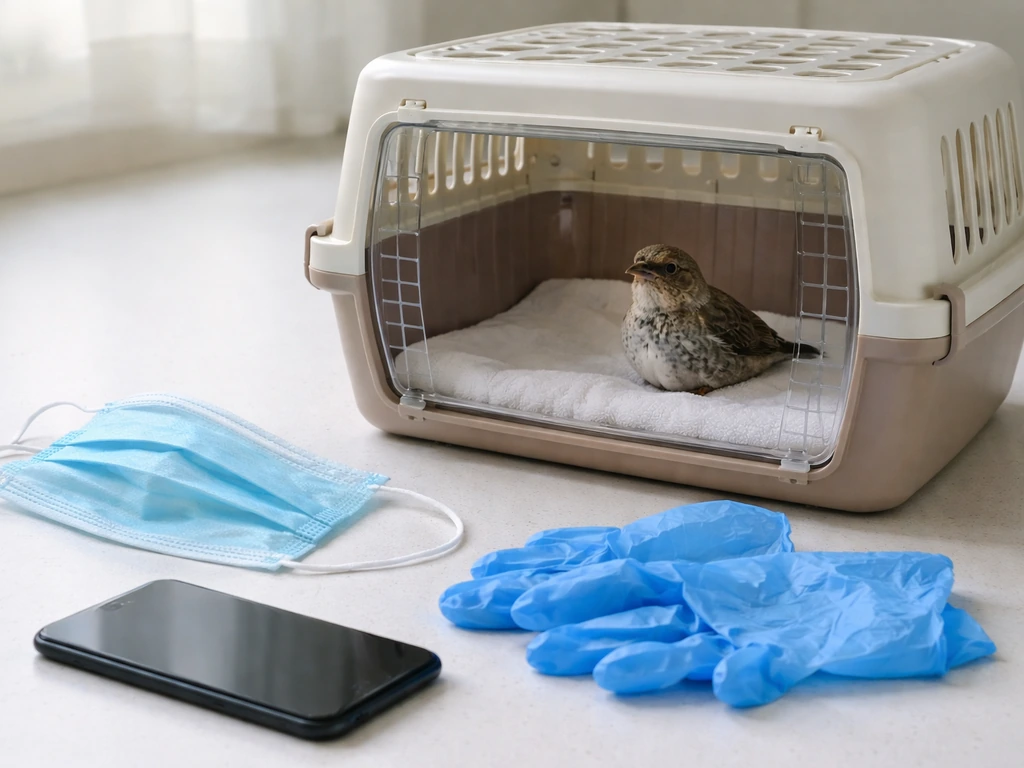
There are clear thresholds where you stop attempting at-home management and escalate to a professional. Do not wait to see if the bird improves on its own.
- Open-mouthed breathing or labored breathing at rest
- Tail bobbing with every breath (a sign of respiratory effort)
- Cyanosis: bluish tinge to the skin around the beak, feet, or cere
- Hunched posture with feathers puffed up and eyes half-closed (not during normal nap time)
- Loss of balance, falling off the perch, or inability to stand
- Seizure or loss of consciousness
- Bleeding that does not stop within a few minutes of gentle pressure
- The bird was given any substance (medication, herbal supplement, essential oil) not prescribed by a vet
- A wild bird has not recovered alert, upright posture within one hour of a window strike
- Any situation where handling itself seems to be making things worse
For pet birds, call an avian veterinarian directly. A general practice vet may not have the species-specific knowledge birds need, so look specifically for avian-certified or avian-experienced practitioners. The Association of Avian Veterinarians maintains a directory that makes it easy to find one near you.
For wild birds, call a licensed wildlife rehabilitator. You can find one through the National Wildlife Rehabilitators Association or your state's fish and wildlife agency. Do not transport a wild bird to a general animal shelter or vet clinic unless they have confirmed they can handle wild birds. Handling and transporting wild birds without a permit may be illegal under the Migratory Bird Treaty Act, so your job is containment and phone calls, not treatment.
The practical summary
If you need to manage a bird right now, dim the room, move slowly, use a towel for restraint if needed, and get the bird into a quiet, dark, covered container as quickly as possible. Do not give any medication or substance unless a vet has told you to. If the bird is showing signs of distress beyond normal handling stress, call a professional. Everything else, including long-term calm handling, is about building trust over days and weeks through consistent, low-stress interactions, not about finding a shortcut that bypasses the bird's nervous system.
FAQ
Can I use over-the-counter sleep aids (like Benadryl or melatonin) to calm my bird so I can handle it?
No. Even “mild” sedatives can dangerously slow breathing in birds, and you cannot safely monitor ventilation or body temperature at home. If you need a procedure done quickly, focus on quick, low-stress containment and call an avian vet for a pre-visit plan or emergency guidance.
What should I do if I already gave my bird a calming or sedating product I found online?
If you already gave something, do not wait for symptoms to “pass.” Call an avian veterinarian or a pet poison help line immediately and tell them the bird’s species, approximate weight, exact product name, dose, time given, and any symptoms. Keep the product label available.
Is it ever okay to restrain a bird with a towel for more than a few minutes?
Do not use a towel to keep the bird still for long periods. If you have to use towel restraint, keep sessions very brief, watch the bird’s breathing, and avoid trapping it in a way that limits chest movement. If the bird seems unusually floppy, breathing becomes slow or open-mouthed, or the head droops, stop and seek urgent avian help.
How do I know when my “calm at home” plan is not working and I should contact a professional?
Stop the at-home attempt and seek help if the bird is struggling to breathe, keeps mouth-open gasping, collapses, becomes very cold, or you notice a marked change in posture or alertness. Also escalate if the bird is bleeding, you suspect broken wings or fractures, or a wild bird cannot stand upright after the initial short recovery window.
How can I tell whether a medication plan is appropriate for my specific bird and situation?
Because birds are lightweight, dosing based on “human” units is unreliable. Use only medications specifically prescribed for that species and that individual bird. If a vet recommends a sedating plan for a procedure, ask what signs mean the dose is too much, what to do if breathing changes, and whether an emergency plan is needed.
What if I used a diffuser or scented product in the room before realizing birds are sensitive?
You should not aerosolize anything near a bird, including essential oils, diffusers, room sprays, and scented candles. If you already used one, ventilate the space thoroughly and move the bird to a separate area before any further handling, then monitor for breathing changes.
My bird fights the carrier. What’s the safest way to get it into the carrier without risking injury?
A carrier transfer is usually safest when the bird already knows the carrier or you can make it familiar over time. For immediate needs, use a ventilated box or carrier, dim the room, and encourage step-in or gentle cupping into the container rather than forcing the bird in while it is fully panicked.
Are there any safe ways to use tonic immobility or similar techniques to quickly sedate a bird during handling?
“Putting the bird on its back” or using tonic immobility is not true relaxation, it is fear-based. It can increase long-term fear and trust issues. Prefer environmental calming (dim lights, quiet, covered container) and hands-on training approaches like step-up and short, predictable handling sessions.
How do I use lighting and sleep scheduling to calm my bird, especially if it stays up late?
Sleep schedules help most when they are consistent and age-appropriate. Aim for steady dark periods and predictable quiet, and avoid sudden schedule changes right before a vet visit. If your bird is nocturnal, adjust timing to its natural pattern rather than forcing an abrupt switch.
What is the correct immediate plan if a wild bird flies into my home or hits a window?
For wild birds, short-term containment must be minimal and purpose-specific. Put the bird in a ventilated box, keep it warm and dark, prevent access to food or water, and contact a licensed wildlife rehabilitator right away. Do not bring it to a general shelter unless they explicitly confirm they treat wild birds.