Bonding with a bird comes down to one thing: earning trust. That sounds simple, but it means letting the bird set the pace, reading its body language honestly, and showing up consistently every single day. Whether you have a new budgie who flattens against the cage wall when you walk by, a cockatiel who's warming up slowly, or wild sparrows you want to attract to your yard, the core approach is the same: small steps, positive associations, and zero pressure.
How to Bond With a Bird: Step-by-Step Trust Plan
Clara Hayes
10 Apr 2026
What bonding actually looks like in a bird
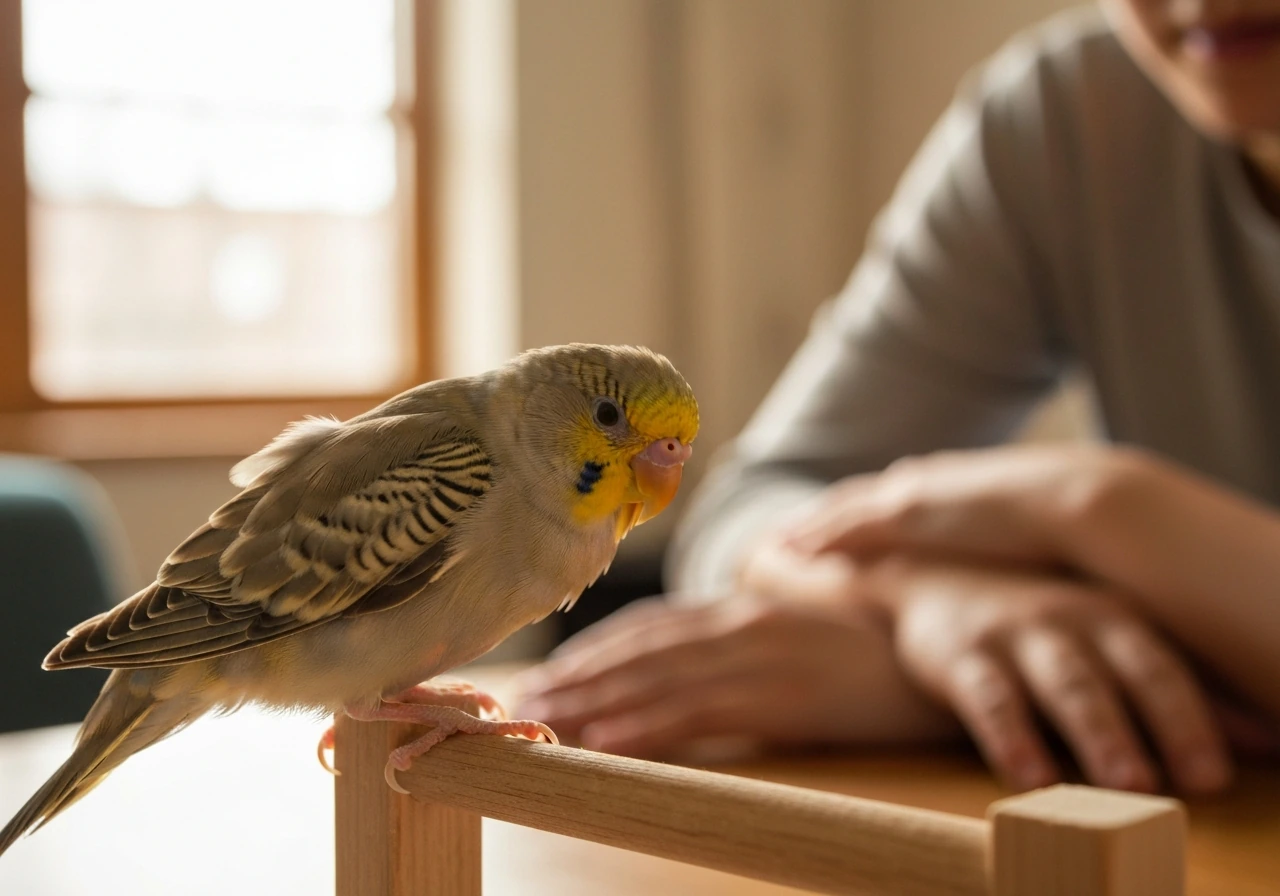
Most people picture bonding as a bird sitting on their shoulder or flying across the room to greet them. That's the end result, not the starting point. Real bonding shows up in smaller, behavioral signs first. A bird that's genuinely comfortable with you will show relaxed body language: feathers slightly fluffed just under the beak and around the head, one foot tucked up, slow eye blinking, quiet vocalizations, and calm interaction with objects in its space. It may stretch, preen itself near you, or simply stay still instead of retreating when you approach. These are the signals that tell you the relationship is actually building.
What bonding is not: a bird that tolerates handling because it has no choice. Avian behavior experts make a clear distinction between voluntary participation and forced compliance. A bird that steps up because it's been cornered, not because it chose to, isn't bonded with you yet. Forced compliance can actually slow bonding because the bird learns the interaction is something to endure, not something it wants. Your goal is to make every interaction something the bird actively chooses, and that requires understanding how to communicate with a bird on its own terms, not yours.
Realistic timeline: most pet birds that have had limited human contact start showing voluntary approach behavior within two to four weeks of consistent, low-pressure daily sessions. Birds that have been mishandled or are naturally more cautious can take two to three months. Wild birds may begin visiting a feeder reliably within a week or two but won't accept your presence at close range for much longer. Patience is not optional here.
Starting points by species
Not all pet birds bond the same way, and adjusting your approach for the species you have will save you a lot of frustration. Here's how to think about each of the most common ones.
Parrots and cockatoos
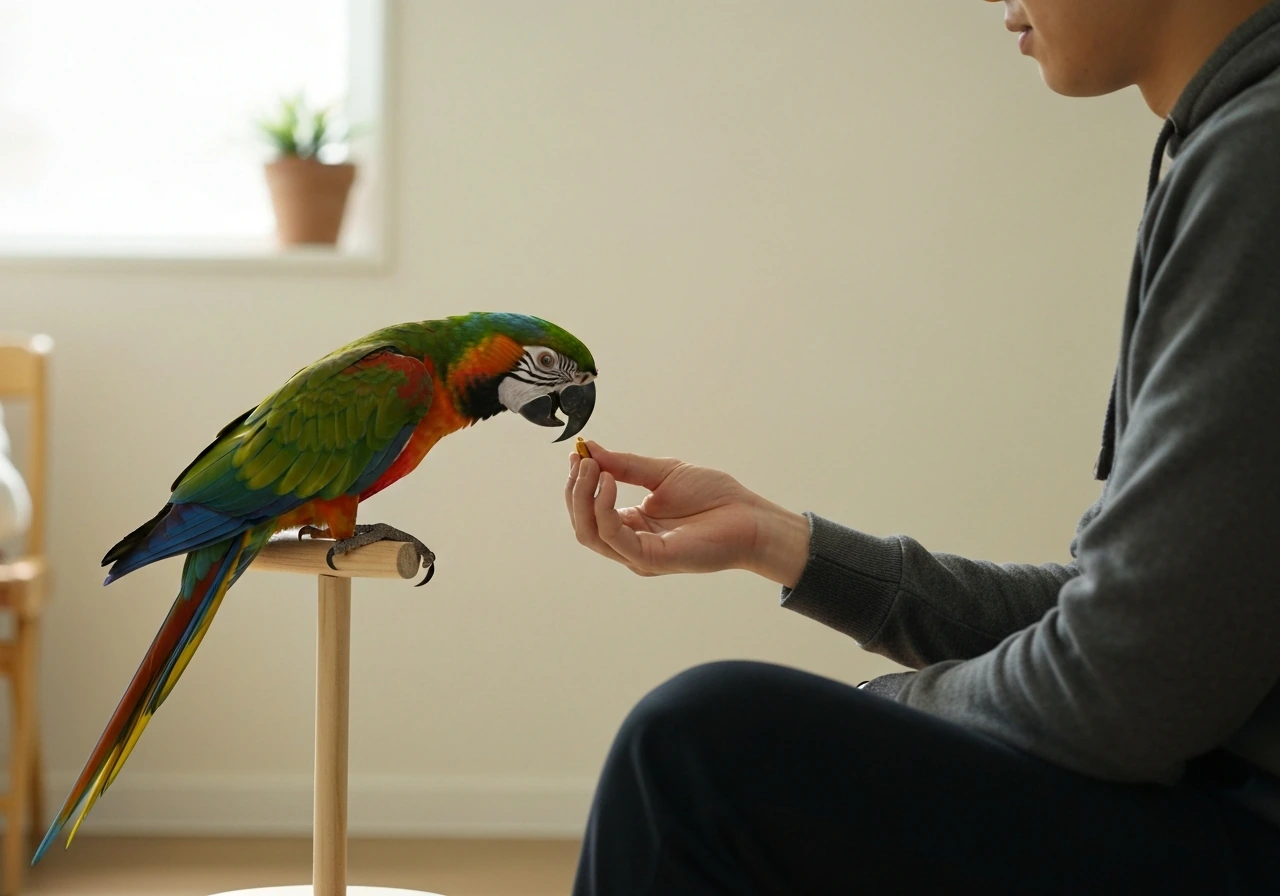
Larger parrots and cockatoos are highly social and often demand a lot of interaction once they're bonded. That's great news for building a relationship, but be aware that too much handling too soon can create hormonal behavior issues later. Start with short, positive sessions of around 15 minutes rather than marathon out-of-cage time. Sit at the bird's level, speak calmly, and offer high-value treats (small pieces of almond, walnut, or whatever the bird reliably goes for) without asking for anything in return at first. Let the bird come to the side of the cage closest to you on its own terms.
Cockatiels
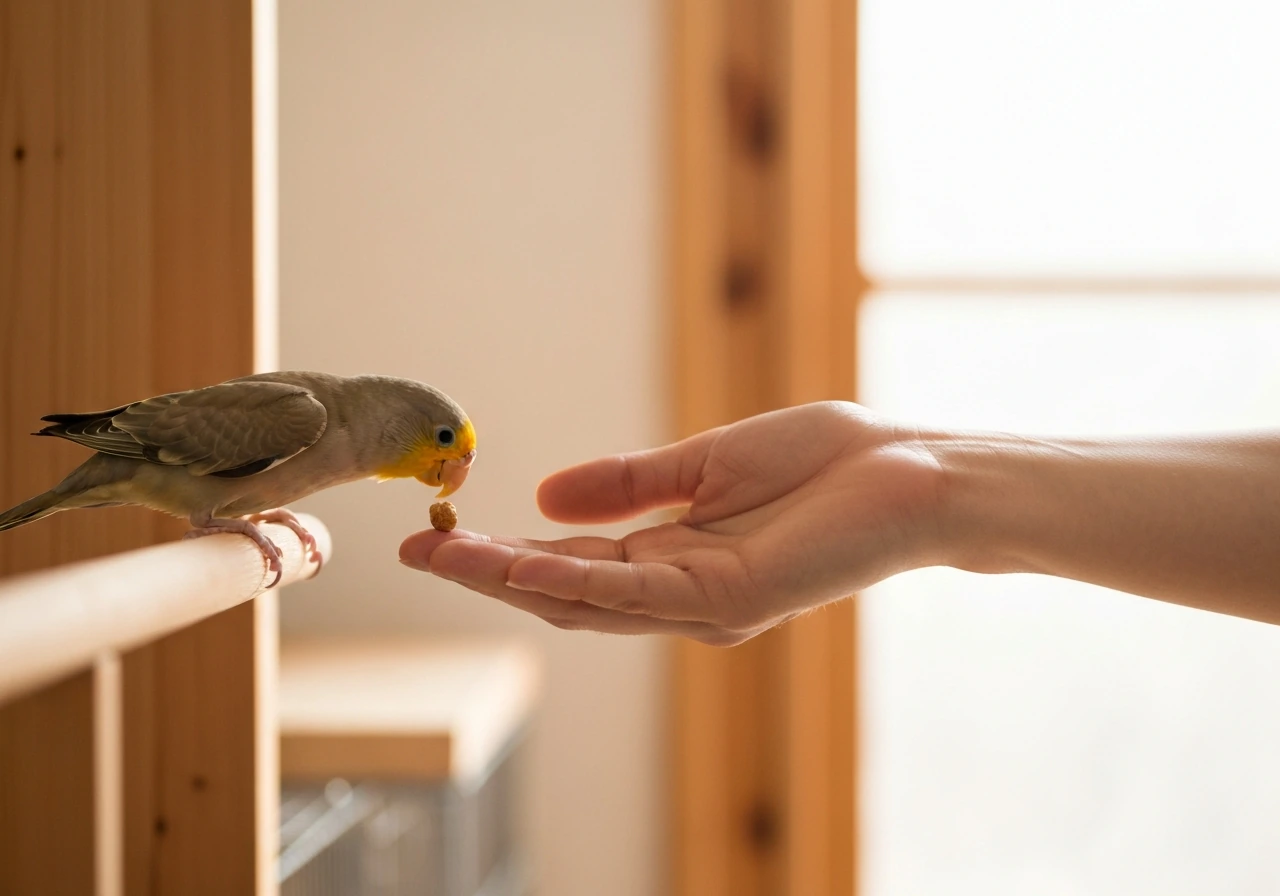
Cockatiels tend to warm up faster than larger parrots and respond very well to gentle whistling and soft speech. A hand placed flat and still near (not inside) the cage, with a millet spray or seed held loosely in the fingers, is an excellent first step. Move slowly, avoid direct eye contact at first (it can read as threatening), and give the bird time to approach the treat on its own. Most cockatiels begin eating from a held hand within one to three weeks of daily practice.
Budgies
Budgies are small, fast, and can be startled easily, but they're also naturally curious. The key with budgies is keeping your movements predictable. Move slowly, talk softly, and always approach from the front so the bird can see your hand coming. Millet is almost universally effective as a treat. Start by placing a small sprig on top of the cage so the bird associates your presence with something good, then gradually move to holding it through the bars, then inside the open cage. Budgies often start stepping onto a finger within two to three weeks when this progression is followed consistently.
Finches
Finches are wired differently from parrots and cockatiels. They're not typically hand-tamed birds, and most are happiest with their own kind rather than seeking human interaction. Bonding with finches looks less like handling and more like creating a calm, enriched environment where they feel safe enough to display their natural behaviors near you. Sit quietly near the cage for regular periods each day. Over time, finches habituate to your presence and will continue feeding, singing, and exploring even when you're close. That's a successful bond for this species.
Daily routines that actually build trust
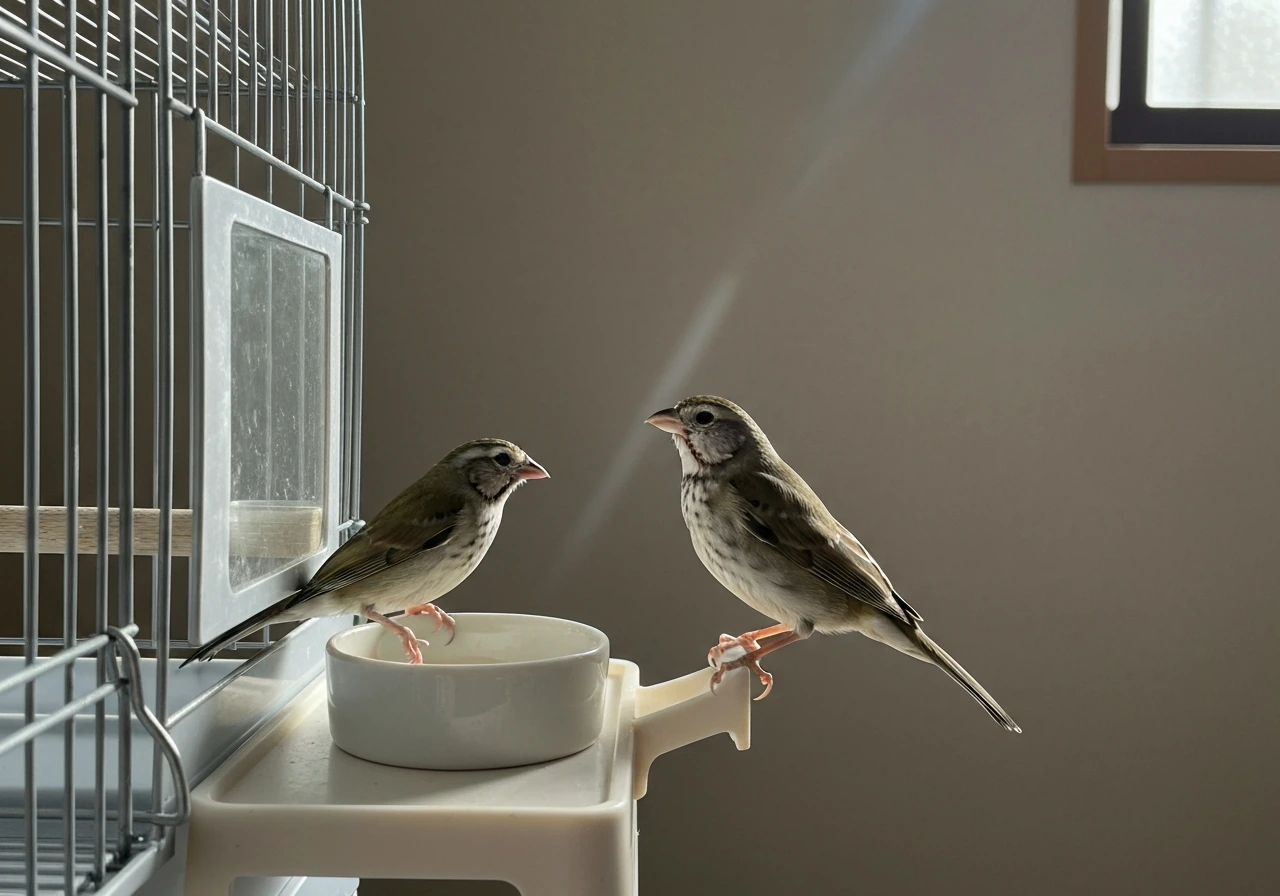
Consistency matters more than duration. A reliable ten-minute session every morning beats an hour on the weekend. Birds track patterns well, and when they learn that your presence reliably predicts something good, the wariness starts to drop. Here's a simple daily framework:
- Same time each day: approach at a consistent hour so the bird anticipates your arrival instead of being surprised by it.
- Announce yourself softly: speak or whistle gently as you approach, so the bird isn't startled by sudden movement.
- Bring a treat: offer something the bird genuinely values (not just the standard seed mix it already has access to) to create a positive association with your presence.
- Stay in view but don't crowd: sit or stand at a comfortable distance and let the bird observe you going about your normal routine near its space.
- End on a good note: stop before the bird shows any signs of stress or disinterest. Leaving while the bird is still relaxed or engaged means it ends the session in a positive state.
Once your bird is consistently calm and approaching the treat from your hand, you can start introducing simple verbal cues. Using a clear, consistent word or short phrase alongside a hand gesture helps the bird predict what's being asked. This is exactly the kind of incremental cue-building described in positive reinforcement training frameworks used by professional trainers. If you want to go deeper on this, check out the practical breakdown of how to talk to a bird in a way that actually registers with them.
Target training is one of the most useful tools you can add at this stage. You present a small stick or dowel near the bird, and any movement toward it gets immediately rewarded with a treat and a marker sound (a click, or a consistent short word like 'yes'). Over multiple sessions, the bird learns to touch the target deliberately, and from there you can use the target to guide the bird toward your hand, into a carrier, or onto a perch. It's an efficient way to build cooperative behavior without any physical pressure.
Approach, perching, and touch: handling without the drama
Handling a bird safely starts well before your hand is anywhere near it. The approach matters enormously. Coming in from above, too fast, or from behind triggers a fear response in almost every bird because those are predator-approach angles. Always move at the bird's eye level or slightly below, come from the front, and move at about half the speed you think you need to. If you want a reliable system for this, the article on how to approach a bird without scaring it walks through the exact positioning step by step.
For birds that are quick to bite or just nervous around hands, use a perch or dowel rather than your finger during early training sessions. Present it at the bird's lower chest, just above the feet, and wait. Many birds will step up onto a neutral object much sooner than they'll step onto a hand because the hand carries more perceived risk. Once the bird is stepping up onto the dowel willingly and without hesitation, you can transition to using your finger or hand, keeping the same presentation angle and speed.
Touch comes last, and it should be introduced gradually. Start by touching only the beak end of a treat the bird is eating from your hand (so your fingers are technically very close to the bird), then progress to a very brief touch on the beak, then the top of the head. Always watch for stress signals during this process: leaning away, crouching, flattening feathers against the body, wide eyes, open beak, or rapid breathing all mean you're moving too fast. Back up a step and give the bird more time before trying again.
Keep sessions short, around 15 minutes maximum. This is especially important early in the process. Birds that become overstimulated or stressed during sessions associate that feeling with you, not with the session ending. Stopping while the bird is still comfortable and willing keeps the relationship moving forward.
Bonding with wild birds in your yard
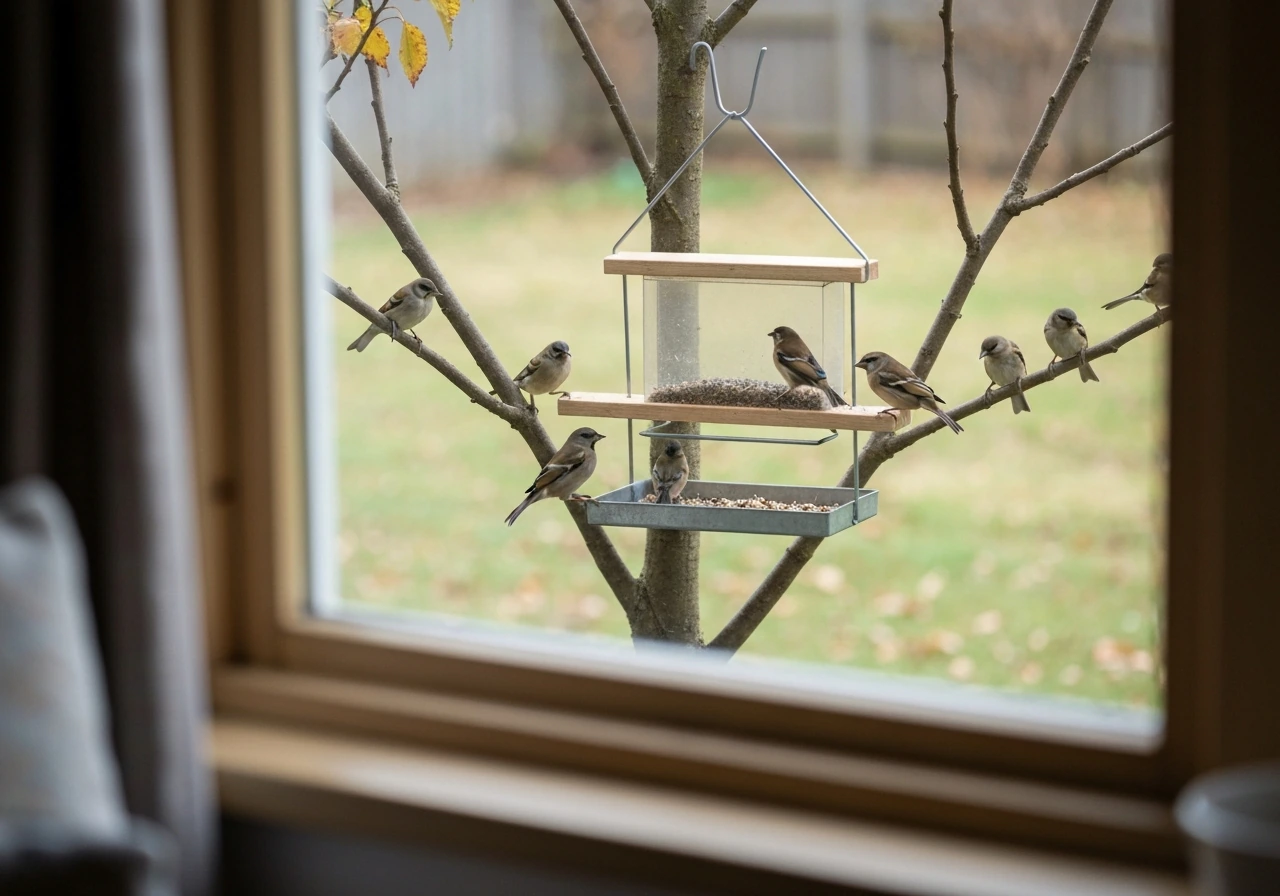
Wild bird bonding is a different kind of relationship. You're not taming wild birds or trying to get them to step onto your hand. You're building a pattern of trust where birds associate your yard and your presence with safety and food, and they show up voluntarily, behave naturally near you, and go about their lives without fear. That's genuinely rewarding and it's also the most ethical approach.
Start with feeders positioned where you can watch from inside. Once birds are visiting regularly, you can start spending quiet time outside near the feeders, seated and still. Move the feeder gradually closer to where you sit over several weeks. Most species will habituate to a calm, predictable human presence within a few weeks of this routine. If you want to go further, check out the guide to how to get close to a bird outdoors without disrupting its natural behavior.
Feeder hygiene is non-negotiable. The Virginia Department of Wildlife Resources also recommends specific feeder sanitation steps, like soaking feeders in a dilute bleach solution for 10 minutes and then thoroughly rinsing, with cleaning frequency adjusted to conditions such as warm weather blank" rel="noopener noreferrer">Feeder hygiene is non-negotiable. Shared feeding surfaces can spread salmonella, house finch eye disease, avian pox, and aspergillosis among wild birds, and some of these pathogens pose risks to humans too. blank" rel="noopener noreferrer">Clean feeders every one to two weeks with a diluted bleach solution, rinse thoroughly, and dry before refilling. Don't let seed accumulate on the ground beneath feeders. Don't try to pick up or treat sick or dead birds yourself.
Keep feeding in perspective. Supplementary food from backyard feeders should be a small portion of wild birds' diets, not their primary food source. If you go away for a week and the feeder is empty, that's fine. Wild birds have wide foraging ranges and won't starve. What you want to avoid is creating dependency or drawing birds into crowded, unsanitary conditions. The USDA and U.S. Fish & Wildlife Service both note that habituation and overcrowding at feeders increases disease transmission risk and can increase human-wildlife conflict, so more is not always better.
Also important: never attempt to hand-tame or physically handle wild birds outside of licensed wildlife rehabilitation contexts. In most countries, that's both illegal under wild bird protection laws and genuinely harmful to the bird's long-term welfare and survival. The goal is for wild birds to remain wild, just comfortable enough with your presence to behave naturally near you.
When things stall: fear, biting, and slow progress
Almost everyone hits a wall at some point, and it usually means one of a few things: the sessions are too long, the progression is moving too fast, or something is wrong physically. Biting, for example, is very often misread as aggression when it's actually a stress or fear response. A bird that bites suddenly and out of character should prompt a visit to an avian vet to rule out pain or illness before you do any more training. Birds are skilled at masking health problems, and subtle behavioral changes like decreased interaction or altered vocalization can be the first sign something is medically wrong.
If the bird bites and you back away or react strongly, you've just taught the bird that biting works. That's not a character flaw in the bird, it's a trained behavior. The fix is to avoid putting the bird in situations where it feels the need to bite, which means slowing down your progression and reading body language earlier. If you feel genuine apprehension around your bird, you might also find it useful to read about how to overcome bird phobia, because your own anxiety communicates to the bird and can make trust-building harder.
Here's a quick troubleshooting checklist for stalled progress:
- Bird retreats or flattens against the cage: slow down, reduce session length, and back up to just sitting near the cage without interacting directly.
- Bird bites consistently: assess whether you're moving past its comfort threshold, check for illness, and switch to a dowel perch instead of your finger.
- Bird won't take treats from hand: try a different treat, offer at a greater distance, and make sure your hand is still and palm-up rather than reaching toward the bird.
- No progress after four to six weeks: review your approach timing and body language signals; consider whether the bird's environment (noise, other pets, foot traffic) is too stressful for bonding to happen.
- Bird was progressing but suddenly regressed: rule out a health issue first, then check if anything in the bird's environment changed.
If you're struggling with the approach itself and can't seem to get the bird to stay calm when you get near, breaking down how to approach a bird into its smallest possible steps often resolves the issue. Most stalled bonding comes down to moving through the stages too quickly, not a fundamental incompatibility between you and the bird.
Pet bird vs. wild bird bonding: a quick comparison
| Factor | Pet Birds | Wild Birds |
|---|---|---|
| Goal | Voluntary handling, step-up, relaxed close contact | Comfortable presence near humans, natural behavior in yard |
| Primary tool | Treats, target training, consistent daily sessions | Feeders, patient outdoor presence, minimal disturbance |
| Timeline | 2 weeks to 3 months depending on history and species | 1 week for feeder visits; weeks to months for close presence |
| Handling | Yes, with progressive desensitization and safety precautions | No (illegal and harmful outside licensed rehabilitation) |
| Health considerations | Rule out illness if sudden behavior changes occur | Keep feeders clean, don't touch sick or dead birds |
| Ethical limits | Avoid forced compliance; all interaction should be voluntary | Avoid creating dependency; supplementary food only |
Your starter plan for today
You don't need to wait for a perfect setup. Here's what you can do right now to start building a bond with your bird, whether it's a pet bird in a cage or the sparrows and finches outside your window.
- Identify one high-value treat your bird responds to, or set up a feeder in a visible spot outside.
- Pick a consistent daily time, ideally morning when birds are most active, and commit to a 10 to 15 minute session.
- For pet birds: sit near the cage and simply be present, speak softly, and offer the treat at the cage door without asking the bird to do anything.
- For wild birds: observe from indoors first, then move to quiet outdoor seating near the feeder over the following week.
- Watch body language carefully and stop before the bird shows stress. Make every session end positively.
- After one to two weeks of consistent calm presence, introduce a simple next step: for pet birds, offer the treat through the open cage door; for wild yard birds, move your seating a foot or two closer.
- If anything unexpected happens (sudden biting, regression, signs of illness), slow down and consult an avian vet if needed before continuing.
The birds that bond most deeply with people are the ones whose people never rushed them. Slow is fast in this process. Every calm, voluntary interaction you create today builds the foundation for the relationship you're working toward.
FAQ
What should I do if my bird accepts treats but still won’t approach me or step up?
Treat acceptance is a good trust sign, but it doesn’t automatically mean your bird feels safe enough to approach. Slow the progression back to the last comfort level, keep sessions shorter (around 5 to 10 minutes), and stop moving your hand toward the bird. Instead, let the bird voluntarily move closer to the treat you place (through or just outside the bars) while you stay still at the bird’s eye level.
How can I tell the difference between a calm bond-building bird and a bored or overstimulated bird?
Bond-building calm usually comes with relaxed posture, steady breathing, slow blinking, and consistent interest in what you’re offering. Overstimulation shows up as restlessness, frequent head darting, repeated lunging or climbing away, sudden loud vocal spikes, or frantic preening. If you see those signs, end the session early and resume later with less time and fewer requests.
My bird is very friendly in the morning but gets defensive later, why?
Some birds are more irritable when their routine is disrupted, when they are hungry or underfed, or when they are fatigued. Try scheduling training at a consistent time, offer a small meal before sessions so the bird is not driven by hunger, and reduce intensity if the bird becomes sharp. Keep the environment stable, fewer noises and fewer new people near the cage.
Should I use millet or nuts as the only treats during bonding?
Use the bird’s favorite items, but don’t rely on one food forever because it can upset diet balance. Rotate to other safe high-value treats once approach is consistent, and keep treat portions small. Also avoid treats that trigger aggression or frantic behavior, if your bird becomes too excited, switch to smaller pieces and shorten the session.
How do I introduce a new person to my bird without losing progress?
Progress is tied to predictable, low-pressure experiences, so involve the new person gradually. Have the person sit at a distance first, remain quiet, and offer treats only if the bird is already calm and approaching for you. Avoid eye contact and sudden movement, and never ask the bird to step up for the first meeting. If the bird retreats, the new person should pause and let you handle the next interaction.
My bird gets quiet and still when I approach, is that a good sign?
It can be. Stillness can mean comfort, especially if paired with relaxed feathers, tucked foot, and slow blinking. But stillness can also be fear freezing. Watch for accompanying cues: a fearful bird often has wide eyes, crouching, or a sudden startle response. If the bird doesn’t relax over multiple sessions, treat it as fear and slow down further.
Is eye contact always threatening to birds?
Not always, but direct, sustained eye contact often reads as a challenge or predator-like focus for many birds, especially early on. Use intermittent glances instead, keep your head slightly turned or lowered, and rely on your body language and treat placement to communicate safety. If your bird leans in and softens with slow blinking, you can gradually gauge whether brief eye contact is acceptable.
How do I stop accidental setbacks, like the bird biting when I try to pick them up?
Plan pickups and handling for times when the bird is already calm, and avoid going faster than the bird can tolerate. Use a perch or dowel transition so the bird steps onto equipment willingly, then guide rather than grab. If biting happens, you likely advanced a step too soon or changed approach speed or angle, scale back to the previous successful step and re-establish voluntary participation.
What should I do if my bird panics when the cage door opens?
A cage door opening is a major cue, and if it’s linked to handling, the bird may anticipate pressure. Start by opening the door only a small amount for a brief time while you stay still, then close it without asking anything. Pair openings with something positive like a treat offered near the opening. Over time, you can lengthen how long the door stays open while monitoring stress cues.
Can I bond with a wild bird if it won’t come close enough for direct feeding?
Yes. The bond you’re aiming for is habituation, birds associating your presence with safety and food. Focus on consistent timing, a stable feeder location you can observe from, and gradual proximity over weeks. If close feeding is not happening, don’t push it, keep the feeding routine steady and let the bird choose to approach more over time.
How close should I sit to a wild feeder before it becomes disruptive?
Start at a distance where birds keep feeding normally when you’re present. If they suddenly scatter, stop calling, or avoid the feeder after you appear, you’re too close or moving too fast. Gradually reduce distance only when they continue natural behaviors consistently for several days, and avoid looming above the birds.
What’s the safest way to deal with biting or scratching risk during bonding?
Treat your hands as tools only after your bird is stepping voluntarily. Early on, use a neutral perch or dowel and work on target touching before finger handling. Wear long sleeves if needed, keep your posture stable, and never punish biting. The goal is to prevent situations where the bird feels cornered, then reward calm choice instead.
When should I get an avian vet involved during bonding problems?
If biting is sudden and out of character, if your bird’s vocalization or appetite changes, if droppings look abnormal, or if the bird seems to avoid movement, it’s time to rule out pain or illness. Birds can mask illness, so don’t assume behavior is purely fear. A physical cause must be excluded before you intensify training.
How do I know my bird is ready for target training and verbal cues?
Target training is a good next step when your bird is consistently calm around your presence and can reliably take treats without frantic retreat. Verbal cues should be introduced only after the bird predicts that the cue means “something good happens,” so pair the word with a treat every time at first. If the bird ignores the cue or reacts with stress, increase consistency and reduce the distance or the difficulty of the request.
Next Articles
How to Communicate With a Bird: Step-by-Step Guide
Step-by-step bird communication routine using vocalizations, body language, trust building, and species tips for pets an
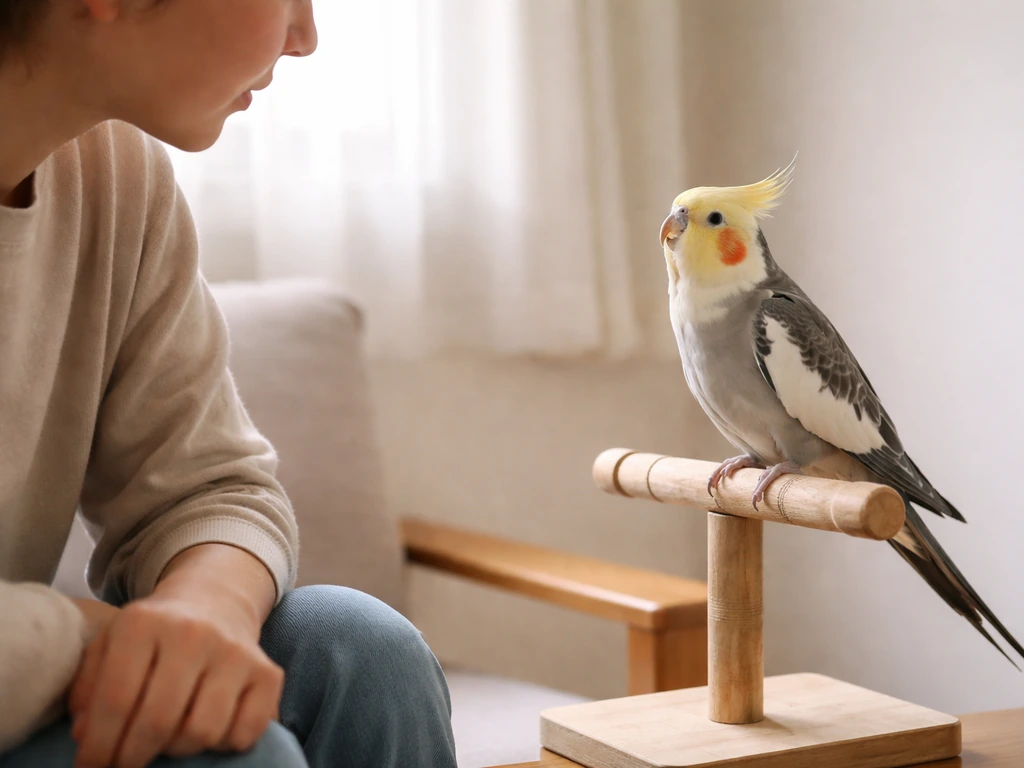
How to Talk to a Bird: Humane Step-by-Step Guide
Humane, step-by-step tips to communicate with pet and wild birds using body language, timing, and safe sound mimicry.
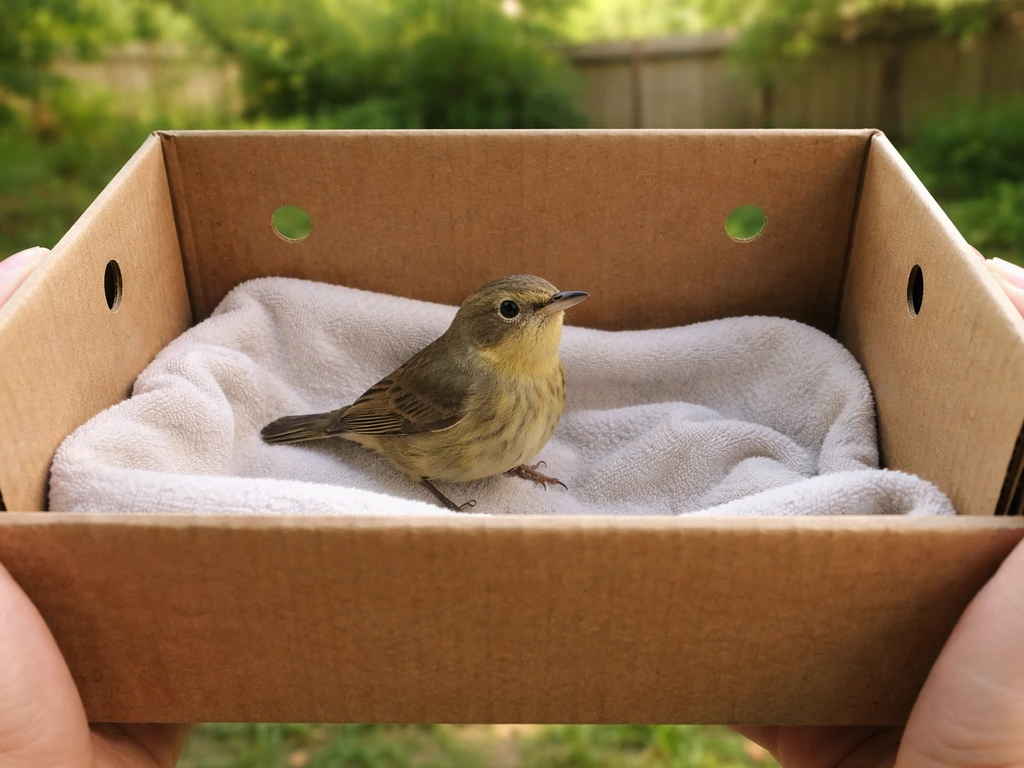
How to Catch a Bird Without Killing It: Humane Steps
Humane, trap-free steps to catch a wild backyard bird safely, minimize stress, contain it calmly, then release or reloca