Getting close to a bird, whether it's a pet parrot or a wild chickadee at your feeder, comes down to one thing: making the bird feel safe enough to choose you. That means slow movements, no direct staring, predictable routines, and letting the bird set the pace. Force it, rush it, or ignore its warning signals, and you'll undo weeks of progress in seconds. Go at the bird's speed and most species will meet you halfway.
How to Get Close to a Bird Safely and Humanely
Clara Hayes
7 May 2026
First, figure out what kind of 'close' you're actually after
The word 'close' means something very different depending on your situation. A pet budgie owner wants a bird that steps onto their hand without a fuss. A backyard birder might just want a song sparrow to keep eating seeds while they sit three feet away. A new parrot owner may be somewhere in between, hoping for calm, mutual trust. Before you pick a technique, be honest about your goal, because the right approach for each one looks quite different.
- Pet bird closeness: tolerating your hand near the cage, stepping up voluntarily, staying calm during handling
- Wild bird closeness: not flushing when you approach, continuing to feed or bathe while you watch from a short distance
- Species-specific closeness: what 'close' looks like varies by species (a finch will rarely step up, while a hand-raised cockatiel may want to sit on your shoulder all day)
Once you know your goal, you can pick the right tools. The rest of this guide is built around all three scenarios, so skip to the section that matches your situation or read through for the full picture.
Safety and humane limits before you take a single step closer
Every approach starts with safety, for both you and the bird. A stressed bird can bite hard enough to break skin, thrash against cage bars and injure itself, or go into a fear spiral that takes days to recover from. None of that is worth rushing through a training step. A few non-negotiables before you start:
- No fast movements. Slow everything down, including how you reach into a cage, turn your head, or stand up from a chair nearby.
- Avoid direct, sustained eye contact. Many birds read a hard stare as a predator look. A gentle sideways glance is far less threatening.
- Lower your body. Crouching or sitting on the floor puts you at less of a looming, predator height.
- No loud sounds. A sudden laugh, sneeze, or clatter of keys can set back a shy bird by days.
- Read the warning signals before you get any closer. Lunging, open beak, leaning away, cowering, hissing, panting, raised head feathers, or wings held away from the body all mean stop and give space.
- Never use punishment or force. Forcing a bird to step up when it's showing fear signals does not teach it that hands are safe. It teaches it that it cannot escape, which makes the next interaction harder.
- Stop the session when the bird is distressed. End on a calm moment, even if that means a very short session.
blank" rel="noopener noreferrer">Eye pinning (rapid dilation and constriction of the pupils) is a signal worth learning to read quickly. Combined with a flared tail and an open beak, it usually means a bite is coming. On its own, it can just mean excitement, so always read it in context with the rest of the bird's body. If you're also interested in understanding deeper communication signals, the topic of how to read bird body language and how to communicate with a bird pairs naturally with everything in this guide. If you want a deeper, more conversational approach, review how to communicate with a bird using body language, calm timing, and consistent cues.
Building trust step by step: the low-stress approach that actually works
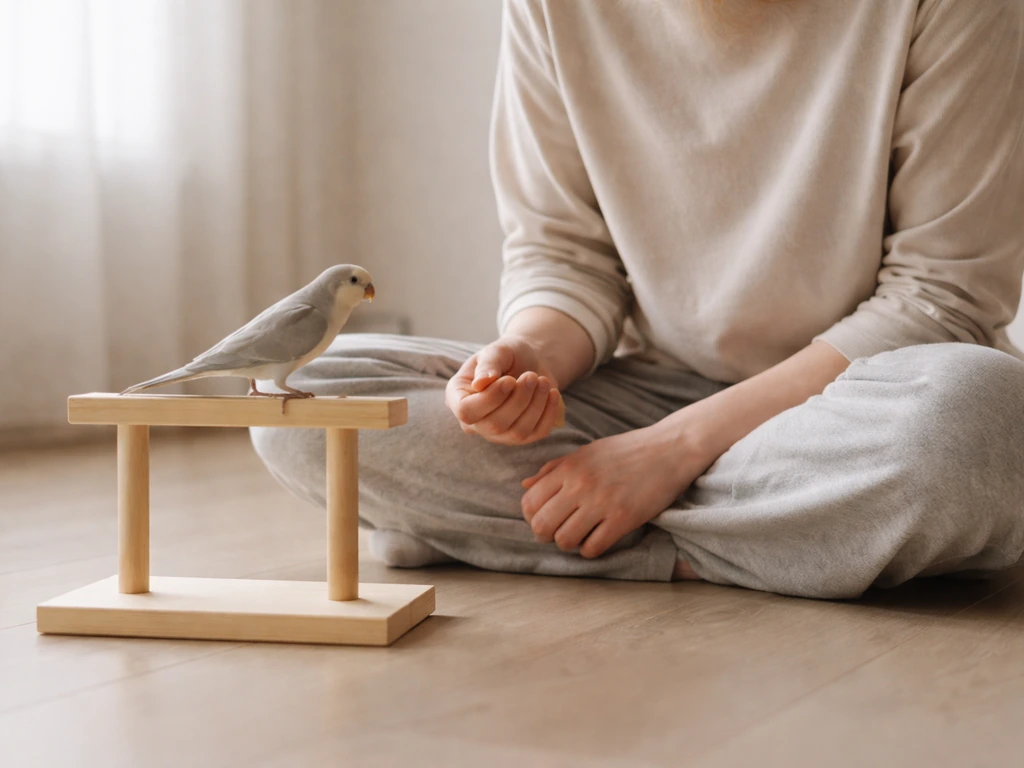
Trust with a bird is built in small, consistent steps, not big dramatic moments. The framework below works for most pet species. The key rule throughout: if the bird refuses or shows distress, go back one step rather than pushing forward. Consent-based progression is the whole game. If you want a deeper framework beyond step-by-step trust, learn how to communicate with a bird using body-language cues.
- Step 1: Be a predictable, calm presence. Sit or stand near the cage daily at a distance that doesn't alarm the bird. Talk softly. Do not reach in. Just exist nearby. Do this for several days or even a week before trying anything else.
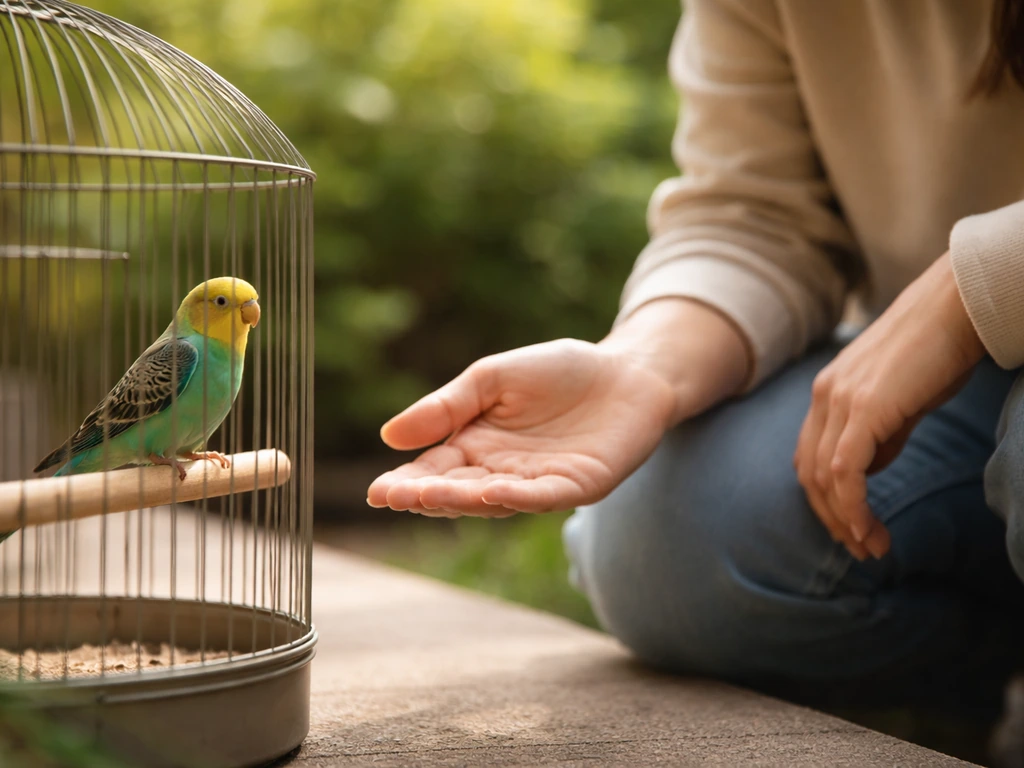
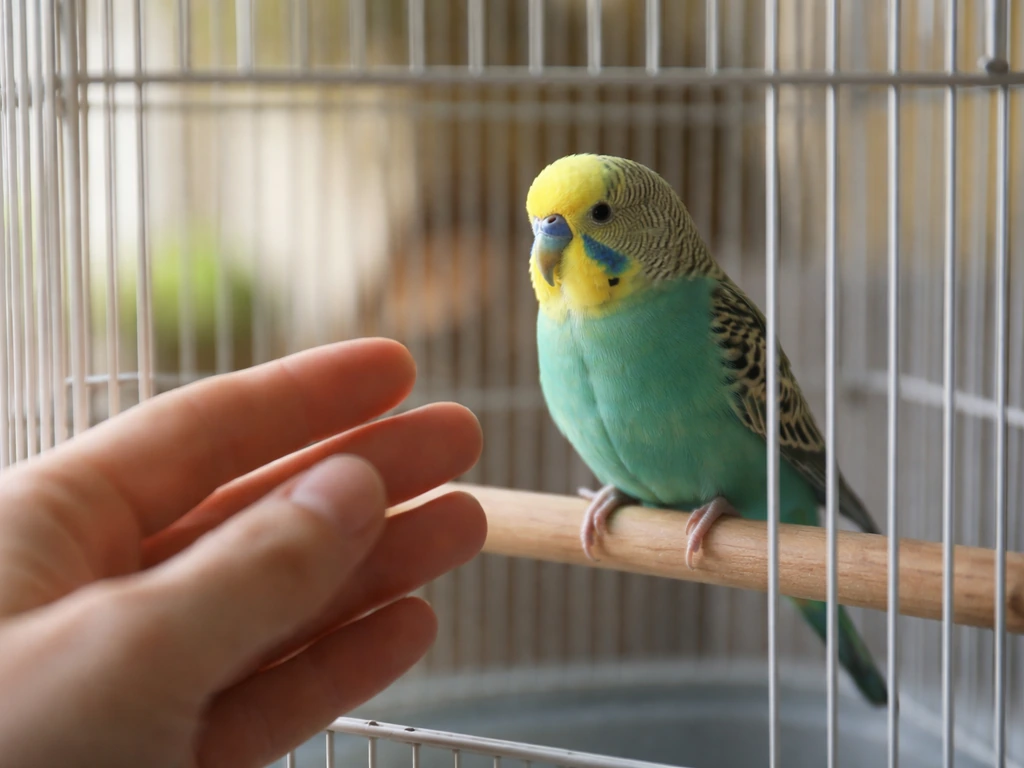
- Step 2: Introduce your hand near the cage exterior. Rest your hand or fingers on the outside of the cage bars, motionless. Let the bird investigate at its own pace. Do this repeatedly across multiple sessions until the bird is comfortable.
- Step 3: Move your hand inside the cage, resting still near the bottom. Do not reach toward the bird. Let it choose to move closer or ignore you entirely. Offer a small treat (millet, a piece of fruit, or whatever the bird loves) on your palm if it approaches.
- Step 4: Offer the treat from your fingers, held still at the bird's level. Do not push the treat toward it. Wait for the bird to lean in.
- Step 5: Work toward the step-up. With your finger or a dowel perch held low against the bird's lower chest, just above its feet, gently encourage it to step onto your hand. If it does, reward immediately with a treat and quiet praise. If it leans away or opens its beak, stop and try again the next session.
- Step 6: Repeat step-up in and then outside the cage, always at the bird's pace. Gradually extend handling time as the bird stays calm.
Routine matters as much as technique. Birds are creatures of habit. If you approach at the same time each day, in the same calm way, they start to anticipate you as a safe, predictable part of their world rather than an unpredictable threat. That predictability is what builds genuine trust over time, and it's closely related to the broader process of bonding with a bird, which goes well beyond just physical closeness. If you're wondering how to bond with a bird, start by making every interaction predictable, safe, and low-pressure.
Species-specific techniques for pet birds
Different pet species have very different baseline temperaments, social wiring, and comfort zones. What works perfectly for a hand-raised cockatiel will frustrate a skittish finch. Here's how to adjust your approach by species.
Parrots (African Greys, Amazon parrots, conures, eclectus, macaws)
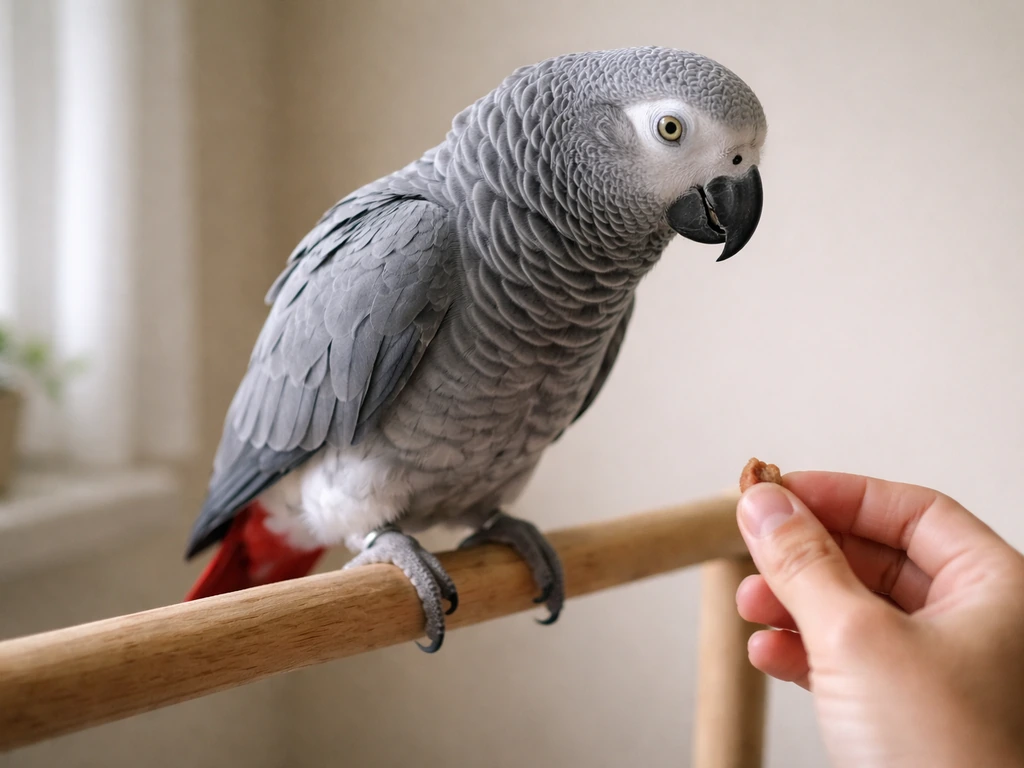
Parrots are highly intelligent and respond extremely well to positive reinforcement, but they are also sensitive to emotional cues and will mirror your anxiety or impatience. The World Parrot Trust consistently emphasizes voluntary step-up training using rewards, never forcing the behavior. Always give your parrot a choice: if it turns away from your offered hand, that's a 'no' for now, and you back off.
Parrots that are forced into step-up may comply short-term but often develop biting habits as their only remaining tool for saying no. Use a dowel or hand-held perch if the bird is nippy, and transition to a bare hand once trust is established. Speak softly, avoid looming over the bird, and keep early sessions to two or three minutes.
Cockatiels
Cockatiels are generally more forgiving than larger parrots and can become comfortable with handling relatively quickly, especially if hand-raised. They often respond well to gentle whistling or soft spoken sounds as you approach. Crest position is your main body-language guide: a flat, slicked-back crest usually signals fear or aggression, while a relaxed or slightly raised crest indicates comfort. Approach at eye level, offer millet on your hand, and work toward step-up using the same gradual steps as above. Most tame cockatiels will step up within a few sessions once they trust your hand.
Budgies (budgerigars / parakeets)
Budgies can be timid at first but tame down beautifully with daily, patient handling. Millet spray is a near-universal motivator. Hold the millet close to your body so the bird has to be near you to eat it, and gradually shorten the distance over multiple sessions. Because budgies are small and easily overwhelmed, keep your hand very still, use just one or two fingers initially rather than a full open palm, and avoid hovering above them (which mimics a raptor's shadow). Solo birds typically tame faster than birds kept in pairs, since a companion reduces their motivation to interact with you.
Finches (zebra finches, society finches, Gouldian finches)
Finches are fundamentally different from the parrot family: they are not social with humans in the same way and are generally not candidates for step-up or hands-on handling. Forcing handling with finches causes significant stress and is not recommended. 'Close' for a finch means tolerating your presence near the cage without panic-flying into the bars, eating calmly when you're in the room, and possibly taking millet from between your fingers if they're very comfortable. Achieve this by sitting near them daily, moving slowly, and letting them set the pace entirely. That's the realistic ceiling for most finch species, and it's enough to enjoy a meaningful connection with them.
| Species | Realistic closeness goal | Best motivator | Key caution |
|---|---|---|---|
| Large parrots | Voluntary step-up, shoulder time, extended handling | Preferred treat (nut, fruit, seed) | Never force step-up; respect 'no' |
| Cockatiels | Step-up, hand perching, gentle petting | Millet, soft whistling | Watch crest for fear signals |
| Budgies | Step-up on one or two fingers, millet feeding from hand | Millet spray | Solo birds tame faster; avoid looming |
| Finches | Calm presence near cage, possible hand millet feeding | Millet | Do not attempt handling; stress risk is high |
Getting closer to wild yard birds
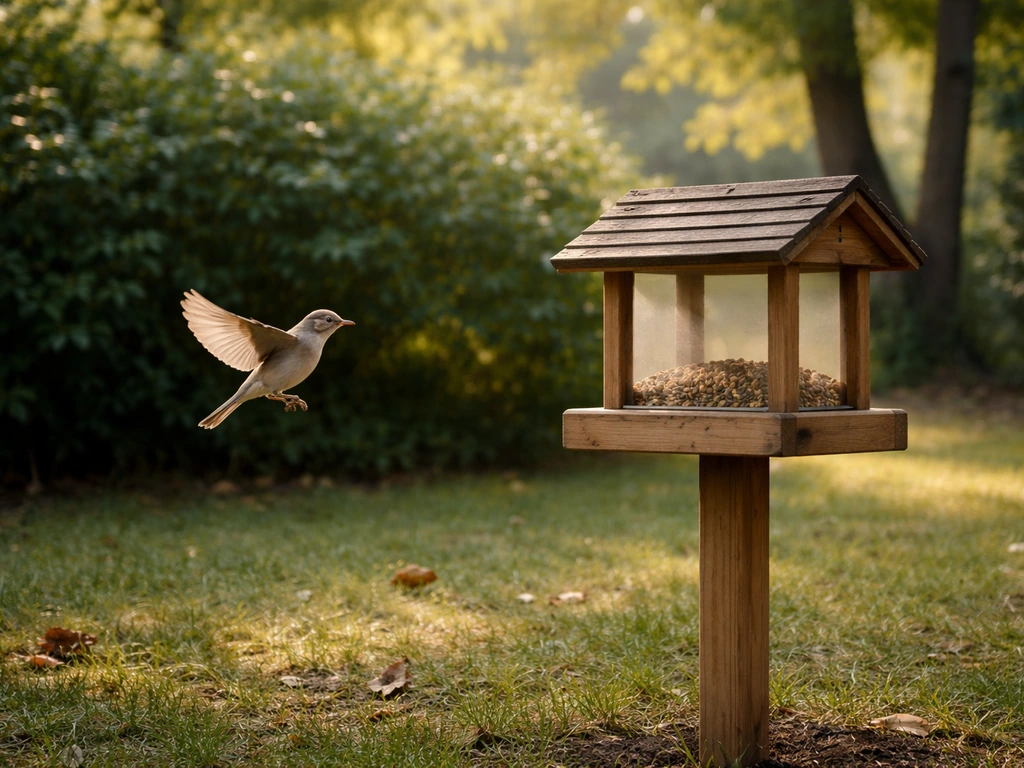
With wild birds, you're not training them in any structured sense. You're making your yard and your presence feel safe enough that they choose to stay close. The goal is usually observation at comfortable proximity, not physical contact, and the most effective tools are consistency, good habitat, and minimal disturbance.
Set up the right environment first
Place feeders in spots that give birds a clear sightline and an easy escape route to nearby shrubs or trees. Birds won't relax at a feeder in the middle of an exposed open lawn with no cover nearby. A birdbath with fresh, clean water is often even more attractive than food, especially during warmer months. Native plants that produce berries or seeds are another excellent draw that doesn't carry the disease-concentration risks that come with busy feeders. Keep feeders clean, because crowded, dirty feeders spread disease quickly, and sick birds won't linger.
Approach with slow, contained movements
When you want to observe wild birds up close, sit down rather than standing. Move in slow, smooth arcs rather than direct straight lines toward the bird. Keep sounds minimal. If you're using binoculars or a camera, introduce that equipment gradually, since a sudden lens pointed at a bird can read as a predator eye. Some birders find that sitting in the same spot at the same time each day causes local birds to habituate to them within a week or two, allowing surprisingly close observation. Start at a comfortable distance for the bird (usually ten to fifteen feet for common yard species) and let them close the gap if they choose.
Timing matters
Early morning is when most songbirds are most active and most focused on feeding, making them slightly more tolerant of a calm nearby presence than at other times of day. Avoid approaching birds during nesting season if they're showing territorial behavior. And never use recorded bird calls or birdsong apps to lure birds closer, as this is widely considered unethical by birding organizations like Mass Audubon because it causes unnecessary stress and can disrupt breeding behavior. Audubon also warns that overusing bird-call apps or playback can repeatedly excite birds and lead to stress and back-and-forth flight never use recorded bird calls or birdsong apps to lure birds closer.
When the bird won't come close: troubleshooting setbacks
Every bird trainer and backyard birder hits a wall at some point. A bird that was progressing suddenly seems more skittish, or one that tolerated your hand last week now won't let you near the cage. This is normal, and it doesn't mean you've failed. Here's a quick checklist for diagnosing what's happening:
- Did something change in the environment? New furniture, a new pet, a moved cage, a different feeding schedule, or even a different perfume can reset a bird's comfort level.
- Are sessions too long? Birds, especially parrots, can hit a satiation or fatigue point. Two to five minutes is often enough for early sessions.
- Are you moving too fast through the steps? If the bird is showing any warning signals (leaning away, open beak, raised feathers), you've moved ahead before trust was solid. Go back one step.
- Is the bird unwell? Sudden changes in a bird's willingness to interact, especially combined with fluffed feathers, lethargy, or changes in droppings, can signal illness. A vet check is appropriate before continuing training.
- Are you making direct eye contact? Even experienced bird owners forget this. Try looking slightly to the side of the bird rather than directly at it.
- Is the treat actually motivating? Some birds go off certain foods. Try a different treat and see if that changes engagement.
- For wild birds: is the feeder or bath clean? A dirty water source or moldy seed will drive birds away fast.
- For wild birds: is there a new predator in the area? A neighborhood cat, a hawk, or even a new outdoor decoration shaped like a predator can cause birds to avoid your yard entirely for weeks.
If a pet bird's fear or aggression seems deeply rooted and doesn't respond to patient, consistent positive reinforcement over several weeks, systematic desensitization with a qualified avian behaviorist is your best next step. This involves very gradually pairing the feared stimulus (your hand, for example) with positive experiences at a distance where the bird is not stressed, then slowly closing the gap over many sessions. It takes longer but produces lasting results without damaging trust. If you're specifically trying to overcome bird phobia, focus on slow, controlled exposure and comfort-first training rather than pushing your fear faster than your progress.
Realistic timelines: what 'close' looks like at each stage
One of the most common mistakes people make is expecting too much too soon, or worse, assuming that slow progress means something is wrong. Here's a realistic picture of what to expect at different stages, keeping in mind that individual birds vary enormously.
| Stage | What it looks like | Approximate timeline |
|---|---|---|
| Stage 1: Tolerating your presence | Bird doesn't flee or panic when you enter the room or approach the cage | Days to 2 weeks, depending on the bird's history |
| Stage 2: Calm near your hand | Bird stays on its perch when your hand rests on or just inside the cage; may investigate with curiosity | 1 to 4 weeks of daily sessions |
| Stage 3: Eating from your hand | Bird approaches and takes food from your fingers inside the cage | 2 to 6 weeks, sometimes faster for food-motivated birds |
| Stage 4: Voluntary step-up | Bird steps onto your hand or finger on cue without hesitation or signs of stress | 4 to 12 weeks for most pet parrots and cockatiels; longer for rescue birds with trauma history |
| Stage 5: Extended handling and trust | Bird seeks out your company, perches contentedly, may explore from your hand or shoulder | Ongoing; deepens over months and years |
| Wild birds: habituation to your presence | Birds continue feeding or bathing within 10 feet while you sit nearby | 1 to 4 weeks of consistent, calm presence at the same time daily |
Rescue birds, birds with a history of force or punishment, and older wild-caught birds will generally take longer at every stage. That's not a failure. It's just more ground to cover. Some very hypervigilant individual birds, both pet and wild, may never reach the later stages, and that's a reality worth accepting with grace rather than frustration. Approaching a bird without scaring it is as much about reading and accepting the animal's limits as it is about technique.
Legal and ethical lines you need to know
In the United States, the Migratory Bird Treaty Act (MBTA) makes it illegal to capture, handle, possess, harm, or kill most wild migratory bird species without a federal permit. This covers the vast majority of songbirds, waterfowl, and raptors you'll encounter in a typical backyard. 'Getting close' to a wild bird for observation is perfectly legal. Touching, capturing, or keeping one is not, unless you hold a specific federal or state wildlife permit.
If you find an injured or grounded wild bird, your instinct to help is a good one, but the right move is to contact a licensed wildlife rehabilitator rather than attempting to handle or care for the bird yourself. Handling a stressed wild bird incorrectly can cause serious injury to the bird (and you), and keeping it without a permit is a federal violation regardless of your intent. Your state wildlife agency or the National Wildlife Rehabilitators Association can connect you with a licensed rehabilitator near you.
On the ethical side, even when something is legal, ask whether it's in the bird's best interest. Deliberately luring wild birds into hand-feeding contact that they haven't chosen on their own terms, using food baiting to draw them into handling range, or repeatedly approaching a nesting bird for photographs all cause real stress even if they don't cause obvious physical harm. The guiding principle from virtually every reputable birding organization is the same: minimize disturbance, let the bird dictate the distance, and back off when you see any sign of stress.
For pet birds, ethical handling means the same thing it always has: consent-based interaction, positive reinforcement over force, and veterinary care when something seems off. If a bird's fear or aggression is severe and isn't responding to consistent, humane effort over several months, a consultation with a certified avian behavior consultant or an avian veterinarian is worth every bit of the investment. These professionals can rule out medical causes, identify what's driving the behavior, and build a plan that actually works for that specific bird.
FAQ
Can I speed things up by repeatedly trying the same “step up” moment until it works?
Yes, but only to the point where the bird is relaxed. If you see flaring tail, repeated eye pinning with other tension signals (open beak, body leaning away), or frequent cage bar hitting, pause and reduce the distance. For pet birds, aim for “comfortable proximity,” not instant contact, and end sessions while the bird is still calm (before it shows stress).
Is it okay to hold my hand closer and closer quickly if the bird seems interested?
Not safely. Many people make birds associate their hands with being grabbed. Instead, offer the hand or perch like a stationary landmark, keep it in the same spot each time, and use short sessions. If the bird steps toward the reward, gradually shift your hand closer over days, not minutes.
What’s the best way to approach a bird’s space without looking threatening?
Start with your approach angle. For most birds, coming from the side and staying slightly below eye level is less intimidating than looming from straight ahead. Also avoid direct, fixed staring and keep your shoulders loose. If the bird flinches or freezes, your angle is probably too threatening, so reset to a farther distance and try again slower.
What should I do if the bird refuses my hand (or seems afraid) mid-session?
If the bird is showing fear, remove the trigger rather than “making it work.” Back up one step, stop offering the target, and return to a level where the bird can eat calmly or engage with a favored routine. Consistent retreat teaches the bird that refusing gets relief, which increases trust long term.
How do I handle it if my parrot or other pet bird starts biting when I get close?
For pet birds that bite, don’t punish the behavior and don’t keep forcing proximity. Use a perch or dowel as the initial target, reward any calm choice (looking, stepping closer, staying still), and consider a vet check if biting suddenly changes. If progress stalls, consult an avian behavior professional for a structured desensitization plan.
If I can’t get a finch to take food from my fingers, what does “getting close” look like realistically?
Yes, but choose the right “close” activity. For finches, focus on tolerating your presence, eating when you are nearby, and calm feeding from between fingers only if the bird clearly stays unpanicked. For parrots and budgies, the closest safe step is often a voluntary step-up onto a perch first, then later onto a bare hand.
Is it okay to use food to get wild birds to approach my hand?
In most cases, hand-feeding is the wrong goal early on for wild birds and often for timid pets too. With wild birds, the closer you try to get to contact, the more you risk stress and habituation patterns that can make them less wary of dangers. Instead, prioritize habitat, clean water, consistent feeder placement, and observation at a distance they willingly choose.
How should I introduce a camera or binoculars if I want to get closer to wild birds?
Equipment can help, but it can also scare. For cameras and binoculars, increase exposure gradually, keep lenses low at first, and avoid sudden pointing or loud shutter sounds. If the bird reacts with rapid escape behavior or frantic movement, you introduced the equipment too quickly or too close.
Why does the bird suddenly get skittish on some days even though we were progressing before?
Yes, and it’s often a mismatch in timing. If a bird is nesting, feeding chicks, or actively defending a territory, any attempt to approach can backfire. For backyard birds, try calmer times (early morning as a starting point), and if you notice repeated alarm calls, flight from the feeder, or tail/wing tension, back off for the day.
How long should my training or “getting close” sessions be for pet birds?
For pet training, avoid sessions that are too long, because birds can “stress through” and then associate you with overwhelm. Keep early sessions brief (minutes, not long blocks), watch for the first stress signs, and stop early. Also keep your environment consistent (same room, same cue, same perch position) so the bird learns predictability, not novelty.