Approaching a bird successfully comes down to one thing: making the bird feel like nothing threatening is happening. Whether you're working with a new pet cockatiel, trying to earn the trust of a backyard crow, or dealing with an injured wild bird in your yard, the core principle is the same. Move slowly, read the bird's signals, and let the bird set the pace. Get that right, and everything else follows.
How to Approach a Bird Safely: Trust Steps and Tips
Clara Hayes
13 Apr 2026
Before you approach: safety, legality, and knowing what you're dealing with
Before you take a single step toward any bird, ask yourself three questions: Is this bird safe for me to approach? Is it legal? And do I actually understand what species I'm dealing with? These aren't bureaucratic boxes to tick. They change your entire strategy.
For pet birds, the safety check is mostly about you. Even a small cockatiel can draw blood if it's frightened. Larger parrots like macaws and African greys can cause serious injuries. Check that the room is escape-proof, ceiling fans are off, open water containers are covered, and any other pets are out of the space before you start.
For wild birds, the legal picture matters a lot. In the United States, almost all wild birds are protected under the Migratory Bird Treaty Act. That means you cannot legally take a wild bird home to care for it, keep it as a pet, or attempt to trap it without proper permits. If you find an injured bird, the right move is to contact a licensed wildlife rehabilitator [before touching or moving the animal](https://www.
cdc. gov/healthy-pets/about/wildlife. html). The U.
S. Fish and Wildlife Service is clear on this: attempting capture without professional guidance increases the bird's stress and can make injuries worse. Your state's wildlife agency (like Virginia DWR or Indiana DNR) echoes the same advice: do not chase an injured bird, and do not assume a bird sitting quietly on the ground is abandoned or needs your intervention. Most animals that look abandoned simply don't need help.
Once you've confirmed it's appropriate to approach, identify the species. A frightened house finch and a frightened cockatoo show similar stress signals, but they need very different response distances and techniques. Knowing the species also tells you whether the bird is naturally skittish (finches, doves) or more curious and social (corvids, parrots).
Set up the environment before you even walk in
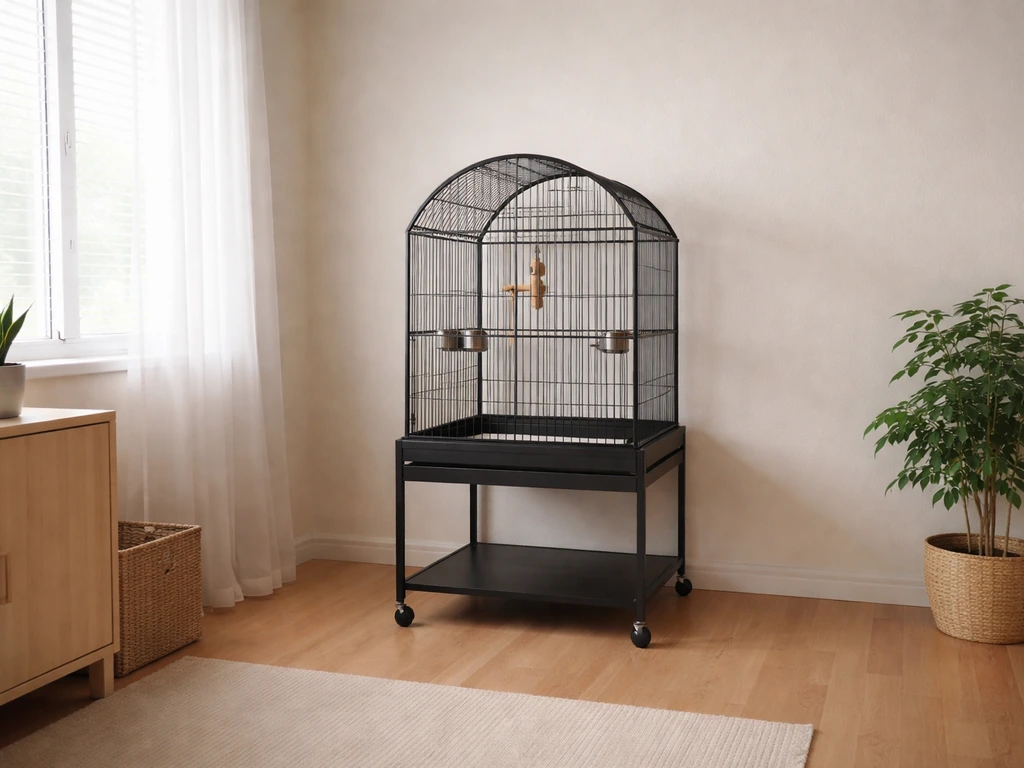
Your environment does half the work for you. A chaotic, noisy, cluttered space makes any bird defensive before you've said a word. A calm, predictable space makes trust-building dramatically easier.
For indoor pet birds, choose a room the bird already knows. Keep lighting moderate (not harsh overhead fluorescents), lower the ambient noise (TV off or at low volume), and remove mirrors and reflective surfaces that can cause territorial stress. Give the bird at least 10 to 15 minutes to settle into a space before you attempt any interaction. Sit at roughly the same height as the bird rather than looming above it. A low stool or sitting cross-legged on the floor works well for cage-level birds. Keep your body angled slightly sideways rather than square-on, which birds read as less confrontational.
For wild birds in your yard, your setup is about removing barriers and creating predictable access points. Set up a single consistent feeding or water station rather than scattering resources randomly. Stay seated during observation periods rather than standing, and choose a spot about 10 to 15 feet away from the station to start. A garden chair near a window, or a patio chair at a fixed position in the yard, lets wild birds learn where you will always be. Predictability is safety in a bird's mind.
Timing matters too. Early morning is when most birds are most active and hungry, which means they're more motivated to engage. Avoid approaching any bird immediately after it eats (wild birds tend to retreat to cover) or during molt, illness, or nesting season when birds are naturally more defensive.
Read body language before you choose your distance
Birds broadcast their comfort level constantly through posture, feather position, and behavior. Learning to read these signals is the single most practical skill you can develop. Communicating with a bird is a two-way process, and the bird is always sending you information first.
Relaxed birds show: feathers slightly puffed in a soft way (not tight), one foot tucked up, slow blinking, gentle grinding of the beak (in parrots), and exploratory head tilting. These are green lights to move slightly closer or offer a gentle interaction.
Stressed birds show: feathers slicked tightly against the body, rapid blinking or wide-open eyes ("big eyes"), crouching low, leaning away from you, rapid back-and-forth head movements, or a frozen posture. These are yellow lights: stop moving, hold still, and wait for the bird to relax before continuing.
Aggressive or highly fearful birds show: open beak, lunging, hissing, feathers raised around the head and neck, screaming, or biting the cage bars. These are red lights. Back off immediately, increase your distance by at least a few feet, and return to an earlier step in your approach sequence. Never push through these signals.
The practical rule for distance: start far enough away that the bird notices you but does not change its behavior. That's your baseline. For most pet parrots, that's 3 to 6 feet. For small pet birds like budgies or finches, it might be just sitting quietly near the cage at arm's length. For wild yard birds, it starts at 10 to 15 feet. Once the bird is consistently calm at that distance across multiple sessions, close the gap by one small step (12 to 18 inches for pet birds, a foot or two of chair-scoot for yard birds).
Approach techniques that actually work
Your voice is your first tool
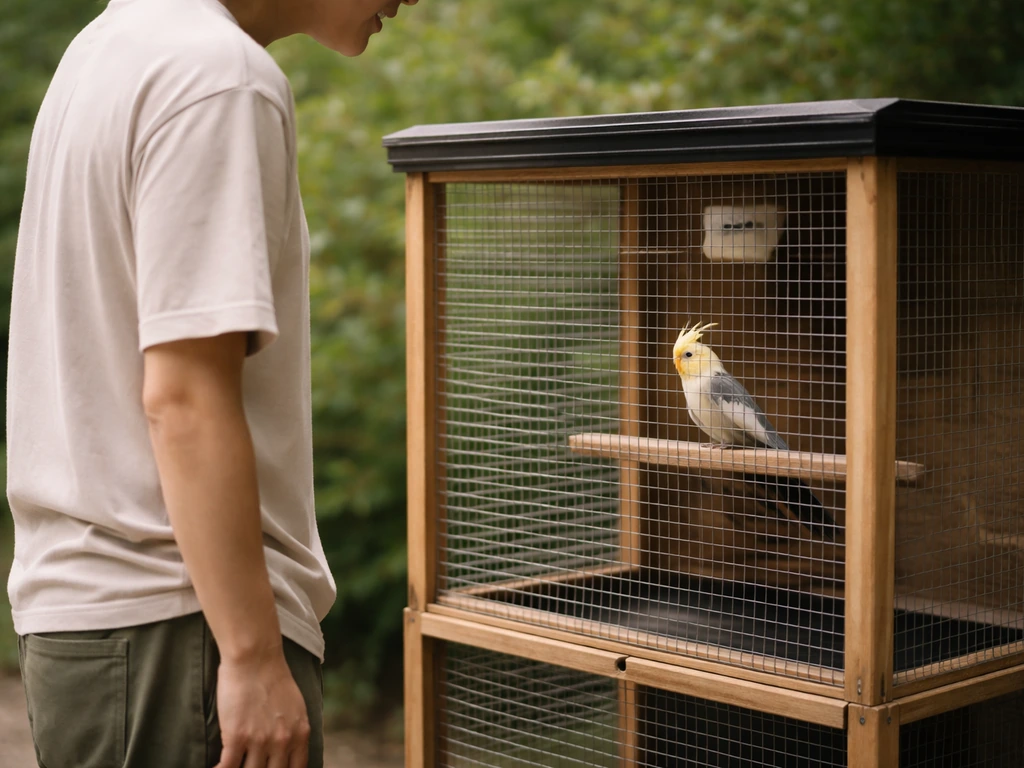
Talk to the bird before you move. Use a calm, low, steady voice. It doesn't particularly matter what you say at first, but keeping a consistent tone and rhythm helps the bird predict you. Many experienced bird owners use a specific greeting phrase every single time they enter the room, and this routine becomes a reliable signal to the bird that nothing threatening is about to happen. If you want to build that kind of rapport, learning how to talk to a bird in a consistent, reassuring way is worth some dedicated attention.
Posture and movement
Move slowly and deliberately. No sudden gestures, no quick grabs, no fast pivots. When walking toward the bird, move at roughly half your normal pace and avoid direct eye contact for the first few seconds of approach. Birds (like many prey animals) interpret a direct, forward-facing stare as predator behavior. Angle your approach slightly to the side and let your gaze drift to the side of the bird rather than straight at it.
When you stop moving, hold still. Birds need time to process your presence and decide you're not a threat. A few seconds of stillness after each movement gives the bird the chance to recalibrate. If the bird looks away from you and goes back to normal behavior, that's a good sign. Move a little closer.
Make your routine predictable
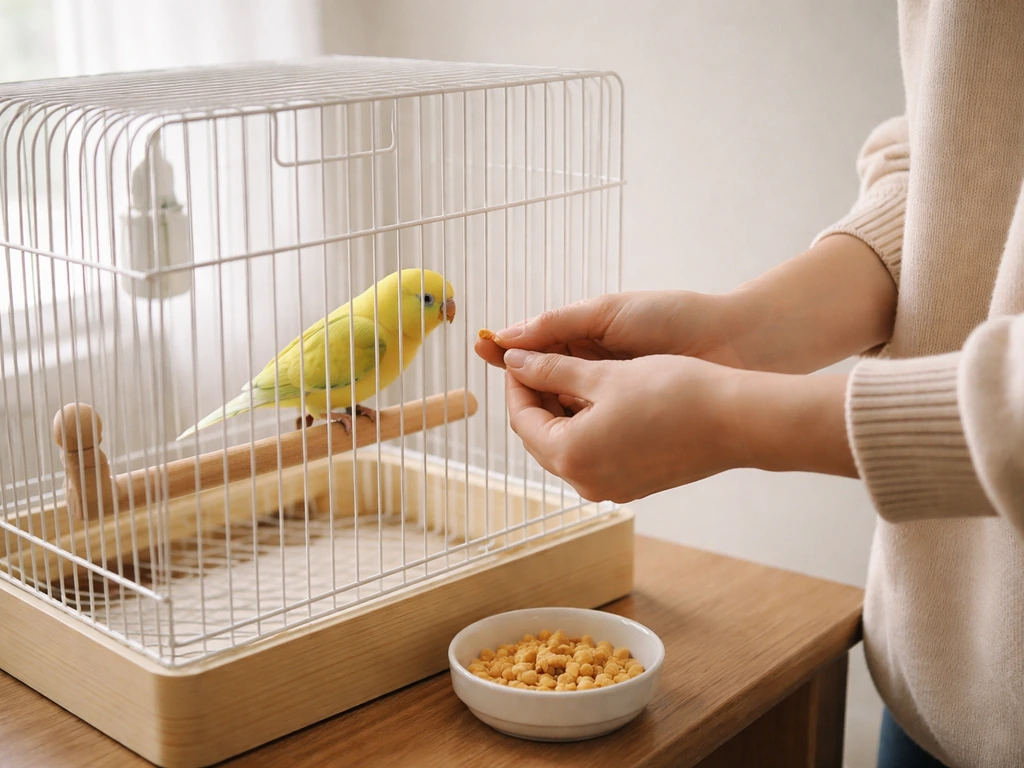
Routine is trust. The more the bird can predict when, where, and how you show up, the faster it relaxes around you. Try to visit at the same time each day, from the same direction, using the same cues. Over days and weeks, the bird begins to associate your presence with neutral or positive outcomes. This is the foundation of every approach technique that follows.
Species-specific strategies
Parrots (including African greys, macaws, conures, amazons)
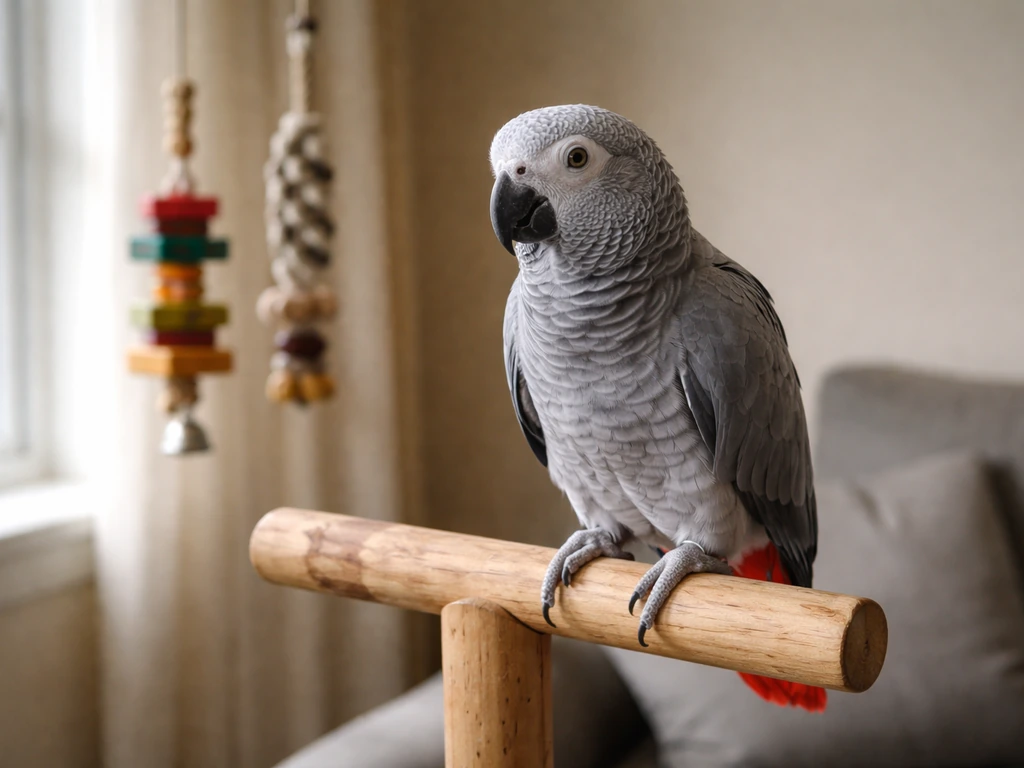
Parrots are intelligent, socially complex birds that respond exceptionally well to calm voice interaction, predictable routine, and positive reinforcement. Many parrots that appear aggressive toward strangers are not aggressive by nature: they're reacting to unpredictable handling. Approach at eye level or slightly below, never from above. Offer the back of your hand (fingers curled) rather than an open palm with fingers extended, which can look like a threat display.
Let the parrot sniff, explore, and touch your hand on its own terms before attempting a step-up. Vetstreet also advises that step-up training starts with offering your hand as a still platform, since a moving hand can discourage the bird, and then rewarding the step-up behavior with a physical treat offering the back of your hand before attempting a step-up.
Cockatiels
Cockatiels are among the most approachable pet birds but are also genuinely flock-oriented and can become anxious if they feel isolated or rushed. Sit near the cage quietly for several sessions before attempting any hands-on interaction. Cockatiels often initiate contact themselves once they've decided you're safe, which is your best signal to proceed. Watch the crest: a raised, fanned crest means excitement or alarm; a flat, slicked-back crest means fear or aggression; a relaxed, slightly raised crest is neutral comfort.
Budgies (parakeets)
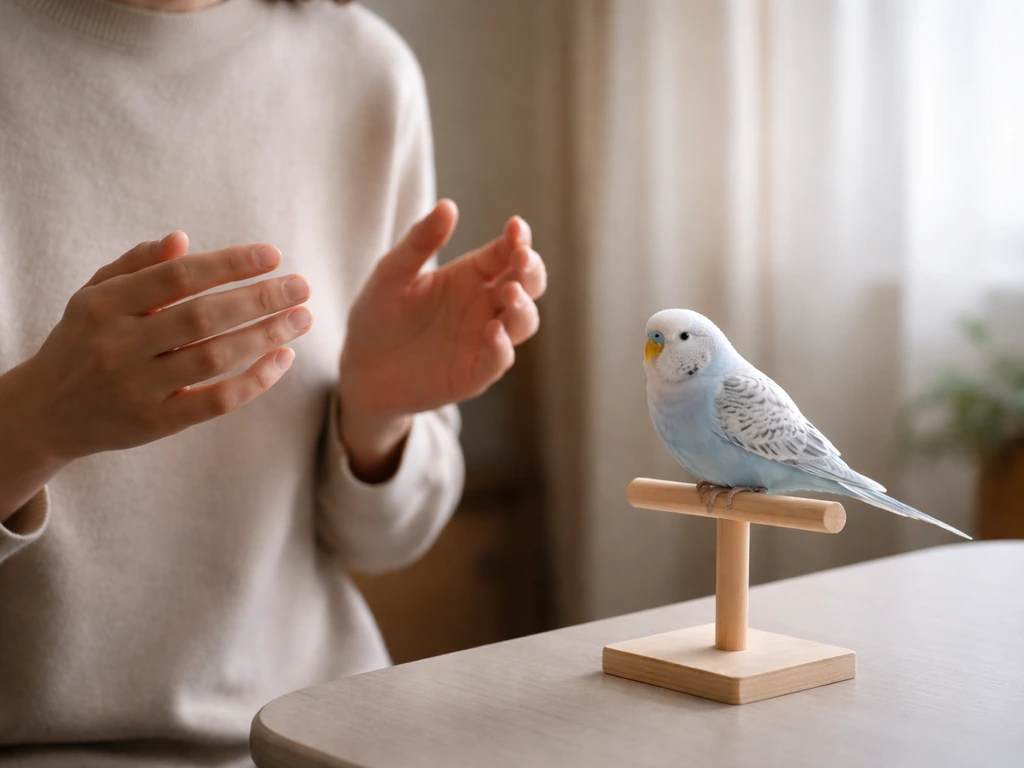
Budgies are small, fast, and easily startled. The key with budgies is patience and minimizing sudden movement. Approach the cage very slowly and spend the first few days simply sitting beside it and talking softly. Hand-taming a budgie works best when you start with a millet spray held near the bird through the cage bars before moving to any out-of-cage interaction. Young budgies (under 4 months) tame fastest, but adult budgies can absolutely learn to trust with consistent, calm handling.
Finches and canaries
Most finches and canaries are not naturally hand-tame and don't typically enjoy being held. That's not a failure: it's just their nature as small, prey-instinct-driven birds. Your goal with these species is usually coexistence and minimal-stress handling rather than active bonding. Keep interactions brief and purposeful (cage cleaning, health checks), move very slowly, and use a small soft net if capture is ever truly necessary. For the rare finch that does become curious around hands, the trust-building process is the same as with budgies but takes considerably longer.
Wild yard birds (sparrows, chickadees, crows, doves)
Wild birds require a completely different mindset. You are not taming them; you are habituating them to your presence. Sit at a consistent spot near a feeder or water source and stay still. Chickadees and nuthatches are among the most habituatable species and can sometimes be coaxed to land on an outstretched hand holding seed after weeks of patient, consistent feeding. Crows are highly intelligent and respond well to food-based association. Doves and sparrows are more wary and may never fully approach, but will feed within a few feet of a calm, still person over time.
Food, water, and rewards: what to offer and when
Food is a powerful tool, but only if you use it correctly. For pet birds, high-value treats (small pieces of fruit, millet, a specific nut the bird loves) work best for reinforcing positive associations with your presence and your hand. Offer the treat at the very end of a successful approach session, not at the start. Starting with food can train the bird to associate your hand only with food, which creates problems later when you need to handle the bird without a treat ready.
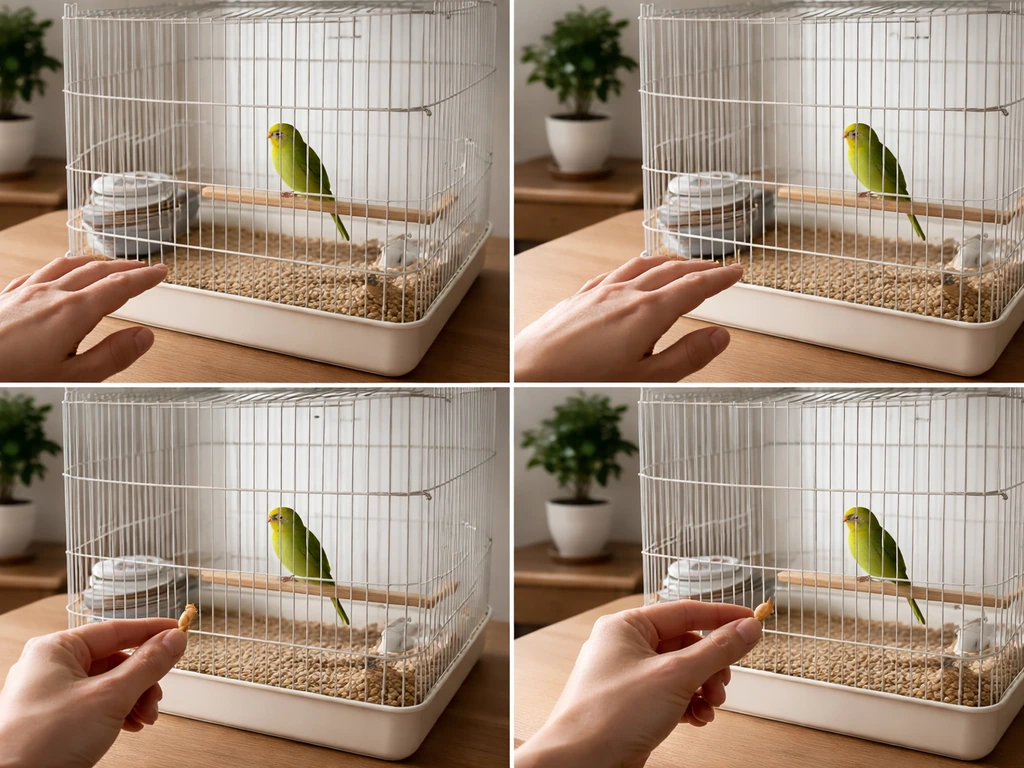
Hand-feeding is a meaningful milestone, but introduce it gradually. Start by placing the treat on the floor of the cage or on a flat surface near you. When the bird consistently takes treats from a surface near your hand, move to holding the treat with your fingertips. Only move to full palm-offering once the bird is calm and not darting away after eating. Rushing hand-feeding often sets back weeks of trust-building.
For wild birds, the picture is more nuanced. Providing appropriate seed, suet, or water at a consistent station is fine and widely practiced. However, directly hand-feeding wild birds (especially waterfowl or birds of prey) can cause dependency, alter natural behavior, and in some contexts is discouraged by wildlife agencies who note that supplemental feeding should support rather than replace natural foraging. If you're working toward having a chickadee take seed from your hand, that's a specific habituation activity done in a controlled, limited context, not a substitute for natural food sources. Keep food offerings to species-appropriate choices: black-oil sunflower seed, plain millet, and suet cakes are safe and broadly useful. Avoid bread, salty snacks, and processed food entirely.
Building trust step by step, with realistic timelines
The approach process isn't a single event. It's a progression through stages, and each stage needs to be solid before you move to the next one. Rushing a stage is the most common reason people get stuck or see regression. If you want to bond with a bird in a meaningful, lasting way, this staged approach is the only reliable path.
- Stage 1 – Presence (Days 1 to 7): Simply exist near the bird at a comfortable distance without interacting. Let the bird see you, hear you, and normalize your presence. No touching, no intense eye contact, no sudden moves. Your only job is to not be scary.
- Stage 2 – Voice association (Days 5 to 14): Add consistent, calm talking during your presence sessions. Use the same greeting phrase every time. The bird starts to associate your voice with the predictable routine of your visits.
- Stage 3 – Proximity without pressure (Days 10 to 21): Gradually close the distance by small increments across sessions, only when the bird is visibly relaxed. For pet birds, this means moving from across the room to beside the cage. For yard birds, it means moving your chair a foot closer every few days.
- Stage 4 – Hand near the bird (Days 14 to 30): Introduce your hand slowly, palm down, near (not toward) the bird. Hold still. Let the bird investigate on its own terms. Do not move toward the bird with your hand; let the bird close the gap.
- Stage 5 – Treat association (Days 20 to 45): Offer high-value treats from a flat surface near your hand, then progress to fingertip offering once the bird is consistently calm with your hand present.
- Stage 6 – Step-up or voluntary contact (Days 30 to 90+): For pet birds, introduce the step-up cue by gently pressing one finger against the lower chest, just above the feet, while saying "step up" in a calm tone. For wild birds, sit with seed in an open, flat palm and wait without moving. First contact is usually brief and chaotic. Celebrate it anyway.
These timelines are realistic for an average bird in average conditions. Some birds move faster, some much slower. A rescued bird with trauma history may need double the time at each stage. A hand-raised baby parrot may skip several stages entirely. The timeline is a guide, not a deadline.
The most useful metric isn't time, it's the bird's behavior. If the bird is relaxed at your current stage, move forward. If it's stressed, go back one stage and stay there longer. Approaching a bird without scaring it is fundamentally about following the bird's pace, not your schedule.
Troubleshooting common problems
The bird flinches or retreats every time you get close
You're closing the distance too fast. Go back to your previous comfortable distance and stay there for at least three to five sessions before trying to move closer again. Also check whether you're moving too quickly, making eye contact too directly, or approaching from above. Lateral approaches at eye level are almost always better received.
The bird lunges or bites
Do not pull away sharply. A slow, steady withdrawal is less alarming than a flinch, which can actually reinforce the biting behavior by confirming to the bird that lunging gets results. Calmly increase distance and reassess your approach speed and angle. Never retaliate or raise your voice. Biting is communication, and it means "I am not ready for this." Accept the message and adjust.
The bird only approaches from one specific spot or angle
That's actually useful information. The bird has told you exactly which position feels safe to it. Work from that position first, and very gradually expand outward from it. Don't try to break the preference: use it as a starting point.
The bird seems completely uninterested or ignores you
This isn't necessarily a bad sign. Some birds, especially naturally independent species and older untamed individuals, simply take much longer to show curiosity. Keep your sessions short (10 to 15 minutes), keep showing up at the same time, and let the bird initiate interest. Boredom or environmental enrichment issues can also make a bird seem flat and disengaged, so check that the bird has adequate foraging opportunities, toys, and social interaction through the day.
Things to absolutely avoid
- Chasing or cornering a bird: this triggers panic and can cause physical injury from impact with walls or cage bars
- Grabbing suddenly from above: birds are hard-wired to fear aerial strikes, and a hand coming from above is interpreted as a predator attack
- Forcing handling before trust is established: early forced contact causes lasting fear associations that take much longer to undo than if you'd simply waited
- Staring directly at the bird for extended periods: direct stare is a predator cue in most bird species
- Loud voices, clapping, or sudden noises near a bird that is already stressed
- Offering unsafe foods: avocado, chocolate, onion, garlic, caffeine, alcohol, and xylitol are all toxic to birds
- Trying to capture or rehabilitate a wild bird yourself without contacting a licensed wildlife rehabilitator first
If you have a genuine fear of birds yourself
This is worth naming because it comes up more often than people admit. If you're dealing with real anxiety or fear around birds, that stress communicates itself through your body language and affects the bird's response. Working through that separately is a legitimate step. There are practical strategies specifically for this, and understanding how to overcome bird phobia can make every technique in this guide work significantly better.
Comparing approach strategies: pet birds vs. wild yard birds
| Factor | Pet Birds (parrots, cockatiels, budgies) | Wild Yard Birds (chickadees, crows, doves) |
|---|---|---|
| Starting distance | 3 to 6 feet (across the room) | 10 to 15 feet from feeding station |
| Primary tool | Voice, routine, hand-taming | Stillness, consistent presence, food station |
| Food use | High-value treats for reinforcement | Species-appropriate seed/water at fixed station |
| Direct hand contact goal | Yes, step-up training is the target | Optional; species-dependent (chickadees possible, doves unlikely) |
| Typical timeline to comfort | 3 to 12 weeks depending on species/history | 2 to 8 weeks for station tolerance; months for hand contact |
| Legal considerations | None beyond basic animal welfare | Migratory Bird Treaty Act applies; no trapping or keeping |
| Regression risk | High if sessions are rushed or inconsistent | Moderate; wild birds re-habituate faster after breaks |
If you're choosing between methods for a pet bird, the hands-on training approach is clearly the right path. For wild birds, the seated-presence-with-food-station method is both more effective and legally appropriate. Don't try to hand-tame a wild bird the same way you'd train a parrot: the legal risk, the stress to the bird, and the low success rate make it the wrong tool for the job.
What you can do starting today
You don't need special equipment or a perfect setup to start. Pick one bird, one location, and one consistent time of day. Sit down. Be still. Talk quietly. Do that for 10 to 15 minutes without any agenda beyond showing up calmly. That's Stage 1, and it's the most important stage. Everything else builds on it.
Once you've established that basic comfort, learning how to get close to a bird in a more deliberate, incremental way becomes the natural next step. The approach isn't a trick or a shortcut. It's a relationship in progress, and the bird will tell you exactly how fast it's ready to move.
FAQ
What should I do if the bird gets more nervous after I start getting closer?
If you need the bird to tolerate handling the next day, you should only increase distance or hand contact when the bird shows calm signals at the current stage across multiple sessions. If the bird is still showing yellow or red signs, stop at “observe and speak” (no touch, no reach), because pushing while stressed can permanently teach the bird that you escalate when it warns you.
How can I tell the difference between a calm bird and a bird that is just “not moving”?
A bird that is quiet does not always mean it is safe. Watch for subtle stress markers like tight feather slicking, slow-to-absent blinking, freezing, or frequent head pumping. If any of those appear, treat it as yellow or red and return to your baseline distance (the point where it does not change behavior).
Why does my bird sometimes seem fine, then suddenly bolts or bites when I move?
Try not to “test” the bird by suddenly leaning in, extending your hand repeatedly, or changing your voice volume mid-session. Instead, do one small movement, then hold still for several seconds and let the bird choose whether to approach. Repeated quick actions are one of the fastest ways to erase trust.
Can what I’m wearing or smelling affect how a bird responds to me?
For many birds, scent cues matter. Wash your hands with unscented soap before training and avoid strong fragrances (perfume, essential oils, flavored lip balm) right before interactions. Also avoid handling food and then immediately reaching toward the bird, because the bird may associate your hand with unexpected smells.
Should I keep trying during a session even if the bird is clearly avoiding me?
If the bird is retreating, keep your sessions shorter rather than longer. Ten to fifteen minutes is ideal, but if the bird starts warning you early, end the session at that point and try again later. Ending on a “less stressed” note helps the bird maintain predictable expectations.
What can I do if food rewards make my bird expect treats every time I approach?
For pet birds, the most useful alternative when hand-feeding backfires is “neutral presence” plus cage-side treats at the end of the session. Place food so the bird can access it without targeting your fingers, then build again gradually from surfaces near your hand only after the bird stops darting away after eating.
What is the right way to increase distance, step-by-step, without spooking the bird?
Start with the distance where the bird notices you but does not change posture, and then increase by one small step only after multiple calm sessions. If you are using a chair-scoot or half-step motion, give the bird time to reassess after each movement. This prevents “overshooting” trust by a few inches.
Are there common body-position mistakes that make birds think I’m trying to grab them?
For pet birds, approach from roughly the bird’s level or slightly below, and keep your body angled sideways. For cage birds, avoid hovering your face above the cage or touching the bars to get attention. Many birds interpret looming or bar-jiggling as a capture attempt.
How should I respond if a pet bird bites during an approach?
If the bird bites, do not yank your hand away quickly or scold the bird, because both add new cues tied to the bite. Withdraw slowly, return to the last stage where the bird was calm, and resume only when the bird’s behavior settles (no head-hunting, lunging, or sustained wide-eye posture).
What should I do differently when approaching a wild bird in my yard?
For wild birds, don’t chase, and don’t reposition yourself in rapid bursts to “work them closer.” Instead, use a stationary chair at a fixed spot, keep the feeding or water station consistent, and reduce your own movements. Habituation usually comes from repeated calm presence, not from trying to close distance quickly.
How do I decide whether a grounded wild bird needs immediate help or just watching?
If you suspect injury, do not assume the bird is abandoned, even if it is on the ground. Look for danger signs like inability to stand, blood, fluffed-and-immobile posture for a long period, or visible trauma. If present, contact a licensed wildlife rehabilitator first, because handling can worsen fractures and shock.
What safety steps should I take if I get scratched or bitten by a bird?
If you are bitten or scratched by any bird (pet or wild), wash the wound immediately with soap and water and watch for swelling, increasing redness, or fever. Seek medical care especially for deeper punctures, immunocompromised household members, or any bite from larger parrots.
Why does my timeline keep slipping even though I’m following the steps?
Age and temperament can significantly change pacing. Older, previously untamed individuals often need more “sit and talk” sessions before any hand is involved, and trauma history can make the bird more sensitive to sudden eye contact. Use behavior-based stage advancement rather than a fixed timeline, and expect setbacks after disruptive events (cleaning day, moving rooms, new pets).
What if I don’t have enough space to start at the recommended distance?
If you cannot approach at close range due to space limits, you can still progress by building the “calm at distance” baseline. Use the same chair spot, same schedule, and allow the bird to take treats or approach the station only when you are still. Once calm is consistent, you can upgrade slowly when you have more room or after the bird relocates naturally closer.