You can absolutely befriend a wild bird, but "befriend" means something specific here: you are earning the bird's tolerance and trust at a safe distance, not taming it, touching it, or training it to depend on you. The goal is a bird that recognizes you as a non-threat and feels comfortable living its life while you happen to be nearby. That's a realistic, achievable, and genuinely rewarding outcome. Forcing contact or pushing past that boundary causes real harm to the bird and, in some cases, breaks wildlife protection laws.
How to Befriend a Wild Bird Safely in Your Yard
Clara Hayes
5 Apr 2026
What "befriending" a wild bird really means (and what you should not do)
Wild birds are not pets in waiting. They have territorial instincts, flock dynamics, and survival needs that are easily disrupted by well-meaning humans. What you're actually doing when you befriend a wild bird is building a slow, patient relationship based on habituation: the bird gradually learns your presence signals safety rather than danger. Over weeks and months, you become part of the environment it trusts.
What you should not do: try to hand-tame a wild bird, capture it, take in a baby bird without professional guidance, or condition it to be so dependent on humans that it loses its fear responses entirely. The U.S. Fish & Wildlife Service specifically warns against touching wildlife or intentionally feeding them in ways that alter their natural behavior. The blank" rel="noopener noreferrer">USDA APHIS echoes this, noting that human food is not healthy for wild animals and that habituation can create dangerous situations for birds near roads, airports, and predators. If your goal is a bird you can actually handle and train in close contact, making a bird your true companion is a different journey that starts with a pet species.
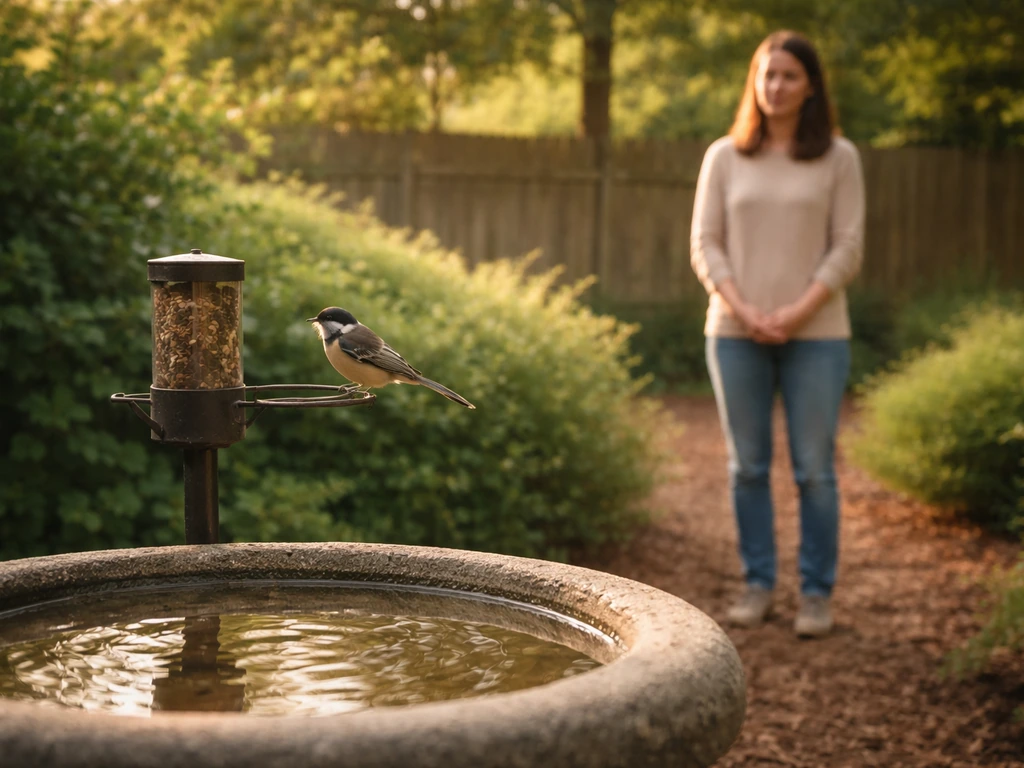
The healthy version of befriending a wild bird looks like this: the bird lands within a few feet of you, eats comfortably while you sit nearby, and maybe even investigates you with curiosity. It still flies away when it wants to. It still behaves like a wild bird. That's the win.
Confirm the bird and read its behavior cues
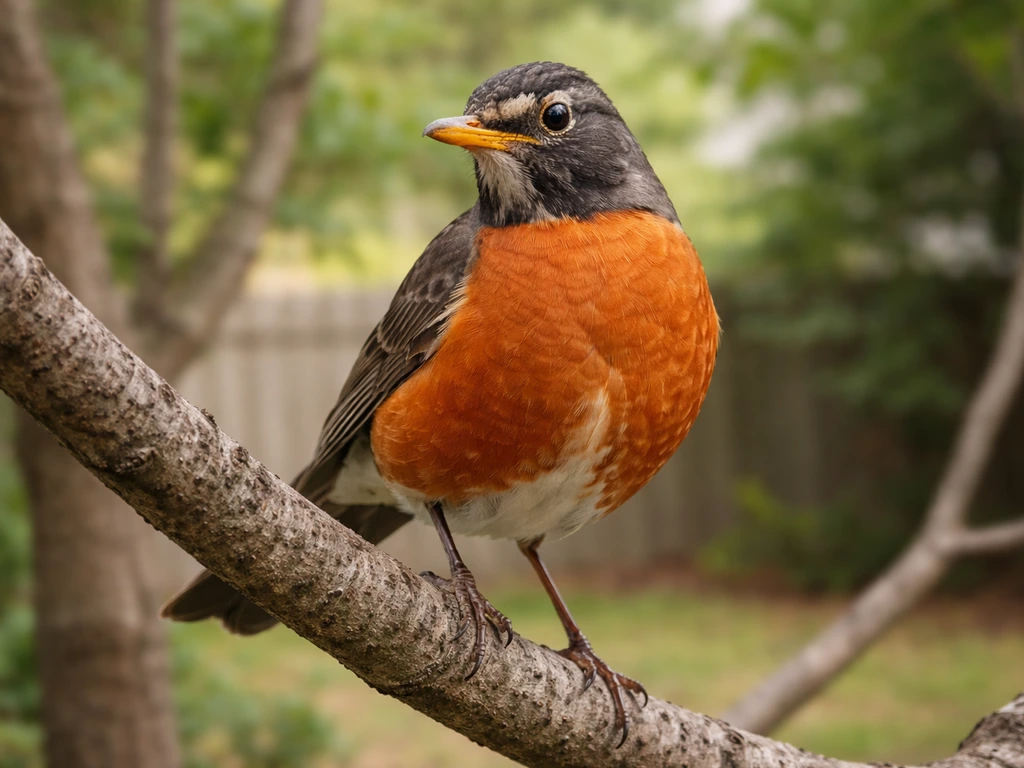
Before you do anything else, figure out what bird you're dealing with. A curious American robin behaves very differently from a territorial mockingbird or a skittish pine siskin. Knowing the species tells you what food attracts it, how close it naturally tolerates humans, and what its stress signals look like. Cornell Lab of Ornithology's Merlin app and eBird database are the fastest way to confirm an ID from a photo or description.
Once you know the species, pay close attention to its body language during every interaction. Stress signals in wild birds are easy to miss until you know what you're watching for:
- Alarm calls or sudden silence: research on bird communities shows birds can freeze entirely after hearing alarm calls, which is a full threat-detection response. If the yard goes quiet when you step outside, you've triggered a stress reaction.
- Fluffed feathers combined with stillness: this can signal illness or cold stress, not comfort.
- Head-bobbing and side-eye staring directly at you: the bird is tracking you as a potential threat.
- Flushing (flying away) at more than 15 to 20 feet: your approach distance is still too close.
- Feather-sleeking and crouching low: high-alert posture, meaning the bird is ready to flee.
- Repeated short flights away from your position: you're in its flight-initiation distance.
The distance at which a bird feels safe varies by species and individual. As a general rule, start observing from at least 20 to 30 feet and only reduce that distance across multiple sessions once the bird stops reacting to your presence. Never approach a bird that is actively alarming, frozen in stress posture, or showing any signs of illness.
Set up your yard to be safe and welcoming
The most powerful thing you can do today requires zero interaction with the bird: make your yard a place birds actively want to be. Trust builds fastest when birds choose to come to you on their terms, not because you cornered an opportunity.
Food and feeder placement
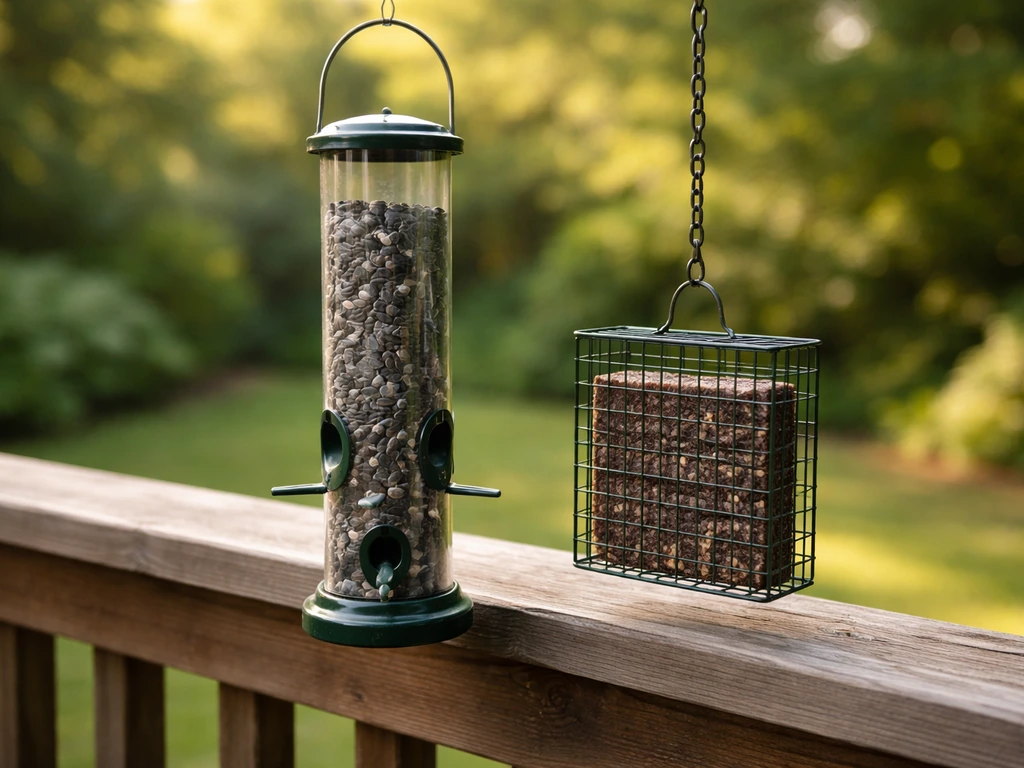
Match food to species. Black-oil sunflower seeds attract the widest range of backyard birds including chickadees, finches, nuthatches, and cardinals. Suet attracts woodpeckers and wrens. Nyjer (thistle) pulls in goldfinches and siskins. Avoid ground-feeding: scattering seed on the ground increases disease transmission between birds and attracts rodents. Use hanging or pole-mounted feeders instead.
Feeder placement matters more than most people realize. Audubon recommends placing feeders either within about 3 feet of a window or more than 30 feet away to reduce the risk of fatal window strikes. A bird that hits a window at full speed from 10 to 25 feet out is traveling fast enough to cause serious injury. Placing your feeder close to your sitting or observation spot (within that 30-foot zone, away from glass) serves double duty: birds come to a place where you can observe them calmly.
Water
A clean, shallow birdbath is often more attractive to birds than food, especially in dry months. Keep water depth to about 1 to 2 inches in the center (deeper in the middle is fine for larger species if edges are shallow). Change the water every 2 to 3 days. A small solar-powered dripper or wiggler adds movement that attracts birds from much farther away.
Shelter, cover, and cat management
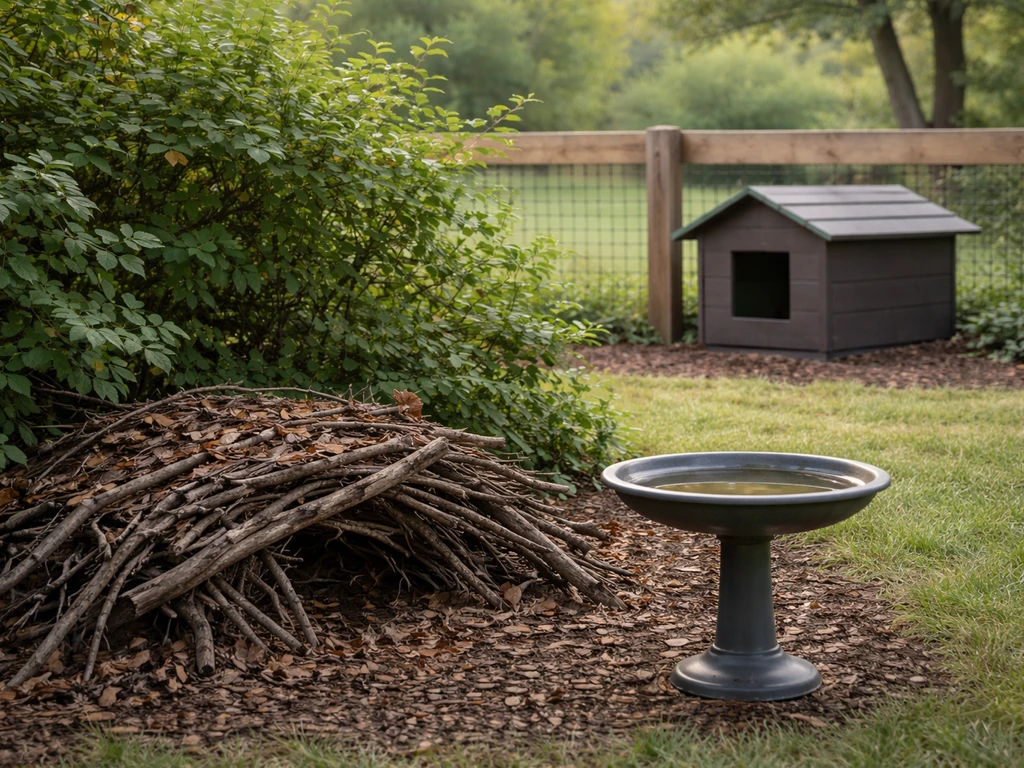
Birds feel safest feeding and bathing within a short flight of cover: dense shrubs, brush piles, or trees. Native plantings, which Audubon strongly recommends, provide both cover and natural insect food, reducing the bird's reliance on your feeders while keeping it close. If you have cats, keeping them indoors is non-negotiable. Free-roaming cats are one of the leading causes of wild bird mortality in North America, and no amount of feeder setup will build trust if birds are constantly flushing from a hunting cat.
Hygiene is non-negotiable
Dirty feeders and birdbaths are disease vectors. Audubon recommends cleaning feeders every two weeks as a baseline, more often in warm or humid weather. The BTO advises weekly cleaning and disinfecting of feeders and baths. If you see birds that look sick (puffed up, lethargic, wet around the eyes or beak), stop feeding entirely for at least two weeks after the last sighting of an unwell bird, and empty all birdbaths. This encourages the birds to disperse and slows infection spread at your station. Always wash your hands after handling feeders, birdbaths, or bird food.
Build a routine
Birds are creatures of habit. Fill feeders at the same time every day, preferably in the morning. Sit outside at a consistent time. Wear similar-colored clothing. The more predictable you are, the faster birds categorize you as a harmless part of the environment rather than an unpredictable threat.
Non-threatening approach strategy
Habituation is the process by which wild birds gradually stop reacting to a repeated, harmless stimulus. You are the stimulus. The goal is to make your presence so consistent and so uneventful that the bird's threat response simply stops firing when you appear.
Start by sitting outside near your feeders or birdbath for 15 to 20 minutes a day without doing much. Sit sideways or at an angle rather than facing the birds directly. Direct front-facing stares are interpreted as predator behavior by most bird species. Keep your movements slow and deliberate. Avoid sudden gestures, reaching, or loud talking. If you want to read, scroll your phone, or sketch, that's actually ideal because it keeps you still without staring at the birds.
Over days and then weeks, you'll notice the birds' flush distance starts to shrink. A chickadee that once flew off when you were 25 feet away might now stay when you're 15 feet away. That's real progress. Never push past what the bird is comfortable with. The moment it flushes, you've gone too far, and the next session needs to reset to the previous comfortable distance.
If you want to understand more about how to communicate non-threatening signals to a bird, posture and eye contact are the core tools: keep relaxed, keep still, and let the bird set the pace.
Testing trust safely: step-by-step feeding and interaction
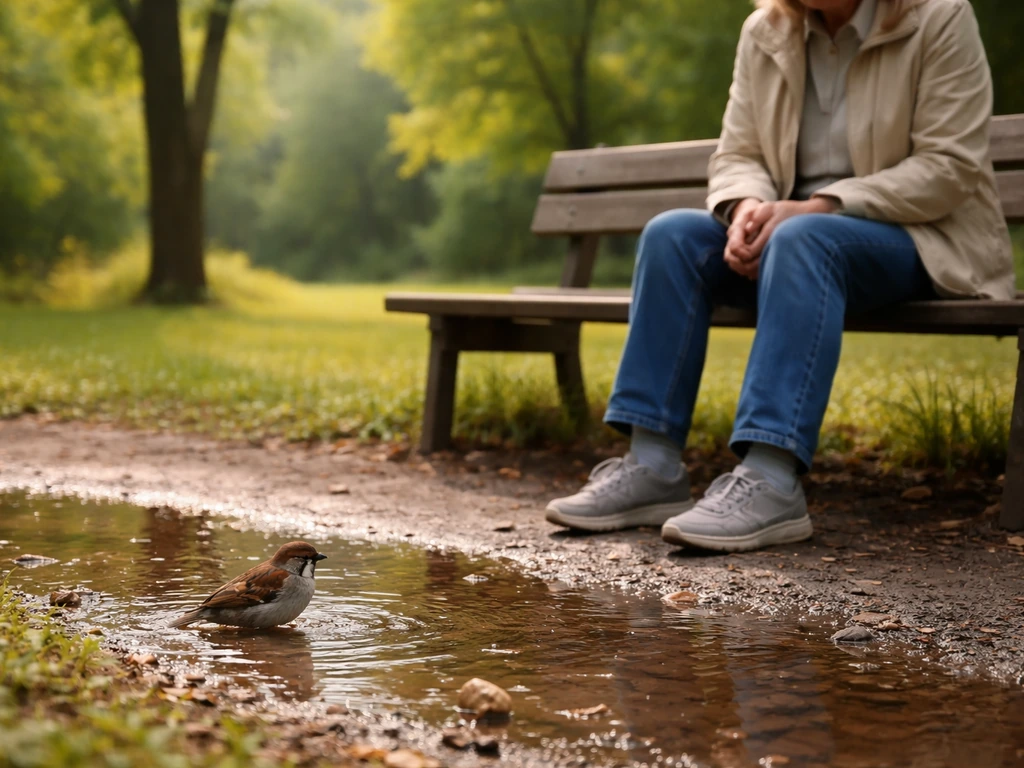
Once a bird is consistently feeding or bathing within 10 to 15 feet of you without flushing, you can begin very gradual trust tests. This is a slow process. Skipping steps sets you back further than if you had never tried.
- Sit at your established comfortable distance for at least five consecutive sessions with no flush reactions before trying to move closer.
- Move your chair or observation spot 2 to 3 feet closer. Sit there for multiple sessions until the bird accepts the new distance without flushing.
- Once you're within 6 to 8 feet and the bird is comfortable, try placing a small amount of seed on a flat surface (a rock or stump) between you and the existing feeder. Do not reach toward the bird. Do not make eye contact. Let the bird investigate on its own.
- If the bird takes seed from that spot over several sessions, you can try placing seed on the arm of your chair or on your knee while sitting completely still. This takes weeks to months with most species.
- Some individual birds, particularly bold species like chickadees, tufted titmice, or certain wrens, will eventually take seed from an open palm. Hold your hand flat and completely still, eyes averted. The moment your fingers twitch or you turn toward the bird, it's gone.
- Do not progress faster than the bird shows you it's comfortable. Patience measured in weeks, not days, is what separates people who succeed from people who give up.
If you're helping a bird in your neighborhood rather than your own yard, the same principles apply with extra caution around public spaces and other people who might disrupt the habituation process. For tips tailored to community settings, helping a bird in your friendly neighborhood covers the specific dynamics of shared outdoor spaces.
Troubleshooting: why birds won't come closer and how to adjust
Most setbacks in building trust with wild birds come from a small set of common problems. Here's how to diagnose and fix them:
| Problem | Likely Cause | Fix |
|---|---|---|
| Bird stops coming to the feeder entirely | Dirty feeder, spoiled food, predator nearby (hawk, cat), or seasonal movement | Deep-clean the feeder, replace food, check for predator sign, accept seasonal absence |
| Bird visits but always flushes when you sit outside | You're too close, too early in the habituation process, or making sudden movements | Reset to greater distance, reduce session length, move more slowly |
| Bird takes food from the ground but not from elevated feeders | Species preference (e.g., doves, sparrows, towhees are ground feeders) | Add a low platform feeder or flat tray at ground level |
| Progress stalled for weeks | You may have advanced too fast and reset the bird's trust level | Go back to a longer distance and restart the gradual approach from scratch |
| Bird is aggressive toward other birds at feeder | Territorial species (mockingbirds, some sparrows) or overcrowded feeder | Add a second feeder 10+ feet away, use multiple ports |
| Bird appears sick or lethargic | Disease at the feeding station | Stop all feeding and empty birdbaths for at least 2 weeks; monitor |
| Bird seems interested but never approaches | Not enough cover nearby, or feeder is in an exposed location | Add a shrub or brush pile within 10 to 15 feet of the feeder |
Seasonal changes are one of the most common reasons progress seems to stall or reverse. Many species migrate, and individual birds that have learned to tolerate you may simply leave in fall or winter. When new birds arrive in spring, you're starting over. That's normal. The setup you've built keeps attracting birds; you just have to re-establish trust with newcomers. If you're thinking about expanding your approach to building a broader circle of bird friendships in your yard, having multiple feeding and water stations with varied food types dramatically increases the number of species that will give you a chance.
Ethics, legality, and your health and safety
Wildlife protection laws
Almost every wild bird in the United States is protected under the Migratory Bird Treaty Act, which means capturing, possessing, or harming them is a federal offense. This is not a technicality: it directly governs how far you can take any interaction with wild birds. You cannot legally keep a wild bird in your home, even temporarily, without a federal and state permit. If you find an injured or sick bird, the legal and ethical path is to contact a licensed wildlife rehabilitator. The FWC in Florida, for example, explicitly states that holding sick or injured wildlife beyond the time needed to transport it is a violation of state law. Federal rehab permits require special skills and training for good reason: raising a wild bird incorrectly causes lasting harm.
Even feeding wild birds sits in a legal gray zone in some jurisdictions. Certain states and municipalities restrict or prohibit intentional wildlife feeding, particularly for waterfowl or in protected areas. Always check your local rules before setting up feeders near parks, preserves, or protected waterways.
Health and disease risks
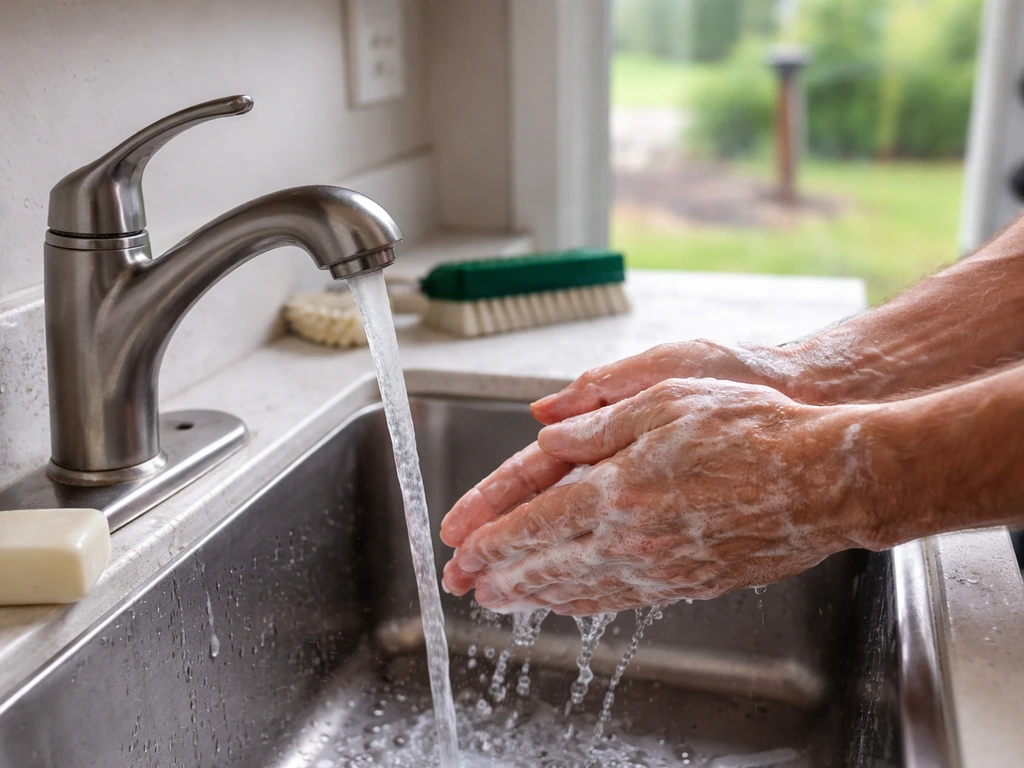
Wild birds can carry diseases including avian influenza, salmonella, and histoplasmosis. The CDC advises clearly: do not touch wild birds, including hand-feeding. Wash your hands thoroughly after any contact with feeders, birdbaths, bird food, or bird droppings. If avian influenza is active in your region, the CDC recommends additional biosecurity precautions for anyone with backyard bird setups, including avoiding direct contact with any birds showing neurological symptoms, unusual deaths, or sudden population die-offs. Report suspected avian influenza to your state wildlife agency immediately.
The dependency problem
One of the most counterintuitive risks in befriending wild birds is over-success: conditioning a bird to depend so heavily on you that it loses its natural wariness and foraging skills. The U.S. Fish & Wildlife Service describes this as "hidden harm" in wildlife feeding. A bird that is completely unafraid of humans is a bird that is more vulnerable to people with bad intentions, to predators it no longer flees, and to dangerous environments like roads and airports it no longer avoids. The goal of your relationship with a wild bird should always be enhancing its life, not replacing its wildness.
If you're looking for inspiration beyond firsthand experience, exploring how authors and naturalists like Vincenzo have approached befriending birds can offer useful perspective on the philosophy behind building these relationships without crossing ethical lines.
When to stop and call for help
Stop interacting and contact a licensed wildlife rehabilitator if you observe any of the following: a bird that cannot fly and is sitting on the ground, a bird with visible injuries (blood, drooping wing, tilted head), a juvenile bird that has been separated from its parents for more than a few hours and is in a genuinely dangerous location, or any bird showing neurological symptoms like circling or seizure-like behavior. Do not attempt to treat or house the bird yourself. Licensed rehabilitators have the permits, training, and facilities to give the bird its best chance at survival and release.
A realistic timeline and what to expect
Here's the honest picture: most common backyard species like American robins and house sparrows will habituate to your presence within 2 to 4 weeks of consistent, calm outdoor time. Bold, intelligent species like black-capped chickadees, tufted titmice, and Carolina wrens often habituate faster and may approach you closely within 4 to 8 weeks. Shyer species like thrushes, waxwings, and most warblers may never fully habituate, and that's fine. The range of outcomes is wide, and individual personality matters enormously. Some birds are just bolder than others.
The single most reliable predictor of success is consistency. Showing up every day at the same time, in the same spot, in a calm and non-reactive way, builds the pattern the bird needs to file you under "harmless." Skip a week and you may set things back. Rush the approach and you definitely will. But get this right, and the moment a wild bird lands a foot from you and calmly cracks a seed while you sit perfectly still? That's worth every patient hour it took to get there.
FAQ
How close is “too close” when I’m trying to befriend a wild bird?
A practical rule is to stop reducing distance the moment the bird flushes, alarm-calls, freezes in an odd posture, or avoids feeding within your presence. After any flush, reset to the last distance where it behaved normally and only try again later (not the same day).
Should I start feeding even if I am not sure what species the bird is?
Yes, but keep it general and low-risk. Offer a variety of common backyard foods via species-appropriate feeders (for example, hanging seed for finches or suet in a suet feeder), and avoid scattering seed on the ground. If you see an unusual pattern, like a single bird repeatedly limping or acting neurologically, stop and contact a rehabilitator instead of guessing.
Can I use peanuts, bread, or “bird mix” to help a bird get used to me faster?
It’s better to use species-matched, intact foods rather than bread. Bread has poor nutritional value and can worsen water and feeder sanitation issues. If you use seed mixes, choose ones without lots of filler you cannot clean easily, and keep feed fresh by refilling smaller amounts more often.
How do I handle it if the bird suddenly stops coming after we were making progress?
Treat it as a signal that conditions changed. Common causes are new predators nearby, a different person or pet in the yard, a feeder moved, or seasonal movement. Return to the previous safe distance, keep your routine unchanged for several sessions, and avoid “chasing” the bird with sudden attempts to lure it closer.
Is it safe to take photos or watch from a blind while the bird is near?
Photos are fine if you do not increase threat cues. Keep your body still, avoid zooming or stepping forward, and do not use flash at close range. A blind can help because it limits your motion, but make sure it does not block airflow to feeders and does not make the bird feel trapped.
What if a bird lands on the ground close to me, does that mean it’s trusting me?
Sometimes it can be normal behavior, especially for foraging. But ground-lying can also be a sign of injury, fatigue, or illness. If it cannot fly normally, is sitting low and unresponsive, or shows visible injury, do not approach or attempt to “help” by handling it, contact a licensed wildlife rehabilitator instead.
Can I gently “teach” the bird to come to me by calling it or offering food from my hand?
Hand-feeding and close human contact shift the relationship toward taming and dependence, and it also raises disease and safety risks. If your bird is already habituating, keep the same station-based feeding routine and focus on being still and predictable rather than converting food delivery to you being the source.
What should I do if I have cats or other pets and I still want to befriend birds?
You need a hard safety boundary. Keep cats indoors, supervise any outdoor time, and consider adding a physical barrier or screened enclosure so birds can visit without being flushed. If birds are consistently startled by pet activity, habituation will stall because the yard never feels safe.
How can I prevent window collisions while still training birds to visit my yard?
Use the feeder-to-window spacing approach already outlined, and add additional measures like window films or decals if birds are repeatedly striking. Avoid placing feeders in the “30-foot zone” directly visible from where you sit if you notice sudden, high-speed impacts.
Are there times of day or seasons when habituation goes slower?
Yes. Breeding and nesting periods can increase territorial behavior or vigilance, and winter can change food needs. If you notice birds becoming more reactive, hold steady with the same feeder locations, reduce sudden changes to your yard, and expect slower progress rather than forcing closer interaction.
How often should I clean feeders and baths if I’m trying to keep birds returning consistently?
Beyond baseline cleaning, increase frequency in warm or humid weather and after you notice heavy use. If you have any sick-looking birds at your station, pause feeding for at least two weeks after the last sighting of an unwell bird and empty the birdbaths to slow spread.
If a bird approaches very closely, does that mean it is safe to touch or move it if there’s a hazard?
No. Even if a bird seems calm, touching a wild bird can cause harm and may be illegal. If there is a hazard like a dangerous location, block access by adjusting the environment rather than handling the bird, and contact a wildlife professional when appropriate.
What diseases should I worry about most at feeders, and how do I reduce risk day-to-day?
Assume feeders and droppings can carry pathogens. Wash hands after any contact with feeders, birdbath surfaces, or bird food, and keep water fresh. If your area has reports of avian influenza or you notice neurological symptoms or sudden die-offs, stop direct contact with birds and report suspicious events to your state wildlife agency.
How long should it take before I see real “trust” progress?
Many common backyard species habituate in weeks with consistent routines. But do not rely only on time, track behavior instead. Real progress looks like calm feeding or bathing within a closer distance without flushing, and it should come with stable body language rather than frantic escapes.
Next Articles
How to Catch a Bird Without Killing It: Humane Steps
Humane, trap-free steps to catch a wild backyard bird safely, minimize stress, contain it calmly, then release or reloca
How to Catch a Bird With a Bottle Safely and Humanely
Humane, safety-first steps to catch a bird with a bottle or cover, plus safer alternatives and what to do after capture.
How to Catch a Bird Alive Safely and Humanely
Humane, safety-first steps to catch a live bird for backyard or pet rescue, with stress-free handling and next actions