The first thing to do is figure out exactly what kind of help this bird actually needs, because the answer changes completely depending on whether you're looking at a wild bird or someone's escaped pet, and whether the bird is injured, stressed, or simply being friendly. In the next 10 to 60 minutes, you can make a real difference by making the right call early, staying calm, and avoiding the most common mistakes people make when they find a bird and immediately want to feed it or pick it up.
How to Help a Bird in Your Neighborhood: Step-by-Step
Clara Hayes
15 Apr 2026
Step one: figure out what you're actually dealing with
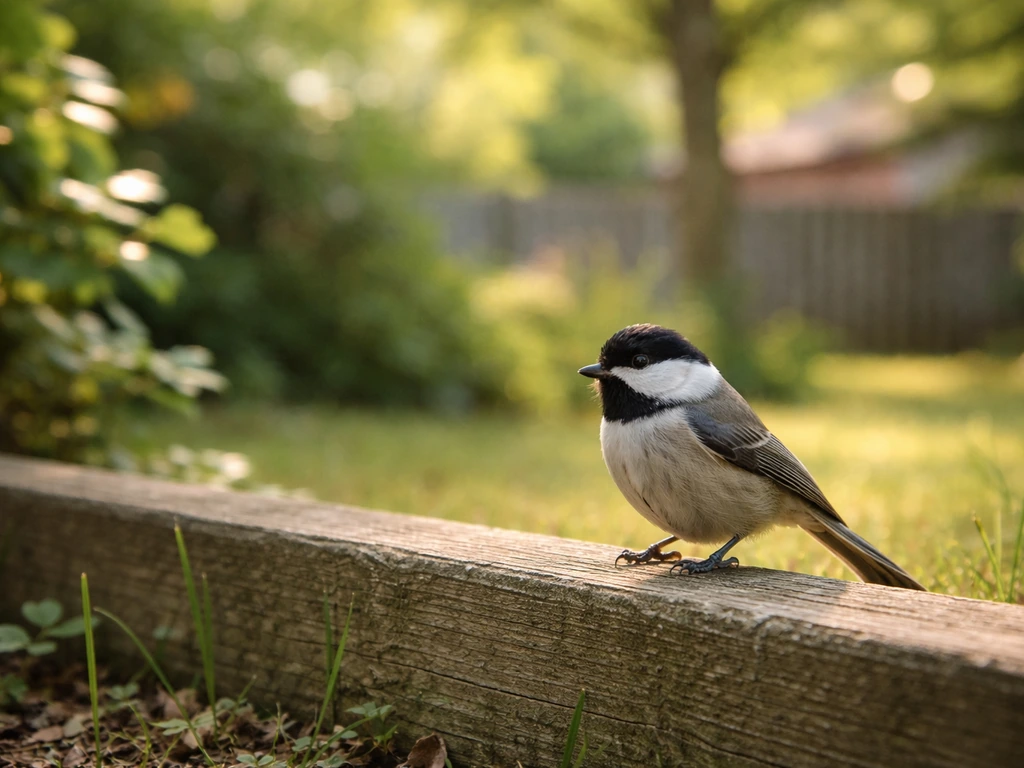
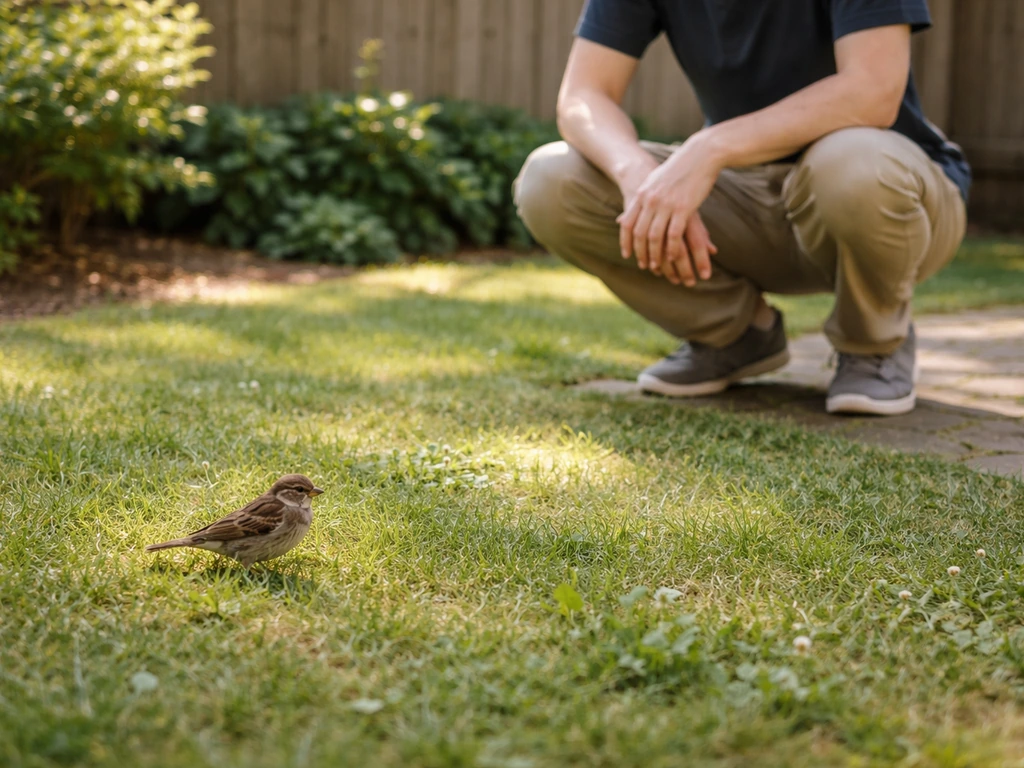
Before you do anything else, stand still and observe for two to three minutes. You're trying to answer two questions: Is this bird wild or a pet? And does it need immediate help or just some space?
Wild birds in your yard or neighborhood typically avoid close human contact, forage on their own, and show normal posture (upright, alert, feathers held tight against the body). A bird that approaches you without fear might be a hand-raised wild bird, a recently escaped pet, or simply a bold species like a house sparrow or crow. Clipped wing feathers are a useful clue that you're looking at a pet bird rather than an injured one. As PetMD explains, wing clipping is a common practice in captive bird care, and trimmed primary feathers look clean and deliberate rather than broken or ragged.
Signs that a wild bird needs help today: it's on the ground and can't fly, it has visible wounds or blood, one wing droops lower than the other, it's panting or holding wings away from its body (a heat stroke warning sign), or it's lethargic and won't move away from you. Signs that a bird is probably fine: it's a fledgling with some feathers, hopping on the ground near a tree, with parent birds nearby. Fledglings on the ground are almost always normal. Resist the urge to rescue them.
| What you see | What it likely means | What to do now |
|---|---|---|
| Clipped wing feathers, approaches humans, tame behavior | Escaped pet bird | Contain safely, check for owner/ID tag, contact local vets |
| On the ground, hopping, some feathers but not fully fledged | Normal fledgling | Watch from a distance, leave it alone unless a cat is near |
| Wing drooping, blood visible, won't move | Injured wild bird | Contain in dark box, call wildlife rehab immediately |
| Panting, wings held out, lethargic | Heat stroke or serious illness | Contain, keep cool/quiet, call rehab or vet immediately |
| Alert, foraging, flies short distances | Healthy wild bird | No intervention needed; set up feeders/water safely |
Immediate safety actions and what NOT to do
If the bird is on the ground in a dangerous spot, such as a sidewalk, driveway, or near a cat, you may need to act quickly. The priority in the first few minutes is reducing immediate hazards, not treating the bird.
Remove cats and dogs from the area first. Even a single cat swat that breaks the skin can cause a fatal bacterial infection in a bird within 24 to 48 hours. If you have outdoor cats, bring them inside now. If a neighbor's cat is nearby, gently shoo it away.
Window strikes are another immediate hazard worth addressing. The U. S. Fish and Wildlife Service notes that [birds hit windows both during the day (attracted by reflections) and at night (attracted by interior lights)](https://www.
fws. gov/story/threats-birds-collisions-buildings-glass). If a bird just hit your window, it may be stunned and sitting on the ground below the glass. In that case, place it in a small ventilated box and allow it to recover in a quiet space before releasing it.
To prevent future strikes, Nature Canada recommends placing feeders either less than 1 meter or more than 10 meters from windows, which dramatically reduces collision risk. For the window itself, the International Wildlife Rehabilitation Council notes that UV-reflective decals spaced approximately 2 inches (5 cm) apart can deter birds from approaching, and products like Acopian BirdSavers (hanging paracord strips) are among the most effective physical deterrents you can install today.
Standard hawk silhouette decals, by the way, rarely work reliably. If you want to prevent more strikes, go with physical barriers or properly spaced UV treatments rather than a single sticker.
The most important rule: do not feed or give water to an injured wild bird
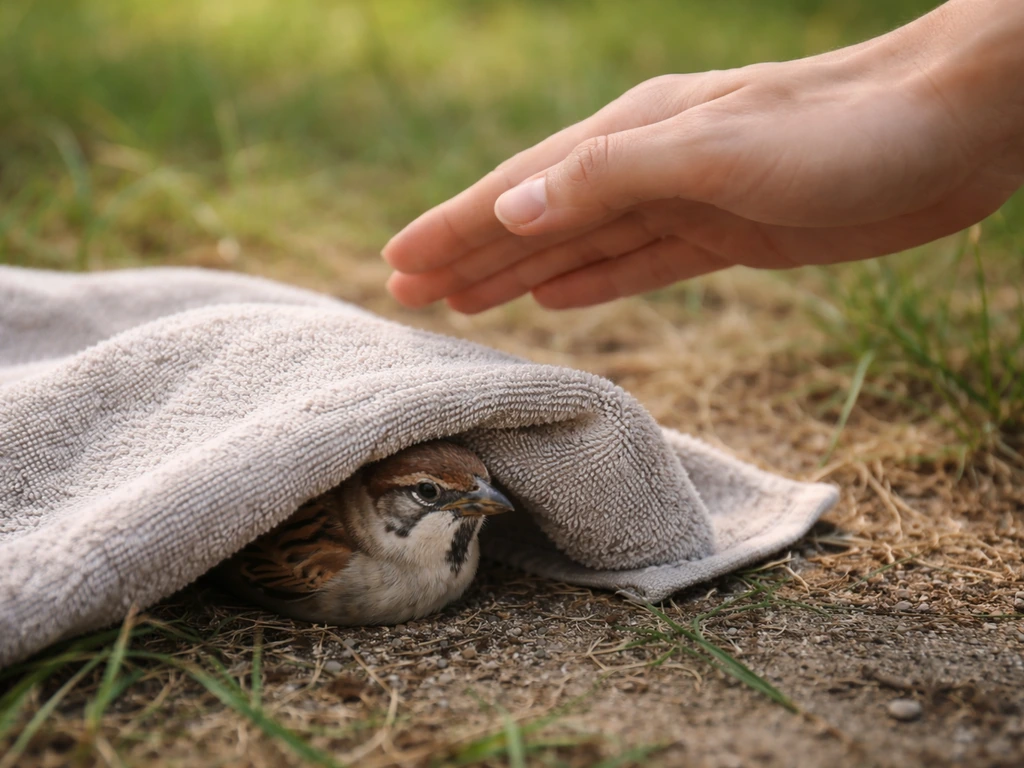
This is the single most common mistake people make, and it can be fatal. Multiple wildlife rehabilitation organizations are consistent on this point: do not feed or give water to a wild bird that appears injured, stunned, or lethargic unless a licensed wildlife rehabilitator has specifically told you to. Incorrect food can cause fatal digestive issues, and water poured into a bird's beak can cause aspiration. Keep the bird warm (around 85 to 90°F for songbirds), dark, and quiet in a ventilated cardboard box lined with a soft cloth, and get it to a professional as quickly as possible.
Triage: when to watch and wait vs when to call for help right now
Not every situation requires a phone call, but some definitely do. Use this as your decision framework.
Call a wildlife rehabilitator or vet immediately if you see any of the following: bleeding that won't stop, open-mouth breathing or tail bobbing with each breath, panting with wings held away from the body, a drooping wing that the bird cannot lift, the bird is cold and unresponsive, or the bird was caught by a cat or dog. These are emergency signs. Wings of the Dawn Wildlife Rescue notes that even noise, touch, and direct eye contact are stressful to an injured bird, so once you've placed it in a box, minimize all interaction until a professional can take over.
Watch and wait (up to an hour) if: the bird hit a window but is upright and alert, it's a fledgling on the ground near a bush, or it's foraging normally but seems slightly off to you. A stunned window-strike bird often recovers on its own within 20 to 60 minutes. If it hasn't flown away after an hour, that's your cue to contain it and make the call.
To find a licensed wildlife rehabilitator near you, the fastest option is Animal Help Now (AHNow.org), which gives you real-time, location-specific results. The Bi-State Wildlife Hotline also directs people there for emergency situations. If you can't reach anyone right away, keep the bird in a secure, ventilated box in a warm, dark, quiet room away from people and pets while you keep trying.
Building trust with yard birds: the patient approach
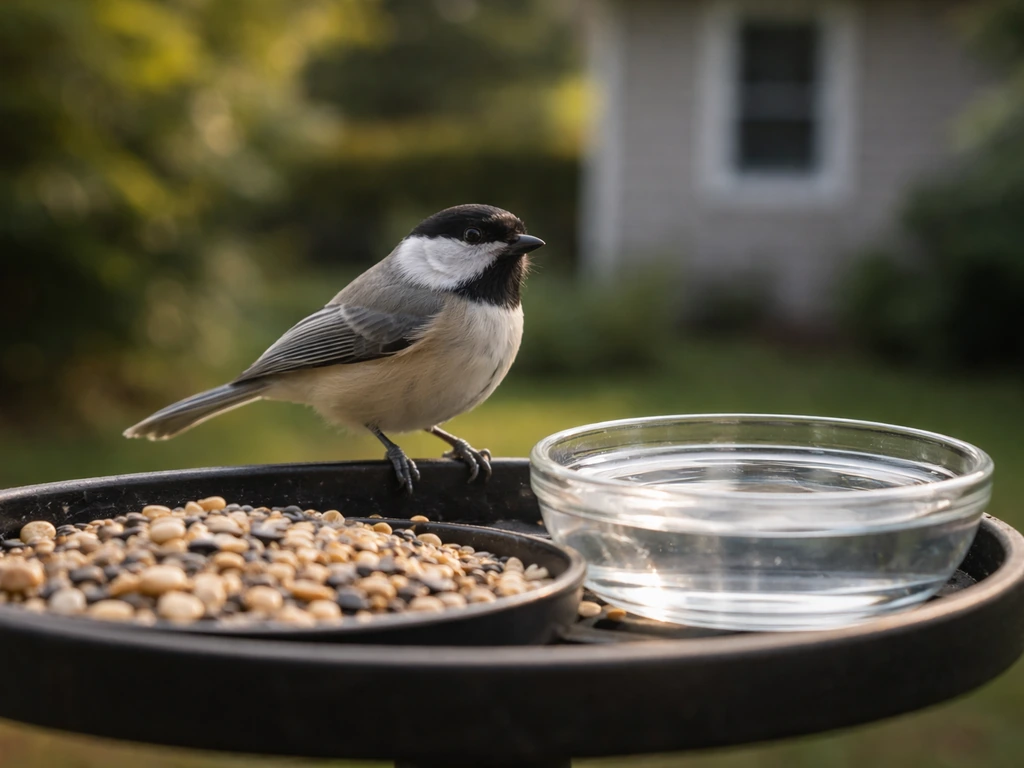
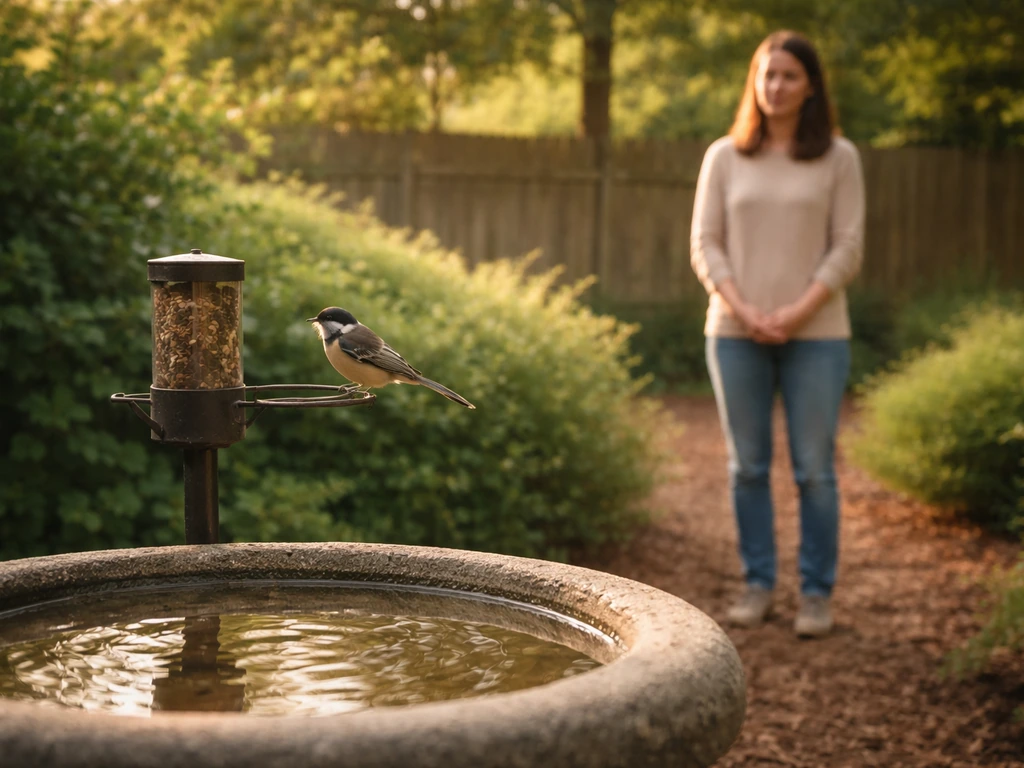
If the bird in your neighborhood is healthy and wild, and you want to attract it, feed it, or simply enjoy watching it, the approach is entirely different. This is about creating a safe, predictable environment where birds choose to come to you on their terms. Learning how to befriend a bird in your yard takes patience, but the results are genuinely rewarding.
Start with feeder and water placement. Place feeders away from windows (under 1 meter or over 10 meters), near natural shelter like shrubs or trees so birds have an escape route, and away from spots where cats can hide. A shallow birdbath nearby increases visits significantly. Keep it clean and refill it every one to two days to prevent mosquito breeding and bacterial growth.
Establish a routine. Fill feeders at the same time each morning. Birds are creatures of habit and will learn your schedule. Once birds are visiting regularly, try sitting nearby at a comfortable distance (6 to 10 feet to start) and staying still. Don't stare directly at them. Over days and weeks, reduce your distance slowly. Some bold species like chickadees, house finches, and nuthatches will eventually eat from a still, open palm if you've built up that trust gradually.
What not to do: don't chase, corner, or grab wild yard birds. Don't play recorded bird calls on a loop, as this stresses territorial birds and can interfere with breeding. Don't offer bread, crackers, or processed food. Stick to species-appropriate foods: black oil sunflower seeds for most songbirds, nyjer for finches, suet cakes for woodpeckers and nuthatches, or fresh fruit for orioles and robins.
Species-specific tips for pet birds
If the bird you're trying to help is a pet (your own or one you've taken in), the approach shifts toward taming, trust-building, and enrichment. The timeline varies significantly by species, age, and history. If you're new to this, reading up on how to make a bird your friend is a solid place to start for understanding the general principles before diving into species-specific work.
Parrots (African Greys, Amazons, Conures, Cockatoos, Macaws)
Parrots are highly intelligent, emotionally complex, and often go through fear phases when introduced to new people or environments. Give a new parrot two to three days of quiet settling-in time before you attempt any interaction. Talk softly from across the room. Offer treats (a small piece of almond or apple) through the cage bars without asking for anything in return. Once the bird is eating consistently and no longer flattening its feathers or hissing when you approach, you're ready to start step-up training.
Feather picking is a red flag in parrots and can have both medical and behavioral causes. The Merck Veterinary Manual notes that behavioral causes (boredom, sexual frustration, overstimulation from other pets) are suspected after medical causes are ruled out, while U.C. Davis points out that diet deficiencies, toxins, and infections are also common triggers. If you're seeing feather destruction, schedule a vet visit before making any behavior changes, because treating a medical problem with enrichment alone won't solve it.
Cockatiels
Cockatiels are one of the most forgiving species for beginners. An untamed cockatiel typically takes one to three weeks of daily, short (10 to 15 minute) sessions to become comfortable with hand interaction. Start by sitting next to the cage and reading aloud or talking quietly. Move to offering millet spray through the bars. Once the bird steps onto your finger inside the cage without scrambling away, begin working in a small, safe, bird-proofed room. Watch the crest: a flat, slicked-back crest means fear or aggression. A relaxed, slightly raised crest means calm and curious. A fully erect crest means excited or alert.
Budgies (parakeets)
Young budgies (under 12 weeks) tame up very quickly, often within a week of daily handling. Older or previously untamed birds take longer, sometimes four to eight weeks. The approach is the same: short daily sessions, treat-based positive reinforcement, and never forcing contact. Budgies are flock animals, so if you have a single bird that's struggling to bond with you, increasing your visible presence near the cage throughout the day (without demanding interaction) helps enormously. Mirror toys can reduce loneliness in the short term but can also create obsessive attachment, so use them sparingly.
Finches and canaries
Finches and canaries are generally not hands-on birds. Most owners enjoy them as aviary birds rather than handling companions, and that's perfectly appropriate for the species. Trying to force taming on a finch causes significant stress and is not humane. Focus instead on providing a large, well-planted cage, a varied diet (seed mix plus fresh greens and occasional egg food), consistent lighting (around 12 to 14 hours of light in spring and summer), and a calm environment away from predator pets. How to make bird friends with a finch looks very different from bonding with a parrot, and it mostly means letting them thrive on their own terms.
Handling and training basics: consent, bites, and stress
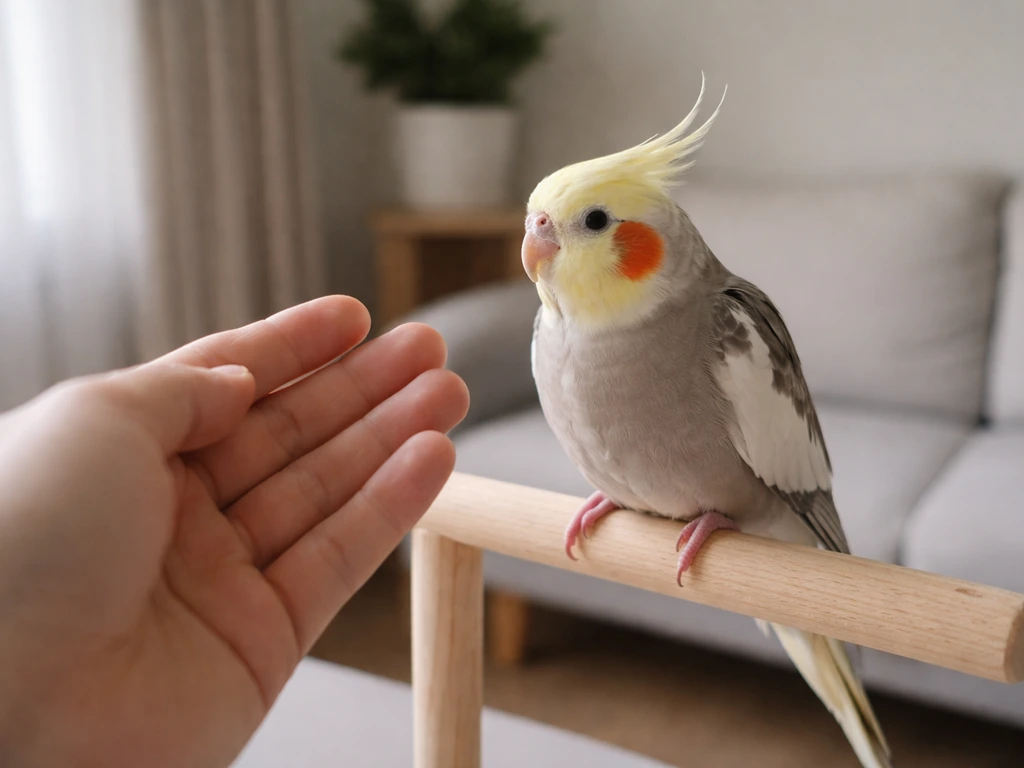
The single most important principle in handling any bird is consent-based training. Forcing a bird to step up onto your hand before it's ready almost always results in a bite and sets back your progress by days or weeks. The Gabriel Foundation is direct about this: forcing a step-up produces bites, and bites make the bird more fearful, not less.
Start with targeting instead. Targeting means teaching the bird to touch its beak to a target stick (a chopstick or pencil works fine) in exchange for a treat. It's low-pressure, the bird controls the interaction, and it builds confidence fast. Once targeting is reliable, you can use the target stick to guide the bird onto your hand or to a perch. This is the foundation of clicker training for birds, and it works across all parrot species. Understanding how to show a bird you're friendly is really about learning to read its body language and respond to what it's telling you, not just performing a set of handling steps.
If a bird bites you, do not jerk your hand away sharply (this can injure the bird), do not yell or punish it, and do not end the session abruptly in a way that reinforces the bite as an escape behavior. Calmly set the bird down on a neutral perch, take a breath, and assess what caused the bite. Common causes: you moved too fast, the bird was tired, it was protecting a food item or perch, or it was overstimulated. Short sessions (five to ten minutes maximum for new birds) prevent most bite situations before they happen.
Signs of stress to watch for during any session: feather flattening, rapid breathing, repeated head-turning to look at the exit, regurgitation (in parrots), lunging, or loud distress calls. When you see these, stop the session. Pushing through stress signals is one of the fastest ways to permanently damage trust with a bird. There's a lot more depth on this topic if you explore the Vincenzo approach to befriending birds, which covers consent-based bonding in detail.
Legal limits, ethical lines, and your next steps
Before you try to rehabilitate a wild bird yourself, you need to understand the legal reality. In the United States, the Migratory Bird Treaty Act prohibits capturing or possessing most wild bird species without federal authorization. This includes common songbirds. State laws add another layer: Florida, Washington, Michigan, South Carolina, North Carolina, and most other states require a wildlife rehabilitation permit to care for injured or orphaned wild birds.
What this means practically is that beyond placing an injured bird in a box to transport it to a licensed rehabilitator, you are not legally permitted to provide ongoing care. This isn't a technicality; it exists because proper rehabilitation requires specialized diets, medical care, and behavioral conditioning that takes months and specific expertise.
For pet birds, the ethical lines are different. You are absolutely permitted to train, handle, and care for your own pet birds, but humane care standards still apply. Prolonged isolation, inadequate diet, using punishment-based training methods, or ignoring signs of illness and feather disease are welfare concerns that should prompt a vet visit, not a YouTube search.
Your practical next-steps checklist
- Observe first. Spend two to three minutes watching before touching or approaching. Identify wild vs pet, healthy vs injured.
- Remove immediate hazards: bring in cats and dogs, clear the area of foot traffic.
- If injured wild bird: place in a ventilated cardboard box lined with a soft cloth, keep warm (85 to 90°F), dark, and quiet. Do not feed or give water.
- Call for help: use Animal Help Now (AHNow.org) or call your local wildlife rehabilitator. Have the bird's location, species if known, and observed symptoms ready.
- If a pet bird: give it 24 to 48 hours to settle before attempting handling. Start with short, treat-based sessions. Use targeting before step-up.
- For yard birds: set up feeders and water at safe distances from windows. Establish a daily routine. Sit quietly nearby and let birds approach on their terms.
- Address window hazards: install properly spaced UV decals or physical deterrents like Acopian BirdSavers if collisions are a recurring problem.
- If feather picking or illness is present in a pet bird: schedule a vet visit before making behavior or diet changes.
- Follow up: check on a recovering window-strike bird every 15 minutes. Contact the rehab center for updates on a transferred wild bird. Log daily progress in taming sessions.
Helping a bird well comes down to slowing down, making accurate observations, and matching your response to what the bird actually needs rather than what feels helpful in the moment. Whether you're trying to earn the trust of a nervous cockatiel or get an injured sparrow safely to a rehabilitator, the same principle applies: calm, consistent, low-pressure action gets better results than urgency. You've got this.
FAQ
How can I tell if a baby bird is a fledgling versus something that needs rescue?
Look for flight capability and context. Fledglings usually can hop and flutter, and they are often close to a tree or bush with adult birds nearby calling. If the bird is feathered but has trouble standing, has a visible injury, is soaking wet, or is in a location where it is clearly in immediate danger (runway-like road, driveway with active cars, direct cat reach), it is more likely to need professional help than a simple “wait and watch” approach.
What should I use to pick up a wild bird if I must move it for safety?
Use minimal contact and good control. Wear thick gloves, move slowly, and place the bird directly into a secure, ventilated box rather than carrying it around. Avoid squeezing the chest. If you cannot safely secure it, prioritize keeping pets and people away and call a wildlife rehabilitator for guidance on the best next move.
Should I put a wild bird back outside if it regains movement inside the box?
Often yes, but do it carefully and only after the bird is responsive enough to stand and reorient. Place the box outside in a quiet, sheltered spot, open the door, and let the bird exit on its own. Do not force handling, and if it seems disoriented, cold, or keeps sitting low and unmoving, keep it contained and contact a professional instead of releasing immediately.
If a bird is panting or holding wings away from its body, can I cool it with water?
Do not pour water into the beak or aggressively mist the bird. For suspected heat stress, move it into a cool, shaded, quiet area and focus on stabilizing in a ventilated box while you contact a wildlife rehabilitator or vet. Improper cooling can worsen stress or aspiration risk, so use gentle environmental cooling rather than direct water application.
What if I suspect the bird is a pet but I am not sure, should I still follow the “do not feed” rule?
If there is any sign of injury, lethargy, stunned behavior, or you are handling uncertain, treat it like a wild bird and avoid feeding. For likely escaped pets, the immediate goal is safe containment and contacting the right help, such as an avian-experienced vet or the local parrot rescue, because wrong food and water delivery can harm even healthy birds.
How long can I keep trying to observe before I contact help?
Use short intervals. A brief 2 to 3 minute assessment can clarify wild versus pet behavior, then switch to a decision window based on danger level. If the bird is injured, has persistent breathing difficulty, or is in an active hazard zone, do not delay for extended observation, contain it and contact a professional right away.
What should I put in the box for warmth and safety if the bird is injured or stunned?
Use a ventilated cardboard box and a soft cloth lining for gentle footing. Keep the bird dark and quiet, and use an external heat source rather than direct heating pads that can overheat. If you notice the bird moving away from the warmth or overheating cues, stop the heat source and seek professional guidance.
Can I use a towel to cover the bird or help it calm down?
A light cover can reduce visual stress in some cases, but it should not restrict breathing or ventilation. Avoid wrapping tightly, and do not use materials that can snag feathers. If covering makes the bird more distressed or overheats the box, remove the cover and focus on quiet, dark conditions.
What foods are safest while waiting, if I accidentally think I should feed a wild bird?
The safest answer is to not feed or offer water to an injured or stunned wild bird. If you are determined to help because the bird appears uninjured but you are uncertain, call a rehabilitator for species-specific instructions rather than improvising food, because even “bird seed” can cause problems depending on diet needs.
Does putting cat deterrents and window decals count as “helping” the same bird?
Yes, in a prevention sense, but it does not replace emergency care for a currently injured or stunned bird. Prevention steps like correctly placed feeders and properly spaced UV deterrents reduce future incidents for nearby birds, including collisions and predation risk.
If a wild bird seems healthy but is repeatedly returning to my porch, how do I make it safer?
Treat it like an ongoing hazard-reduction problem. Check for reflective surfaces, reduce window collision risk with correctly spaced UV patterns or physical barriers, and ensure feeders and birdbath areas provide escape cover without letting cats ambush. Also, keep outdoor pet traffic minimal near the space the bird is using.
What should I do if a bird bite happens during consent-based training?
Do not yank your hand away quickly and do not punish. End the session calmly by placing the bird on a neutral perch, then reassess triggers like overstimulation, hunger, or too-fast movement. Keep sessions short (often 5 to 10 minutes for new birds), and resume later with lower-pressure steps such as targeting to rebuild confidence.
How can I tell if my pet bird’s feather issues are medical versus behavioral?
Use the presence of additional symptoms as a decision aid. Feather picking paired with changes in appetite, lethargy, fluffed posture for long periods, droppings changes, or sudden odor or skin changes strongly suggests medical issues and should be assessed by an avian vet before behavior changes. If the bird is otherwise well but the behavior is escalating due to boredom, overstimulation, or stress, a vet can still help confirm it is safe to proceed with environmental and training adjustments.
Next Article
How to Befriend a Wild Bird Safely in Your Yard
Step-by-step safe ways to befriend a wild bird with food, water, shelter, distance, and trust building.