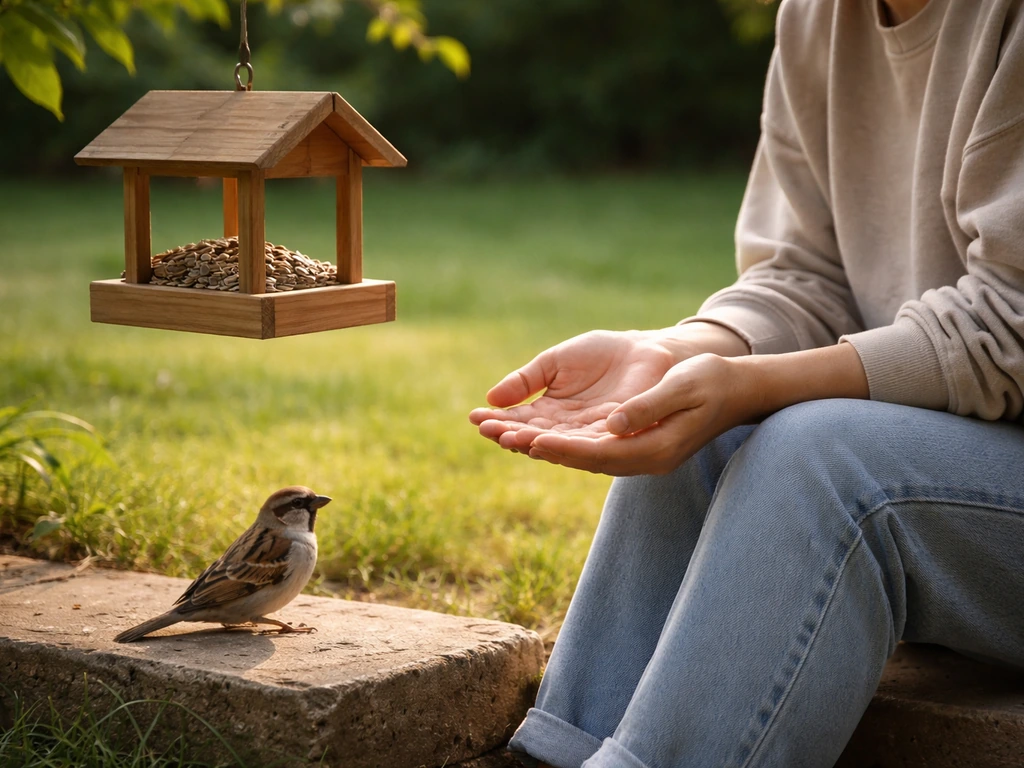
Making a bird your friend comes down to three things: giving the bird a safe, low-stress environment, letting it set the pace, and rewarding every small step toward you with something it genuinely wants. If you want more structured guidance, a good book on how to befriend a bird can lay out routines, timing, and handling steps how to befriend a bird book vincenzo. Whether you have a new budgie staring at you from the corner of its cage or a chickadee visiting your backyard, the core principle is the same: trust is earned, not forced. With the right setup, consistent routines, and a solid read on what the bird is telling you with its body, most birds will voluntarily choose to be near you within weeks to months.
How to Make a Bird Your Friend: Humane Steps
Clara Hayes
26 Apr 2026
Start with the right setup and clear safety boundaries
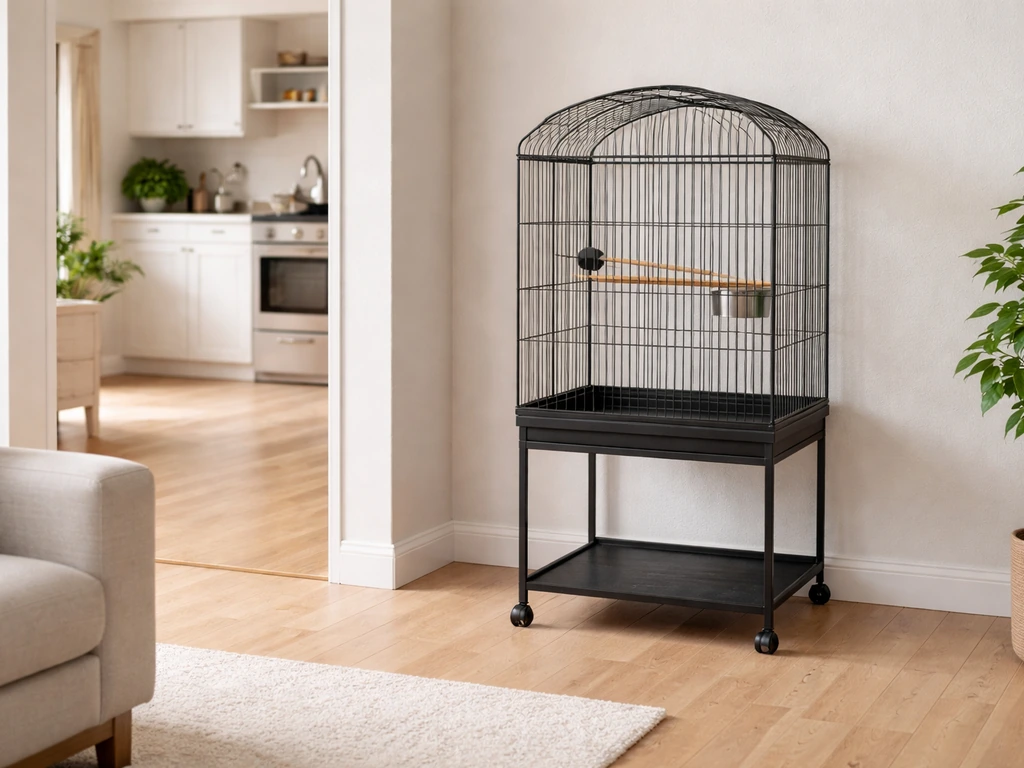
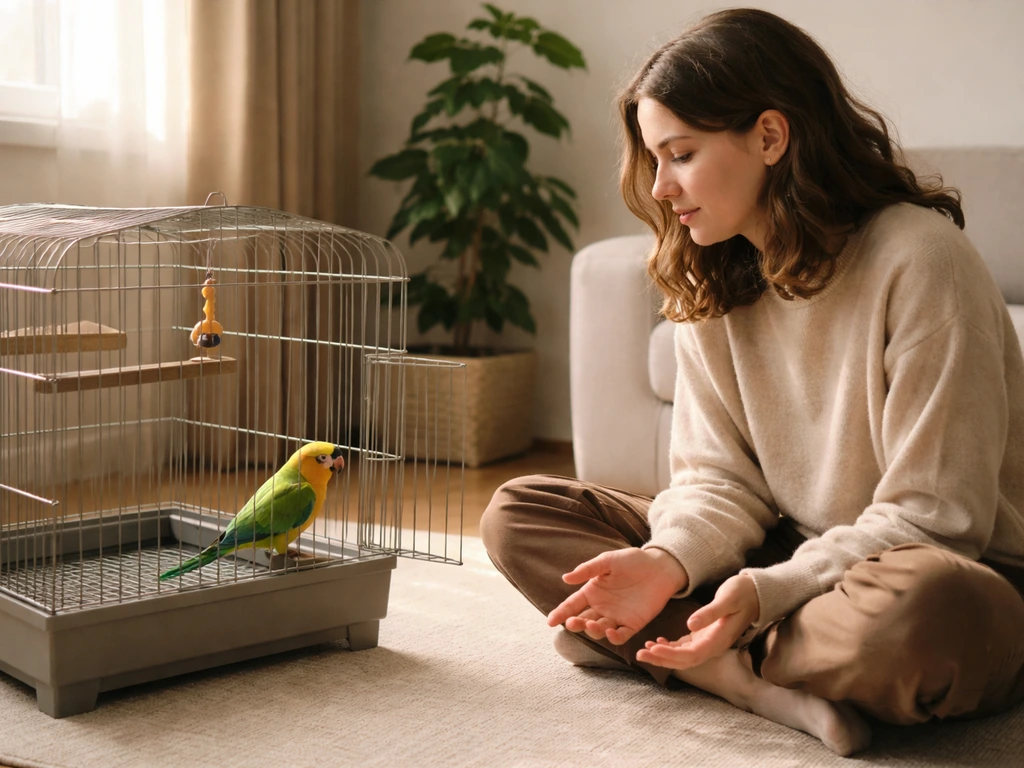
Before you even try to interact, get the environment right. For pet birds, cage placement matters more than most beginners realize. Keep the cage away from the kitchen entirely: cooking fumes, especially from non-stick cookware, can be lethal to birds. Place it in a room where the family spends time so the bird gets used to human activity without being overwhelmed. Match the lighting to natural day/night cycles as closely as possible, ideally with a timer-controlled full-spectrum bulb, so the bird stays on a predictable schedule. A bird that is chronically sleep-deprived or stressed by unpredictable light is going to be harder to befriend.
Safety cuts both ways: yours and the bird's. [Birds can carry Chlamydia psittaci, the bacteria behind psittacosis, a respiratory illness that can infect humans. ](https://www. ncbi.
nlm. nih. gov/books/NBK538305/) This is not a reason to panic, but it is a reason to wash your hands before and after every handling session, to avoid touching your face during interactions, and to never handle a bird that appears sick or lethargic. If you notice persistently fluffed feathers paired with low energy (not just post-bath fluffing or nap-time puffing), that bird needs a vet visit before training continues.
Avoid cleaning the cage without appropriate precautions like gloves and good ventilation, and do not let anyone with a compromised immune system handle the bird until you have confirmed it is healthy.
- Place the cage in a main living area, not the kitchen or a drafty hallway
- Use a timer to maintain consistent light/dark cycles that mirror sunrise and sunset
- Wash hands before and after every session
- Never handle a bird showing signs of illness (fluffed feathers, lethargy, watery droppings)
- Keep the cage at or slightly below eye level so the bird does not feel dominated
- Remove obvious hazards: open water containers, other pets in the room, loud sudden noises
Humane taming steps that actually build trust
The biggest mistake people make is rushing. A bird that is cornered or grabbed does not learn that you are safe; it learns that you are a threat. Start by simply being present. Sit near the cage, speak softly, and do something calm like reading. Do this for a few days before you try anything else. You are letting the bird file you under 'not a predator' in its brain, and that takes repetition, not drama.
Once the bird is comfortable with your presence (it is eating normally, exploring its cage, and not alarm-calling every time you walk in), move to the next step: hand-feeding through the cage bars or an open door. Use small, high-value treats: millet spray for budgies and cockatiels, a small piece of fruit or nut for parrots. Hold the treat still and wait. Do not push it at the bird. The moment the bird takes it, even tentatively, that is progress. Repeat this daily, keeping sessions short (five to ten minutes maximum) so the bird stays curious and not overwhelmed. This can look like small, repeatable sessions that teach the bird that your presence is friendly and safe.
When the bird is reliably taking treats from your stationary hand, you can begin asking it to come to you by positioning the treat slightly further away each session. Eventually you work toward the bird stepping onto your hand voluntarily to get the reward. The word 'voluntarily' is key here: if the bird steps back, leans away, or starts to look agitated, the session is over. End on a positive note by giving a treat anyway, then try again tomorrow. Progress measured in small wins adds up fast.
Positive reinforcement and daily routines
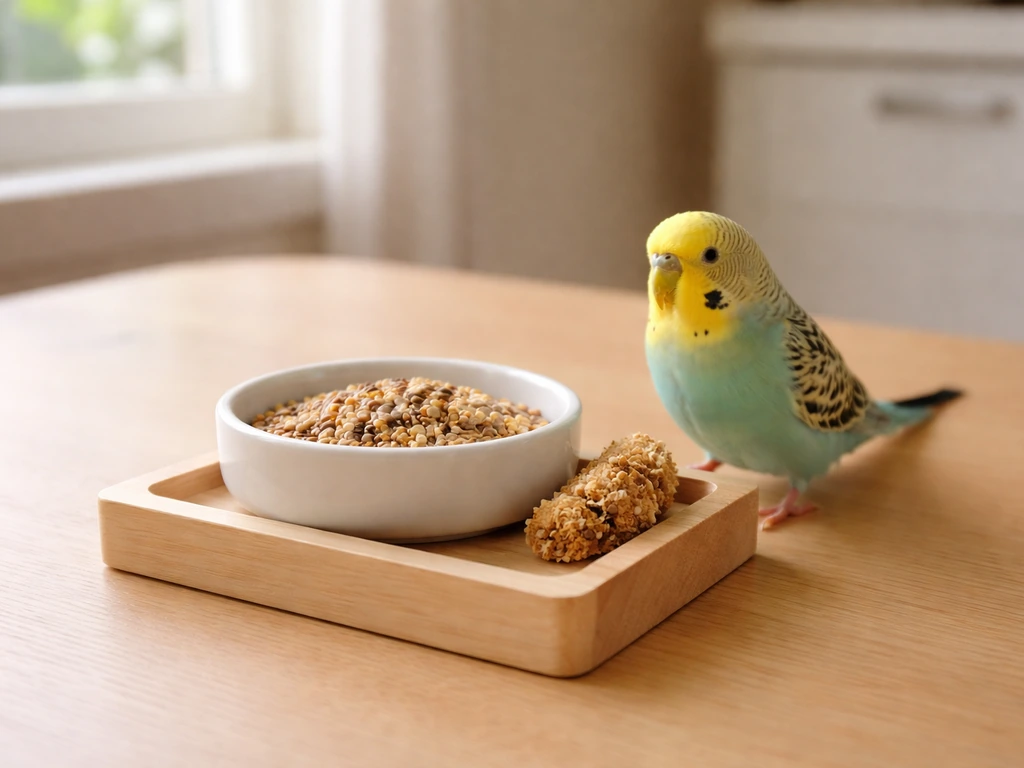
Positive reinforcement is not just a training technique here; it is the entire philosophy. You are teaching the bird that choosing to be near you predicts good things. The most effective tool is a marker: a short, consistent sound (a click from a clicker, or a spoken word like 'yes') delivered the instant the bird does what you want, followed immediately by a small food reward.
The marker needs to happen within one to two seconds of the behavior or the bird cannot connect the two. Pair the marker with a treat at least ten times in a row before you start using it to mark specific behaviors, so the bird firmly understands that the sound means a reward is coming.
Routine is just as important as the reward itself. Birds are creatures of habit, and a bird that knows 'every morning at 8am, the human sits down and good things happen' is going to start anticipating and even initiating contact. Keep training sessions short (five to fifteen minutes), at the same time each day if possible, and always end before the bird loses interest. Boredom and frustration during sessions set your progress back. If the bird stops engaging, eating treats, or starts preening excessively, it is done for the day.
Target training is a particularly useful early step. You teach the bird to touch a target stick (a chopstick or a commercial target wand) with its beak in exchange for a click and treat. This gives the bird a clear, achievable task, keeps sessions focused, and teaches the bird that participating in training is fun and under its own control. From there you can use the target to guide the bird onto a perch, into a carrier, or toward your hand, all without any physical coercion.
Species-specific guidance: parrots, cockatiels, budgies, and finches
Parrots (medium to large species)
Parrots are highly social and intelligent, which means they bond deeply but also test boundaries constantly. A parrot that bites is often not being aggressive in a true sense; it is communicating. Respect warning signals (see the body language section below) and never punish a bite by yelling or pushing back, because this either frightens the bird or, for a bold parrot, turns into an exciting game. With larger parrots especially, use a designated 'step up' cue consistently, reward compliance every time in early training, and make sure the bird has plenty of out-of-cage enrichment so it is not bored when you do interact. Expect the trust-building process to take several weeks to several months depending on the bird's history.
Cockatiels
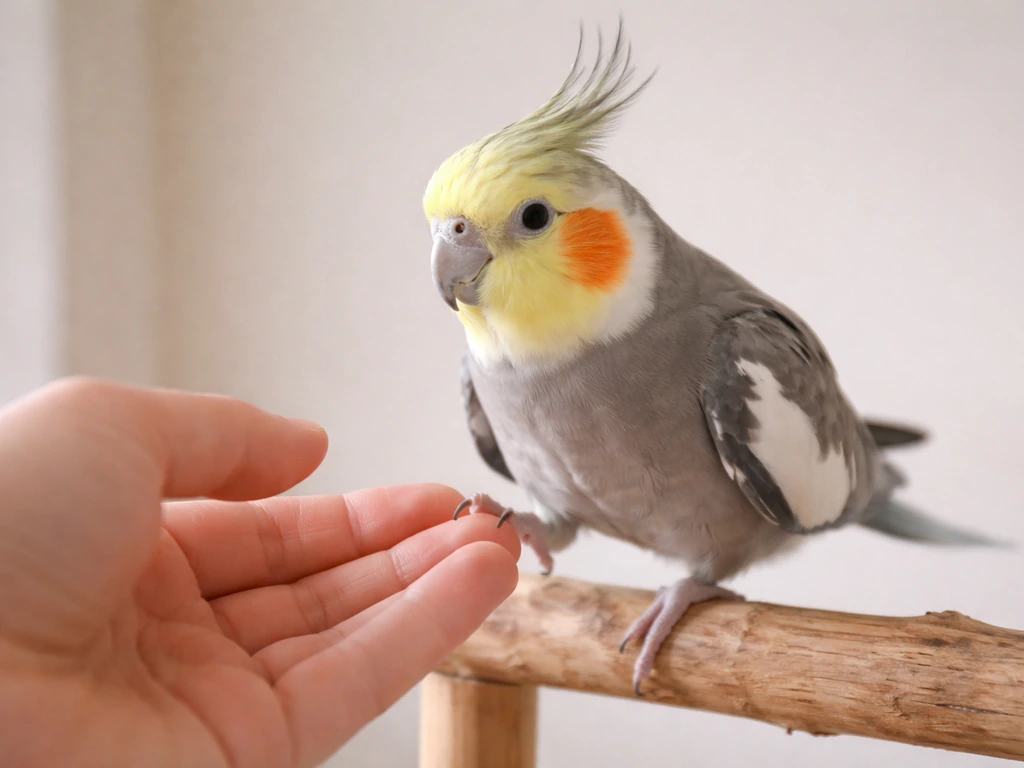
Cockatiels are among the most naturally social pet birds and tend to warm up faster than most parrots if you are consistent. They communicate heavily through their crest: flat and slightly back means relaxed or curious, fully erect crest signals excitement or alarm, and a slicked-down crest is a sign of fear or aggression. Watch the crest during every session and adjust accordingly. Cockatiels respond very well to gentle whistling and will often try to mimic sounds you make, which is a great bonding tool. Daily out-of-cage time in a bird-safe room accelerates trust dramatically for this species.
Budgies (budgerigars)
Budgies are tiny but have big personalities, and they can become incredibly affectionate if tamed patiently. The main challenge is that their small size makes them fast to feel threatened, so slow and low movements are critical. Millet spray is your best friend with budgies: hold a sprig between your fingers inside the cage for five minutes a day and let the bird come to you at its own pace. Once a budgie is comfortable eating from your hand, it will often progress quickly to climbing onto fingers and exploring. Avoid grabbing or cupping a budgie in your hand for restraint during taming; it resets all your progress.
Finches
Finches are fundamentally different from the parrot family. Most finch species (zebra finches, society finches, Gouldians) are not naturally inclined to become hand-tame in the same way, and that is fine. Their version of friendship is being comfortable enough in your presence to sing, court, forage, and behave naturally while you are nearby. Pushing for hand contact with most finches causes chronic stress and is not in the bird's best interest. Instead, focus on being a predictable, calm presence, providing excellent foraging opportunities and enrichment, and appreciating the bond for what it is. If you specifically want a more touch-oriented relationship with a small bird, a budgie or cockatiel is a better starting point.
| Species | Typical taming timeline | Best reward | Key signal to watch | Touch-tame potential |
|---|---|---|---|---|
| Large parrot (African grey, Amazon, Cockatoo) | 2 to 6+ months | Nuts, fruit pieces | Eye pinning, feather position | High, but requires patience |
| Cockatiel | 2 to 8 weeks | Millet, soft fruit | Crest position | High |
| Budgie | 3 to 10 weeks | Millet spray | Body posture, tail bobbing | High with consistent work |
| Finch | Rarely hand-tame | Fresh greens, live food | Singing and normal behavior | Low; presence-comfort is the goal |
Attracting and socializing wild yard birds the right way
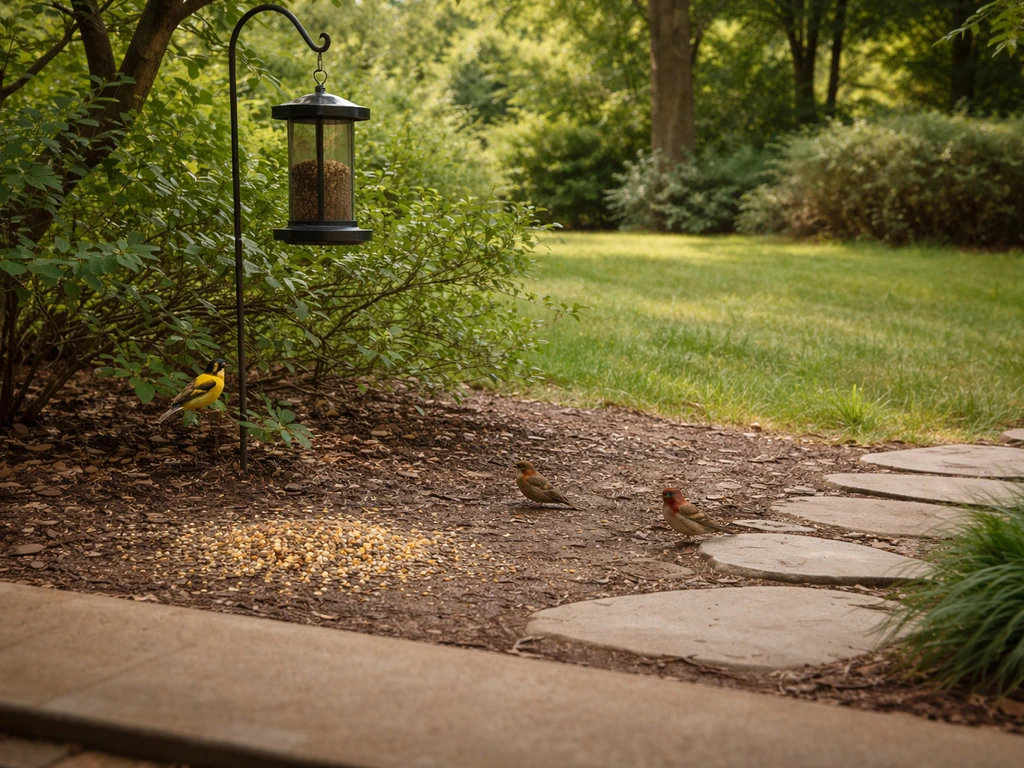
Wild birds are a completely different situation, and the ethical line here is important to understand before you start. The goal with wild birds is not to tame them or make them dependent on you; it is to create conditions where they feel safe enough to go about their natural behavior while you observe and appreciate them from close range.
There is a real difference between a chickadee that lands a few feet away because your yard is a reliable, safe habitat and a bird that has lost its natural fear of humans because people have been hand-feeding it. The first is a healthy, wild bird that happens to tolerate you. The second is a bird whose survival instincts have been compromised.
USDA APHIS is direct about the risks of feeding wildlife: animals that associate humans with food can become aggressive, lose road-wariness, and in worst cases have to be removed by wildlife managers. Full food dependency also makes birds vulnerable if the food source disappears suddenly. None of that is friendship; it is harm with good intentions. The better approach is habitat-based attraction.
A well-designed bird bath does more for wild bird socialization than almost anything else. Use a shallow bath with sloping sides, no deeper than about 10 cm (4 inches) at its deepest point, so birds of all sizes can wade safely. Place it near a shrub for cover but with clear sightlines so birds can watch for predators. Refresh the water daily. Combine this with native plantings that produce seeds and berries, and you create a yard that birds return to repeatedly, which in turn creates repeated low-stress exposure to your presence. Over time, as you sit quietly in the same spot at the same time, birds will habituate to you as part of the landscape rather than a threat.
If you do use a feeder, keep it clean (dirty feeders spread disease), choose appropriate seed for local species, and never offer food from your hand to wild birds repeatedly with the goal of creating dependency. Occasional brief hand-feeding in controlled contexts (like a garden where chickadees are already very tame and accustomed to humans from years of safe contact) is different from deliberately conditioning a wild bird to approach humans for food. Know your local wildlife laws too: in the U.S., all native songbirds are protected under the Migratory Bird Treaty Act, and any attempt to capture, keep, or disturb nesting birds is illegal.
Reading body language and working through fear or aggression
Bird body language is your most important feedback tool, and learning to read it fluently is what separates someone who makes real progress from someone who keeps getting bitten and confused. Here are the signals that matter most:
| Signal | What it usually means | What to do |
|---|---|---|
| Feathers slightly fluffed, eyes half-closed, one foot tucked | Relaxed, comfortable, may be napping | Great sign; proceed calmly |
| Feathers fluffed AND lethargic, not interested in food | Possible illness, not comfort | End session, consider vet visit |
| Leaning forward, feathers slicked down, beak open | About to bite, clear warning | Stop, give the bird space |
| Leaning away, moving to the back of the cage/perch | Does not want interaction right now | Respect it, try again later |
| Rapid tail wagging (parrots) | Excitement or agitation | Read context; pause if unsure |
| Pinning eyes (pupils rapidly dilating and constricting) | High arousal; can be excitement or aggression | Proceed very carefully or stop |
| Relaxed beak grinding (small circular motion) | Content, about to sleep | Excellent sign of comfort |
| Alarm call or loud repeated vocalization | Something feels threatening | Identify and remove the stressor |
Biting happens for several reasons: fear, over-excitement, territorial behavior, hormonal surges, or what veterinarians call displaced aggression (the bird is stressed by something else and you are the nearest available target). The response to a bite should never be punishment. For a fear-biter, punishment confirms that you are dangerous. For an attention-seeking or excitement-biter, your reaction becomes a reward. Instead, calmly remove yourself from the interaction, wait for the bird to calm down, and try again in a shorter, lower-intensity session next time. Review your pacing: if a bird is biting regularly, you are probably moving too fast.
Fear in new birds is completely normal and not a sign that the bird will never trust you. A bird that freezes, tries to flee, or crouches when you approach simply has not yet learned that you are safe. The fix is more time at the earlier stages: more quiet presence, more hand-feeding through the cage, more marker-reward pairing before you ask for anything close or physical. Some birds that were poorly socialized as young birds or had negative experiences with humans take longer, but very few are truly beyond building a positive relationship if you are consistent and patient.
Handling, consent, and building a relationship that lasts
The cooperative care model, developed by veterinary behavior specialists, is the gold standard for how to think about handling. The idea is simple: give the bird a meaningful choice in every interaction, and pay attention to what it is telling you moment to moment. A bird that actively steps onto your hand, moves toward you, and stays relaxed on your hand is consenting to the interaction. A bird that is perched on your hand because it is trapped there and looks for any opportunity to leave is not. Those two situations feel the same if you are only watching the surface behavior, but they produce completely different long-term results.
Practical consent looks like this: offer your hand or arm as a perch option, but do not force the bird onto it. Use your step-up cue consistently so the bird knows what the gesture means. If the bird steps up and then immediately steps off, let it. If it stays, reward it.
Over time, the bird learns that stepping up leads to good things and that it is free to leave when it wants to, which paradoxically makes it more likely to stay voluntarily. This is the same principle behind why a bird that has always been allowed to leave your hand tends to perch on people's shoulders of its own accord, while a bird that has been held against its will often bites the moment it gets the chance.
For specific physical care like nail trims or beak checks, you can train acceptance the same way: reward the bird for allowing you to touch its feet, first briefly, then for progressively longer contact. This cooperative grooming approach reduces stress dramatically compared to restraining the bird, and it also deepens the trust relationship because the bird learns that even slightly uncomfortable things end quickly and are followed by rewards.
Long-term friendship with a bird is maintained the same way it is built: consistency, respect for the bird's signals, and making sure your presence consistently predicts good things. As you practice these daily, low-pressure steps, you’ll be following the same approach behind how to help the bird in my friendly neighborhood. Spend time near the bird without always asking for something. Talk to it. Let it watch you do normal activities. Birds that become truly bonded to their people are almost always birds whose people made daily, low-pressure time with them a habit rather than a project. The relationship deepens gradually over months and years, and the birds that get there are genuinely rewarding companions.
Your next steps at a glance
- Set up the environment correctly first: safe cage placement, natural light cycles, no kitchen fumes, other pets separated
- Establish your hygiene routine: handwashing before and after every session, no handling sick birds
- Spend 5 to 10 minutes daily just being present near the bird without demanding interaction for the first week
- Introduce hand-feeding through the cage: hold a treat still and wait for the bird to come to you
- Pair a marker sound (click or 'yes') with a food reward at least 10 times before using it to mark behaviors
- Introduce target training once the bird is comfortable taking treats from your hand
- Practice step-up training using your consistent cue, rewarding every successful step-up, and always respecting refusals
- For wild birds, build habitat (native plants, a clean shallow bird bath) rather than creating food dependency
- Check body language at the start of every session and adjust or stop based on what you see
- Keep a simple log of what worked, what triggered stress, and how long sessions lasted so you can track progress
FAQ
How long does it usually take to make a bird your friend?
Most birds show meaningful changes in weeks to months if the routine stays low-stress and consistent. The key checkpoint is whether the bird starts choosing to approach for treats or to relax during your presence, not how quickly it lets you touch it.
What should I do if my bird looks calm but suddenly bites?
If a bite happens after the bird seems fine, stop and treat it like new information. End the session immediately, wait for normal behavior (eating, quiet posture), then resume later with a shorter, earlier-stage exercise (like stationary treat delivery) to reduce intensity.
Is it okay to handle my bird if it tolerates me but does not step up willingly?
If the bird steps up only to escape immediately or looks tense, it is not a reliable consent signal. In that case, keep interactions focused on voluntary perching and treat delivery, and only proceed with touching when the bird shows consistent relaxed choices.
How can I tell fear versus excitement when my bird is acting aggressively?
Fear often comes with crouching, freezing, attempts to flee, or a generally shut-down body. Excitement can look bouncy and alert, sometimes with rapid movements. Either way, the fix is the same for training progress, reduce intensity and lengthen the “observe and treat” stage before asking for contact.
What treats should I use, and what are common treat mistakes?
Use small, high-value treats so the reward is clear, millet spray for many small seed-eaters (like budgies and cockatiels) and small fruit or nut pieces for larger birds, in tiny amounts. Avoid big portions or frequent messy foods that can cause digestive upset and can also reduce your treat value over time.
How do I start if my bird is not eating when I’m near the cage?
Go back a step and reduce the session pressure. Sit nearby, offer food through the bars without reaching, and use a marker only when the bird engages with the environment (like approaching or taking nearby food). If the bird still refuses food consistently, pause training and consider a vet check.
Can I train multiple birds in the same room?
Yes, but only if you can keep them from escalating each other. Use separate cages or barriers, do sessions when one bird is not visibly reacting to the other, and never let competition for treats turn into lunging or crowding.
Why does my bird sometimes preen excessively right after I try to step it up?
Over-preening during or right after handling can be a stress displacement behavior for some birds. If it happens, treat that as a signal to shorten sessions, increase distance, and rebuild at a stage where the bird is relaxed enough to eat and explore.
What if I want my bird to be friendly but I am busy, can I do fewer sessions?
Consistency matters more than session length, but you still need predictable exposure. If you cannot do long training, do brief daily sessions (a few minutes) and add “non-demand time” where you sit nearby and talk without asking for stepping up or touching.
Should I use a clicker or a word as my marker?
Either works, but the marker must be consistent and delivered within one to two seconds of the desired behavior. If using a spoken marker, keep the word short and steady in tone, and make sure everyone in the household uses the same cue.
How do I train step-up safely if my bird keeps leaning away or stepping off?
Keep the treat and step-up cue position stable, reward for any level of approach, and stop immediately when the bird leans away or becomes agitated. Progress is measured by voluntary acceptance, you move the next step only after the bird can repeat the current step calmly.
Can I socialize a bird without ever letting it perch on me?
Yes. Friendship can start with voluntary cage-edge interaction (treats, target touches, relaxed presence) and can progress to perches in the room without requiring the bird to be on your body. This is especially helpful if your goal is comfort and trust first.
What’s the safest way to clean the cage while I’m building trust?
Clean at times when the bird is not expecting interaction, and avoid creating sudden stress triggers near the cage. Use appropriate gloves and ventilation, and prevent fumes from lingering, then return to quiet, predictable interaction afterward with treats so cleaning does not erase trust.
What should I do if I think my bird might be sick?
Do not continue training that involves close handling if the bird is fluffed with low energy, breathing issues, or showing persistent lethargy. Prioritize a vet visit and keep interaction low-pressure at a distance until you have clearance, since stress can worsen symptoms.
How should I handle wild birds versus pet birds if I want them to be around me?
For wild birds, focus on habitat-based attraction, reliable water (shallow bath with easy access), safe cover, and native plants that produce food. Avoid repeated hand-feeding aimed at dependency, it can reduce their natural wariness and can create long-term risk.
Do I need gloves for handling if I’m worried about psittacosis?
Gloves can help, but the most reliable protection steps are handwashing before and after sessions, avoiding touching your face, and not handling birds that look unwell. If anyone in your home is immunocompromised, coordinate with a vet before resuming contact.
My bird is biting during excited moments, how do I stop making it worse?
Remove yourself calmly and end the session, do not escalate with yelling or sudden restraint. Next time, start with a lower-intensity task such as stationary treat delivery, and rebuild gradually so the bird learns your presence predicts calm rewards, not dramatic reactions.
Next Article
How to Make Bird Friends: Trust Building for Pets and Wild Birds
Humane steps to build trust with pet parrots, cockatiels, budgies, finches and wild backyard birds safely.