You can tame a pet dove in as little as one to three weeks using calm, consistent presence and food-based positive reinforcement. Wild doves are a different story: the goal there is earning trust at a distance, not direct handling. Either way, the process starts the same way: figure out what kind of dove you have, read its current stress level honestly, and build from there without ever forcing contact.
How to Tame a Dove Bird: Humane Step-by-Step Plan
Clara Hayes
23 Apr 2026
Know Your Dove Before You Do Anything Else
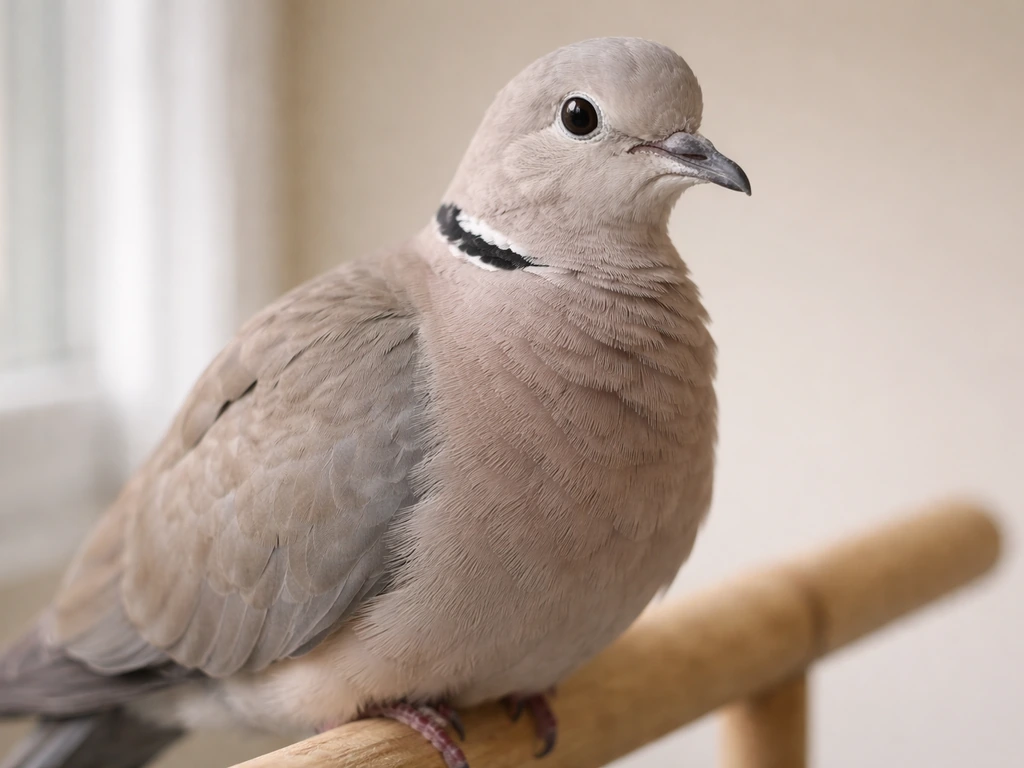
The most common pet dove in the U.S. is the ring-neck dove (Streptopelia risoria), also sold as a ringed turtle dove or laughing dove. These birds have been domestically bred for generations and are genuinely calm by nature. Lafeber Co. describes ring-necked doves (Streptopelia risoria) as easy-going and notes that they may be hand-tamed, which helps set expectations for taming potential. They tend to come around faster than most bird species. If your dove came from a pet store, a breeder, or a previous owner, it's almost certainly a ring-neck. These birds are noticeably pale buff or white, with a thin black ring around the back of the neck.
The other dove you might encounter, especially outdoors, is the mourning dove. Mourning doves are medium-sized, sandy brown with a long tapered tail, pinkish breast, and small dark spots on the wings. They're native to North America and protected under the Migratory Bird Treaty Act. If a dove shows up injured or grounded in your yard, check carefully before assuming it's a lost pet. A leg band does not automatically mean it's tame or domestic: the U.S. Fish and Wildlife Service bands wild mourning doves as part of research and population management, so a banded wild bird and a banded pet dove are not the same thing. Look at behavior and context together, not just the band.
Before you start any taming work, honestly assess where your bird is starting from. A dove that presses into the back corner of its cage and slicks its feathers tight against its body when you walk in needs a much slower approach than one that already walks toward the cage door.
Key fear signals to watch for: feathers pressed flat against the body, head pulled back, wide darting eyes scanning for an exit, crouching low as if about to take flight, or open-mouth breathing. If you see any of those, the bird is telling you it's not ready for direct contact yet, and that's fine. Your job in the early days is just to lower that response, not skip past it.
Set Up a Safe, Low-Stress Environment First
Before you work on trust, the space needs to be right. A stressed bird in a chaotic environment won't tame no matter how patient you are.
- Use a cage large enough for the dove to fully extend its wings and turn around without touching the bars. For a ring-neck dove, a minimum of 24 x 24 x 24 inches is workable, though bigger is always better.
- Place the cage at chest height or slightly below, never on the floor. Doves feel more secure at an elevated position where they can see what's coming.
- Put the cage in a quiet room with predictable foot traffic. Avoid kitchens (fumes from non-stick cookware are lethal to birds), drafty windows, and spots near loud TVs or speakers.
- Cover three sides of the cage with a light cloth if the bird is highly reactive. This reduces visual overstimulation while still letting air circulate.
- Keep a consistent daily routine for feeding, cleaning, and interaction times. Doves calm down dramatically once they can predict when you'll appear and what you'll do.
- Remove mirrors and highly reflective surfaces from the cage during early taming. They can confuse and distract the bird.
- Make sure there's no way for the dove to escape into a large, open room during taming sessions. Chasing a panicked bird is one of the worst things you can do for trust-building and can cause injuries.
What Not To Do
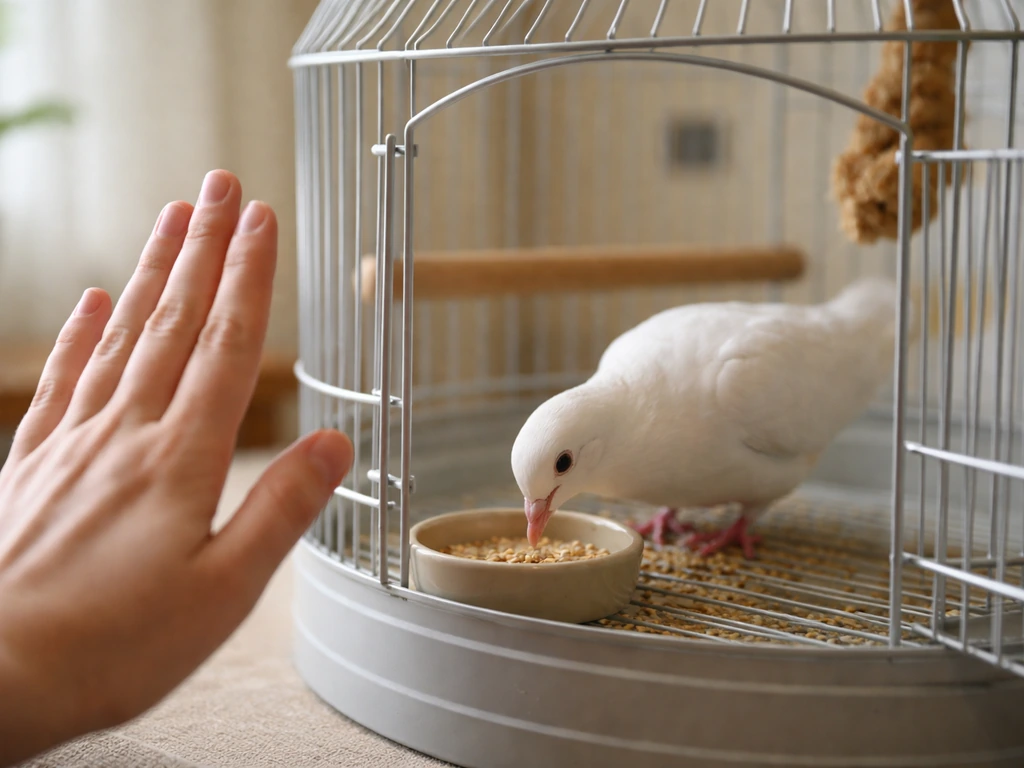
- Never grab or chase the bird to pick it up. Forced restraint causes fear conditioning and can cause physical injuries including bone fractures from struggling.
- Don't stare directly at the bird during early sessions. Direct eye contact reads as predatory to prey animals like doves.
- Don't restrict the bird's chest or abdomen when holding it. Doves, like all birds, breathe using air sacs and muscle movement in the chest area. Squeezing can be dangerous.
- Don't rush the timeline. One good two-minute session beats one awful ten-minute session every time.
- Don't try taming when the bird is showing open-mouth breathing, hard panting, or extreme crouching. Those are signs of acute stress. Back off, give it space, and try again later.
Day-by-Day Taming Plan: From Stranger to Trusted Human
This plan is designed for a pet dove in your care. Adjust pace based on what you observe. A calmer bird may progress faster; a very fearful bird may stay at each stage twice as long.
Days 1 to 3: Calm Presence Only
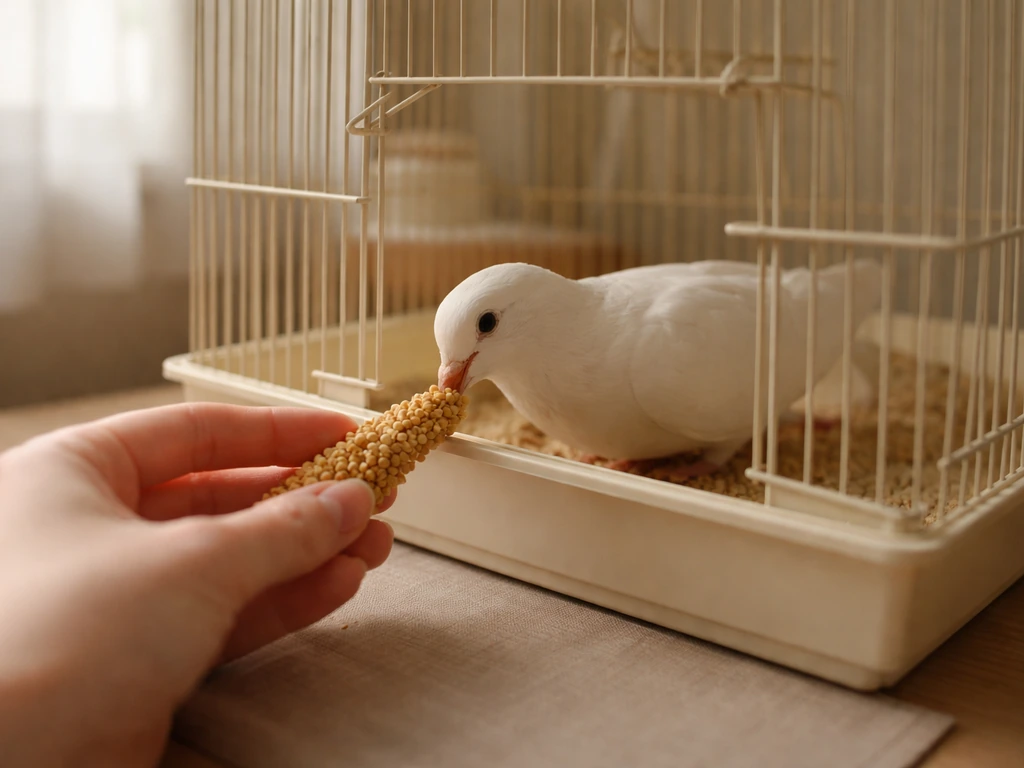
Sit near the cage for 10 to 15 minutes at the same time each day. Don't reach in, don't make sudden moves, and speak softly in a low, even tone. Read aloud, narrate what you're doing, or just talk. You're not doing anything to the bird yet. You're teaching it that your presence doesn't mean danger. Change food and water by moving slowly and deliberately, without hovering. If the dove eats, drinks, or preens while you're nearby, that's progress.
Days 4 to 7: Hand Inside the Cage With Food
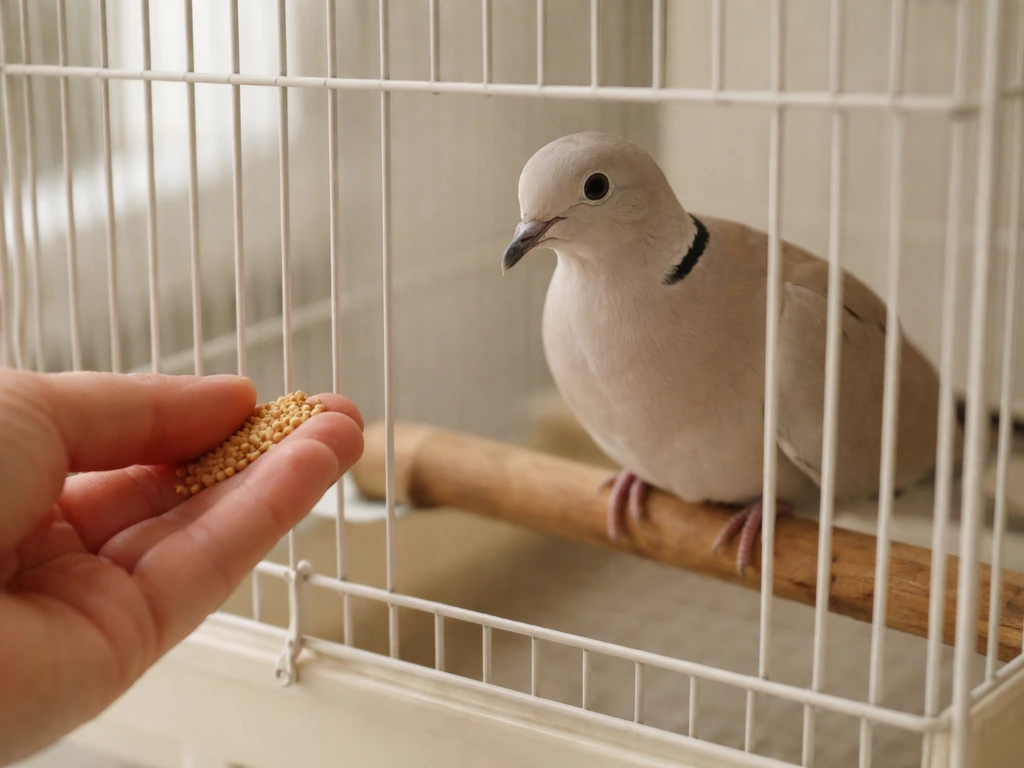
Now you start using food as a bridge. Millet is the best starting reinforcement for most doves: it's highly palatable, easy to hold, and mourning doves as well as ring-necks readily accept it. Spray millet on a stem works especially well because the bird can peck at it without having to touch your hand. Hold the millet stem or a small pinch of seeds in your open palm, resting still inside the cage. Don't reach toward the bird. Let it come to you. If it doesn't approach, place the millet near it and withdraw your hand. Repeat this at every feeding. You're teaching the dove that your hand means food, not threat.
Days 8 to 14: Hand-Feeding and Reducing Distance
Once the dove regularly eats from the millet stem while your hand is still, begin holding it so the bird has to step slightly closer to reach the food. Inch the distance down gradually over several sessions, never in one jump. The moment the dove eats calmly from your hand with no visible stress signs (no slicked feathers, no wide eyes, no attempt to fly off), you've cleared a major hurdle. This is usually where ring-neck doves land by the end of week two.
Days 14 to 21: First Voluntary Contact
With hand-feeding solid, you can now let the dove step onto your finger voluntarily. Hold your index finger horizontally just below the bird's chest, at the level of its lower belly, and gently press forward with light contact. Say a consistent cue word like 'up' each time. Most doves will step onto the finger once they're comfortable with your hand. Don't lift your hand dramatically the first few times, just let the bird sit on your finger at the same height. Keep sessions to a few minutes and always end before the bird shows stress. Reinforcement after a step-up (offer a seed immediately) locks in the behavior quickly.
Moving Past Trust: Step-Up, Target Training, and Perch Work
Once your dove steps up reliably, you can shape more complex behaviors using target training. Target training means teaching the bird to touch or follow a specific object (the target, usually a chopstick, a pencil eraser, or a dedicated training stick) in exchange for a reward. Present the target a short distance from the bird's beak. When it looks at or touches the target, immediately reward with a seed. Keep sessions to three to five minutes maximum. Over multiple sessions, you can use the target to guide the bird to new perches, into a carrier, or through basic recall.
For perch routines, use a handheld perch or a short branch held steady in your palm. Let the dove step onto it the same way it steps onto your finger. Practice moving the perch-mounted bird from one location to another in short, smooth arcs. No jerky movements. This builds the dove's confidence being carried and transferred, which makes vet visits, cage cleaning, and any necessary handling much less stressful for both of you.
Recall (getting the bird to fly to you on cue) is possible for many doves once they're fully tamed. It takes longer than step-up training and requires an enclosed, safe space to practice. Use a consistent sound cue (a soft whistle or word) paired with immediately offering food when the bird flies toward you. Shorten the distance to near-zero at first, then increase it gradually as the behavior becomes reliable.
Wild Yard Doves vs. Pet Doves: Two Very Different Goals
If you're dealing with wild doves visiting your yard, the goal is not taming in the hands-on sense. If you want the birds to become comfortable around you, focus on attraction and habituation rather than trying to tame a wild bird directly. It's building habituated trust at a safe distance. Wild mourning doves that visit regularly will become noticeably less skittish over time if you're consistent and non-threatening, but that's not the same as a pet dove that steps onto your hand. Trying to physically tame a healthy wild mourning dove is not only very difficult, it's legally problematic: mourning doves are federally protected migratory birds in the U.S., and keeping one without a permit is illegal.
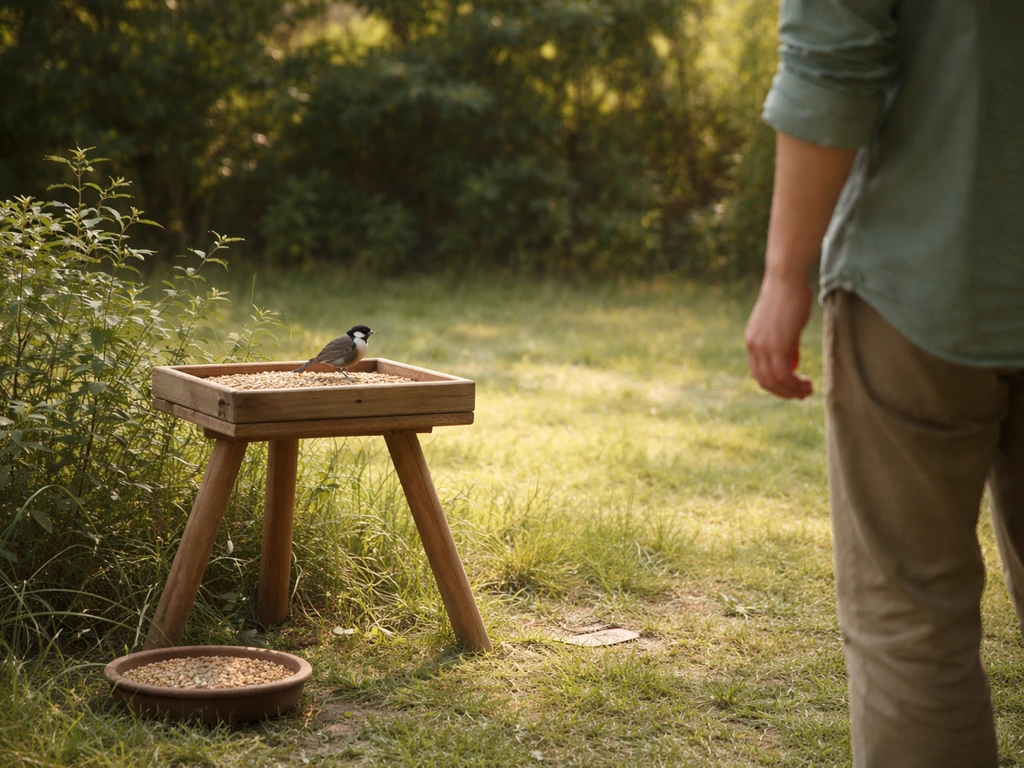
For wild yard doves, the right approach is attraction and habituation. Offer a flat platform feeder or ground feeder with cracked corn, white proso millet, or sunflower seeds. Keep the feeder in a consistent location. Reduce your movement near the feeder area over time, sitting quietly at increasing proximity until the doves remain while you're present. This kind of trust-building is genuinely rewarding, and some wild doves will become remarkably relaxed around people, but it's a different thing than taming a pet bird. Wild birds are approached through attraction and habituation instead of direct handling taming a pet bird.
The distinction matters especially if you find an injured or grounded wild dove. In that case, contain it gently in a dark, quiet box and contact a licensed wildlife rehabilitator immediately. Don't attempt to tame, feed heavily, or keep it. The goal is stabilization and professional care, not ownership. This is where taming a wild bird and caring for a pet dove part ways entirely.
| Factor | Pet Dove (Ring-Neck) | Wild Dove (Mourning Dove) |
|---|---|---|
| Legal to keep? | Yes, no permit required | No, protected under MBTA without a rehab permit |
| Taming potential | High, responds well to hands-on taming | Low for direct handling; habituates to presence only |
| Best reinforcement food | Millet, sunflower, small grain mix | Cracked corn, white millet, sunflower seeds |
| Realistic goal | Step-up, hand-feeding, perch transfer | Feeder visits while you're present; reduced flight distance |
| Handling approach | Gradual, food-reward based, daily sessions | No direct handling unless injured (contact a rehabilitator) |
| Timeline to first trust | 1 to 3 weeks with daily work | Weeks to months for feeder habituation |
When Things Aren't Going Well: Common Problems and Fixes
The Dove Refuses to Eat During Sessions
This is almost always a stress response, not a food preference issue. If your dove eats fine when you're not watching but stops when you're nearby, you're still too close or too present. Go back to sitting at a greater distance without interacting. Make sure you haven't changed anything else in the environment (a new smell, rearranged furniture, or a new person in the house can restart the fear clock). Try offering food through the cage bars rather than reaching inside, which feels less invasive.
Panic Flights and Cage Thrashing
If your dove panics and thrashes when you approach, the setup or timing is off. Make sure the room is quiet before you enter, avoid wearing bright clothing or hats during early sessions (which can read as predatory), and approach from the side rather than straight on. Always move slowly and announce yourself before entering the room. Some birds do better if you look away or look slightly down rather than directly at them. If thrashing persists despite all this, consider whether the cage is too small for the bird to feel safe inside it.
Biting or Pecking
Dove pecks are rarely hard enough to break skin, but they're a clear signal to back off. A peck during hand-feeding usually means you moved too fast or the bird felt cornered. Don't pull back sharply when pecked (that confirms the peck worked and reinforces the behavior). Instead, stay still briefly, then calmly withdraw your hand and end the session. Next session, go back one step in the process. Consistent, predictable sessions that end before frustration builds are the fastest way through this.
Progress Has Stalled Completely
If you've been at the same stage for more than two weeks with no improvement, check a few things. Are sessions happening at a consistent time daily? Irregular timing disrupts the predictability doves rely on. Is the bird healthy? A dove that's not eating well, has fluffed feathers most of the day, or has discharge around eyes or nostrils needs a vet visit before taming work continues. Are you ending sessions on a good note, or pushing to the point of stress each time? Sessions that end badly teach the bird that your presence leads to bad outcomes. Shorten sessions dramatically and lower your criteria until you're consistently ending on something positive.
The Long Game: Ethics, Legality, Housing, and Keeping Your Progress
Once you've put the work into taming a dove, the last thing you want is to backslide because of a fixable care issue. Doves are social birds and do better with a companion of the same species if you're away from home for long hours. A ring-neck dove pair will be calmer, healthier, and easier to maintain than a singleton. If you got your bird to maintain it solo, that's fine, but plan for daily social interaction as part of its care.
Diet matters for ongoing trust too. A dove that's nutritionally satisfied is calmer and more receptive. Ring-neck doves do well on a base of commercial dove or pigeon seed mix (millet, milo, wheat, cracked corn), supplemented with leafy greens a few times a week and fresh water changed daily. Avoid avocado, chocolate, caffeine, and salty or processed foods entirely. Grit should be available but not forced, as doves use it for digestion.
On the legal side: if you found a dove and aren't sure of its origin, don't assume it's a legal pet. As noted earlier, mourning doves are federally protected. Even a seemingly tame mourning dove found injured cannot be legally kept without a wildlife rehabilitation permit in the U.S. If you've been caring for one temporarily, the right path is to contact a licensed wildlife rehabber and work toward release or transfer to someone permitted to house it. Releasing a fully tame, dependent bird into the wild without preparation is also a welfare problem: a dove that has lost its foraging and escape instincts has poor survival odds. A rehabber can assess release readiness properly.
If you're rehoming a pet dove for any reason, do it through a bird rescue or experienced dove keeper rather than releasing it outdoors. Ring-neck doves are not native to North America and have no survival adaptations for life in the wild here. Responsible rehoming keeps your progress intact for the bird's next carer and ensures the animal's welfare long term.
Taming a dove is one of the more rewarding things you can do with a small pet bird. They're gentle, they coo softly, and once they trust you they'll sit on your shoulder or hand with a relaxed, almost sleepy contentment. The key is patience and consistency, not technique. Lovebirds have similar trust needs, but their day-to-day routine and handling steps differ, so follow a lovebird-specific approach for best results how to tame love bird.
Show up every day, keep sessions short and positive, and let the bird set the pace. You'll get there. With the right, gentle approach, you can also learn how to tame bird species safely without forcing contact. For more details on the step-by-step process, see our guide on how to tame bird safely. Wild birds require a different kind of trust-building, so use distance, calm routine, and legal guidance as you learn how to tame wild bird safely how to tame bird.
FAQ
How do I tell if my dove is getting used to me or just tolerating me?
Tolerance looks like the bird stays still but still shows fear cues when you move, such as slicked feathers, head pulling back, or open-mouth breathing. True habituation is when the bird keeps normal posture, continues eating while you sit nearby, and recovers quickly if you adjust your position. If it freezes as soon as you make any noticeable change, you are still moving too fast.
What if my dove refuses millet when I start hand-feeding?
Some doves are picky about the exact texture or freshness. Try offering millet spray as well as plain millet seeds, and verify the millet is not stale. Also check that the room routine is quiet and that you are present for several days before you introduce the stem. If it still will not eat while you are nearby, back up to cage-bar feeding for several sessions and only then retry hand delivery.
Should I try to tame the dove by holding it early if it seems calm?
Avoid lifting or restraining in the first stages. A dove can look calm while still being fearful underneath, and early handling can teach avoidance rather than trust. Instead, focus on letting the dove approach the millet and step up voluntarily, then shorten the gap between you and the “up” cue gradually. If the dove flattens feathers even once during approach, slow down before any lifting.
How long should I expect each training step to take?
Use “behavior reliability,” not a fixed timeline. A good checkpoint is when the dove eats from the millet stem consistently in your presence, then steps closer without stress, and only then steps onto your finger repeatedly. If you do not see progress for about two weeks at one stage, reduce session intensity, confirm health, and adjust criteria so you are ending each session on a win.
What’s the safest way to handle a dove during cage cleaning or vet visits before it is fully tamed?
Plan transfers as training, not as sudden grabs. Use a familiar handheld perch or short branch and guide the bird onto it with minimal movement, then move the perch in smooth arcs. Keep cleaning and transport areas quiet and dimmer than the rest of the room to reduce flapping. If you must use a carrier, practice getting the bird into it with target-style rewards over multiple short days.
My dove panics when I enter the room, even though it eats fine at other times. What should I change?
Your presence is the trigger. Increase the distance you start from, keep the same entry routine (same time, announce softly, approach from the side), and avoid eye-level staring or bright hats and clothing during early sessions. Also rule out other changes like furniture moves, new scents, or a new person in the home that could restart fear. Give the bird time to settle before any feeding attempt.
Is it okay if the dove pecks or snaps during hand-feeding?
A peck is a clear signal to slow down, but it does not mean you should “punish” the bird or yank your hand away sharply. Stay still briefly, withdraw calmly, end the session, and return one step at the next attempt (more distance, slower approach, or cage-bar feeding). Over time, pecks usually decrease as the bird learns you are not cornering it.
Can I tame a mourning dove that keeps visiting my yard?
You can build habituated trust at a distance, but do not try to physically tame or keep a wild mourning dove as a pet. Work with a consistent feeder location, reduce your movement near the feeding area, and sit quietly at increasing proximity. If a wild dove is injured or grounded, switch to immediate contact with a licensed wildlife rehabilitator rather than trying to feed or handle it.
What should I do if I found a banded dove and it seems friendly?
A leg band does not automatically mean it is domesticated or safe to keep. Check the context (where you found it, whether it was active outdoors, and whether it depends on you). For mourning doves, bands can be part of research or population management, so assume it could be wild until you have confirmation. If you are not certain of origin and legal status, contact a wildlife professional before continuing any “taming” attempts.
Do I need to keep my dove alone, or can I add another bird to speed up taming?
A companion can reduce stress and make daily behavior calmer, especially for ring-neck doves. However, introduce cautiously, and prioritize stable routine and proper nutrition first. If you bring home another bird, quarantine it and monitor health to avoid introducing illness that can set back taming progress.
How do diet problems affect taming progress?
A hungry or nutritionally imbalanced dove can stay irritable, fearful, or lethargic, which delays trust work. Stick to a consistent commercial base feed, supplement greens several times per week, and change water daily. Make sure the bird has appropriate grit available for digestion. If you notice poor appetite, fluffed-down posture most of the day, or discharge around eyes or nostrils, pause training and get a vet check.
What if I’m using the “up” cue but the dove won’t step onto my finger?
Lower your criteria. Move the finger closer but keep it at the level the bird would naturally step onto, and wait without pushing forward. If stepping does not happen within a brief, calm window, end the session and return to the previous success step (finger near millet, then millet stem eating). Using a consistent cue sound is helpful, but the bird should decide the first successful step, not be pressured to do it.
Next Articles
How to Tame a Lovebird: Gentle Step by Step Training Guide
Humane step-by-step lovebird training to build trust, reduce fear, and teach step-up, with routines and troubleshooting.
Can You Tame a Wild Bird? Humane Trust Building Steps
Can you tame a wild bird? Learn safe, humane trust-building steps, feeding routines, and when to avoid handling.
How to Tame a Wild Bird Safely: Step-by-Step Trust Plan
Humane, step-by-step guide to build trust with wild birds safely using food routines, safe setups, and legal boundaries.