Most pet birds take anywhere from a few days to a few months to tame, depending on the species, age, and how consistent you are. A hand-raised budgie might step up for you within a week. A wild-caught or neglected parrot could take six months or more before it tolerates calm handling.
How Long Does It Take to Tame a Bird? Timelines
Clara Hayes
2 May 2026
Wild yard birds are a different story entirely: you are not truly taming them, but habituating them to your presence, and that can happen in as little as two to four weeks with the right setup. The honest answer is that taming is a process, not an event, and the timeline you get depends heavily on what you do every single day.
If you want to tame a bird quickly, the key is staying consistent every single day and building from short sessions into longer ones. Even if you want results fast, the key is still consistent daily work, not a one-off push taming is a process.
What 'Tame' Actually Means (And Why It Matters for Your Timeline)
People use the word 'tame' to mean a lot of different things, and that ambiguity causes a lot of frustration. So let's sort it out before we go further. There are three separate things happening when you work with a bird:
- Habituation: The bird stops reacting fearfully to your presence, sounds, or slow movements. It is not engaging with you yet, just no longer panicking. This is the baseline you need to reach first.
- Taming: The bird is comfortable enough to approach you, accept treats from your hand, perch on you, and tolerate gentle handling without signs of stress. This is what most people mean when they say 'tame.'
- Training: The bird performs specific behaviors on cue, such as stepping up on command, recalling to your hand, or talking. Training builds on taming but is a separate skill set that takes additional time.
You cannot skip habituation and jump straight to training. Every minute you spend sitting quietly near your bird's cage in the first week is doing important work, even if it looks like nothing is happening. VCA Animal Hospitals recommends giving a newly purchased bird about a week just to settle in before you start any formal sessions. That settling period is not wasted time. It is where habituation begins.
Realistic Timelines by Species
These ranges are based on a bird with no prior trauma, a patient owner, and consistent daily sessions. Your bird may move faster or slower depending on its history and personality. Use these as planning benchmarks, not guarantees.
| Species | Habituation | Hand-feeding | Step-up / Handling | Basic Training Readiness |
|---|---|---|---|---|
| Budgie (parakeet) | 3–7 days | 1–3 weeks | 2–6 weeks | 6–10 weeks |
| Cockatiel | 3–10 days | 1–4 weeks | 3–8 weeks | 8–12 weeks |
| Parrot (small, e.g., conure, lovebird) | 1–2 weeks | 2–6 weeks | 4–10 weeks | 3–6 months |
| Parrot (large, e.g., African grey, macaw) | 1–3 weeks | 3–8 weeks | 6–16 weeks | 4–12 months |
| Finch / canary | 1–3 weeks | 4–10 weeks (many never hand-feed) | Rarely tolerates handling | Very limited |
| Common wild yard birds | 2–4 weeks | 4–8 weeks (habituation only) | Not applicable / illegal to handle | Not applicable |
Parrots
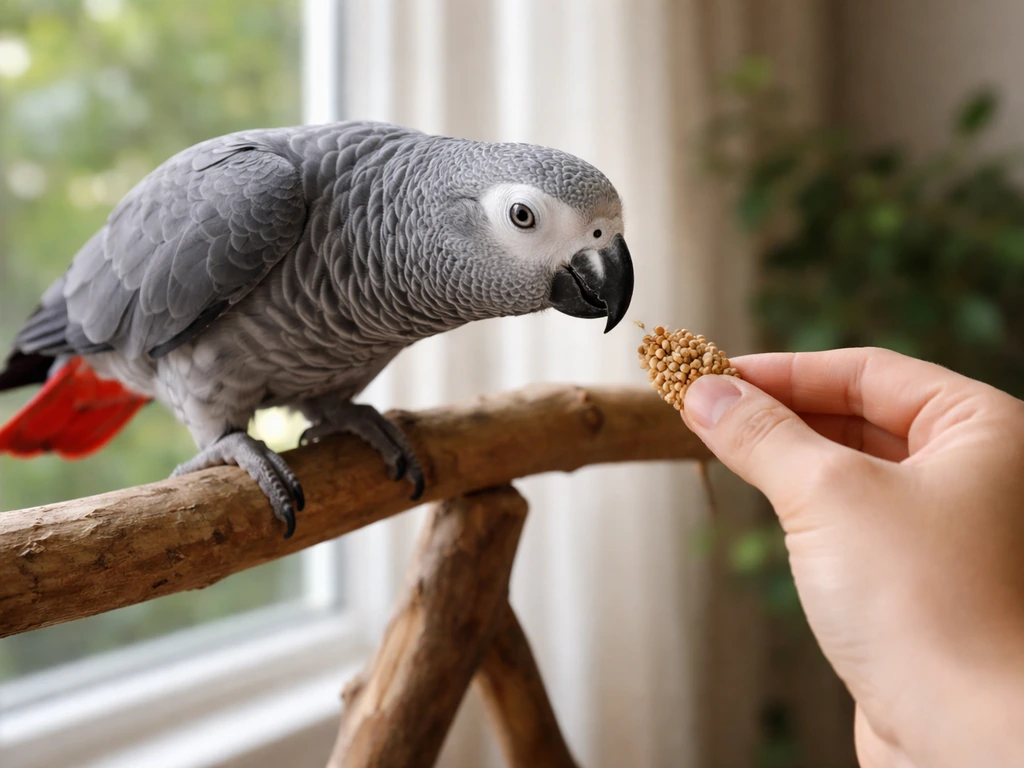
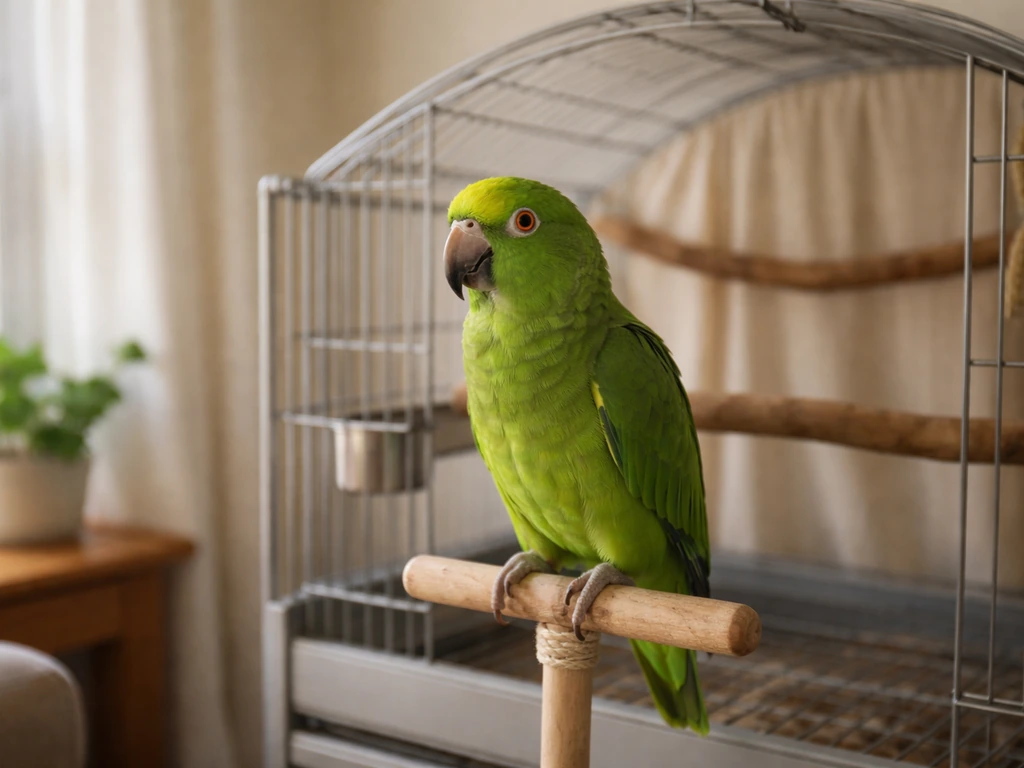
Large parrots like African greys, Amazon parrots, and macaws are highly intelligent and can be deeply suspicious of new people or environments. A bird that was hand-raised by a breeder might step up within days, but a rehomed adult or a bird with a history of rough handling may take months just to stop flinching when you approach. Be patient and expect a longer runway. The payoff is a bond that can last decades.
Cockatiels
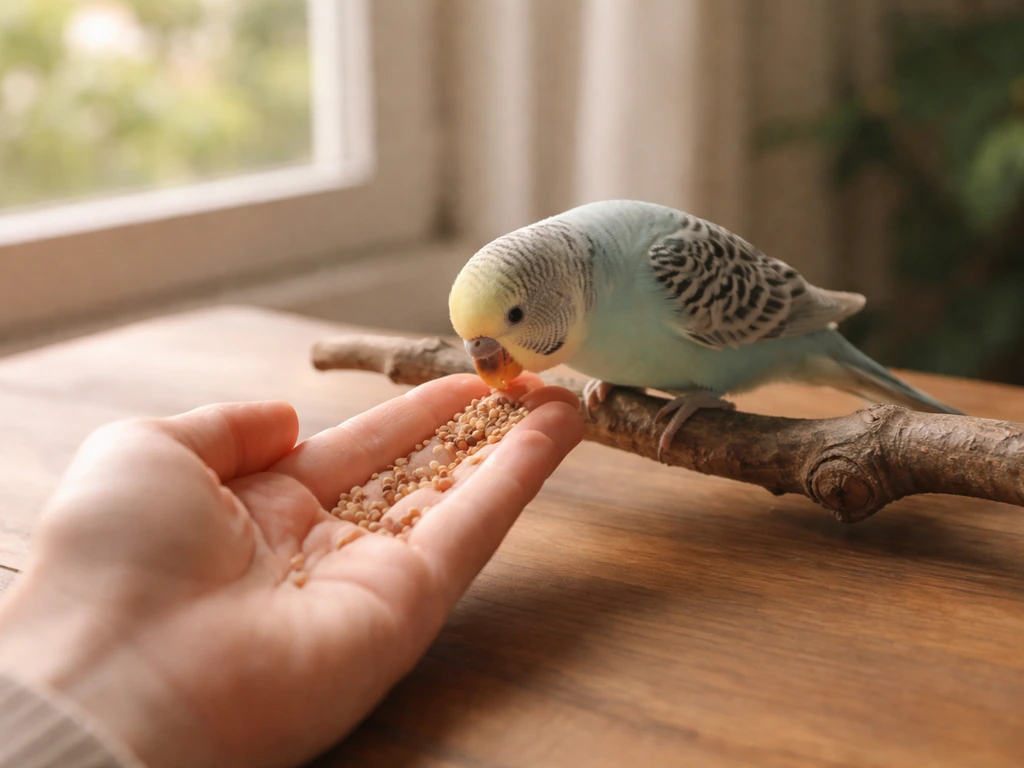
Cockatiels are one of the more forgiving species to work with. They are social, curious, and motivated by food. Most hand-raised cockatiels will accept a millet spray from your fingers within the first week. A parent-raised or recently re-homed cockatiel may take three to eight weeks to get comfortable with handling. Young cockatiels (under six months) tend to tame noticeably faster than adults.
Budgies (Parakeets)
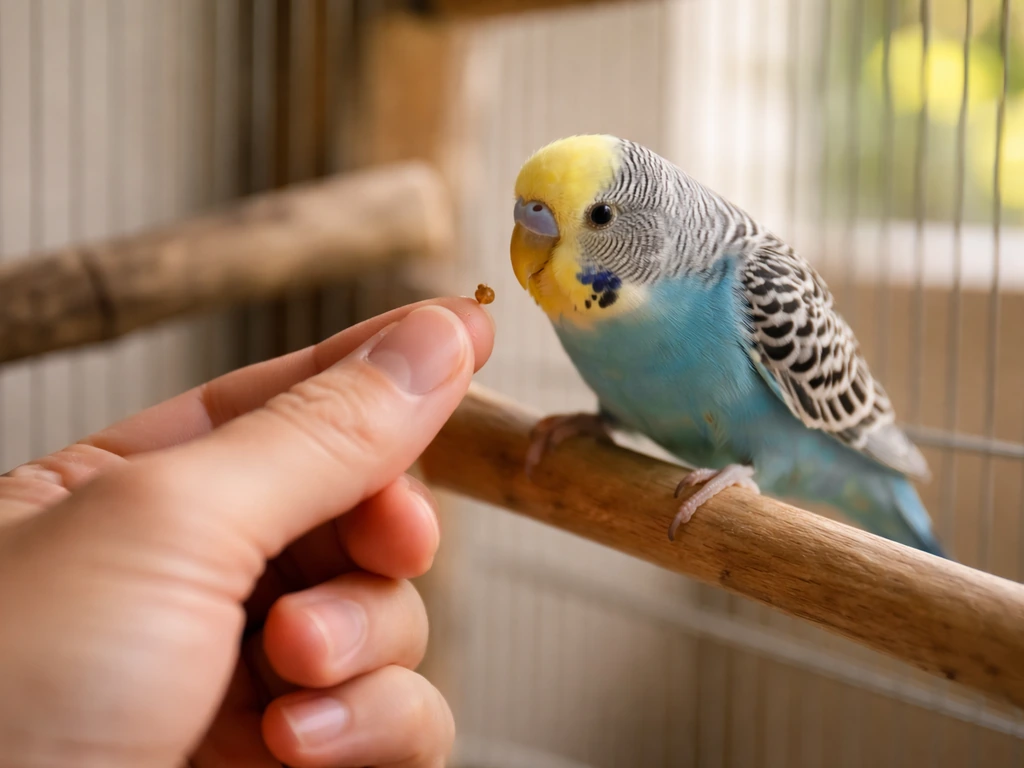
Budgies are small, quick, and can be flighty at first, but they are also highly social and motivated by treats and companionship. A single young budgie typically responds faster than one kept in a pair or group, because a solo bird bonds to you as its flock. Expect hand-feeding within one to three weeks and reliable step-ups within four to six weeks with daily practice.
Finches and Canaries
Finches and canaries are fundamentally different from hookbills. They are not wired for human contact the way parrots and budgies are. Most finches will eventually become comfortable with your presence near their cage, and some individuals will eat from an outstretched hand after weeks or months of patient effort. But expecting them to step up or be handled regularly is not realistic for the vast majority. If you want a hand-tameable bird, a finch is probably not your best choice.
Common Wild Yard Birds
Wild birds like chickadees, nuthatches, and house sparrows can be habituated to eating from a hand held perfectly still, but this is not 'taming' in the pet-bird sense. It is a learned association: you plus stillness equals food. Research published in Scientific Reports has documented this behavior across many wild species. With a consistent feeding spot, quiet approach, and patience, some species (especially chickadees) will land on an outstretched hand within two to four weeks. Most other backyard species take longer or never quite get there.
A Daily Routine That Actually Speeds Things Up
The single biggest factor in your timeline is what you do every day. Sporadic interaction produces sporadic progress. Here is a routine that works for pet birds, structured around VCA's recommendation of starting with one or two sessions of five to ten minutes each, then gradually building to two twenty-minute sessions daily. A detailed, humane daily routine can help you make the fastest safe progress possible.
- Set up the environment first. Place the cage at eye level in a room where the family spends time, away from drafts, direct sun, and the kitchen. A bird that feels secure in its space tames faster than one that is constantly startled.
- Week one: Just be present. Sit near the cage for ten minutes twice a day. Read aloud, talk softly, move slowly. Do not reach in. Let the bird watch you and realize you are not a threat.
- Week two: Introduce your hand near the cage. Rest your hand on the outside of the cage bars for a few minutes. If the bird moves toward you, great. If it moves away, stay still and finish the session without drama.
- Week two to three: Offer treats through the bars. Use the bird's favorite food, whether millet for budgies and cockatiels, a small piece of fruit for parrots, or seed for finches. Hold it steady and wait. Do not chase the bird with the treat.
- Week three onward: Move your hand inside the cage. Once the bird reliably eats from outside the bars, open the door and offer the treat on a flat palm. Keep your hand low and still. Avoid eye contact, which can feel threatening.
- When the bird is comfortable with your hand inside: Introduce the step-up cue. Hold your index finger or hand just below the bird's chest and say 'step up' in a calm, consistent tone. Pair it with the treat every time. Practice only a few minutes per session and only when the bird seems relaxed and receptive.
- Keep sessions short and end on a positive note. A good rule: stop before the bird loses interest, not after.
For wild yard birds, the routine is simpler but requires similar patience. Set up a feeder at a consistent spot. After two weeks of regular feeding, stand a few feet away while birds feed. Gradually reduce the distance over days. Eventually, extend a flat hand loaded with seed and stand completely still. Chickadees and nuthatches are the most likely to land. This process realistically takes four to eight weeks.
Signs Your Bird Is Progressing (And Red Flags to Watch For)
Green lights: your bird is making progress
- Moves toward you or toward your hand rather than away
- Eats while you are nearby without stopping to watch you nervously
- Vocalizes (chirps, chatters, or sings) when you enter the room
- Relaxed feathers: slightly puffed when resting, smooth when active
- Grooms itself in your presence (a very good sign of comfort)
- Begins to initiate contact, touching your hand or leaning into scratches
- Accepts the step-up cue with little hesitation
Red flags: your bird is stressed or fearful
blank" rel="noopener noreferrer">The Association of Avian Veterinarians lists clear fear body language: leaning away, wide-open eyes, a low crouching posture, quivering wings, and feathers pulled tight to the body. Cockatiels will raise their crest sharply when alarmed. The Avian Welfare Coalition adds hissing, a fanned tail, and wings held out away from the body as additional stress signals. Fear Free avian specialists note that if you push past these early cues, the bird will escalate to lunging and biting. If you see any of these, stop the session immediately, give the bird space, and dial back your approach next time.
There is one red flag that requires a vet visit, not just a training adjustment: open-mouthed breathing at rest. Purdue University's avian husbandry guidance identifies this as a serious sign, especially when accompanied by tail-bobbing or prolonged panting. A sudden increase in biting can also signal pain or illness rather than a training problem. If either of these appears, call an avian vet before your next session.
Why Taming Is Taking Longer Than Expected (And What to Do About It)
If you are several weeks in and feeling stuck, run through this checklist. Most delays trace back to one of these common causes:
| Problem | What it looks like | Fix |
|---|---|---|
| Sessions are too long or too frequent | Bird starts avoiding you, seems agitated by your arrival | Cut back to 5-minute sessions, twice daily maximum |
| You are moving too fast | Bird consistently retreats when you extend your hand | Go back one step. Spend another week at the previous stage. |
| Wrong treat or low motivation | Bird shows no interest in what you are offering | Try three or four different high-value foods to find what excites your bird most |
| Inconsistent schedule | Progress seems to reset between sessions | Same time, same person, same routine every day is critical |
| Cage placement is stressful | Bird is constantly alarmed by foot traffic, other pets, or outdoor windows with predator sightings | Move the cage to a calmer wall or corner |
| Prior trauma or neglect | Bird panics at hands regardless of food motivation | Expect a longer timeline (months, not weeks). Consider consulting an avian behaviorist. |
| Bird is molting | Formerly calm bird has become irritable and bite-prone | Reduce handling during the molt. Resume normal sessions when new feathers are in. |
| Age of the bird | Adult bird is progressing much slower than expected | Adult birds can be tamed but it takes longer. Double your estimated timeline and stay consistent. |
| Illness or pain | Sudden regression, increased biting, open-mouth breathing | Vet visit before any further training |
Humane Handling, Safety, and the Legal Side of Wild Birds
Handling pet birds safely
Always let the bird choose contact. Force-handling a frightened bird does not build trust. It teaches the bird that hands are dangerous, which sets your timeline back significantly. When you do handle a tamed bird, support its feet, keep sessions short, and read body language throughout. Never handle a bird near open windows, ceiling fans, or other pets. Wash your hands before and after, especially if you have multiple birds.
Wild birds: the legal and ethical reality
This is where pet-bird taming and wild-bird habituation split into completely different categories, legally and ethically. In the United States, the Migratory Bird Treaty Act (MBTA), enforced by the U.S. Fish and Wildlife Service, prohibits capturing, possessing, or transporting migratory birds without prior federal authorization. That covers the vast majority of wild songbirds you might see in your yard. Encouraging a chickadee to eat from your hand in your own backyard is one thing. Attempting to capture, contain, or keep a wild bird is a federal offense.
Even short of illegality, there are genuine welfare concerns with wild-bird feeding. The BC SPCA has noted that regular feeding can facilitate disease spread, cause birds to rely on nutritionally inadequate food, and increase risks like window strikes and predator exposure. USDA APHIS generally recommends against encouraging wildlife by leaving food out regularly. If you do practice hand-feeding wild birds, keep it occasional rather than a daily dependency, use appropriate species-specific seed or suet, and be aware of local regulations. Never attempt to capture, restrain, or bring a wild bird indoors, even if it appears injured. Contact a licensed wildlife rehabilitator instead.
Milestones and Timelines: What to Aim for and When
Here is a practical goal-based breakdown so you can measure where you are and what to work on next. These are targets for pet hookbills (parrots, cockatiels, budgies). Finches and wild birds follow the modified expectations covered above.
| Target Behavior | Budgie | Cockatiel | Small Parrot (conure, lovebird) | Large Parrot (African grey, macaw) |
|---|---|---|---|---|
| Calm in your presence (habituation) | 3–7 days | 3–10 days | 1–2 weeks | 1–3 weeks |
| Eating from your hand | 1–3 weeks | 1–4 weeks | 2–6 weeks | 3–8 weeks |
| Tolerating hand inside cage | 2–4 weeks | 2–5 weeks | 3–7 weeks | 4–10 weeks |
| Reliable step-up on cue | 3–6 weeks | 4–8 weeks | 6–12 weeks | 2–4 months |
| Calm handling / perching on you | 4–8 weeks | 6–10 weeks | 8–14 weeks | 3–6 months |
| Basic training readiness (recall, target) | 6–10 weeks | 8–12 weeks | 3–6 months | 4–12 months |
Introducing a hand-held perch as a step-up tool before moving to a bare finger can help nervous birds. ThinkParrot notes that accepting a perch may itself take hours, days, or weeks depending on the bird. Do not skip this intermediate step if your bird is hesitant about hands.
Where to Go From Here
Start today by identifying which stage your bird is currently at using the milestone table above. That tells you exactly what your next step is. If your bird is not yet calm in your presence, your only job right now is to sit nearby and be boring. If you are hoping for results in a single day, focus on getting your bird calmer and more comfortable first, then build on that momentum tame your bird in one day. If it is already eating from your hand, begin introducing the step-up cue. Do not try to jump ahead. Consistent daily sessions, even just five to ten minutes, compound into real progress faster than long, sporadic sessions.
If your bird is frightened and you want to see faster results without causing stress, the approach for a scared bird is a more careful, paced version of this same routine, just with more distance and slower movement in the early stages. If you have a bird that was recently untamed and ended up loose outside its cage, getting it back calmly without breaking trust is its own skill. Once you have the bird back inside, focus on gentle, consistent habituation so it feels safe in the cage again getting it back calmly without breaking trust. And if you are hoping to compress the timeline significantly, understanding which parts of the process can safely be accelerated, and which cannot, will save you from setbacks that add weeks to your timeline.
The most important thing to remember is that the bird sets the pace. Your job is to show up consistently, read the signals, and never push harder than the bird is ready for. That approach, done patiently, reliably produces a tame, trusting bird. Rushing it reliably does not.
FAQ
How can I tell if my “taming” timeline is actually working or just spinning wheels?
Generally, you should expect daily progress even if it is small, but there should be clear signs of improvement each week (less flinching, more relaxed body language, quicker step-up after the cue). If nothing changes for 3 to 4 weeks, re-check the session length, your distance from the bird, and whether you are accidentally reinforcing fear (for example, leaning in too fast or reaching for the bird before it chooses contact).
Is it better to do one long training session or several shorter ones each day?
One long session is less effective than many short ones because birds acclimate to your presence through repeated low-stress exposures. A practical adjustment is to keep sessions at 5 to 10 minutes when fear signs appear, and only increase toward two 20-minute sessions when the bird stays calm throughout. If you are using treats, stop before the bird is fully stressed or satiated, so the next session still feels worthwhile.
What if my bird loses interest in treats during training, does that mean I’m doing it wrong?
Yes, but you should change them only one variable at a time. If the bird is food-motivated, use small, frequent treats, but avoid giving large meals that remove motivation. If the bird loses interest, experiment with different treat sizes or hand-feeding timing rather than changing your entire routine at once.
How should I handle it if the bird won’t step up even after weeks of daily sessions?
If your bird is not stepping up yet, do not force touch as a shortcut. Use a progression of cues, first rewarding calm presence near the cage, then accepting a hand-loaded perch, then the step-up cue. For frightened birds, you can also slow your approach by using more distance and slower movements while keeping the same cue, so the bird learns what to expect.
My bird is tolerating me, but fear signs still show up. What should I do next?
The most common mistake is pushing contact before habituation is solid. If you are seeing wide-open eyes, leaning away, or quivering wings, you are likely asking for too much too soon. Back up to the last step where the bird stayed relaxed, extend the “boring” time near the cage, then rebuild toward contact only when fear signals drop.
Does a bird’s past trauma or age change the timeline, and can I still tame it successfully?
Yes, age and prior handling matter, but the bigger predictor is how consistent and low-stress your exposures are. A newly acquired bird that is settling may appear worse before it improves, so delay formal training until the bird can eat normally and remains calm while you are present. If the bird was previously traumatized, expect a longer runway and plan more distance earlier in the process.
What should I do if I have a few bad sessions and progress suddenly stalls or reverses?
Not really, and trying to “catch up” usually backfires. After a rough day, return to the last successful step the bird tolerated and keep sessions shorter for a few days. In other words, treat setbacks as information, reduce pressure, and rebuild momentum gradually rather than increasing intensity.
When is it safe to increase time out of the cage, and what’s the right way to progress?
It depends on species, but for pet birds, you typically should not expect frequent supervised out-of-cage handling until the bird reliably tolerates your hands and remains calm in the home environment. Use a staged approach, first with step-up on a perch, then brief handling, and only increase time when the bird stays relaxed without escalating to biting or lunging. If the bird gets loose outside the cage, prioritize calmly re-entry and trust-building rather than immediate “catch-up” training.
Can I speed up habituation with wild birds by feeding more often or standing closer?
For wild yard birds, the key edge case is legal and welfare limits. You should not capture, contain, or bring wild birds indoors, and you should treat hand-feeding as occasional, not daily dependency. Also consider practical risk factors like window collisions and predator exposure, and keep the feeding area consistent only if local rules and safety allow it.
At what point should I stop training and contact an avian vet instead?
For pet birds, an avian vet check is warranted if you see open-mouth breathing at rest, sudden persistent biting, tail-bobbing with breathing changes, or prolonged panting. These can indicate pain or respiratory issues rather than training fear. If you notice these, pause training and contact an avian veterinarian before resuming sessions.