If your untamed bird is out of its cage right now, here is the short answer: stop chasing it, slow down, and work with the bird's natural instincts rather than against them. Panicked birds rarely make good decisions, and neither do panicked owners. The steps below will walk you through exactly what to do from this moment, whether your bird is a budgie perched on a curtain rod, a cockatiel flapping around the ceiling fan, or a wild bird that somehow ended up inside your home.
How to Get an Untamed Bird Back in Its Cage Safely
Clara Hayes
15 Apr 2026
First: figure out what you're dealing with
Before you do anything else, answer two questions: Is this a pet bird or a wild bird? And is the bird injured? These two answers change everything about your approach.
Pet bird vs. wild bird
A pet bird that has escaped its cage is frightened, disoriented, and already stressed by the unfamiliar open space. It may look like it is having a great time flying around the room, but it is actually running on adrenaline.
A truly wild bird that has flown into your home through an open window or door is a completely different situation: it does not belong in captivity, it is not going back into any cage, and in most places it is illegal to keep it. If you have a wild bird indoors, your only job is to open a door or large window and guide it calmly toward the exit.
If it is uninjured and flying strongly, let it escape on its own. If it looks hurt, do not attempt to keep or rehabilitate it yourself. Contact a licensed wildlife rehabilitator in your area instead, since caring for wild birds beyond basic transport typically requires permits.
Quick safety checklist before you start
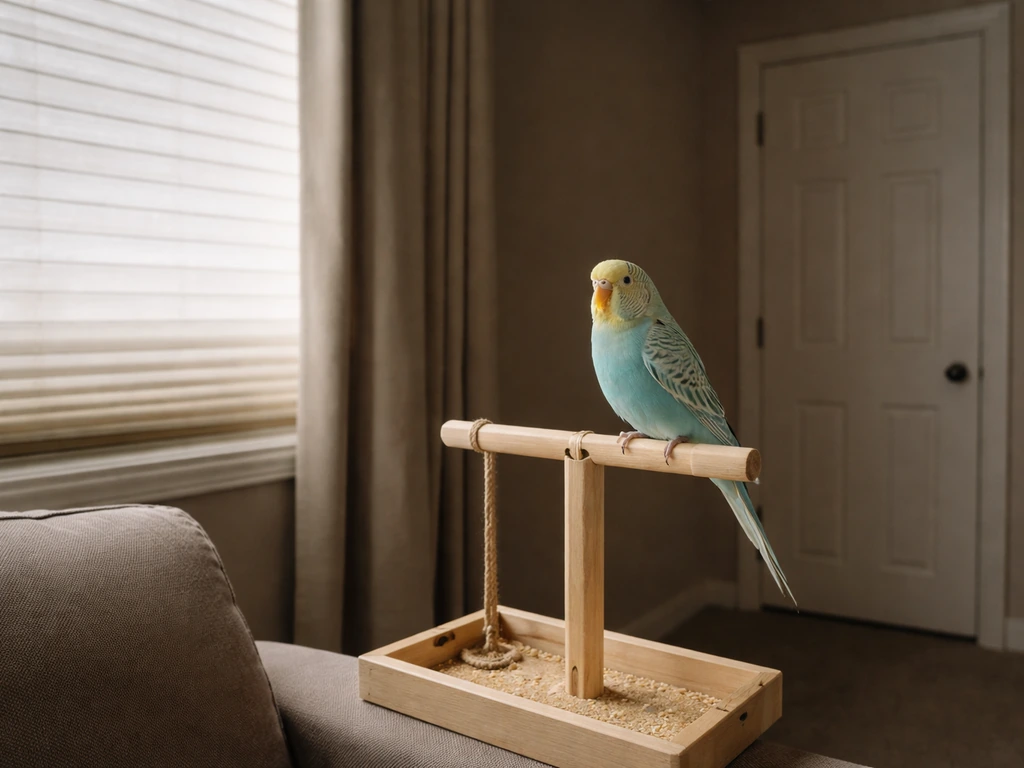
- Close all doors and windows in the room the bird is in. Close drapes or pull down blinds so the bird cannot see the glass and fly into it.
- Remove or confine other pets. A cat or dog in the room turns a stressful situation into a dangerous one instantly.
- Turn off ceiling fans. This is non-negotiable.
- Check for hazards: open toilets, hot stovetops, candles, or anything the bird could land on and burn or drown in.
- If the bird is visibly injured (bleeding, drooping wing, unable to fly), do not attempt to herd it. Use the towel capture method described later and go straight to an avian vet.
- Note: if the bird is injured but still airborne, do not throw a towel or blanket at it from a distance. That can make injuries significantly worse.
Get the room and cage set up before you try anything
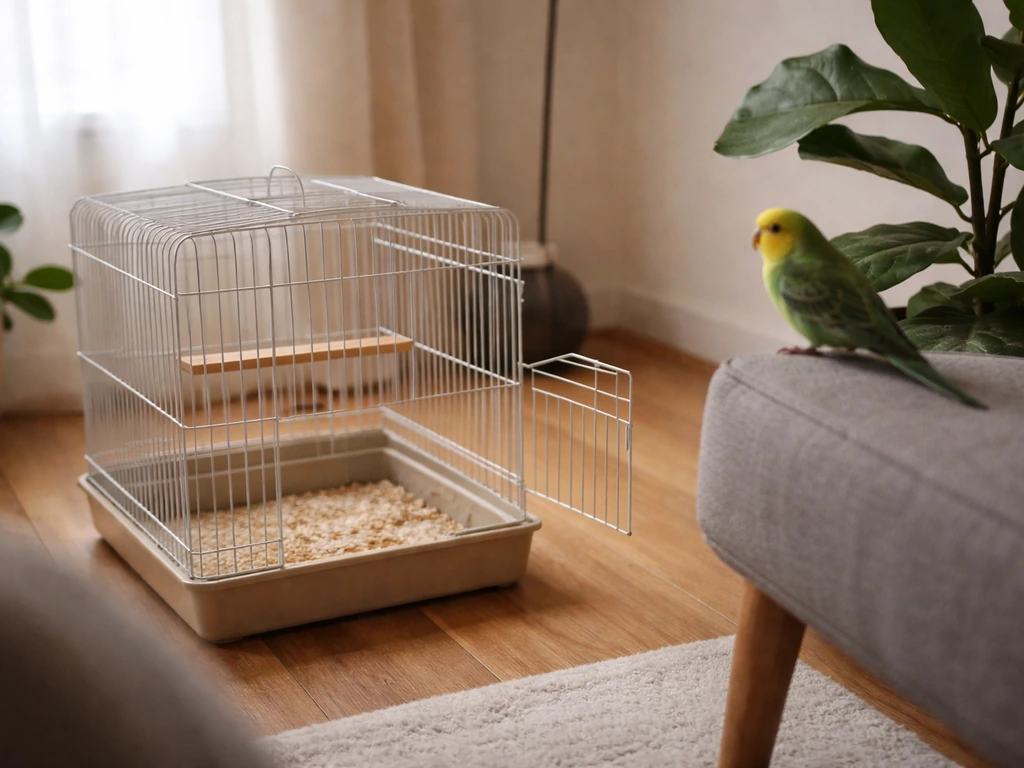
Your cage is your best tool here. The goal is to make the cage the most appealing spot in the room, not to corner the bird into it. Start by positioning the cage at eye level or slightly higher, somewhere clearly visible from where the bird is perching. Birds instinctively feel safer at height, and a cage that is low on the floor feels like a trap.
Open the cage door completely and leave it that way. Put the bird's absolute favorite food inside: a piece of millet for budgies and finches, a small chunk of sweet fruit or a nut for cockatiels and parrots. The food needs to be something the bird does not get every day, so it is genuinely motivating.
Timing matters more than most people expect. Birds are most food-motivated at dawn and dusk, which means late afternoon or early evening is actually your best window for luring a reluctant bird back in with food. If you can wait until that natural feeding drive kicks in and the room is quiet, you may not need to do much else at all. Dim the lights slightly (but do not go completely dark unless you are attempting a towel capture), keep your movements slow and predictable, and give the bird 15 to 20 minutes to investigate the cage on its own.
Luring techniques by species
Different species respond to different cues, and knowing which approach fits your bird saves a lot of wasted effort.
Parrots (African Greys, Amazons, conures, and similar)
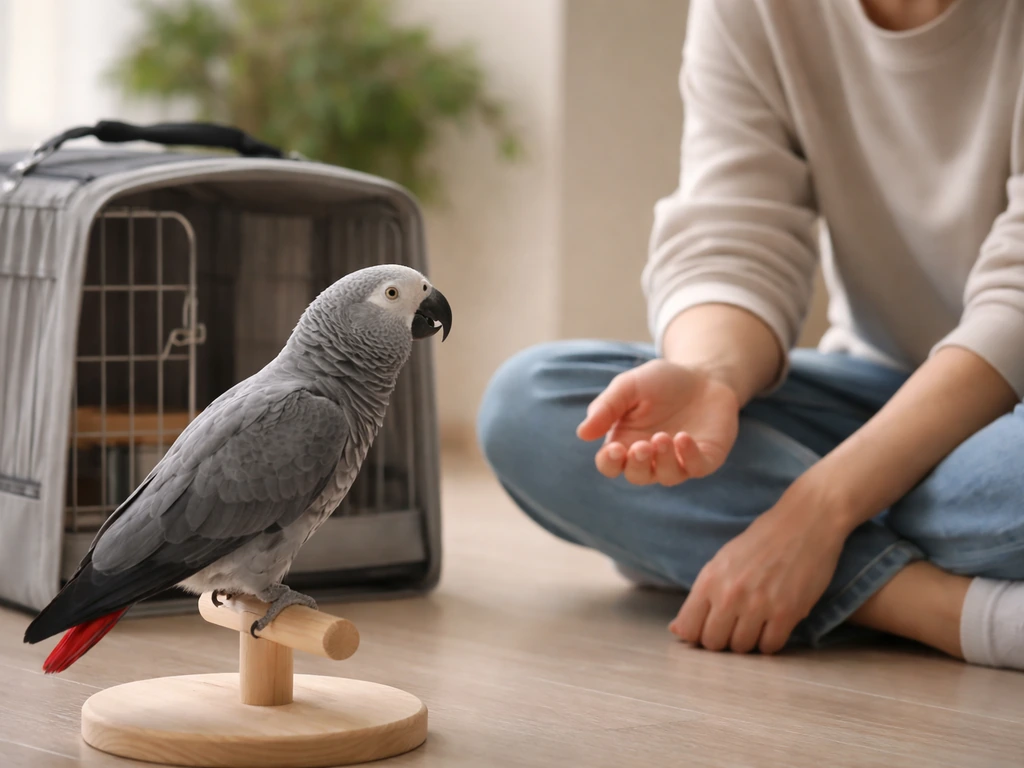
Parrots are smart and cautious. Chasing one is counterproductive because they will simply keep relocating to the highest point in the room. Instead, sit down on the floor or in a chair near the cage, speak in a normal, calm conversational tone, and let the bird watch you be boring for a few minutes. Hold out a favored treat from a distance, extending it slowly toward the cage door. Many parrots will eventually fly or climb down to investigate when they realize you are not a threat. If your parrot already knows a step-up command, use it quietly from a seated position once the bird is within arm's reach.
Cockatiels
Cockatiels are flock-oriented and respond well to familiar sounds. If you have another calm cockatiel in the cage, it will often call the escaped bird back on its own. If not, try whistling the bird's favorite tune softly, which can help a frightened cockatiel locate and orient toward you. Millet spray held near the cage door is highly effective. Cockatiels tend to calm down faster than parrots once the room goes quiet, so patience and low stimulation are your best tools.
Budgies (parakeets)
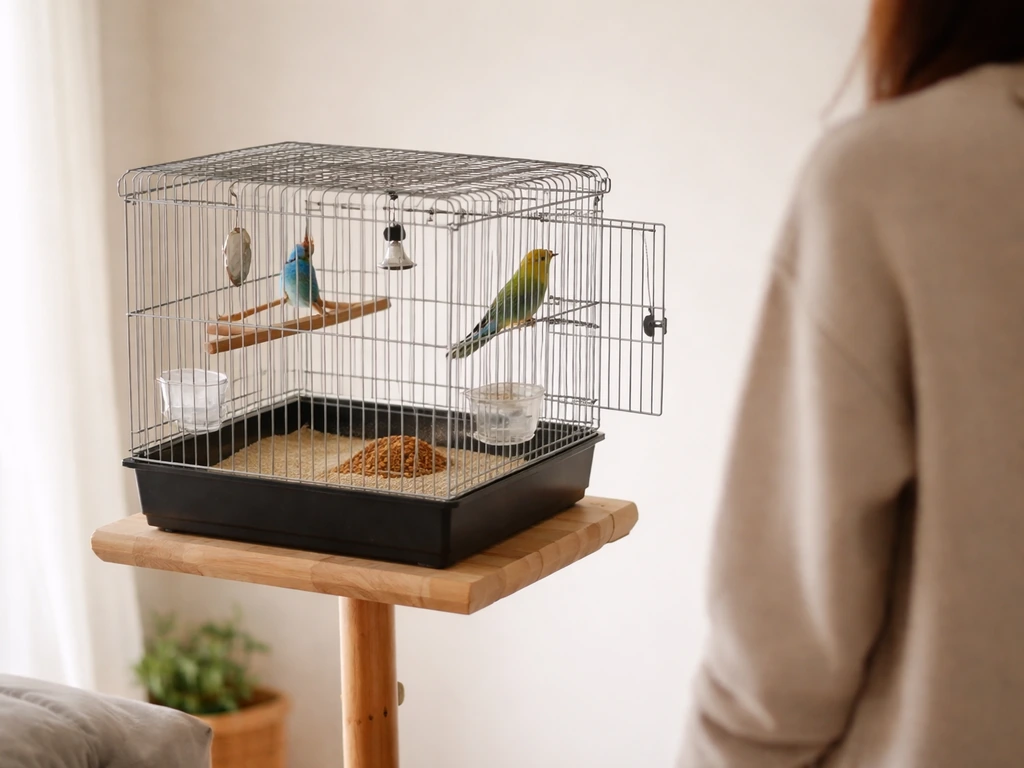
Budgies are fast, nervous, and exhausting to chase. The best approach is to place the cage high and visible, load it with millet, and simply leave the room for 10 to 15 minutes. Remove yourself from the equation entirely. A budgie that does not see a human looming nearby will often fly straight into the cage on its own. If you have a companion budgie inside the cage, the escaped bird will be drawn back by the flock bond even faster.
Finches and small birds
Finches are extremely flight-reactive and do not tame in the same way parrots do. Do not attempt to hand-lure a finch. Instead, use the food-and-open-cage method and minimize all movement in the room. Turn off lights to make the room as dim as possible without going completely dark, which can reduce the finch's urge to keep flying. Finches tire quickly, and a resting finch is much easier to guide back through a cage opening using a soft towel as a gentle funnel.
Step-up, target, and 'enter cage' training steps
If your bird already knows a step-up command, now is the time to use it. Approach slowly, hold your finger or a perch just below the bird's chest, and give the verbal cue in a steady, low tone. If the bird steps up, walk calmly to the cage and hold your hand or the perch just inside the door so the bird can step off onto the familiar perch inside. Reward immediately with a treat and quiet praise. Keep the session short: two or three successful reps of anything are enough for one interaction.
Target training is genuinely the most useful long-term tool for this exact situation. Hand taming your bird goes a lot faster once it understands target training, because you can guide it to any location, including back into the cage, by asking it to follow a target stick or your fingertip. The concept is simple: the bird learns to touch a target object (a chopstick, a pen cap, a colored bead) with its beak in exchange for a treat.
Once that behavior is reliable, you can hold the target just inside the cage door and the bird will follow it in. Practice this when the bird is already back in the cage so it becomes a fluent, voluntary behavior before the next escape happens.
For birds that are not yet step-up trained, you can still use a shaped luring approach. Hold a treat just inside the cage door. When the bird moves toward it, reward. Then hold the treat a little deeper inside. Reward again. Build the bird's confidence one small movement at a time rather than trying to get it all the way in on one try. This is the same shaping logic used in clicker training: each small step toward the goal gets a reward, and you never skip ahead faster than the bird is comfortable going.
When the bird refuses to go back in
Sometimes none of the gentle approaches work, especially with a bird that has never been handled or one that has been loose for a while and is now keyed up with adrenaline. Here is how to troubleshoot the most common sticking points.
The bird keeps flying to the highest point and won't come down
Stop all movement and sit quietly for 10 minutes. Birds often descend on their own when there is nothing happening below them. If the bird is exhausted (heavy breathing, drooping wings), darken the room significantly. A darkened room can temporarily reduce a bird's drive to keep flying, which gives you a window to approach slowly. Do not rush in the moment the lights go down. Move to within reach, then proceed with a towel capture if needed.
The bird is biting or panicking when you get close
Back off completely. Walk out of the room if you can and give the bird 5 to 30 minutes to decompress before trying again. Forcing the interaction when a bird is in full panic mode almost always makes it worse and can cause the bird to injure itself or you. Getting a scared bird calm enough to handle is a process that cannot be rushed, even in a recovery situation.
The bird is flying into corners or crashing into walls
This is a sign of extreme panic and you need to slow everything down immediately. Use visual barriers: drape a large towel or sheet over furniture in the room to create softer walls that reduce the open space the bird is trying to navigate. Audubon also recommends closing curtains, blinds, or shades so birds cannot see through glass and attempt to fly through windows [Use visual barriers](https://www. audubon.
org/news/simple-solutions-prevent-collisions). This is not about trapping it, it is about reducing the overwhelming visual field and giving the bird somewhere calmer to land. [Covering windows or glass to make the appearance more opaque](https://kb. rspca.
org. au/knowledge-base/how-can-i-stop-birds-flying-into-my-windows-or-attacking-my-car/), such as closing curtains to reduce transparency, can help birds avoid flying into them. Once it has settled on a surface and its breathing slows, you can attempt a quiet approach.
If you have to physically handle the bird
Sometimes a hands-on capture is necessary, particularly if the bird is exhausted, injured, or in a situation where it could hurt itself further. The tool for this is a standard hand towel or small bath towel. Approach the bird from the side, not head-on, and hold the towel loosely between yourself and the bird so it partially obscures your face and hands. Birds are significantly less reactive when they cannot make direct eye contact with the handler. Move slowly and steadily until you are close enough to drape the towel gently over the bird.
Once the towel is over the bird, use both hands to close it loosely around the body, securing the wings against the bird's sides and controlling the head gently between your thumb and forefinger. Do not squeeze. The restraint should prevent injury from flapping, not restrict the bird's ability to breathe. Transfer the bird directly to the cage and release it inside, letting it exit the towel on its own. A bird that scrambles out of the towel and onto a familiar perch will settle far faster than one you try to place by hand.
For larger parrots, calm herding before the towel capture makes the whole process safer. Slowly and quietly walk the bird into a corner or narrow space by positioning yourself between the bird and the rest of the room. Do not wave your arms or make sudden movements. Once the bird is in a corner with limited flight options, use the towel technique described above.
After the bird is back: preventing this from happening again
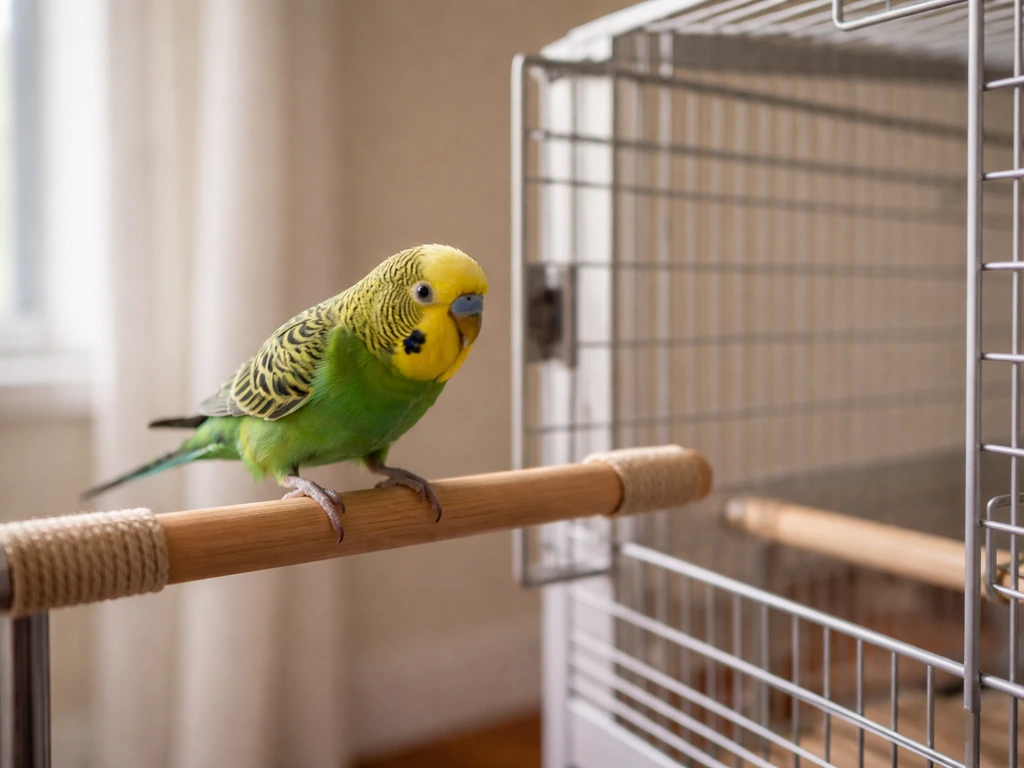
Getting the bird back in is only half the job. If returning to the cage always means the end of stimulation and social contact, the bird will resist going back every single time. The key is to make cage entry a neutral or positive event rather than a punishment.
Start practicing voluntary cage entry during low-stakes daily sessions. Every time the bird goes into the cage on its own or follows a target inside, reward it immediately and then open the door again within a minute or two. This teaches the bird that going in does not mean being locked away indefinitely. Over time, the resistance to cage entry drops significantly. If you want to understand what a realistic training timeline looks like, how long it actually takes to tame a bird gives you an honest breakdown by species and individual temperament.
Daily step-up practice is one of the most practical habits you can build. Even two to three minutes of step-up practice per day, with a consistent verbal cue and a small treat reward for each correct response, makes a bird dramatically easier to handle in unexpected situations. Taming a bird quickly is possible when you are consistent with short, positive sessions rather than long, infrequent ones.
Look at your cage setup critically. Is the door easy for the bird to exit accidentally? Consider whether the latch requires any modification. Check that perches are positioned away from the door so the bird cannot use a perch as a launchpad straight out. Also review your own routine: do you always check before opening the cage in a room with open windows or other hazards? Building a habit of doing a quick room check before any cage interaction takes about five seconds and can prevent a lot of stress.
Building trust over time
An untamed or semi-tamed bird that has just gone through a frightening capture experience may be more skittish than usual for the next day or two. Give it extra quiet time, cover part of the cage with a light cloth in the evening to help it feel secure, and do not push any training for 24 to 48 hours. After that rest period, return to short, positive sessions. If you have been meaning to work more seriously on taming and handling, this is a good moment to reset and start a proper approach. Taming your bird in a single focused day outlines an intensive but humane approach that works well as a fresh start after a stressful event.
A quick comparison: luring vs. towel capture
| Method | Best for | Pros | Cons | Recommended? |
|---|---|---|---|---|
| Food lure + open cage | Calm or mildly stressed birds, birds with any food motivation | No handling stress, voluntary, builds trust | Can take time, may not work if bird is very panicked | Yes, always try this first |
| Target or step-up training | Birds with some prior training, parrots and cockatiels | Voluntary, reinforces positive behavior, fastest long-term solution | Requires prior training foundation | Yes, build this skill now |
| Darkening the room | Any species, especially finches and small birds | Reduces flight drive, buys time to approach | Bird must be in a closed, safe room | Yes, use alongside other methods |
| Towel capture | Exhausted, injured, or panicked birds that won't self-return | Effective when other methods fail, protects bird from injury | Stressful for bird, requires correct technique to avoid harm | Use as last resort or for injury situations |
| Herding into corner + towel | Larger parrots in a controlled room | Effective for difficult birds, reduces flight distance | Requires calm, slow movement; can escalate if rushed | Yes, for larger birds when luring fails |
A note on wild birds and the law
If the bird in your situation is a wild bird that ended up inside your home, a quick reminder: once it is safely guided outside, your involvement ends there. Do not attempt to feed it or encourage it to return. Feeding wild birds on an ongoing basis, especially with human food, is actively discouraged by wildlife management authorities because it can reduce natural foraging behavior, attract predators, and create other wildlife conflicts. If a wild bird appears injured after you guide it out, contact a licensed wildlife rehabilitator in your area rather than attempting care yourself. Handling protected wild bird species without proper permits is illegal in most countries.
For your pet bird, the entire experience of escaping and being returned can actually become a trust-building opportunity if you handle it calmly and follow up with patient, reward-based sessions. Birds that learn cage entry is safe and voluntary become genuinely easier to manage over time. The goal is not just to get the bird back today but to make it less likely you will need to do this again, and to make your bird more confident and cooperative in the process. If you want a structured plan for making that happen, working with a scared bird in short, positive sessions is the most direct path forward.
FAQ
What if my bird is already back near the cage but won’t go in when I open the door?
Keep the cage door open and stop trying to grab. Offer the same favorite food from just inside the doorway, then reward any step closer. If your bird stalls at the threshold, try lowering the treat position slightly deeper and only for a few seconds before retreating to your last “successful” spot. This avoids breaking the bird’s confidence with repeated reaching.
Should I keep lights on or turn them off to get an untamed bird back in the cage?
Dim lights can help for some species when the bird is keyed up, but avoid complete darkness unless you are prepared to do a towel capture. If the room is too dark, some birds bolt upward or fly unpredictably. Start with gentle light reduction, then increase darkness only if the bird still will not come down.
Can I chase if my bird keeps escaping again and again?
Chasing usually teaches the bird that you are part of the chase loop, so it will keep dodging and relocating to higher points. Instead, reset the room to low stimulation, make the cage the highest-value option (favorite food in the cage), and use short, controlled attempts. If you need to try again, decompress the bird for 5 to 30 minutes first.
My budgie or cockatiel won’t approach the cage, even with millet or treats inside. What else can I change?
Check your cage placement and perches. If the bird can’t see the entrance clearly, or if a perch near the door lets it “launch” away instantly, movement will reinforce avoidance. Place the cage at eye level or slightly higher, ensure the doorway is visible from where it is perching, and move tempting exit perches farther from the door.
Is a towel capture safe for small birds, and how do I prevent injury?
It can be, if you approach from the side, avoid squeezing, and control only flapping and head position. Use a towel that is large enough to gently obscure direct eye contact. Once the bird is in the towel, close it loosely enough to prevent scrambling, then transfer directly to the cage so it can step out on its own.
What if the bird is injured or appears weak after being loose?
Do not attempt to “test” training or keep luring. Prioritize stabilization and minimal handling, then get veterinary care or, for a wild bird, a licensed wildlife rehabilitator. If it is not breathing normally, bleeding heavily, or has obvious trauma, immediate professional help matters more than getting it into the cage fast.
How can I tell whether it is a wild bird or a pet when it is loose inside?
Look for behavior and context. A wild bird typically has strong flight drive, looks unsettled by indoor surroundings, and will not seek human interaction. A pet bird may respond to familiar sounds, show learned behaviors like step-up cues, or linger in known “safe” spots. If you are unsure, treat it as wild until it is confirmed and focus on guiding it to an exit rather than returning it to captivity.
Once I get my pet bird back in, should I immediately start training again?
Not the same day if it was a stressful escape or you had to do towel capture. Give 24 to 48 hours of extra quiet before deeper practice, then resume with very short, positive sessions. During the reset window, avoid pushing cage entry training until the bird’s breathing and demeanor look normal.
What if my cage door opens outward or the latch is awkward, and the bird bolts out accidentally?
Modify your routine first, then the setup. Always check windows and room hazards before interacting with the cage. If the door placement makes it easy for the bird to slip out, consider keeping the door direction and perch positions so the bird cannot use the entrance area as a launch point. Aim for a door that you can open and close quickly without reaching across the bird’s flight path.
How do I make cage entry easier next time if the bird associates the cage with stopping fun?
Immediately after any voluntary entry or successful target follow, reward the bird and open the door again within a minute or two. The goal is to teach that cage entry is a temporary, safe choice, not the end of freedom and social time. Track whether the bird enters faster over several days, and keep sessions short to avoid frustration.