You hand-tame a bird by earning trust through slow, consistent presence rather than forcing contact. Start close but non-threatening, reward any calm behavior near your hand, and let the bird choose to step on rather than pushing the issue. Done right, most pet birds (parrots, cockatiels, budgies) can progress from fearful to stepping onto your hand within days to weeks, depending on the individual bird's history and personality. Finches and wild backyard birds need a completely different approach, which I'll cover separately below.
How to Hand Tame a Bird: Humane Step-by-Step Guide
Clara Hayes
23 Apr 2026
What 'hand taming' actually means (and what it doesn't)
Hand taming is not about making a bird tolerate being grabbed. It is about building genuine trust so the bird chooses to interact with you. There is a meaningful difference between a bird that sits on your hand because it feels safe and one that sits there because it has given up trying to escape. The second situation is sometimes called 'learned helplessness,' and it looks like taming but is actually chronic stress. You want the first.
Forcing handling causes fear responses that set your progress back days or weeks. A bird that bites, screams, pants, holds its wings away from its body, fans its tail, or raises the feathers on its head is telling you to stop. Those are not stubbornness signals. They are genuine distress signals, and the humane (and most effective) thing to do is back off immediately.
Humane expectations and safety before you start
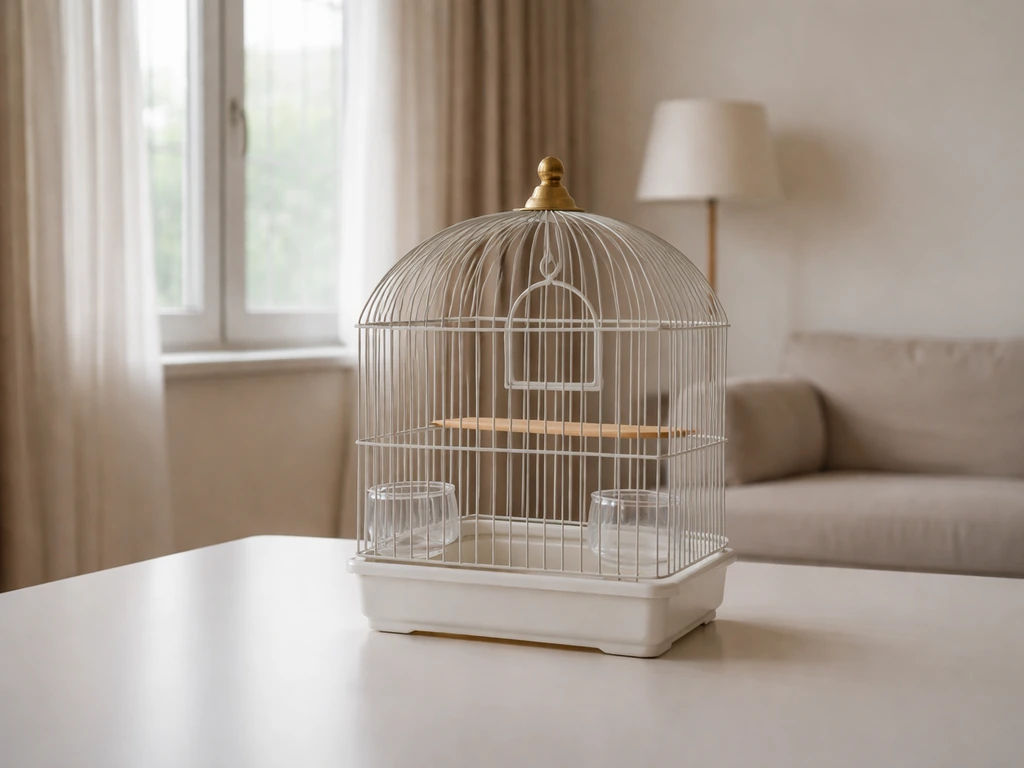
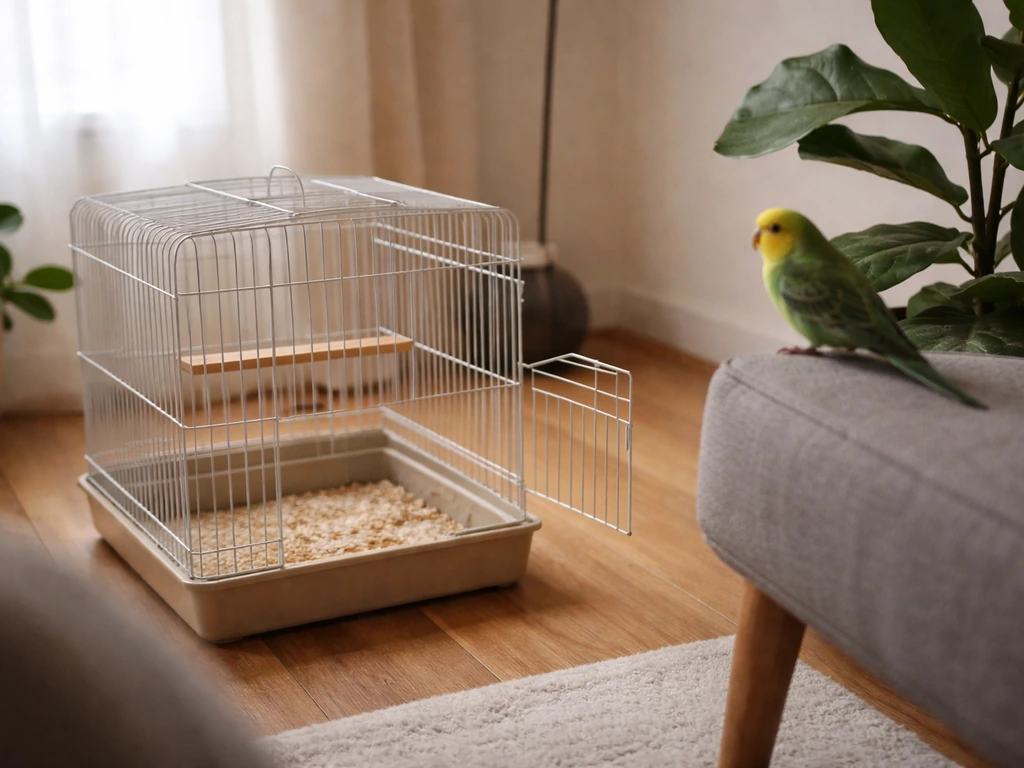
Before you even approach the cage, set yourself up for a low-stress session. The environment matters as much as technique.
- Choose a quiet room with no loud TV, no other pets nearby, and no fans or open windows the bird could escape through if it gets loose.
- Keep the room at a comfortable temperature. Birds under heat stress pant, hold wings away from the body, and breathe with an open mouth. Cold drafts are equally risky, especially for smaller species.
- Keep sessions short: 5 to 10 minutes maximum for nervous birds, no more than 15 to 20 minutes even for willing ones. Overtired birds lose focus and bite.
- Never put pressure on a bird's chest when holding it. Their respiratory systems work differently from mammals and chest compression can genuinely impair breathing.
- If you have long hair, tie it back. Cover dangling earrings and avoid reaching toward a bird's face with hands you haven't introduced slowly. Parrots and larger hookbills can bite hard enough to injure lips, ears, and fingertips.
- Wash hands before sessions to remove food smells that might confuse the bird, and after to reduce zoonotic risk.
- Have a high-value treat ready: millet spray for budgies and cockatiels, a small piece of fruit or nut for parrots, nothing forceful for finches.
The most important rule is this: if the bird shows any stress signal during a session, stop the interaction and move away calmly. Do not push through it. Ending on a calm moment is always better than ending on a fearful one.
Know your bird: species-specific taming approaches
Different species have genuinely different social wiring, and what works brilliantly for a cockatiel can completely backfire with a finch. Here is how to think about the four most common pet bird types.
Parrots (African Greys, Amazons, Conures, Macaws, Caiques)
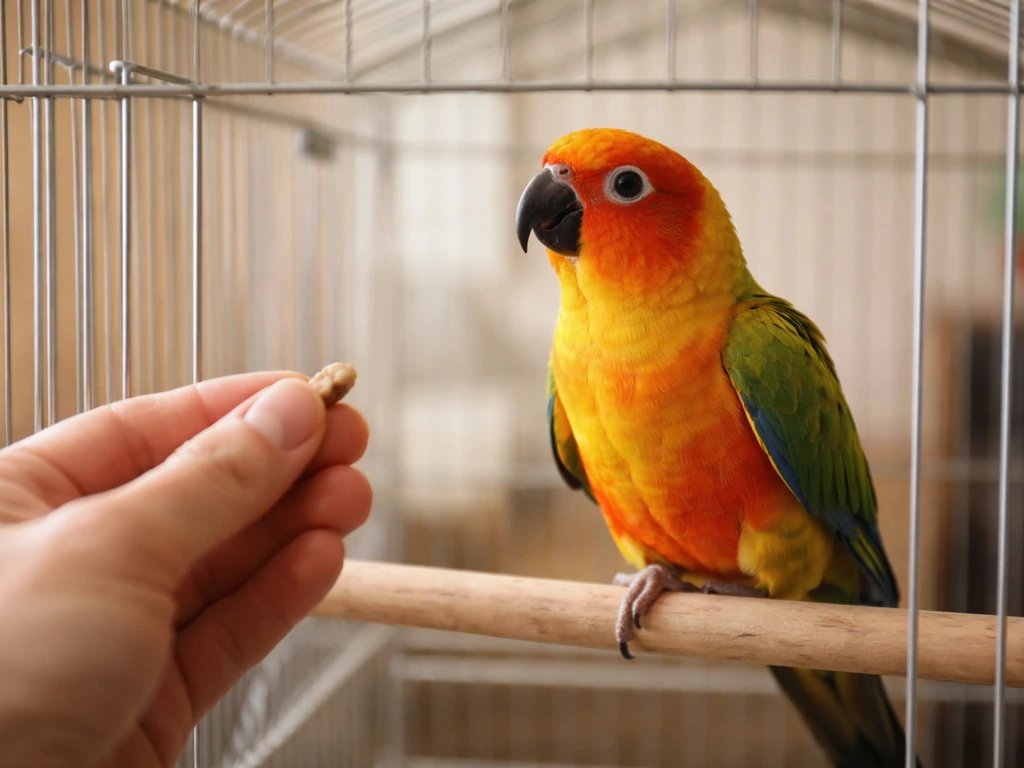
Parrots are highly intelligent and emotionally sensitive. They read body language well and hold grudges if they feel threatened. The trust-building phase often takes longer than with smaller birds, but once a parrot bonds with you, step-up reliability is usually excellent. SpectrumCare notes that building trust with the right setup, body language, and timing helps step-up training become reliable once the bird is comfortable with calm, predictable conditions and rewards step-up reliability is usually excellent. Parrots respond very well to target training (touching a small stick or chopstick with their beak to earn a reward) as a low-pressure way to build positive associations before any hand contact happens. Avoid looming over them. Approach from the side, at their level, not from above.
Cockatiels
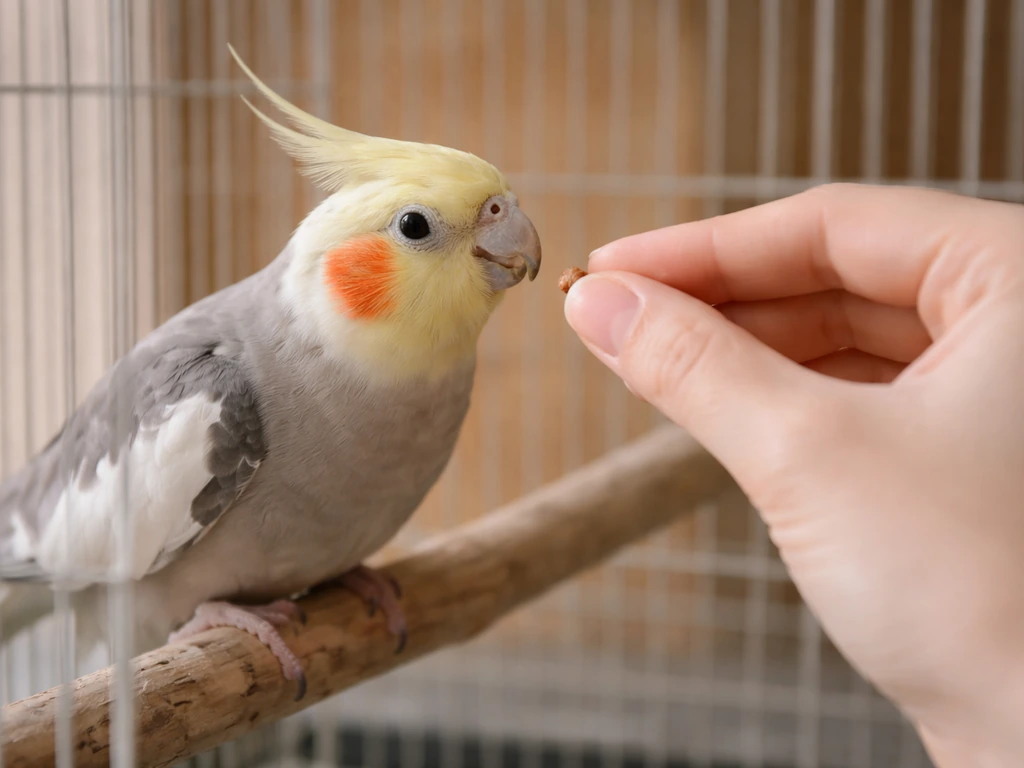
Cockatiels are generally among the easiest pet birds to hand tame. They are social, curious, and food-motivated. A hand-raised cockatiel may step up almost immediately. A wild-caught or aviary bird may take two to four weeks of daily sessions. Watch the crest: flat and slicked back means fear or aggression, soft and slightly raised means curious and calm. Work with the crest, not against it.
Budgies (Budgerigars)
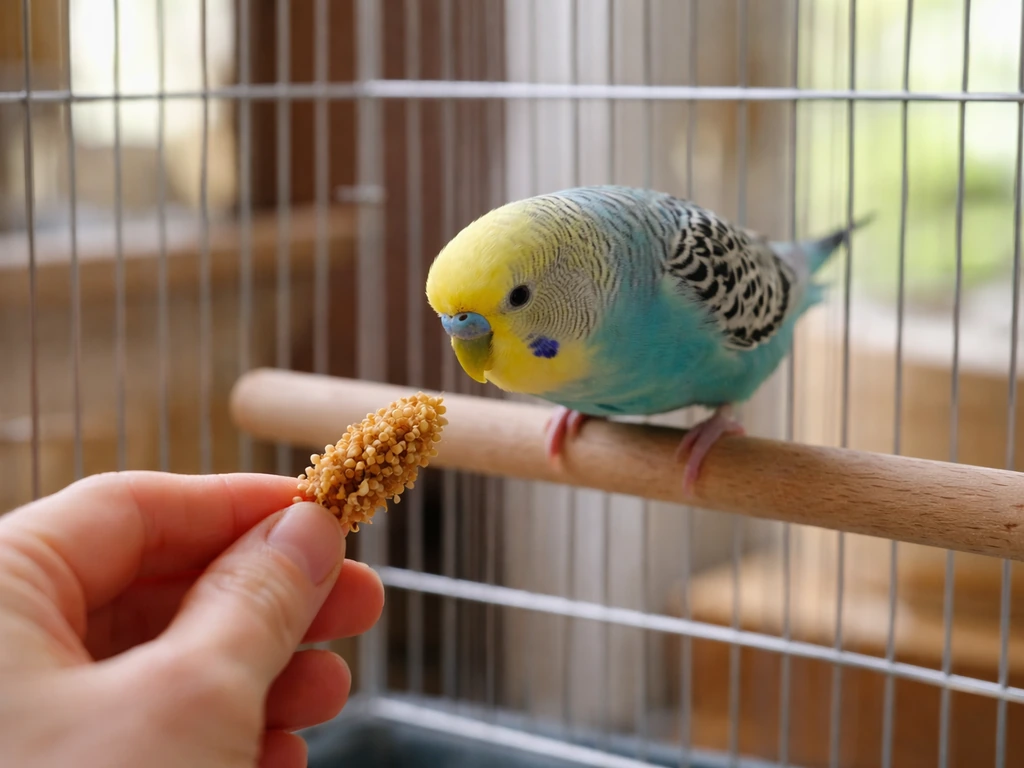
Budgies are small and fast to habituate, but they are also prey-animal-wired, so sudden movements hit them hard. Millet spray is almost universally effective as a reward. The key with budgies is tiny, incremental steps, each one so small the bird barely notices the progression. Young budgies (under six months) tame far faster than adults, but adults absolutely can be tamed with patience. Plan on consistent daily 10-minute sessions over two to four weeks for a nervous adult budgie.
Finches (Zebra Finches, Society Finches, Canaries)
Here is the honest truth about finches: most finch species are not candidates for step-up hand taming the way parrots and budgies are. Finches are not wired for close human contact and forcing it causes real stress without any meaningful benefit to the bird. The realistic goal with finches is calm coexistence, where the bird is relaxed in your presence, eats near you, and does not panic when you change their food and water. If you want a bird that sits on your hand, a finch is not the right choice. If you have a finch and want to reduce fear, focus on moving slowly around the cage, talking softly, and hand-delivering treats through the cage bars without expecting the bird to step onto you.
Building the foundation: bonding, trust, and consent cues
Before your hand goes anywhere near the bird, you need to build a baseline of trust. This phase is not optional, and skipping it is the single most common reason people get stuck.
- Spend time near the cage daily doing calm, non-threatening things: reading, talking softly, eating near the cage. Let the bird get used to your smell, voice, and presence without any expectation.
- Talk to the bird in a quiet, consistent voice. Use their name. You are not teaching vocabulary at this stage, you are just becoming a familiar, non-scary sound in their environment.
- Hand-deliver food through the cage bars or door from a distance. Start with your hand at the edge of the cage opening, not pushed deep inside. The goal is for the bird to associate your hand with good things appearing.
- Move slowly and predictably at all times. Birds track movement intensely. Slow, arcing movements read as safe. Fast, straight-line movements read as predator strikes.
- Watch for consent cues: the bird moving toward your hand rather than away, leaning forward, chirping softly, or showing relaxed body posture (smooth feathers, calm crest if applicable). These are green lights to progress.
- Recognize non-consent cues and respect them: backing away, fluffing up, hissing, biting at the cage bars, open-mouthed breathing, screaming. These mean slow down or stop entirely for the day.
This foundation phase typically takes three to seven days for a hand-raised bird and one to three weeks for a bird with limited human socialization. Do not rush it. A bird that is comfortable with your presence before you try to touch it will progress faster overall than one that is pushed into hand contact before trust is established.
Step-by-step hand introduction: from sitting nearby to stepping onto your hand
Once the bird is calm with your presence near the cage, you can start the actual hand progression. Go through these stages in order and only move to the next one when the bird is consistently relaxed at the current stage, not just tolerating it, actually calm.
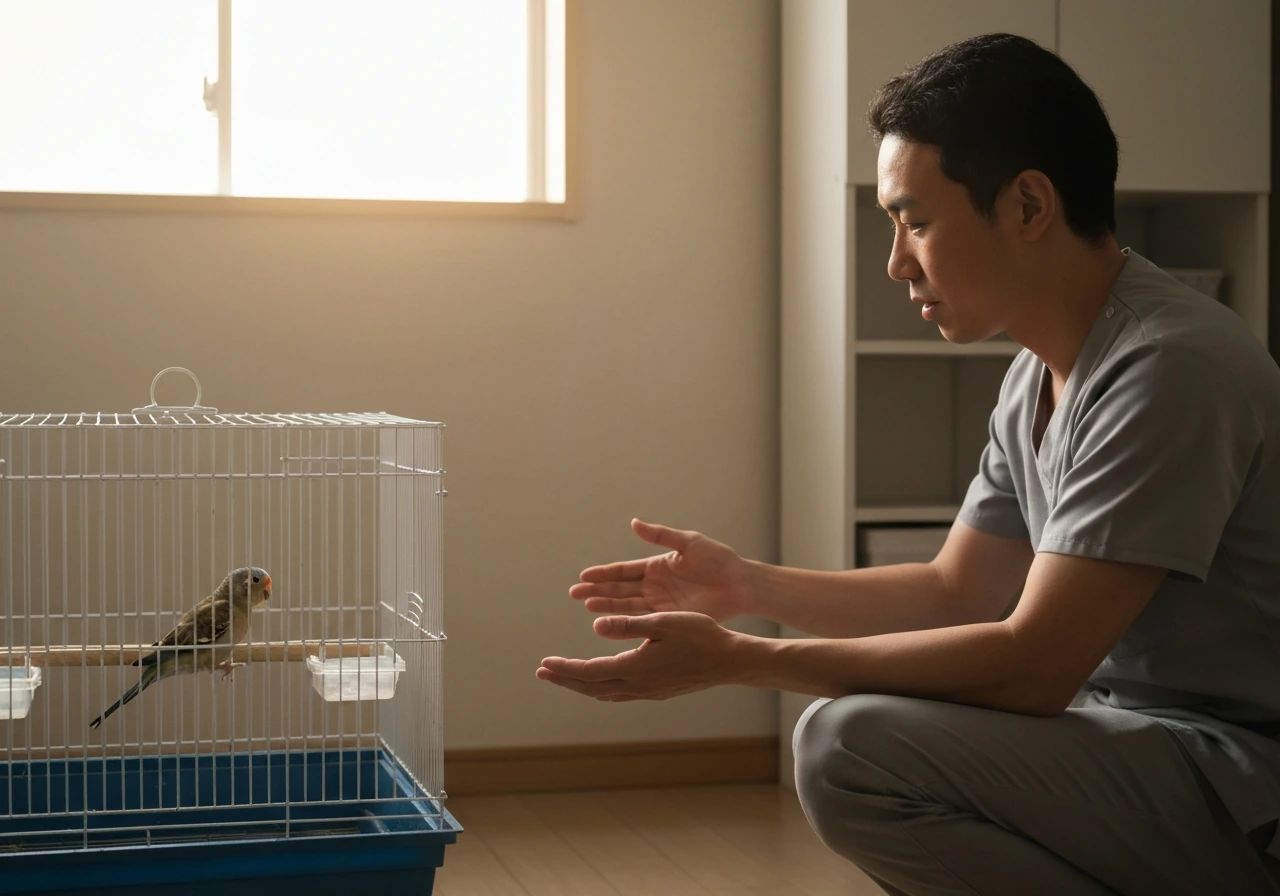
- Stage 1 - Hand near the cage exterior: Place your still, open hand against the outside of the cage bars for 30 to 60 seconds. No movement, no pressure. If the bird approaches or stays calm, reward with a treat placed near that spot.
- Stage 2 - Hand inside the cage door, low and still: Open the cage door and rest your open hand just inside the threshold, below the bird's perch height. Keep it below eye level (less threatening). Do not reach toward the bird. Let the bird come to investigate. Reward any approach.
- Stage 3 - Treat delivery from your palm: Hold a high-value treat flat in your palm with your hand inside the cage. Let the bird take it without you moving your hand. If it stretches its neck to reach the treat without stepping on your hand, that is fine. You are building positive association, not forcing a step-up yet.
- Stage 4 - Hand as a perch option: Position your hand horizontally, fingers together, at just below the bird's feet when it is on its perch. Gently press the back of your hand or a finger against the lower part of the bird's legs, just above the feet. This 'step-up prompt' works because birds instinctively step forward when something touches that spot. Do not force it upward. Just offer the perch opportunity.
- Stage 5 - First voluntary step-up: When the bird consistently places at least one foot on your hand when prompted, continue encouraging until it transfers its full weight. The moment both feet are on your hand, stay still, keep low, and reward immediately with treat and calm praise.
- Stage 6 - Moving with the bird on your hand: Once the bird steps up reliably, practice moving your hand slowly, just a few inches, while the bird is on it. Build duration and movement gradually. Always return the bird to its cage on a positive note, not after a struggle.
A useful rule from bird welfare guidance is this: when a bird consistently places a foot on your hand at the prompt, that is when you move to the next stage. Consistency is the signal, not just a single success. One good step-up is a win. Five in a row means you are ready to progress.
How to run your training sessions and what timeline to expect
Consistency beats intensity every single time with birds. If you are trying to reach a goal fast, review how to tame a scared bird in 1 day for quick, low-stress options that still respect trust-building. A 10-minute session every day will produce better results faster than a two-hour session once a week. If you are aiming for quick results, focus on short, consistent daily sessions and prioritize trust so you are not forced into unsafe handling how to tame your bird in one day. If you want to know how long it takes to tame a bird, the timeline depends on the species and the trust-building stage you are currently in quick results. If you need an even faster start, check out practical steps for how to tame a bird quickly while still keeping the session low-stress. Here is how to structure your routine.
- One to two sessions per day is ideal. Morning and early evening work well because birds are often most active and food-motivated at those times.
- End every session on a win, even a tiny one. If a session is going badly, dial back to a stage the bird is already comfortable with, get one easy success, then end.
- Keep a simple log: date, which stage you worked on, how the bird responded, any stress signals you saw. Patterns become obvious within a week.
- Do not train when you are stressed, rushed, or irritated. Birds pick up on human tension immediately.
- Avoid training right after a loud event, after the bird has been frightened, or when there are unusual distractions in the environment.
Realistic timelines by species and situation
| Bird Type / Situation | Foundation Phase | First Step-Up | Reliable Step-Up |
|---|---|---|---|
| Hand-raised cockatiel or budgie | 1 to 3 days | 3 to 7 days | 2 to 3 weeks |
| Adult aviary/pet store cockatiel | 1 to 2 weeks | 2 to 4 weeks | 4 to 8 weeks |
| Adult aviary/pet store budgie | 1 to 2 weeks | 2 to 3 weeks | 3 to 6 weeks |
| Parrot (hand-raised, socialized) | 1 to 5 days | 1 to 2 weeks | 3 to 6 weeks |
| Parrot (rescue, neglected, fearful) | 3 to 6 weeks | 6 to 12 weeks | 3 to 6+ months |
| Finch (any) | 2 to 4 weeks (calm coexistence only) | Not a realistic goal | Not a realistic goal |
If you are trying to tame a bird more quickly, there are legitimate techniques for accelerating progress without force, and that is worth exploring separately. But these timelines represent what most birds actually need for genuine, stress-free taming rather than just surface compliance.
Troubleshooting: biting, panicking, not approaching, and inconsistent progress
Every bird hits a wall at some point. Here is how to work through the most common problems without setting yourself back.
The bird bites when my hand enters the cage
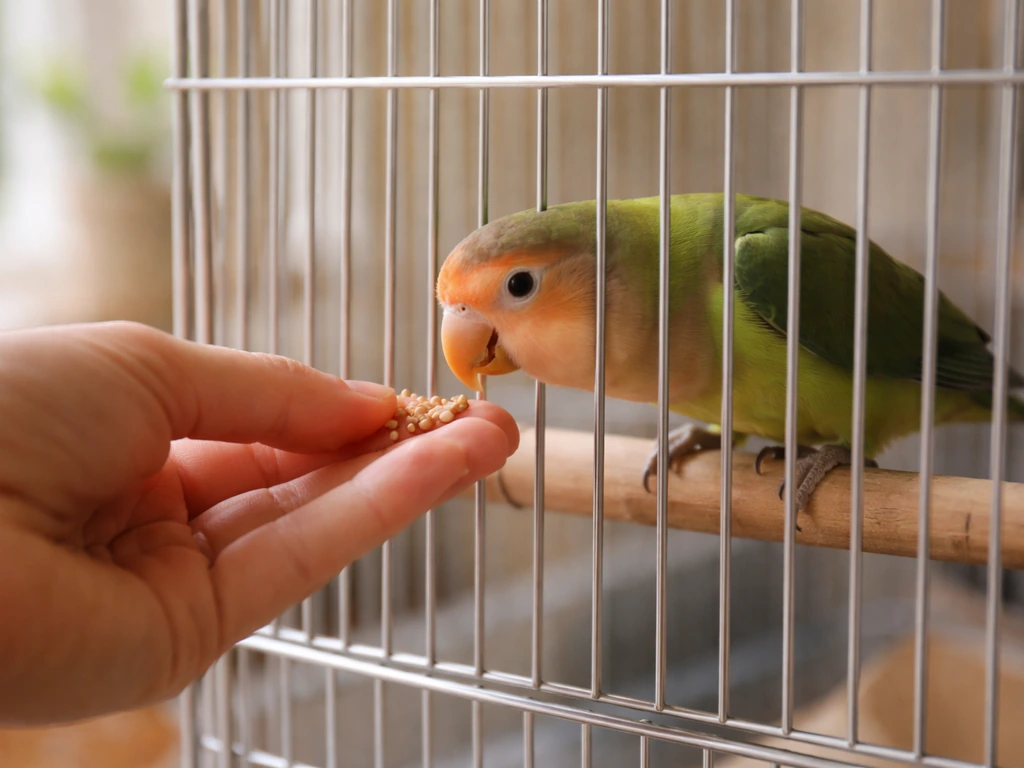
This almost always means you moved to hand-inside-cage too fast. Go back to Stage 1 (hand on the outside) for another few days. You can also try target training: hold a chopstick or small stick at the cage bars and reward the bird for touching it with their beak. This puts a positive, controlled behavior onto the 'object approaching from outside' situation before your actual hand is involved.
The bird panics and thrashes when I open the cage
Do not open the cage at all for now. Spend several more days just sitting near it, talking calmly, and feeding treats through the bars. The bird is telling you the threshold of the cage door is still a major stressor. Rushing past this point causes real harm, so slow down.
The bird approaches the treat but won't step on my hand
Move the treat slightly further back into your palm so the bird has to step forward to reach it. Make sure your hand is positioned at exactly the right height, just touching the lower legs, not too far below (too much of a jump) or too high (feels threatening). Be patient. Many birds eat from your hand for several sessions before committing to a step-up.
Progress is great for a few days, then the bird regresses
This is completely normal. Something changed in the environment (a new smell, a noise, a rearranged room, even a new piece of clothing you wore), or the bird simply had an off day. Go back one stage, re-establish confidence, and build back up. Do not interpret regression as failure. It is just information.
When to stop and get professional help
Reach out to a certified avian behavior consultant or your avian vet if the bird shows feather destruction, prolonged screaming, significant weight loss, or complete shutdown (sitting motionless, not eating, not responding). These go beyond normal taming challenges and may indicate an underlying health issue, trauma history, or a need for behavior support beyond what self-guided training can address. There is no shame in getting help. A good avian vet or behavior professional can make months of difference.
Wild birds in your yard: what 'hand taming' really means outdoors
If you found this article hoping to hand-tame a wild bird you have seen in your yard, the approach is fundamentally different from working with a pet bird, and the legal and ethical stakes are higher.
In most countries, including the US (under the Migratory Bird Treaty Act), the UK, Canada, and Australia, it is illegal to capture, keep, or interfere with wild birds without a permit. This applies even to well-intentioned situations. You cannot legally take a wild bird inside, keep it in a cage, or attempt to tame it for any length of time without proper rehabilitation licensing.
What you can do is build a relationship at a distance over time. Some wild birds, particularly corvids (crows, jays), certain chickadees, and hand-fed sparrows, will occasionally take food from an open palm if you have spent weeks or months building a feeding routine in the same spot, at the same time, with the same person. This is not taming in any formal sense. It is habituation, and it happens on the bird's terms entirely. If an untamed bird suddenly seems ready to stay near you, keep building trust first and avoid rushing to put it back in a cage situation how to get untamed bird back in cage.
Humane ways to attract and enjoy wild birds up close
- Set up a consistent feeding station with species-appropriate food (black oil sunflower seeds, nyjer, suet, mealworms depending on your target species).
- Add a clean, shallow birdbath with a dripper or mister, which attracts more species than food alone.
- Plant native shrubs and trees that provide natural cover and food sources, which brings birds closer to your house naturally.
- Sit quietly at a consistent distance from the feeding station every day at the same time. Over weeks, reduce the distance very gradually.
- If you want birds to feed from your hand, extend your palm with food and sit completely still at the feeding station. Some species will approach after days to weeks of this, but many never will, and that is okay.
- Never corner, chase, or try to pick up a wild bird unless it is injured, in which case contact a licensed wildlife rehabilitator rather than handling it yourself.
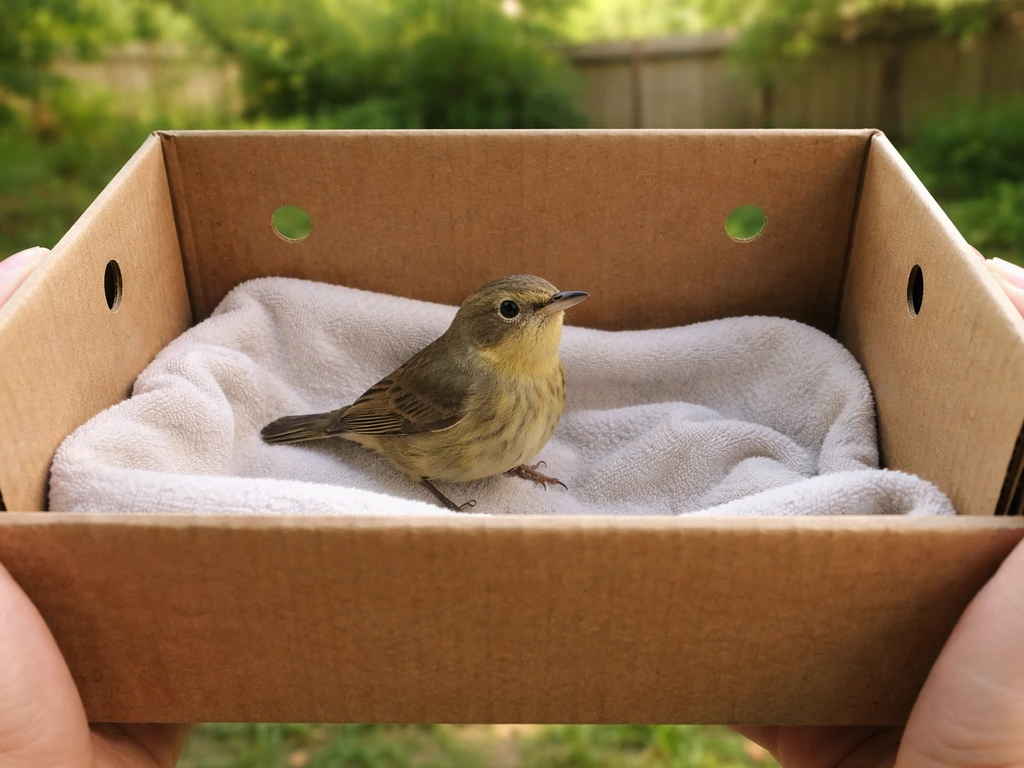
If you find an injured wild bird, do not attempt to tame or keep it. Place it in a ventilated box in a warm, dark, quiet space and call a local wildlife rehabilitator or wildlife rescue hotline immediately. Handling wild birds outside of this emergency context is not humane, even when motivated by care.
The single most important habit to build right now
Read your bird, not just your schedule. The most effective hand tamers are not the people who follow a rigid protocol perfectly. They are the people who notice when the bird is having a bad day and adjust accordingly, who end a session two minutes early because they caught a stress signal early, and who celebrate a tiny piece of progress instead of pushing for the next milestone. Start your first session today with five minutes of just sitting near the cage and talking softly. That is it. That is a real beginning, and it counts.
FAQ
What should I do if my bird bites during hand-taming, even when I stop right away?
Use treat delivery and non-contact progress first. If the bird repeatedly bites when you present your hand, do not “try again harder.” Move back to calmer stages (outside-hand then through the bars), switch to target training or bowl/trough hand-delivery, and only reintroduce step-up after the bird can eat calmly with your hand in the same position for several sessions.
How can I practice step-up without accidentally training my bird that my hand always leads to restraint?
Do not let the bird learn that stepping up makes handling unavoidable. End sessions while the bird is calm, and vary your approach so the bird does not associate your hand with being grabbed. If you need to handle for health reasons, use separate “cooperative” training sessions or consult an avian behavior professional, so medical handling does not undo taming trust.
My bird panics when I open the cage door. How do I progress past this?
If the bird is very stressed by the cage opening, keep the cage door closed and treat through the bars until your bird stays relaxed when you mimic the motion without opening. If the bird only calms when you retreat, stay in that safer distance and move the opening step back by days, not minutes.
What causes sudden setbacks, even if my routine has been consistent?
Yes. A “good day” can be misleading. Regressions can happen from a new smell, household noise, schedule changes, poor sleep, molting, or even a recent food change. When it happens, return to the last consistently relaxed stage for a few days, and keep sessions short and predictable.
Is it better to do longer sessions less often, or short sessions every day?
For most pet birds, short daily sessions beat long infrequent ones. Aim for about 5 to 10 minutes if the bird is still learning, and stop as soon as you see stress signals (tail fanning, panting, wing away from body, feather flattening/raising). If you want to increase practice, add days before you add minutes.
My bird will eat treats near my hand but refuses to step onto it. What should I change?
Stop using your hand as a reward surface and switch to alternatives the bird can control. For example, keep treats near the front of the cage, place food in a consistent spot, or use a perch-based target so the bird chooses to approach. If the bird shows fear responses around your palm specifically, you may need to move to a different hand height or position for several sessions.
How do I tell the difference between a calm step-up and compliance that could be stress?
Avoid forcing “step-up” on a bird that is not consistently relaxed, especially if it is showing distress. If the bird only steps onto your hand briefly and immediately backs away, that is not the same as calm step-up. Work on consistency first (multiple calm step-ups in a row), and do not advance stages because of a single moment of success.
When should I stop hand-taming and call an avian vet instead?
Feather issues, repeated prolonged screaming, weight loss, and complete shutdown are red flags. If you notice any of these, pause training and contact an avian vet promptly before resuming. Illness and pain can look like “behavior,” and continuing may increase stress and delay treatment.
Can I use the same steps to hand tame a wild bird I see in my yard?
You should avoid expecting wild backyard birds to be “tame” in the pet sense. If you are attempting distance feeding, keep it non-invasive, do not approach with a hand, and do not cage or handle. Build trust only by consistent time and place, and if the bird seems ready to approach, still prioritize calm coexistence over sudden close contact.
What should I do if I find an injured wild bird?
If you cannot safely or legally keep or handle a wild bird, focus on protecting the bird from stress and risk. For injured birds, place them in a ventilated box in a warm, dark, quiet area and contact a wildlife rehabilitator or rescue hotline. Do not try to “calm it down” by prolonged handling.