A lively, chirpy bird is a healthy bird. If your pet bird has gone quiet, seems flat, or just isn't as talkative as you'd like, the first step is ruling out a health problem, then looking at the environment, then working on trust and training. For backyard wild birds, the approach is different: you're not training them to talk, but you can set up your yard so they feel safe enough to come close and sing freely. This guide covers both, step by step.
How to Make Pets Alive Chirpy Birds Talk: Humane Steps
Clara Hayes
19 May 2026
Start here: quiet doesn't always mean shy
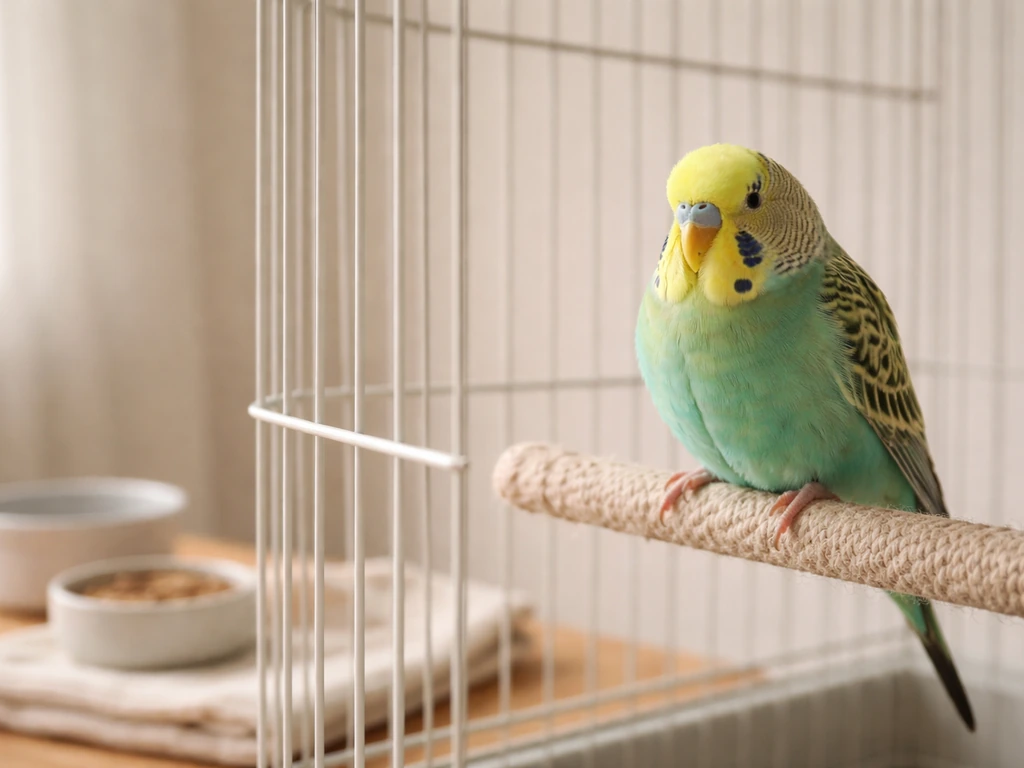
Before you try any training or environmental tweaks, check whether your bird's silence is a welfare signal. A bird that suddenly goes quiet after being vocal, or that sits fluffed up at the bottom of the cage, is telling you something is wrong. Quiet in a previously chatty bird is one of the clearest early warning signs of illness.
Run through this checklist right now if your bird seems off. Any single item on this list warrants a call to an avian vet the same day, not a wait-and-see approach.
- Open-mouth breathing, tail bobbing, or noisy breathing at rest: treat this as an emergency
- Panting with feet or beak that feel hot to the touch: emergency, call a vet immediately
- Weakness, falling off the perch, or inability to grip
- Blue or gray tinge to the skin, gums, or around the beak
- Not eating or drinking for more than 12 hours
- Stretched neck posture, labored or shallow breathing
- Fluffed feathers combined with lethargy or eyes closing during the day
- Sudden change in droppings (very watery, discolored, or absent)
If your bird passes this welfare check and simply seems less vocal or energetic than usual, keep reading. Most of the time the fix is environmental or behavioral, and it's very fixable.
Set up the environment for energy and vocal motivation
Birds are hugely sensitive to their surroundings. Light, temperature, cage position, sleep quality, and enrichment all directly affect how active and vocal your bird is. Getting this right is honestly more important than any specific training trick.
Light and temperature
Natural light cycles drive a bird's hormones and activity levels. Place the cage near a window that gets indirect natural light for most of the day, but make sure part of the cage is always shaded so the bird can regulate its own temperature. A consistent room temperature between 65 and 80 degrees Fahrenheit suits most companion species. Drafts, air conditioning vents directly pointed at the cage, and sudden temperature swings are all stress triggers that suppress vocalization.
Cage placement
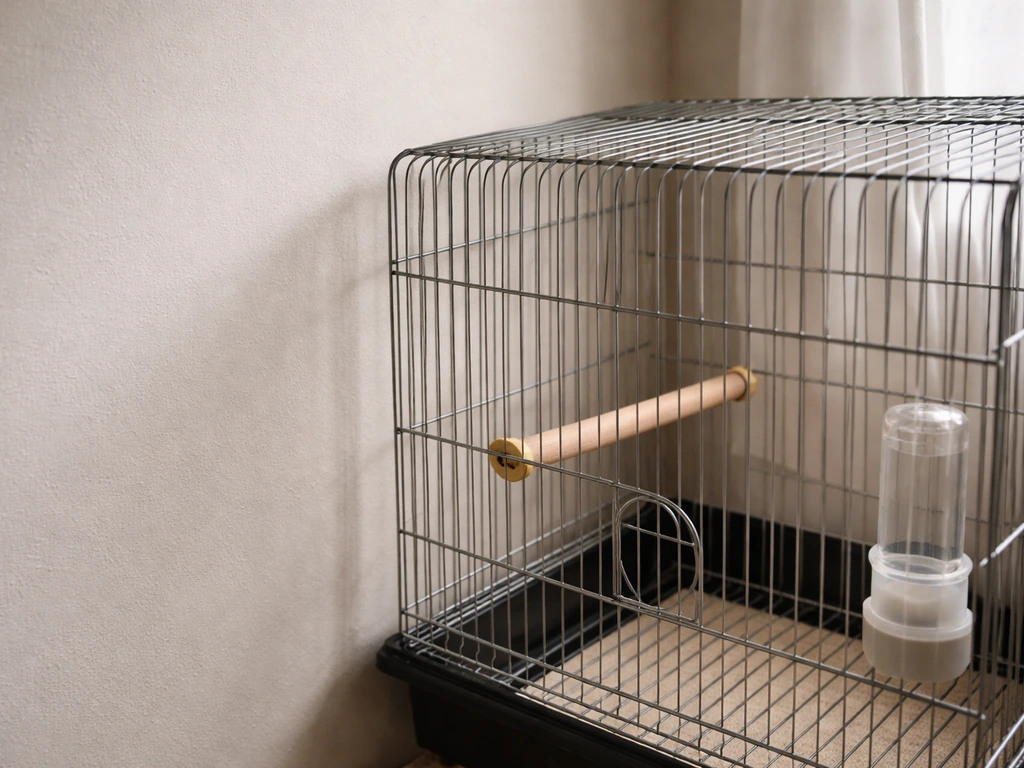
Position the cage so the bird has a solid wall behind it on at least one side. This gives a sense of security, which is a precondition for confident, relaxed vocalizing. A cage in the middle of a room with activity on all sides can keep a bird permanently on edge. Eye level or slightly below is the sweet spot for most species. Avoid kitchens (toxic cooking fumes) and garages (carbon monoxide, fumes). A busy but predictable family room usually works well.
Sleep: the most underrated factor
Most parrots and similar companion birds need around 10 to 12 hours of quiet, uninterrupted, dark sleep every night. Chronic sleep deprivation makes birds grumpy, quiet, and prone to feather issues. If your household is active until midnight and the bird is in a lit room, it isn't getting enough rest. A cage cover can help, but if you've never used one before, introduce it gradually: a bird that panics under a cover should not be forced to use one. Instead, move the cage to a quieter, darker room for the night. The Association of Avian Veterinarians recommends consulting your avian vet about the specific sleep hours your species needs.
Enrichment and bathing
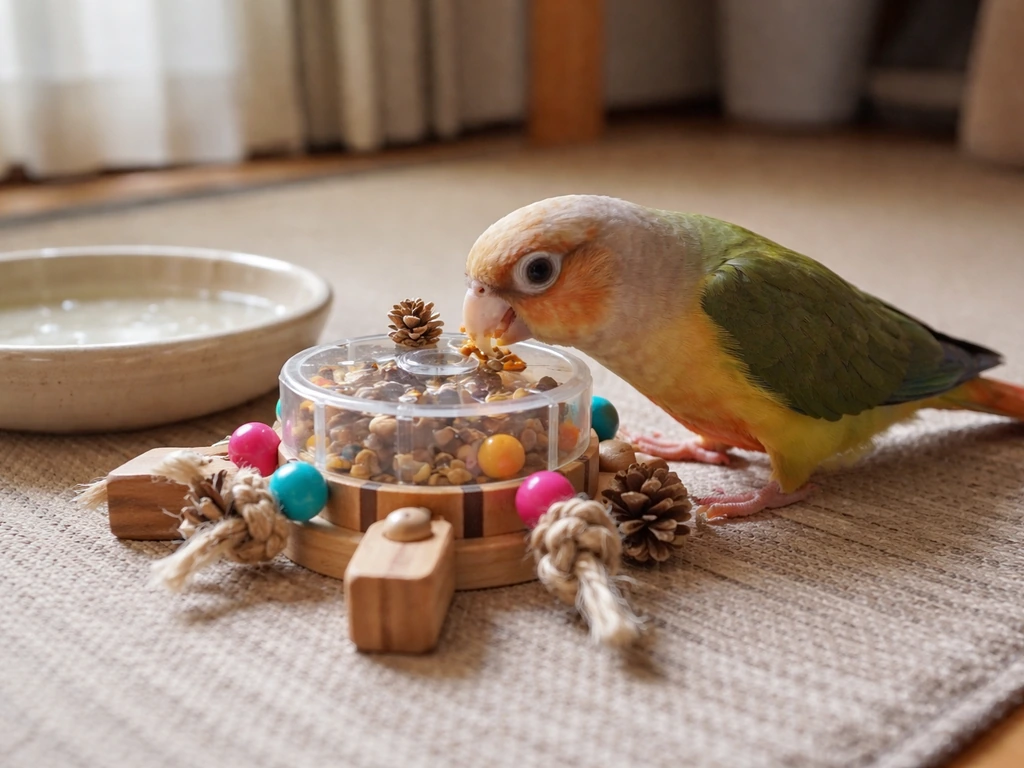
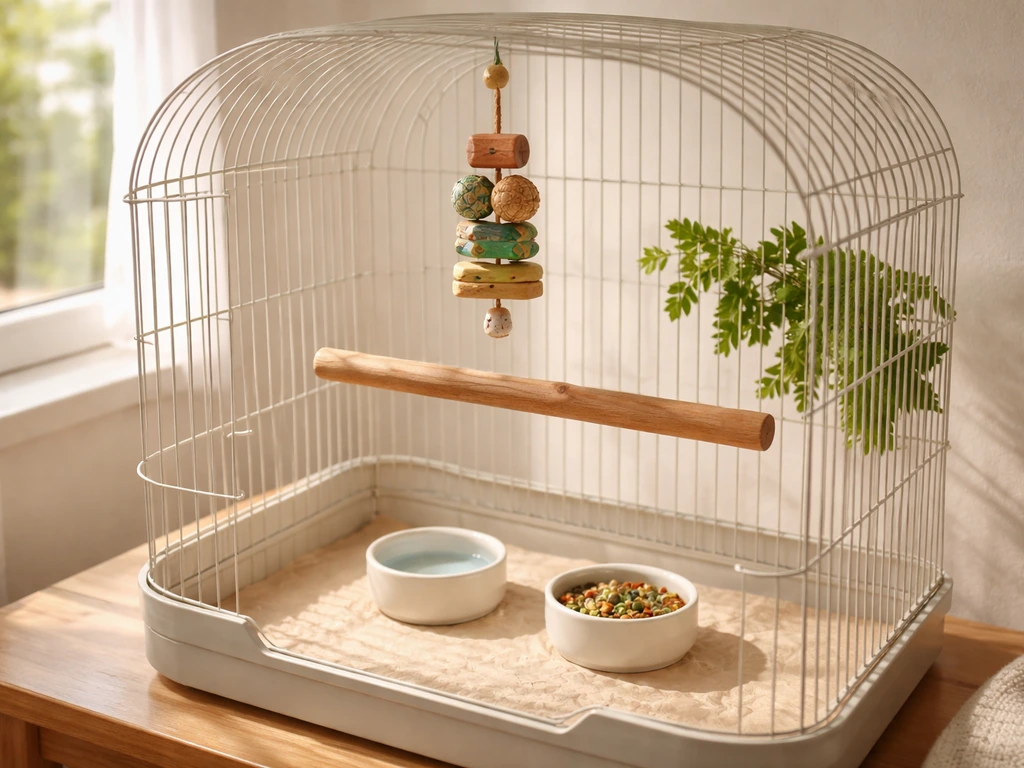
A bored bird is a quiet bird. Provide a rotating variety of toys, foraging opportunities, and textures so the bird has something to engage with every day. Swapping toys in and out every few days keeps things novel. Bathing is also a genuine mood lifter: offer a shallow dish of room-temperature water, a gentle misting with a spray bottle, or even a weekly supervised shower for species that enjoy it. Rainforest species like Amazon parrots often love daily misting, while powder-down species like cockatoos and cockatiels generally do better with less frequent baths. Watch your individual bird and let its reaction guide you.
Building trust with your specific species
Trust-building is the foundation of any vocal interaction. A bird that's afraid of you won't call to you, won't learn words from you, and won't engage. The approach differs a lot by species, so here's what works for each.
Parrots (African Greys, Amazons, conures, cockatoos, and similar)
Parrots are highly social and usually want a relationship with you, but they earn trust on their own timeline. Start by spending time near the cage without demanding interaction: read aloud, talk softly, let the bird observe you. Once the bird is relaxed in your presence (no alarm calls, feathers smooth, eating normally when you're near), begin short hand-feeding sessions through the cage bars using a favored treat.
When the bird takes food confidently, start opening the cage door and offering the hand with a treat resting on your palm. Never force step-up by pushing your finger into the bird's chest; instead, hold your finger steady at chest height and wait. Patience here is genuinely worth it. Punishment of any kind, including yelling, will create fear and setback weeks of progress.
Cockatiels
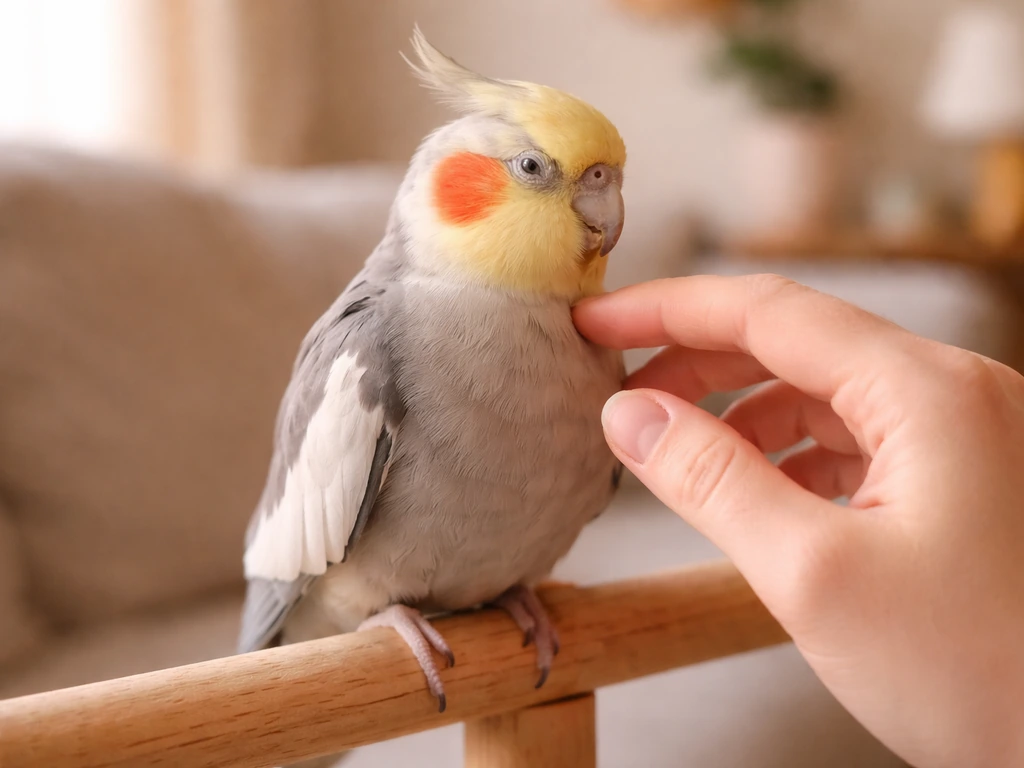
Cockatiels are affectionate and usually tame faster than larger parrots. Most hand-raised cockatiels will step up within a few days if you're consistent and calm. For a bird that isn't hand-raised, start the same way as with parrots: presence first, then hand-feeding through bars, then offering the hand inside the cage. Cockatiels are very responsive to your tone of voice and will often start whistling back to you once they feel comfortable. Whistle a simple two or three note tune consistently; most cockatiels pick this up within a few weeks. Cockatiels don't usually learn words the way large parrots do, but they can mimic short phrases and tunes well.
Budgies (budgerigars)
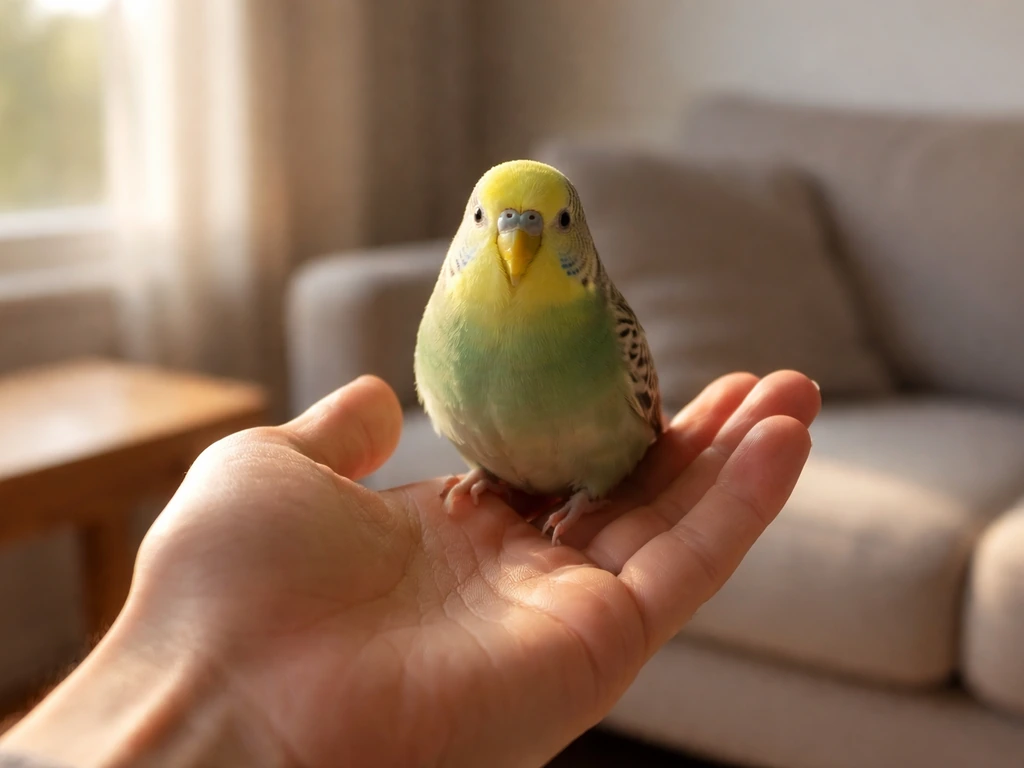
Budgies are talkative little birds but they're also easily startled. Slow, quiet movements around them are everything. A single budgie is more likely to bond with you and learn to talk than a paired budgie, which tends to focus social energy on its companion. That said, budgies are social animals and keeping them alone for the purpose of talking ability has to be weighed against their need for company.
If you have a single budgie, you become the flock, so you need to invest real daily time. Talk to your budgie constantly, repeat simple words and phrases in a clear, cheerful tone, and use a consistent word for specific actions (the same word every time you pick them up, offer food, etc. ). Hand-taming follows the same gradual approach: presence, treats through bars, then hand inside the cage.
Finches
Finches are the outlier here. They are social birds that should ideally be kept in pairs or small groups with other finches, and they are generally difficult to hand-tame. Most finches won't step up or seek physical contact with humans. That's completely normal. The goal with finches isn't touch-based trust, it's comfort in your presence. Speak softly near the cage, move slowly, avoid sudden gestures, and they will gradually stop alarm-calling when you enter the room. Finch song is triggered by social interaction with other finches, good lighting, and the right season. If you want more song from your finches, focus on housing them in appropriate pairs or groups and optimizing their environment rather than trying to train vocalizations.
Training for chirps, vocalizations, and talking
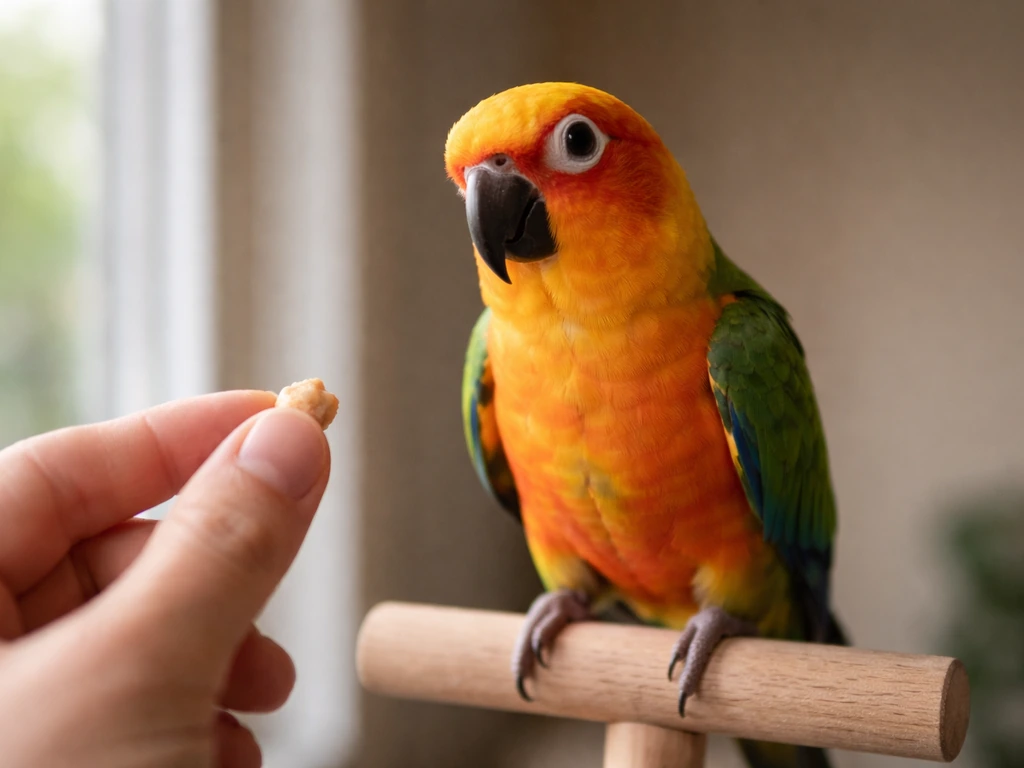
Once your bird is comfortable with you, you can actively encourage talking and chirping using positive reinforcement. If you want your bird to let you pet it too, keep pairing those vocal wins with calm, gentle handling actively encourage talking and chirping. The core principle is simple: when the bird makes a sound you want more of, immediately reward it with something it values (a tiny treat, praise, gentle touch if it enjoys that, or access to a favorite toy). This is operant conditioning, and it works reliably when it's applied consistently.
How to use positive reinforcement for vocalizations
- Identify your bird's highest-value reward: a specific treat (millet, a small piece of fruit, a seed) works for most species. The reward needs to be something the bird really wants, not just something it tolerates.
- Pick one word or phrase to start with: short, clear, and frequently used. 'Hello,' 'step up,' and the bird's name are popular choices because you'll say them naturally dozens of times a day.
- Say the word clearly every time you do the associated action. Consistency of context is what makes words stick.
- The moment the bird makes any attempt at the sound, even a rough approximation, immediately deliver the reward and pair it with enthusiastic, warm verbal praise.
- Keep sessions short: 5 to 10 minutes, two to three times a day. Birds learn better in frequent short sessions than in long infrequent ones.
- If you want to add precision, use a clicker as a marker: click the instant the bird produces the target sound, then deliver the treat within a second or two. The click tells the bird exactly which behavior earned the reward.
Avoid scolding or showing frustration when a bird makes unwanted sounds. Attention of any kind (even negative attention) can reinforce a behavior. If you want to reduce contact calls or loud screaming, the strategy is to ignore those sounds completely and reward quiet talking or chirping instead.
Routines that encourage natural vocal activity
Birds are creatures of routine and they vocalize most naturally at predictable times, usually in the morning after waking and in the late afternoon before roosting. Build your interaction sessions around these natural active periods. Greet your bird in the morning with the same phrase every day. Respond to its calls with your voice. Play recordings of your target species vocalizing (at a moderate volume) during the day when you're not home: this can stimulate a bird to chirp and call in response. Just don't overdo it, because constant audio stimulation without social response can become stressful.
Encouraging wild backyard birds to sing and come closer
For wild birds in your yard, the goal is completely different from pet bird training. You are not trying to tame them or teach them to talk. You're creating a safe, welcoming environment where they feel comfortable enough to visit, stay, and vocalize naturally. If you’re looking for how to keep a bird without a cage, start by creating a safe, welcoming space that encourages natural visits instead of forcing contact. Getting wild birds to sing near your home is really about removing threats and providing resources.
Feeders, water, and shelter
Set up a reliable food source appropriate to the species in your area: black oil sunflower seed attracts the widest variety of common backyard birds. A clean, fresh water source (birdbath or dripper) is often even more effective than food at drawing birds in. Change the water every one to two days in warm weather. For shelter, native shrubs and trees near your feeding area give birds a place to perch and watch before committing to the feeder, which dramatically increases how often they use it.
Clean your feeders regularly. The recommended method is warm soapy water followed by a 10-minute soak in a solution of 9 parts water to 1 part bleach, then a thorough rinse and complete drying before refilling. Audubon also advises that, depending on conditions like hot or humid weather, you may need to adjust your cleaning schedule and make sure feeders are completely dry before refilling How to Feed Birds Safely This Winter. In hot or humid conditions, clean weekly. If you see sick birds at your feeder, take the feeder down for at least two weeks to prevent disease spread, and contact your local wildlife agency.
Feeder placement and window safety
Place feeders either within 3 feet of a window or more than 30 feet away. This sounds counterintuitive, but feeders very close to windows result in lower-impact collisions because birds can't build up speed in that short distance, while feeders far away mean birds are already flying fast when they reach the glass. The dangerous zone is the middle range. If your feeder is in that zone, treat your windows with bird-safe tape or film to make the glass visible.
Keeping a respectful distance
The best thing you can do for wild bird vocalization in your yard is to watch from inside or from a chair at a comfortable distance and let the birds habituate to your presence over time. Moving slowly, wearing neutral clothing, and avoiding sudden gestures helps. Wild birds that become too comfortable with humans can lose their natural wariness, which puts them at risk. Enjoy them, feed them safely, and resist the urge to try to hand-feed or touch them.
Why your bird won't chirp or talk: troubleshooting
If you've addressed environment and health but your bird is still quiet, work through these common causes one at a time.
| Problem | Signs | Fix |
|---|---|---|
| Fear or unresolved stress | Alarm calls, fluffing, biting when approached, hiding in corner of cage | Slow down taming process, reduce handling pressure, revisit environment setup |
| Boredom or under-stimulation | Repetitive behavior, feather-chewing, pacing, flat affect during the day | Rotate toys daily, add foraging challenges, increase out-of-cage time |
| Paired or bonded to another bird | Vocalizes to cage-mate, ignores you, shows no interest in training sessions | Separate during training sessions; accept that paired birds may never be as human-focused |
| Noise and inconsistency | Startles easily, rarely relaxed, no predictable quiet periods | Establish consistent daily routine, reduce background noise during interaction time |
| Neglect or insufficient social time | Quiet all day, not responsive when you do interact | Commit to multiple short daily sessions, not one long weekly one |
| Health issue (silent illness) | Quiet onset with any appetite or physical change, even subtle | Avian vet visit, do not delay waiting for improvement |
| Wrong reward in training | Disinterested in treat, walks away during sessions | Try different treats, adjust session length, rule out that the bird isn't hungry |
Realistic timelines, a daily plan, and when to call a vet
Progress with bird taming and vocalization training is real but it's not fast. Here's an honest look at what to expect.
| Timeframe | What realistic progress looks like |
|---|---|
| Days 1 to 7 | Bird is calmer in your presence, stops alarm calling when you enter the room, eats normally when you're nearby |
| Weeks 2 to 4 | Hand-feeding through bars is accepted, bird makes contact calls toward you, may step up with encouragement |
| Month 1 to 2 | Consistent step-up, responding to its name, mimicking simple tones or whistles (cockatiels/budgies), beginning to associate a specific word with an action |
| Month 3 to 6 | First recognizable word attempts in parrots and budgies, reliable vocal interaction during morning and afternoon sessions, clear comfort signals (relaxed feathers, slow blinking, mutual preening attempts) |
| 6 months and beyond | Expanding vocabulary in talking species, reliable recall to vocalizations, strong daily routine of vocal interaction |
Your daily plan (15 to 20 minutes total)
- Morning (5 min): Greet your bird using the same phrase, uncover the cage, observe posture, droppings, and appetite. Note anything unusual.
- Mid-morning or midday (5 to 10 min): Training session. One target behavior or word, short and positive. End on a success, even a small one.
- Evening (5 min): Talk softly near the cage, wind down activity, offer any remaining fresh food, prepare for sleep routine.
When to stop training and see an avian vet
Training only makes sense when your bird's basic health needs are met. Stop training sessions immediately and contact an avian vet if you notice: any of the emergency respiratory signs listed at the top of this article, a sudden drop in appetite or water intake, weight loss (you can feel the keel bone becoming more prominent), any change in droppings that persists for more than 24 hours, or a bird that was previously vocal and has gone completely silent without any environmental explanation. Avian illness can progress quickly and birds are instinctively good at hiding symptoms, so trusting your gut when something feels off is always the right call.
Beyond emergencies, schedule a routine wellness visit with an avian vet at least once a year. Ask specifically about your species' ideal sleep hours, dietary needs, and any behavioral patterns that concern you. Getting that baseline of health right is what makes everything else in this guide actually work.
FAQ
How can I tell if my bird is “quiet” because it is tired or because it is sick?
Look for patterns, a tired bird often settles more and stays responsive, while illness often changes posture (persistent fluffing low in the cage), appetite, droppings consistency, or breathing effort. If silence is sudden after being chatty, treat it as a welfare concern and contact an avian vet the same day, even if the cage setup seems perfect.
What should I do if my bird stops talking but still eats normally?
Still treat the change as a signal, especially if it is paired with less activity or altered droppings over 24 hours. Recheck sleep timing first (dark, uninterrupted rest) and cage stressors (drafts, kitchen fumes, moving the cage). If vocalization does not return within a few days after environment is stabilized, schedule an avian wellness or problem visit.
Is it okay to use a cage cover every night instead of moving the bird to a darker room?
It can work, but only if your bird tolerates it. Introduce covers gradually, start with partial coverage, and make sure the bird can still breathe comfortably and not overheat. If your bird panics under the cover or flaps heavily, do not force it, switch to a quieter, darker room option.
How loud should I keep bird vocalization recordings, and how long should they play?
Use moderate volume, enough for the bird to notice, not so loud that it causes alarm or panting. Limit playback to daytime blocks when you can also respond socially. If you notice the bird calling less over time, signs of stress, or persistent alarm, stop recordings and rely on interaction and environment improvements instead.
Should I reward quiet behavior all day or only during training moments?
Rewards should be immediate and consistent when you see the behavior you want (for example, a calm chirp or quiet asking call). You do not need to reward every minute, focus on short periods when you are available to respond, then gradually widen the window as the bird learns what earns good outcomes.
Can I make a bird talk faster by using more treats or higher-value rewards?
More is not always better, overly frequent treats can disrupt diet and reduce motivation to do anything else. Use tiny treats sized for your bird, keep rewarding tied to specific sounds, and balance with normal meals to avoid weight gain or digestive issues.
What is a common mistake when trying to teach words or tunes?
Teaching too many phrases at once or changing the phrase constantly. Pick one target word or two to three note tune for a set timeframe, use the same phrase every time in the same context, and reward the closest correct vocal attempt immediately to reinforce the association.
My parrot screams for attention, how do I handle it without reinforcing the screaming?
Do not react in a way the bird experiences as attention, avoid eye contact, talking, or reaching during the scream. Respond only when it pauses or makes a quieter call you can reinforce, then calmly offer a reward. Expect a short “extinction burst” where screaming may increase before it improves.
Why does my budgie whistle back but still does not talk?
Whistling and word mimicry are different skills. Budgies often mimic sounds and short repeated phrases, but some never progress to full words. Keep training focused on simple, consistent phrases tied to daily routines, and avoid pushing step-up or handling right during whistling sessions if it makes the bird more anxious.
Should I keep one budgie alone so it focuses on me for talking?
A single budgie may bond with you and respond more to human interaction, but it can also become emotionally distressed without a flock. If you keep one for training, compensate with real daily companionship time (not just talking) and enrichment, and consider long-term options like a companion bird if your bird shows stress signs.
Do finches ever learn to chirp on cue like parrots?
Generally no, finch vocalizations usually depend on social structure and breeding or seasonal cues. The best approach is comfort in your presence and correct housing (pairs or small groups), plus good lighting and season-appropriate conditions. Human touch training is typically unnecessary and can reduce wellbeing if it increases fear.
For wild birds, why do they stop visiting after I put up a feeder?
Often it is placement, noise, or predator risk changes. Ensure fresh water is extremely reliable (many birds come for water even more than food), clean feeders regularly, and watch from a consistent distance to let them habituate. If you see sick birds, remove the feeder for at least two weeks to break disease spread and reassess nearby shelter and cover.
How far should I place feeders from windows to prevent collisions?
Use either very close (within about 3 feet) or more than about 30 feet away. The middle distance can be more dangerous because birds have enough speed when they reach the glass. If you cannot change spacing out of the middle range, apply bird-safe film or tape to make the window visible.
When should I stop trying home changes and book an avian vet visit?
Stop immediately if you see emergency respiratory signs, a sharp drop in appetite or water intake, rapid weight change, persistent droppings changes beyond 24 hours, or a previously vocal bird that becomes completely silent with no clear environmental reason. Birds hide illness well, so if something feels off, get professional evaluation right away.
How long should it take before I see any improvement in chirpiness after changing sleep and environment?
If the cause is environmental or routine-related, some birds show noticeable improvement within several days once sleep is stable and stressors are removed. If there is no change after you have corrected major factors (sleep, drafts, cage placement, enrichment) for about a week, reassess for medical causes and consider an avian vet visit.
Next Articles
How to Pet a Wild Bird Safely and Humanely
Safety-first steps to earn trust with a wild bird, avoid harmful handling, and know what to do for injured birds.
How to Make a Pet Bird: Humane Setup and Taming Guide
Step-by-step humane guide to setting up a pet bird, taming routines, species tips, and health and legal red flags.
How to Train Your Bird to Let You Pet It
Step-by-step training to build trust and safely desensitize your bird to petting using treats, cues, and body language.