You can train most pet birds to tolerate and even enjoy being petted by working through a gradual desensitization process: start by simply being near the cage without triggering stress, then slowly introduce your hand as a non-threatening presence, and only attempt gentle contact once the bird is consistently calm and showing open, relaxed body language. The whole process can take anywhere from a few days with a hand-raised budgie to several months with a wild-caught or previously neglected parrot, and the key variable is always the bird's comfort level, not your schedule.
How to Train Your Bird to Let You Pet It
Clara Hayes
7 May 2026
Why birds resist being touched (and what their body says)
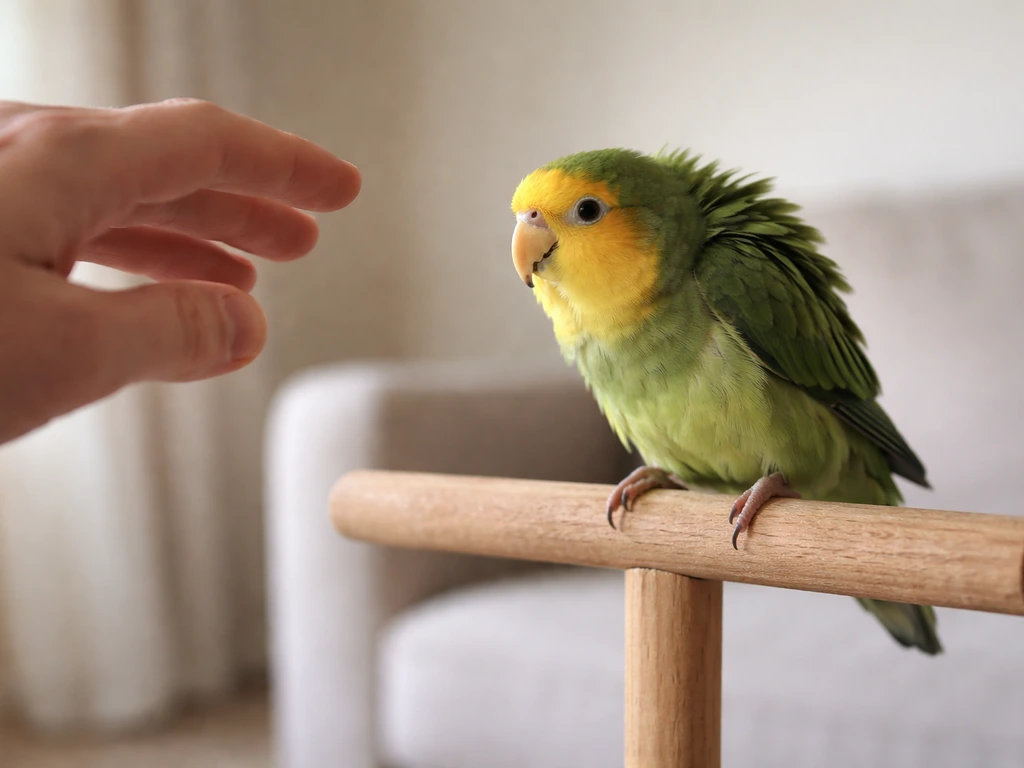
Birds are prey animals. Even a fully domestic parrot or cockatiel carries hardwired instincts that treat sudden closeness as a potential threat. Understanding this is the single most important thing you can do before you touch your bird, because it reframes every setback as normal biology rather than a personality flaw.
Before you ever reach toward your bird, you need to read what it's communicating. These are the signals that tell you to slow down or back off entirely:
- Feathers slicked tight against the body: the bird is on high alert and bracing for action
- Tail fanning or flaring: a clear aggression signal, especially in parrots
- Crest raised stiffly (cockatiels, cockatoos): excited or threatened, not relaxed
- Snapping, lunging, or open-beak posture: the bird is actively telling you to back off
- Leaning or stepping away from your approaching hand: a polite 'no' that escalates if ignored
- Rapid eye pinning (pupils expanding and contracting quickly): intense arousal, often precedes a bite
Conversely, a bird that is ready for interaction shows a relaxed, slightly fluffed posture (not the persistent fluffing associated with illness), slow blinking, a low or gently fanned crest, and a willingness to stay put or lean toward your hand. These are your green lights. Fluffed feathers that persist all day or come with other symptoms like labored breathing or open-mouth breathing are a sign to call your avian vet, not a signal to keep training.
One principle overrides everything else in this guide: body language beats verbal cues. If your parrot is saying 'scratch me' in a perfect human voice while simultaneously leaning away and flaring its tail, stop and give it space. Consent in bird training is always expressed through behavior, not words.
Step-by-step desensitization and counterconditioning
Desensitization means gradually exposing the bird to something it finds scary (your hand, your touch) at such a low intensity that it doesn't trigger a fear response. Counterconditioning pairs that exposure with something the bird loves, usually a high-value treat, so the previously scary thing starts predicting good outcomes. Together, these two techniques are the backbone of all humane bird training.
Stage 1: Become a non-event near the cage
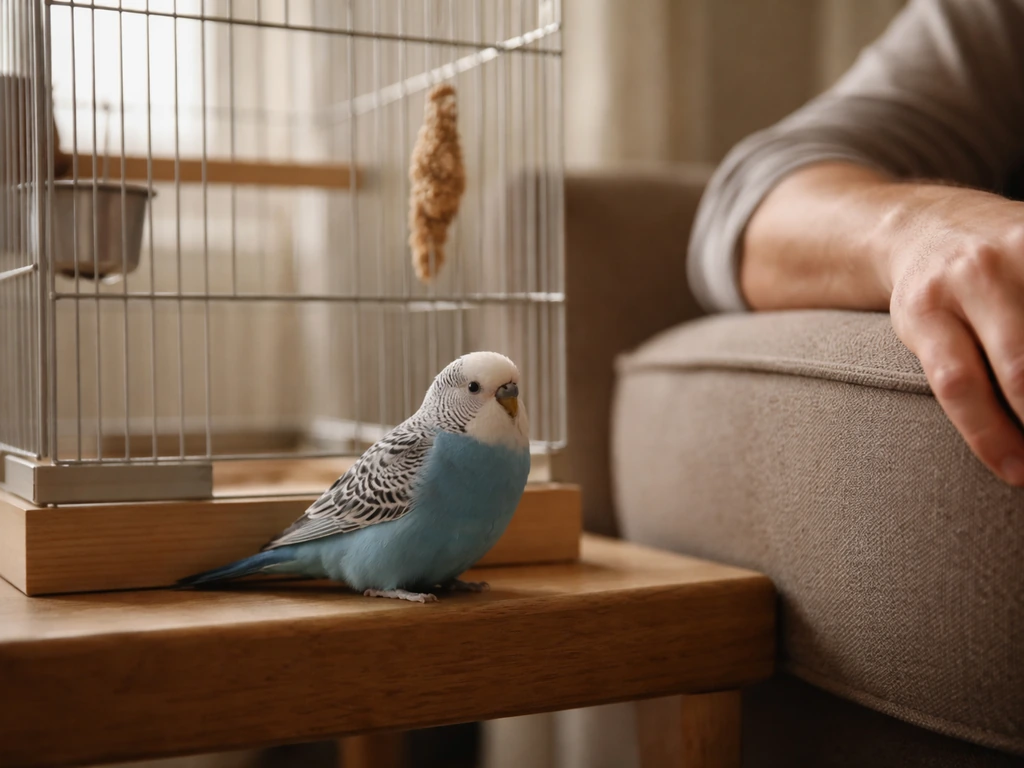
Before your hand goes anywhere near your bird, you need to be a boring, predictable presence. Spend several days simply sitting near the cage, talking quietly, and going about normal activity. When you approach the cage to add food or water, move slowly and deliberately. Avoid fast movements, loud sounds, or looming over the bird from above. The goal is for your bird to continue its normal behavior (eating, preening, vocalizing) while you're present. Once that's consistent, you're ready for stage 2.
Stage 2: Hand near the cage, no touching
Now start bringing your hand into the bird's visual field during cage servicing, but without reaching toward the bird. Rest your hand on the cage bars briefly while you change the water, then remove it. Do this at every interaction for a few days. The bird learns that your hand appearing and disappearing is also a non-event. If the bird moves away or shows any tension signals, you've moved too fast. Drop back to stage 1.
Stage 3: Introduce treat delivery by hand
Offer a high-value treat (a small piece of millet for small birds, a pine nut or bit of almond for parrots) through the cage bars from your fingers. Hold it steady and let the bird come to you. Do not push the treat toward the bird or follow it around the cage. If the bird takes the treat, great. If it doesn't, leave it clipped to the bars and walk away. Repeat until the bird readily approaches your hand for the treat. This is the real trust-building stage, and it can take days or weeks depending on the bird's history. If you are also aiming for a bird setup without a cage, focus on creating a safe, bird-proof space so the same training principles can work beyond the bars trust-building stage.
Stage 4: Hand inside the cage or open door
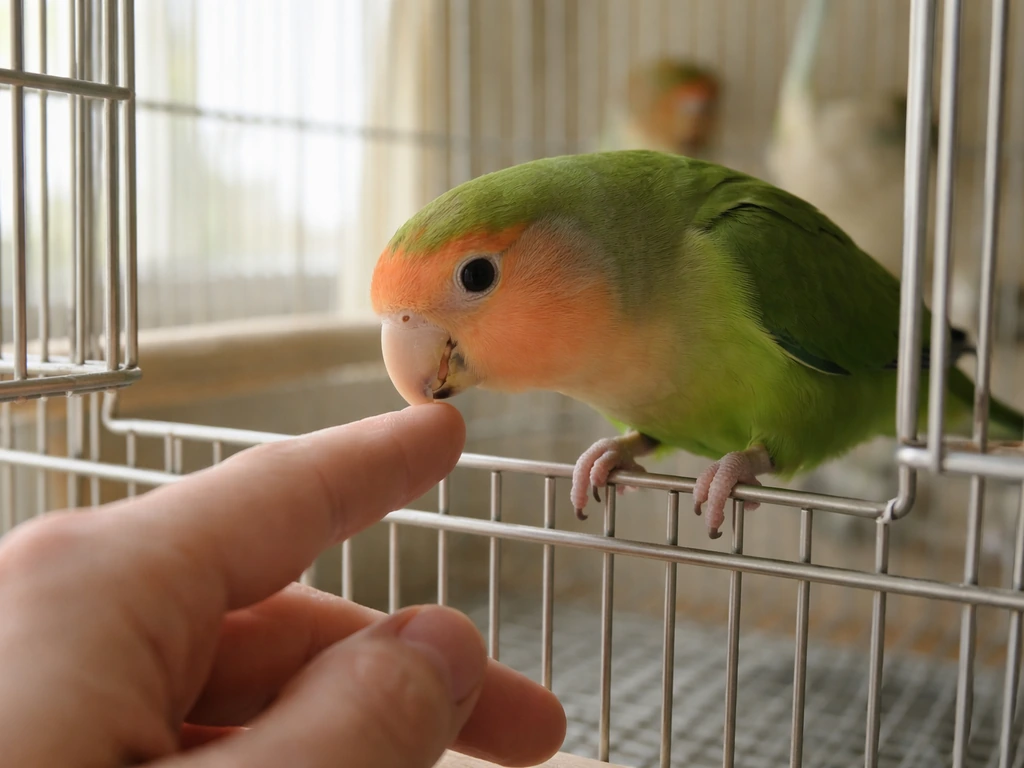
Once the bird confidently takes treats from your fingers through the bars, open the door and place your treat-holding hand just inside the opening. Keep it low and still. Let the bird approach on its own terms. Your hand position matters: keep your palm open and relaxed, fingers loosely together, approaching from the side rather than from above. Birds are especially reactive to things coming from overhead, which mimics a predator's approach.
Stage 5: The step-up as a bridge to touch
Before petting, you want your bird comfortable with your hand as a perch. PetMD notes that a common first training cue/behavior for pet parrots is “step up,” where the bird anticipates the hand request and steps onto the owner’s hand with a favorite treat paired with the behavior blank" rel="noopener noreferrer">“step up”. Position your index finger (or your whole hand for larger birds) in front of and just below the bird's belly where the body meets the legs, and gently press against the lower chest. This prompts the natural step-up reflex. blank" rel="noopener noreferrer">Reward immediately with a treat and verbal praise. Once the bird steps up reliably, it's physically close to you and comfortable with hand contact, which makes the transition to petting much smoother.
Stage 6: First gentle contact
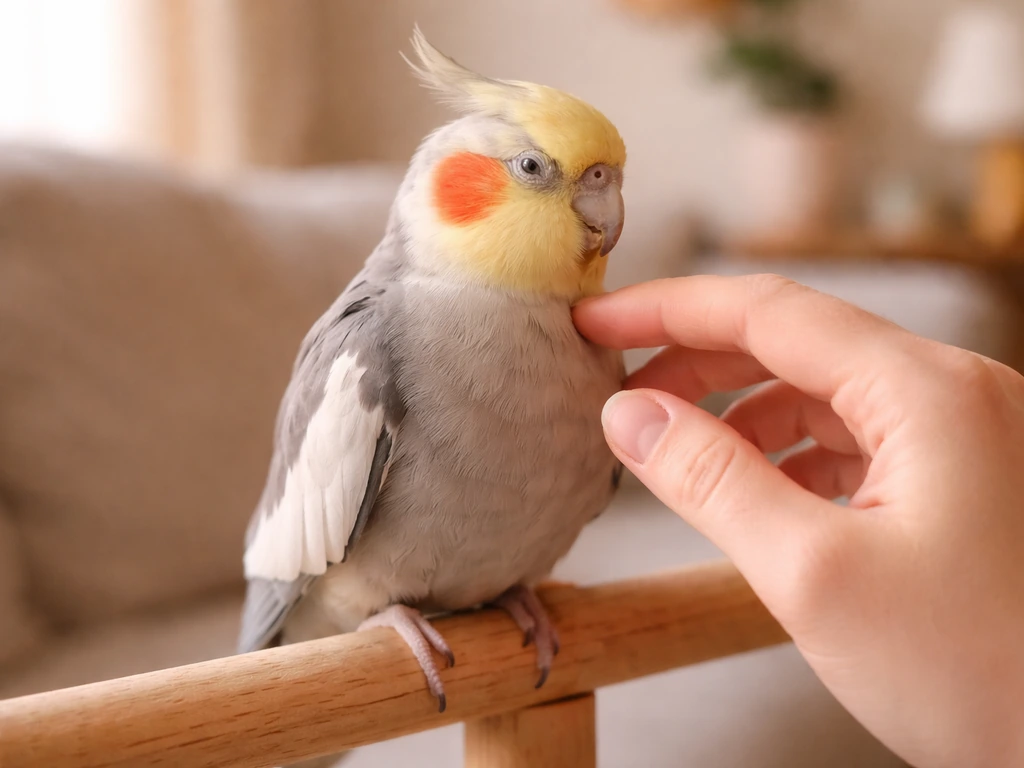
Start with the head and the area around the beak. These are safe zones for most pet birds and typically the areas they most enjoy. Approach slowly from the side, not from above. Use one or two fingertips to gently touch the top or back of the head. Watch the bird's response closely: a bird that leans into your touch, closes its eyes, or starts to grind its beak is enjoying it. A bird that moves away, tenses up, or starts fanning its tail wants you to stop. Remove your hand calmly and try again in the next session. Learning to make a pet bird feel safe with your touch is the key to every step, from treats to gentle head contact. When your bird feels safe and consistent with gentle contact, it is more likely to stay healthy and cheerful, including chatter and chirpy behavior.
Species- and temperament-specific approaches
The core process above applies to all pet birds, but the timeline and technique need real adjustments depending on what species you're working with and what the individual bird's history looks like.
| Species | Typical touch tolerance | Best first contact zone | Special considerations |
|---|---|---|---|
| Budgerigar (Budgie) | High if hand-raised, variable if aviary-bred | Top of head, around beak | Very food-motivated; millet spray is a powerful training tool. Small size means grip pressure is a real injury risk. |
| Cockatiel | Generally high; very social | Crest, cheek patches, behind the ears | Watch crest position constantly. A fully erect stiff crest during handling means stop immediately. |
| Conure (small-medium parrot) | Moderate to high; energetic | Top of head, neck feathers | Can be nippy during excitement. Keep sessions short. High treat motivation makes conditioning fast. |
| African Grey / Amazon (large parrots) | Highly variable; can be one-person birds | Head and neck only until trust is deep | Long memory for negative experiences. Rebuilding trust after a scare takes significantly longer. Never rush. |
| Finch / Canary | Low; these species are not typically hand-tamed | Not recommended beyond perch training | These birds are not suited to petting in the traditional sense. Interaction goals should focus on hand proximity, not touch. |
Temperament within a species matters as much as species identity. An African Grey that was hand-fed from the egg may accept touch faster than a poorly socialized budgie. The IAATE's position is clear on this: every bird is an individual with specific behavioral and physiological needs, and the training approach must be tailored to that individual. Never compare your bird's progress to someone else's.
A note on wild birds in your yard
If you're trying to get closer to wild birds like sparrows, chickadees, or jays, the approach is different and the goal is proximity, not petting. Wild birds can be conditioned to land on an outstretched hand holding seed through very patient, slow desensitization over many sessions in the same spot. This is done entirely on the bird's terms, with no handling, no capture, and no confinement. It's legal, ethical, and genuinely achievable with common backyard species. However, deliberately handling or attempting to pet a wild bird raises both legal concerns (most wild birds are protected under federal law in the U.S.) and disease and injury risks for both you and the bird. If you're interested in that kind of interaction, focus on creating a calm, predictable feeding environment and letting the bird set the pace.
Safety rules and humane training boundaries
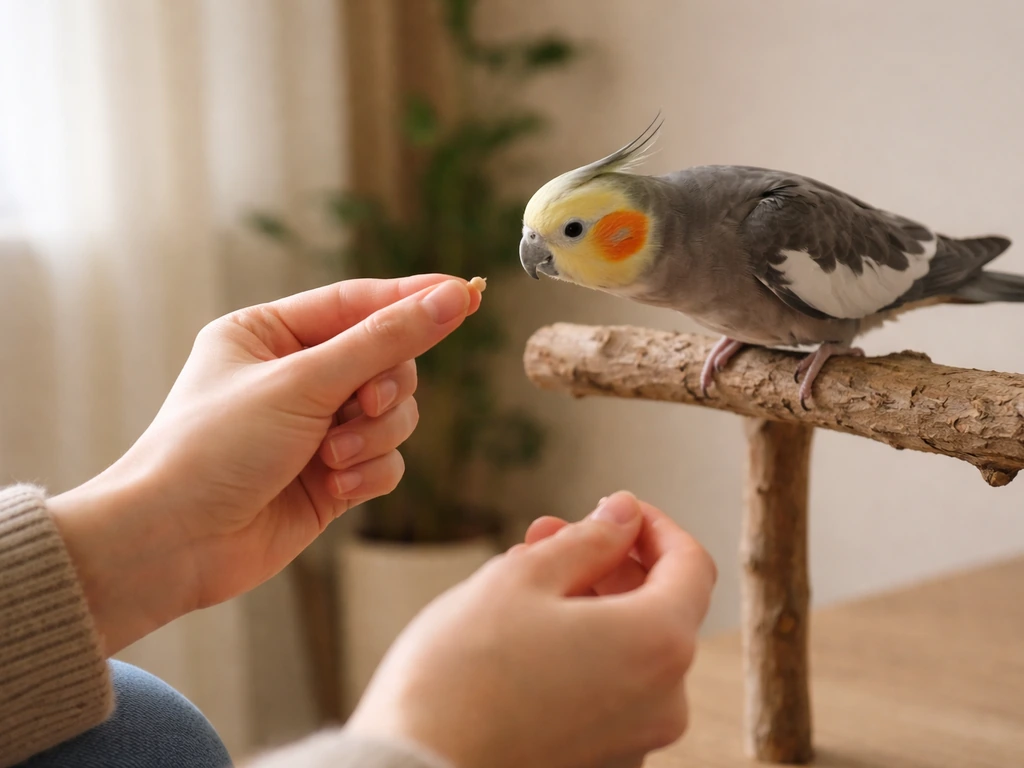
Training a bird to accept touch carries some real physical risks if you skip the groundwork. Here are the non-negotiables:
- Never force touch: a bird that is physically restrained for petting learns that hands predict fear, which makes everything harder, not easier
- Keep the bird below eye level during all handling sessions, not on your shoulder or head, where you lose visibility and control and where bites to the face become possible
- Approach always from the side, never from overhead
- Avoid stroking the back and under the wings during early training: these areas are associated with mating behavior in parrots and can cause hormonal arousal or defensive biting
- Move slowly and telegraph your movements: let the bird see your hand coming well before it arrives
- If the bird bites, do not yank your hand away sharply (this can injure both you and the bird); instead, gently push slightly toward the bite, which releases the grip without a sudden jerk
- For towel-assisted health handling (which is separate from trust-based petting), follow specific hand placement guidance rather than improvised grabbing, and keep sessions extremely brief
Biting is communication, not defiance. When a bird bites during training, it means the desensitization process moved too fast. Do not punish the bird verbally or physically. Simply end the session calmly, and next time back up one full stage in the process. Reinforcing biting by reacting dramatically or by retreating in an excited way can accidentally teach the bird that biting is an effective control strategy.
How to structure training sessions and what to expect over time
Session structure
Keep sessions short, ideally 5 to 10 minutes, once or twice a day. Birds learn better in short, positive bursts than in long, exhausting marathons. Always end on a success, even if that means scaling back the goal for that session so the bird can succeed at something. Pick a consistent time of day when the bird is naturally active and alert, usually mid-morning or late afternoon. Avoid training right after the bird wakes up (it's hungry but also startled) or in the evening when it's winding down.
Realistic timelines
| Stage | Typical timeline (social, hand-raised bird) | Typical timeline (fearful or aviary-raised bird) |
|---|---|---|
| Stage 1: Calm near cage | 1 to 3 days | 1 to 2 weeks |
| Stage 2: Hand visible at cage | 2 to 4 days | 1 to 3 weeks |
| Stage 3: Treat from fingers | 3 to 7 days | 2 to 6 weeks |
| Stage 4: Hand inside cage | 1 to 2 weeks | 4 to 8 weeks |
| Stage 5: Step-up on hand | 1 to 3 weeks total from start | 6 to 12 weeks total from start |
| Stage 6: Tolerating gentle head petting | 3 to 6 weeks total | 3 to 6+ months total |
These are rough ranges, not rules. Some birds skip ahead; others plateau for weeks at a single stage. A plateau is not failure. It just means the bird needs more repetitions at that stage before the next step feels safe.
Troubleshooting common setbacks
- Bird stops taking treats: it may not be hungry enough (train before meals, not after), the treat may not be high-value enough, or the environment is too stressful. Try a different treat and check for anything new in the room that might be causing anxiety.
- Bird was improving but suddenly regressed: something changed its sense of safety. New person in the house, a rearranged room, a loud event, or even a change in your clothing or glasses can reset trust. Go back to the last successful stage and rebuild from there.
- Bird keeps stepping away when you reach in: your approach is too fast or too direct. Try placing your hand in the cage without moving it and just waiting. Let the bird approach you.
- Biting is getting worse, not better: you are almost certainly moving through stages too quickly. Back up two full stages and slow the pace significantly.
- Bird seems interested but won't quite make contact: place the treat on your flat palm rather than between your fingers. A flat, non-grabbing hand is less threatening.
When to get professional help and what's ethically off-limits
Some birds have fear or aggression that is beyond what patient home training can address alone. If your bird is lunging, biting hard enough to break skin, screaming at the approach of any hand despite weeks of careful desensitization, or showing persistent fear responses that don't improve at all, it's time to bring in outside help.
Start with an avian veterinarian. Chronic fear and aggression in a bird that was previously calmer can have a medical component, including chronic pain, hormonal imbalances, or nutritional deficiencies. Ruling out physical causes first is essential. If the bird checks out medically, look for a certified avian training professional. The IATCB's Certified Professional Bird Trainer (CPBT-KA) credential is a meaningful benchmark for avian-specific knowledge. You can also find certified behavior consultants with bird experience through the IAABC's consultant directory. These are different from general pet trainers and worth the distinction when you're dealing with a genuinely fearful or aggressive bird.
On the ethics and legality side: never use physical force, punishment, or pain-based tools to get a bird to accept touch. Beyond being cruel, these methods are counterproductive because they increase fear and destroy the trust you're trying to build. For wild birds in the U.S., intentional capture or handling of most native species without a permit is illegal under the Migratory Bird Treaty Act. Even if a wild bird in your yard seems tame, your goal should be voluntary proximity and never restraint or forced contact. If you find an injured wild bird, contact a licensed wildlife rehabilitator rather than attempting care or handling on your own.
Finally, stay calm during every session. The RSPCA puts it simply: move slowly, avoid fast hand movements, and stop the moment your bird seems distressed. The most effective thing you can do for a bird that's learning to trust touch is to be the one creature in its environment that always, without exception, respects what it's telling you.
FAQ
How long should I pet my bird once it lets me touch it?
Yes, but keep it to the bird’s comfort level. If your bird enjoys contact, limit petting to brief sessions and stop at the first tension signs (tail fanning, leaning away, pinning eyes with stiffness). For many birds, head and beak-area touches are more tolerable than belly or wing touches, so you may need to stay with the same “safe zone” consistently to prevent setbacks.
What should I do if my bird seems okay with hand training but suddenly dislikes petting?
Use the same language-free rule: do not treat while the bird is tense. If the bird shows fear or stress after the touch starts, immediately withdraw your hand and end that step. Next session, repeat the previous stage where the bird was comfortably relaxed, then only reintroduce contact when the bird can take treats without hesitation.
My bird refuses treats from my fingers. Does that mean it’s too scared for training?
Avoid pushing the treat or following the bird around, even if it looks like it “should” come for it. Instead, present the treat, hold steady, and let the bird choose. If it won’t take the treat, leave it on the bars and disengage calmly, then try again later or use a different high-value item the bird reliably goes for.
Can I train an older bird or a bird that is already aggressive to accept petting?
Yes, training can help, but the approach may need to shift toward “tolerate handling” rather than “friendly petting.” Start with longer periods of calm proximity and cage-bar hand presence, then work on step-up on a stable perch before any head touching. If the bird escalates to hard bites or persistent screaming at the sight of your hand, it’s a sign to seek avian-specific help rather than forcing progress.
Why is my bird suddenly biting or backing away even though it used to tolerate petting?
Try a short session at a calmer time, and reduce intensity instead of increasing it. Common fixes include slowing your approach, approaching from the side, keeping your hand lower than the bird’s head, and pausing all touch until the bird is eating normally with your presence. Also check whether the bird is experiencing discomfort from issues like pain, hormonal surges, or illness, especially if behavior changes suddenly.
Is it okay to hold my bird gently so it gets used to being petted?
If you’re aiming for petting, avoid scruff grabs, restraint, and any “catch-and-hold” attempts. Instead, build step-up and voluntary approach first. For putting your hand near the bird, keep movements slow and predictable, and only introduce the next step when body language stays relaxed during the exposure.
My bird jumps at my hand even when I move slowly. How can I prevent the flinch?
Because birds are prey animals, overhead approaches and reaching straight toward the head often trigger predator instincts. Use side approaches, keep your palm relaxed and low, and avoid sudden changes in your posture or speed. If your bird flinches consistently, go back to the treat-through-bars stage and rebuild calm predictability before any touch.
Does it matter when I give treats during petting, or can I just reward later?
Yes, but be cautious about what the bird learns you will do. Let the bird choose the timing, then reward immediately after the desired behavior (such as stepping up or leaning in). If you accidentally pet when the bird is tense, you can accidentally reinforce tolerance only when the bird is stressed, so timing matters.
What if my bird will step up but hates being touched on the head?
Often it’s a “wrong place at the wrong time” issue. Start with the head or beak area, then watch for enjoyment signs (leaning in, relaxed eyes, beak grinding) versus stop signs (tensing, moving away, persistent tail fanning). If your bird dislikes head contact, switch to other approved zones your bird tolerates, and avoid progressing to new body areas too quickly.
Can I train my bird to let me pet it if it prefers to stay on the perch instead of stepping up to my hand?
You can incorporate that, but keep training voluntary. Let the bird walk onto the target location on its own, or use a consistent “step-up first” routine, then reward the approach. Avoid chasing or blocking the path, because that often raises stress and can undo trust-building progress.
How do I know if I’m overtraining my bird?
Yes. If sessions are too long or too frequent, birds can become overstimulated and less willing to participate. Keep sessions short, aim for a consistent schedule, and end while the bird is still successfully taking treats or accepting brief touches, even if that means you do less than you planned.
How can I tell the difference between a training plateau and a problem I should fix?
Not always. Some birds plateau at one stage for weeks, especially if they had limited socialization, a stressful history, or a recent change in environment. A useful check is whether the bird can repeat the same behavior reliably on different days. If it can, you are building tolerance, even if speed is slow.
When should I assume this is a health issue rather than an “attitude” issue?
If it’s a true medical or pain issue, you may see persistent changes like decreased appetite, ongoing tail fanning with no improvement, abnormal breathing, or sudden aggression where none existed. When physical symptoms appear, contact an avian veterinarian before continuing advanced training, since discomfort can override learning.
I want to be able to pet a backyard wild bird. Is that realistic or ethical?
Yes, but wild bird training should focus on voluntary landing and proximity, not handling or petting. Keep the bird in control of the interaction, use a consistent feeding spot, and avoid capturing or restraining. If you want petting, that crosses into higher risk territory legally and medically, so plan for voluntary comfort rather than touch.
My bird bit me during training. How should I adjust without losing progress?
If a bite happens, stop the session calmly and do not respond with punishment or excitement. Next time, return one full stage and lower the intensity (for example, more proximity work, then hand-on-bars, then treat-through-bars) before attempting any touch again. Also evaluate what was different right before the bite, such as faster movement, closer approach, or choosing a disliked body zone.
Next Articles
How to Keep a Bird Without a Cage: Safe Plans
Step-by-step safe cage-free setup for pet and backyard birds, with training, safety checks, routines, and legal tips.
How to Catch a Bird Without Killing It: Humane Steps
Humane, trap-free steps to catch a wild backyard bird safely, minimize stress, contain it calmly, then release or reloca
How to Catch a Bird With a Bottle Safely and Humanely
Humane, safety-first steps to catch a bird with a bottle or cover, plus safer alternatives and what to do after capture.