Getting close enough to gently touch a wild bird is possible with some species, but it takes patience, the right setup, and a realistic understanding of what 'petting' a wild bird actually means. Most of the time, the goal should be earning enough trust that a bird chooses to land near you or even on your hand, not picking one up or forcing contact. That distinction matters legally, ethically, and for the bird's health. Here's how to do this the right way.
How to Pet a Wild Bird Safely and Humanely
Clara Hayes
15 May 2026
The legal and ethical reality before you touch anything
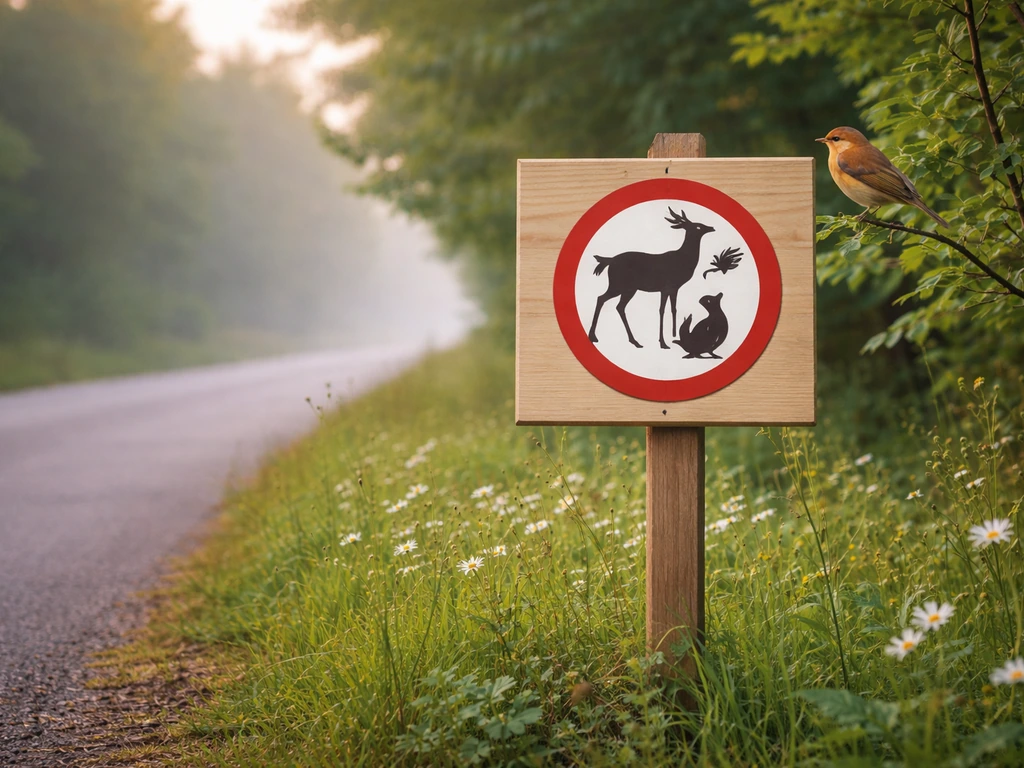
In the United States, most wild birds are protected under the Migratory Bird Treaty Act (MBTA), codified at 16 U. The U. S. Fish & Wildlife Service provides an MBTA overview explaining federal protections for migratory birds, including rules related to taking or possessing birds, nests, and eggs [Migratory Bird Treaty Act (MBTA), codified at 16 U.
](https://www. fws. gov/migratorybirds/RegulationsPolicies/mbta/mbtintro. html).
S. C. Chapter 7, Subchapter II. The law defines 'take' very broadly, it includes pursuing, capturing, collecting, wounding, or even attempting any of those things.
Picking up a healthy migratory bird, even briefly and with good intentions, can technically put you in violation of federal law. Non-migratory species like house sparrows, European starlings, and pigeons aren't protected under the MBTA, but many state laws add their own layers of protection.
Beyond the legal side, there's a real welfare argument for keeping your hands off. Wild birds are prey animals. Being grabbed by something large triggers an extreme stress response, elevated heart rate, cortisol spike, risk of injury from flapping. Even a brief handling session can be genuinely traumatic for a healthy wild bird. So the ethical approach is to let the bird set the pace entirely, and accept that 'petting' in the wild-bird context means earning proximity, not forcing it.
There's also a health reason to be cautious. There's also a health reason to be cautious wash hands thoroughly after any contact with wild birds, their droppings, or materials they've touched. The CDC advises washing hands thoroughly after any contact with wild birds, their droppings, or materials they've touched. With avian influenza circulating in wild bird populations, bird enthusiasts are considered a higher-risk group for exposure. This doesn't mean you can't interact with wild birds, it means you should take basic hygiene seriously whenever you do.
Read the bird first: species, condition, and whether to approach at all
Before you do anything, take a moment to actually observe the bird. A lot of people approach a wild bird thinking it needs help, when it's perfectly fine, just juvenile, molting, or resting. Correctly reading what you're looking at changes everything about how you should respond.
Signs the bird is healthy and should be left alone
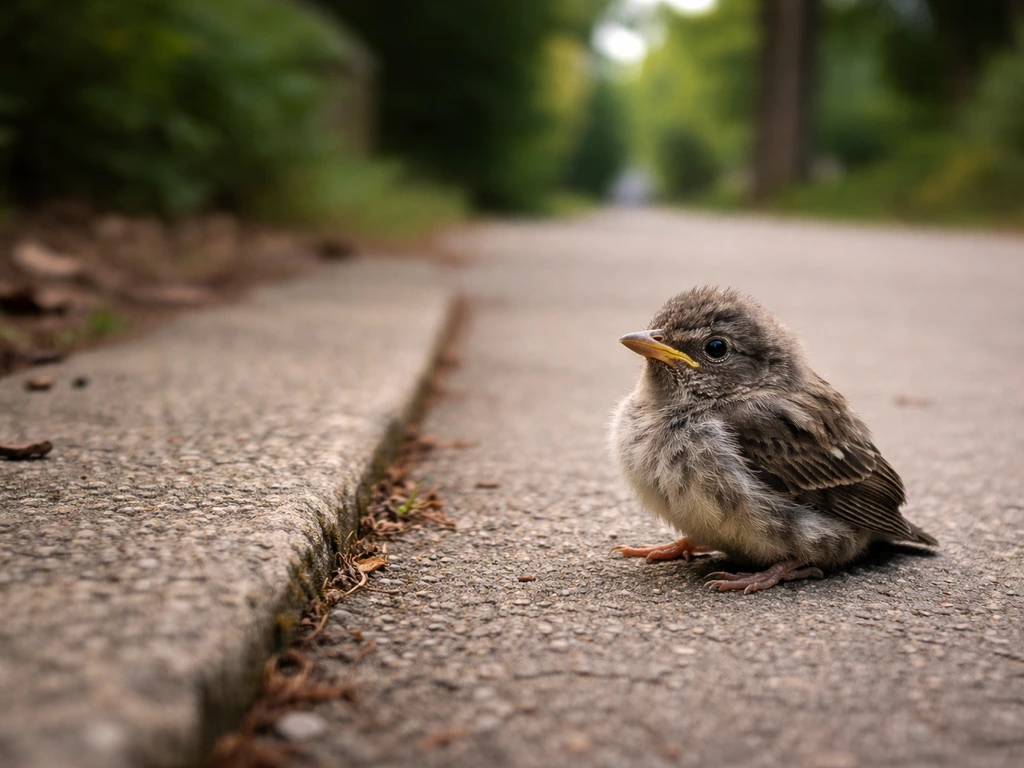
- It flies or hops away when you approach within 10–15 feet — that's a normal flight response, not a sign of injury
- It's a fledgling (has some feathers, awkward on the ground) — fledglings are supposed to be on the ground and their parents are almost certainly nearby
- It's perched upright, alert, and watching you with both eyes
- It's actively foraging, vocalizing, or preening
Signs something may be wrong
- The bird allows you to walk right up to it without moving — this is NOT tameness, it usually means the bird is too sick or injured to flee
- One wing is drooping or held at an odd angle
- The bird is on its side, or repeatedly falling over
- Eyes are closed or half-closed in daylight
- Visible wounds, bleeding, or missing patches of feathers
Species also matters. Corvids (crows, jays) and some pigeons are genuinely capable of building individual relationships with humans over time. Small songbirds like chickadees and titmice can become remarkably bold at feeders. Raptors, herons, and most shorebirds are extremely stress-prone and should never be approached for recreational interaction, leave those entirely to licensed rehabilitators.
Gain trust before you even think about touching
The foundation of any real relationship with a wild bird is predictability. Birds are smart enough to learn that you specifically are not a threat, but only if your behavior is consistent enough for them to figure that out. This phase takes days to weeks depending on the species and the individual bird. Rushing it guarantees failure.
Start by simply being present in the same outdoor space at the same time each day. Sit quietly, move slowly, and don't stare directly at the bird, direct eye contact reads as predatory to most birds. Read a book, have a coffee, just exist nearby. You're teaching the bird that your presence never leads to anything bad.
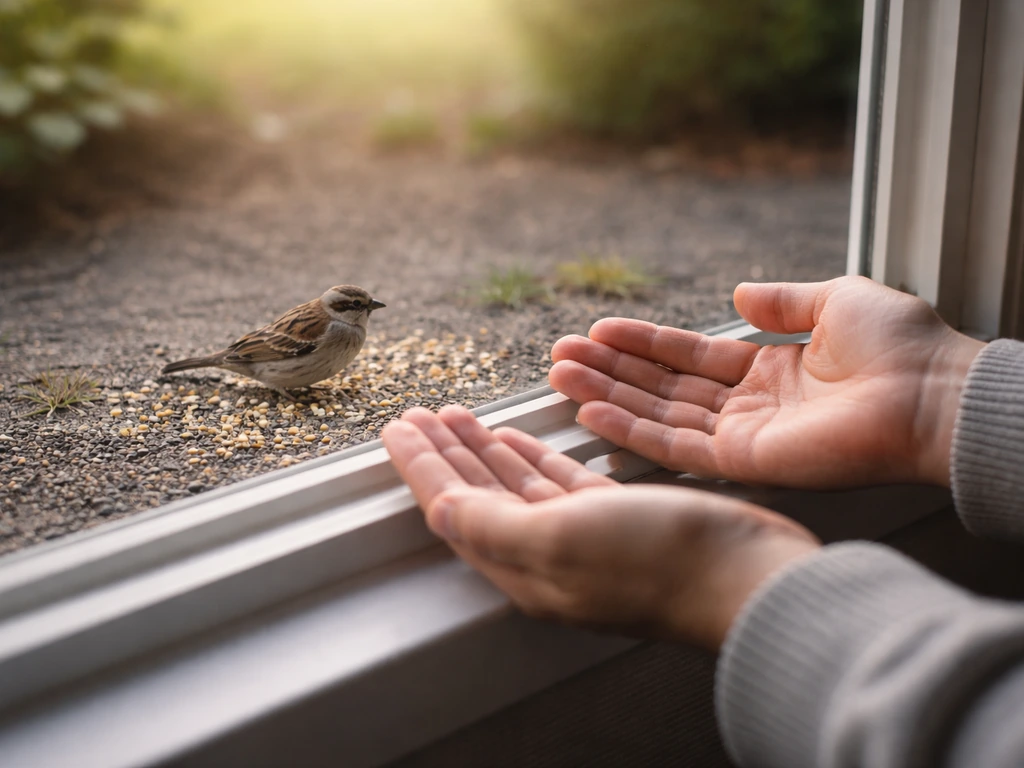
Once the bird is comfortable with you at 15–20 feet, start offering food. Hold it in your open palm and stay completely still. Don't thrust your hand toward the bird, just let your hand be a static part of the environment. Chickadees, nuthatches, and titmice will often come to a hand with seed within a few sessions if you're patient. Crows may take longer but remember faces and return specifically to people who've been reliable food sources.
Keep every session short, 10 to 15 minutes maximum. End on a positive note, meaning stop before the bird gets stressed or leaves. You want the bird to associate your presence with calm and reward, not with pressure.
What 'petting a wild bird' should and shouldn't look like
Let's be honest about the realistic ceiling here. For the vast majority of wild birds, the closest thing to 'petting' you'll ever achieve is the bird choosing to perch on your hand or arm while eating. That is a genuine, meaningful interaction, and it's the appropriate goal. Stroking a wild bird's feathers the way you'd pet a cat is almost never going to happen without causing the bird significant stress, and it shouldn't be the objective.
| Interaction type | Appropriate? | Why |
|---|---|---|
| Bird landing on your hand voluntarily | Yes | Bird-initiated, low stress, no restraint involved |
| Bird eating from your palm | Yes | Voluntary, positive association, bird can leave freely |
| Gently stroking a bird that's perched on you | Rarely, use extreme caution | Only if the bird shows zero stress signals and doesn't move away — most wild birds won't tolerate this |
| Picking up a healthy wild bird to hold it | No | Highly stressful, potentially illegal, risk of injury to both parties |
| Handling a wild bird to 'tame' it | No | Causes trauma, disrupts natural behavior, may be illegal |
| Picking up an injured bird to help it | Only as emergency first aid | Do this only to move the bird to safety, then contact a licensed rehabilitator immediately |
If a bird that has been visiting your yard eventually perches on your knee or shoulder on its own, that's the gold standard. You didn't force it. It chose you. That's the interaction worth working toward. Training a pet bird to accept petting is a different process entirely, and if that's your actual goal, working with a domestically raised bird is a much more humane path.
Step-by-step: setting up your space and building a routine
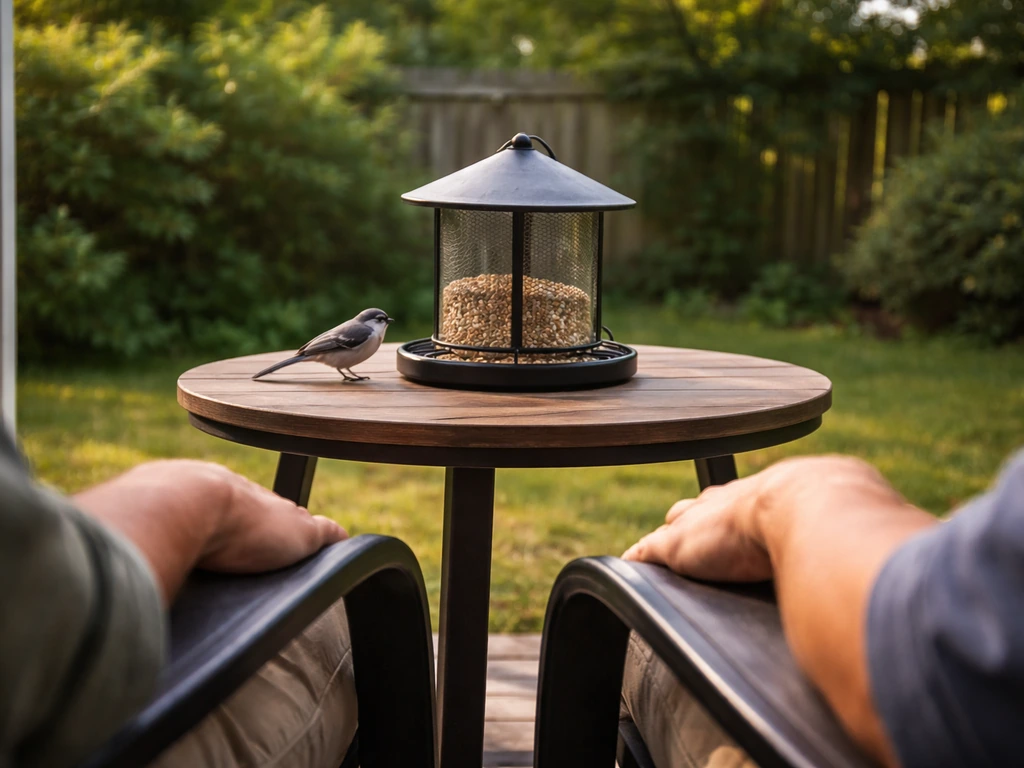
Your physical setup matters as much as your behavior. Birds need to feel safe in the space before they'll consider trusting you in it.
- Set up a feeding station within view of where you sit. Place it at a height that makes sense for the species — platform feeders at about 4 feet work well for many songbirds; ground feeders suit doves and sparrows. Keep it clean and filled consistently.
- Add a water source nearby. A shallow bird bath (no more than 2 inches deep) with fresh water changed daily will attract birds more reliably than food alone.
- Choose your sitting spot and stick with it. Pick one chair, one spot on the porch, one area of the yard. The bird needs to learn where you appear and that you're predictable.
- Show up at the same time every day. Morning is best — birds are most active and hungry then. Even 10 minutes of consistent presence is more effective than sporadic longer visits.
- Reduce nearby disturbances. Keep pets inside during your sessions, ask household members to stay back initially, and minimize sudden noises.
- Start offering hand-fed treats at week two or three. Once birds are comfortable at the feeder with you nearby, move a small amount of food to your open, flat palm. Rest your elbow on your knee or on the armrest so your hand is completely still. Don't wiggle your fingers or shift your weight.
- Extend your hand incrementally closer to the feeder each session — maybe 6 inches per day — until your hand IS the feeder. The bird will make the leap when it's ready.
Black-oil sunflower seeds work for most feeder birds. Mealworms (live or dried) are irresistible to bluebirds, robins, and chickadees and can significantly speed up the trust-building process. Peanuts in the shell work brilliantly with crows and jays. Use the food that's specific to the bird you're working with.
When it's not working: troubleshooting fear, aggression, and refusal to approach
The bird won't come closer than 10 feet
- You may be moving too much — even breathing visibly can spook a nervous bird at close range; try wearing quieter clothing and moving in slow motion
- Your sessions might be too long or too frequent, creating pressure rather than familiarity
- Another animal (cat, dog, hawk) may have spooked the bird recently — give it a few days before resuming
- Try placing a small pile of high-value food (mealworms, peanuts) exactly where you want the bird to come to, then sit 5 feet further back than usual and rebuild from there
The bird approaches but flies off the moment you move
- You're at the right distance but your stillness isn't consistent enough yet — practice being truly motionless for 5-minute stretches
- Try wearing the same color clothing each session so you look the same to the bird each time
- Avoid sunglasses if possible — the reflective lenses can read as a predator's eyes to some species
The bird is acting aggressively (dive-bombing, alarm calling)
- You are almost certainly too close to an active nest — back off immediately and give the area a wide berth for several weeks until nesting season passes
- Mockingbirds and red-winged blackbirds in particular defend large territories aggressively; don't attempt to build a relationship with these birds during breeding season (roughly March through July in North America)
- If a crow is mobbing you specifically, you may have accidentally threatened it or a fellow crow in the past — crows remember faces for years; change your hat or wear a different jacket and approach calmly from a different direction
Nothing seems to be working after weeks of trying
- Consider the species — not every wild bird can be habituated to human proximity; warblers, thrushes, and most raptors are unlikely candidates no matter how patient you are
- Check whether other people or animals are disrupting the space when you're not there
- Try a different individual bird — if a specific bird is simply very skittish, another individual of the same species in the same area may be more receptive
- Accept that for some birds and some situations, the relationship will stay at feeder-watching distance — and that's genuinely okay
If the bird is injured: this changes everything
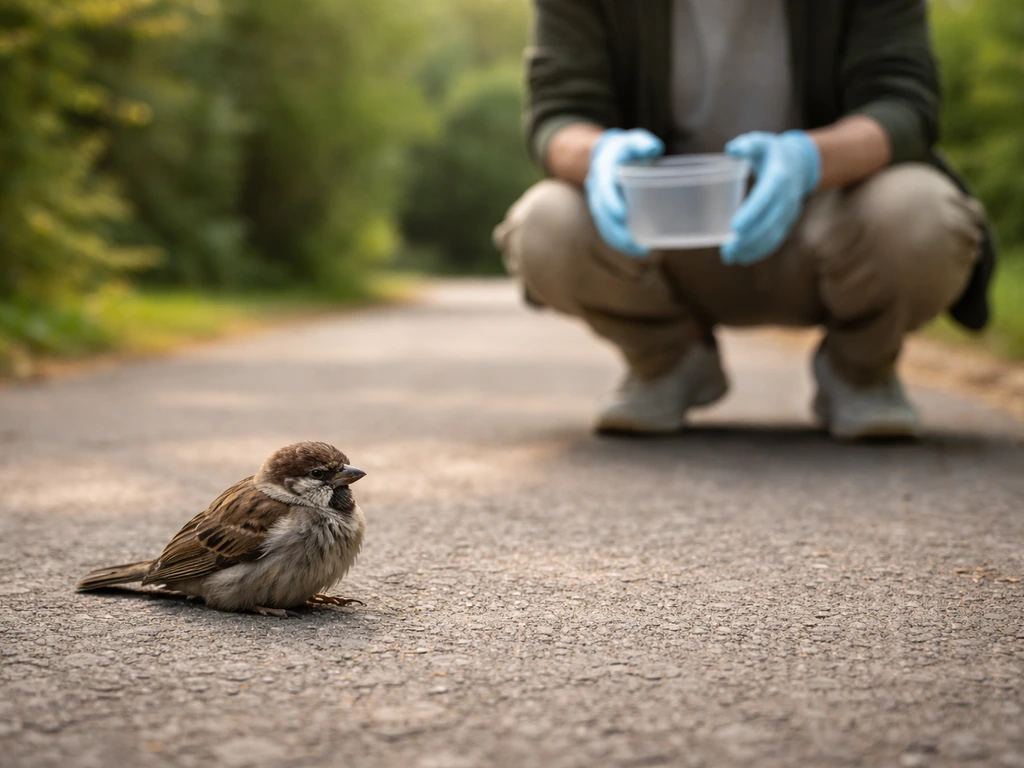
If you've found a bird that is clearly injured or in distress, the entire framework above goes out the window. Your role is not to tame or pet it, it's to keep it calm and get it to a licensed wildlife rehabilitator as quickly as possible. Rehabilitators have the legal permits, training, and equipment to handle wild birds without causing additional harm. You almost certainly don't, and that's not a criticism, it's just the reality.
Here's what to do if you find an injured bird:
- Do not try to feed it water or food — an injured bird can aspirate liquid easily, and the wrong food can cause additional harm
- Gently place it in a cardboard box with air holes, lined with a clean cloth or paper towel — no loose fibers that can tangle around toes
- Put the box somewhere dark, quiet, and at room temperature — darkness reduces stress significantly
- Wash your hands thoroughly with soap and water immediately after handling the bird
- Contact a licensed wildlife rehabilitator right away — in the U.S., you can find one through the National Wildlife Rehabilitators Association (NWRA) or the Wildlife Rehabilitator directory maintained by your state's fish and wildlife agency
- Do not keep the bird overnight if you can avoid it — the sooner it gets professional care, the better its chances
The same guidance applies to birds that appear to be orphaned nestlings (no feathers, eyes closed, fell from a nest). If you can safely locate and reach the nest, placing the nestling back is the single best thing you can do, the parents will not abandon it because you touched it; that's a persistent myth. If the nest is unreachable or destroyed, call a rehabilitator.
What to do starting today
If your goal is to build a genuine, trust-based relationship with a wild bird in your yard, the most useful thing you can do right now is set up a clean, reliable food and water source, pick your sitting spot, and commit to showing up at the same time tomorrow morning. That's it. Consistency is the entire game in the early stages.
If you're dreaming of a chickadee landing on your palm, that's absolutely achievable with the right species and enough patience, plan for two to four weeks of daily sessions before the bird makes that move on its own. If you're hoping to stroke a wild bird's feathers, recalibrate that goal toward hand-feeding first and see how the bird responds over time.
If you want the bird to let you pet it, focus on building trust with hand-feeding first, then only increase contact if the bird stays relaxed and chooses it stroke a wild bird's feathers. If you want to keep a bird without a cage, focus on creating a safe, trust-based routine rather than handling it like a pet hand-feeding first. The relationship is real even if it stays at arm's length.
And if you're more interested in working with birds that can genuinely be trained to enjoy handling and interaction, exploring how to train a pet bird to accept touch is a much more practical path, domestically raised birds are far better candidates for that kind of bond, and the training process itself is rewarding in its own right. If you want to pursue that route, learning how to make a pet bird part of your household safely is the next step train a pet bird to accept touch. If you mean a domestically raised pet, you can also focus on how to make pets alive chirpy bird talk by supporting good care, enrichment, and appropriate training.
FAQ
Is it ever legal to touch or hold a wild bird just to “pet” it for a second?
In many places, touching or picking up a wild bird can be treated as “take,” even if your intent is harmless. Instead of handling it, aim for the bird voluntarily perching near or on your hand while you stay still, and if you want reassurance for your location, check your state rules in addition to the federal protections.
What should I do if the bird suddenly flies away as soon as I sit down or extend my hand?
Treat it as a signal to slow down and shorten the approach. Resume the same “presence” routine without offering hand food for one or two sessions, then reintroduce food from the same spot only when the bird returns on its own, your goal is predictable calm, not progress by pushing closer.
Can I pet a wild bird if it looks tame, like it already visits my feeder every day?
Even “regulars” can be stressed by contact, and some species may habituate to food while still reacting strongly to touch. Keep contact off the menu, hand-feed first, and only consider any closer proximity if the bird stays fully relaxed (no rapid panic hopping, no frantic flapping, and it continues feeding).
Is hand-feeding the same as petting, or are there safer alternatives?
Hand-feeding can be safer than stroking because it avoids grabbing or trapping the bird. The safest alternative is to let the bird choose the perch, by keeping your hand stationary and low to the ground, and placing food consistently so the bird learns you are a safe, boring environment.
How can I tell the difference between a bird that is resting versus a bird that is sick or injured?
Resting birds often appear alert enough to resume normal behavior when approached at a distance, sick or injured birds may show persistent crouching, inability to stand or fly, labored breathing, tilted posture, or visible wounds. If the bird cannot right itself or seems impaired, stop “trust building” and contact a licensed rehabilitator.
What distance is safe to start from if I want the bird to eventually perch near my hand?
Use a conservative starting range like 15 to 20 feet, then adjust based on the bird’s behavior. If it stops feeding, abandons the area, or signals alarm, you are too close. Move in only one small step at a time across days, not minutes.
What food mistakes cause birds to lose trust or visit less often?
Avoid sudden food changes, don’t throw food, and don’t thrust your hand toward the bird. Also use species-appropriate foods, since offering the wrong item can make interactions feel unpredictable and delay trust building.
Are there hygiene steps I should follow beyond washing my hands?
Yes. Keep your feeding area clean by removing old food and wiping surfaces, avoid touching your face while interacting, and change clothes if you’ve had significant droppings exposure. If you have cuts on your hands, cover them and consider skipping close interactions entirely.
Should I try again if a bird disappears from my yard for a while?
Often, yes, but reset your approach. Return to the quiet presence routine first, without hand offerings for a couple of sessions, because birds may have learned a new risk. Consistency matters, but restarting slowly prevents turning a “safe place” into a stressful one.
What if I find a nestling or a baby bird that looks orphaned, can I put it back?
If it is truly a nestling (not fully feathered) and you can safely access the nest, returning it is usually the best option, parents typically continue care. If the nest is unreachable or destroyed, the next step is a rehabilitator rather than prolonged handling or “at-home rearing.”
How short should sessions be, and what signs mean I should end immediately?
Keep sessions brief, about 10 to 15 minutes, and stop earlier if the bird escalates into alarm behaviors like repeated sudden bursts of flapping, vocal distress, frantic retreat, or refusal to feed. Ending calmly helps the bird associate you with safety.
Can I train a wild bird to tolerate petting by keeping sessions consistent every day?
Trust can grow, but petting like you would with a pet is typically the wrong target for wild birds. If the bird does not voluntarily perch or remain relaxed near your hand, do not push for touch. The humanely achievable endpoint is voluntary proximity, or a perch while eating.
What should I do with my feeders and water to make the birds feel safe long-term?
Use a predictable location, keep feeding times consistent, and place water where you can observe without stalking. Remove wet or spoiled food promptly, and consider spreading feeding stations to reduce crowding stress, especially in winter when birds are more vulnerable.
Next Article
How to Make a Pet Bird: Humane Setup and Taming Guide
Step-by-step humane guide to setting up a pet bird, taming routines, species tips, and health and legal red flags.