Making a pet bird truly yours, meaning turning a nervous new arrival into a calm, trusting companion, comes down to three things done in order: picking the right species for your real lifestyle, setting up a safe and stimulating environment before the bird arrives, and then working through a consistent taming routine that goes at the bird's pace, not yours. Skip any of those steps and you'll spend months undoing avoidable mistakes. Follow them and most birds, even fearful rescues, will begin warming up within a few weeks.
How to Make a Pet Bird: Humane Setup and Taming Guide
Clara Hayes
14 May 2026
Choosing the right bird and planning for the long haul
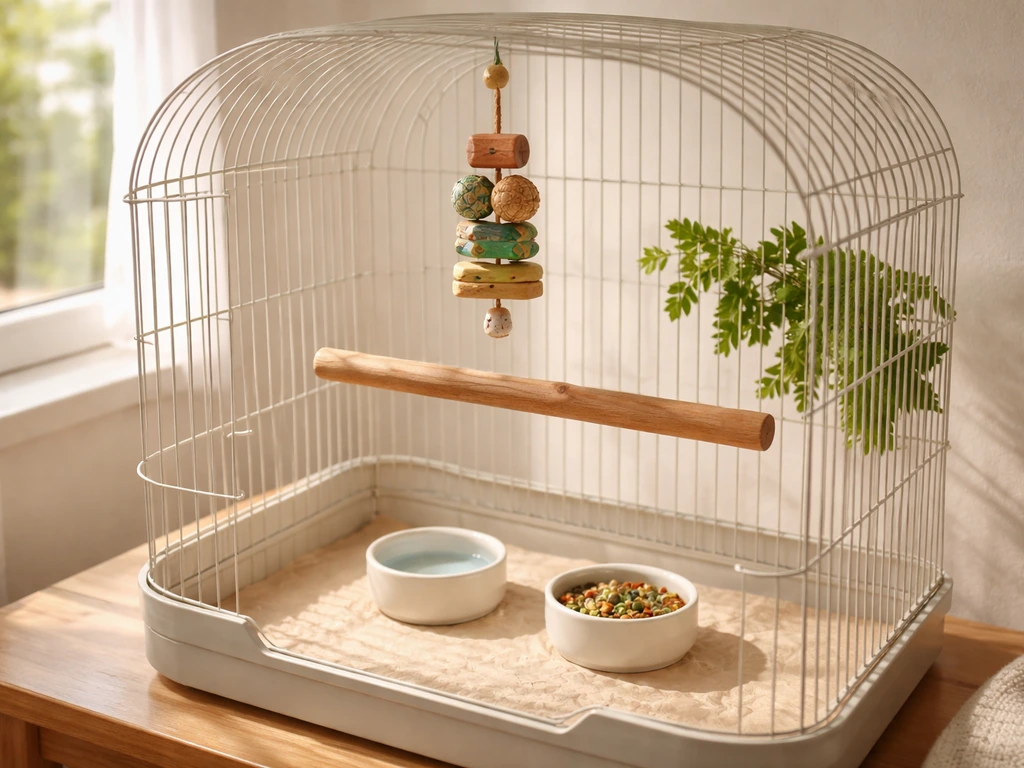
Before you buy or adopt anything, be honest about your daily schedule, your noise tolerance, and how much hands-on time you can realistically offer. A macaw or African grey can live 50 to 80 years and needs several hours of direct interaction daily. A budgie or cockatiel is far more forgiving for a first-time owner, thrives with 30 to 60 minutes of focused attention, and still gives you a genuinely social bird that can learn to talk, whistle, and step up reliably.
| Species | Lifespan | Noise Level | Handling Need | Best For |
|---|---|---|---|---|
| Budgerigar (budgie) | 7–15 years | Low–medium | Moderate | First-time owners, small spaces |
| Cockatiel | 15–25 years | Medium | Moderate–high | First-time owners who want affection |
| Lovebird | 10–15 years | Medium | High | Owners with consistent daily time |
| Conure | 15–30 years | High | High | Experienced owners, louder homes |
| African grey / Amazon / Macaw | 40–80+ years | Very high | Very high | Experienced, dedicated owners only |
| Finch / Canary | 5–10 years | Low | Low (mostly hands-off) | Owners who prefer watching over handling |
Plan for the full lifespan. That means budgeting for an avian vet (not just a general practice vet), accounting for food, enrichment, and cage costs annually, and having a plan for who cares for the bird if you travel or can no longer keep it. Rehoming a bird that has bonded to you is genuinely hard on the animal, so make this decision carefully.
Always source from a reputable breeder or rescue rather than a pet store chain when possible. A hand-raised bird from a breeder will already be partway through the taming process. A rescue bird may take longer but is equally rewarding. Ask to see the bird interact with the seller before you commit, and look for bright eyes, clean nostrils, smooth feathers, and active posture.
Setup essentials: cage, food, enrichment, and a safe environment
Getting the cage right
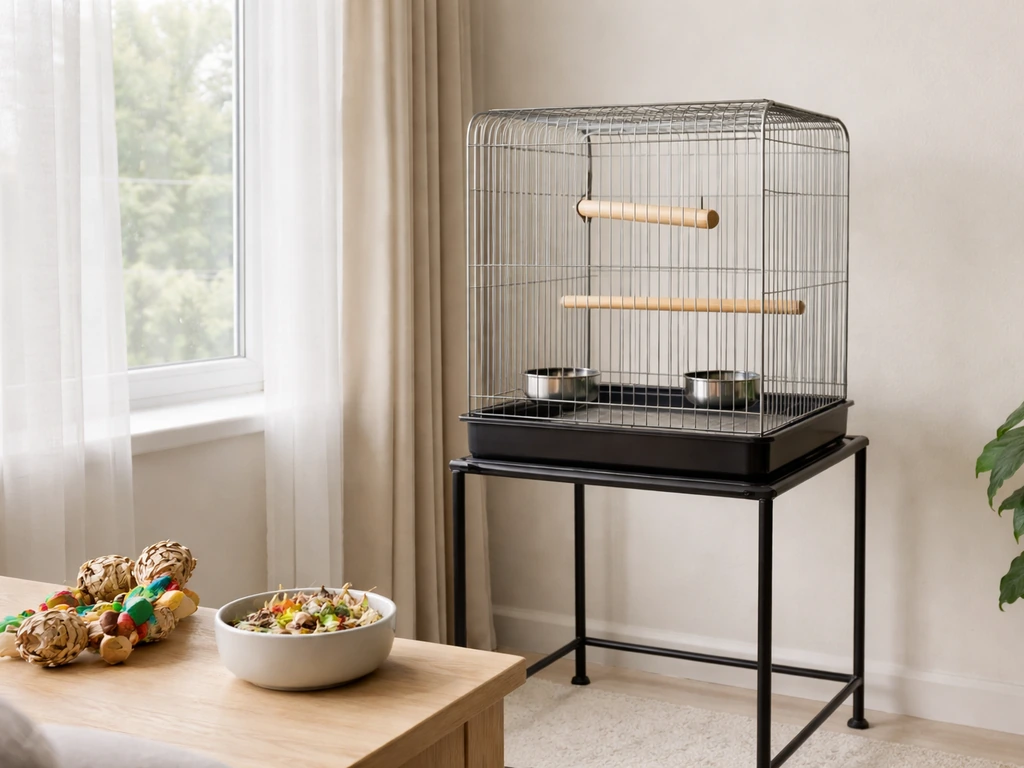
Cage size matters more than most people realize. The Association of Avian Veterinarians publishes minimum cage-size recommendations, and the rule of thumb is always bigger than the minimum if you can manage it. Your bird should be able to fully extend both wings without touching the sides. Bar spacing is equally critical: for small birds like budgies and cockatiels, spacing should not exceed half an inch so the bird cannot push its head through and get stuck. Place the cage at eye level or slightly below, against a wall (not in the center of a room), so the bird has a sense of security on at least one side. Never place it in the kitchen. Fumes from non-stick cookware, gas burners, and cleaning sprays are genuinely toxic to birds and can kill them quickly.
Aim for a location with natural light but not direct afternoon sun all day, away from drafts, air vents, and exterior doors. Most pet birds do best with 10 to 12 hours of darkness per night, so a room where you can dim lights or cover the cage by a consistent time each evening works well.
Inside the cage, use at least three perches of different diameters and textures. VCA Animal Hospitals recommend matching perch diameter to the bird's foot size (the foot should wrap about three-quarters around the perch) and including at least one textured perch, like a stone or cement perch, to help with natural nail and beak wear. Change cage liner paper daily. Purdue University's avian husbandry guidance is clear that daily substrate changes are essential for hygiene and disease prevention.
Feeding your bird properly

Diet is where a lot of well-meaning owners go wrong by offering mostly seeds. Seeds are high in fat and low in many key nutrients. For small birds like budgies, cockatiels, and lovebirds, the Merck Veterinary Manual recommends a target diet of 40 to 50% pellets, 30 to 40% seed mix, 10 to 15% healthy vegetables, and 5 to 10% fresh fruit. For larger parrots, the pellet proportion goes up significantly: around 80% pellets, with 10 to 15% vegetables and 5 to 10% fruit.
If your bird is currently on an all-seed diet, convert gradually. Lafeber recommends starting at 75% old food and 25% new, holding that ratio for at least two weeks before shifting further. Merck suggests beginning with a 20% pellet and 80% seed mix for the first couple of weeks, then progressing. Either way, weigh your bird weekly during the transition. If it loses more than 10% of its body weight, stop the conversion and call an avian vet immediately.
- Safe vegetables: leafy greens (kale, spinach in moderation, romaine), carrots, bell peppers, broccoli
- Safe fruits: apple (no seeds), blueberries, mango, papaya, melon
- Foods to avoid entirely: avocado, onion, garlic, chocolate, caffeine, alcohol, fruit pits and seeds
- Fresh water changed at least once daily, more in hot weather
Enrichment and mental stimulation
Birds are intelligent animals that get bored, and boredom leads to feather plucking, screaming, and other stress behaviors. Rotate toys every few days to keep things novel; the Association of Avian Veterinarians recommends daily or weekly rotation depending on how quickly your individual bird loses interest. Include foraging opportunities, like hiding food inside paper cups, wrapping treats in paper, or using puzzle feeders, because the RSPCA notes that wild birds spend much of their day foraging, and mimicking that keeps captive birds mentally engaged.
Household safety checklist
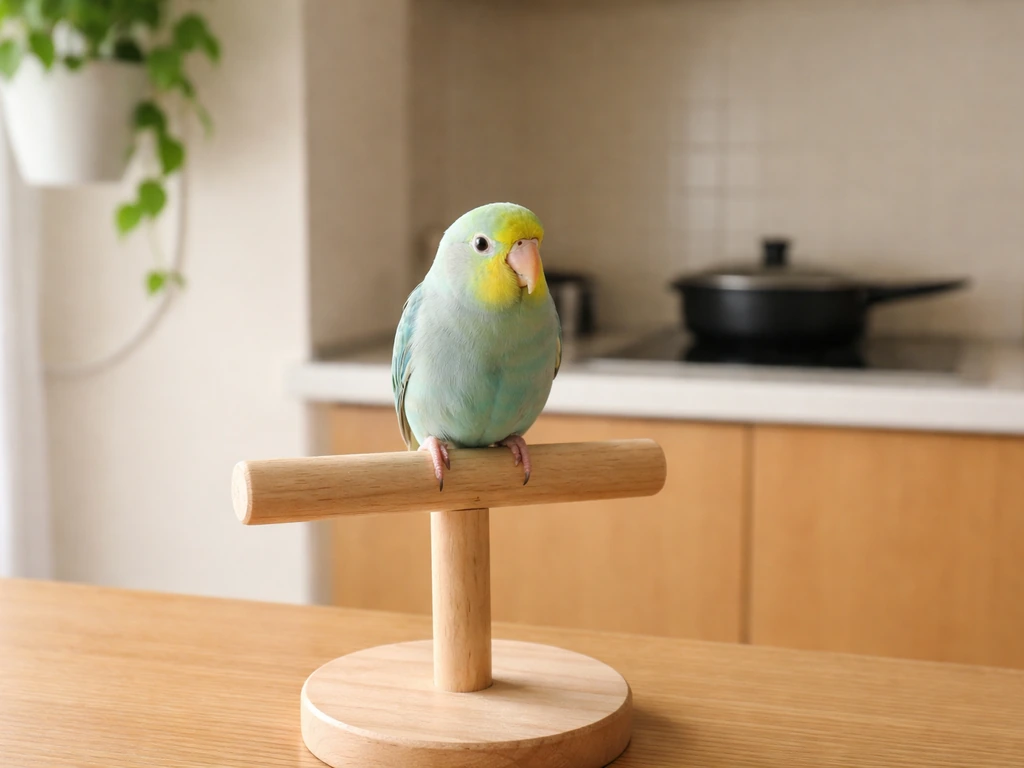
- Remove or cover non-stick (PTFE/Teflon) cookware or use the bird only in rooms far from the kitchen when cooking
- Check for toxic houseplants (philodendron, lily, poinsettia, and many others) and remove them from any room the bird accesses
- Secure windows and doors before letting the bird out of the cage
- Remove or cover ceiling fans before free flight time
- Store cleaning products, candles, and air fresheners away from bird areas
- Check for zinc or lead in cage hardware and toys (zinc toxicosis is one of the most frequently reported metal toxicities in pet birds)
Taming basics: building trust step by step
Taming is not about forcing contact. It is about teaching the bird that you are safe and that good things happen when you are nearby. This process uses two core techniques: systematic desensitization (gradually exposing the bird to something scary at a distance it can tolerate, then slowly closing that distance) and counterconditioning (pairing your presence with something the bird loves, like a favorite treat, so the emotional association shifts from fear to positive anticipation). Both take patience, but they work reliably across species.
- Days 1 to 3: Leave the bird alone to settle. Talk softly near the cage but do not reach in. Let the bird observe you going about your normal routine.
- Days 4 to 7: Sit near the cage for 10 to 15 minutes twice a day, reading aloud or talking quietly. Offer a high-value treat (millet spray for small birds, a piece of fruit for larger parrots) through the cage bars without pushing your hand inside.
- Week 2: Begin placing your hand flat near the cage door or just inside the cage entrance, not moving toward the bird. Let the bird approach on its own terms. The moment it takes a step toward your hand, offer a treat.
- Week 3: With the cage door open, let the bird sit on the open door or a nearby perch while you offer treats from your hand. Do not grab or chase.
- Week 4 and beyond: Introduce the step-up cue. Place your finger or hand against the bird's lower chest, just above its feet, and say 'step up' in a calm, even tone. The moment it steps on, reward immediately. Keep sessions short (5 minutes max) and end on a positive step.
- Once step-up is reliable: Practice stepping up and stepping down between your hand and a perch. Gradually extend handling time as the bird shows relaxed body language.
Realistic timelines vary. A hand-raised young budgie may step up within a week. A fearful rescue cockatiel may take two to three months before it willingly approaches your hand. Do not compare your bird to someone else's. Every bird has its own history and temperament.
Handling and safety training: reading body language, using perches, and building routines
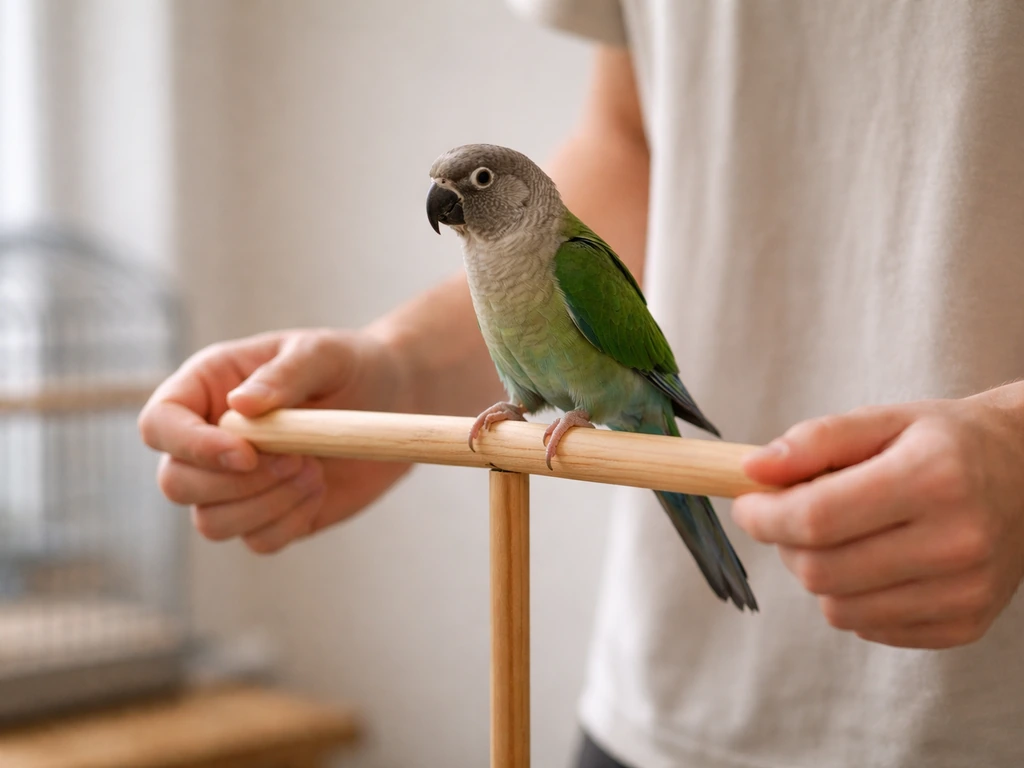
Before you pick a bird up, you need to read what it is telling you. A relaxed bird has smooth feathers, bright eyes, and may gently grind its beak (a sign of contentment). A stressed or about-to-bite bird will pin its eyes (pupils rapidly dilating and contracting in parrots), fan its tail, lean forward, raise its feathers into a puffed threat display, or open its beak. Stop what you are doing the moment you see those signals. Pushing through stress signals teaches the bird that escalating gets results, which is exactly how biting habits form.
When handling outside the cage, always supervise closely. Purdue University's avian husbandry guidance specifically warns against allowing birds unsupervised access to household spaces where hazards or toxic items may be present. Use a T-perch or stand as a neutral stepping stone when transferring the bird from one location to another; this reduces the chance of the bird seeing your hand as a threat and gives it somewhere to go besides your shoulder or head.
Build a simple daily routine: same wake time, same out-of-cage time in the morning and evening, same bedtime with the cage covered. Birds thrive on predictability. A consistent schedule reduces anxiety, which reduces screaming, biting, and stress feather behavior. Aim for at least two out-of-cage sessions per day for social species like cockatiels, parrots, and budgies.
Species-specific training tips
Parrots (conures, amazons, African greys, macaws)
Larger parrots are highly intelligent and respond well to clicker training and target training (touching a stick or target with their beak on cue). Start target training before step-up if the bird is hand-shy; it gives you a way to reward engagement without requiring the bird to step onto your hand first. African greys in particular can be very sensitive to change, so introduce new toys, perches, and people slowly. Amazons are more bold but can become hormonal and nippy in spring, so watch their body language carefully during breeding season.
Cockatiels
Cockatiels are one of the most beginner-friendly parrots. They respond beautifully to gentle, consistent handling and are usually talking or whistling within a few months if worked with daily. Males tend to be more vocal and more interested in mimicking sounds. Use millet spray as a training treat because most cockatiels will work hard for it. Watch for the crest as your primary mood indicator: a flat crest against the head means fear or aggression, a relaxed slightly raised crest is neutral, and a fully erect crest with a bright expression means excitement and comfort.
Budgies (budgerigars)
Budgies are quick learners but need patient, small-step training because they are also quick to startle. A single budgie will tame faster than a pair, because a companion reduces the bird's motivation to bond with you. If you have two, you can still tame them, but it takes more consistent effort. Use millet spray and a calm, low voice. Young budgies (under 12 weeks) tame in days to weeks; older budgies may take a month or more but can absolutely be tamed.
Finches and canaries
Finches and canaries are fundamentally different from parrots. They are not social with humans in the same hands-on way and generally do not want to be handled. Their enrichment comes from watching other birds, singing, flying freely in a large aviary or flight cage, and foraging. If you want a pet you can hold and interact with physically, a finch is not the right choice. If you want a bird that fills your space with song and is relatively low-maintenance in terms of daily handling, finches are excellent. Respect that boundary and your finches will thrive.
Introducing your bird to your home and building daily bonding time
The first 48 to 72 hours after bringing a bird home should be quiet. Resist the urge to show the bird off to everyone or handle it constantly. Let it eat, drink, and explore the cage at its own pace. Keep the household calm, avoid loud music or sudden noises, and give the bird time to map its new space.
Once the bird has settled (eating and drinking normally, exploring the cage, showing alert rather than fearful behavior), begin your taming sessions as described above. Daily bonding time does not have to be formal training; it can be sitting near the cage reading, talking to the bird, or letting it sit on a play stand near you while you work. The goal is for the bird to associate your presence with safety and good things.
If you have other pets, introduce them carefully and never leave a bird unsupervised with a cat or dog regardless of how gentle they seem. Even a non-aggressive swipe from a cat can cause serious injury or fatal bacterial infection (Pasteurella) from the scratch or bite. Keep introductions brief, controlled, and always with the bird safely in its cage.
For readers interested in going deeper into specific skills, topics like training a bird to let you pet it, or managing a bird without a cage for free-roaming time, build naturally on the foundation described here. If you want it to become comfortable with gentle petting, focus on step-by-step desensitization, consistent rewards, and always stopping when the bird shows stress training a bird to let you pet it. If you want true free-roaming time, focus first on secure bird-proofing, supervised out-of-cage practice, and a routine that keeps the bird safe and bonded even without a cage managing a bird without a cage for free-roaming time.
Troubleshooting fear, biting, and health or behavior red flags
Fear and refusal to step up
If your bird consistently retreats, flaps away, or bites when you attempt step-up, you have moved too fast. Go back two steps in the taming sequence. Spend another week just sitting near the cage and offering treats through the bars with no requests. Use systematic desensitization: find the distance at which the bird is relaxed around your hand and work from there, not from the distance that scares it. Sessions should be two to five minutes maximum when rebuilding trust.
Biting
Biting is communication. The bird is telling you it is scared, overstimulated, in pain, or defending its territory. PetMD advises that punishment (yelling, flicking, putting the bird down roughly) makes biting worse by escalating the situation. Instead, stay calm, remove your hand slowly without jerking away, end the session, and note what triggered the bite so you can avoid or desensitize to that trigger next time. If biting behavior appears suddenly in a bird that has previously been calm, rule out a medical cause first. Petco's guidance specifically notes that unexpected behavior changes can indicate illness, and an avian vet visit is warranted.
Screaming
Some contact calling (a bird calling out to locate you) is completely normal and healthy. Excessive screaming that continues for extended periods is usually a response to boredom, inconsistent attention, or being inadvertently rewarded for screaming by getting a reaction (even a negative one). Reward quiet, calm behavior with attention. Walk away calmly when screaming starts and return only when the bird is quiet, then immediately reward that quiet with your attention.
Health red flags that need an avian vet
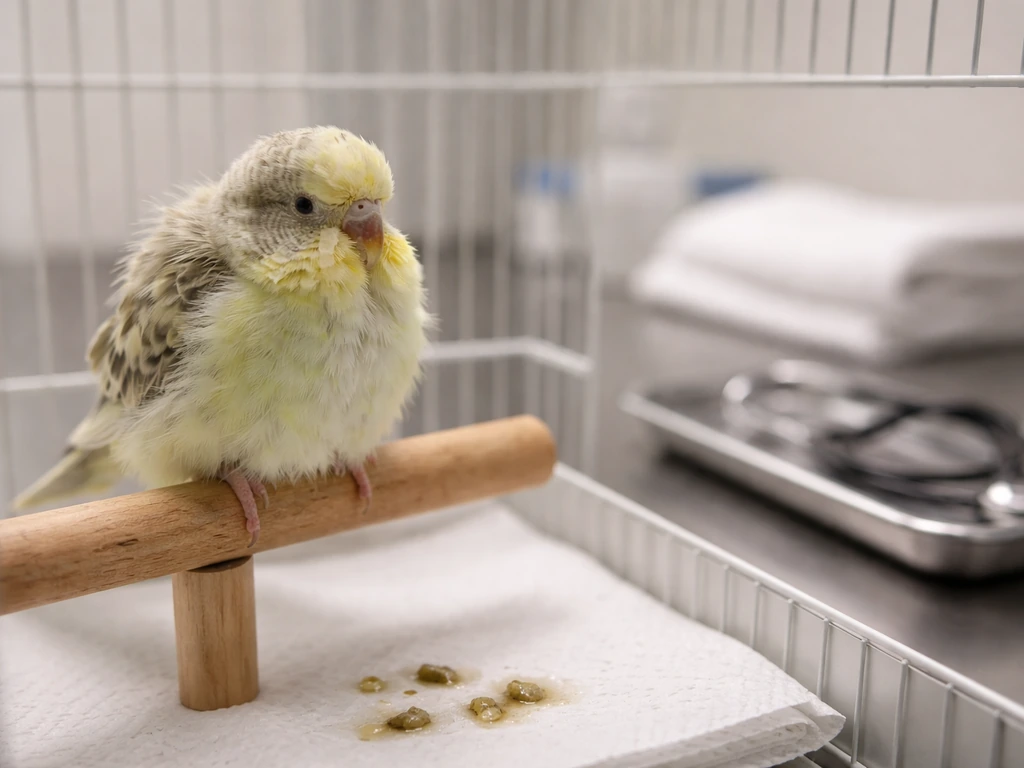
- Fluffed feathers for extended periods (not just during a brief nap)
- Discharge from nostrils or eyes
- Changes in droppings: very watery, discolored, or absent
- Weight loss greater than 10% of body weight
- Tail bobbing with each breath (a sign of respiratory distress)
- Sitting on the cage floor instead of a perch
- Sudden feather destruction or plucking
- Loss of balance, head tremors, or seizure-like behavior
- No eating or drinking for more than 12 hours
Birds are prey animals and instinctively hide illness until they cannot. By the time a bird looks obviously sick, it is usually significantly unwell. Find an avian-certified vet before you bring the bird home so you are not searching in an emergency.
Cage hygiene to prevent disease
Change cage substrate daily. When disinfecting the cage itself, remove all organic material (droppings, food debris) first because most disinfectants are inactivated by organic matter. After cleaning, apply disinfectant and allow a contact time of 5 to 10 minutes before rinsing. The CDC recommends wetting cage surfaces with water or disinfectant before scrubbing, rather than dry-sweeping, to reduce dust and aerosol from dried droppings, which can carry Chlamydia psittaci (the cause of psittacosis, a respiratory illness that can infect humans).
Ethics and legal considerations: pet birds versus wild birds
It is worth being direct here: in the United States and most countries, you cannot legally keep a wild bird as a pet. Nearly all native wild bird species are protected under the Migratory Bird Treaty Act, and keeping them without a federal permit is a federal offense. This includes songbirds, raptors, waterfowl, and most common backyard species. The only legal option if you find an injured or orphaned wild bird is to contain it gently, keep it in a dark quiet box, and contact a licensed wildlife rehabilitator or your state wildlife agency as soon as possible. Audubon's guidance is clear: if the bird is visibly injured (bleeding, broken wing, unable to move), contact a wildlife rehabilitation agency immediately rather than attempting home care.
For people interested in connecting with wild birds humanely, the appropriate path is attracting them to your yard with feeders, native plants, and water features rather than attempting to tame or keep them. If you want to learn how to pet a wild bird you encounter up close, keep it humanely distant and focus on safe, non-tamely interactions. The topic of how to interact safely with wild birds you encounter up close is covered separately on this site.
When it comes to importing pet birds into the United States, the rules are strict. Pet birds imported from Mexico must go through federal quarantine for at least 30 days upon arrival. Under 50 CFR regulations, personal pet import permits limit imports to no more than two exotic birds per year, and birds imported under a personal pet permit cannot be sold afterward. If you are purchasing a bird domestically, make sure it was captive-bred and that the seller can provide documentation. Captive-bred birds from reputable breeders do not require import permits and are a far more ethical and legally straightforward choice.
On the ethical side beyond legality: choose birds that were raised humanely, avoid purchasing wild-caught species even when legal, support breeders who prioritize socialization and health over volume, and be honest with yourself about whether you can meet the bird's long-term needs. A parrot surrendered to a rescue at age 10 because the owner's life changed is a real and common outcome. The more thoughtfully you choose at the start, the better the outcome for both of you.
What to do today
If you do not have a bird yet: research species using the table above, locate an avian vet in your area, and find a reputable breeder or rescue before you buy anything. Set up the cage and test the environment for a few days before the bird arrives. If you already have a bird at home: assess whether your setup meets the safety and diet basics above, start the taming sequence from the beginning regardless of how long you have had the bird, and book a baseline health check with an avian vet if you have not had one. Every day you put a short, positive, low-pressure session in, you are building the relationship. If you want your pet bird to be chirpy and talk more, focus on the basics first: a balanced diet, daily bonding, and enrichment that keeps boredom away how to make pets alive. There is no shortcut, but there is a clear path.
FAQ
What’s the quickest way to tell if a bird is a good fit for my lifestyle before I bring it home?
Do a realistic “time audit” for the species, not just a personality check. Write down your likely out-of-cage time, who will interact with the bird on weekends, and how often the bird would be alone for more than 6 to 8 hours, then match the bird’s typical daily interaction needs to that schedule. If you travel frequently or your household is often loud, prioritize smaller, quieter companions or plan for a sitter before committing.
Can I start taming immediately when the bird arrives, or should I wait?
Wait for at least the first 48 to 72 hours while the bird eats, drinks, and explores normally. Starting too early often creates lasting negative associations with your hands and voice. After the bird settles, begin with short sessions that focus on your presence (sitting near the cage, calm talking, treats through the bars) before asking for step-up.
My bird won’t step up but seems calm. What should I do next?
Use a “consent-first” approach. If your bird is calm but refuses step-up, switch to target training or offering treats near the perch so the bird learns that moving toward you is the reward. Only progress to step-up after the bird reliably approaches your cue without fear signs, and keep the session length very short to avoid overwhelm.
How can I reduce biting during the first month?
Track triggers and prevent escalation. Most early bites happen when the bird feels trapped, overstimulated, or pushed too fast. If a bite happens, calmly end the session, remove your hand slowly, and note the situation (time of day, lighting, recent handling, noise, whether the bird just ate). Then step back two stages for at least a week, focusing on distance-based desensitization and calm rewards.
Is it okay to use millet spray as a training treat for all pet birds?
Millet is especially effective for many budgies and cockatiels, but it should be treated as a training supplement, not a staple. For larger parrots, you’ll often get better results using small, varied, healthy treats that match their diet plan (for example, tiny pieces of approved fruit or vegetable) while still reserving millet for specific training steps if your vet approves it for your bird.
What if my bird screams a lot. Am I supposed to ignore it completely?
Ignore the screaming only in the sense of not feeding it with attention, but still manage the cause. Start by ensuring boredom and schedule gaps are covered (predictable bedtime, at least two out-of-cage sessions for social species, and toy rotation). When screaming starts, walk away calmly, then return only when quiet, and reward quiet immediately. If the pattern persists, consider stress, illness, or hormonal behavior and book an avian vet check if it’s a sudden change.
How do I handle free-roaming time safely if I’m working on taming?
Keep it supervised and controlled even if the bird is progressing. Start with short, structured sessions in a safe room, remove hazards (open toilets, hot surfaces, inaccessible toxic items), and avoid letting the bird perch on heads or shoulders during early training when fear can flip into biting. Always use a neutral “stepping stone” stand or T-perch to guide returns, so the bird learns leaving you is not the only way to get out of the interaction.
How often should I change cage liner and clean the cage?
Plan for daily liner changes and consistent spot cleaning so organic debris does not build up. When doing deeper cleanings, remove droppings and food debris first before disinfecting, and make sure surfaces remain in contact with the disinfectant for the recommended dwell time so it actually works. Also, avoid dry sweeping of dried droppings to reduce dust and respiratory risk.
What’s the safest way to introduce a new bird to a cat or dog?
Do not rely on “gentle” behavior. Keep the bird fully caged and supervised at all times during introductions, and ensure the bird cannot access the pets even briefly. Use short, controlled sessions and keep distance so the bird can remain calm, then gradually increase interaction only if both animals stay nonreactive. Any history of predatory behavior is a reason to slow down or reconsider the home setup.
My bird’s diet is all seed. How long should a transition take and what red flags mean I should stop?
Use a gradual conversion, usually over several weeks, and weigh your bird weekly to confirm stable intake. If weight drops by more than 10% during the switch, stop the conversion and contact an avian vet immediately. Also watch for reduced appetite, lethargy, or stool changes, because those can indicate the bird is not adjusting well.
When should I call an avian vet for behavior changes?
Call promptly if biting, screaming patterns, posture, breathing, or appetite change suddenly from a previously normal baseline. Birds hide illness, so “new behavior” is often an early sign rather than a training setback. If you cannot identify a clear trigger (new toy, schedule change, recent taming push), book a baseline visit or urgent consult depending on severity.
Next Articles
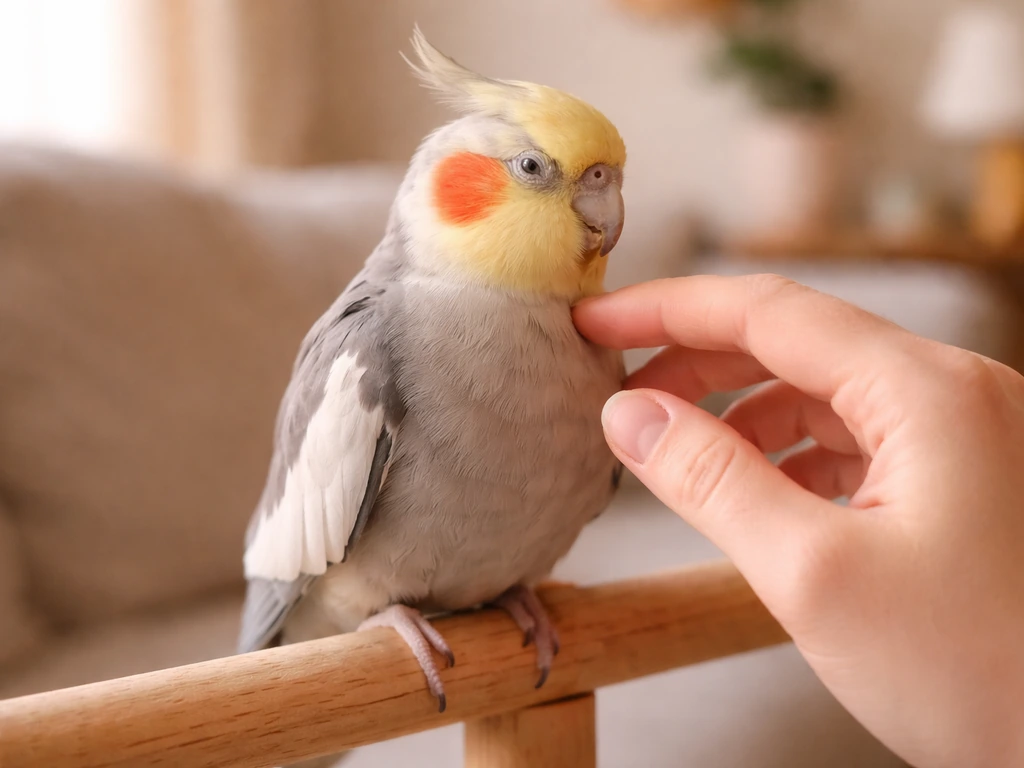
How to Train Your Bird to Let You Pet It
Step-by-step training to build trust and safely desensitize your bird to petting using treats, cues, and body language.
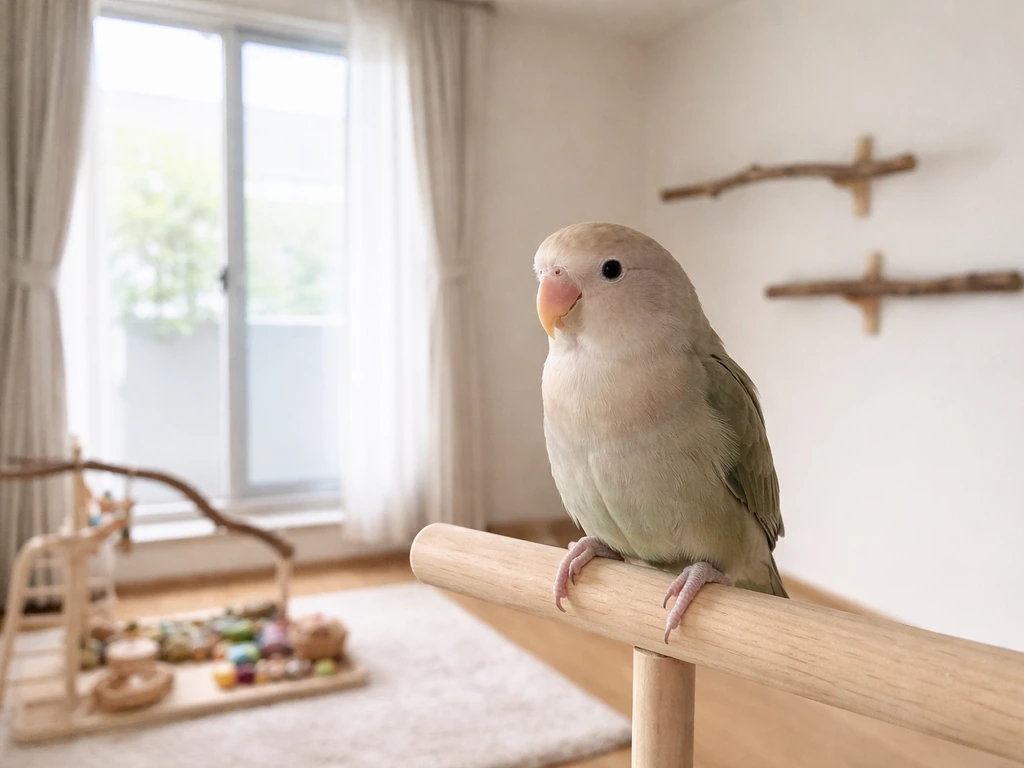
How to Keep a Bird Without a Cage: Safe Plans
Step-by-step safe cage-free setup for pet and backyard birds, with training, safety checks, routines, and legal tips.
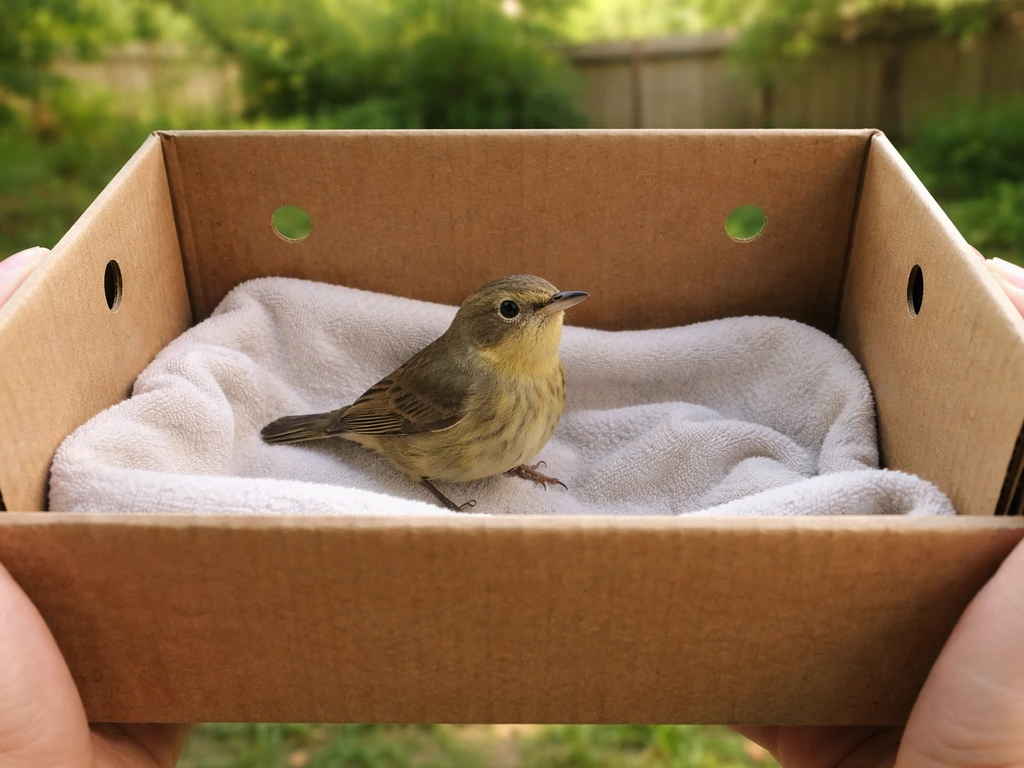
How to Catch a Bird Without Killing It: Humane Steps
Humane, trap-free steps to catch a wild backyard bird safely, minimize stress, contain it calmly, then release or reloca