You can absolutely build a real back-and-forth relationship with a pet finch, but it looks different from what you'd get with a parrot. Finches are not wired to perch on your finger and mimic words. What they will do, with patient daily effort, is learn to recognize you, fly toward you, stay calm in your presence, and respond to your soft voice with their own chirps and calls. The peer-reviewed work on zebra finches hosted on PubMed Central explains the biological mechanisms behind how social interaction can enhance vocal learning. That responsive, curious engagement is what chatting with a finch actually means, and it is genuinely rewarding once you get there.
Finch How to Chat With Bird: Trust Training Steps
Clara Hayes
7 May 2026
Understanding Finch Behavior and Trust Cues

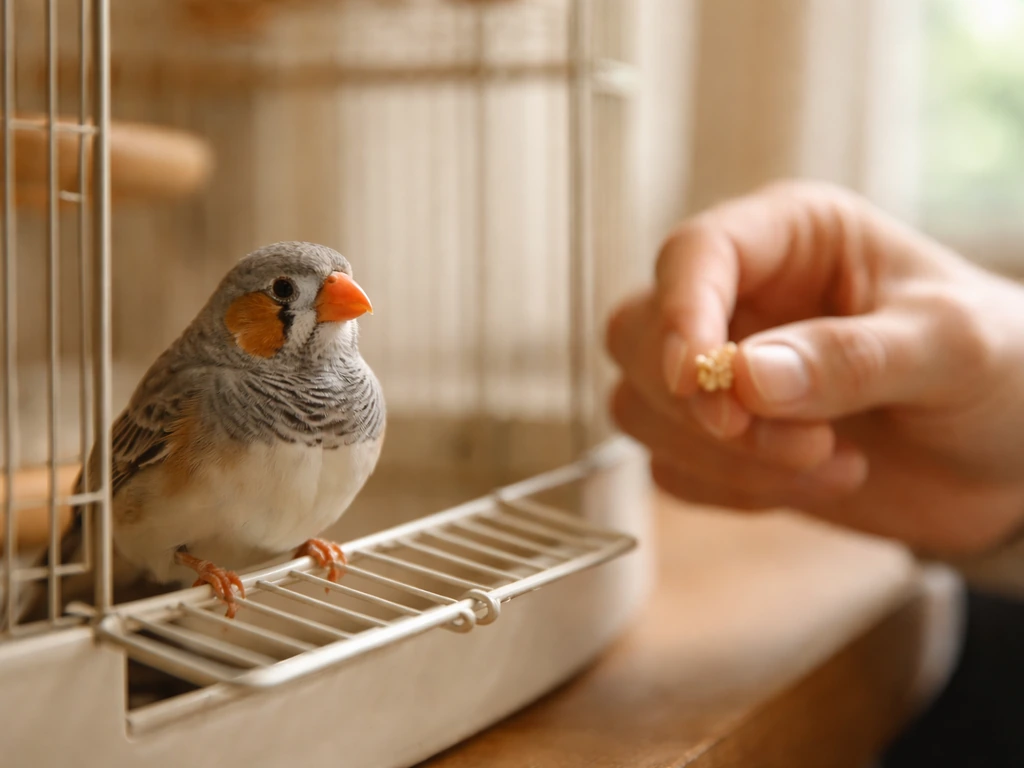
Before you try to interact with your finch, you need to know what it's telling you. Finches are prey animals with fast nervous systems, and they give you clear signals if you know what to look for. Reading those signals correctly is the single biggest factor in whether your bonding sessions go well or set you back.
Fear signals to stop and give space immediately:
- Flattened feathers pressed tight against the body, making the bird look thin and elongated
- Rapid back-and-forth movement along the perch or cage bars (frantic pacing)
- Tail fanned out or held stiffly, often paired with open beak
- Pre-flight positioning: leaning forward, weight on the toes, eyes wide and fixed on you
- Loud, repeated alarm calls rather than the usual conversational chirps
- Hiding in a corner, behind a toy, or at the back of the cage
Curiosity and comfort signals to keep going:
- Feathers slightly relaxed, normal body shape (not puffed, not flattened)
- One foot tucked up while resting near you
- Soft, rhythmic chirping or song directed toward you
- Turning to face you and leaning slightly forward without fleeing
- Preening while you are nearby (this is a major trust signal)
- Eating or drinking while you are present
One note on puffed feathers: a finch that puffs up briefly while resting and then returns to normal shape is simply warm and comfortable. A finch that stays puffed, sits low on the perch, and is unusually quiet or lethargic may be sick. That combination is a health flag, not a trust-building opportunity, and it warrants a vet call before you proceed with any training.
How to Set Up the Right Environment for Bonding
The cage placement and room setup do most of the heavy lifting before you ever say a word to your finch. Get these basics right and you'll cut your taming timeline in half.
Place the cage at roughly your chest height, in a room where the family naturally gathers and moves around calmly (a living room or office works well). Avoid kitchens because of fume hazards from non-stick cookware, and avoid high-traffic hallways where people rush past unpredictably. The goal is a spot where your finch sees human activity throughout the day but is not startled by sudden movements or loud noise.
Keep a consistent daily routine around the cage: same wake-up time, same cover removal, same feeding schedule. Finches are creatures of routine and they genuinely calm down when they can predict what happens next. Erratic schedules keep their stress hormones elevated even when nothing threatening is actually happening.
Inside the cage, place at least one perch near the front of the cage at a level where your face is visible when you sit nearby. This perch becomes the spot your finch will learn to associate with your approach. Natural wood perches of varying diameter (around 1/2 inch to 3/4 inch for most finch species like zebra finches and society finches) are preferable to smooth dowel rods, which can cause foot soreness over time.
If you have more than one finch, bonding still works but moves more slowly. Finches that have a companion bird will naturally prioritize that relationship. Do not separate companions to force human bonding as that causes distress. Instead, work with the pair together and accept that your goal is comfortable coexistence and responsive behavior rather than exclusive attachment.
Step-by-Step Taming Routine to Build Communication
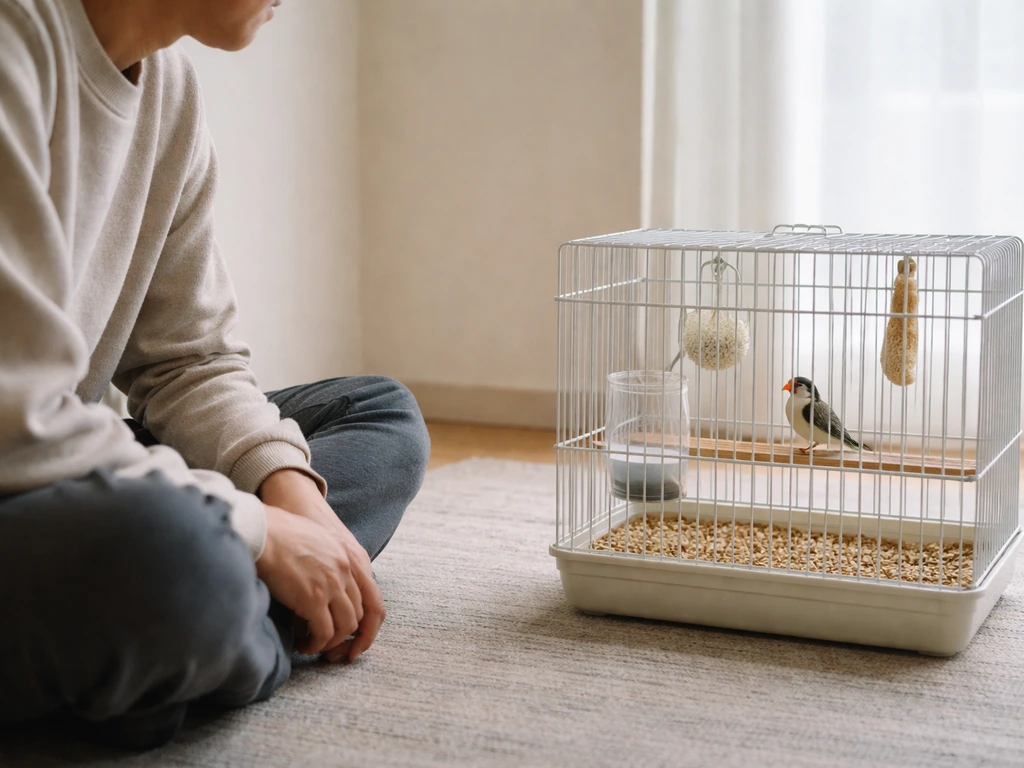
This routine is designed to progress in stages. Do not skip ahead. Each stage builds the foundation for the next, and rushing is the most common reason progress stalls.
- Stage 1 (Days 1 to 7): Presence only. Sit about three feet from the cage for 10 to 15 minutes once or twice a day. Do not make direct eye contact, do not reach toward the cage, and speak in a low, calm voice or hum quietly. Read a book, work on your laptop, or simply sit there. You are teaching your finch that your presence means nothing bad happens.
- Stage 2 (Days 8 to 14): Move closer. Bring your chair to about 18 inches from the cage. Continue the same calm routine. Begin introducing a consistent soft sound, like a gentle two-note whistle or a specific phrase spoken quietly ("hey little one" works well). Say it every time you approach. Your finch will start to associate that sound with your safe presence.
- Stage 3 (Days 15 to 21): Hand near the cage exterior. While seated close, rest your hand near the outside of the cage bars without pressing against them. Hold still. Let the finch investigate if it chooses. Many finches will hop to the near perch and look at your hand within a few sessions. Do not reach in yet.
- Stage 4 (Week 4 and beyond): Slow hand inside the cage. Open the cage door slowly and place your hand flat and still just inside the doorway, below the perch level. Do not chase or corner the bird. Offer a small high-value treat (a tiny spray of millet or a small seed the finch loves) on your open palm. Remain completely still. The goal is for the finch to choose to approach.
- Stage 5 (Variable timeline): Contact tolerance. Once the finch consistently approaches your hand in the cage, practice having your hand present for longer periods. Some finches will step onto a finger, especially if a millet sprig is held at the right angle. Others prefer to stay near your hand without stepping up, and that is perfectly fine.
One positioning note that matters: keep your hand below the bird's perch level whenever possible. Approaching from above triggers a predator response. Coming from below or at the same level feels much less threatening to a small bird.
Daily Training Exercises for "Chatting"
Once your finch is calm and curious in your presence, you can start building what I genuinely call a conversation: a back-and-forth pattern of sounds and responses that happens reliably because your finch has learned it leads to good things.
Using your voice as a cue
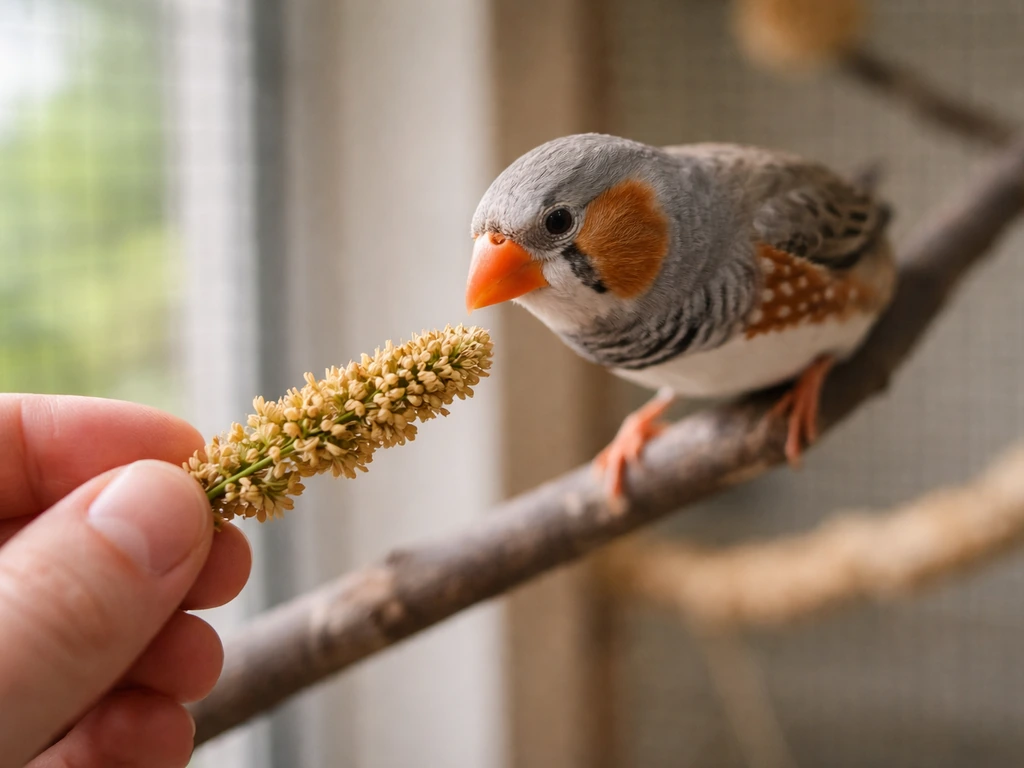
Finches respond strongly to soft, melodic sounds. Use a consistent short phrase or whistle every time you approach, every time you offer food, and every time the finch comes toward you. The repetition creates a learned association. Within a few weeks, many finches will begin vocalizing back when they hear their person's voice, which is the closest thing to a conversation you will get from this species, and it is genuinely delightful.
Timing your reinforcement correctly
The rule here is simple: the reward (usually a millet sprig or a piece of egg food) must arrive within two to three seconds of the behavior you want. If your finch hops toward the front of the cage when you speak, that hop gets a reward immediately. If you fumble with the food for ten seconds, the connection is lost. Keep treats ready in your hand before you begin each session.
Keeping sessions short and consistent
Five to ten minutes twice a day beats a 45-minute session once a week every single time. Finches have good short-term memories for routine but they need daily repetition to solidify learned behaviors. End every session before the finch shows any stress signals, which means ending on a success. If the session is going well, stop anyway. You want the bird to be slightly eager for the next session, not relieved it ended.
Adding a simple recall cue
Once your finch reliably comes to the front of the cage when you arrive, you can layer in a specific whistle or word as a recall cue. Whistle, then immediately present the treat. Repeat this every session. Over time, the whistle alone will bring the bird toward you even from across the cage. This is the clearest version of a finch "responding on cue" and it works reliably with most individuals given enough time.
Troubleshooting Fear, Biting, and Stalled Progress
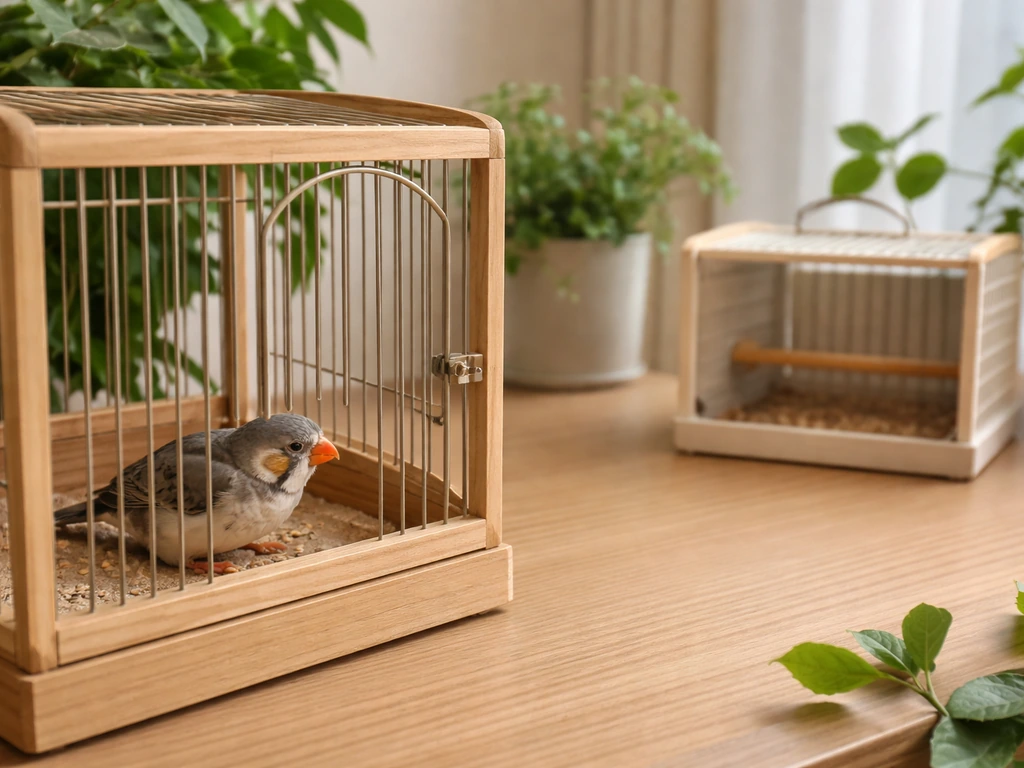
Most problems in finch taming come down to one of three things: moving too fast, inconsistent routine, or a bird that is stressed for a reason that has nothing to do with training. Here's how to diagnose and fix the most common issues.
| Problem | Likely Cause | What to Do |
|---|---|---|
| Bird panics every time you approach | Moved too close too quickly, or loud household noise | Go back to Stage 1. Increase distance and reduce session length to 5 minutes. |
| Bird nips or bites when hand enters cage | Hand is threatening (too fast, approaching from above, or bird feels cornered) | Keep hand still and low. Biting is a stress and fear response, not aggression. Never pull away sharply as that rewards the bite. |
| Progress stalled for two or more weeks | Plateau is normal but check for routine inconsistency or cage stress (new item, nearby window predator, changed cage mate) | Audit the environment. Remove any new stressors. Return to the last successful stage. |
| Bird won't come out of cage when door is open | Not ready yet, or cage is the only perceived safe zone | Do not force it. Let the door stay open during calm sit sessions. Place a treat just outside the door and wait. |
| Bird ignores you entirely | Solo finch without a companion may self-entertain; or bird is simply not food-motivated by your treat choice | Try different treats (live mealworms are highly motivating for many finches). Also try session timing just before the bird's normal feeding time. |
| Finch was friendly and then suddenly became fearful | Environmental change, illness, or a startling event you may not have witnessed | Check for health signs first. If health looks fine, identify any household changes and give the bird a few days of low-pressure presence only. |
On the topic of biting: a finch bite is small but it matters as information. Biting is nearly always a sign of stress and fear, not a personality flaw. The bird is telling you it feels unsafe. Respond to it the same way you'd respond to any fear signal: back off, reduce pressure, and rebuild trust from the last comfortable stage. Punishing or scolding a finch for biting achieves nothing except confirming to the bird that you are, in fact, something to be afraid of.
Humane Handling, Safety, and Realistic Timelines
Finches are small and fragile. If you do reach a point of physical handling (for health checks, not as a regular bonding exercise), there are a few things that matter a lot for safety. If you want bird grooming basics alongside bonding and training, review how to groom a bird so you can keep feathers and skin healthy without stressing your finch.
- Never squeeze. Hold a finch with a loose tent of your fingers around the body, supporting the keel (breastbone) without pressing it. Pressure on the keel restricts breathing.
- Keep handling sessions under two minutes unless a health check requires more time.
- Handle close to a soft surface (your lap, a low table) so that if the bird slips free, the fall is short.
- Avoid handling right after eating, during molting (birds are physically sensitive during molt), or in cold temperatures.
- Wash your hands before and after handling to protect both of you.
- Never handle a bird near ceiling fans, open windows, other pets, or non-stick cookware on the stove.
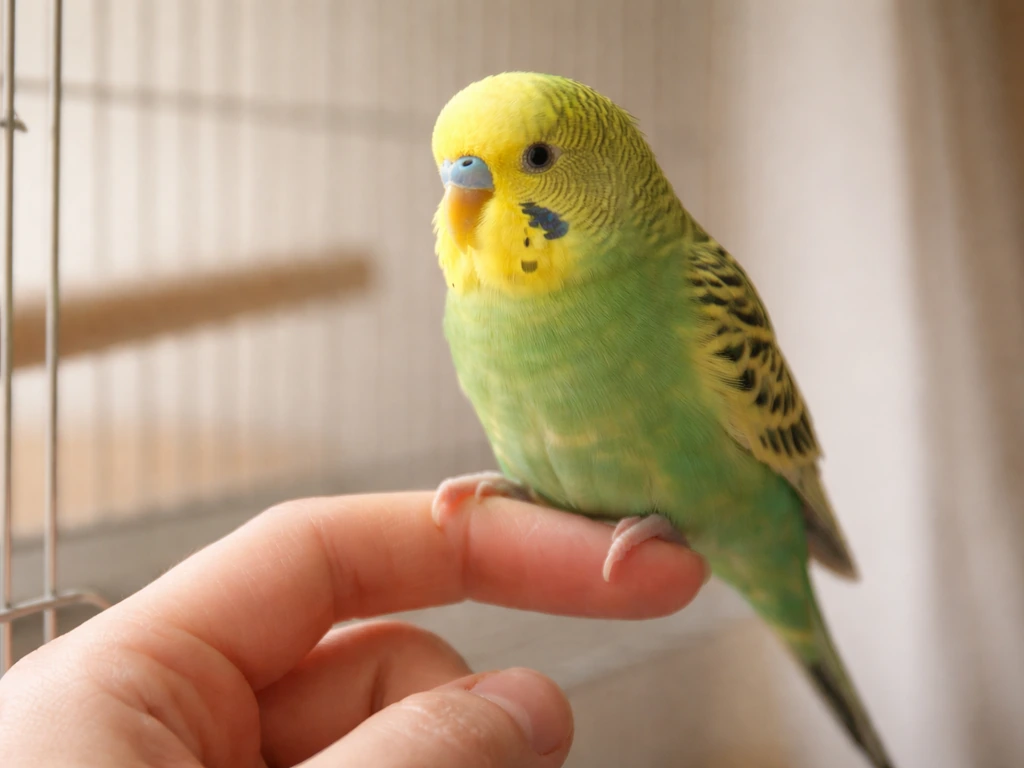
On timelines: be honest with yourself about what to expect. A hand-raised finch from a reputable breeder may accept your presence within a week and show responsive vocalization within a month. A finch that was cage-bred with minimal human contact may take three to six months to reach a genuinely comfortable relationship, and some individuals simply never become fully comfortable with direct hand contact. That is not failure. A finch that sings when you enter the room, comes to the front of the cage to see you, and eats calmly while you sit nearby is a finch that trusts you, and that matters. The bonding journey with finches is slower and quieter than with a budgie or cockatiel, but it is just as real. Budgies have different signals and training steps, so be sure to use a budgie-specific approach when learning how to pet a budgie bird.
When to Call a Vet or Rehabilitator
Some behaviors and physical signs are not training problems. They are health problems, and no amount of patient bonding work will fix them. Get an avian vet involved if you notice any of the following.
- Persistent fluffed feathers combined with inactivity, closed eyes during the day, or sitting low on the perch for extended periods
- Tail bobbing with each breath (a sign of respiratory distress in small birds)
- Discharge from nostrils or eyes, or clicking/wheezing sounds when breathing
- Droppings that have changed significantly in color, consistency, or smell over more than two days
- Sudden dramatic personality change (a previously interactive bird that becomes completely withdrawn almost overnight)
- Weight loss visible as a prominent keel bone when you gently feel the chest
- Any injury: bleeding, a drooping wing, limping, or a foot that is not gripping correctly
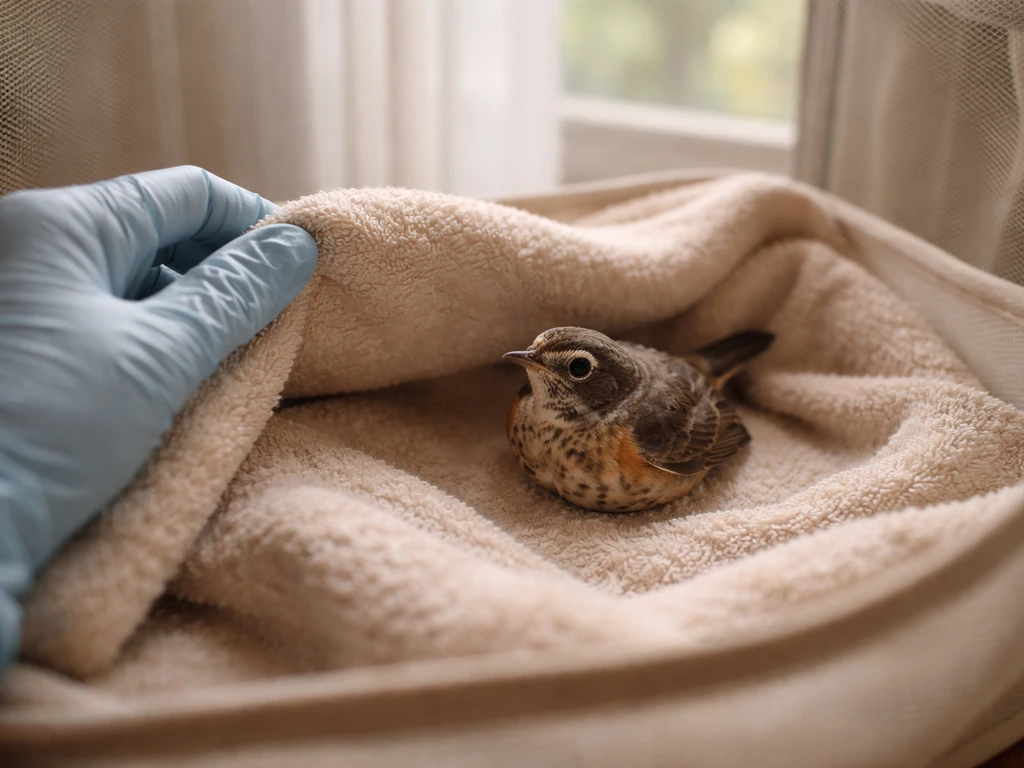
If you have encountered a wild finch that appears injured or sick, do not attempt to tame or bond with it. If you do not have a cage, focus on trust-building in a safe, controlled space rather than trying to tame a bird directly. Contact a licensed wildlife rehabilitator in your area. Rehabilitators have the training, housing, and legal permits to care for wild birds safely, and keeping a wild finch without a permit is illegal in most countries (more on that below). For persistent behavioral issues in a pet finch that are not explained by health problems, an avian vet or a certified parrot behavior consultant can also be a useful resource, as they can observe the bird and environment directly.
Ethics and Legal Notes: Wild Finches vs Pet Finches
This distinction matters and it's worth being direct about it. The taming and chatting techniques in this article are for domestically bred pet finches: species like zebra finches, society finches, and Gouldian finches that have been captive-bred for generations and are legally kept as pets. Wild finches are an entirely different situation. If you are specifically asking how to make a wild bird your pet, start by reviewing the legal and ethical rules for keeping wild finches, and choose habitat-based attraction instead of direct taming.
In the United States, wild finches (including American goldfinches, house finches, and purple finches) are protected under the Migratory Bird Treaty Act. It is illegal to capture, possess, or keep them without a federal permit. Similar protections apply in Canada, the UK, Australia, and most other countries. This is not a technicality; it exists because wild birds suffer in captivity, lose their survival skills, and cannot be successfully returned to the wild after extended human contact.
If your goal is to interact with wild finches in your yard, the humane and legal approach is habitat-based attraction rather than direct contact. This means:
- Offering appropriate feeders stocked with nyjer (thistle) seed, which goldfinches and house finches love
- Providing fresh, clean water in a shallow bird bath
- Planting native seed-bearing plants like coneflowers, sunflowers, and native grasses
- Sitting quietly at a distance and allowing birds to habituate to your presence over many weeks
- Never attempting to hand-feed wild finches in a way that causes them to lose their wariness of humans
Some experienced backyard birders do eventually get wild finches to feed from a stationary hand at a feeder, but this takes months of patient presence and should never involve restraint or forced contact. The bird always controls the interaction, always. That is the ethical line between attracting wildlife and habituating it in ways that can ultimately harm it.
If you want a bird that will genuinely chat with you, sit on your shoulder, and learn to come when called, a hand-raised pet finch from a reputable breeder is the right path. Wild birds in your yard can offer something equally wonderful, just different: the joy of being trusted enough that a free creature chooses to share your space. Both are worth pursuing, but they require very different approaches, and the line between them should always stay clear.
FAQ
How do I use the whistle or short phrase when my finch is not showing curiosity yet?
Start by talking at times when your finch is already calm, like right after the cage cover comes off and you can offer a small, fast reward. If you add the sound during stressful moments (cleaning, sudden room noise, reaching too close), your “conversation” cue becomes associated with pressure instead of safety.
What should I do if my finch suddenly stops coming to the front of the cage?
Avoid chasing or moving your hand in front of the bird. For most finches, the best “reset” is to pause, sit farther back, reduce the volume of your voice, and resume only at the last step where the bird stayed relaxed (eyes open, normal posture, no tail flicking or darting).
Can I teach finches to respond to my hand signals or a specific “come” command?
Yes, but it should be a secondary cue, not the first training step. Wait until your finch consistently approaches in response to your usual approach sound, then introduce a distinct recall whistle only when the treat is immediately delivered within two to three seconds.
What treats work best for building a finch conversation, and how should I choose between millet and egg food?
Millet and egg food both work for many finches, but freshness and consistency matter. Use small portions you can deliver quickly, and keep the same treat type for cue training so the bird learns “sound means that exact reward,” not “sometimes food appears.”
My finch seems more jumpy some days. Should I push through or adjust the routine?
Do not increase training length or frequency on days the bird seems stressed. Instead, shorten sessions and end sooner, keep the room routine unchanged, and only repeat the cue if the finch is still showing comfort signals. If stress persists for multiple days, treat it as an environment or health issue rather than a training gap.
How do I know the finch’s chirping means trust, not fear?
A finch “chatter-back” is normal, but it should not replace safety behaviors. If the bird vocalizes but you see fear signs like freezing, backing away, or rapid darting, continue at the previous stage and focus on calm proximity rather than rewarding approaches that only happen when the bird is panicked.
What if my whistle is too loud or my voice sounds different from day to day?
You should use the same sound consistently, but keep it gentle. If you notice your finch becoming more alert in a tense way (stiff body, quick retreat), switch to a quieter version of the cue and rely more on stillness and predictable routine while you rebuild comfort.
How can I avoid losing training progress if I need to grab treats during sessions?
Yes, but only if it does not interfere with quick reward delivery. Place treats within easy reach and avoid rummaging with noisy containers during the two to three second reward window. If you cannot deliver immediately, prepare beforehand and make the cue shorter.
What should I do if my finch comes to the front of the cage but won’t take the next step toward me?
If your finch sometimes comes to the front but does not approach after the cue, reduce the cue intensity and return to rewarding smaller steps, like stepping onto the front perch or staying calm at your face level. Progress is often stepwise, not instant.
Is it okay to try to handle the finch to help it “learn” faster?
If you’ve never handled the bird, skip hand-contact bonding and focus on recall and calm presence. For health checks, use the gentlest necessary approach and keep stress low, then return to routine bonding steps immediately afterward so the bird does not start associating you with restraint.
How long can I take a break from training before restarting, and how should I restart?
Do not rely on one-off “good sessions.” Finches learn from repetition, so keep the same cue, same timing, and similar session structure most days. If you miss several days, restart at the last successful stage instead of expecting full cue response immediately.
I have two finches. How should I train “conversation” if they bond with each other first?
Separate companion finches only if it is medically necessary. Otherwise, competing social bonds can slow human bonding because the birds may prioritize each other. Your goal becomes responsiveness to your presence for their benefit, not exclusive attachment.