You can absolutely pet a bird without a cage. The cage isn't what makes the interaction work, trust is. Whether you have a pet parrot who free-roams your home or you're trying to build a connection with a backyard bird, the process is the same at its core: go slowly, let the bird make choices, and reward cooperation. Force never works long-term. Gentleness does.
How to Pet a Bird Without a Cage Safely and Kindly
Clara Hayes
22 Apr 2026
What you're actually trying to do here
Before anything else, get clear on your goal. There's a real difference between taming a pet bird (building a long-term relationship where the bird genuinely tolerates and enjoys touch) and casually interacting with a wild yard bird (which has hard limits and legal protections). Both are covered here, but they call for different expectations and methods.
For a pet bird outside a cage, the goal is hand-training: you want the bird to step onto your hand voluntarily, stay calm near your body, and eventually accept gentle petting on its head or neck. For a wild bird, the realistic goal is earning enough trust that the bird will feed from your hand or perch nearby, full-contact petting of a wild bird is almost never appropriate, and in many places it's restricted by law.
The concept that runs through all of this is what avian behaviorists call behavioral assent, the bird voluntarily moves toward you or steps onto your hand because something good follows, not because it was forced or trapped. That voluntary participation is the entire foundation. Once you understand that, the steps below make a lot more sense.
Taming basics: building trust when there's no cage involved
Working with a bird outside a cage actually makes trust-building easier in one way: the bird has the option to leave, which means every time it chooses to stay near you, that's real information. A bird that stays when it could fly away is already telling you something positive.
Start by simply being present. Sit near your bird for 10 to 15 minutes a day without reaching for it or making sudden movements. Read a book, talk softly, let the bird observe you. Do this at the same time each day, birds respond well to predictable routines because predictability means safety. After a few days, most pet birds begin to show relaxed body language: smooth feathers, calm eyes, normal vocalizations.
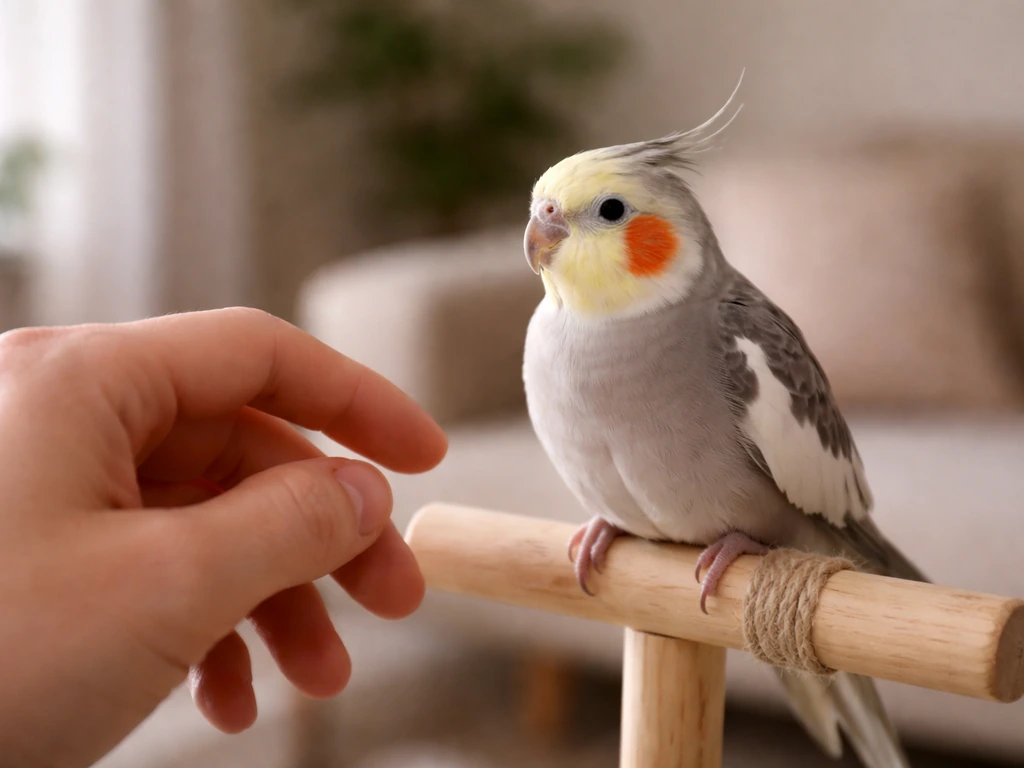
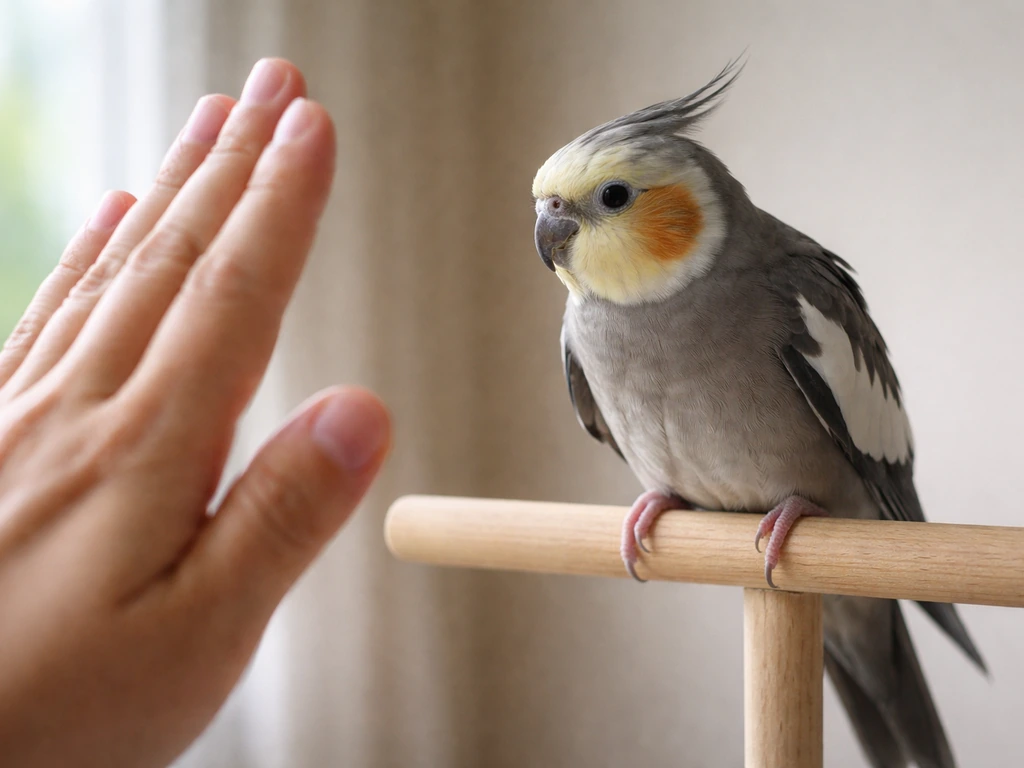
Next, introduce your hand as a neutral object before it becomes a touching object. Place your flat, still hand near the bird's perch without making contact. If the bird leans away or shows stress signals (more on those later), pull back slightly. If it stays neutral or leans in, hold the position for 10 seconds and then slowly withdraw. Repeat this over multiple sessions until your hand gets no reaction at all.
The RSPCA frames this well with a simple handling mantra: there is strength in gentleness. Rushing a bird into accepting touch by using restraint or force doesn't build trust, it builds fear and often makes future handling much harder. Patience here is not optional; it's the actual technique.
Setting up a low-stress environment
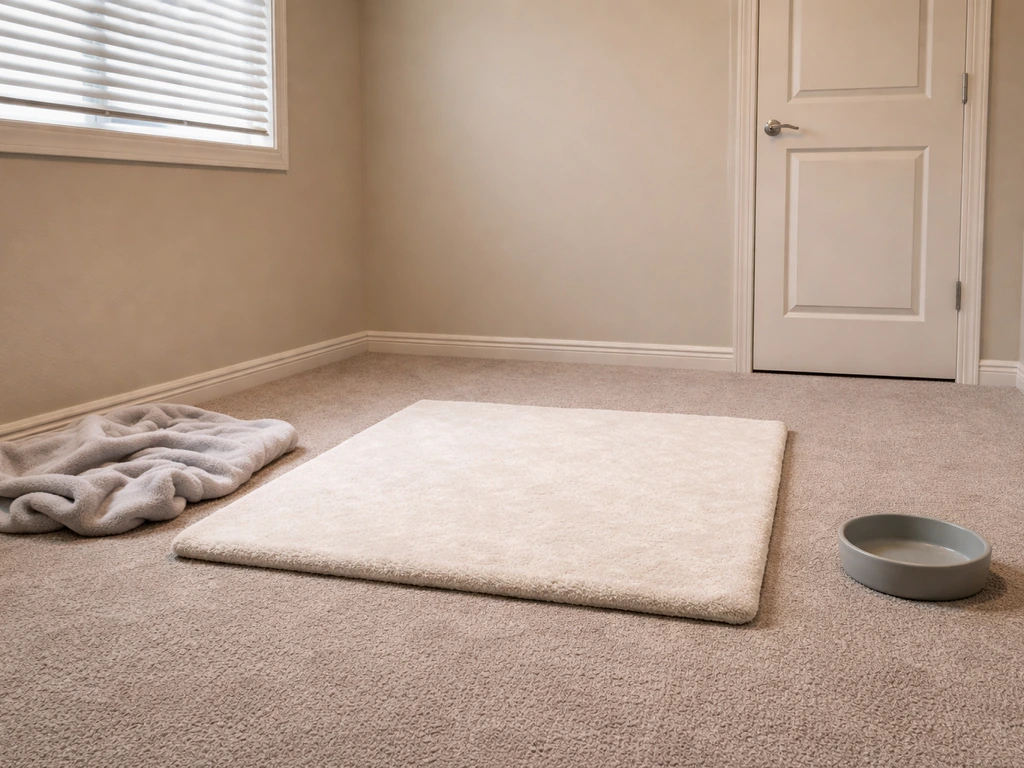
The space matters a lot. Work in a small, quiet room with no ceiling fans running, no other pets present, and minimal visual clutter. Close windows and doors. Dim lighting can help anxious birds relax initially. Sit at or below the bird's eye level rather than looming over it, height means dominance to most birds, and coming in from above triggers an instinctive fear response. Use a steady, unhurried voice and avoid sudden gestures.
Species-specific tips: parrots, cockatiels, budgies, and finches
Different species have very different temperaments, touch preferences, and training timelines. What works brilliantly for a cockatiel can genuinely stress a finch. Here's a practical breakdown.
| Species | Temperament | Preferred first touch | Typical timeline to first petting | Notes |
|---|---|---|---|---|
| Parrot (medium/large) | Social, curious, strong-willed | Head and neck scritches | 2–8 weeks from zero | Highly food-motivated; use target training to build step-up before petting |
| Cockatiel | Gentle, affectionate, can be nippy when scared | Cheek feathers, crest base | 1–4 weeks | Loves head scratches; whistle or hum to build comfort |
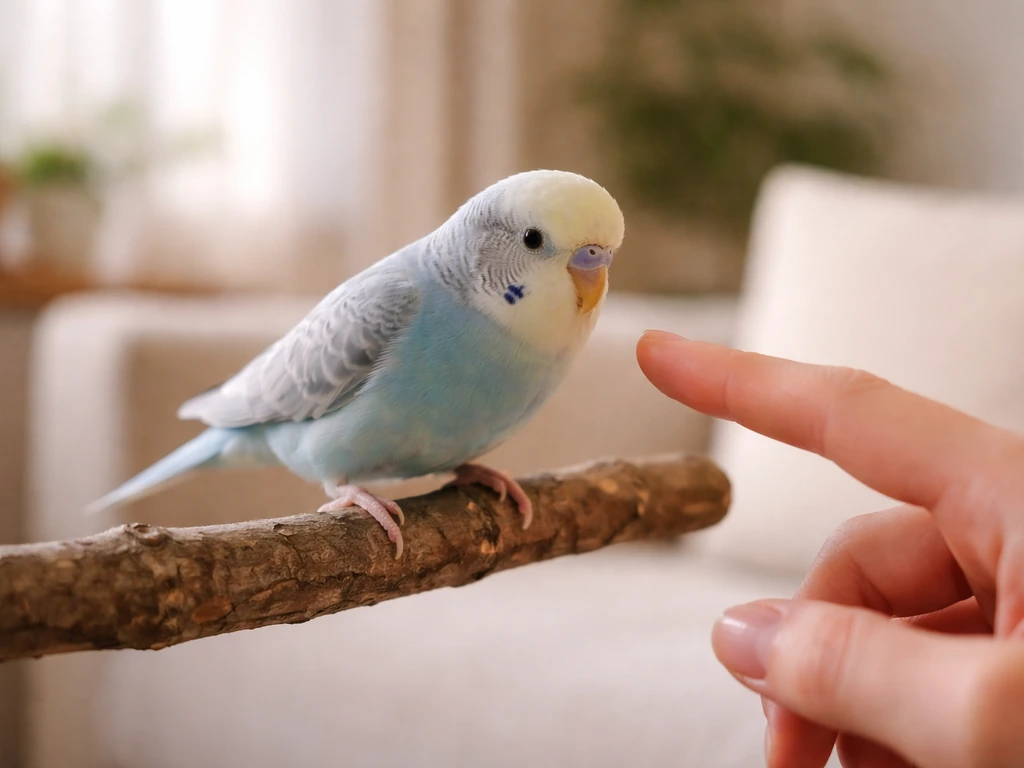
| Budgie | Skittish initially, bonds deeply once tame | Forehead and around beak | 2–6 weeks | Small size means it startles easily; go slower than you think you need to |
| Finch | Flighty, less touch-oriented, prefers flock interaction | Generally not appropriate for petting | Months, and many never fully tame | Better goal is hand-feeding than petting; respect their social nature |
Parrots
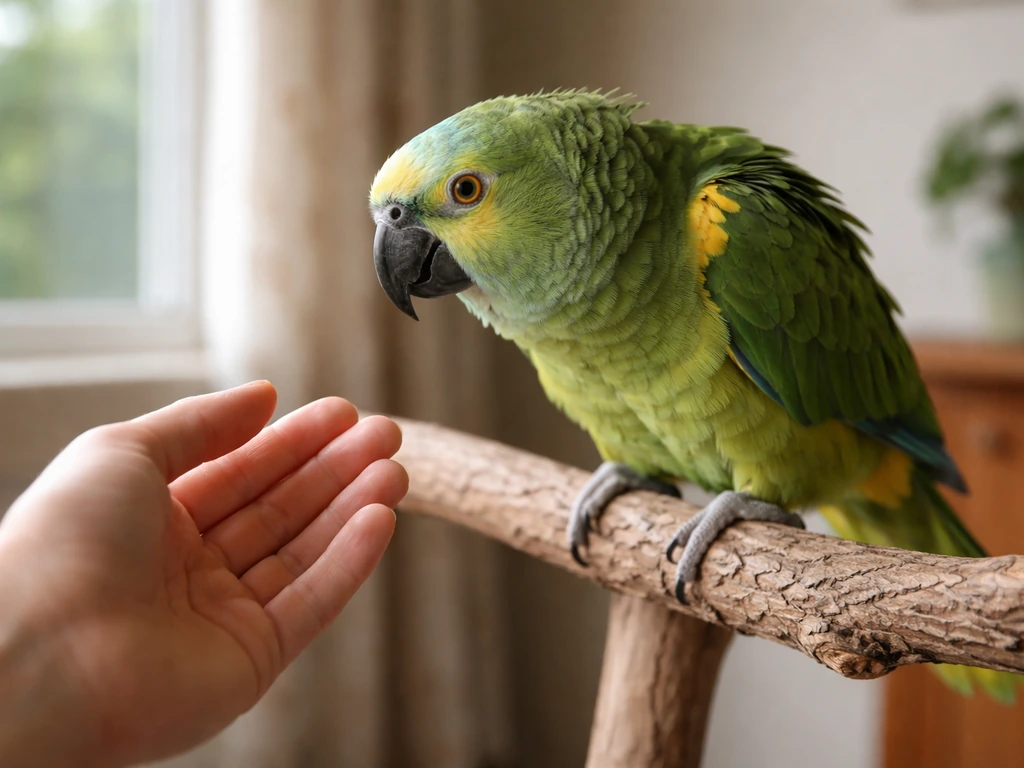
Medium and large parrots (think conures, African greys, amazons, cockatoos) are highly intelligent and genuinely enjoy human interaction once trust is built. Start with target training: hold a small stick or chopstick near the bird and reward it with a treat the instant it touches the target with its beak. This gets the bird used to approaching your hands voluntarily. Once the bird is comfortable stepping to your hand for a treat, you can begin offering head scritches, gently rubbing the feathers around the back of the head and nape of the neck with one finger. Most parrots will lower their head and fluff up slightly when they want more. That's your green light.
Cockatiels
Cockatiels are among the most naturally social pet birds and often become comfortable with petting faster than larger parrots. They tend to respond well to soft whistling or humming, matching their own vocal patterns creates a sense of familiarity. Offer your finger as a perch and let the bird step up at its own pace. Once it's perching on your hand reliably, move one finger slowly toward the cheek feathers or the base of the crest. A relaxed cockatiel will lean into the touch. An annoyed or scared one will lean away, hiss, or bite. If the crest is raised stiffly (not in a relaxed fan), the bird is on alert, back off and try again later.
Budgies
Budgies are small and fast to startle, so the desensitization process needs to move more slowly than it does with larger birds. The hand-presence exercises described earlier are especially important here. Once a budgie is comfortable sitting on your finger, introduce touch by letting it investigate your other hand first, let it step on, peck at your nails, explore. Touch attempts work best on the forehead and just above the beak. Because budgies are so small, use just one fingertip rather than a full hand stroke. For more detail on budgie-specific handling, the dedicated guide on how to pet a budgie bird covers this in much more depth.
Finches
Finches are the exception in this group. They are naturally flighty, flock-oriented birds that do not typically seek out human physical contact the way parrots do. Attempting to pet a finch the same way you would a cockatiel will almost always cause significant stress. The realistic and humane goal with finches is hand-feeding: getting the bird comfortable enough to take millet or seeds directly from your fingers.
That level of trust is genuinely an achievement for a finch, and most owners find it deeply rewarding. If you're curious about engaging with your finch on a deeper level, communication-based approaches are worth exploring. If you want finch-specific guidance on how to chat with a bird, focus on calm, consistent interaction and reward curiosity communication-based approaches are worth exploring.
Approaching wild yard birds humanely
Wild birds are a different situation entirely, and it's worth being direct about what's realistic. The U.S. Fish & Wildlife Service warns that feeding birds and drawing them into close contact on shared surfaces makes it easier for birds to spread bacteria such as salmonella and E. coli feeding birds and shared surfaces make it easier for birds to spread bacteria such as salmonella and E. coli. Most wild birds, sparrows, chickadees, robins, jays, and similar backyard species, will not allow you to pet them under normal circumstances, and that's completely appropriate. They are wild animals with strong survival instincts, and attempting to force contact causes real stress and can injure the bird.
What is realistic is earning enough trust that a wild bird will feed from your hand. Chickadees and tufted titmice are particularly known for this and can be coaxed to hand-feed within a few weeks of patient effort. The method is straightforward: first establish a feeding routine at a fixed spot so the birds learn to expect food there. Then, over several sessions, move the food source progressively closer to where you sit, until eventually you hold the seed in your outstretched, still hand and wait. Remain completely motionless. This can take 15 to 30 minutes of stillness in a single session.
Even if a wild bird does land on your hand to feed, resist any impulse to close your hand around it or stroke it. Let it land, take food, and leave freely. That's the entire interaction. Anything beyond that risks injuring the bird, causing trauma, or habituating it to humans in ways that can actually be dangerous to the bird's survival.
Legal and ethical considerations for wild birds
In the United States, most wild birds are protected under the Migratory Bird Treaty Act, which makes it illegal to capture, harm, or possess them without a federal permit. Similar laws exist in the UK, Australia, Canada, and most other countries. Encouraging a wild bird to perch on your hand for food is generally considered observation, not possession. But capturing, restraining, or keeping a wild bird, even temporarily, is a different matter legally. If you find an injured wild bird, contact a licensed wildlife rehabilitator rather than handling it yourself. The question of whether wild birds can ever become true companions is a separate and nuanced topic worth exploring carefully.
Step-by-step: from zero contact to gentle petting
Here is the full progression laid out as a concrete sequence. Work through each stage only when the bird is showing consistently relaxed body language at the current stage. Don't rush to the next step, the timeline is a guide, not a deadline.
- Stage 1 — Presence only (Days 1–5): Sit near the bird for 10 to 15 minutes without interacting. Speak softly. No reaching, no eye contact pressure. Goal: bird ignores you or shows mild curiosity.
- Stage 2 — Hand introduction (Days 5–10): Place your open, still hand 6 to 12 inches from the bird's perch. Don't move it. Hold for 10 seconds, withdraw slowly. Offer a treat nearby but not from your hand yet. Goal: bird shows no stress response to your hand.
- Stage 3 — Hand as perch (Days 10–20): Offer your index finger just below the bird's feet with very gentle upward pressure, saying 'step up' in a calm voice. Reward immediately with a treat and verbal praise when the bird steps on. Repeat 3 to 5 times per session. Goal: bird steps up reliably within 2 seconds of the cue.
- Stage 4 — Desensitization to touch (Days 15–25): While the bird perches on your hand, slowly bring your other hand's single finger into view nearby. Don't touch yet — just let it be visible. Reward the bird for staying calm. Goal: bird pays no attention to the approaching finger.
- Stage 5 — First contact (Days 20–35): Make first contact at the back of the head or nape of the neck using one fingertip, with a very brief, slow stroke. Stop immediately. Offer a treat. Watch body language carefully. Goal: bird shows neutral or positive response (head lowering, feather fluffing, leaning in).
- Stage 6 — Building duration (Days 30+): Gradually extend petting sessions by a few seconds at a time, always ending on a positive note before the bird shows any stress signals. Introduce new touch areas (cheek feathers, chest) one at a time only after the previous area is fully accepted. Goal: bird actively seeks out petting and shows relaxed, engaged body language throughout.
Using rewards effectively
Rewards don't have to be food alone. Most birds respond well to a combination of small food treats (a single millet seed, a tiny piece of fruit, or a seed appropriate to the species), verbal praise in a warm, animated tone, and the opportunity to return to a favorite perch or activity. The key is timing, the reward needs to happen within 2 seconds of the behavior you're reinforcing, or the bird won't connect the two. If you're using food, keep pieces tiny so the bird stays motivated across a full session rather than getting full and losing interest.
Safety rules and what to do when things go wrong
Things will go wrong. A bird that was doing great yesterday might refuse to step up today. A bird that seemed tame might bite without warning. None of this means you've failed, it means you need to read what the bird is telling you.
Stress signals to watch for
- Feathers tightly slicked against the body (fear/alarm posture)
- Rapid, shallow breathing or open-mouth panting
- Wide, pinned eyes with rapid pupil dilation and contraction (in parrots)
- Tail fanning or wing spreading as a warning
- Repeated attempts to move away from your hand
- Biting or nipping that escalates rather than being a single exploratory peck
- Vocalizations that are sharp, repetitive, or alarm-sounding rather than normal chatter
- Crouching low on the perch with head pulled in
When you see any of these, stop immediately. Don't pull your hand away fast, that can trigger a chase/bite response. Instead, lower your hand slowly and give the bird space. End the session with something neutral or positive if possible, so the last memory of the interaction isn't negative.
Troubleshooting common setbacks
| Problem | Likely cause | What to do |
|---|---|---|
| Biting when touched | Touch happened too fast or in a sensitive area | Go back one stage in the progression; avoid the sensitive area for now |
| Refuses to step up | Not yet comfortable with hand as a safe object | More hand-presence sessions; try luring onto hand with a treat placed on your palm |
| Flighty / flies away constantly | Room is too large or has too many escape routes; bird is under-stimulated or over-stressed | Use a smaller room; check for environmental stressors (noise, other pets, drafts) |
| Was tame, now aggressive | Hormonal changes (breeding season), health issue, or a single scary experience | Rule out illness first; return to basics with more patience; avoid forcing interaction |
| Bird accepts food but won't allow touch | Trust is partial, not complete | This is normal progress; continue at Stage 3-4 longer before attempting Stage 5 |
| Wild bird won't come closer | Not enough time or routine established | Be more consistent with feeding schedule; reduce your movement during sessions |
Your personal safety
Bird bites range from mildly annoying (budgie) to genuinely painful (large parrot). Never put your face near a bird you haven't fully tamed. Wash your hands before and after every interaction, this protects both you and the bird. If you're working with a bird that is known to bite hard, consider wearing a thin glove during the very early hand-introduction stages, but move away from it as soon as the bird's comfort increases, because gloves dampen the natural feedback that helps you read the bird's response.
Also keep grooming basics in mind: overgrown nails on a pet bird can scratch during handling, which creates negative associations on both ends. Keeping nails appropriately trimmed is part of maintaining a bird that's comfortable and safe to handle. And remember that the healthier and better-groomed your bird is, the more at ease it tends to be during interaction, there's a direct connection between a bird's physical comfort and its willingness to engage with you.
When to stop and walk away
Stop the session if the bird shows sustained stress signals for more than 30 seconds, if it bites twice in a row, if it is panting or showing signs of overheating, or if it has been active for more than 20 minutes and is showing tired or irritable behavior. Never end on a moment of high tension if you can help it, ask for one tiny easy behavior the bird knows well (like a simple step-up it's already mastered), reward it warmly, and close the session on that small win. Sessions should be short and positive, ideally 10 to 15 minutes, rather than long and exhausting.
The through-line in all of this is respect. A bird that chooses to be near you, chooses to step on your hand, and chooses to accept a gentle scratch on the back of its head is giving you something real. That voluntary participation is what makes the whole thing meaningful, and it only happens when you give the bird the time, safety, and consistency to get there on its own terms.
FAQ
How do I tell the difference between curiosity and stress when I’m trying to pet a bird without a cage?
If a bird freezes, stiffens, flattens its feathers, widens its eyes, tail-bobs aggressively, or makes repeated loud alarm calls, pause the training immediately. Don’t try to “push through” to petting. Lower your hand slowly, stop touching for the day, and return to the earlier step (hand presence at a distance) the next session when the bird looks neutral again.
When should I start actual petting (not just step-up or hand presence)?
For most pet birds, the safest early petting is very brief contact to the head or neck only after step-up and relaxed body language are consistent for several sessions. If the bird suddenly pulls away during contact, keep your hand still for a moment, then withdraw slowly. Ending early is better than continuing and teaching the bird that “petting” predicts unwanted pressure.
What if my bird will step up but refuses petting on its head or neck?
If the bird is not yet stepping onto your hand, don’t treat “petting” as the next milestone. Instead, focus on voluntary behaviors you can reinforce, like touching a target stick, leaning toward your offered finger, or stepping onto a low perch. Once the bird regularly chooses those actions, you can gradually shorten the distance to contact.
How should I time rewards so the bird actually learns what I want?
Use a calm, neutral approach to timing: deliver the reward within about 2 seconds of the behavior you want, and then quickly return to a “no pressure” moment (hand still or hand away). If the bird seems to lose interest, use smaller treats and shorten the session rather than increasing the frequency of rewards.
Is it ever okay to nudge a wild bird onto my hand?
For wild birds, you generally should not reach toward them to touch or “guide” them onto your hand. Hand-feeding can be appropriate, but only if the bird is freely approaching and leaving. If the bird hesitates, simply wait longer at the fixed feeding spot or move the food one step closer more slowly over multiple days.
My bird bites sometimes, how do I respond without making it worse?
Stop and reassess if the bird bites more than once in a row, shows escalating aggression, or seems to be actively avoiding you. A useful correction is to return to the last step the bird could do comfortably (for example, step-up from a perch) and rebuild from there, at a slower pace and with fewer attempts per session.
Should I wear gloves when I’m trying to pet a bird without cage?
Yes, for early hand introduction you can use a thin glove to reduce injury risk, but it should be temporary. The key downside is reduced sensation, which makes it harder to read micro-signals and adjust quickly. Move away from the glove as soon as the bird shows consistent relaxed choices near your hand.
What’s the best time to pet a pet bird so it stays calm?
Many birds do best when touch is offered only during their preferred window, such as after eating or when they are already relaxed, not during high arousal (after loud activity, after a scary event, or right after you just entered the room). If you notice the bird becomes more tense over repeated petting attempts, switch back to observation and rewards for voluntary proximity.
How do I set up the room if I’m trying to pet a free-roaming pet bird safely?
Even if you’re not using a cage, you still want clear boundaries that prevent sudden escapes or unwanted chasing. Work in a room without other pets, keep doors and curtains manageable, and remove hazards like ceiling fans. Also avoid looming by sitting at the bird’s level rather than above it.
What pre- and post-session habits make a big difference for safety and trust?
Aftercare matters. Wash your hands before and after, and avoid face-to-bird contact until the bird is fully comfortable with handling. Also check nail condition and grooming before sessions, since rough nails or fluffed, messy feathers can increase discomfort and make the bird more likely to reject contact.
Next Articles
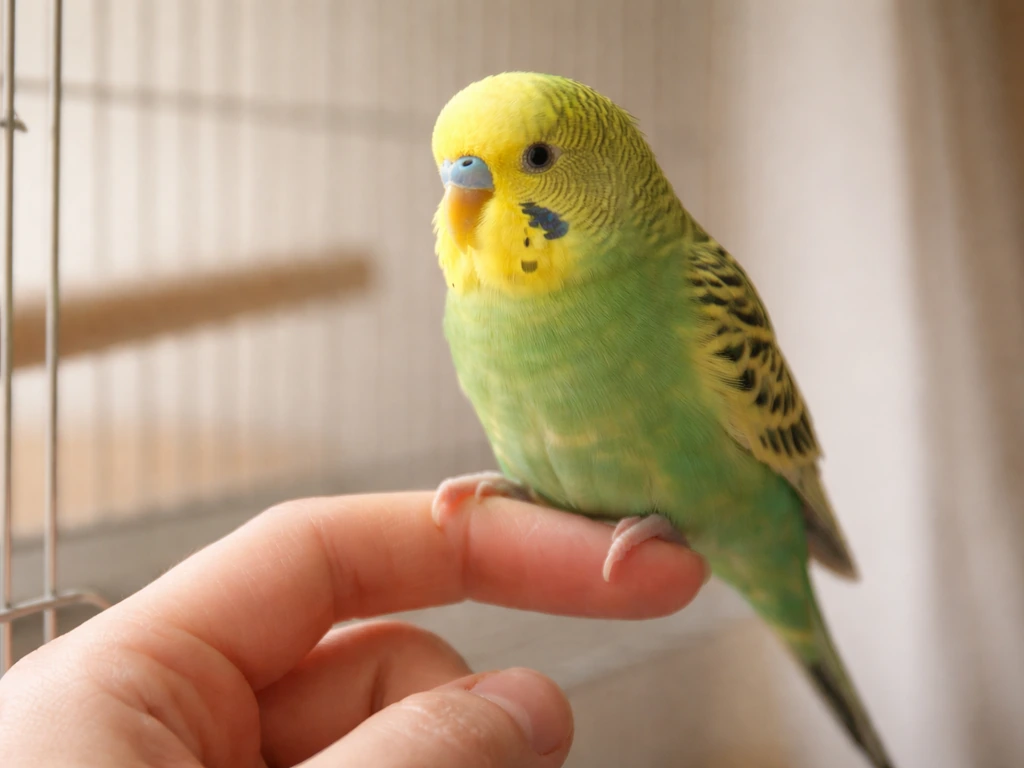
How to Pet a Budgie Bird: Safe Beginner Steps + Fixes
Step-by-step, safety-first budgie petting guide with trust stages, petting spots, and fixes for biting and fear.
How to Groom a Bird Safely Step by Step for Pets and Wild Birds
Step by step how to groom pet and wild birds safely with humane handling, cleaning, trust building, and vet stop signs.
How to Catch a Bird Without Killing It: Humane Steps
Humane, trap-free steps to catch a wild backyard bird safely, minimize stress, contain it calmly, then release or reloca