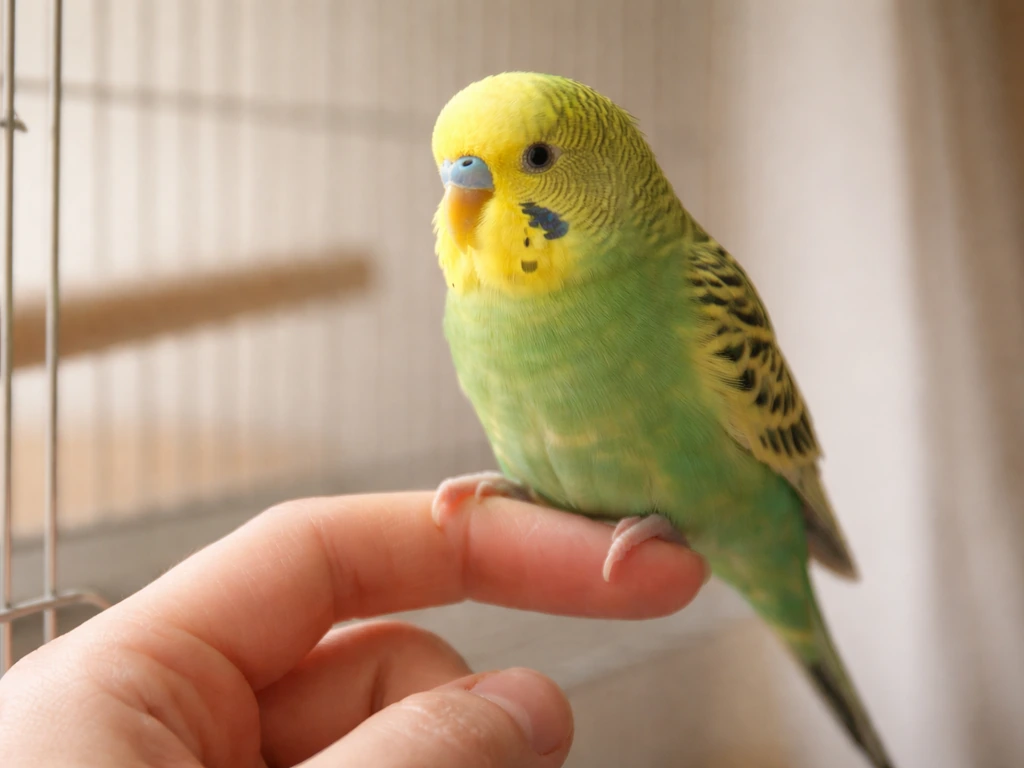
You can pet a budgie, but it takes a little patience upfront. Most budgies are not hand-tame when you first bring them home, and reaching straight in to stroke one will almost always backfire. The good news is that budgies are naturally curious, social birds, and with a consistent routine you can go from a bird that flees to the far corner of the cage to one that actively climbs onto your hand and leans into a head scratch, often within a few weeks.
How to Pet a Budgie Bird: Safe Beginner Steps + Fixes
Clara Hayes
19 Apr 2026
Setting up for your budgie's comfort and safety first
Before you even think about touching your bird, the environment has to feel safe to them. A stressed budgie cannot learn, bond, or accept contact, so the setup you create directly determines how fast taming goes.
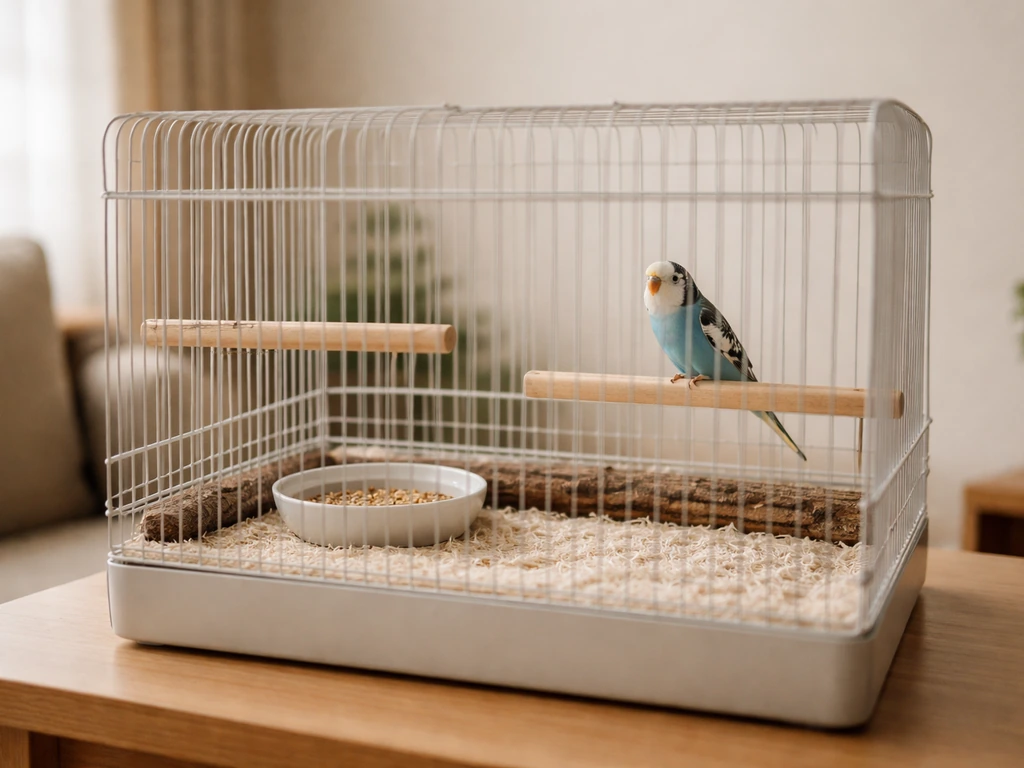
Place the cage at eye level or slightly below, in a room where the family spends regular time but away from loud TVs, speakers, kitchen fumes, and drafts. Budgies are prey animals, so being cornered in a high-traffic spot or near sudden noise sources keeps their stress response permanently switched on. A living room wall where people come and go calmly is usually ideal.
Lighting matters more than most people realize. Budgies see into the UV spectrum, and full-spectrum avian lighting (placed so the bird can also move away from it if they choose) supports natural behavior and has been shown to reduce fear of humans compared with standard incandescent or cool-white fluorescent bulbs. Aim for 10 to 12 hours of light per day with a consistent on/off schedule. A predictable light routine helps regulate the bird's internal clock and reduces baseline anxiety.
Inside the cage, provide at least two perches of different diameters and textures at different heights, plus a few toys and a foraging opportunity like a millet holder clipped to the bars. A budgie that is mentally occupied is far less reactive when a hand appears. Make sure the cage door opens wide enough for your hand to enter without you needing to twist your wrist awkwardly, because hesitant or clumsy entries teach the bird that hands equal sudden events.
- Cage at eye level, away from kitchen, open windows, and speakers
- Full-spectrum avian lighting on a 10–12 hour timer, with a shaded retreat area inside or near the cage
- Two or more perches at varying heights and widths (natural wood branches work well)
- A few foraging toys and enrichment items so the bird is never bored
- A wide-opening door so hand entry is smooth and calm
- Quiet, predictable daily schedule (same feeding time, same cover-at-night time)
Keep the area around the cage clear of mirrors, other pets, and anything reflective at first. When you let the bird out for free-flight sessions later, do a full room safety check: close windows and ceiling fan, cover glass surfaces, remove toxic houseplants, and make sure no other animals are present. Handling a bird without a cage around is a different skill set covered separately, but the safety fundamentals are the same. You can also use the same calm, trust-building approach for how to pet a bird without cage, just with stricter room safety.
How to approach and gain trust
Trust-building starts before your hand ever enters the cage. For the first few days, simply be present near the cage at a comfortable distance. Sit or stand close enough that the bird can see you clearly, then talk in a calm, even voice. Read aloud, narrate what you are doing, or just chat softly. Your voice is the first thing the budgie will associate with you, and a consistent, pleasant tone is genuinely the fastest tool you have.
Watch your budgie's body language constantly. A relaxed bird will fluff slightly (not puffed up sick-style, but gently), grind its beak, chirp or chatter, and face toward you with curiosity. A stressed bird slicks its feathers flat against the body, stands tall and rigid with its head pulled back, and scans for an escape route. An openly threatened bird may fan its tail, hold its wings out from the body, and open its beak. If you see any of those fear signals, you have moved too fast. Back up a step, literally.
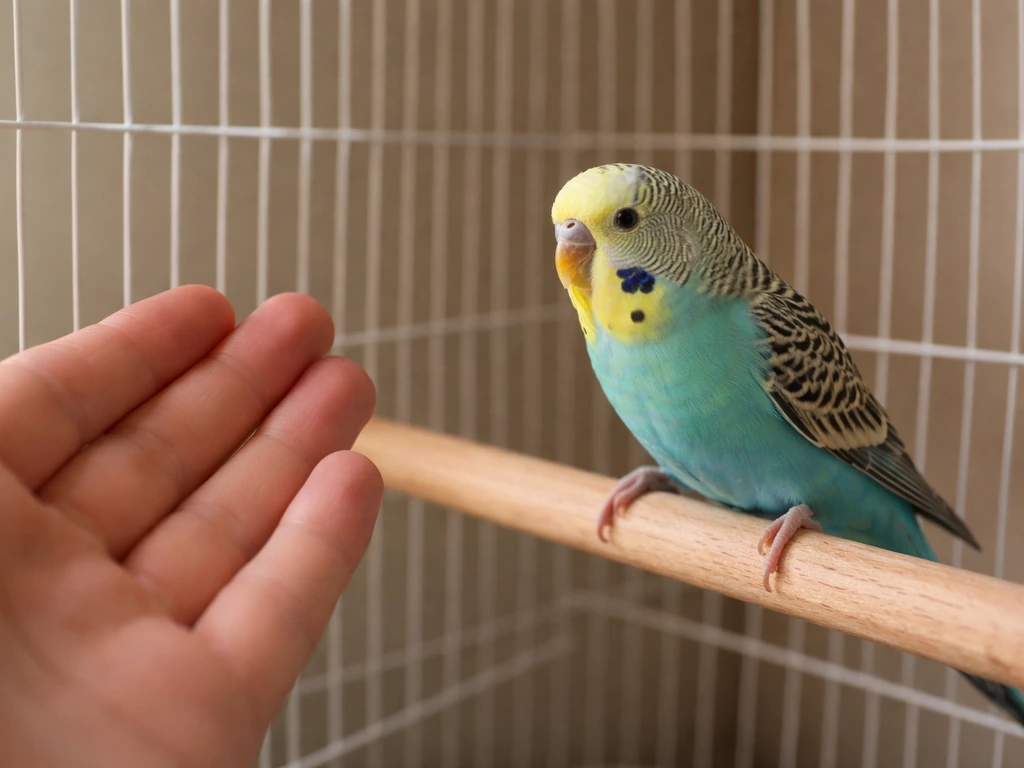
Once the bird is eating, singing, or moving around normally while you are nearby, you can begin introducing your hand to the outside of the cage. Place it flat and still against the bars for short sessions of two to three minutes, then remove it calmly. No sudden withdrawal, no reaching. Just presence. Repeat this several times a day until the bird investigates your hand through the bars without retreating.
Avoid hectic movements and sharp noises entirely at this stage. Move slowly and deliberately every time. When approaching the cage, announce yourself with a word or your usual greeting phrase so the bird is never startled. Consistency here builds a prediction in the bird's brain: this human's approach equals calm, safe things, not threats.
Hand-feeding, step-up training, and bonding routines
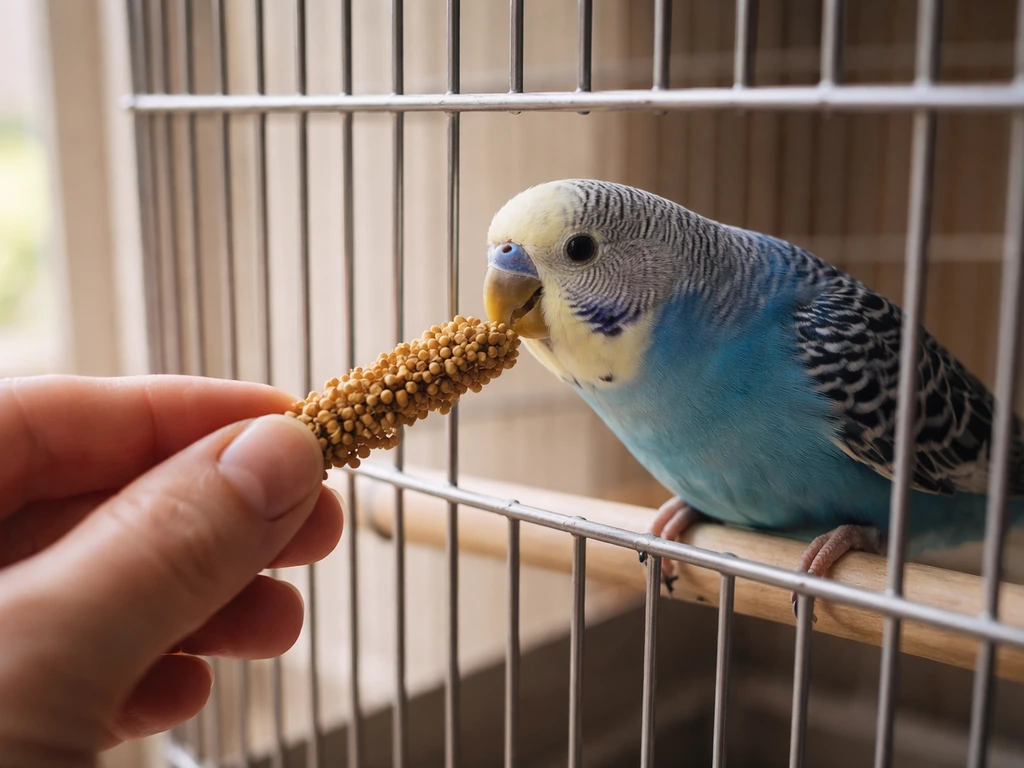
The single most effective way to make your hand mean something good is to deliver treats from it. Spray millet is the gold standard for budgies, it is highly palatable, easy to hold, and you can offer it through the cage bars or from a pinched piece inside the cage. Keep the rest of the millet ration intentionally modest on training days so it stays motivating, since budgies allowed unlimited millet lose interest in it quickly and can become overweight.
Hold a small piece of millet spray through the cage bars and wait. Do not push it toward the bird. Let the budgie decide when to come. The first time the bird steps forward and nibbles from your fingers, stay absolutely still. No talking, no movement, no excited reaction. Just let it eat calmly. After a few seconds, slowly withdraw the treat and end the session on that positive note. Repeat this multiple times per day, every day.
Once the bird reliably comes to your hand through the bars, move inside the cage with the treat. Open the door, bring your hand in slowly at a lower height than the perch the bird is sitting on (coming from below is less threatening than from above), and offer the millet. At this stage, many budgies will lean toward your hand but not quite step on. That is fine. Keep rewarding approach before you ask for anything more.
The step-up: how to teach it
Step-up training is the foundation of safe, relaxed handling. Hold your index finger horizontally just below the bird's chest at a point where it would naturally need to step up to reach the treat. Say 'step up' in a calm, consistent tone. The moment one toe touches your finger, even briefly, immediately reward with the millet. You are marking that tiny toe-touch as the behavior you want. Over many short sessions, the bird will progress from one toe to a full foot to both feet, and eventually will step up reliably on cue.
If the bird will not step onto a finger right away, use a handheld wooden perch or dowel first. Many budgies accept a perch before they accept a bare finger, and you can transition from perch to finger once the step-up behavior is established. Never push your finger into the bird's chest to force the step, and never close your hand around the bird. Forced contact erodes trust fast and can cause bites that set the process back by weeks.
Keep each training session short: two to five minutes maximum, two to four times a day. Short and frequent beats long and occasional every time. End every session while the bird is still engaged and before it shows any sign of stress. Ending on a success means the bird walks away with a positive association, making the next session easier.
Progressing to actual petting
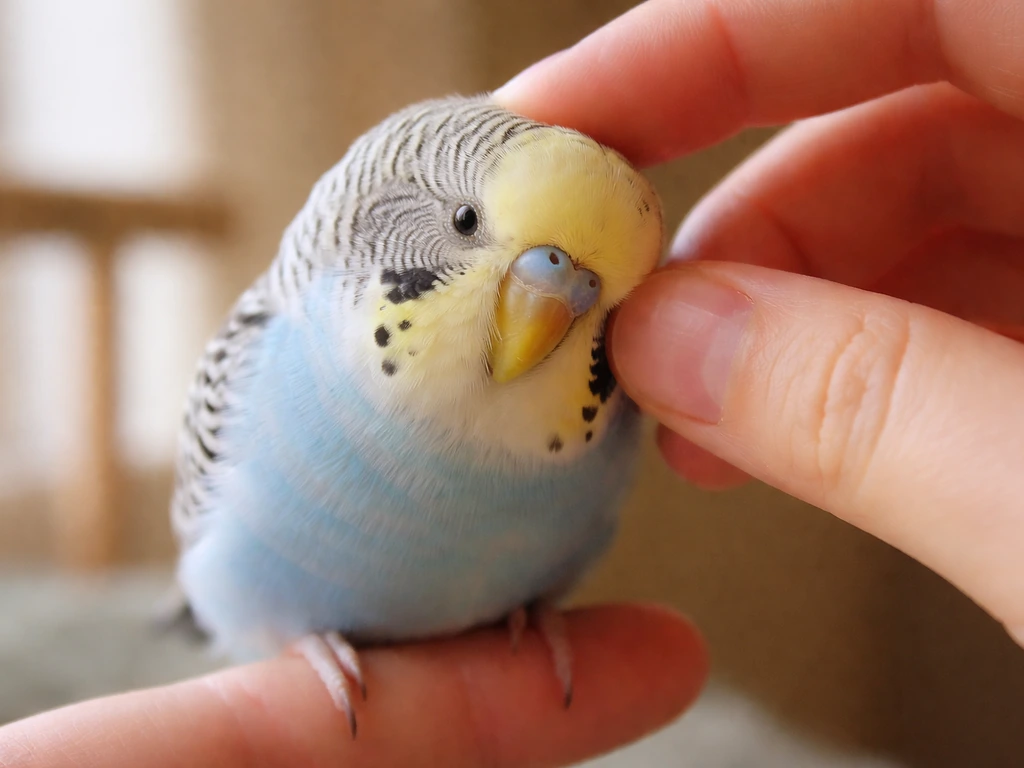
Once the budgie steps up consistently and sits calmly on your hand while you move slowly, you can try gentle contact. Start with a single finger touching the top of the head or the back of the neck, not the back or wings, which many budgies find startling before they are fully tame. Use the back of a fingernail or the very tip of your index finger and give one slow stroke. Watch the body language response. If the bird leans in or half-closes its eyes, you are on track. If it ducks, tenses, or tries to move away, pull back and go back to just holding without touching for a few more sessions.
The head, cheeks, and back of the neck are generally the safest areas to start petting. Budgies that trust you completely will lower their heads and fluff slightly as an invitation. Wings, belly, and tail are more sensitive and should wait until the bird is fully comfortable with head touches. Grooming-style scratching around the nape and behind the crest feathers is what most tame budgies enjoy most, mirroring the preening their flock mates would do. Grooming-style scratching around the nape and behind the crest feathers is the kind of gentle contact to focus on as you build trust, so you can learn how to groom a bird safely.
A realistic daily handling plan with timelines
There is no single timeline that applies to every budgie. A young bird (under 12 weeks) that was hand-raised may step up in a day or two. An adult bird that has had no human handling might take two to three months to reach the same point. What matters is that you track progress in terms of behavior, not calendar days.
| Stage | What it looks like | Typical timeframe | Your daily action |
|---|---|---|---|
| 1. Settling in | Bird eats, drinks, moves around cage normally while you are nearby | Days 1–7 | Sit near cage, talk softly, no hand contact yet |
| 2. Hand near cage | Bird does not retreat when your hand rests against the bars | Days 5–14 | Hand on outside of cage bars for 2–3 min, 3x daily |
| 3. Hand-feeding through bars | Bird approaches and takes millet from your fingers | Days 7–21 | Offer millet through bars, stay still while bird eats |
| 4. Hand inside cage | Bird takes treats from hand inside the cage | Days 14–30 | Slow hand entry, treat offered at perch level |
| 5. Step-up on perch or finger | Bird reliably steps onto hand on cue | Weeks 2–6 | Step-up sessions 2–4x daily, 2–5 min each |
| 6. Sitting calmly on hand | Bird stays on hand without stepping off immediately | Weeks 4–8 | Hold sessions with movement, talking, treats |
| 7. Accepting petting | Bird lowers head, tolerates or invites touch to head/neck | Weeks 6–12+ | One-stroke touch, reward calmly, read body language |
During out-of-cage time, keep sessions to 15 to 30 minutes initially and build from there. Budgies need daily interaction to maintain tameness, so even five minutes of active engagement every day keeps the bond strong. If life gets busy and sessions become infrequent for a week or two, the bird may become slightly more wary, but it typically comes back much faster the second time because the positive associations are already embedded.
Troubleshooting fear, bites, and refusal to step up
If progress has stalled or your budgie has started biting, the first thing to do is slow down, not push harder. What owners often read as stubbornness or aggression is almost always fear or discomfort. A bird that is biting, lunging, backing away, or refusing to step up is communicating something. Your job is to figure out what.
Why budgies bite and back away
Biting is primarily a fear response, not a dominance behavior. If your budgie has recently started biting after previously being comfortable, the first step is a veterinary check to rule out pain or illness before you assume it is a training issue. The Association of Avian Veterinarians, via the parrots.org owner-behaviour guidelines PDF, notes that biting does not have to be part of having a parrot and advises seeking veterinary attention when appropriate, including when behavior could be health-related seeking veterinary check to rule out pain or illness. Physical discomfort causes behavioral changes in birds just as it does in any animal, and trying to train through pain-induced biting will not work and can make things worse.
If the bird has a clean bill of health, look at what changed. Common triggers for a sudden step back include: a new person handling the bird, a change in the room layout or schedule, a frightening event (a loud noise, a near-miss with another pet, a dropped object), or simply being moved through training steps too quickly. Identify the likely trigger, remove or reduce it, and go back to the last stage where the bird was consistently relaxed.
Common blockers and how to fix them
- Bird backs to the far corner when your hand enters: Go back to hand-at-bars-only stage. Your hand inside is still too much, too soon.
- Bird takes treat but immediately flies off: That is still progress. Keep rewarding the approach and contact, and do not ask for more until sitting calmly is consistent.
- Bird bites when you try to step it up: Stop using your finger for now, switch to a perch. Rebuild finger tolerance with treat-delivery before trying step-up again.
- Bird was tame but seems scared again: Check for environmental changes, illness, or a negative experience. Rule out medical causes. Back up two stages and rebuild.
- Bird refuses to step up no matter what: Make sure the treat is genuinely motivating (try withholding it for an hour before sessions). Check that your approach angle is below the bird's chest, not above it.
- Bird bites hard and draws blood regularly: Stop trying to force any contact, consult an avian vet and a certified avian behavior consultant. This level of fear/reactivity needs a tailored plan.
Never use force to make a budgie step up. Pressing your finger into the bird's chest to physically lever it off a perch, toweling a bird to enforce contact, or holding the bird against its will to 'get it used to it' are all punishment-based techniques that destroy trust and reliably make fear and biting worse. Desensitization through positive reinforcement is not the slow option, it is the faster option because it does not create new fear associations to undo.
Stress signs to watch for during any session include rapid breathing (the abdomen rises and falls quickly), a panicked flight response where the bird crashes into cage bars, prolonged slicked-back feathers even after you have withdrawn, and open-mouth breathing. If you see any of these, end the session immediately and give the bird time to recover completely before the next one.
Humane care, welfare basics, and when to get help
Handling your budgie the right way also means knowing the broader welfare picture. Budgies are social flock birds and do best with daily human interaction or, ideally, a same-species companion. A solitary budgie that is only handled once a week is likely under-stimulated and stressed, which makes taming harder and affects health over time.
If you ever need to restrain your budgie for an emergency (a vet visit, a first-aid situation), practice towel introduction well before you need it in a crisis. Let the bird investigate a small, soft towel as an enrichment item, then gradually introduce the idea of being gently wrapped, always watching for overheating. Obese birds and those with any respiratory issue are particularly vulnerable to overheating during towel restraint, so release immediately if you see rapid or labored breathing and try again when the bird is calm. This is something your avian vet can walk you through in a low-stakes consultation.
On the ethical side, a few firm guidelines: budgies in most regions are legal to keep as pets because they are captive-bred, but always buy from a reputable breeder or adopt from a rescue rather than from sources that may traffic wild-caught birds. Wild-caught birds are a different situation entirely, with different legal and welfare considerations. If you are specifically trying to make a wild bird your pet, the approach needs extra caution because wild birds are more likely to be fearful and can carry health risks wild-caught birds.
Signs that you need professional help
Some behavioral issues go beyond what self-guided training can resolve, and recognizing that early saves a lot of frustration. See an avian vet promptly if your budgie starts feather-plucking, has persistent open-mouth breathing, stops eating, or bites suddenly after being previously gentle, since all of these can indicate underlying medical causes. PetMD notes that sudden biting can be a sign of stress or fear, and advises a veterinary exam to rule out medical pain or discomfort bites suddenly after being previously gentle. Do not assume behavioral causes until physical ones are ruled out.
If the medical check is clear but biting or extreme fear does not improve with consistent positive-reinforcement work over four to six weeks, contact a certified avian behavior consultant. Organizations like Avian Behavior International provide guidelines for finding qualified, ethical consultants who use science-based methods. A good consultant will assess the bird's history, environment, and handling routine and give you a tailored plan rather than generic advice. It is worth the investment, especially since prolonged fear and stress in birds has real physiological effects, not just behavioral ones.
If you are also interested in handling your budgie outside the cage or understanding how grooming fits into your care routine (nail trims, beak checks, feather condition), those are natural next steps once your bird is comfortable with basic step-up and hand contact. Getting the trust foundation right first makes every other aspect of care easier, from routine vet visits to simply enjoying your bird perched on your shoulder while you go about your day.
FAQ
Can I pet my budgie if it never steps up, but it sits near the cage door?
Yes, but only at the “outside the cage” stage. Keep your hand flat and still near the bars, reward curiosity with a small millet spray offer, and let the bird choose to approach. If it tries to move away, do not try head touches. Step-up readiness usually has to come first for safe, relaxed contact.
What should I do if my budgie seems calm, but suddenly bites when I reach in for a treat?
Treat it as fear or pain until proven otherwise. Back up, end the session, and check for recent changes (new person in the room, rearranged cage items, loud noises, illness signs, or a new cage toy hurting a toe). If biting is new or worsening, schedule an avian vet exam before continuing training.
Is it ever okay to pet a budgie on the first day it comes home?
Generally no. Use the first days for routine and voice association, you can talk calmly and reward calm behavior through the bars. Petting too early is one of the most common mistakes, because many budgies interpret sudden contact as a chase or attack.
How long should I hold my hand against the cage bars during training?
Start with very short, repeatable sessions (about 2 to 3 minutes), and watch body language closely. If the bird shows sustained fear signs, withdraw and try again later. If the bird is relaxed and investigating your hand, you can end while it is still engaged to keep the association positive.
Should I use my bare finger or a perch for step-up training?
Begin with the approach that the bird will accept without fear. A handheld wooden perch or dowel can be a helpful stepping stone for budgies that won’t touch a finger. Once the bird steps up onto the perch reliably, transition by placing your finger where it naturally needs to step, without forcing contact or pinching the bird.
How do I know my budgie is enjoying head scratches versus tolerating them?
Enjoyment usually looks like leaning toward the hand, gentle lowering of the head, slight fluffing (not puffing up sick-style), and relaxed breathing. Tolerating or disliking it looks like tensing, ducking away, pinning the eyes, tail fanning, or keeping feathers slicked back after you withdraw. When in doubt, return to treat-only sessions.
Where should I start petting, and where should I avoid until the bird is fully tame?
Start with the head, cheeks, and the back or top of the neck area (especially the grooming spot near the nape). Avoid belly, wings, tail, and sudden touches on sensitive areas until the bird steps up confidently, sits calmly, and actively leans into head contact.
How many training sessions per day is “too much”?
Short, frequent sessions are better than long ones. A practical range is 2 to 4 sessions daily for step-up and hand practice, keeping each session brief. If the bird’s stress signs increase, reduce frequency and go back a stage to what it can do comfortably.
My budgie is eating treats from my fingers through the bars, but it won’t step onto my hand. Why?
That pattern is common. Eating from the bars can feel safe while stepping onto a hand is higher-risk. Keep rewarding approach and toe-touch attempts, and only move to inside-the-cage hand offers when it is reliably coming to your fingers. Use the same calm routine and treat every tiny step forward.
Is millet spray safe, and how do I avoid overfeeding during training?
Millet is safe for budgies for training because it is easy and highly motivating, but it should be rationed. Keep treats intentionally modest on training days so it stays reinforcing. If your budgie has a history of weight gain or you are unsure, ask an avian vet about appropriate daily treat amounts.
What if my budgie’s fluffed feathers mean it’s happy, but it still tries to bite?
Fluff can be relaxing, but it can also be a stress response depending on the rest of the posture. Combine signals: look for relaxed eyes, steady breathing, and leaning into contact. If it is fluffed and also slicking feathers back, tensing, or showing open-mouth fear breathing, stop and go back to treat-only outside the cage.
When should I contact an avian vet or behavior consultant?
Contact an avian vet promptly if the bird bites suddenly after being gentle, stops eating, shows persistent open-mouth breathing, or you suspect pain (for example, a new wound or difficulty perching). If medical causes are ruled out and fear or biting does not improve with consistent positive reinforcement over about 4 to 6 weeks, consult a certified avian behavior professional for a tailored plan.
Next Articles
How to Groom a Bird Safely Step by Step for Pets and Wild Birds
Step by step how to groom pet and wild birds safely with humane handling, cleaning, trust building, and vet stop signs.
How to Catch a Bird Without Killing It: Humane Steps
Humane, trap-free steps to catch a wild backyard bird safely, minimize stress, contain it calmly, then release or reloca
How to Catch a Bird With a Bottle Safely and Humanely
Humane, safety-first steps to catch a bird with a bottle or cover, plus safer alternatives and what to do after capture.