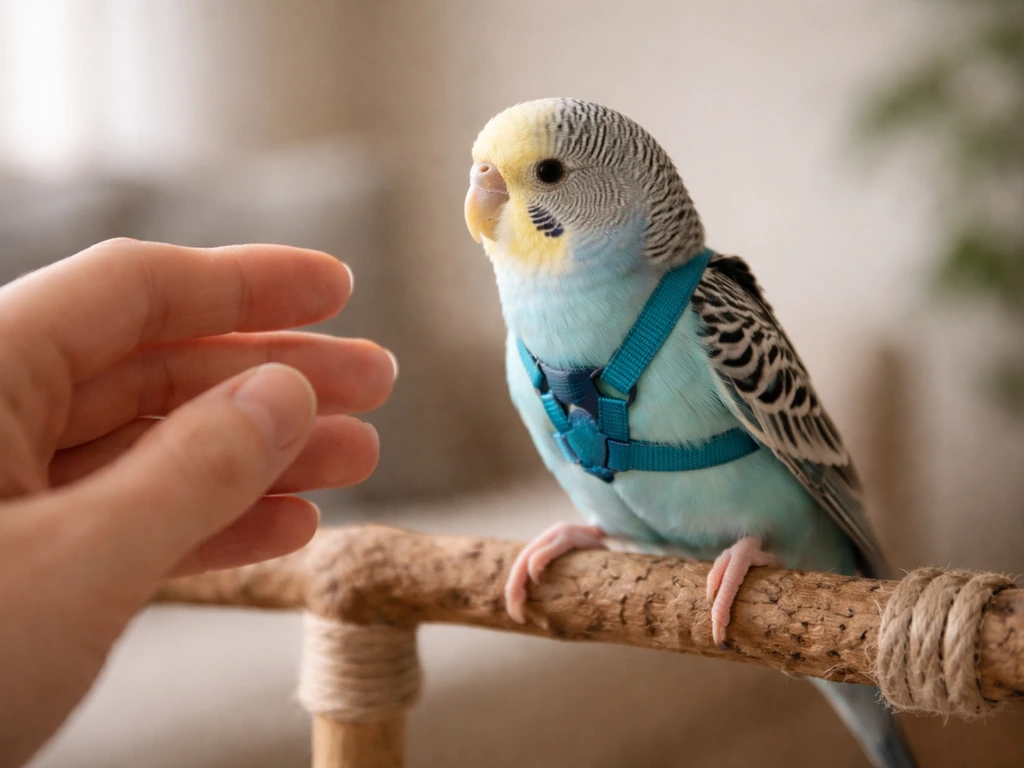
You can start petting a cockatiel by first earning its trust through calm, consistent presence near the cage, then progressing to hand-feeding, then a finger perch, and finally gentle head scratches, all at the bird's pace. If you also want to focus on growth and healthy development, use a balanced diet, proper lighting, and regular vet checkups alongside your taming sessions how to grow cockatiel bird. Most cockatiels go from skittish to finger-tame in two to four weeks with daily five-to-ten minute sessions. The key is reading body language at every step and never forcing contact, which sets the whole process back.
How to Pet a Cockatiel Bird Safely Step by Step
Clara Hayes
4 May 2026
Before you start: setup, consent, and safety
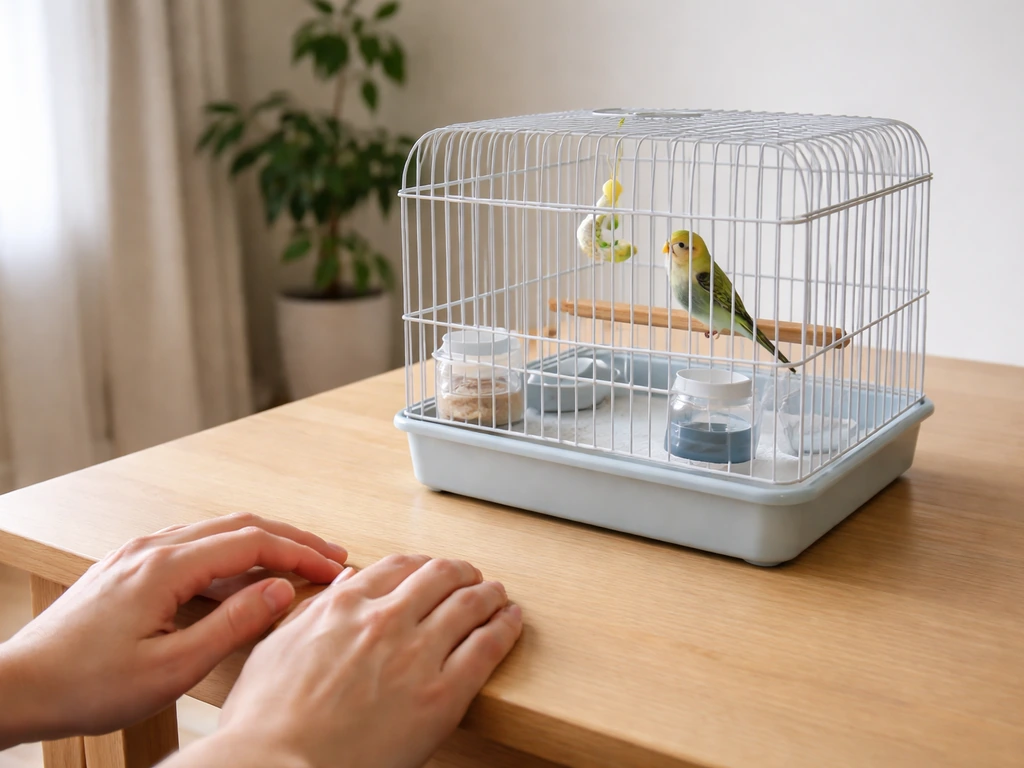
Before you touch the bird at all, get the environment right. Place the cage in a draft-free, well-lit room away from air conditioning vents and kitchen fumes. Birds are highly sensitive to aerosolized chemicals, so only use cleaning products formulated for pet birds anywhere near the cage. Avoid dry-sweeping around the cage area because airborne dust and dander can irritate both the bird and you, damp-wipe surfaces instead. Don't position perches directly above food or water bowls either, since droppings will contaminate both.
Hygiene matters in both directions. Wash your hands thoroughly with soap and running water before and after every session, before, so you're not bringing in food smells that confuse the bird; after, to follow CDC guidance on psittacosis prevention. This is basic and non-negotiable, especially for kids or anyone with a compromised immune system.
Consent-based handling means you watch for the bird's signals before making any move. A cockatiel that is standing tall, crest feathers slightly raised but relaxed, chirping softly, and leaning toward you is saying yes. One that is crouched, feathers puffed, hissing, backing away, or raising its crest in a sharp spike is saying no. Forcing contact when the bird says no does real damage to trust and makes the whole taming process longer. If you use a cat collar on any bird-safe gear, make sure it is specifically designed to be bird-safe and never allows trapping, snagging, or restricted breathing bird-safe cat collar. Commit now to stopping every session the moment the bird shows clear discomfort.
How to approach and win trust in the first 24 to 72 hours
The goal for the first few days is simply to become a non-threatening part of the bird's environment. Don't try to touch anything yet. Sit near the cage at the same time each day, even fifteen minutes of quietly reading, talking softly, or eating a snack nearby does a lot. Use a calm, low voice. Don't stare directly at the bird continuously; direct eye contact can feel predatory to a prey animal. Instead, glance over occasionally and look away.
After a day or two, move your chair slightly closer each session. When the bird stops moving away from your approach and starts orienting toward you instead, you're ready for the next step: opening the cage door and resting your hand on the door frame without reaching in. Just let the bird investigate the idea of your hand being nearby. If it hops closer, great. If it backs up, hold still and wait it out.
Introduce food as a bridge. Millet spray is the cockatiel equivalent of currency. If you are still figuring out how to catch a cockatiel, focus on trust-building first, then use treat rewards to make your hand feel safe Millet spray is the cockatiel equivalent of currency.. Hold a small piece just inside the cage door, keep your hand completely still, and let the bird decide whether to approach. The moment it takes even a nibble from your hand, that is a massive milestone. Repeat this at every session until the bird walks straight to your hand without hesitation.
Step-by-step handling and petting routine by comfort level
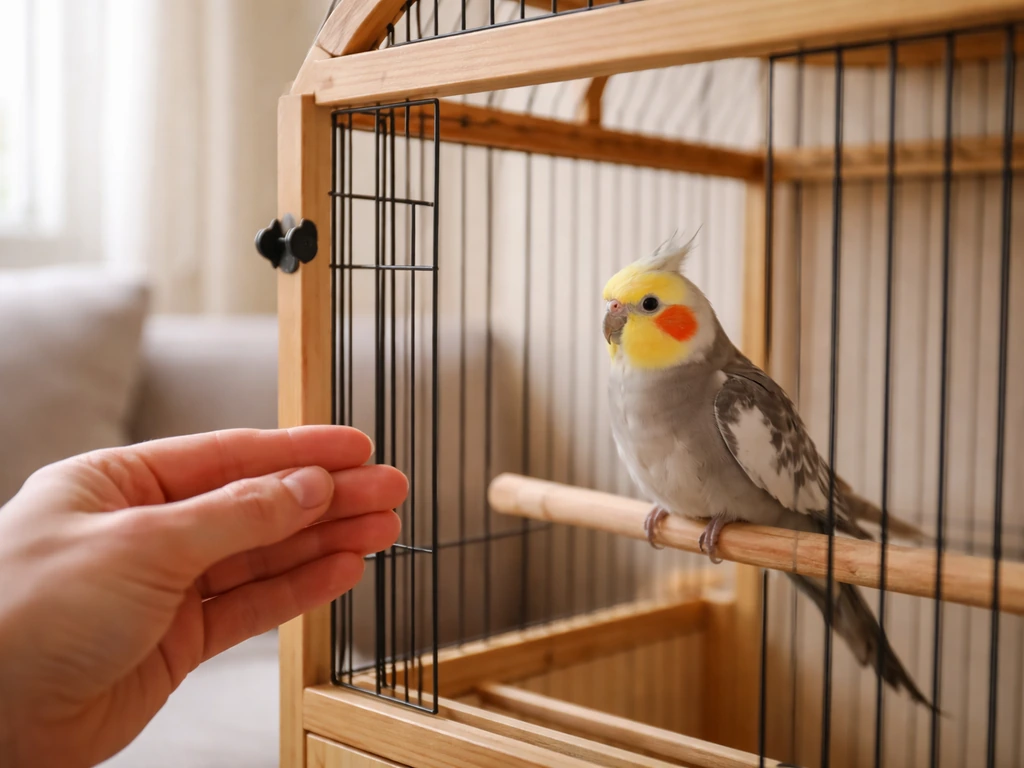
Think of taming as a ladder with distinct rungs. When you do decide to use a harness, start with short, supervised acclimation sessions so your cockatiel stays calm use a bird harness on a cockatiel. Don't skip rungs, each one builds the confidence needed for the next. Here is the full sequence from zero contact to full petting.
- Presence stage: Sit near the closed cage daily. No reaching, no sudden moves. Just be a calm fixture in the bird's world.
- Open-door stage: Open the cage door and rest your fingers on the door frame. Let the bird sniff or look at your hand from a distance.
- Hand-feeding stage: Offer millet or a small piece of veggie directly from your fingers inside the cage. Keep your hand totally still.
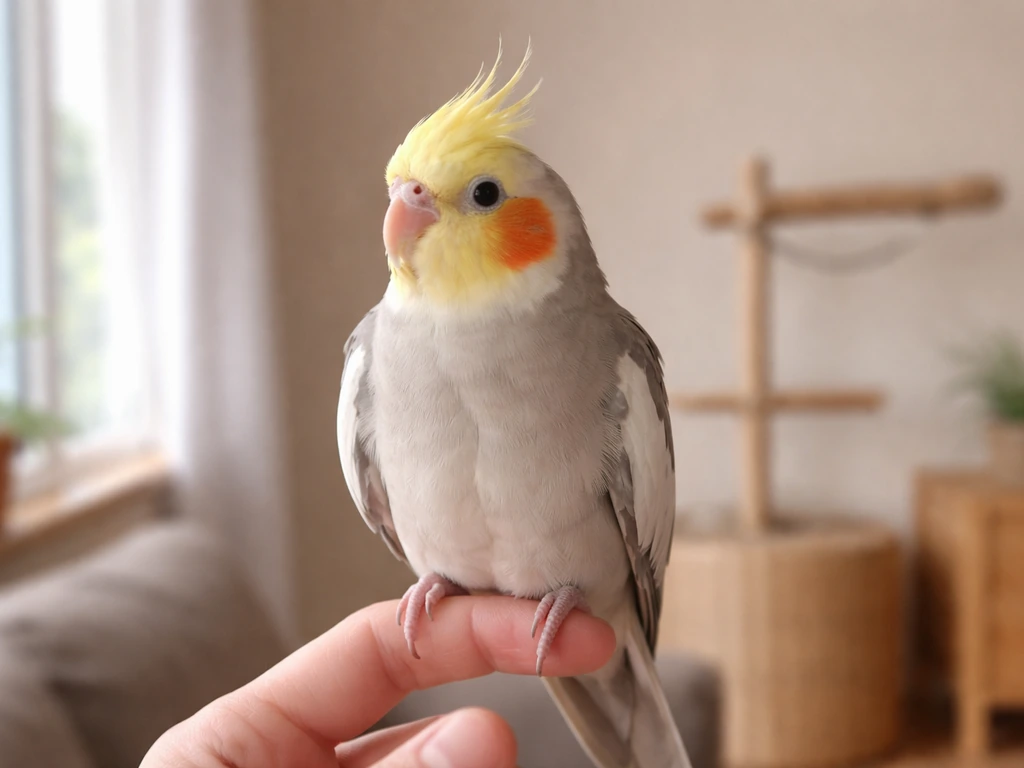
- Finger perch stage: Once hand-feeding is comfortable, place your index finger horizontally against the bird's lower chest, just above its feet, and apply very gentle upward pressure while saying 'step up' in a calm voice. Most birds step on after a few tries.
- Out-of-cage handling stage: Once the bird steps up reliably inside the cage, invite it to step up and stay on your hand outside the cage in a small, safe room with windows and mirrors covered.
- Touch introduction stage: With the bird perched calmly on your hand or arm, slowly bring your free index finger toward the back of the bird's head. If it leans into it or closes its eyes, scratch gently. If it moves away, stop and try again next session.
- Full petting stage: Scratch the head, behind the crest, around the ear patches, and under the chin. These are the areas most cockatiels love most. Avoid the back and wings at first — many cockatiels interpret back-stroking as a mating signal, which can cause hormonal issues over time.
Keep every out-of-cage session short at first, five minutes maximum during weeks one and two. A cockatiel that ends a session still wanting more is far more likely to be excited for the next one. Extend sessions gradually as the bird's comfort grows.
Reading body language during petting
| Body Language Signal | What It Means | What to Do |
|---|---|---|
| Eyes half-closed, head leaning into hand | Enjoying the contact | Keep going gently |
| Crest relaxed and flat, soft chirping | Calm and comfortable | Good — maintain the session |
| Crest raised sharply into a spike, beak open | Alarmed or agitated | Stop touching, give space |
| Feathers puffed up, hunched posture | Scared or unwell | End the session, check for illness |
| Beak grinding (soft, slow grinding sound) | Sleepy and very content | Keep going or let the bird rest |
| Wing flapping or trying to fly off | Wants to leave | Let it go back to the cage |
| Hissing or lunging toward your hand | Warning you before a bite | Pull back calmly, no punishment |
What to do if your cockatiel is scared, biting, or won't step up
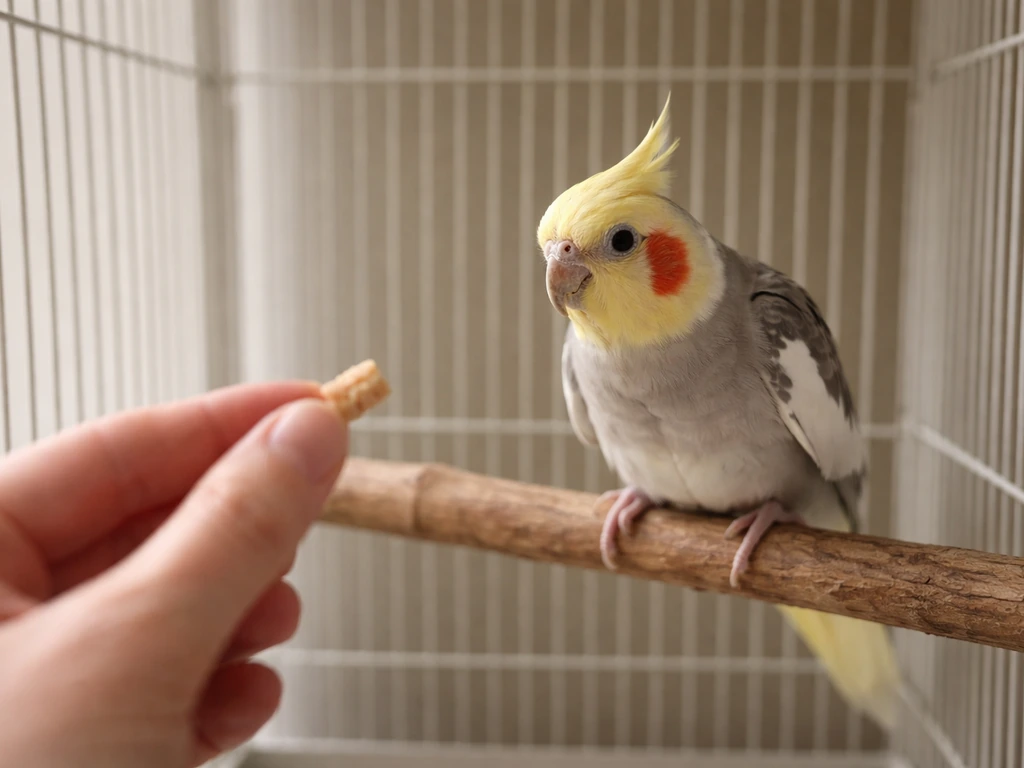
Biting and lunging are almost always driven by fear or stress, not aggression for its own sake. PetMD's stress guidance for pet birds points this out clearly: a bird that bites is communicating discomfort, and owners who recognize that early can adjust before the behavior gets entrenched. So if your bird bites, the first question isn't 'how do I stop the biting', it's 'what am I doing that's scaring the bird?'
Troubleshooting common problems
- Bird flinches and backs away when you reach in: You're moving too fast. Go back to the hand-feeding stage for another week. Your hand approaching should predict a treat, not just contact.
- Bird bites when you try to pet it: Stop immediately without yanking your hand (a fast pull-back is scary and rewarding for a biter). Say nothing, pause, and try again only after the bird has calmed down. Never punish a cockatiel for biting — it destroys trust.
- Bird won't step up onto your finger: Make sure you're pressing against the lower chest, not poking at the feet. Some birds respond better to a dowel perch than a bare finger at first. Also check that you're in a calm room — step-ups fail in noisy or visually busy environments.
- Bird seems fine in the cage but panics when out: Some cockatiels are simply overwhelmed by open space early on. Practice out-of-cage sessions in a very small room or a bathroom with the toilet lid closed and no mirrors visible.
- Bird has regressed after being fine before: Check for changes in the household — new pets, rearranged furniture, a loud appliance, or even a new person. Cockatiels notice everything. Go back one stage in the ladder and rebuild from there.
- Bird is biting one specific person: That person may be moving faster, wearing strong perfume, or making more direct eye contact. Have them start the trust-building process from the beginning, using millet, while moving more slowly and avoiding staring.
Taming over time: training cues, rewards, and realistic timelines
The 'step up' cue is the foundation of everything. Once your cockatiel steps onto your finger on cue, you have a way to move the bird safely at any time, which reduces stress for both of you during cage cleaning, vet visits, and daily handling. If you want to add talking, use the same consistent approach with simple training cues and rewarding moments when your cockatiel attempts sounds or mimics you. If you want to take your cockatiel outside, learning how to put a leash on a bird safely starts with training the step-up cue so handling stays calm. Once your cockatiel is comfortable with handling, you can start learning how to train your bird to wear a harness in a safe, step-by-step way. Pair the verbal cue 'step up' consistently with the upward finger pressure so the bird starts to respond to the word alone. Add a 'step down' cue for returning to a perch. These two cues alone make your cockatiel dramatically easier to handle and build a communication loop the bird can count on.
Rewards work best when they're immediate (within one to two seconds of the behavior) and genuinely motivating. Millet spray is nearly universal, but get to know your specific bird. Some cockatiels go crazy for a tiny piece of egg, corn, or grape. Use the highest-value treat only for the behaviors you're actively training, so it stays special.
| Timeline | Realistic Goal | What Success Looks Like |
|---|---|---|
| Days 1 to 3 | Bird tolerates your presence near the cage | Bird doesn't flee to the far side of the cage when you sit nearby |
| Days 4 to 7 | Bird accepts hand-feeding through the cage door | Bird walks to your hand for millet without hesitation |
| Week 2 | Bird steps up onto your finger inside the cage | Clean, confident step-up on cue, no lunging or hesitation |
| Weeks 2 to 3 | Bird steps up and stays on your hand outside the cage | Bird perches calmly for five-plus minutes without trying to flee |
| Weeks 3 to 4 | Bird accepts head scratches | Bird leans into your finger, eyes close, beak grinding |
| Month 2 and beyond | Petting is a normal part of daily routine | Bird seeks out your hand and asks for head scratches voluntarily |
These timelines assume a healthy bird and one to two short sessions per day. A bird that was previously mishandled or had limited socialization may take two to three times longer, and that's completely normal. Don't let a slow start discourage you, consistent daily effort compounds quickly.
Bonding tips: favorite spots, routine, and enrichment
Cockatiels are flock animals. In the wild, they spend all day within sight and sound of their group. You are the flock now, so the single most powerful bonding tool is simply being present. Let the bird out during whatever you're doing, working at a desk, watching TV, eating, so it learns that being near you is safe and enjoyable, not just a training event.
Routine matters enormously. Cockatiels track time well and get genuinely anxious when their schedule changes without warning. Try to do cage cleaning, feeding, and your main handling session at roughly the same time each day. A bird that knows what to expect is a calmer, more trusting bird.
Where cockatiels like to be touched
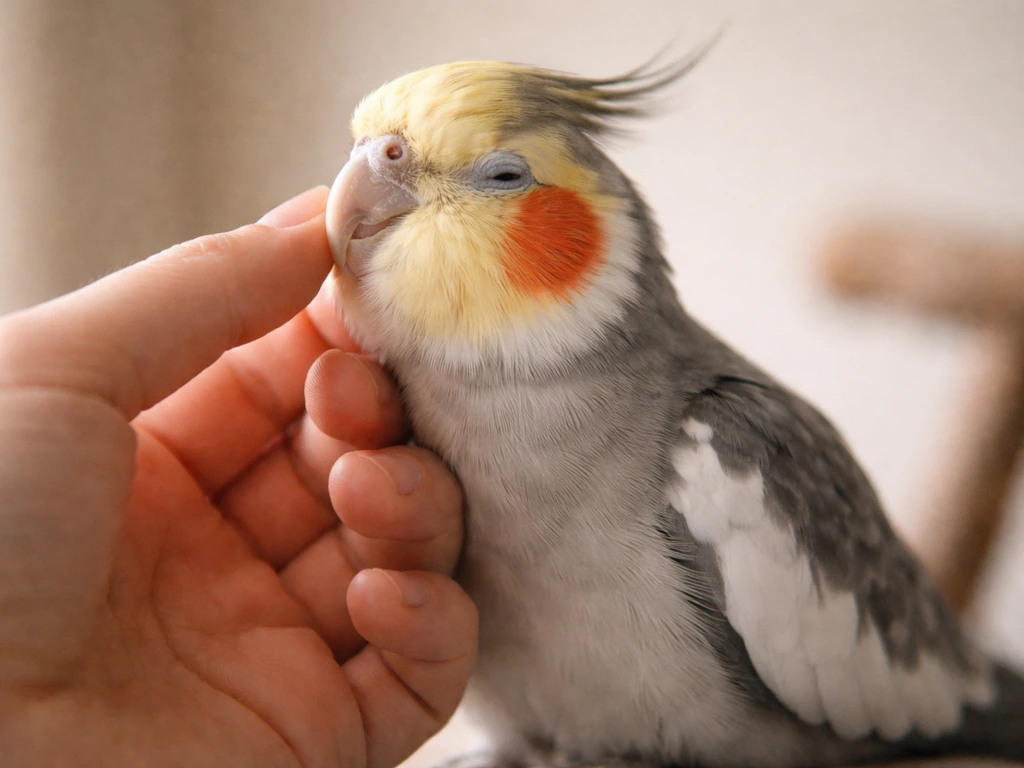
Most cockatiels have a short list of petting hotspots. The area behind the crest, around the ears, under the chin, and along the cheek patches tends to get the strongest positive response. The head in general is safe territory. The back, rump, and under the wings are areas to mostly avoid during casual petting, repeated stroking in those areas can trigger hormonal behavior in some birds, particularly in single-bird households.
Enrichment that supports bonding
- Talk or whistle to your bird throughout the day — cockatiels are vocal and will start to mimic and respond, which deepens the relationship naturally.
- Rotate toys every week or two to keep the cage environment interesting; boredom leads to feather-picking and frustration.
- Offer foraging opportunities by hiding treats inside toys or wrapped in paper so the bird uses its intelligence daily.
- Let the bird watch you eat and occasionally share a safe food (cooked egg, leafy greens, small fruit pieces) — shared meals are a powerful bonding ritual for flock birds.
- If you are interested in expanding the bird's world further, harness training is a natural next step for cockatiels that are already fully finger-tame and comfortable with handling.
The whole process comes down to this: go slower than you think you need to, reward every small win, and never push past what the bird is comfortable with today. Even though this guide is about taming a cockatiel, you can learn a lot from studying predator-prey behavior, like how does a cat catch a bird. A cockatiel that trusts you completely will come to your hand, lean into your scratches, and spend hours sitting on your shoulder, and that relationship is worth every patient session it took to build.
FAQ
What should I do if my cockatiel starts to pull away or look stressed while I’m petting?
Use a “one tiny step” rule. If your cockatiel flinches, freezes, backs away, or suddenly raises its crest sharply, pause immediately and keep your hand still or withdraw it. Resume only at the last point where it stayed relaxed (for example, hand resting by the door without reaching in).
Where are the safest places to pet a cockatiel, and what areas should I avoid?
Stick to short, safe contact areas and change how you pet if it responds negatively. Start with the head in general, plus the behind-the-crest, ear area, under-chin, and cheek patches. Avoid under the wings, the back, and the rump for casual petting, and do not continue repeated stroking in those areas because some birds can become hormonally triggered.
Can I skip hand-feeding and go straight to petting if my bird seems calm?
Don’t use “petting” to replace training. If you want your bird to be handleable, rely on the step-up cue first, then reward. Treat the first head scratch as a reward for calm, voluntary behavior, not as something you do automatically every time you open the door.
How do I tell whether a bite is fear versus excitement, and what changes should I make?
It depends on what you mean by “biting.” A fear bite usually happens during approach, reaching, or cage-door handling and is paired with backing away, puffing, or a sharp crest spike. If your bird bites when you put your hand in its space, reduce your distance, wait longer before reaching, and rebuild trust with treats at the door rather than trying to force contact.
How often should I give treats during taming, and how do I avoid over-rewarding?
Keep rewards genuinely motivating and use them only at the moments you want to reinforce. If millet spray is your bird’s favorite, use it for step-up or voluntary nibbling, then save higher-value treats for key milestones like stepping onto your finger without hesitation.
My cockatiel won’t eat from my hand. What’s the best next step?
If your bird won’t approach your hand, don’t increase speed or reach farther. Go back a rung, for example, just resting your hand on the door frame while you stay calm and still. Let the bird approach the hand on its own, then reward the exact behavior you want (like a single touch or nibble).
How does learning step-up help prevent bites during everyday tasks like cage cleaning?
Yes, you can reduce bite risk immediately by training and using cues. Once it reliably steps up, you can move the bird without grabbing, and you can also end handling on cue or with gentle step-down. This prevents surprise “grab” moments during cage cleaning or routine care.
Is it okay to pet my cockatiel after something stressful, or should I wait?
Avoid petting right after stressful events (like a loud disturbance, a vet visit, or a sudden schedule change). If the bird’s crest is sharp, feathers look puffed without relaxing, or it is tense and backing away, treat that as a sign to stop and return to quiet proximity and low-pressure exposure.
How long should my petting sessions be in the beginning?
If you want to pet more than once, use a consistent stopping point. Many birds learn faster when sessions end before they become cranky. Aim for very short sessions early (about five minutes), and end while the bird is still receptive, then try again later.
What should I do if I’m getting repeated bites and can’t safely progress?
In an emergency, don’t “chase” the bird by grabbing. Use calm body positioning, reduce movements, and return to your last successful routine (quiet presence, door-frame hand, then step-up only). If bites escalate, hide sources of stress, and consider getting guidance from an avian vet or experienced trainer because injury risk goes up when handling is rushed.
Next Article
How to Train Your Bird to Wear a Harness Safely
Step-by-step, safety-first harness training for pet birds: choose fit, build trust, progress wear time, troubleshoot iss