To attract bluebirds, you need three things working together: the right nest box installed correctly, open habitat with short grass or bare ground nearby, and a reliable food source like live mealworms during nesting season. Get all three right and bluebirds can show up within days of setting up. Skip one, and you may wait all season and never see a single bird investigate your box.
How to Attract Bluebirds: Nest Box, Placement and Care
Clara Hayes
16 May 2026
Which bluebird is actually in your area?
Before you buy anything, figure out which of the three North American bluebird species lives in your region. Buying the wrong box or setting up in the wrong habitat wastes time and money.
- Eastern Bluebird (Sialia sialis): The most widespread species. Found east of the Rockies across most of the US and into southern Canada. Males have bright blue upperparts with a reddish-brown throat and chest, and a clean white belly. Females are duller but follow the same pattern.
- Western Bluebird (Sialia mexicana): Found in western states, especially open pine and oak woodlands. Males have blue upperparts but with a gray belly and a blue throat, not reddish-brown like the Eastern.
- Mountain Bluebird (Sialia currucoides): Found in high-elevation open country across the western US and mountain West. Males are a striking all-blue bird with a pale gray belly. Females are grayish with a faint blue wash.
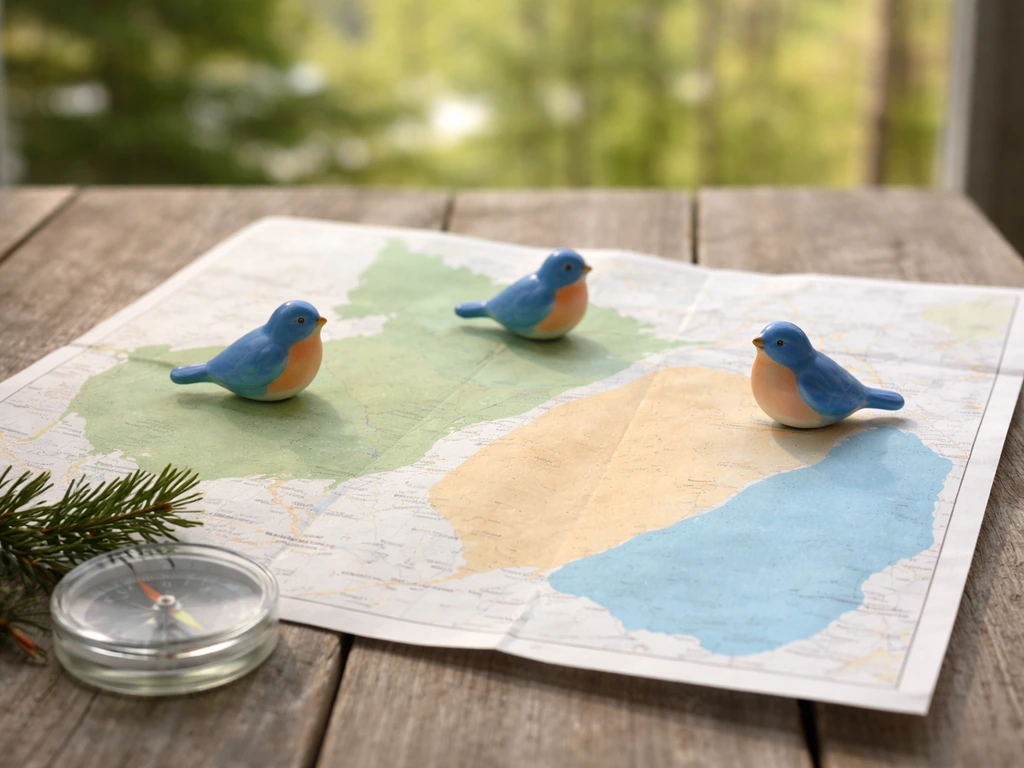
The easiest way to confirm which species is near you right now is to check eBird's species range maps (search 'Eastern Bluebird eBird range map' or the relevant species). These maps show estimated seasonal occurrence by county, updated annually, so you can see at a glance whether bluebirds are expected in your specific area during the breeding season. USGS also maintains range data for Mountain Bluebirds if you're in the West and unsure. Once you confirm your species, everything else, box size, placement, and habitat setup, follows from there.
Nest box setup: dimensions, design, and placement
Box dimensions and design
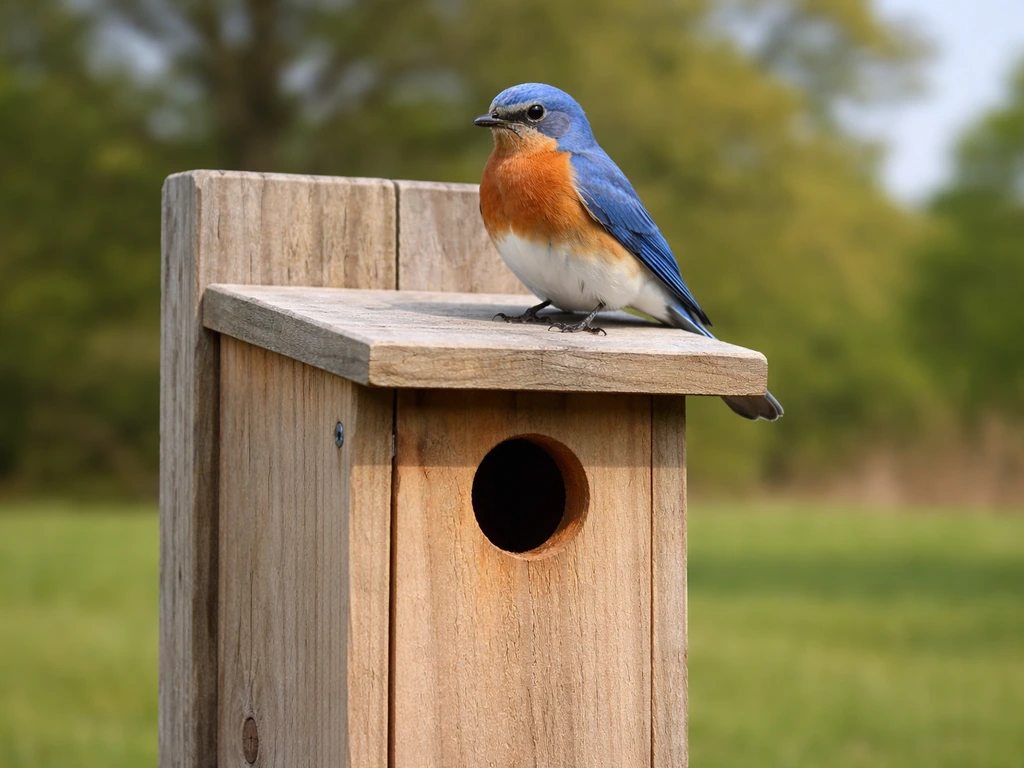
For Eastern and Western Bluebirds, the standard entrance hole size is 1-1/2 inches (round). Some plans use a vertical oval slot measuring 1-3/8 by 2-1/4 inches, which can help exclude House Sparrows. Mountain Bluebirds need a slightly larger 1-9/16 inch hole. The box itself should have a floor area of roughly 4 by 4 inches for Eastern and Western Bluebirds, with an interior depth of about 8 to 12 inches from the floor to the bottom of the entrance hole. The roof must extend beyond the entrance hole and beyond any ventilation slots on the sides to keep out rain. Drainage holes in the floor corners and ventilation near the top of the side panels are non-negotiable. Boxes should open from the front or side for easy monitoring, which is something you'll be doing regularly.
Avoid boxes with perches below the entrance hole. Perches are not needed by bluebirds and actually give House Sparrows an easier time hanging around and harassing nesting pairs. Raw, untreated wood like cedar or pine works best. Avoid painted or stained interiors.
Mounting height and predator guards
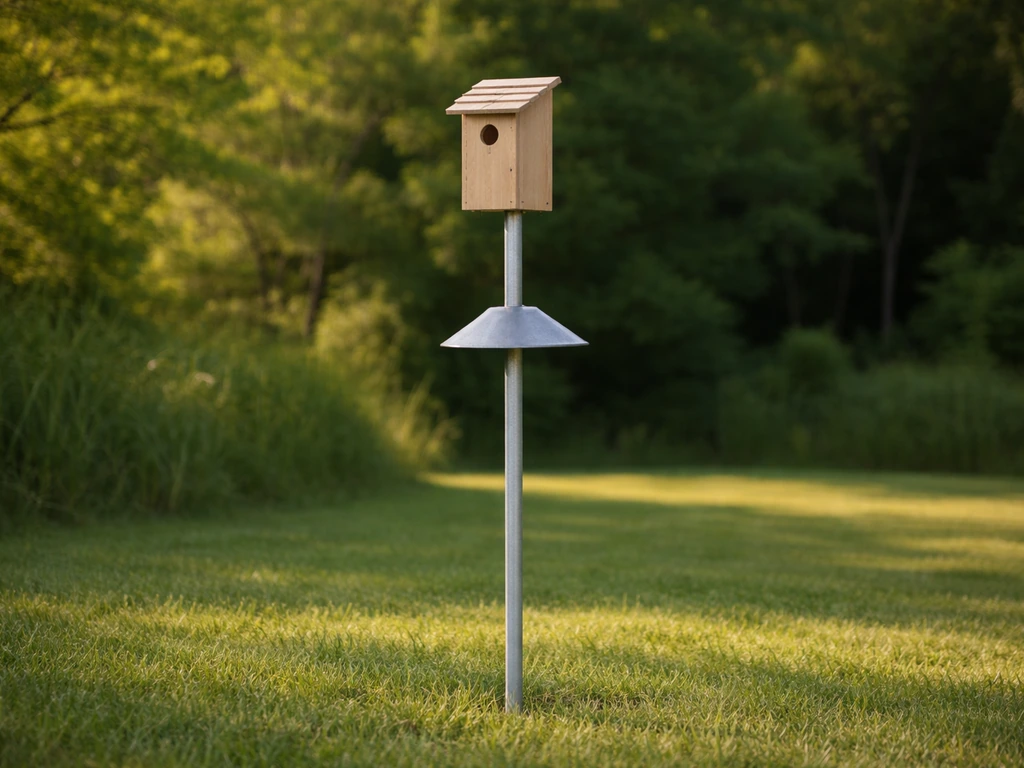
Mount boxes between 4 and 6 feet off the ground on a smooth metal pole. Boxes mounted lower than 5 feet give climbing and jumping predators (raccoons, cats, rat snakes) an easier route to the nest. A predator baffle is not optional if you're serious about success. A stovepipe baffle or cone-style baffle placed on the pole below the box dramatically increases nest success rates. Nail-on tree mounting is not recommended since it skips predator-guard options entirely and gives snakes a direct highway to the box.
Spacing and orientation
Space individual bluebird boxes at least 300 feet apart, or position them so boxes are out of the line of sight from one another. Bluebirds are territorial and two pairs won't nest that close together. If you want to attract both bluebirds and Tree Swallows (which are also great to have around), pair boxes about 15 to 25 feet apart on separate poles, then space the next pair 300 feet away. Tree Swallows and bluebirds will happily co-exist at paired boxes. Face the entrance hole away from prevailing winds, typically south to southeast in most of the US, to keep the interior warm during early spring nesting.
Food, water, and seasonal feeding
Live mealworms: the single best attractant
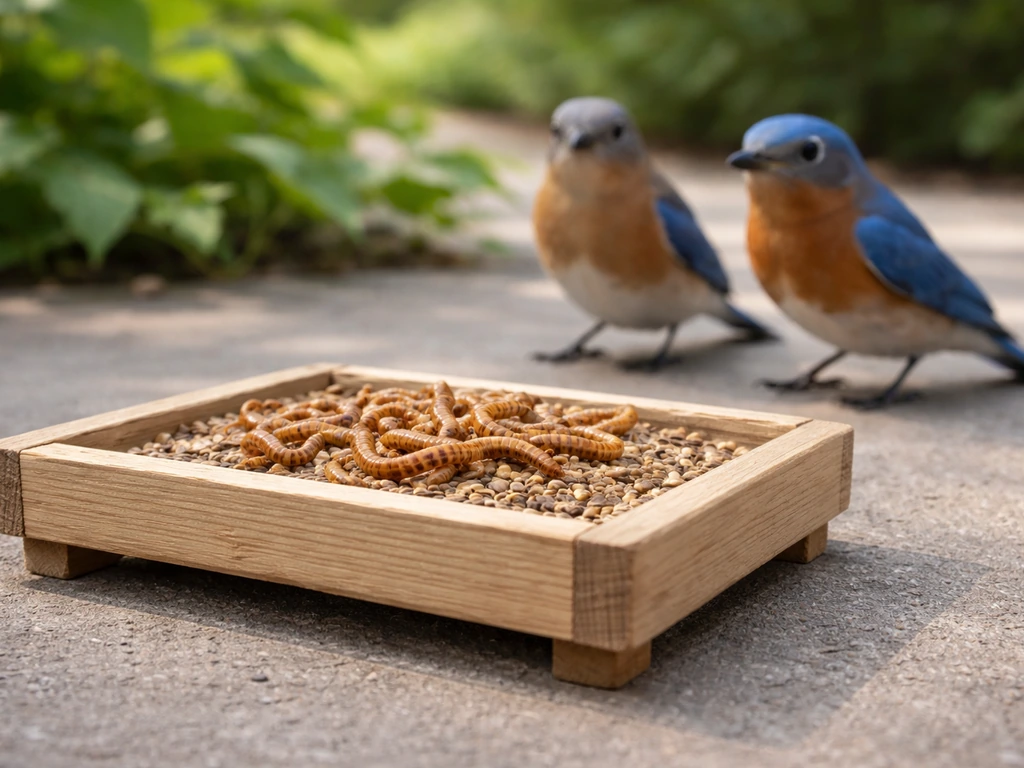
Bluebirds are insect eaters first. They'll spot a wiggling mealworm from a distance, and offering live mealworms is the fastest way to get their attention and build a habit. Offer around 15 worms per bird per day in an enclosed dish feeder, basically a small covered feeder with a clear front panel or dome that keeps rain and sun off the worms and prevents larger birds from cleaning it out. Place the feeder away from the nest box, not directly on top of or next to it, so feeding behavior doesn't stress incubating adults.
Train the birds by offering mealworms at the same spot at roughly the same time each day. Bluebirds are observant and will quickly learn the routine. Don't dump an unlimited supply out in the open: this attracts starlings, robins, and other competitors. Stick to the dish feeder with a small daily offering. Dried mealworms work as a backup but live worms are far more effective as an initial attractant.
Seasonal food shifts
During cold, rainy stretches in early spring and late fall, bluebirds shift toward fruit. Native berry-producing shrubs (more on those in the landscaping section) are the best long-term food source. In winter, bluebirds in southern parts of their range survive largely on fruit, so dried mealworms plus berry access is the combination to offer. During active brooding and fledgling feeding in late spring and early summer, the demand for live insects is at its peak. This is the time to be most consistent with your mealworm offering, because parents are feeding themselves and multiple nestlings.
Water
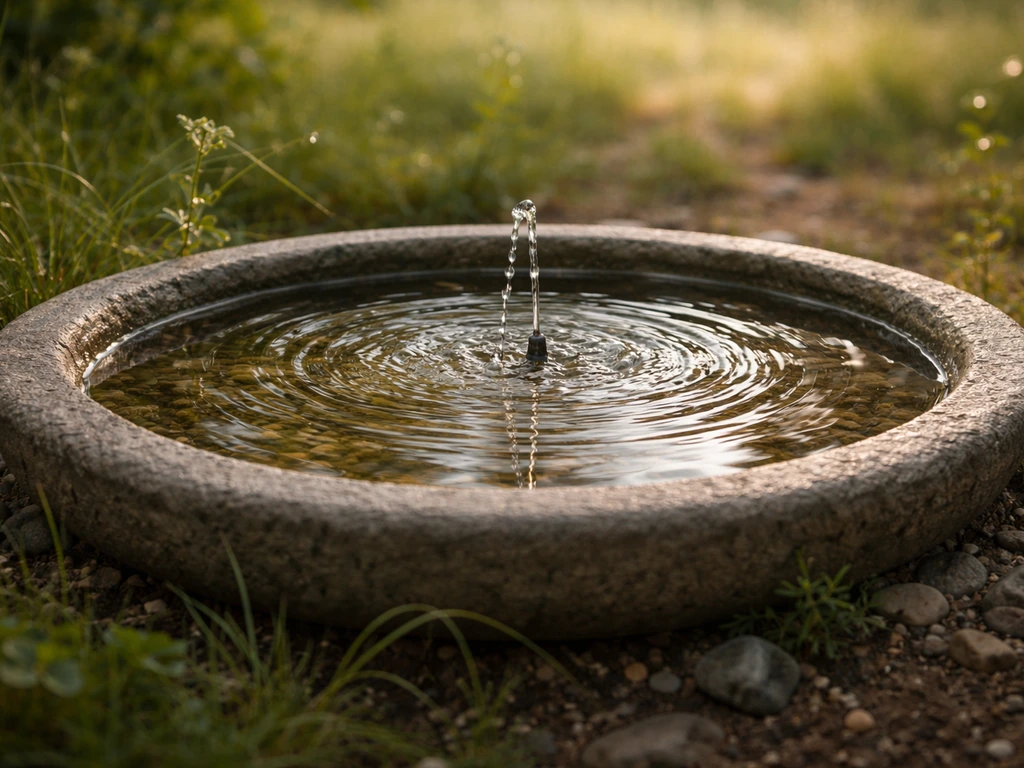
A shallow birdbath with moving water is one of the most underrated bluebird attractants. The sound of dripping or moving water draws bluebirds in from a surprising distance. Keep the water no deeper than 1 to 2 inches at the shallow end. Add a mister or dripper if you can. Clean the bath every 2 to 3 days to avoid algae and mosquito breeding, and in winter check it daily to keep it from freezing over.
Bluebird-friendly landscaping
What to add
Bluebirds forage by watching from a perch, dropping to the ground to catch insects, and then returning to another perch. They strongly favor areas with short grass, sparse ground cover, and patches of bare ground. Audubon’s Eastern Bluebird field guide describes the species’ typical breeding habitat as “semi-open” areas, which matches the preference for short grass, sparse ground cover, and patches of bare ground. Think pastures, mowed fields, and open lawns with fence lines or scattered low shrubs. If your yard is mostly closed canopy or dense shrubs, it's simply not suitable bluebird habitat, and no box will change that.
- Low native perches: Wooden fence posts, T-posts, or small dead snags placed around open lawn give bluebirds hunting perches. A single post 3 to 4 feet tall in the middle of an open lawn is genuinely useful.
- Native berry shrubs: Dogwood (Cornus spp.), holly, elderberry, and native viburnums provide late-season and winter food. Plant them at the edges of your open area, not in the middle.
- Native bunch grasses or short native meadow areas: These support insect populations that bluebirds feed on, without creating the dense cover that blocks foraging.
- Open lawn with short grass: Mow a portion of your yard to 2 to 3 inches. Bluebirds need to see and reach the ground easily.
What to remove or reduce
- Dense shrubs or ground cover in the foraging zone: Anything thicker than knee height in the main open area makes bluebird foraging harder.
- Invasive plants: Multiflora rose, honeysuckle, and similar invasives create dense habitat favored by House Sparrows, which compete aggressively with bluebirds for nest sites.
- Pesticides: Insecticides kill the insects bluebirds eat. Even a lightly treated lawn will provide far fewer foraging opportunities. If you use pesticides, move the foraging area to an untreated section.
- Bird feeders stocked with seed near the nest box: Seed feeders draw House Sparrows and Starlings, which are the two biggest nest-box competitors bluebirds face.
When to set up, and what to watch for
Timing by season
In most of the eastern US, Eastern Bluebirds begin nest-building in early March to early April, with a peak spring nesting period roughly from early April through mid-May. Western and Mountain Bluebirds are typically a few weeks later, starting in late April in many areas. Have your box up and ready at least 2 to 4 weeks before those dates, because scouts (usually males) check potential nest sites before pairs form or arrive. Boxes that are already in place when males arrive have a major advantage over ones just installed. If you're reading this in May, put the box up immediately. There's often a second nesting attempt in June or July, and late arrivals can still attract a pair for that round.
What the nesting timeline looks like
Once a pair chooses your box, here's roughly what to expect: the female builds the nest over several days to a week, then waits about a week before beginning to lay eggs. She lays one egg per day until the clutch is complete, typically 4 to 5 pale blue eggs. Incubation takes about 13 to 14 days. Nestlings fledge 16 to 19 days after hatching. The female often starts a second nest roughly a week after the first brood fledges. So from the start of nest-building to a completed first brood can take 6 to 7 weeks.
Monitoring the box
Check the box once a week by gently opening it and taking a quick look. Record what you see: no nest, nest in progress, eggs, nestlings. Don't monitor after the nestlings are 12 to 14 days old. At that age, opening the box can cause them to fledge prematurely, which dramatically reduces their survival. After a rainy cold stretch, peek at the nest to make sure it's dry and hasn't been flooded. If nestlings look cold and wet, this is when offering extra mealworms helps the parents keep feeding without spending energy searching in bad weather.
When things aren't working: a troubleshooting guide
No bluebirds visiting at all
- Box in the wrong habitat: If your yard is heavily wooded or heavily shrubbed, bluebirds may simply not be foraging there. Move the box to the edge of an open area.
- Box up too late in the season: If it's past mid-May, you may be waiting for a second brood opportunity. Keep the box clean and in place.
- No local population: Use eBird to confirm bluebirds are actually present in your county. If they're not on the map, no amount of setup will change that.
- Too much competition nearby: Seed feeders with heavy House Sparrow traffic within 50 feet can deter bluebirds from settling.
Wrong birds taking the box
House Sparrows are the number one problem. If a different bird is taking over your setup, such as a myna bird, adjust your strategy based on its behavior and legal protections House Sparrows. They're non-native, aggressive, and will evict bluebirds, destroy eggs, and kill adults and nestlings inside the box. If House Sparrows start building a nest, remove it immediately and repeatedly. You are legally allowed to remove House Sparrow nests since they are not protected under the Migratory Bird Treaty Act. Consider a 1-3/8 inch slot entrance, which fits bluebirds but makes entry harder for House Sparrows. Chickadees, titmice, and Tree Swallows using the box are less of a problem and are native cavity nesters protected by law. If you want to reserve the box for bluebirds, add a second box nearby for these species.
Predator problems
Signs of predation include broken eggshells, missing eggs or nestlings, a disturbed or destroyed nest, or a dead adult inside the box. Common culprits are raccoons, cats, rat snakes, and squirrels. If predation has happened, install or upgrade the pole baffle immediately before the pair re-nests. A conical or stovepipe baffle placed 3 to 4 feet off the ground on a smooth metal pole is effective against most climbing predators. Also check whether the pole is close enough to a fence, tree, or structure that a predator could bypass the baffle by jumping.
Parasites, insects, and disease
After each brood fledges, clean the box out completely. Remove the old nest, then wipe the interior with hot water. This removes blowfly larvae, mites, and parasites that can reduce the health of a second brood. Don't use chemical pesticides inside the box. Ants sometimes invade boxes from the bottom of the pole: a ring of petroleum jelly or a dedicated ant guard on the pole below the box handles this. Wasp nests can establish quickly in an unoccupied box: check weekly and remove them while small.
Weather setbacks
A cold snap or extended rain in early spring can cause nest abandonment or nestling hypothermia. If temperatures drop below freezing after eggs are laid or nestlings have hatched, and you can see the nest is wet or the adults are not returning, supplemental mealworms placed near the box entrance can give the adults a quick calorie boost without requiring them to forage far in bad weather. Don't attempt to move the nest or handle eggs without guidance and appropriate legal permits.
Keeping it humane, legal, and ethical
All three bluebird species are protected under the Migratory Bird Treaty Act (MBTA). This means you cannot disturb active nests with eggs or young, harm adults, or possess feathers or eggs. Monitoring a nest box by opening it gently and briefly is considered acceptable responsible nest box management, not disturbance, as long as you do it carefully and stop after day 12 to 14 of the nestling stage.
House Sparrows and European Starlings are not protected by the MBTA, so their nests and eggs may legally be removed. Native species like Tree Swallows, chickadees, and wrens are fully protected. If a native species other than a bluebird is nesting in your box, leave it alone and let that nest complete. Do not remove active native nests, even if you were hoping for bluebirds.
- Never handle nestlings or fledglings unless they are injured and you are contacting a licensed wildlife rehabilitator.
- Don't use glue traps, snap traps, or poison to control predators near a nest box. These methods are inhumane and can harm non-target animals including the bluebirds themselves.
- Don't supplement with food items that are harmful: no bread, no processed foods, and no mealworms that have been treated with insecticides (some commercially purchased ones are).
- If you join a bluebird trail monitoring program through a state bluebird society, you'll be monitoring boxes on a schedule that's already designed to minimize disturbance and maximize safety for the birds.
Attracting bluebirds rewards patience and consistency more than expensive gear. If you are also trying to attract a bulbul bird, the same idea applies: focus on the right food and habitat setup in your yard attract bulbul bird. To attract whippoorwill birds, focus on offering suitable habitat for them at dusk and avoid bright lights that can discourage hunting Attracting bluebirds. Get the habitat right, put up a properly built box with a predator baffle, offer live mealworms in a small dish feeder, and monitor weekly. Most people who do all of this correctly see their first bluebird investigation within a few weeks of setup during the active season. From first visit to a completed nest usually takes a month or less. Once bluebirds find your yard, they often return year after year, and sometimes raise two or even three broods in a single season. You may also notice similar courtship behaviors in other cavity-nesting birds, such as how a rifle bird of paradise attracts a mate.
FAQ
I installed a correctly sized bluebird box, but no bluebirds are visiting. What should I check first?
Not necessarily. If bluebirds are expected in your county, a box can sit empty even when it is perfect, because males often scout and then settle only when pairs form. Put the box up 2 to 4 weeks ahead of the usual start window for your species and keep habitat and mealworm routines consistent, then re-evaluate after the main nesting peak rather than after just 1 or 2 weeks.
Can I move or replace my bluebird box after the season has started?
Yes, but only if it stays aligned with the nesting schedule and you avoid creating a predator bypass. If you are already late in the season, you can replace the whole box immediately rather than waiting, but do it before heavy rain periods if possible, and keep the pole height and baffle in place so predators cannot access the entrance.
What happens if I have another bluebird box nearby?
If the box is not at least around 300 feet from the nearest other bluebird box, you may get fewer nest attempts because bluebirds defend territories. If you want to attract both bluebirds and Tree Swallows, use paired spacing (separate poles for the bluebird and swallow boxes, then keep the next set well away) rather than placing everything in one tight cluster.
Can I customize a bluebird box by adding a perch or painting the inside?
Avoid adding perches below the entrance hole and avoid painting or staining the interior, because these changes can increase House Sparrow ability to hang around and reduce nesting suitability. Also ensure the roof overhang and floor ventilation are correct, since leaks and poor ventilation can drive failure even when the birds can access the entrance.
Where exactly should I place the mealworm feeder relative to the nest box?
For Eastern and Western species, offer live mealworms primarily in a covered dish feeder placed away from the nest box entrance. This avoids stressing adults while they are incubating or brooding, because you do not want constant visitor traffic or loud feeding right at the doorway.
How often can I check the nest box during egg and chick stages?
Do not open the box after nestlings are about 12 to 14 days old, because the risk of premature fledge and lower survival increases at that stage. A safer routine is weekly checks early on (nest progress, eggs, early nestlings), then leave it alone once the chicks are getting close to fledging.
What should I do during a cold snap after eggs are laid?
If you see wet nest material, stalled feeding, or adults that stop returning after freezing conditions, supplemental mealworms near the box entrance can help by giving parents quick calories without a long foraging trip. Avoid handling eggs or moving nests, because that can cause more harm than the extra food helps.
How do I respond if House Sparrows start using my box?
If House Sparrows are actively taking over, remove their nest material immediately and repeatedly once you notice it. Use a tighter entrance size that fits bluebirds but makes entry harder for House Sparrows, and consider placing an additional box nearby intended for other native cavity nesters so you do not lose all breeding activity.
If a different native bird starts nesting in the box, can I relocate it to bring in bluebirds?
Yes. Some boxes can attract protected native cavity nesters like Tree Swallows or chickadees, and those nests should be left to complete. If a native species other than bluebirds is using the box, do not remove it just to make space, even if you prefer bluebirds.
When should I switch from mealworms to fruit for bluebirds?
Roughly the transition tends to follow your seasonal insect and fruit availability. In early spring and late fall, fruit and berries become more important, while late spring and early summer is when live insect demand peaks for active brooding. Keep mealworm offerings consistent during that peak rather than relying on worms only at the start.
Why aren’t bluebirds using my box even though they are in the region?
A common reason is that the yard is too closed-off. Bluebirds need open foraging areas with short grass, sparse ground cover, and patches of bare ground, because they feed by watching from a perch and dropping to the ground. If your landscape is dense with shrubs or canopy, no box will fully compensate.
Do I need a birdbath to attract bluebirds, and how should I maintain it?
Yes, but treat it as supportive rather than the main attractant. Moving water helps draw bluebirds in, and you should keep the shallow end about 1 to 2 inches deep, clean it every 2 to 3 days to prevent algae and mosquitoes, and check daily in winter so it does not freeze over.
What maintenance should I do after the first brood fledges?
After each brood fledges, completely clean out the old nest and wipe the interior with hot water to reduce mites and parasites. Also check for ants entering from below the pole, and handle wasp issues early by inspecting weekly when the box is available.
Next Article
How to Attract Whippoorwill Birds With Night Habitat Steps
Step-by-step night habitat plan to attract whippoorwills with the right cover, lighting, and calling cues.