Whether you're trying to recapture an escaped pet myna, safely remove a wild one from inside your home, or manage a problem bird in your yard, the safest path is always attraction first, capture second. Get the bird comfortable coming to a specific spot for food before you ever think about closing a trap or throwing a net. That one shift in approach cuts stress for the bird and dramatically improves your success rate.
How to Catch a Myna Bird Safely and Humanely
Clara Hayes
30 Apr 2026
Humane reality check and what the law actually says
Before anything else, you need to know where you stand legally. In the U.S., the Migratory Bird Treaty Act (MBTA) makes it unlawful to pursue, hunt, take, capture, kill, or possess migratory birds without authorization (16 U.S. Code § 703). The U.S. Fish and Wildlife Service (FWS) administers permits for activities otherwise covered by the Act, and "take" absolutely includes trapping or netting a wild bird. State regulations layer on top of federal law too. Minnesota DNR guidance, for example, explicitly lists capturing, trapping, and netting as forms of "taking" that generally require a license or permit unless a narrow exception applies, such as an animal actively causing damage to property.
The good news: the common myna (Acridotheres tristis) is not native to North America and is considered an invasive species in many regions where it has established itself. Audubon’s field guide notes that common mynas are native to southern Asia and that escapees have established feral populations in many regions, including southern Florida. FWS does have specific permit pathways for nuisance or depredating birds. However, even when capture is authorized, FWS guidance is explicit that fright and inhumane handling are not acceptable. Every step in this guide is built around that standard. If you are outside the U.S., check your local regulations. In Australia, for instance, common mynas are classified as pest birds in most states and dedicated trap programs exist through local councils.
- If the bird is a pet that escaped from your own home, you have the clearest legal path to recapture it. Focus on the attraction and containment steps below.
- If it's a wild bird causing damage, contact FWS or your state wildlife agency before trapping to confirm whether a permit is needed in your situation.
- If the bird is injured and you did not own it, contact a licensed wildlife rehabilitator. DIY handling of injured wild birds can worsen injuries and may still carry legal risk.
- Never use glue traps, poisons, or any method designed to harm the bird. These are not just inhumane, they are illegal under the MBTA.
Know your bird before you try anything
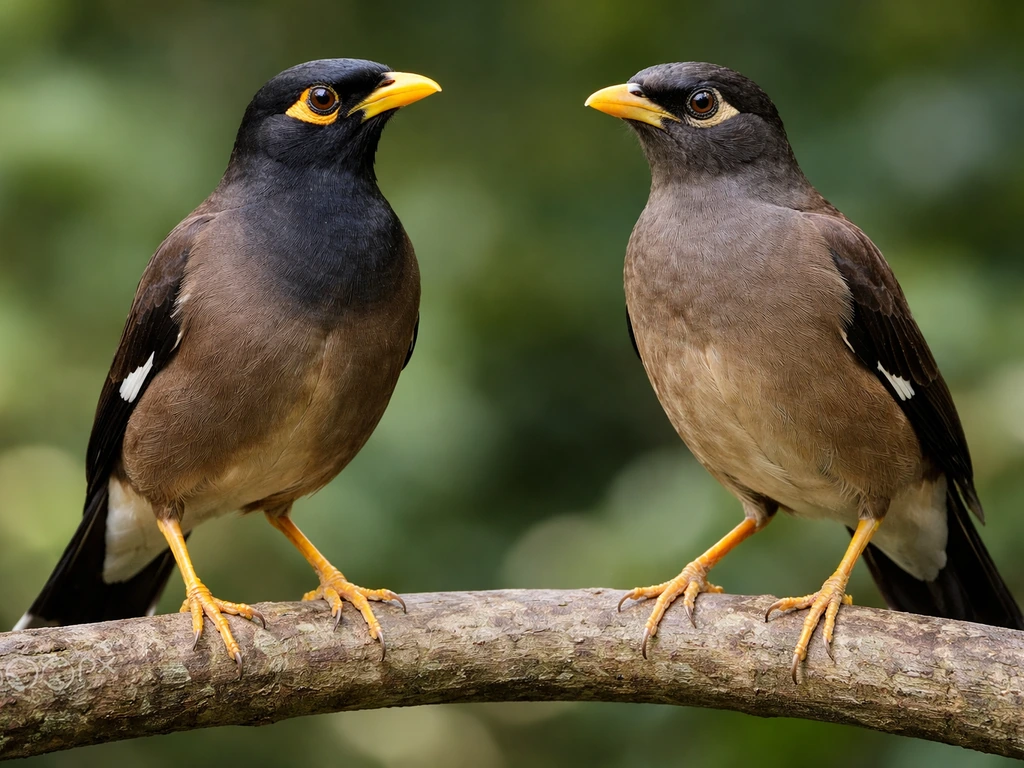
Correctly identifying the bird matters because it changes your legal standing and your strategy. The common myna (also called the Indian myna, Acridotheres tristis) is about 23 to 26 cm long and has a very distinctive look: a black hooded head, a bare bright yellow patch behind each eye, a stout yellow bill, and yellow legs. The body is warm brown and in flight you'll see bold white wing patches. It's a stocky, confident bird. The hill myna (Gracula religiosa), the species most often kept as a talking pet, is glossy black all over with orange-yellow wattles and white wing flashes. If your escaped pet is a hill myna, you're looking for a completely different silhouette.
Behavior is almost as useful as appearance. Common mynas are bold, loud, and social. They walk along the ground with a strutting gait, pick through grass and garden beds for insects and grubs, and gather in noisy groups near roosting sites at dusk. They are also highly opportunistic around human food. A pet myna that has escaped will often behave differently: it may hover near windows or familiar sounds, respond to its own name or phrases it knows, and show less fear of humans than a wild bird would. That reduced fear is actually your biggest advantage when recapturing an escaped pet.
Why is a myna hard to catch by hand? They are fast, sharp-eyed, and wary. Even a tame pet myna will often dodge and retreat when it senses it's being cornered. Wild mynas are far more skittish. Chasing does nothing except burn energy and push the bird further away. The only reliable approach is making the bird want to come to you.
Attract first: get the bird coming to you reliably
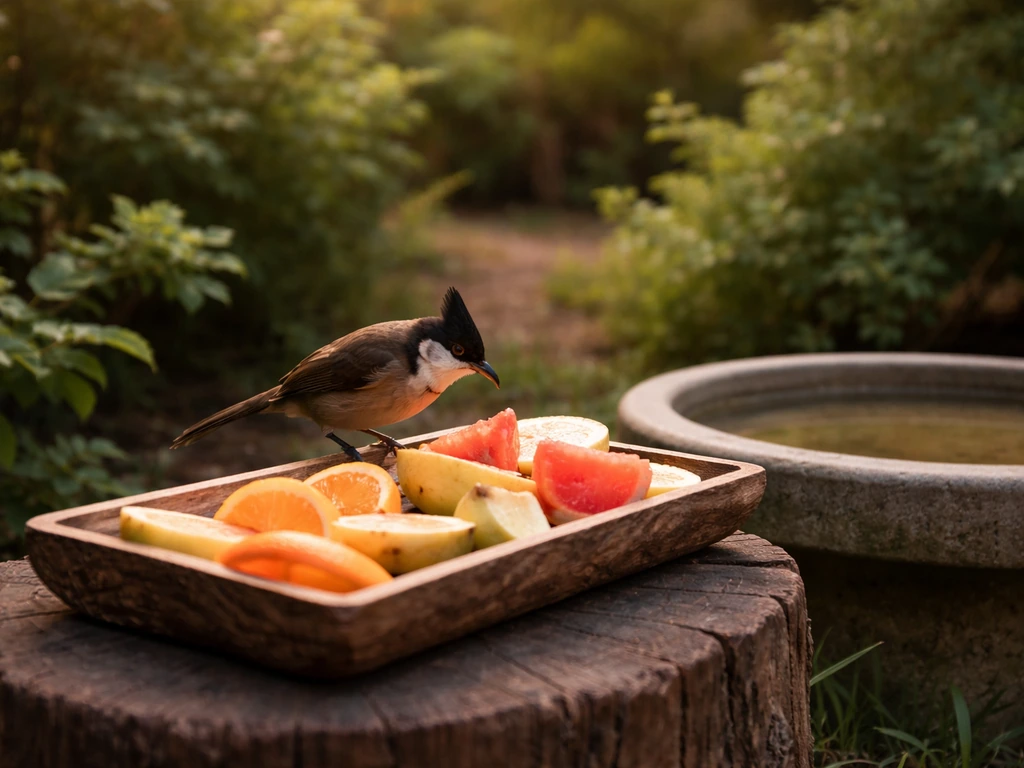
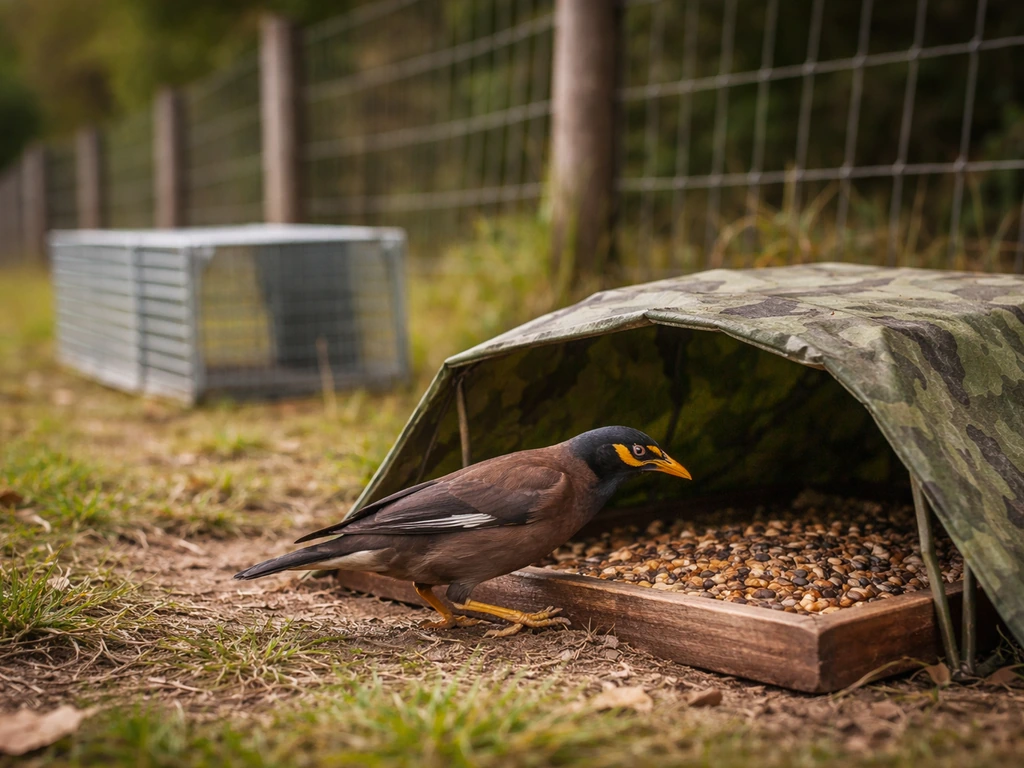
This is the step most people skip, and it's the reason they fail. Whether you are recapturing a pet or trying to humanely trap a problem wild bird, spend at least two to three days getting the bird conditioned to a specific feeding spot before you introduce any trap or enclosure. Whippoorwills respond best to quiet, natural habitat cues and steady night-time offerings, so your attraction plan should fit how they feed and where they roost how to attract whippoorwill bird. Rifle bird of paradise courtship is different from myna feeding, but the core idea is still using the right cues to pull a mate close attraction first. This pre-feeding phase is standard practice in professional myna control programs. Cardinia Shire Council's myna trapping guidelines describe exactly this approach: place food at the chosen location daily until the bird is searching for it there regularly, then introduce the trap.
Best baits and how to use them
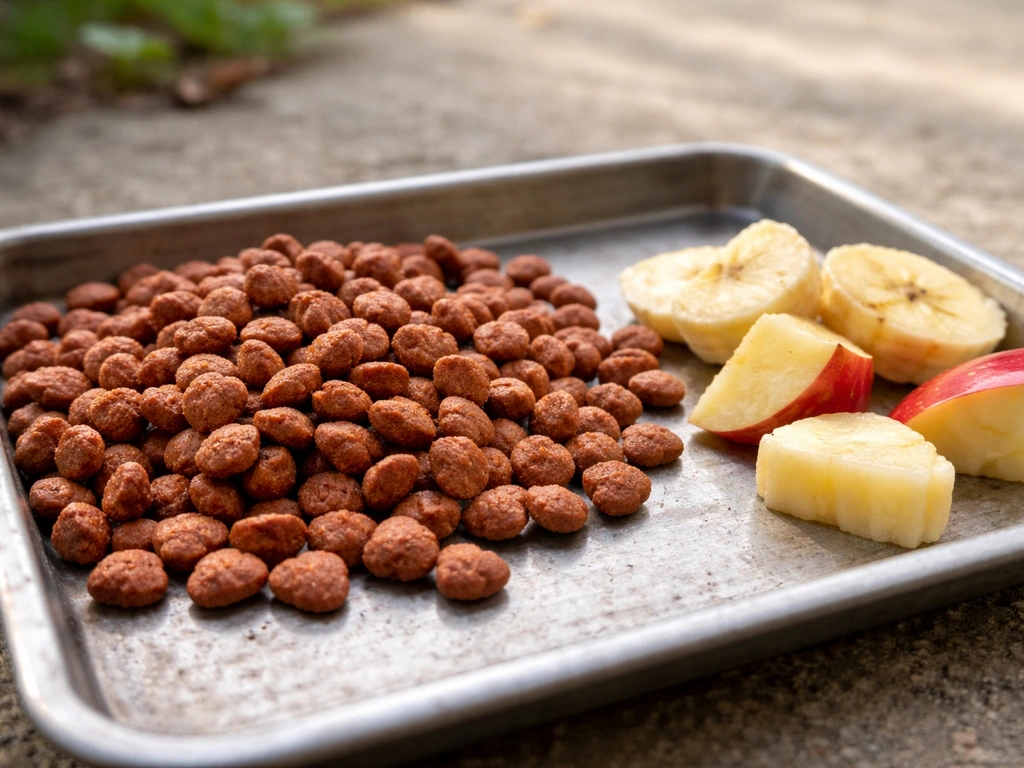
Myna diet is broad: fruit, grain, grubs, insects, and in suburban areas they are not shy about kitchen scraps. For trapping purposes, dry red-colored cat food is one of the most effective and field-tested baits for common mynas, as recommended in Australian myna control programs. It's calorie-dense, visually attractive to the birds, and holds up well outdoors. You can supplement with small pieces of banana or apple, cooked rice, or mealworms. For an escaped pet myna, use whatever it ate at home because familiar smells and foods are powerful draws.
- Dry red cat food kibble (top choice for common mynas)
- Ripe fruit pieces: banana, apple, or mango
- Cooked rice or grain
- Mealworms (especially effective as a secondary attractant)
- The bird's regular seed or pellet mix if recapturing a pet
Place food in a shallow dish in a consistent, open location the bird already visits. Minimize foot traffic near the spot. Mynas are smart enough to notice patterns, so feed at the same time each day. After two or three days of the bird visiting confidently, you're ready for the next step.
Shelter and a controlled entry point
Mynas feel safer approaching food near some cover, like a low shrub, a fence line, or the edge of a structure. Set up your feeding station close to that kind of edge. If you're recapturing a pet indoors or on a porch, close off the area gradually over a few sessions so the bird gets used to operating in a smaller, familiar space. The goal is to funnel the bird toward a location where containment is possible without any dramatic rushing or chasing.
Step-by-step capture using the least-stress methods
Once the bird is reliably visiting your feeding spot, you have two main options: a drop trap or walk-in cage trap for wild birds, or a net capture in a controlled indoor space for an escaped pet. Here is how each works.
Option 1: Walk-in cage or box trap for wild or outdoor mynas
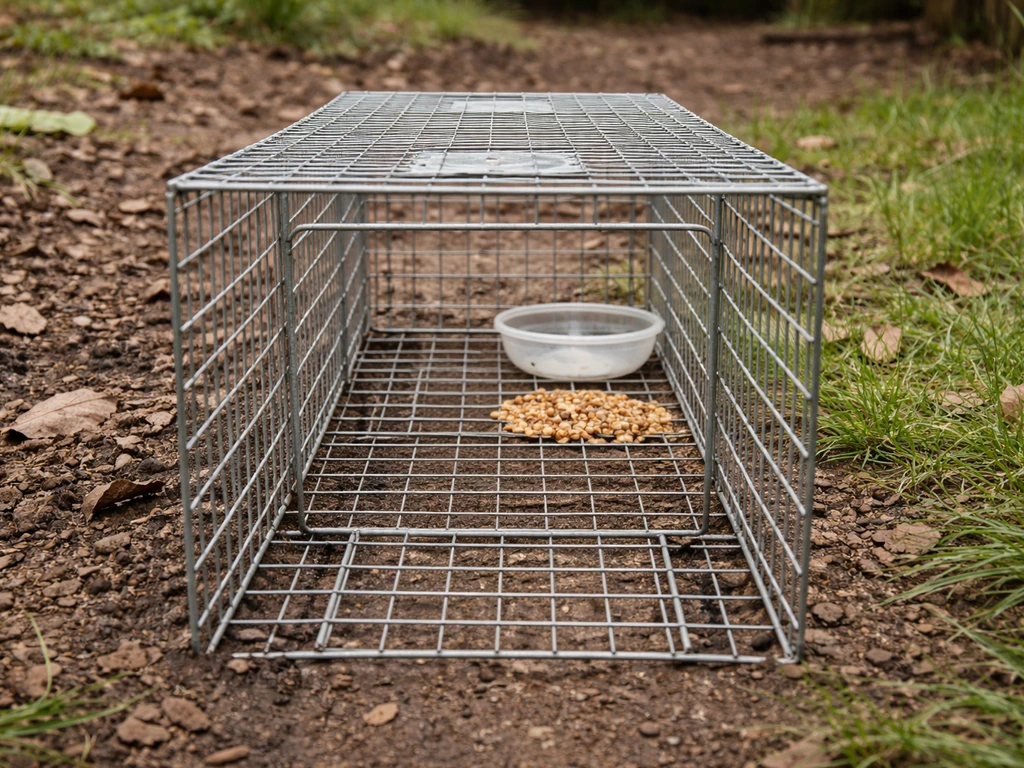
- Set up a wire cage trap at your established feeding spot. Place the food and a small water dish inside, positioned so the bird must enter the trap to reach them. Leave the trap door open and secured for the first one to two days so the bird can enter and exit freely. This is the pre-conditioning phase.
- Once the bird is entering the trap confidently, set the trigger mechanism so the door closes when the bird steps on the treadle plate or disturbs the bait dish. Many commercial myna traps use a simple treadle-and-drop-door design.
- Check the trap every 30 to 60 minutes once it is active. Never leave a set trap unattended for hours, especially in heat. A bird trapped in a small wire cage in direct sun can overheat rapidly.
- When the bird is inside, approach slowly and quietly, drape a light cloth over three sides of the trap to reduce visual stimuli, then transfer the bird to a secure, ventilated carrying box.
The two-stage roost trap design used in Australian myna control programs adds a holding section separate from the entry section, which reduces bird-to-bird stress if multiple mynas are involved. If you are dealing with a group of birds, that design is worth researching through your local pest management authority.
Option 2: Net capture in a controlled indoor space
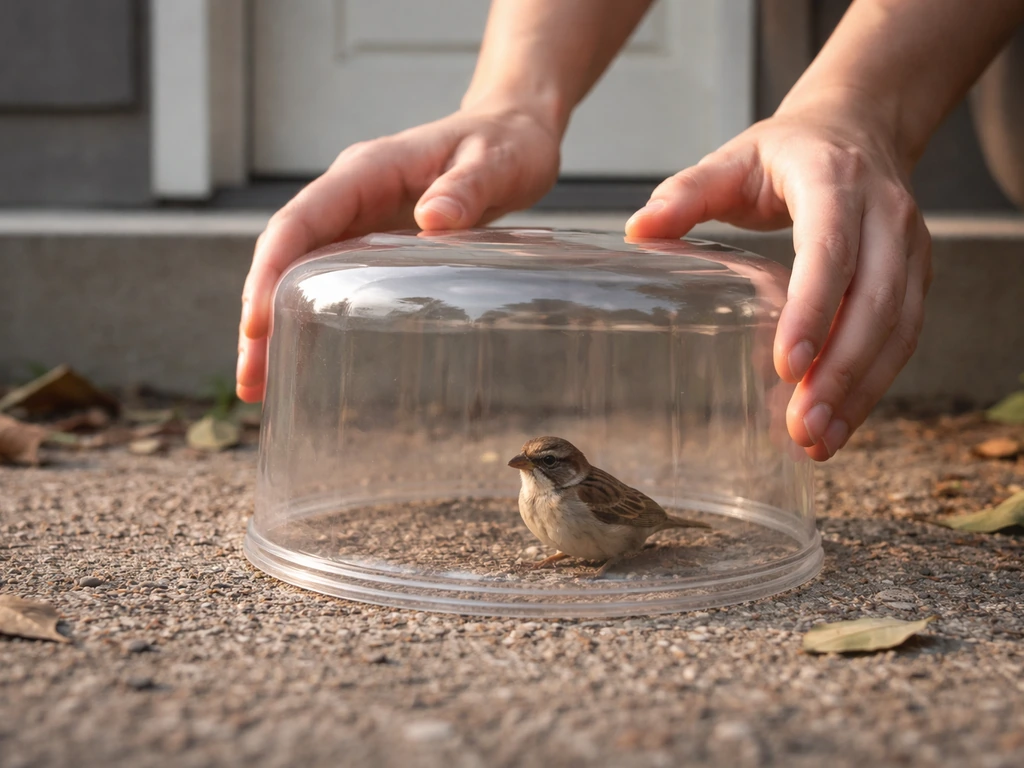
This works best for recapturing an escaped pet myna indoors or in a screened enclosure. First, remove all hazards from the room: ceiling fans off, windows covered, doors closed. Dim the lights slightly, since reduced light calms birds and slows their reaction time. Let the bird settle on a low perch or the floor near food. Use a soft, lightweight net with a deep bag (a butterfly net or purpose-made bird net works well) and make one smooth, confident sweep rather than several tentative jabs. Hesitation gives the bird time to launch. Cover the net opening immediately with your free hand once the bird is inside.
One important warning from RSPCA wildlife guidance: do not throw a towel or blanket over a flying bird, especially if it may be injured. This can cause impact injuries and worsen any existing trauma. The towel method only works reliably on a bird that is already perched and calm, and even then a proper net is safer and faster.
Troubleshooting when the bird won't enter the trap
- Go back to pre-feeding for another two to three days before trying again.
- Move the trap to a slightly different position, closer to natural cover.
- Switch the bait. If dry cat food isn't working, try fresh fruit or mealworms.
- Reduce human activity and noise near the area during feeding times.
- If other bird species are eating the bait and disturbing the area, use a smaller trap opening sized for mynas specifically.
After you catch the bird: containment, stress reduction, and what to do next
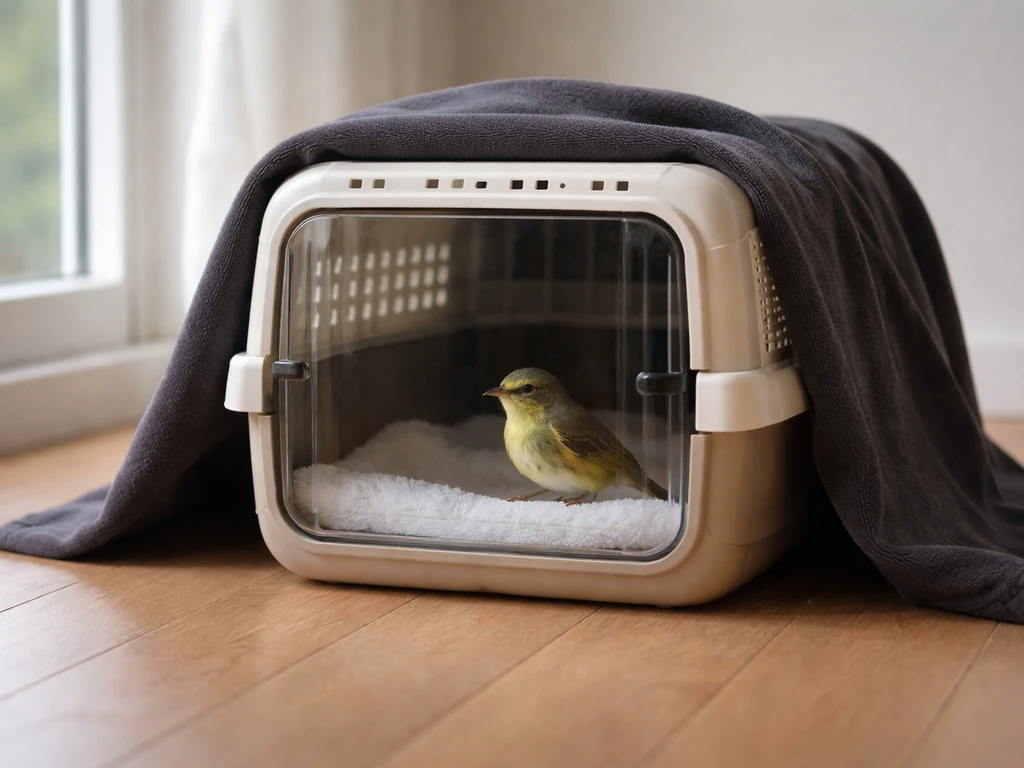
The moments right after capture are when injury risk is highest. Move deliberately and stay calm because the bird reads your energy. Here is the immediate sequence.
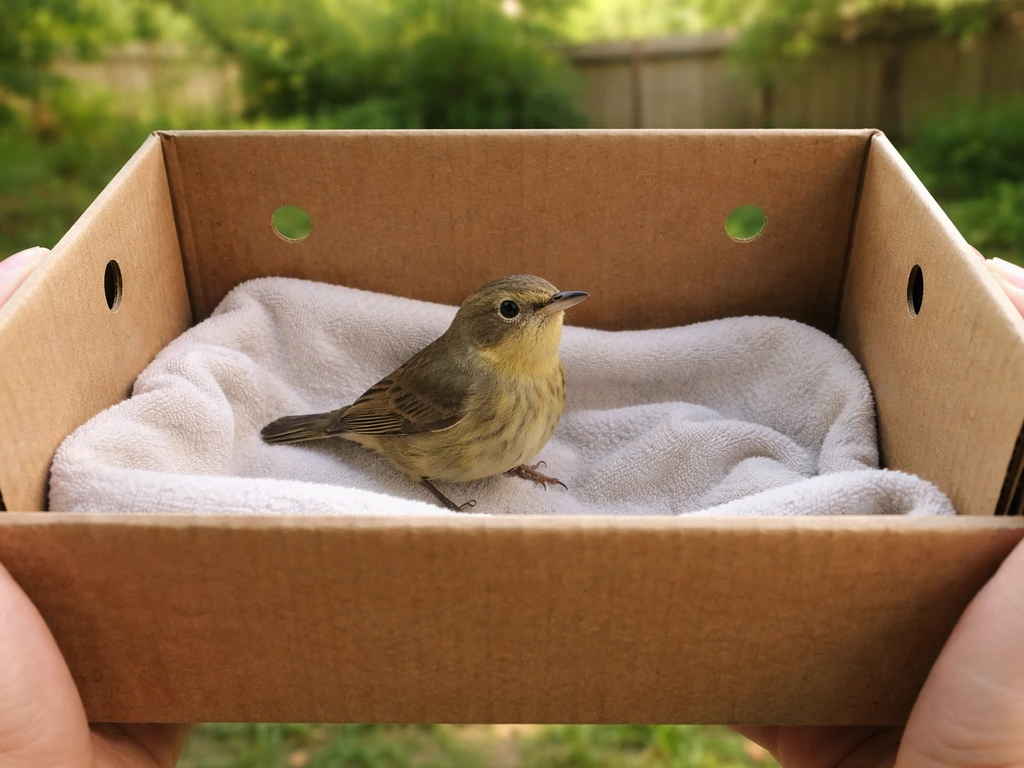
- Transfer the bird from the net or trap into a secure, ventilated carrying box or pet carrier as quickly and gently as possible. The box should be just large enough for the bird to stand and turn, but not so large it can thrash around.
- Cover at least three sides of the carrier with a lightweight cloth or towel to block visual stimuli. This alone significantly reduces panic. The Merck Veterinary Manual recommends this approach for transporting distressed birds.
- Place the covered carrier in a quiet, dim, temperature-stable location. Avoid car vents blowing directly on it.
- Do not house more than one bird in a single carrier, consistent with FWS humane handling guidance. Birds in close quarters with an unfamiliar bird will escalate stress for both.
- Check on the bird every 20 to 30 minutes. Watch for signs of severe stress: open-mouth breathing, inability to stand, or repetitive crashing against walls.
- If you're recapturing your own pet, move it to its familiar cage as soon as you're safely indoors. Familiar surroundings, its regular food, and your calm voice will help it settle within a few hours.
- If this is a wild bird and your plan involves transfer to a wildlife professional or relocation, FWS guidance notes birds should not remain in a transport carrier longer than 72 hours. Arrange transfer as quickly as possible.
When to stop and call a professional
Call a licensed wildlife rehabilitator immediately if the bird appears injured (broken wing, bleeding, unable to stand), if it is clearly exhausted or in shock, or if you are unsure about your legal authorization to hold it. Do not attempt extended DIY care of a wild myna. Rehabilitators have the permits, the species-specific knowledge, and the equipment to give the bird the best outcome. Contact your nearest wildlife rehabilitation center or your state fish and wildlife agency for a referral.
If catching isn't the answer: deterrence, relocation, and professional help
If your goal is simply to stop mynas from dominating your yard or garden, you may not need to catch them at all. Because mynas are diet opportunists, removing food sources is often the most effective first step. Secure compost bins and outdoor food waste, bring in fallen fruit, and avoid leaving pet food outdoors. Mynas are also cavity nesters and will readily exploit roof voids, dense shrubs, and ledges. Blocking access to these spots removes the incentive to stay.
Visual deterrents like reflective tape, predator decoys, or motion-activated sprinklers have mixed results with mynas because these birds are bold and adapt quickly to non-threatening stimuli. Consistent harassment via sprinklers timed to feeding hours works better than static deterrents. If you attract other garden birds to your yard, the competition and territory noise from established residents can discourage myna flocks from settling. This connects to the broader principle behind attracting birds like bluebirds or bulbuls to your space: a busy, bird-active yard tends to regulate itself better than an empty one. If you want to attract blue bird species instead, you can use a similar lure approach, but match it to their diet, light, and nesting needs attracting birds like bluebirds.
For persistent problems with large numbers of common mynas, especially in Australia where they are classified as a pest, community trapping programs coordinated through local councils are a well-resourced and legally straightforward option. These programs use standardized Pee-Gee or cage traps, provide training, and handle disposition of trapped birds. Joining one of these programs is far more effective than individual trapping and removes the legal guesswork entirely.
If your situation involves a myna that entered your home through a window or door and is now trapped inside, skip the trap entirely. Close interior doors to confine it to one room, open the windows or doors leading outside, step back and wait. Most birds will find the exit within a few minutes once the room is quiet. If it has been longer than 20 to 30 minutes, dim the room and use a very gentle herding motion with an open towel held low to guide it toward the open exit, but never chase or corner it. Patience here genuinely works faster than action.
| Situation | Best approach | When to call a professional |
|---|---|---|
| Escaped pet myna outdoors | Pre-feed in familiar area, then net or open-cage recapture | If bird has been missing more than 24-48 hours and shows signs of injury |
| Wild myna inside the house | Contain to one room, open exits, wait quietly | If bird is injured or cannot fly out after 30-40 minutes |
| Wild mynas damaging garden/property | Remove food sources, block nesting sites, then humane cage trap if permitted | If numbers are large or legal permit status is unclear |
| Injured wild myna on ground | Do not attempt capture. Keep people and pets back | Immediately: contact a licensed wildlife rehabilitator |
| Large flock, persistent pest problem | Join a community or council trapping program | Contact local pest management authority or wildlife agency |
FAQ
How can I tell if the “myna” I’m dealing with is actually a hill myna pet or a common myna wild bird?
Use the silhouette and face pattern. Common mynas have a black hooded head plus bright yellow bare patches behind each eye, yellow legs, and bold white wing patches in flight. Hill mynas are glossy dark overall and have orange-yellow wattles, with a different overall face and wing flash pattern. If you are unsure, avoid trapping until you confirm, because the species you catch affects what authorization and care options are allowed.
If I legally can’t trap or capture in my area, what should I do instead?
First, shift to exclusion and attract-and-displace strategies. The article already suggests removing food sources, but also focus on blocking nesting sites (seal roof voids, cover vents, and remove dense cover that provides cavities). If the bird is inside, confine it to a single room and open the exterior exit so it can leave on its own, which usually avoids any need for capture.
What’s the safest way to set a feeding spot so the bird commits to it, but I don’t attract other animals?
Choose a consistent, open location with minimal foot traffic, use a shallow dish, and remove leftovers after a short period rather than leaving food all day. That reduces odors that pull in rats and other birds and prevents the bird from learning that “any time equals free food” (which makes trapping less predictable).
Can I use homemade traps or improvised nets instead of purpose-built equipment?
Improvised setups raise injury risk because many don’t have the right entry geometry, latching design, or holding space to prevent panic flapping and contact injuries. If capture is authorized, use designs intended for the target size and behavior (drop trap, walk-in cage, or properly designed roost traps). If you don’t have suitable equipment, it’s safer to continue attraction-only and rely on a licensed professional when authorization is required.
How do I handle a myna that refuses to approach the feeding dish after conditioning?
Don’t keep increasing your pressure (more food, more movement, or closer placement). Instead, extend conditioning by a few more days, keep the dish in the same spot and at the same time each day, and move the dish slightly closer to cover only if the bird is consistently visiting but staying at a distance. If there is a mismatch in bait preference, switch bait to what fits their typical diet in your area, while still keeping feeding placement unchanged.
When I catch a myna indoors, should I immediately transfer it outdoors or keep it inside?
If the capture is only to resolve a nuisance indoors, the safest immediate goal is containment with minimal stress. Keep the bird in a secure, dim, quiet space and handle the timing based on authorization. If you’re unsure whether you may hold the bird, call a licensed wildlife rehabilitator right away rather than deciding on your own relocation or release timing.
What if the bird is injured or bleeding but looks like it can still fly?
Treat it as injured anyway. Even “still flies” birds can have fractures, internal bleeding, or shock. Put it in a secure container in a warm, dark, quiet area and contact a licensed rehabilitator promptly. Avoid repeated attempts to net or relocate it yourself.
How long should I wait before calling for help after a capture attempt fails?
If the bird won’t commit after the attraction phase (two to three days) or you observe escalating avoidance behaviors, pause and reassess rather than running multiple capture attempts. If it’s a wild myna and you don’t have clear legal authorization, or if multiple failed attempts occur, contact local wildlife control or a council/community trapping program where applicable to reduce risk and prevent further stress to the bird.
Are deterrents like reflective tape or decoys enough to stop mynas from nesting?
They’re often inconsistent for mynas because the birds adapt quickly. The most reliable approach is removing incentives: remove accessible food (including fallen fruit and outdoor pet food) and block cavities or ledges they use for nesting. If harassment options are used, time them to feeding hours and keep the pattern consistent, since that’s when mynas make decisions about where to settle.