
You can safely catch a wild bird without killing it by using a towel, your bare hands, or a net to gently restrain it, keeping the wings folded against its body to prevent injury. The key is moving slowly, minimizing noise and stress, and having a lined box ready before you ever touch the bird. Whether you're dealing with a window-collision casualty in your yard, an injured songbird you spotted near the feeder, or a disoriented bird that wandered inside, the same core principles apply: stay calm, move slowly, contain quickly, and limit handling to the minimum needed.
How to Catch a Bird Without Killing It: Humane Steps
Clara Hayes
6 May 2026
Humane capture basics and the rules you can't skip
Before you reach for the bird, run through these ground rules. They protect both you and the animal, and skipping them is how birds get hurt during well-meaning rescues.
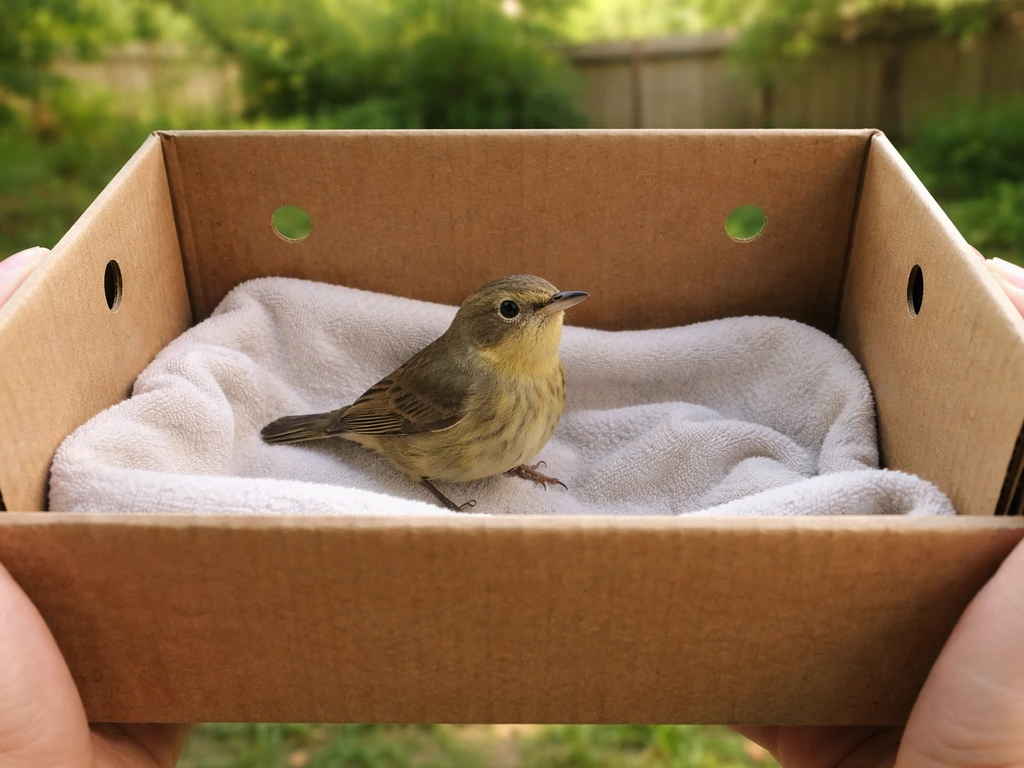
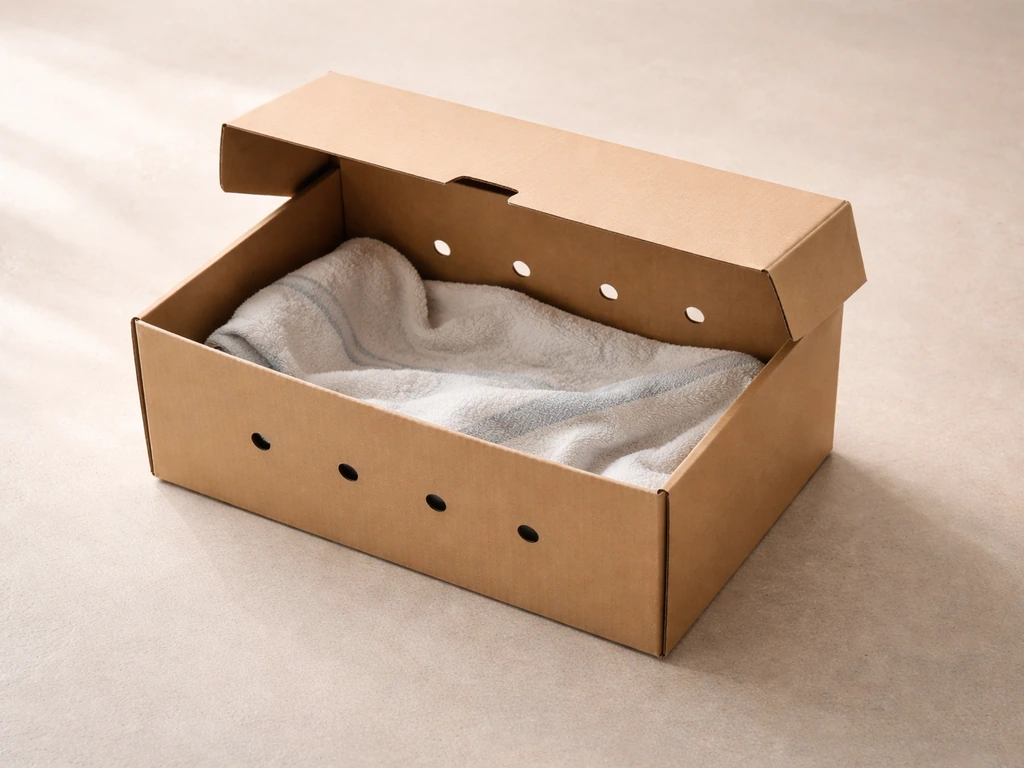
- Prepare your container first. A cardboard box or shoebox with a lid, lined with a folded towel or paper towels, and punched with a few ventilation holes is all you need. Have it open and within arm's reach before you approach the bird.
- Keep noise to a minimum. Human voices, footsteps, and eye contact are genuinely stressful to wild birds. Tufts Wildlife Clinic specifically flags noise, touch, and direct eye contact as major stressors. Work quietly.
- Wear thin gloves if you have them. They protect you from bites and scratches and reduce disease transmission. For most small songbirds, lightweight garden gloves are fine. Skip heavy gloves for tiny birds since you lose too much dexterity.
- Never grab a bird by its legs, tail, or wings. Always restrain around the shoulders so the wings stay folded against the body. A flapping wing fractures easily.
- Move in a slow arc, not a straight charge. Approach from the side rather than head-on, and crouch to reduce your visual threat profile.
- Limit total handling time. Every second a wild bird is in your hands is stress on its heart. Get it contained and leave it alone as fast as you can.
- Keep pets and children away from the capture area immediately.
One practical timing tip: dawn and early morning are generally your best window. Birds are calmer, temperatures are cooler, and you're less likely to be competing with heat stress on top of the bird's existing problem.
Catching a wild bird without a trap
Most backyard situations don't require a trap at all. A stunned, injured, or grounded bird can usually be picked up with your hands or a towel. Here's how to approach each scenario.
The towel method (most reliable for most birds)
Grab a hand towel or washcloth and drape it lightly over the bird as you approach. The darkness under the cloth calms the bird almost immediately. Once it stills, place both hands around the bird through the towel, with your fingers gently encircling the shoulders so the wings can't flap outward. Lift the bird still wrapped in the towel and lower it into your prepared box. Leave the towel in the box for padding, close the lid, and you're done.
Bare-hands approach for stunned birds
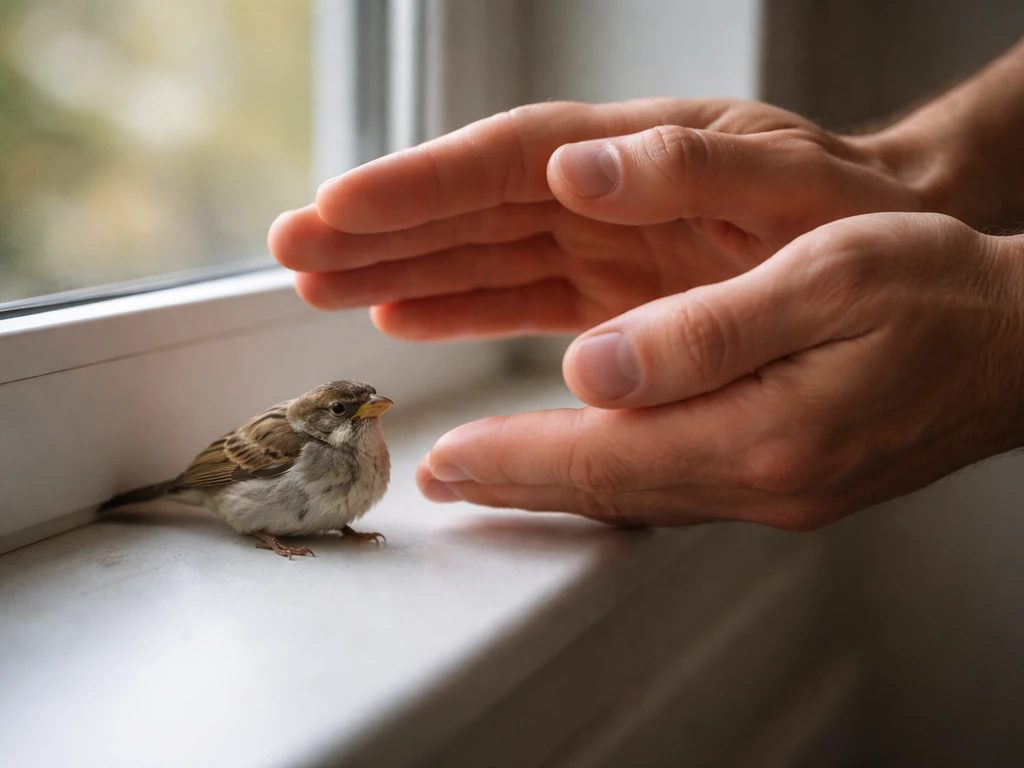
If the bird is truly stunned (blank" rel="noopener noreferrer">window collision, for example) and sitting still, you often don't need a towel at all. Cup both hands around the bird from above, press your palms gently inward so the wings can't spread, then lift. Keep the bird horizontal. Place it directly in your box. Bare-hands techniques are covered in much more detail in the guide on how to catch a bird with your bare hands, but the short version is: two hands, shoulders pinned, horizontal lift.
Cornering an alert but grounded bird
If the bird is moving but can't fly, use a contained space to your advantage. Corner it gently against a wall, fence, or bush and approach from a low angle. You can use a large cardboard box itself as a scoop, sliding it toward the bird and tipping it over as a temporary cover, then sliding a piece of cardboard underneath to seal it. This is essentially the box trap principle from the guide on how to catch a bird with a box, but without bait or a trigger string since the bird is already grounded.
Using a net for faster or more mobile birds
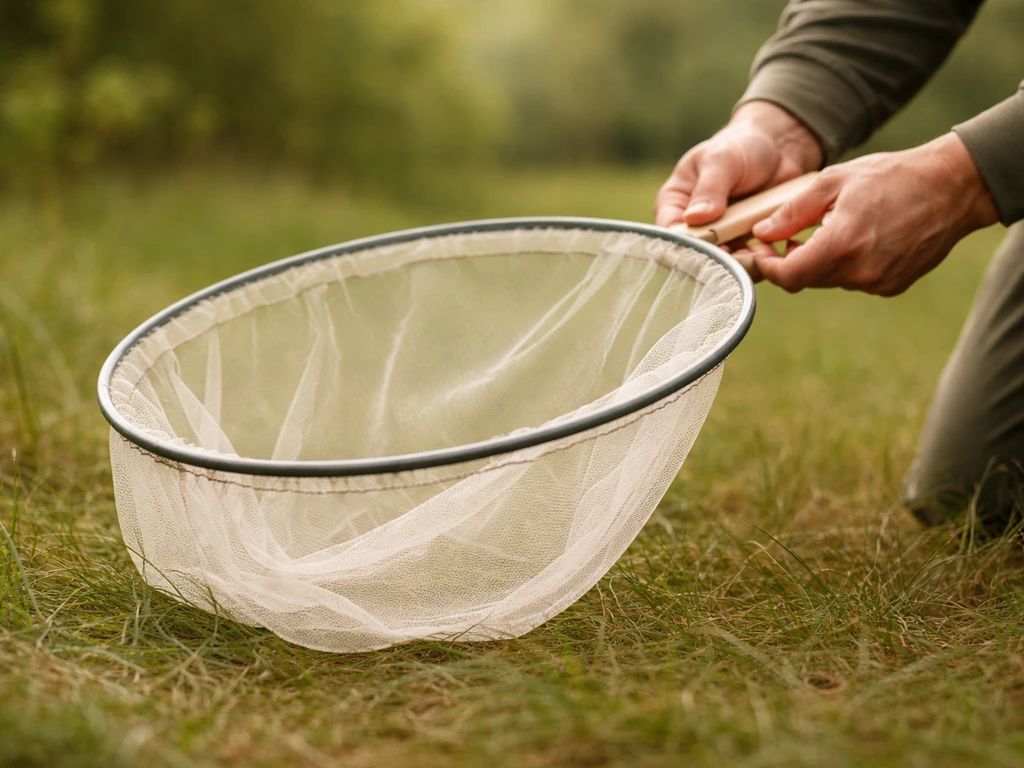
A soft butterfly net or a purpose-made bird landing net works well for birds that are weakened but still making short hops or low flutters. A soft butterfly net or a purpose-made bird landing net works well for birds that are weakened but still making short hops or low flutters how to catch a bird with a net.
Swing the net in a smooth arc rather than a stabbing motion, and immediately fold the net opening closed so the bird can't escape and can't thrash. Reach in through the net fabric from outside, locate the shoulders, and transfer to your box. Net techniques are explored in depth in the article on how to catch a bird with a net. One caution: never leave a bird sitting in the bottom of a net.
The mesh can tangle feet and toes fast.
Luring a bird into a contained space
If you need to catch a healthy but disoriented bird that has flown into your garage or shed, the most humane approach is to remove the stress rather than chase it. Close doors and other escape routes, darken the space by covering any windows except one, and leave that one window fully open. The bird will almost always fly toward the light and exit on its own within 10 to 30 minutes. If it doesn't, you can very slowly use a broom or wide piece of cardboard to herd it toward the opening without ever physically grabbing it.
How to handle a bird without hurting it: tools and technique
The single most important rule in bird handling is shoulders, not wings. Wrap your hand or the towel around the bird's shoulder joint so both wings are pressed lightly but firmly against the body. This prevents the frantic flapping that breaks feathers and dislocates joints. The grip should feel snug, not squeezing. You want to feel the keel (breastbone) between your fingers but not compress the chest, since birds breathe by expanding their chest and you can suffocate a small bird by gripping too tightly across the sternum.
For larger birds like pigeons, crows, or ducks, use two hands and support the body from underneath. Keep the head pointed away from your face since larger birds peck hard and some can draw blood. For raptors (hawks, owls, falcons), the guidance from the Raptor Center at the University of Minnesota is clear: cover the entire bird with a thick towel or blanket, pin the wings to the body, lift, and get it straight into a ventilated carrier. Do not attempt to restrain the talons yourself unless you have leather gloves and some experience. Raptors are a case where calling a wildlife rehabilitator is genuinely the right call.
Transport containers should be only slightly larger than the bird. This sounds counterintuitive, but a snug box prevents the bird from flapping and reinjuring itself during transport. Punch several dime-sized ventilation holes in the lid and upper sides, never the bottom. Keep the box in a warm, dark, quiet location and resist the urge to peek in every few minutes.
Species-aware tactics for common backyard birds
Different birds require slightly different approaches. Here's a practical breakdown of the most common species people encounter.
| Bird | Typical situation | Best capture method | Special notes |
|---|---|---|---|
| Sparrows, finches, chickadees | Window collision, grounded after cat attack | Towel or bare hands | Extremely fragile; handle for under 30 seconds. Never squeeze. |
| Robins, starlings, thrushes | Stunned, weakened, or trapped indoors | Towel, bare hands, or corner-and-scoop | Tend to struggle more than tiny birds; towel preferred. |
| Pigeons, doves | Injured on ground, can't fly | Two-handed shoulder grip or towel | Surprisingly calm once covered; keep head away from your face. |
| Crows, jays | Injured or grounded | Net or towel plus thick gloves | Smart and defensive; will peck hard. Approach slowly. |
| Ducks, geese | Entangled, injured, or oiled | Large towel or blanket, two people ideally | Wings are powerful. Wrap the whole body. Geese can bruise you. |
| Raptors (hawks, owls) | Window collision, hit by car | Thick towel or blanket, carrier only | High injury risk to handler. Call a rehabilitator if at all possible. |
| Hummingbirds | Trapped indoors or exhausted | Slow bare-hands cup or offered finger perch | Almost never need manual capture; darken room and let them find a window. |
If you're dealing with a pet bird that has escaped outside, the situation is different. A tame cockatiel, budgie, or parrot that flew out the door is stressed but typically not injured, and your goal is luring rather than grabbing. Keep your voice calm and familiar, offer a favorite treat or their travel cage, and avoid chasing since they'll just fly further. Catching a bird that is in a tree is covered separately and involves patience and positioning more than physical capture.
What to do immediately after you've caught the bird
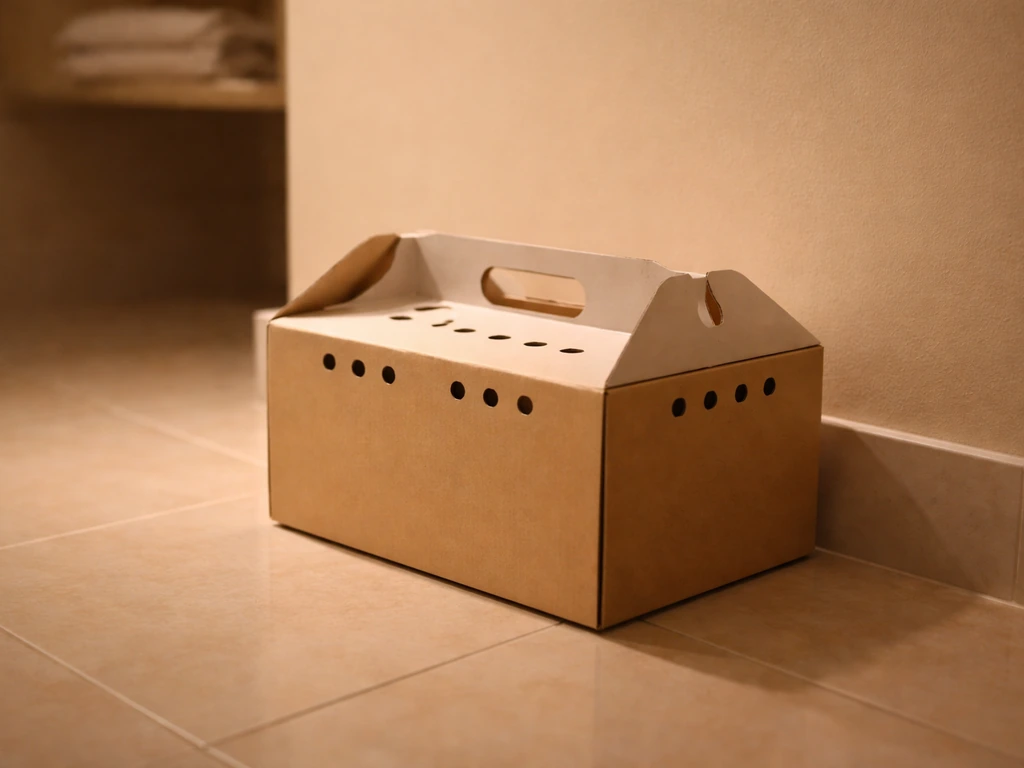
You have the bird in its box. Now what?
- Place the closed, ventilated box in a warm, quiet, dimly lit room. A bathroom or laundry room works well. Keep it away from pets, loud appliances, and direct sunlight.
- Do not offer food or water to most wild birds, especially small songbirds. Audubon specifically advises against feeding or watering birds before professional assessment. The one exception is waterfowl that are visibly dehydrated after entanglement, but even then, get professional guidance first.
- Check every 15 minutes if the bird was simply a window-collision casualty with no visible injuries. Open the box lid slightly outdoors. If the bird is alert, upright, and responsive, it may fly off on its own. USFWS guidance specifically recommends this check-every-15-minutes approach for stunned birds.
- If the bird doesn't recover within two hours, has visible injuries (bleeding, drooping wing, obvious leg break), or can't hold its head up, it needs a wildlife rehabilitator. Stop waiting and start searching.
- To find a wildlife rehabilitator: search your state's wildlife agency website, call a local animal shelter or veterinary clinic and ask for a referral, or use the National Wildlife Rehabilitators Association directory. Most areas have someone within driving distance.
- For a healthy bird you caught to relocate (perhaps it got trapped in your garage), simply carry the box outside to a suitable area with vegetation and open the lid. Step back. It will leave when it's ready.
A critical thing not to do: do not place the bird in a wire cage, a clear glass container, or anywhere it can see the outside world clearly. Do not keep the bird in a cage for long, and instead focus on a safe, humane containment plan until you can get expert help how to catch a bird in a cage. Visual exposure keeps stress hormones elevated and slows recovery. Darkness is genuinely therapeutic here.
Troubleshooting: why your capture attempt isn't working
Most failed attempts come down to a handful of predictable mistakes. Run through this checklist if the bird keeps escaping or you're struggling to get close.
- You're moving too fast. Slow down by at least half. Approach in a low crouch, pausing every few steps. The bird's flight instinct is triggered by sudden movement, not slow approach.
- You don't have your container ready. Fumbling for a box after you've caught the bird means dropping it or letting it escape. Set everything up first.
- You're approaching head-on. Come from the side or behind. A bird facing you is already in threat-assessment mode.
- The bird isn't actually injured and can fly fine. A healthy wild bird that can fly is not catchable by hand and shouldn't be chased. If it can fly, it doesn't need your help. Best Friends Animal Society notes this explicitly: a bird flying well is generally not catchable, and that's actually good news.
- You're in a wide-open space. Physical capture without a trap becomes nearly impossible in open lawn. Use a corner, a wall, or a bush to limit the bird's escape routes before you close in.
- Your grip is wrong. If the bird is struggling violently in your hand, check that you've got the shoulders, not the body or legs. A bird gripped at the shoulders with wings pinned calms down significantly faster.
- There are too many people. One calm person is far less threatening than three excited ones. Clear the area.
- You tried too many times. Multiple failed attempts ramp up the bird's adrenaline and physical exhaustion. If you've failed twice, take a 10-minute break and let the bird settle before trying again.
The legal side: what you're actually allowed to do
This part matters more than most people realize. In the United States, the Migratory Bird Treaty Act (MBTA) makes it federally unlawful to pursue, capture, possess, or transport most wild bird species without a permit. This covers an enormous range of common backyard birds including robins, sparrows, warblers, swallows, hummingbirds, hawks, and owls. The Animal Legal and Historical Center quotes the MBTA's broad prohibition language directly: take, possession, transportation, or sale of migratory birds without permits is prohibited. The law applies to live birds as well as dead ones, and even feathers and nests.
State law adds another layer. Washington State, for example, explicitly states it is unlawful to possess or transport live wildlife or wild birds without a permit, with very limited exceptions. Most states have similar rules.
So what does that mean practically for someone who just found an injured bird in their yard? In most U. S. states, short-term emergency handling to contain a clearly injured bird and transport it directly to a licensed wildlife rehabilitator is considered an exception to possession rules and is not prosecuted.
The key word is directly: contain it, drive it to a rehabilitator, and hand it off. Don't keep it, don't try to nurse it back to health yourself, and don't show it to the neighborhood kids for three days first. Golden Gate Bird Alliance also advises not to attempt to provide food or water to an injured bird and to take it to a wildlife rescue or rehabilitator if it doesn’t recover [do not attempt to provide food or water](https://goldengatebirdalliance.
org/birding-resources/birding-information/injured-birds/).
Licensed wildlife rehabilitators hold the permits that allow them to legally possess, treat, and house wild birds. The USFWS Migratory Bird Permit Memorandum (MBPM-4) and the agency's formal humane capture guidance both exist specifically to govern what permitted individuals can do. If you are not permitted, your legal safe zone is: emergency containment, minimal handling, and prompt transfer to someone who is permitted.
When to call a professional instead of handling it yourself
- The bird is a raptor (hawk, owl, eagle, falcon). Talons can cause serious injury and these birds need specialized care.
- The bird is bleeding actively or has an obvious broken bone.
- The bird has been caught by a cat, even if it looks fine. Cat bacteria cause fatal sepsis in birds within 24 to 48 hours without antibiotics.
- You've had the bird for more than two hours and it isn't recovering.
- The bird is a protected species you can't identify.
- You feel unsure about any part of the handling or what to do next.
The NYC Bird Alliance says it plainly: once the bird is securely contained, if you can't transport it yourself, contact a local rescue organization. You don't have to solve this alone, and calling for help is always the right move when you're uncertain. Wildlife rehabilitators are not there to judge you for picking up the bird. They're there to take it off your hands and give it the best possible outcome.
FAQ
What should I do if the bird seems healthy but keeps panicking or flying around inside?
If the bird is alert, perched, or able to stand and hop normally, the “catch” plan is usually unnecessary. Try quiet exclusion steps (close doors, block off other rooms, reduce windows glare) and let it leave on its own. Use physical capture only if it is injured, clearly unable to fly, or trapped with no other way out within a short time.
How big should the transport box be, and what kind of bedding is safest?
For a box, aim for a snug fit, but never squeeze the bird. A practical test is that you can slide the box lid on easily and there is no extra space where the bird can complete a strong flapping sequence. Ventilation should be in the lid and upper sides, and bedding should be soft and non-slip (avoid loose fibers that can catch toes).
Should I feed or water a bird after I catch it?
Do not give food or water unless a veterinarian or licensed wildlife rehabilitator instructs you. Many species aspirate or choke, and some “home remedies” can worsen dehydration or cause crop and gut problems. The safer immediate goal is warmth, darkness, minimal handling, and a quick handoff to permitted care.
What’s the safest way to transport a rescued bird in the car?
If you have to carry it, keep the box upright on the seat or floor so the bird stays as horizontal as possible and can’t roll. Avoid shaking, loud sounds, and repeated opening of the lid, and keep travel time short. If the bird becomes noticeably colder (chilled to the touch), add gentle, external warmth to the box area only, not heat sources inside the container.
I found a bird that hit a window but it looks unhurt. When should I contact help?
If you find a bird with no visible injury but it is disoriented, the window-method (one open exit and dim surroundings) is often the best first attempt. If it cannot reach the opening after about 30 minutes, or you repeatedly see it colliding or falling, switch to humane containment and contact a rehabilitator rather than trying repeated grab attempts.
Can I use tape or a zip tie to stop the bird from flapping?
You should not tape, tie, or bind a bird’s wings. Even “temporary” ties can damage shoulder joints and cause breathing restriction. If a bird is thrashing, focus on the shoulders restraint method (wings held lightly to the body) and then transfer immediately to a ventilated, dark container.
What if I think I found a baby bird that fell out of a nest or is still on the ground?
A nestling or fledgling on the ground is common, but “no visible injury” does not always mean “safe to keep.” If the bird is feathered or recently left the nest, follow a quick rescue approach: keep it warm, reduce handling, place it back if you are sure it came from that location, and otherwise contact a licensed rehabilitator.
How can I tell if a bird needs urgent professional care after an attempt to catch it?
If you see blood, a wing droop, open mouth breathing, severe lethargy, or inability to stand or perch, treat it as urgent. Keep it contained and limit handling, then contact a wildlife rehabilitator as soon as possible. These signs often indicate internal injury even when the bird initially looks “mostly okay.”
What’s the safest next step if I’m worried about legality or whether I’m allowed to transport the bird?
Even when a short-term exception applies, the safest legal and humane workflow is contain, document briefly (time and location), and transfer directly. Avoid keeping it overnight, showing it around, or attempting rehabilitation at home. If you are unsure which agency covers your area, call a local wildlife rehabilitator first and follow their instructions.
What should I do if the bird escapes while I’m trying to place it into the box?
If the bird escapes mid-transfer, stop immediately, reset your approach, and do not chase it across open space for long. Darkness and enclosure help, so re-establish a contained area (close doors, reduce sightlines) and try again with a towel-over or net transfer depending on the bird’s movement. Longer chases increase injury risk and exhaustion.