
You can build real trust with a sparrow, but the path looks very different depending on whether you're working with a pet bird or a wild one. If it's a wild sparrow, your goal is gentle, patient association from a distance using food, not hands-on taming. If it's a captive-raised or hand-fed bird, you have more room to work toward hand feeding and close contact. Either way, the process is slow, quiet, and reward-based. Forcing contact or rushing proximity almost always sets you back weeks.
How to Tame a Sparrow Bird: Humane Trust-Building Steps
Clara Hayes
6 May 2026
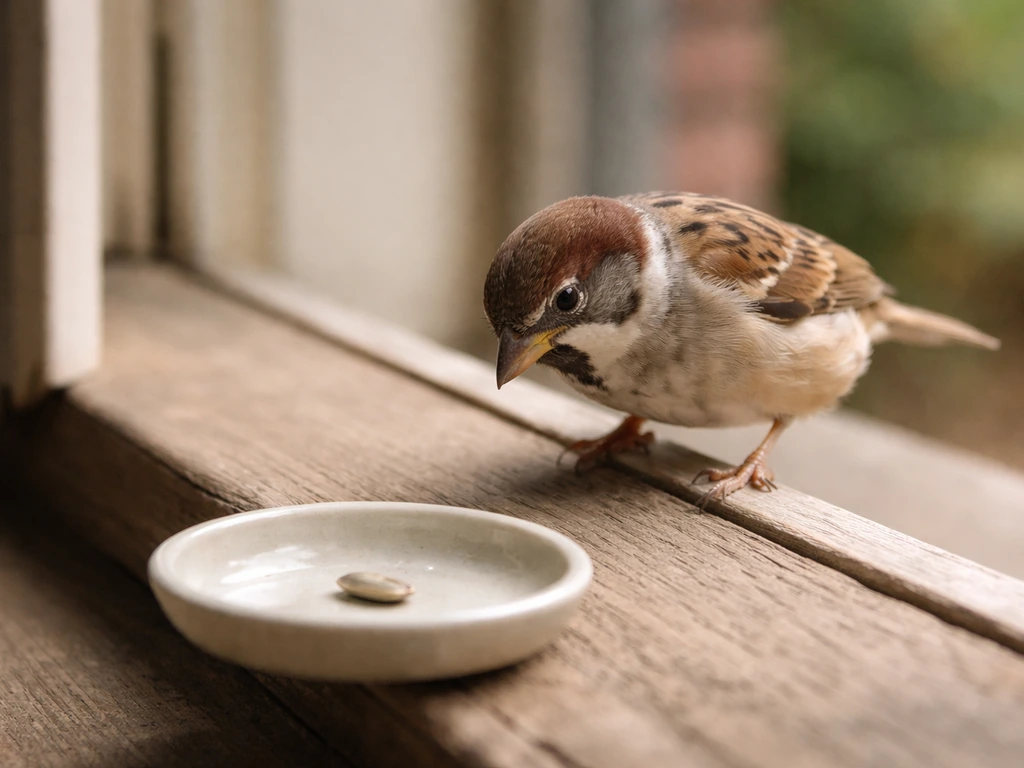
First: Figure out what kind of sparrow you're actually dealing with
This step matters more than anything else in this guide, because it determines what's legal, what's realistic, and what approach you should take. Most sparrows people encounter in North America are wild birds, and the situation changes completely if that's the case.
Wild sparrows found in your yard, on a windowsill, or hopping around a parking lot are almost certainly protected under federal law. The Migratory Bird Treaty Act (MBTA) covers a long list of native species, including many sparrows like song sparrows, white-throated sparrows, and chipping sparrows (the full list is at 50 CFR § 10. That authoritative protected-species list is published in 50 CFR § 10.13 under the Migratory Bird Treaty Act blank" rel="noopener noreferrer">the full list is at 50 CFR § 10.. 13). Under the MBTA, it's illegal to capture, handle, or keep these birds without authorization. That means even well-intentioned taming attempts that involve catching or confining a wild native sparrow can put you on the wrong side of the law.
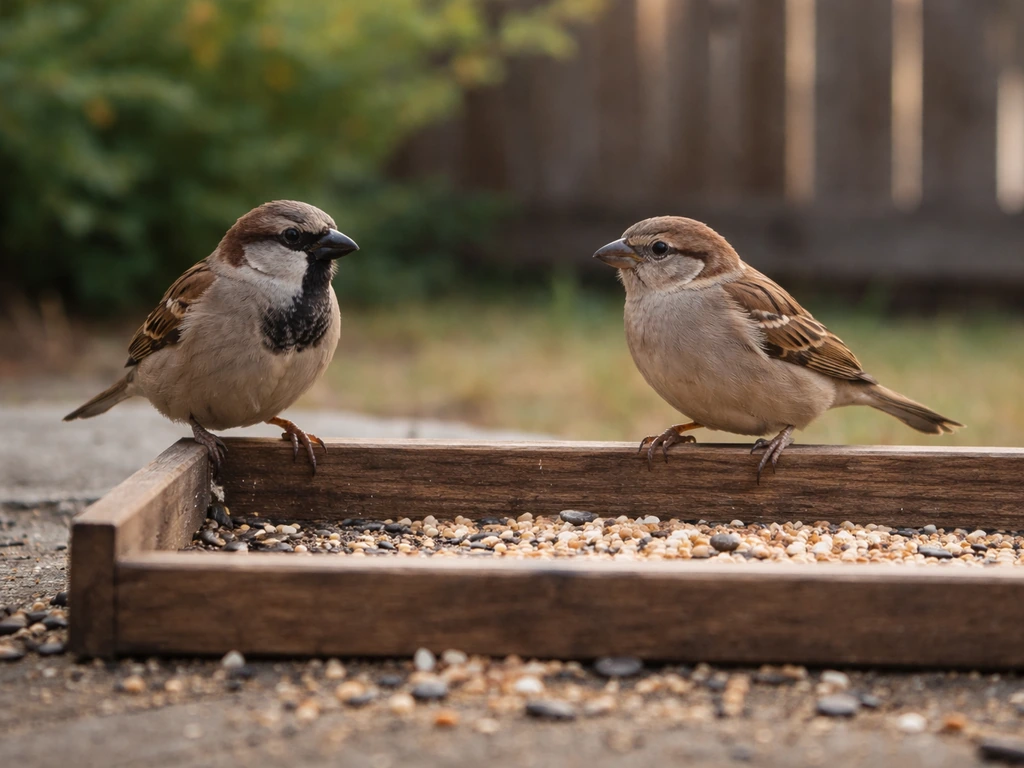
House sparrows (Passer domesticus) are the big exception. They're an introduced, non-native species and are not protected under the MBTA in the U.S. This is the sparrow most likely to be kept as a pet or raised from a found nestling. If your sparrow is a house sparrow, you have more flexibility legally.
A captive or pet sparrow is one that was either purchased from a breeder, hand-raised from a very young age, or has been in human care long enough that it's no longer capable of surviving in the wild. These birds are candidates for hands-on taming. A truly wild adult sparrow is not, and attempting to tame it in the traditional sense is stressful for the bird and usually unsuccessful.
- Wild native sparrow found outside: Observe from a distance; do not confine or handle. If injured, contact a licensed wildlife rehabilitator.
- Wild house sparrow (non-native): Not federally protected; still stressful to confine as an adult. Approach with realistic expectations.
- Captive-raised or pet sparrow: Your best candidate for trust-building and gradual hand taming.
- Nestling or fledgling found on the ground: Check if it's a fledgling (feathered, hopping) before assuming it needs rescue. If a parent is dead or visible injury exists, call a rehabilitator.
Safety, legality, and being honest about what "taming" means for a sparrow
Sparrows are not parakeets or cockatiels. They're skittish prey animals with fast metabolisms and high stress responses. Even pet sparrows rarely become lap birds. A realistic tame sparrow is one that tolerates your presence calmly, approaches you for food, and maybe steps onto your hand without panicking. Full, relaxed handling like you might expect from a parrot is uncommon and should never be forced.
For wild birds, the U.S. Fish and Wildlife Service is clear: you should never attempt to capture or transport a wild bird without professional guidance, and keeping a wild bird as a pet is illegal. If you find a bird that appears sick or injured, showing signs like a broken limb, active bleeding, shivering, or a dead parent nearby, those are situations where the bird likely needs professional help. Contact a licensed wildlife rehabilitator rather than trying to care for it yourself.
For captive house sparrows, the safety basics are simple but important. Keep the bird away from other pets (especially cats and dogs), avoid direct handling until the bird is calm and choosing to come close, and never hold or restrain a sparrow tightly. Their bodies are small and fragile, and a stressed sparrow can injure itself trying to escape.
Setting up the right environment before you do anything else
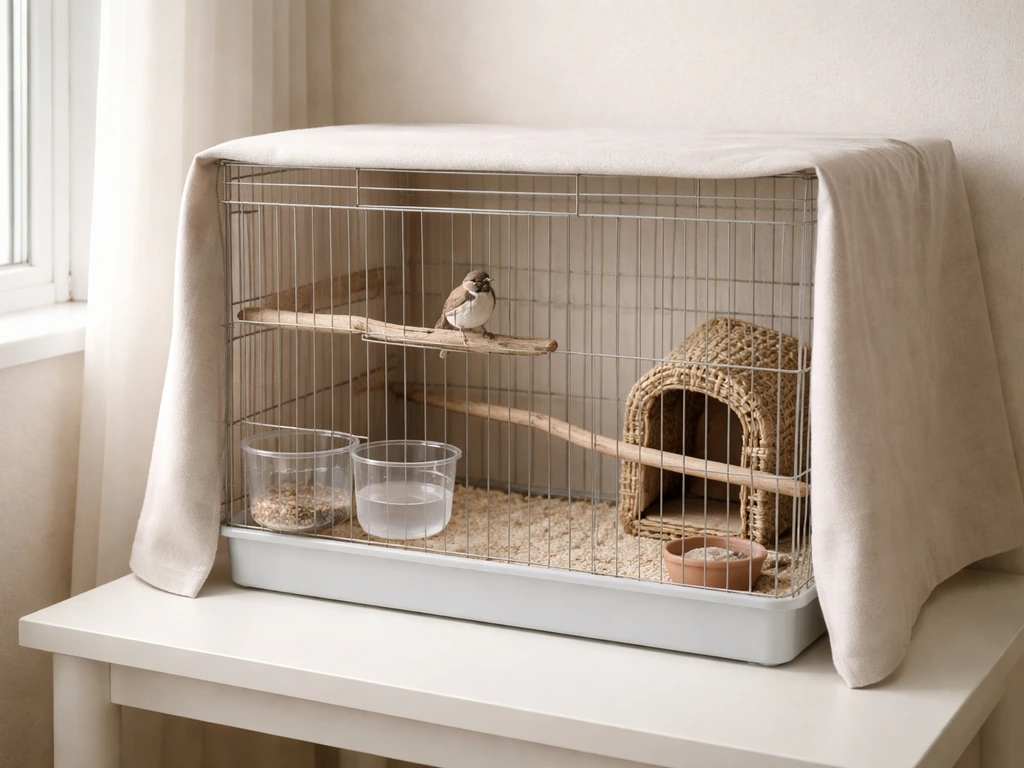
The environment you create in the first days sets the tone for every interaction that follows. Stress reduction is your first job, not taming. A calm bird in a low-stimulation space will progress far faster than a frightened bird in a busy room.
For a pet or captive sparrow indoors
Use a cage that gives the bird enough room to move, perch, and retreat. Place it in a quieter room away from heavy foot traffic, loud TVs, and other pets. Cover three sides of the cage with a light cloth to give the bird a sense of shelter. Leave one side open so you can sit nearby without crowding it. Position a perch near the open side at roughly your seated eye level. This positioning matters: coming at a bird from above reads as a predator approach, so keeping things at eye level or below reduces fear responses.
For a wild backyard sparrow you want to attract and habituate
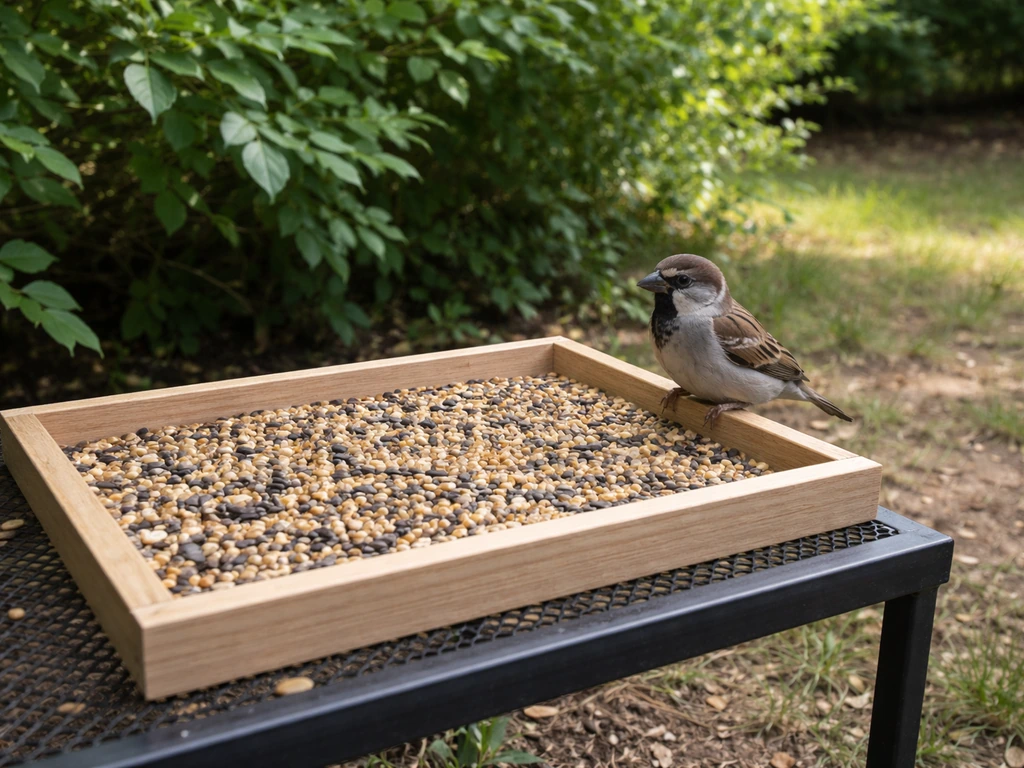
Set up a consistent feeding spot with a flat feeder or tray at a predictable height, ideally near a bush or shrub the bird can retreat to quickly. Sparrows are more comfortable feeding when cover is close. Place your chair or seating spot about 10 to 15 feet from the feeder initially. The goal is for the bird to associate your presence with the arrival of food, not with threat.
Routine is everything here. Show up at the same time each day, move slowly and predictably, and let the bird make all the choices about proximity. This kind of habituation can take weeks, and that's completely normal.
Step-by-step: Building trust from a distance to near-hand feeding
Whether you're working with a pet sparrow in a cage or a backyard bird at a feeder, the trust-building sequence is the same: presence first, then association, then proximity, then hand contact only if the bird offers it.
- Sit near the bird without doing anything. For a caged bird, sit a few feet away and read or do something quiet. For a wild bird, sit near the feeding area. Do this daily for 5 to 10 minutes. Your goal is to become background, not a threat.
- Introduce food as the bridge. Use a food the bird already eats and loves: small millet seeds, crushed sunflower hearts, or mealworms work well for sparrows. Place food in the bird's usual spot. After a few days, start placing it slightly closer to where you sit.
- Move your chair or position closer by small increments. Reduce the distance by a foot or two every few days, but only if the bird is eating calmly and not bolting when you arrive. If it flushes repeatedly, hold your position and give it more time before moving closer.
- Introduce your hand near the food, not toward the bird. Place food on a flat surface near your hand or on a small dish held steady. Don't reach toward the bird. Let the bird approach the food and get comfortable seeing your hand nearby.
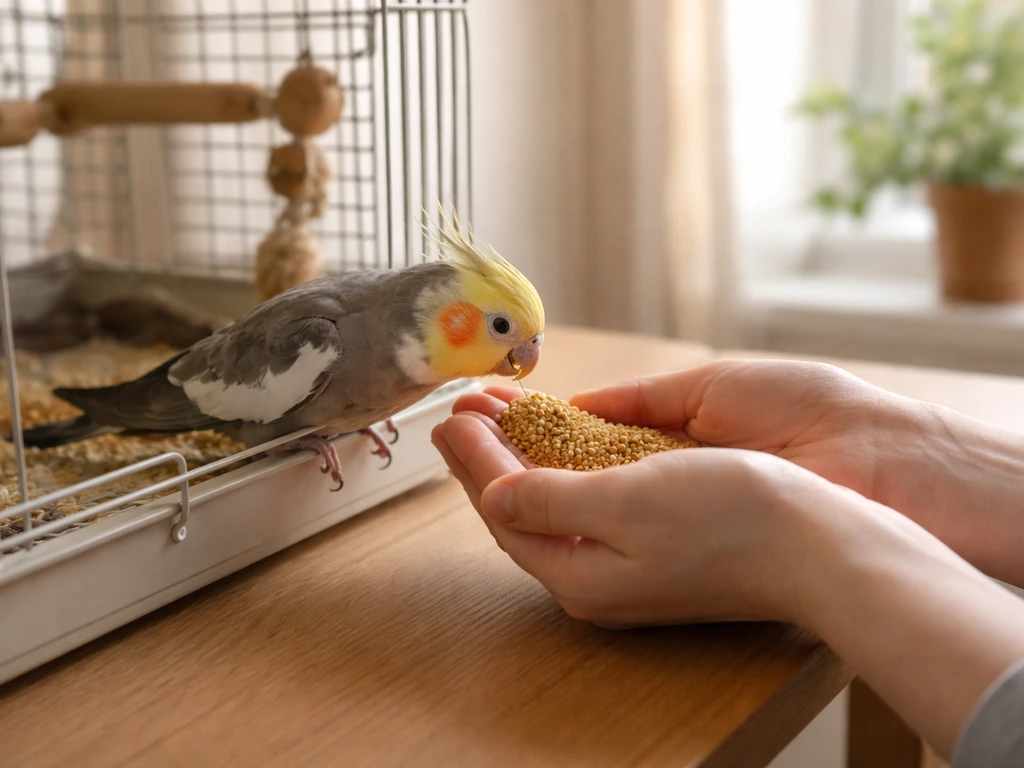
- Offer food from your open palm. Hold a flat, still open hand with millet or a mealworm on the palm. Stay completely still. This can take days or weeks before the bird steps onto or picks from your hand. Let the bird touch you first.
- Only attempt gentle handling if the bird steps onto your hand voluntarily and repeatedly without distress. For most sparrows, the goal is hand feeding and calm coexistence, not full handling.
Throughout all of this, avoid direct eye contact for long periods. Sustained staring reads as predator behavior to small birds. Because small birds have quick stress responses, gentle, low-pressure routines are key to successfully learning how to tame a sparrow. Soft, slightly averted gaze is less threatening. Speak in a calm, low, consistent voice so the bird starts to recognize your sounds as non-threatening.
Feeding, housing, and keeping the bird engaged while it settles in
Getting the diet right supports the whole taming process. A well-fed sparrow with the right nutrition is calmer, less reactive, and more willing to engage. Sparrows are primarily seed eaters, but they also need some protein, especially when stressed or molting.
| Food | Notes | Use as training treat? |
|---|---|---|
| Millet (white or red) | Core staple, readily accepted by most sparrows | Yes, good daily treat |
| Crushed sunflower hearts | High energy, easy to eat without husks | Yes, excellent for hand feeding |
| Mealworms (dried or live) | High protein, good for stress recovery and molting | Yes, strong motivator |
| Canary seed mix | Well-balanced seed blend for small birds | Use in feeder, not as sole treat |
| Greens (kale, spinach, chickweed) | Occasional variety, not a staple | No, not useful for training |
| Bread, crackers, sugar foods | Nutritionally poor and potentially harmful | Never |
For a caged sparrow, provide fresh water daily, a cuttlebone or mineral block, and at least two perches of different diameters to keep feet healthy. Avoid perches that are uniform in diameter as they can cause pressure sores over time. Natural wood perches with some texture work best.
Enrichment for sparrows doesn't need to be complex. A shallow dish of fine sand or dirt for dust bathing, a few small branches arranged inside the cage, and a bit of dried grass or nesting material to rearrange all help reduce boredom and stress. A bird that's physically and behaviorally satisfied is much easier to work with. If your goal is satisfactory how to tame bird results, use this baseline and keep expectations realistic about slow, reward-based progress satisfied.
Keep the cage covered partially at night and maintain a consistent light cycle. Sparrows do better with roughly 10 to 12 hours of darkness to support normal sleep patterns. Irregular light cycles increase stress and can slow taming progress significantly.
When things aren't working: common problems and how to handle them
Taming a sparrow rarely goes in a straight line. Here are the most common stalls and what to do about them.
The bird flushes or bolts every time you approach
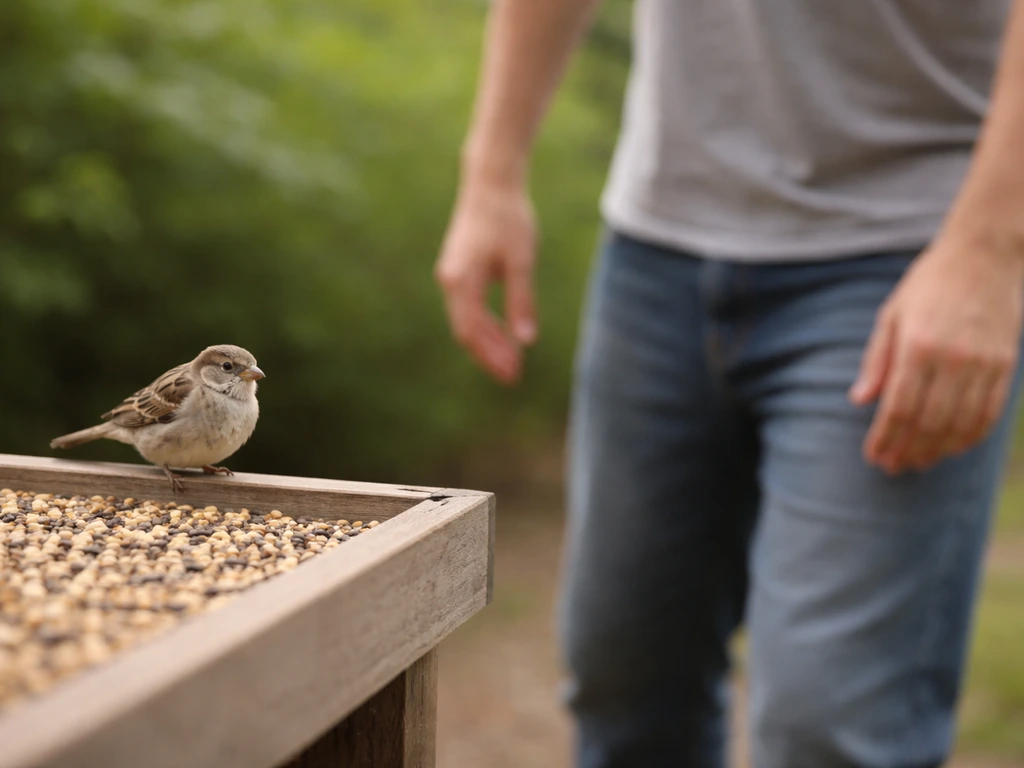
You're moving too fast or too directly. Go back to sitting further away and doing nothing but existing near the bird. Reduce session length to 3 to 5 minutes and increase very gradually. For wild birds, switch to a motion-triggered feeding approach: place food and leave, then slowly extend the time you stay near the feeder before leaving.
The bird chirps loudly or shows alarm calls constantly
Persistent alarm calling means the bird still sees you as a genuine threat. Don't interpret this as aggression or attitude. It's fear. Hold your position (or back off slightly) and wait it out over several sessions. A bird that transitions from alarm calls to quiet observation is making real progress, even if it doesn't come near you yet.
The bird refuses to eat when you're nearby
This is a strong sign the bird is too stressed to feel safe. For a caged bird, try draping more of the cage and only leaving the food side visible. Reduce any other household noise or activity during feeding time. Sometimes just switching to a more irresistible food, like live mealworms, breaks through a food refusal stall. Project FeederWatch also includes mealworms as common foods for birds at feeders live mealworms.
The bird bites when your hand gets close
A biting sparrow is not being mean. It's communicating that your hand is too close too fast. Pull back and slow down. A sparrow bite is sharp and fast but not dangerous. Don't react dramatically when it happens, as yelping or pulling back sharply reinforces that your hand is something alarming. Instead, stay calm, withdraw slowly, and reduce the proximity in your next session. Working through biting behavior is a longer process covered more fully in guides focused on that specific issue. Working through biting behavior is a longer process covered more fully in guides focused on how to tame a bird that bites.
Progress has completely stalled for weeks
Take a short break of a few days, then restart from an earlier stage in the process. Sometimes a reset lets the bird's stress levels drop enough to start responding again. If a caged sparrow has shown no progress after six to eight weeks of consistent daily sessions, it may be a bird that simply cannot habituate well to captivity, and that's worth discussing with an avian vet or experienced bird behaviorist.
How long this actually takes, and when to stop and get help
Sparrows tame more slowly than parrots or cockatiels. A hand-raised sparrow that's been socialized since a nestling may be comfortable on your hand within a few weeks. A juvenile bird that had some early human contact might take one to three months to reach hand-feeding comfort. A wild adult sparrow, even a non-protected house sparrow kept legally, may never fully relax with close human contact, and that's just the reality of the species.
| Milestone | Typical Timeline |
|---|---|
| Bird eats calmly while you're in the room | 1 to 2 weeks |
| Bird stops alarm calling when you sit nearby | 2 to 4 weeks |
| Bird approaches food while you're within 3 feet | 3 to 6 weeks |
| Bird eats from a dish near your hand | 4 to 8 weeks |
| Bird picks food from your open palm | 6 to 12 weeks or longer |
| Bird steps onto hand voluntarily | Variable; some birds never reach this stage |
If you're working with a wild bird that was found injured and is in temporary care, do not try to tame it at all. Follow the guidance from Tufts Wildlife Clinic and similar organizations: keep the bird in a quiet, covered, low-stimulation container, do not feed it (especially if it has injuries), and contact a licensed wildlife rehabilitator as soon as possible. The goal for injured wild birds is release, not bonding.
Know when to bring in help. If a captive sparrow shows persistent signs of illness (fluffed feathers, eyes closed during the day, labored breathing, droppings that are consistently off), stop the taming work and get to an avian vet. A sick bird cannot handle the additional stress of training. Similarly, if a bird's behavior has you genuinely confused or you're not seeing any forward movement after two to three months, an avian behaviorist or experienced rehabilitator can watch how the bird responds to you and give you specific, tailored feedback that no article can replicate.
The core principle through all of this: the sparrow decides the pace. Your job is to show up consistently, keep stress low, make food the bridge, and let the bird make the choice to come closer. That patience, more than any specific technique, is what actually builds trust with a sparrow.
FAQ
Can I tame a wild sparrow if I plan to release it after it trusts me?
Yes, but only after you confirm it is house sparrow (Passer domesticus) or otherwise legally permitted to keep and train. For wild native sparrows under the Migratory Bird Treaty Act, capturing or confining for taming is generally illegal, even if you plan to release later.
What should I do if my sparrow suddenly gets scared again after making progress?
If it shows repeated panics, you can take “presence breaks” by sitting near the cage or feeder without interacting at all for one to two days. Restart at the same feeding distance you were at when the bird last acted calm, then only shorten distance in small increments.
How can I tell when a sparrow is ready for hand contact?
Don’t aim for step-up behavior like you would with parrots. Instead, watch for voluntary signs, such as stepping closer to the open cage side to eat, lowering the head to feed, or lingering near you without alarm calling. Those behaviors are the right milestones to advance to hand offered near the feeder.
How long should taming sessions be, and when should I stop?
A good rule is to treat the “session” as short and end while the bird is still calm. If you notice stiff posture, repeated alarm calls, or flinching, stop and resume at the earlier stage the next day rather than pushing through.
Should I fully cover the cage or only part of it?
For a caged sparrow, cover three sides so it feels hidden, but avoid fully trapping it in a dark box where it cannot see you at all. You want the security of cover with the ability to see you at eye level when you sit near the open side.
My sparrow is not eating at the feeding spot, what food and method should I try?
Use food that the bird will actually eat, and switch gradually if it refuses. Live mealworms can be a strong motivator, but only offer them in small amounts and remove leftovers after a short time so they do not spoil and attract pests.
What human behaviors most often cause a sparrow to stay fearful?
Avoid long, direct stares and fast reaching. Also avoid sudden changes in your routine, like wearing unfamiliar hats, changing locations, or playing loud audio, since small birds read those as threat cues. A slightly lowered, sideways gaze and slow movements usually reduce alarm quickly.
Can I gradually move closer during training without spooking the bird?
Yes, but do it in a way that does not create a “chase.” Move your chair or position slowly, a few inches or a small step at a time, and keep the feeder location consistent so the bird learns you are tied to food, not to movement.
How should I respond if my sparrow bites me?
A biting sparrow usually means the hand is too close or appears too sudden, not that it intends harm. Withdraw smoothly, return to the previous distance, and try again only when the bird is actively feeding or calmly observing.
What if there is no progress after weeks of daily training?
If the bird is not improving after six to eight weeks of consistent, low-stress sessions, it can be a temperament or welfare issue. In that case, discuss with an avian vet or a bird behavior specialist, since hidden illness, chronic stress, or poor diet can prevent habituation.
I found a sparrow with an injury, can I try to tame it temporarily while it recovers?
If you find an injured wild sparrow, do not attempt taming. Keep it warm and quiet in a covered, low-stimulation container, avoid feeding especially if injured, and contact a licensed wildlife rehabilitator so the bird can be returned to the wild.
Does lighting or daily timing affect how fast a sparrow trusts me?
Yes, and inconsistency is a common reason taming slows. Aim for a stable daily schedule, the same seating position relative to the feeder, and predictable lighting and quiet hours, since irregular routines can keep the bird in a constant stress state.
What cage details matter most for comfort during taming?
For cage setup, use perches of different diameters and avoid uniform dowel sizes. Also ensure the bird can retreat easily to cover rather than being forced into the open near where you place yourself during training.
Will other pets or family members slow down taming?
It can, especially if the bird associates your approach with household stress. During the first habituation weeks, keep pets separated, reduce traffic around the cage, and keep other people away so the bird learns your specific presence is predictable and non-threatening.
Next Articles
How to Tame a Scared Bird: Step-by-Step Trust Plan
Safety-first plan to tame a scared bird: calm setup, trust routines, reward training, and humane handling steps.
Satisfactory How to Tame a Bird: Step-by-Step Guide
Step-by-step, safety-first plan to tame pet parrots, cockatiels, budgies, finches and wild yard birds.
How to Tame a Bird in Real Life: Humane Steps
Humane, step-by-step guide to build trust with pet or wild birds, with safety, species tips, timelines, and legal guidan