Taming a scared bird starts with one rule: slow down more than you think you need to. Most people move too fast, too close, too soon, and the bird never gets a chance to realize you're not a threat. The good news is that fear in birds is almost always reversible with the right approach. Whether you have a new budgie huddled in the corner of its cage or a cockatiel that lunges every time you reach in, the same core method works: reduce threat cues, build a calm routine, and let the bird set the pace for every step forward.
How to Tame a Scared Bird: Step-by-Step Trust Plan
Clara Hayes
5 May 2026
First: Is This Bird Actually Scared, or Is Something Wrong?
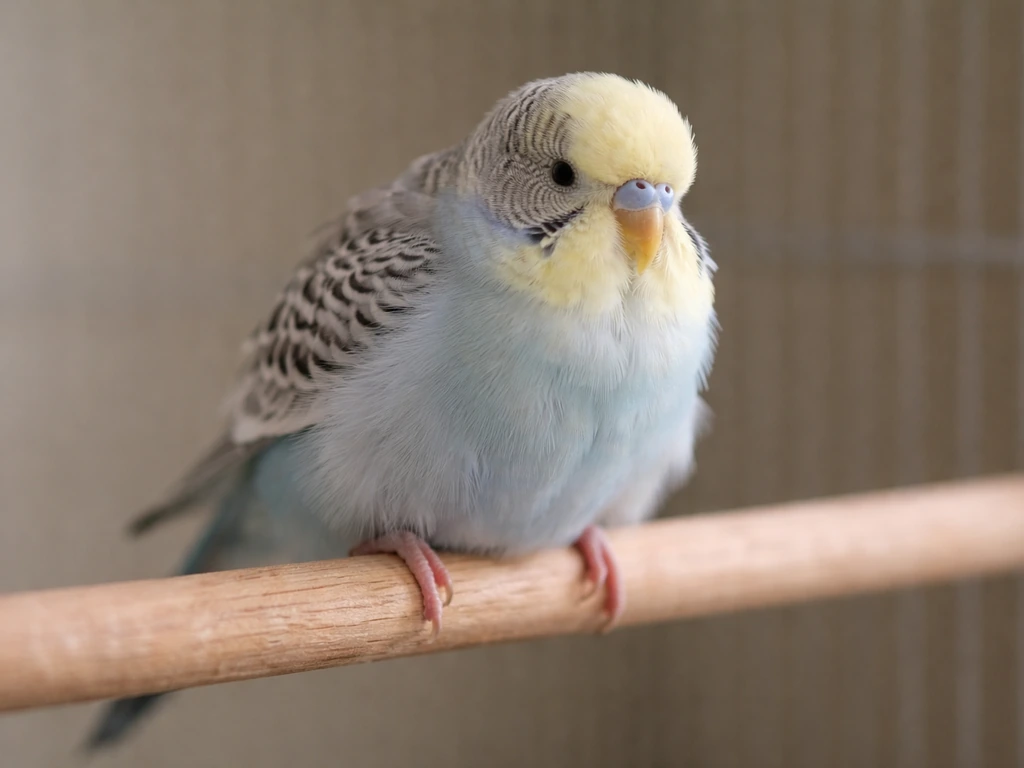
Before you start any taming work, spend two minutes doing a quick health check. A scared bird and a sick bird can look very similar. Puffed feathers, sitting low on the perch, and not eating are classic fear signs, but they're also signs of illness. If your bird is showing any of the following, stop and call an avian vet rather than starting a training plan. Egg binding (avian dystocia) should be treated as a true emergency because it can become life-threatening quickly, and warning signs can include weakness and trouble gripping the perch.
- Open-mouth breathing or pronounced tail bobbing with each breath — this is an urgent emergency, get to a vet immediately
- Puffed up posture combined with weakness, trouble staying on the perch, or drastically reduced droppings
- Visible bleeding — apply gentle pressure and styptic powder or gel if you have it, and contact a vet right away if bleeding doesn't stop within a few minutes
- A blood feather that has snapped and is actively bleeding — apply firm pressure at the base of the follicle and get veterinary advice fast
- Suspected egg binding in a female bird (straining, wide stance, lethargy) — this is a time-sensitive emergency
If your bird is injured, keep it warm (aim for 80 to 90°F / 27 to 32°C) in a quiet, darkened carrier while you arrange veterinary care. Do not attempt taming or handling exercises on a bird that is unwell. A sick bird's fear response is amplified and forcing interaction adds stress that can worsen its condition. Once your vet clears the bird as physically healthy, you're ready to start.
If the bird is simply new, untamed, or had a bad experience, and it's eating, moving normally, and producing normal droppings, you're dealing with behavioral fear and the rest of this guide is exactly what you need.
Set Up an Environment That Stops Scaring the Bird Before You Even Start
The single biggest mistake people make is jumping to hands-on handling before the bird has had a chance to feel safe in its space. Your first job isn't to touch the bird. It's to make the bird's environment feel predictable and non-threatening.
Location and cage placement
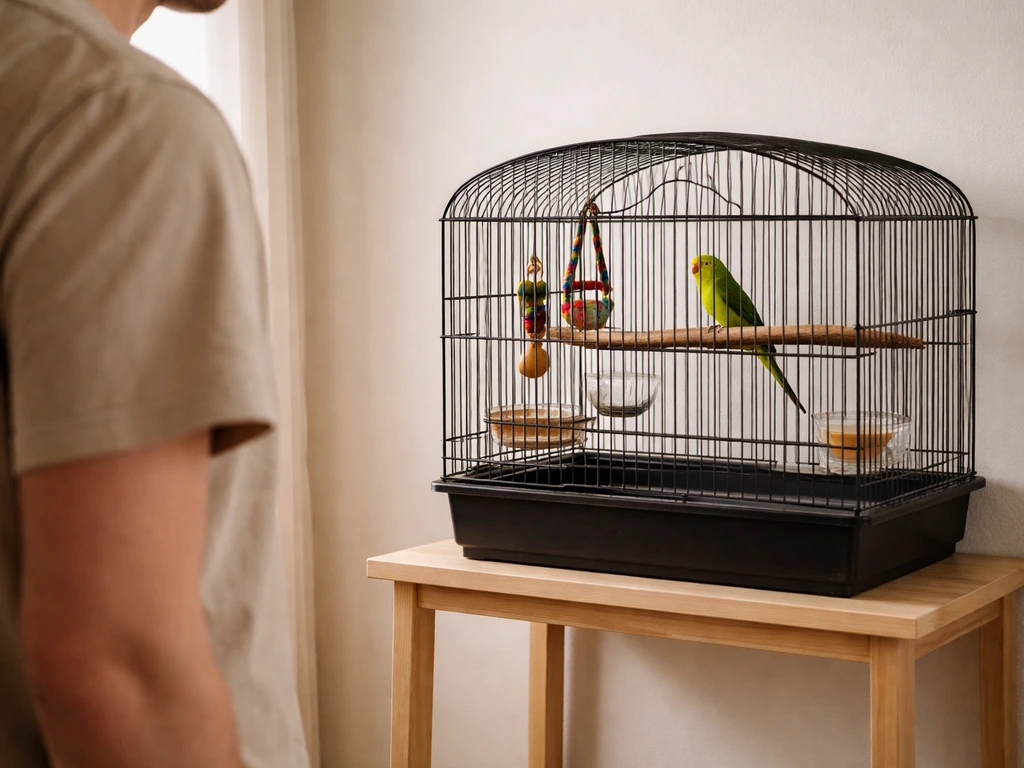
Place the cage at eye level or slightly below, never on the floor (that triggers a ground-predator response in most species) and never so high the bird is looking down on you. A spot in the main living area works well because the bird gradually habituates to normal household noise, but avoid the kitchen (fumes, temperature swings) and keep the cage away from exterior windows where hawks or cats could be visible. Direct drafts and AC vents are stress triggers too.
Lighting, noise, and cover
Natural light cycles help. Try to keep a consistent 10 to 12 hours of light and 10 to 12 hours of quiet darkness. Sudden loud noises, TV at high volume, and other pets pressing against the cage are all threat cues to remove. A partial cage cover on the sides and back (not the front) helps a nervous bird feel less exposed without fully isolating it.
Distance and approach direction
For the first few days, just be present at a distance that doesn't cause the bird to flee to the far side of the cage or display alarm behavior (screaming, wing flapping, trying to climb away). That's your starting distance. Sit sideways to the cage rather than facing it head-on, because direct eye contact reads as predator behavior to birds. Speak quietly and calmly whenever you're in the room so your voice becomes associated with non-threat.
Build a predictable daily routine
Birds are creatures of routine and they calm down dramatically when they can predict what's coming. Feed, clean, and interact at the same times each day. Narrate what you're doing in a soft, even tone. The goal is for your presence to become boring, familiar, and associated with good things rather than unpredictable events that spike adrenaline.
The Week-by-Week Trust Building Plan
This timeline is a guide, not a contract. Some birds move faster, some slower, especially birds with trauma histories or very limited prior human contact. The rule is always: progress to the next stage only when the bird is relaxed and comfortable at the current one.
Days 1 to 3: Passive presence
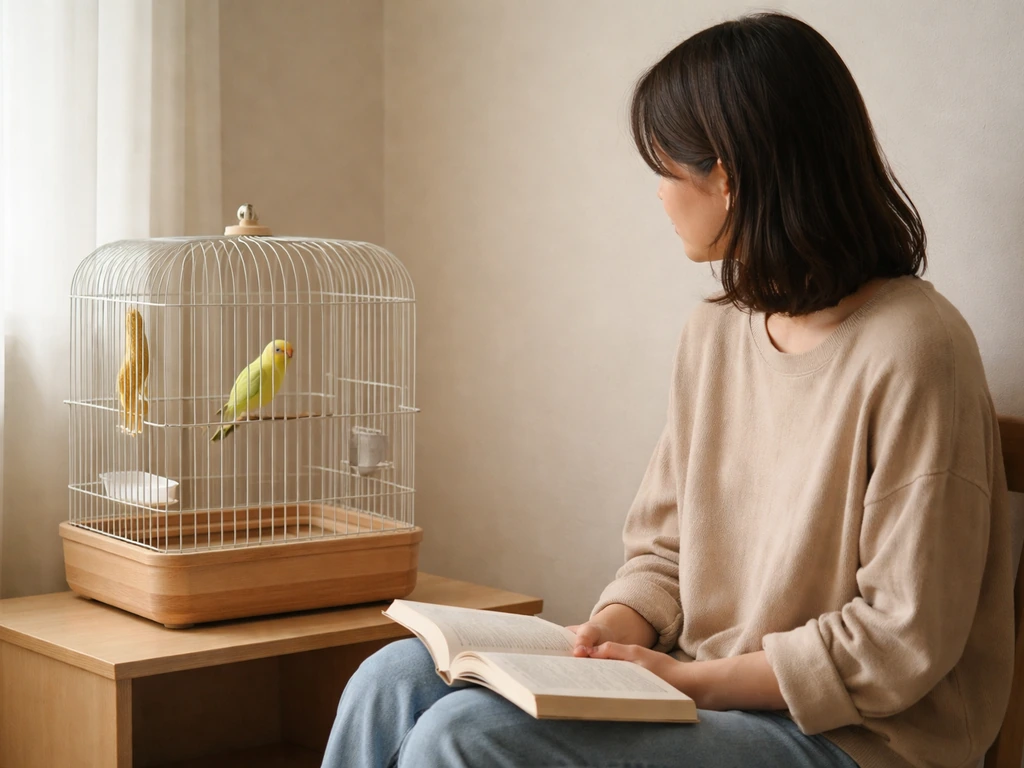
Do nothing that asks anything of the bird. Sit near the cage, read a book, watch TV at low volume, or work on a laptop. Just exist nearby without making the bird the focus of your attention. Let the bird watch you, get curious, and start to relax. Success at this stage looks like the bird eating normally while you're in the room and not constantly alarm-calling or flattening feathers when you walk past.
Days 4 to 7: Slow movement and talking
Start moving closer gradually, always approaching from the side rather than straight on. Talk to the bird using its name in a calm, soft voice. Avoid sudden movements. If the bird starts climbing away or screaming, you've moved too fast. Back up to the last comfortable distance and hold there for another day. Success looks like the bird watching you with curiosity rather than panic.
Week 2: Introducing your hand through the food routine
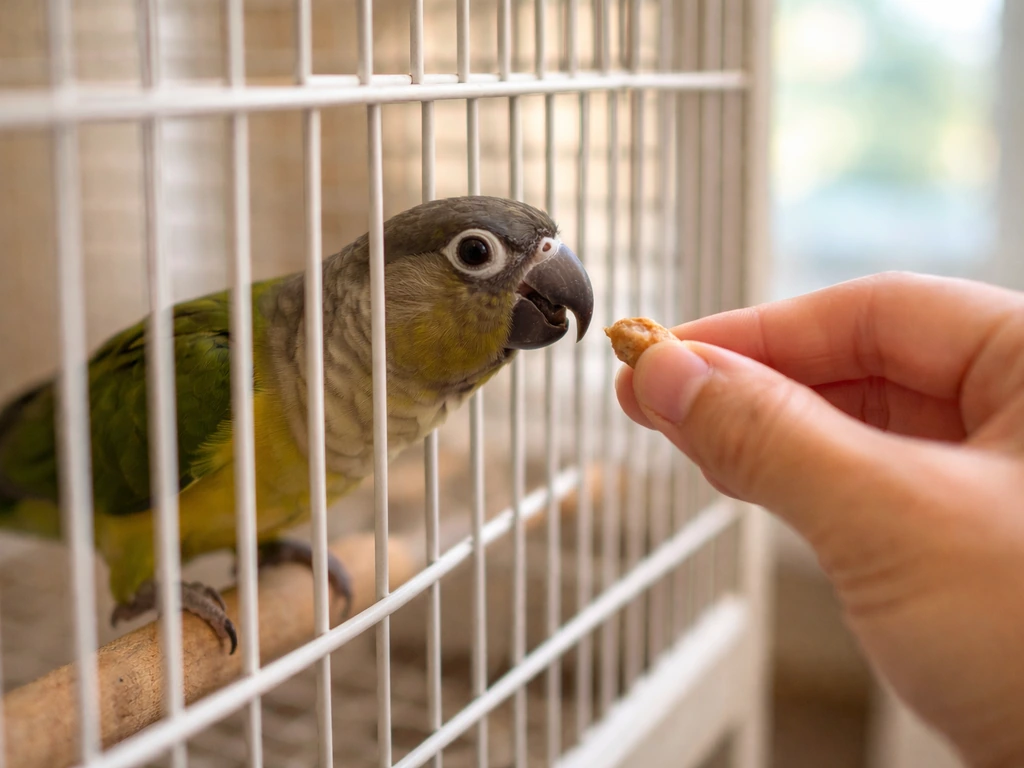
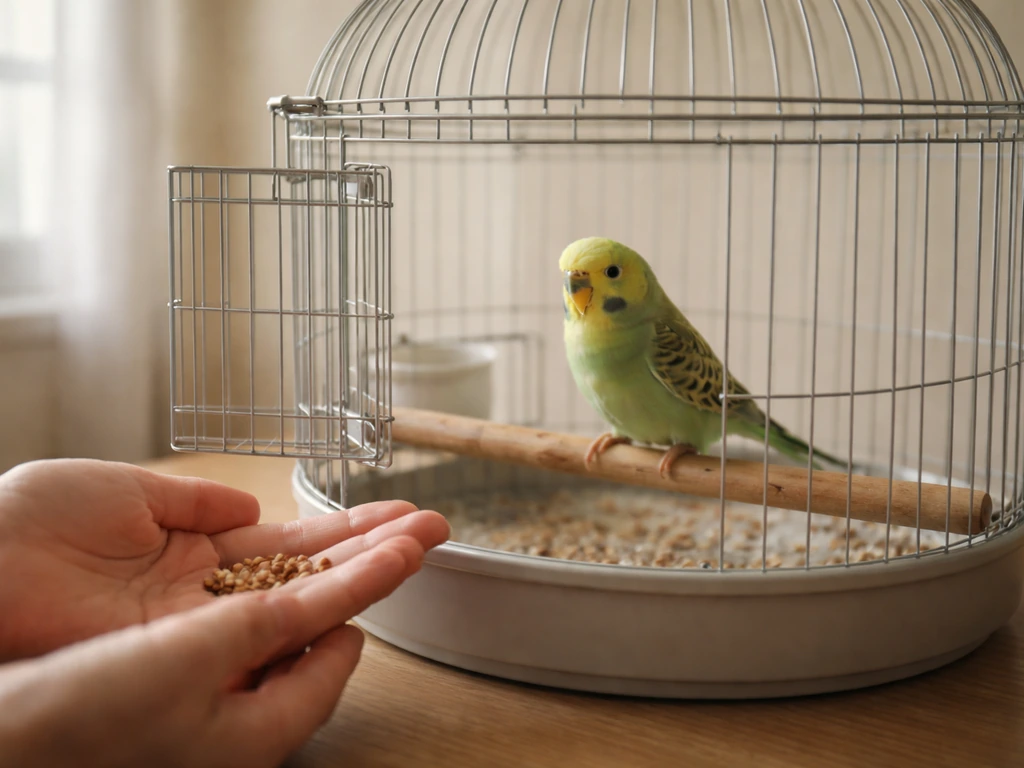
Begin offering high-value treats by hand through the cage bars or by placing your hand inside the cage and holding very still. Use a treat the bird goes crazy for (see the food section below). Don't push the treat toward the bird. Just let your hand be there, treat in palm, and wait. The first time the bird voluntarily takes food from your hand is a big milestone. Celebrate quietly.
Weeks 3 to 4: Hand inside the cage, then open door time
Practice resting your hand calmly inside the cage for a few minutes each day without reaching toward the bird. Let the bird decide to approach. Once the bird is regularly taking treats from your hand inside the cage, you can open the cage door and let the bird choose to come out on its own terms. Don't rush this. Forced handling at this stage can set you back weeks.
Weeks 4 to 6 and beyond: Step-up and handling
Once the bird is comfortable coming to your hand for food inside the cage, you can begin teaching step-up (covered in detail below). Physical handling, like cupping the bird in your hands or having it ride on your shoulder, comes last and only after the bird has made it clear through body language that it's comfortable with your presence. This part can take two months or more for a badly frightened bird, and that's completely normal.
Species-Specific Tips
The general plan above works across species, but each type of bird has quirks worth knowing. Here's what to adjust depending on what you're working with.
Parrots (conures, African greys, amazons, cockatoos, etc.)
Parrots are highly intelligent and often fear-bite not out of aggression but because they're overwhelmed. They read your body language and energy intensely, so staying calm yourself is non-negotiable. Avoid looming over a parrot and keep initial sessions very short (5 minutes max). Larger parrots that have been rehomed or had multiple owners may have deep trust issues that take three to six months to work through. Respect that timeline. Many parrots respond well to talking and will start mimicking you before they'll accept physical contact, which is a great sign of engagement.
Cockatiels
Cockatiels are social and usually come around relatively quickly with consistent gentle handling, often within two to four weeks. Watch the crest: flat and slicked back means frightened or aggressive, softly raised means curious and relaxed, fully erect means alert or excited. A hissing cockatiel is telling you to back off right now. Respect it. Cockatiels often warm up to whistling before they warm up to hands, so whistling a simple tune back and forth is a great bonding tool.
Budgies (parakeets)
Budgies are small and fast and their fear response can look like chaos: rapid fluttering, crashing into walls, hitting the cage top. Avoid startling them with sudden movements above them (think hawk silhouette from above). Approach from the front or side and at cage height. Millet spray is the gold-standard treat for budgies and one of the fastest ways to get them eating from your hand. Young budgies (under six months) tame far more quickly than adults with no prior handling, so adjust your timeline expectations accordingly if you're working with an adult.
Finches (zebra finches, society finches, etc.)
Finches are unique in that many are not meant to be hands-on pets and taming them to perch on a finger isn't realistic or necessary for a good relationship. The goal with finches is usually habituation: getting them comfortable enough with your presence that they don't panic every time you walk past or reach in to change food and water. Move slowly and deliberately during cage maintenance. Pair your approach with a specific soft sound (like clicking your tongue gently) so they learn to associate that cue with a non-threatening interaction. True lap-bird bonding is not a realistic goal for most finch species.
Food Rewards and Teaching Real Behaviors
Food is your most powerful tool. The key is using something the bird finds genuinely exciting, not just its regular diet. If millet is always available, it loses its power as a reward. Reserve high-value treats strictly for training sessions.
| Species | High-Value Treat Options | Frequency Tip |
|---|---|---|
| Parrots | Pine nuts, almonds (unsalted), small piece of banana or mango | Offer only in training sessions, not in the food bowl |
| Cockatiels | Spray millet, small piece of egg (hard-boiled), oat groats | 1 to 2 short sessions per day, 5 to 10 minutes each |
| Budgies | Millet spray, small piece of apple or carrot | Keep sessions under 5 minutes to avoid fatigue |
| Finches | Live or dried mealworms (small portions), egg food | Use during maintenance approaches, not dedicated handling sessions |
Teaching approach (the foundation)
Hold the treat between your fingers and wait near the cage or with your hand inside the cage, completely still. The moment the bird takes even one step toward you, say a calm marker word like 'yes' or 'good' and immediately offer the treat. You are marking the voluntary movement toward you. Over many short sessions, the bird learns that moving toward your hand produces a reward. Never lunge the treat at the bird or try to get the treat closer to force the interaction.
Teaching step-up
Once the bird is reliably coming to your hand for treats, place your index finger (or for smaller birds, your finger turned horizontally) gently against the bird's lower chest, just above the feet, with a treat visible in your other hand. Say 'step up' clearly and calmly. Many birds will step up automatically when gentle pressure is applied just above the feet because it's an instinctive balance response. The moment they step up, mark it and deliver the treat. Keep sessions to about five reps then end on a positive note.
Target training (great for scared birds)
Target training is especially useful for fearful birds because it gives them something to do and engage with that doesn't involve physical contact. Hold a chopstick or pencil near the bird and reward any time the bird touches or approaches it with its beak. Once the bird is reliably touching the target stick, you can use it to guide the bird toward your hand or to a new location. It builds confidence fast because the bird is choosing to interact rather than being touched.
When Things Stall: Troubleshooting Fear and Setbacks
Progress is almost never a straight line. Here are the most common problems people hit and exactly how to fix them.
The bird bites every time you reach in
Biting is the bird's clearest message: 'I'm not ready for this.' Don't yell, don't jerk your hand away dramatically (that reinforces the biting because it worked), and don't punish. Simply say 'ouch' neutrally, withdraw your hand slowly, and give the bird a moment. Then go back to a step the bird was comfortable with. If biting is happening consistently, you've been moving too fast. Back up two stages in the plan and rebuild from there. If you want a deep dive on this specific issue, it's worth looking at a guide focused specifically on taming a bird that bites, because bite response and hand-shy behavior have their own detailed fixes. If you are dealing with biting, a guide focused on how to tame a bird that bites can help you troubleshoot the bite response step by step taming a bird that bites.
The bird won't come out of the cage or panics when the door opens
Cage aversion usually means the outside world feels unsafe, not that the bird loves its cage. Try leaving the door open without encouraging the bird to come out for several days in a row. Place treats just inside the door threshold, then gradually move them just outside. Let the bird make the first move entirely on its own. Never reach in and pull a cage-averse bird out. This shortcut creates a trauma association with the cage door that makes the problem significantly worse.
Progress was good and then suddenly stopped
This is completely normal and usually caused by one of a few things: a change in routine, a new person or pet in the household, a noise or event that startled the bird, or the bird entering a hormonal phase (especially common in cockatiels and parrots in spring). Don't push through regression. Drop back to a comfortable stage and rebuild. A bird that regresses after making good progress typically rebounds faster than a bird being tamed from scratch.
The bird screams or calls constantly when you approach
Contact calling (screaming when you leave or approach) is different from fear screaming. Fear screaming is loud, high-pitched, and accompanied by flight attempts. Contact calling is a social behavior asking for response. Don't ignore contact calls entirely and don't yell back (which rewards the behavior by giving attention). Respond calmly with a whistle or a word, wait for a moment of quiet, and then approach. You want to teach the bird that quiet behavior, not screaming, gets your attention.
Quick troubleshooting checklist
- Is the bird healthy? Rule out illness before continuing taming work
- Are sessions too long? Keep them under 10 minutes and always end before the bird shows stress signals
- Is the treat actually high-value to this specific bird? Experiment with different options
- Are you approaching from above or head-on? Shift to side approaches at cage level
- Has anything changed in the environment (new pet, new person, moved cage)?
- Is the bird in a hormonal phase? Reduce contact and wait it out
- Are you inadvertently rewarding fear by retreating dramatically when the bird panics?
When to Stop Pushing, and What's Legal With Wild Birds
Know when to pause the taming process
There are times when the humane choice is to stop trying to tame a bird, at least temporarily. If a bird shows chronic stress (constant feather ruffling, refusing food consistently, self-mutilation like feather plucking triggered by your approach), it needs a break from taming efforts and a vet visit to rule out stress-related health issues. Some birds, especially those with significant trauma histories or certain parrot species with strong wild instincts, may reach a plateau of 'tolerates me but doesn't want contact' and that plateau is a perfectly acceptable outcome. A bird that eats well, behaves normally, and isn't afraid when you're in the room has a good quality of life even without step-up training.
The ethical line on forcing handling
Forced handling, grabbing a bird and holding it against its will to 'get it used to you,' doesn't work and actively damages trust. The bird doesn't learn you're safe. It learns it can't escape you, which is a very different thing and a much worse outcome. Always let the bird choose to participate. If it's not choosing to engage, your job is to make the environment and your presence more rewarding, not to override the bird's choice.
Wild birds: important legal and ethical limits
If you're dealing with a wild bird (a sparrow, finch, or other native species that's visited your yard or has come inside), the rules are fundamentally different from pet bird taming. Learn the separate, sparrow-specific approach for taming a wild sparrow bird in the safest way possible, so you do not run afoul of legal and ethical limits sparrow, finch, or other native species. In the United States, most wild birds are protected under the Migratory Bird Treaty Act, which means it is illegal to keep, possess, or attempt to tame most native wild bird species without a federal permit. This includes songbirds, raptors, waterfowl, and the vast majority of backyard species. The only legal options for injured wild birds are to contact a licensed wildlife rehabilitator or your state's wildlife agency. If a wild bird is tame enough to approach you freely and is eating from your hand at a feeder, that's a different situation from keeping it indoors or attempting to make it a pet. The former is fine; the latter is not. For detailed guidance on working with specific wild species like sparrows, the approach is quite different from pet bird taming and worth exploring separately.
When to call a wildlife rehabilitator or avian vet
Call a licensed wildlife rehabilitator for any wild bird that can't fly, appears injured, or seems too tame (which can signal illness). Call an avian vet for any pet bird that shows physical symptoms alongside behavioral fear, any bird that stops eating during the taming process, or any bird whose fear behavior seems extreme and doesn't respond to two to three weeks of consistent, gentle work. An avian vet can also rule out pain as a cause of fear and biting, which is more common than people realize. A bird that suddenly becomes fearful after being previously calm should always get a health check first.
FAQ
How long should I spend on taming sessions each day when I’m teaching a scared bird to trust me?
Keep the early work short and finish while the bird is still calm, many birds do best with 5 to 15 minute sessions once or twice daily. If the bird’s alarm behaviors increase after you start, stop that session and stay at the last successful distance the next day.
What counts as “progress” if my scared bird won’t step up yet?
Progress can be non-contact, for example the bird eats normally while you’re in the room, stays on the perch instead of hiding, approaches the cage front for treats, or takes food from your hand without panicking. If feeding and droppings stay stable, you’re moving in the right direction even without touch.
How do I choose the right treat so the bird actually wants it?
Use something the bird truly values and reserve it strictly for training so it stays high reward. If millet or other favorite treats are always available, the bird won’t work for them, and you may need a tighter treat-only policy plus smaller portions to maintain motivation.
My bird takes treats but still panics when I open the cage door. What should I do?
Don’t treat opening the door as an “advancement” trigger. Practice first with the door mostly staying shut, then briefly open it only during calm treat moments, with the bird fully deciding whether to approach. If the bird startles, close it and rebuild at the previous stage for another few days.
How close is “too close” during the approach steps?
Too close is when the bird’s body language tightens, it tries to climb away quickly, or it shifts into high-arousal behaviors like frantic wing flapping or sustained screaming. Back up to the last comfortable distance for at least a full day, then resume with smaller steps in approach.
What should I do if my bird regresses after making progress?
Regression usually means something changed, even subtle things like a new cleaning product scent, a different schedule, or a rearranged room. Drop back one or two stages, remove likely new stressors, and reintroduce the last successful routine before attempting any new handling.
Is it okay to try to force eye contact or talk more to “calm” the bird?
Avoid direct, steady staring, and keep your voice consistent rather than louder. Many birds interpret prolonged eye contact as predatory focus, so sit sideways, speak quietly, and let the bird look at you on its own schedule.
How should I respond if my bird bites during taming or step-up practice?
Treat biting as a clear signal to slow down, do not punish or jerk away, and do not hold the bird in place to “prove” you’re safe. Withdraw calmly, wait briefly, then restart from the last stage the bird could handle comfortably, typically setting you back to earlier distance and treat work.
Can I tame a scared bird if it lives with another pet bird?
Often yes, but you may need to prevent crowding and competition. Reduce external stressors, ensure the cage is positioned so the scared bird is not forced into constant interaction, and monitor for aggressive guarding that can override training. If the bird’s fear spikes when another bird is nearby, consider separate management during training sessions.
What if the bird stops eating during the taming process?
Stop taming immediately and treat it as a health and stress red flag. Stable, normal feeding is a baseline requirement before progressing, so contact an avian vet if eating doesn’t resume promptly, especially if droppings change or the bird shows puffing or low posture.
Do wild birds need the same taming approach as pet birds?
No, the rules are fundamentally different. Many wild birds are protected, and the safest next step is to contact a licensed wildlife rehabilitator if the bird is injured, unable to fly, or appears unusually tame. Pet-bird taming methods can be harmful or illegal when applied to native wildlife.
When is it humane to stop taming and accept “tolerates me but no handling”?
If the bird consistently eats, behaves normally, and shows only mild stress without progressing after consistent work, accepting a non-touch relationship can be a good outcome. Also consider stopping if the bird shows chronic stress signs like persistent feather damage, self-plucking triggered by your approach, or prolonged refusal to settle, and then schedule a vet check.
Next Articles
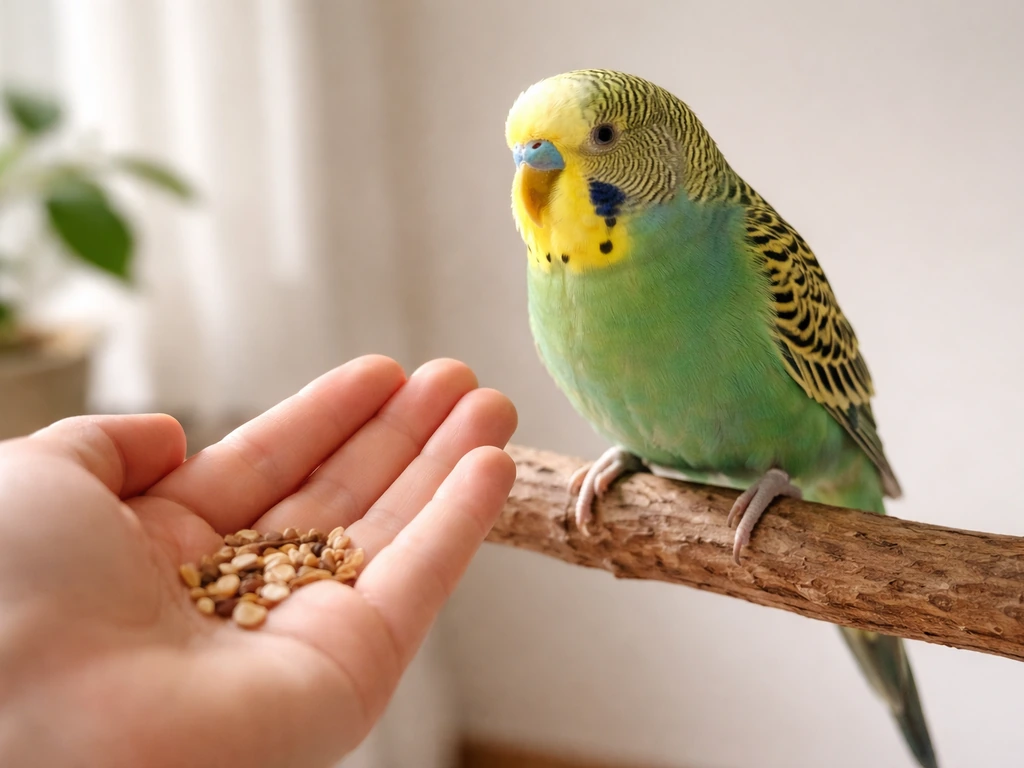
Satisfactory How to Tame a Bird: Step-by-Step Guide
Step-by-step, safety-first plan to tame pet parrots, cockatiels, budgies, finches and wild yard birds.
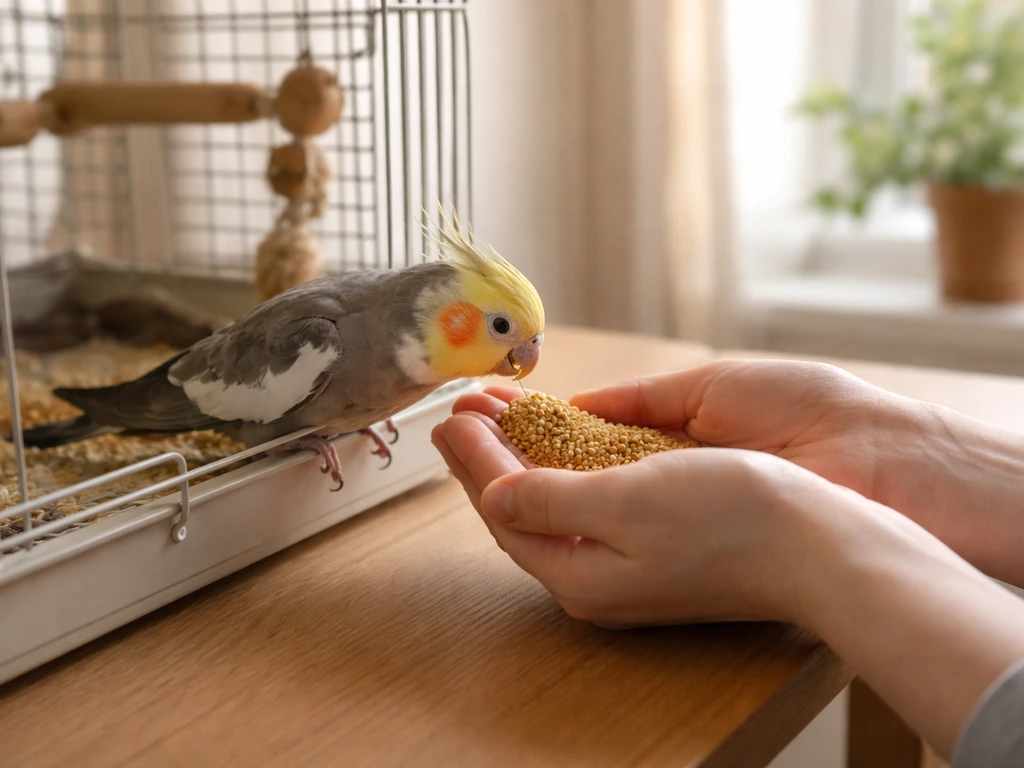
How to Tame a Bird in Real Life: Humane Steps
Humane, step-by-step guide to build trust with pet or wild birds, with safety, species tips, timelines, and legal guidan
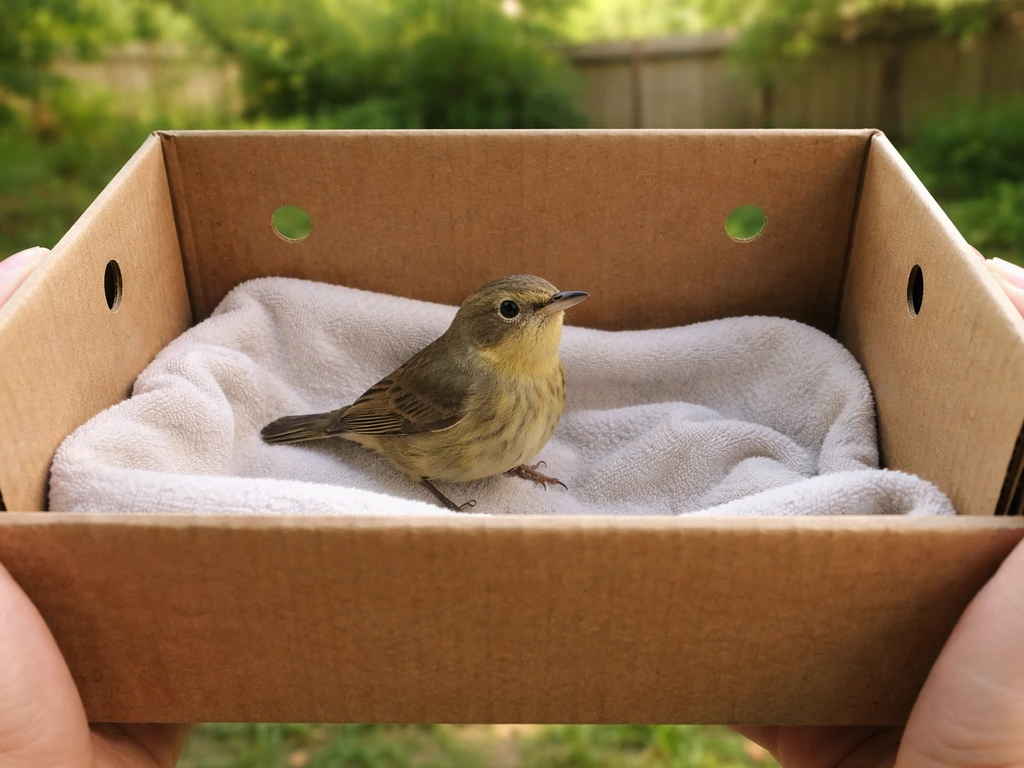
How to Catch a Bird Without Killing It: Humane Steps
Humane, trap-free steps to catch a wild backyard bird safely, minimize stress, contain it calmly, then release or reloca