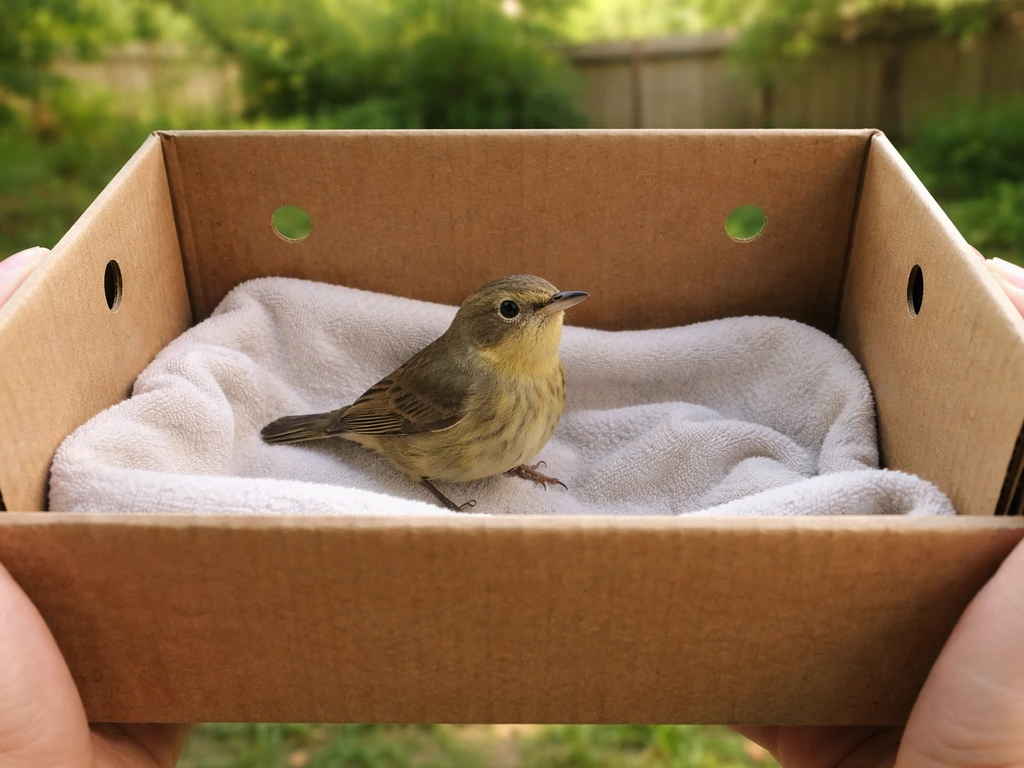
Taming a bird in real life means earning its trust through patient, consistent, low-pressure interaction, not grabbing it, forcing contact, or rushing the process. Whether you're working with a new pet parrot, a hand-shy cockatiel, or a backyard sparrow you'd like to hand-feed, the core method is the same: you move at the bird's pace, use food as a positive bridge, read body language, and never use fear or force. Done right, most pet birds can go from cage-shy to stepping onto your hand within a few weeks. Wild birds can learn to eat from your palm within days to months, depending on species and individual temperament.
How to Tame a Bird in Real Life: Humane Steps
Clara Hayes
30 Apr 2026
What taming actually means (and what it doesn't)
Let's clear something up right away. Taming isn't about dominating a bird or making it submit. It's about building a relationship where the bird chooses to engage with you because it feels safe and rewarded doing so. The RSPCA puts it well: 'There is strength in gentleness. If you have to use force when handling your bird, you are doing it the wrong way.' That applies to every species, every size, every situation.
For pet birds, taming typically means the bird tolerates and eventually enjoys handling, steps onto your hand on cue, and doesn't panic when you approach. For wild birds encountered in yards, taming means habituation to your presence close enough for hand-feeding. It does not mean making a wild bird dependent on you, turning it into a pet, or keeping it. Those are separate problems with real legal and ethical consequences, which we'll cover later in this article.
What taming can't do: it can't override a bird's fundamental instincts, override serious illness or injury, or happen on a timeline you force. A bird that is sick, severely traumatized, or simply a fully wild adult of a naturally skittish species may never reach the level of comfort you're hoping for, and that's okay. Knowing when to adjust your expectations is part of being a good handler.
Safety first: bites, scratches, and disease
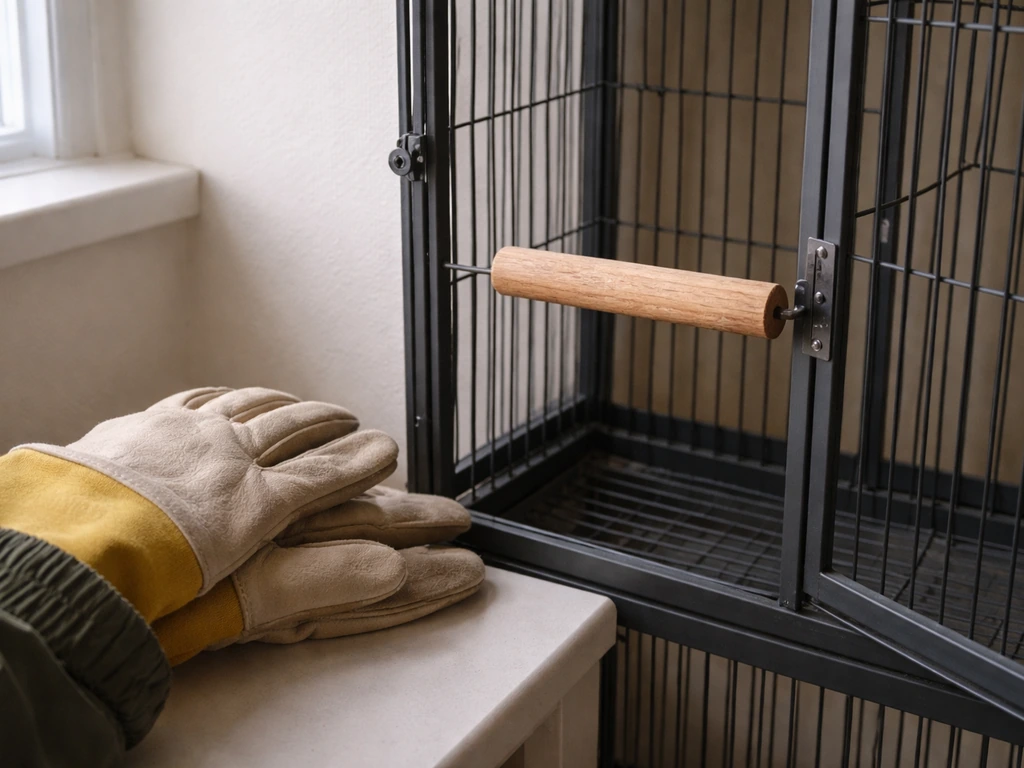
Before you get anywhere near a bird, run through these basics. Bites from even small birds like budgies can break skin, and larger parrots can cause serious finger injuries. Scratches from talons are common when a bird is frightened and scrambling. The risks go up when you rush or when the bird is in a full fear response. Keep your movements slow and deliberate, position your hand from below rather than reaching over the top of the bird (which mimics a predator strike), and always watch for bite warnings before contact.
Disease precautions matter more than most people realize. Psittacosis (also called avian chlamydiosis) is a bacterial infection caused by Chlamydia psittaci that can spread from birds to humans, and it's more common in parrots, cockatiels, and some wild birds than people expect. The CDC recommends washing your hands thoroughly after touching any bird, its droppings, cage equipment, or feathers. The CDC recommends thorough [handwashing with running water and soap after touching birds, their droppings, cage equipment, or feathers](https://www.
cdc. gov/psittacosis/prevention/index. html). Don't clean droppings with bare hands.
Clean cages and food and water bowls daily, and keep all of this away from food prep areas. If you're handling wild birds at feeders, the same logic applies: wash hands after touching feeders or birdbaths, and wear disposable gloves if you're dealing with a sick or injured bird.
- Wash hands immediately after any bird contact, cage cleaning, or feeder maintenance
- Never use bare hands to clean droppings; use gloves and dispose of them safely
- Keep bird areas separate from kitchen and food prep surfaces
- Clean cages, food bowls, and water bowls daily
- Avoid face-level contact with birds you don't know well, especially wild ones
- If a bird shows open-mouth breathing, panting, or drooping wings, stop all handling and consult a vet
A note on handling sick or dead wild birds: don't do it with bare hands, and don't attempt taming sessions with any bird that looks unwell. Contact your local wildlife authority or animal control instead. Attempting to tame a sick bird isn't humane and puts you at unnecessary health risk.
Read the bird before you touch it: species, background, and readiness signals
The single most important thing you can do before starting any taming work is assess what you're actually dealing with. A hand-raised budgie from a reputable breeder is in a completely different place than a cage-bred finch that has never been touched, or a wild house sparrow at your backyard feeder. Species matters, history matters, and readiness signals matter.
Pet bird backgrounds to know
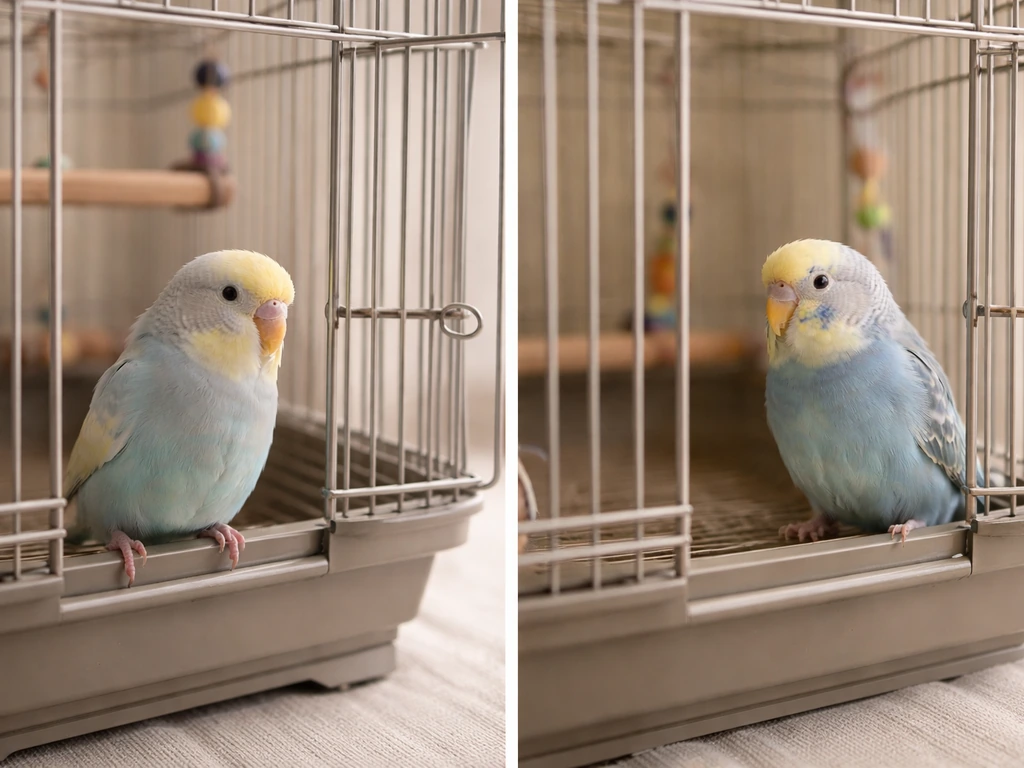
- Hand-raised from a young age: likely already somewhat tame, responds well to voices and gentle movement, shortest timeline to full taming
- Parent-raised but captive-bred: hasn't bonded with humans yet, needs patient introduction, medium timeline
- Older rehomed bird: may have bad handling history, can be fearful or defensive, needs a slower, trust-first approach
- Aviary or colony bird (finches, canaries): often minimally handled, may never become a hands-on pet but can become comfortable with your presence
Readiness signals to look for
VCA advises starting taming only when the bird 'appears to be settling comfortably into its new surroundings. ' For a new pet bird, give it at least a few days in its cage before any direct interaction.
Watch for these green-light signals: the bird is eating and drinking normally, it doesn't flush to the far side of the cage every time you walk by, it makes contact calls or vocalizes at you, it watches your movements with curiosity rather than panic, and its feathers are smooth and relaxed rather than slicked down tight.
Red-light signals include rapid breathing, fanned tail feathers, wings held away from the body, crouching low with a coiled posture ready to spring, or total freezing. If you see any of those, back off and give more time.
Trust-building basics that work for every bird
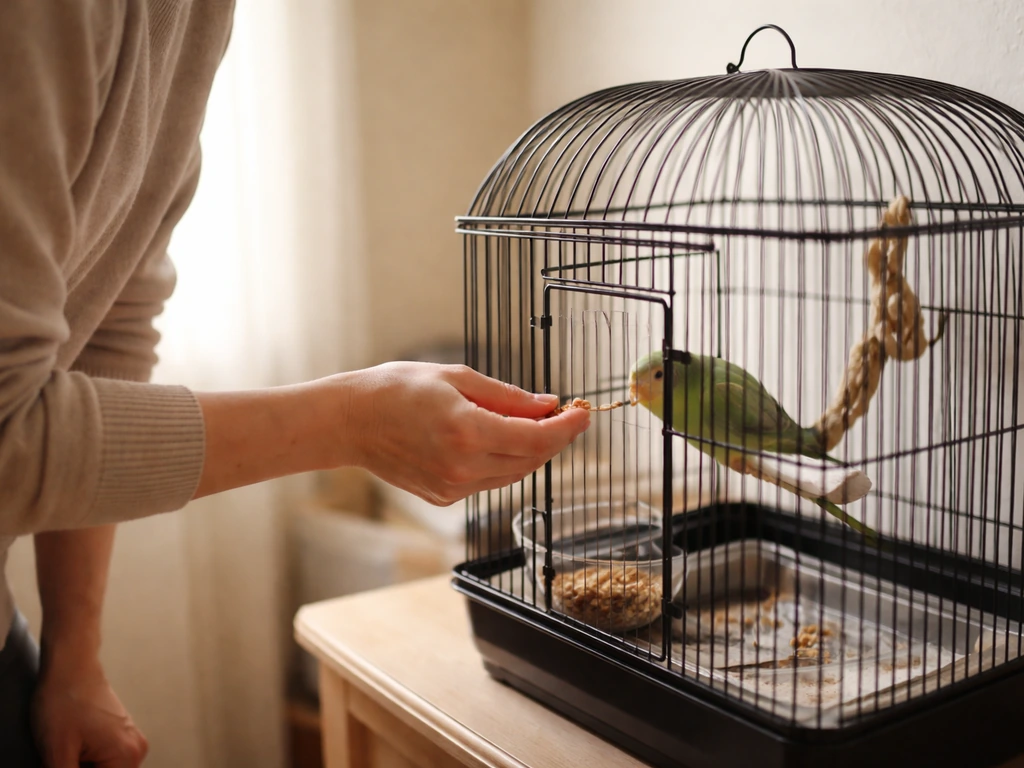
Regardless of species or background, the foundation of taming is the same: you make your presence predict good things, you never punish or force, and you build in tiny increments. Avian behavior research is clear that when a bird shows fear or aggression, it's usually because it's trying to escape or avoid something aversive. The fix isn't discipline, it's removing the aversive thing (your hand, your close presence) and reintroducing it at a distance where the bird feels safe, then gradually closing that distance over days or weeks.
- Establish a consistent routine: show up at the same times each day, move predictably, and speak in a calm, low voice before you do anything else near the bird
- Start at a distance where the bird is relaxed: if it stiffens when you're 3 feet away, start at 4 feet, then 3.5 feet, then 3 feet over several sessions
- Introduce high-value food from outside the cage first: hold a treat (millet spray, a piece of fruit, a sunflower seed) near the cage bars without reaching in, just letting the bird associate your hand with good things
- Keep sessions short: 5 to 10 minutes maximum, ending while the bird is still calm and engaged, not after it has become stressed
- Never end a session by chasing, grabbing, or cornering the bird
Lafeber's training guidance says it clearly: keep sessions short and don't make training tedious. Prolonged exposure to something a bird finds even mildly uncomfortable creates negative associations that set you back. You want every session to end on a positive note, even if the only progress was the bird eating a treat through the cage bars.
Step-by-step taming by species
Parrots (African Greys, Amazons, conures, cockatoos, lovebirds)
Parrots are smart, social, and often already somewhat relationship-oriented by the time you get them. The challenge is that they're also strong, bite hard, and are sensitive to body language. Here's the sequence that works:
- Days 1 to 3: Just exist near the cage. Sit nearby, talk softly, let the bird observe you. Don't stare directly at it (that's a threat signal for most parrots). Read a book or work quietly.
- Days 4 to 7: Offer high-value treats through the bars with a calm, flat hand. Don't push the treat through, just hold it and wait. If the bird takes it, great. If not, leave it clipped to the bars and walk away.
- Days 7 to 14: Open the cage door and offer treats just inside the doorway. Keep your hand low, palm up, and stay still. Let the bird come to you.
- Week 2 to 3: Introduce the step-up cue. Hold your index finger or a short perch stick horizontally just below the bird's chest, say 'step up' in a calm voice, and apply gentle upward pressure against the lower legs (not the chest). The moment it steps on, praise and treat immediately.
- Week 3 onward: Practice step-ups inside the cage, then at the cage door, then outside the cage. Short sessions, lots of praise. Extend out-of-cage time gradually.
Stick training (using a dowel or perch stick rather than your bare finger) is a valid starting point for birds that bite defensively. Lafeber notes that for some birds, stick training should come before hand taming, not after. Once the bird reliably steps onto the stick, you transition to your finger by shortening the stick over sessions until your hand is the perch.
Cockatiels
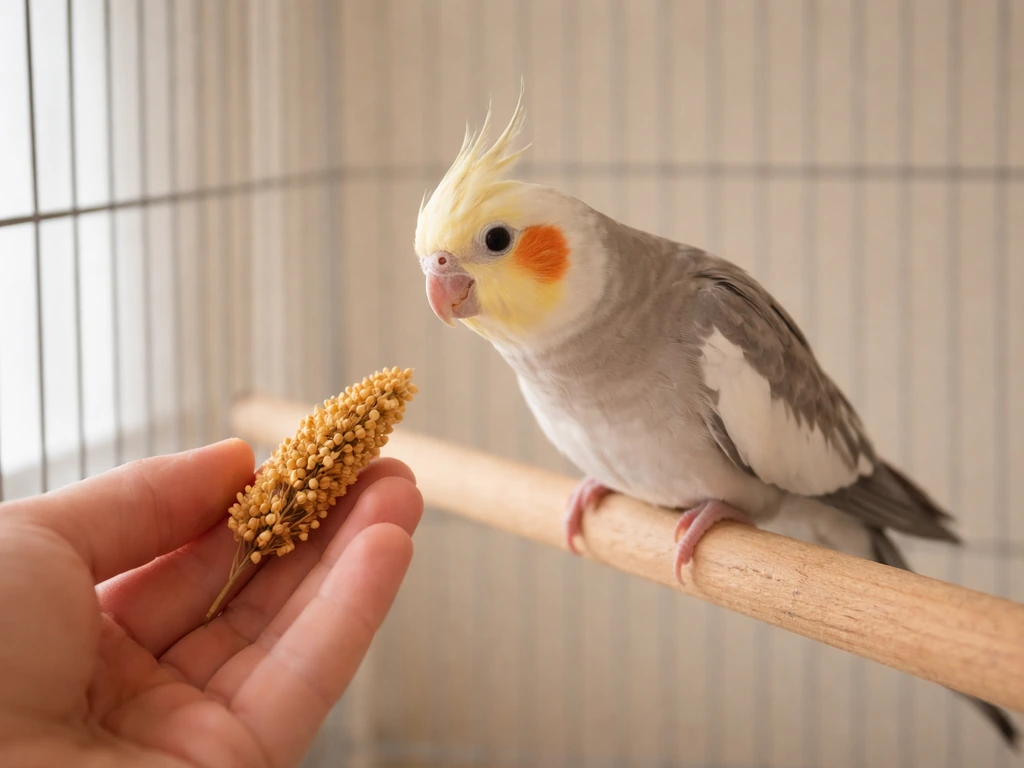
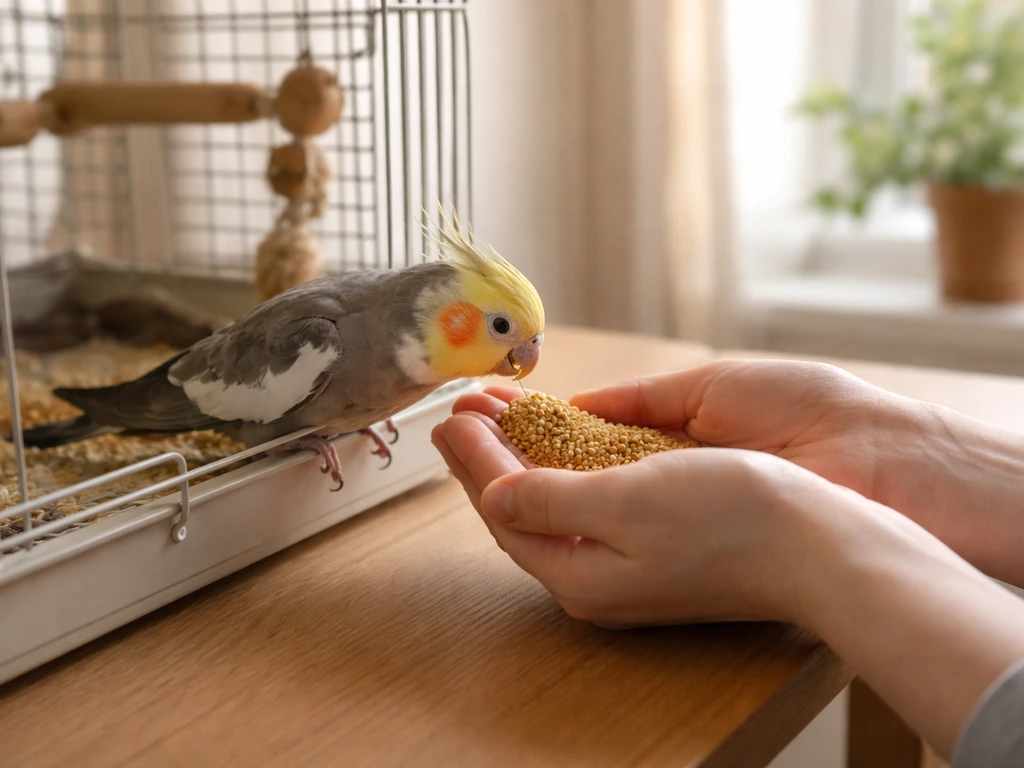
Cockatiels are one of the most tameable birds available, and a young, hand-raised cockatiel can often be stepping onto your hand within a week. Older or parent-raised birds take longer but respond well to the same approach. Key difference from parrots: cockatiels are prey-animal sensitive and react strongly to sudden movement or sound. Always approach from the front, never from above or behind.
- Days 1 to 5: Cage presence only. Sit nearby, whistle or hum softly (cockatiels respond well to whistling), offer millet spray through bars.
- Days 5 to 10: Hand-feed through the open cage door. Use your non-dominant hand, keep it low and steady. No eye contact, look slightly away.
- Days 10 to 18: Introduce finger as a perch just below the breast, say 'up' gently. If the bird bites the finger, don't yank back (this teaches the bird that biting works). Hold still, wait for it to stop, then reward.
- Days 18 onward: Short out-of-cage sessions in a small, bird-safe room. Cockatiels often bond fast once they feel safe outside the cage.
Budgies (budgerigars)
Budgies are quick learners when young but can be stubborn if acquired as adults from an aviary setting. The key is patience and millet, which is basically budgie currency. Young budgies (under 6 months) typically tame within 2 to 4 weeks of daily sessions. Older aviary budgies may take 2 to 3 months.
- Week 1: Cage-side presence, talking softly. Offer millet through bars. Move slowly around the cage without reaching in.
- Week 2: Open-door hand feeding. Hold millet in your palm and let the bird hop onto your hand to reach it. Keep perfectly still.
- Week 3: Once the bird stands on your palm for millet inside the cage, slowly and smoothly move your hand slightly. If no panic, continue; if the bird flushes, back to stillness.
- Week 4 onward: Bring the bird out of the cage on your hand, one short session at a time, in a quiet room with windows covered.
Finches and canaries
Here's the honest truth about finches and canaries: most of them are not wired to be hand-tame pets in the same way parrots or cockatiels are. They're flock birds that view humans as potential threats and prefer to be admired from a short distance. 'Taming' for finches usually means they tolerate your presence near the cage without panicking, and will eat from a feeder insert while your hand is nearby. Expecting a zebra finch to sit on your shoulder is setting yourself up for frustration.
That said, hand-raised finches or those kept singly (which isn't ideal for welfare but is sometimes the situation) can become more human-focused. The approach is the same low-pressure, treat-based method, just with even smaller increments and more distance to start.
Wild backyard birds
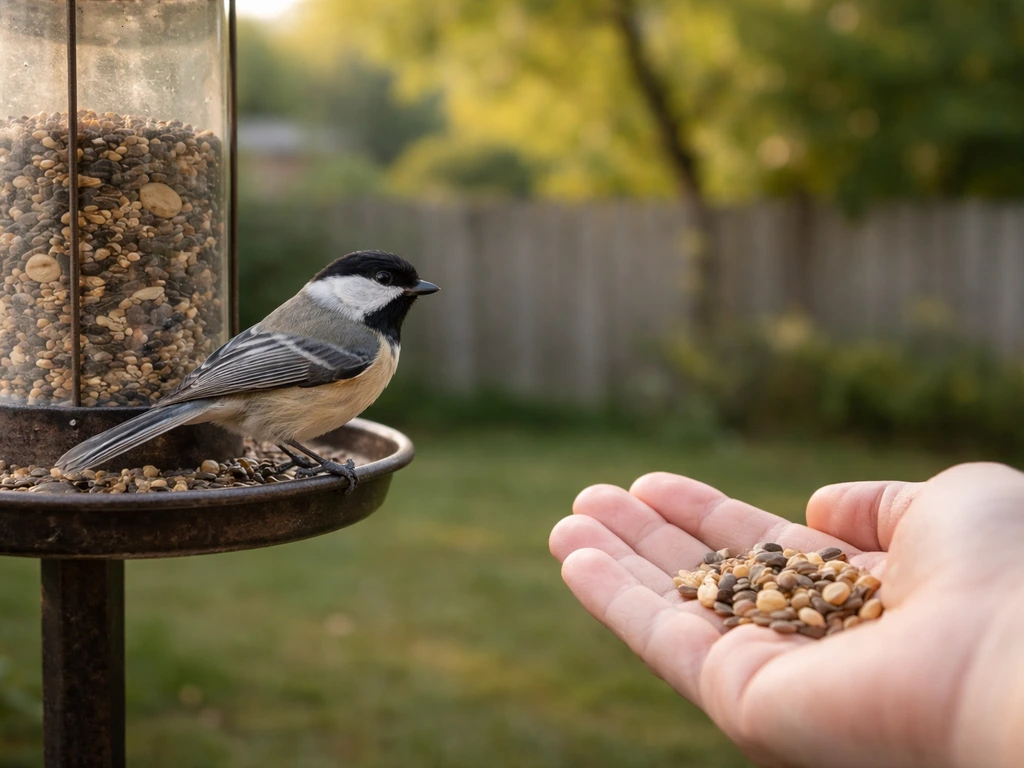
Getting a wild bird to eat from your hand is genuinely achievable with common species like chickadees, nuthatches, titmice, and some sparrows. It's not the same as taming a pet bird, and your goal should be hand-feeding only, not handling or keeping. Here's how it works:
- Step 1: Establish a feeding routine at a consistent time and place every day for 1 to 2 weeks. The birds need to know you're a reliable food source.
- Step 2: Begin standing or sitting still near the feeder while it's stocked. Don't look directly at the birds. Let them get used to your presence at about 6 to 10 feet.
- Step 3: Gradually move closer each day, by about a foot at a time, over 1 to 2 weeks. Stop moving when birds flush and wait for them to return before your next increment.
- Step 4: Replace the feeder with your outstretched palm holding sunflower seeds or suet. Stand or sit completely still. Look away. Wait.
- Step 5: Some birds (especially chickadees and titmice) may land on your hand within minutes of this setup if they've had weeks of positive association. Others take days to weeks. Stay consistent.
Timing matters with wild birds. Early morning when natural food is scarce, and in late fall or winter when calories are harder to find, birds are more willing to take risks. Species like house sparrows and house finches can also be habituated to hand-feeding, though they tend to be more cautious than chickadees. If you're specifically trying to work with sparrows, there's more detail on species-specific techniques in our dedicated guide on how to tame a sparrow bird.
When progress stalls: troubleshooting common setbacks
Even with the best approach, most people hit a wall at some point. The bird was progressing, then suddenly started refusing to approach, biting again, or seemed to regress completely. This is normal. Here's how to diagnose what's happening and what to do about it.
| Problem | Likely cause | What to do |
|---|---|---|
| Bird was approaching, now won't come near | Aversive experience (grabbed, startled, loud noise), or health issue | Back up two steps in your protocol, check for illness signs, shorten sessions |
| Biting during or after step-up | Overstimulation, warning bites being ignored, or hand position too high | Reduce session length, watch for pre-bite body language (pinned eyes, fanned feathers), lower your hand position |
| Won't take treats from hand | Wrong treat, too much pressure, bird is not hungry enough | Try a different high-value treat, do sessions before meals, reduce your distance |
| Screams or lunges when you approach | Strong fear response, possibly past trauma | Slow everything down, use stick training first, consider a fear-based taming approach |
| Was tame, now hormonal/aggressive | Breeding season hormonal changes (common in cockatiels, lovebirds, amazons) | Reduce stimulating petting, keep sessions short, wait for season to pass |
| Wild bird stopped coming to hand | Change in routine, competition from other birds, natural food availability increased | Return to feeder-only feeding for 1 to 2 weeks, re-establish routine |
| No progress after 4 to 6 weeks | Bird may be severely fear-conditioned, or needs professional behavioral guidance | Consult an avian vet or certified bird behavior consultant |
One of the most common mistakes is misreading fear as stubbornness or disobedience. Avian Behavior International makes the point that when a bird avoids you, it's usually because your presence is still predicting something it wants to escape, not because it's being difficult. The solution is almost always to slow down, reduce pressure, and rebuild positive associations at an easier distance or with less direct contact.
If your bird is scared rather than simply inexperienced, the approach needs to adjust significantly. There's a full breakdown of techniques for that specific situation in our guide on how to tame a scared bird. Similarly, if biting is the main obstacle, there are targeted methods for that in our guide on how to tame a bird that bites.
If biting is the main obstacle, you can follow the steps in our guide on how to tame a bird that bites for a more satisfactory approach satisfactory how to tame bird. If you are still unsure where to start, review our small-and-bird taming steps so you can move at the right pace and reduce fear how to tame a bird that bites.
If biting is the main obstacle, use the steps in our guide on how to tame a bird that bites. If biting is the main obstacle, use the steps in our guide on how to tame a bird that bites.
Legal and ethical lines you should not cross with wild birds
This is where a lot of well-meaning people accidentally get into trouble. Wild birds are legally protected in most countries, and 'taming' a wild bird in any way that involves capturing, confining, or keeping it is typically illegal without a licence, regardless of your intentions.
In the UK, the Wildlife and Countryside Act 1981 protects all wild birds and makes it an offense to intentionally disturb certain birds while nesting, or to possess them without authorization. UK government guidance makes clear that keeping wild birds requires licences and sometimes registration depending on species. In the US, the Migratory Bird Treaty Act protects hundreds of native species, making it illegal to capture, possess, or harm them without a federal permit. In Canada, the Migratory Birds Convention Act 1994 applies similar protections to a broad list of migratory species. The EU Birds Directive protects all naturally occurring wild bird species across member states.
The ethical concern is separate from the legal one. Even where hand-feeding is legal and harmless (it is, in most jurisdictions, for common garden species), encouraging wild birds to lose fear of humans entirely can put them at risk. A chickadee that lands on anyone's hand may eventually land on the wrong person's hand. The US Fish and Wildlife Service specifically cautions that wild bird feeding can change wildlife behavior in ways with downstream ecological consequences. The goal of hand-feeding should be a relationship built on the bird's terms, not dependency or habituation that removes its natural wariness.
If you find a wild bird that is injured, sick, or genuinely in distress, do not attempt to tame or rehabilitate it yourself. Contact a licensed wildlife rehabilitator in your area. They have the training, permits, and equipment to give the bird a real chance. Attempting home rehabilitation without a permit is illegal in most jurisdictions and often leads to poor outcomes for the bird. PetMD's guidance is direct on this: avoid handling sick or dead birds and contact local wildlife authorities or animal control instead.
When to call a professional
- The bird is injured, bleeding, unable to fly, or showing neurological signs
- You've found a grounded wild bird that can't be identified as a fledgling (fledglings are intentionally on the ground and should be left alone unless in immediate danger)
- Your pet bird's behavior has suddenly changed, it's losing weight, or it's showing signs of illness during taming work
- A taming program has produced no progress after 6 to 8 weeks of consistent daily work
- You need a permit to legally keep or rehabilitate a wild bird in your jurisdiction
The bottom line is that real taming, the kind that actually sticks and builds a healthy relationship, is slow, patient, and always on the bird's terms. Start small, stay consistent, prioritize safety and hygiene, and know when to call in expert help. That approach works every time. Rushing it, forcing it, or skipping the groundwork is what leads to setbacks, injuries, and stressed-out birds. You've got this.
FAQ
How do I know when it is safe to move closer during taming?
Use a simple rule, if the bird shows clear escape or aggression signs, stop and increase distance. If the bird is calm enough to eat, relax its posture, and let you approach slightly closer without escalating, you are on track. When you restart after a bad session, reduce the difficulty by going back one step (for example, from hand offering to feeder near the cage bar).
What should I do if the bird regresses and starts refusing again after progress?
Yes, and it is one of the biggest hidden problems. If the bird can reach your hand and still panics, your approach is probably too fast or too close, not “more time” in the same setup. Re-enter at an easier distance, keep sessions very short, and only add a new step once the bird repeatedly chooses to engage.
Why does my bird seem to respond randomly from day to day?
Change just one variable per session. If you keep adjusting food types, hand position, timing, and voice cues at once, you will never know what helped or hurt. A practical approach is to keep everything the same except one change, then watch for at least several successful repetitions before making another adjustment.
How should I handle bite warnings in the moment?
Stop immediately and reassess safety if any bite warning happens, especially stiff body, fanned tail, crouching to spring, lunging, or sudden freezing. Do not “test” the bird by raising your hand higher or pushing through. End the session, give the bird time to reset, then resume at a lower-pressure distance later.
How do I teach a reliable stepping-on cue without forcing contact?
For many birds, the best “cue” is a consistent target, such as a perch stick or a specific stepping surface, paired with the same word and reward timing. Train the cue first when the bird is comfortable, then gradually bring the cue closer to your hand. Avoid switching cues repeatedly, because that delays learning.
What counts as a “short session,” and how long is too long?
Short sessions are better than long ones, and boredom can also create negative associations if you stretch exposure when the bird is uncomfortable. A practical target is a few minutes of active work, then stop while the bird is still willing to engage. If the bird stops taking treats, freeze and back up rather than continuing.
Can noise or my routine (walking by, talking, music) make taming harder?
Yes, but keep it consistent and structured. If the bird learns that certain sounds predict pressure, it can become more cautious around you. Start with quiet, predictable routines, then introduce new sounds gradually at a distance where the bird stays relaxed.
What if my bird is scared of me, not just unfamiliar with handling?
If the bird is frightened, you should reduce your “signal intensity” rather than increase it. That means slower movement, more distance, and fewer direct approaches. If you must interact, do it only in a way that allows the bird to retreat, then reintroduce the hand or perch stick at a distance the bird consistently accepts.
How do I choose the right treats and timing for taming?
Do not assume food rewards will work if the reward is wrong or offered at the wrong time. Use small, highly desirable treats, and deliver them immediately after the behavior you want (such as approaching, touching the target, or stepping). If the bird takes the food but keeps avoiding your hand, you likely need to rebuild distance tolerance before expecting contact.
How can I hand-feed wild birds without accidentally “taming” them into danger?
If you are dealing with a wild bird at a feeder, aim for habituation to your presence, not physical handling. A good next step is to keep the feeder and hand offering at consistent locations and times, then lengthen the time you are visible rather than trying to reach closer right away.
What safety precautions should I take if I am working with a parrot or cockatiel that bites?
Bite force and injury risk change with species, age, and how close you get, so plan your safety before starting. Wear long sleeves, avoid sudden hand movement near the head, and use a perch or target tool when appropriate. If a bird has a history of severe bites, get guidance tailored to that behavior rather than using generic steps.
Do I really need to worry about disease risk if I am only feeding the bird briefly?
The safest default is to wash your hands after any bird contact and avoid touching food prep areas until you have cleaned up. If a bird looks sick, use disposable gloves if you must handle the immediate situation, and do not attempt taming sessions at all. For wild birds, take the same approach after touching feeders or birdbath equipment.
When is it time to stop trying and ask for professional help?
Yes. If you cannot get consistent calm signs (normal breathing, relaxed feathers, steady interest, regular eating) within a reasonable timeframe, the bird may be too fearful, too injured, or not suitable for the interaction you want. That is when you adjust expectations and consider expert help, or for wild birds, stop and contact a licensed wildlife professional.
Next Article
How to Catch a Bird Without Killing It: Humane Steps
Humane, trap-free steps to catch a wild backyard bird safely, minimize stress, contain it calmly, then release or reloca