Taming a bird comes down to one thing: earning trust on the bird's schedule, not yours. If you want a straightforward walkthrough, see this guide on how to tame a bird in real life. Whether you've got a new budgie sitting frozen in the corner of its cage, a cockatiel that lunges every time you open the door, or a backyard crow that bolts the moment you step outside, the process is the same at its core. You make yourself predictable, you move slowly, you reward calm behavior, and you repeat it daily. Most pet birds show real progress within two to four weeks of consistent work. Wild birds in a backyard can become reliably approachable within a season. But the approach changes depending on species and what you actually mean by 'tame,' so let's start there.
Satisfactory How to Tame a Bird: Step-by-Step Guide
What Does 'Tame' Actually Mean for Your Bird?
The word 'tame' gets used to mean three very different things, and knowing which one you're after will shape everything you do. The first is trust, meaning the bird doesn't panic at your presence and accepts you in its space. The second is handling tolerance, meaning the bird will step onto your hand, sit on your shoulder, and let you move it without stress. The third is target behaviors, meaning the bird performs specific trained actions like step-up on cue, recall, or trick behaviors. You don't have to pick just one, but you do need to achieve them in that order. No bird will reliably step up if it's still terrified of your hand. No bird will learn tricks if it doesn't trust being handled. Trust always comes first.
It also matters whether you're working with a pet bird or a wild bird, because the end goals are completely different. With a pet bird, the aim is full partnership: a bird that's comfortable being part of your daily life. With a wild bird in your yard, the ethical goal is habituation, meaning the bird becomes comfortable enough near humans to feed and rest safely, without becoming dependent or losing survival skills. Keep that distinction in mind as you read on.
How to Approach Safely and Build Trust Fast
The single fastest way to build trust with any bird is to make yourself boring. Birds are prey animals with a hair-trigger threat response. Sudden movement, direct eye contact, looming from above, and loud sounds all read as predator behavior. The moment you trigger that response, you've set yourself back. So the first rule is: slow down more than you think you need to.
Set up a non-threatening daily routine before you even attempt to interact. Spend time in the same room as the bird without looking at it directly. Talk quietly and move predictably. Let the bird observe you doing normal, non-threatening things like reading, folding laundry, or drinking coffee. Approach the cage or feeding area from the side rather than straight on, which is far less threatening than a frontal approach. Do this for several days before you try any direct contact.
Learn to read fear signals before you touch anything. The Association of Avian Veterinarians lists clear fear signs to watch for: the bird leans away from you, eyes go wide, feathers pull tight to the body, the bird crouches low or goes very tall and stiff, the beak opens slightly, or the bird rocks its head from side to side. Cockatiels and cockatoos will raise their crest when alarmed. Any of these signals means stop, back up, and try again more slowly. The worst thing you can do is push through these signs, because that teaches the bird that ignoring its warnings doesn't work, which eventually leads to biting.
Species-Specific Taming Plans
Parrots (Conures, African Greys, Amazons, Macaws)
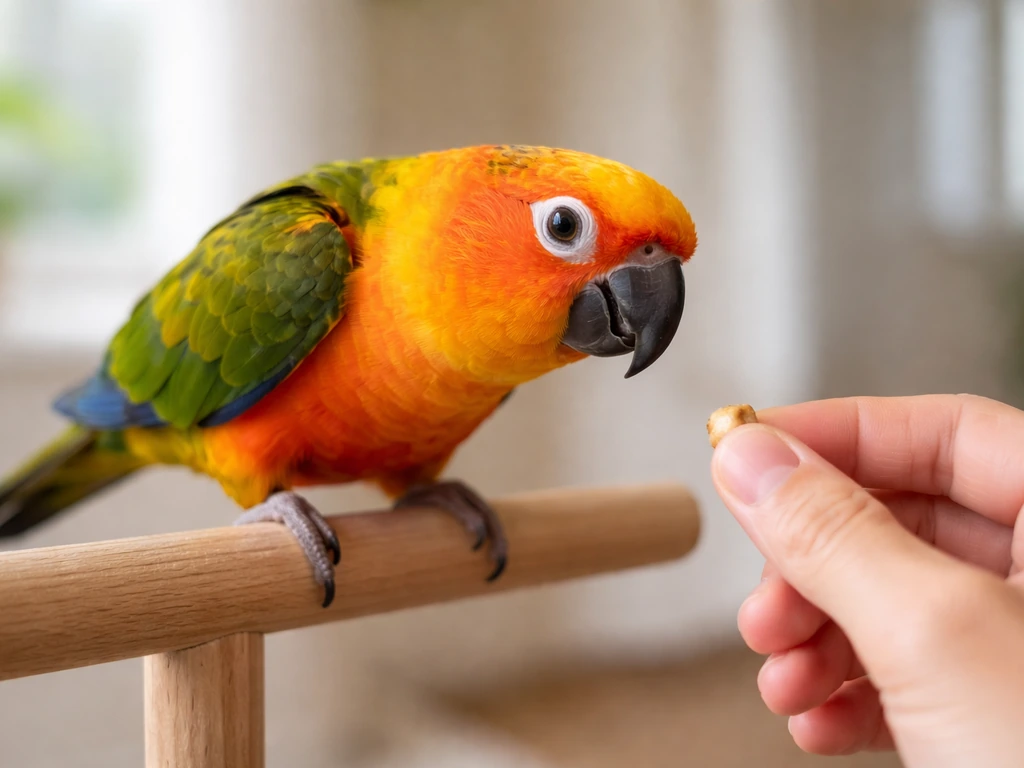
Parrots are intelligent, emotionally complex, and highly social, which makes them capable of deep bonds but also intense fear and distrust when those bonds are broken or never formed. With a new or untamed parrot, start outside the cage. Sit near it at eye level or below, never towering over it. Offer high-value treats like small pieces of almond, walnut, or a favorite fruit through the cage bars before you ever try to open the door. The goal in the first week is simply for the bird to take food from your fingers without flinching. Once it does that reliably, open the cage door and offer treats at the threshold. Then move your hand inside. Then rest your hand on the perch near the bird. Each step can take several days. Don't rush it.
Clicker training works extremely well with parrots. The Association of Avian Veterinarians explains that the click acts as a bridge signal, telling the bird at the exact right moment that it did something correct and a reward is coming. You can use a commercial clicker, a ballpoint pen click, or a consistent verbal sound. blank" rel="noopener noreferrer">Mark and reward every approach to your hand, every calm moment near you, every successful step-up. Parrots generalize quickly once they understand the game, and training sessions become something they look forward to.
Cockatiels
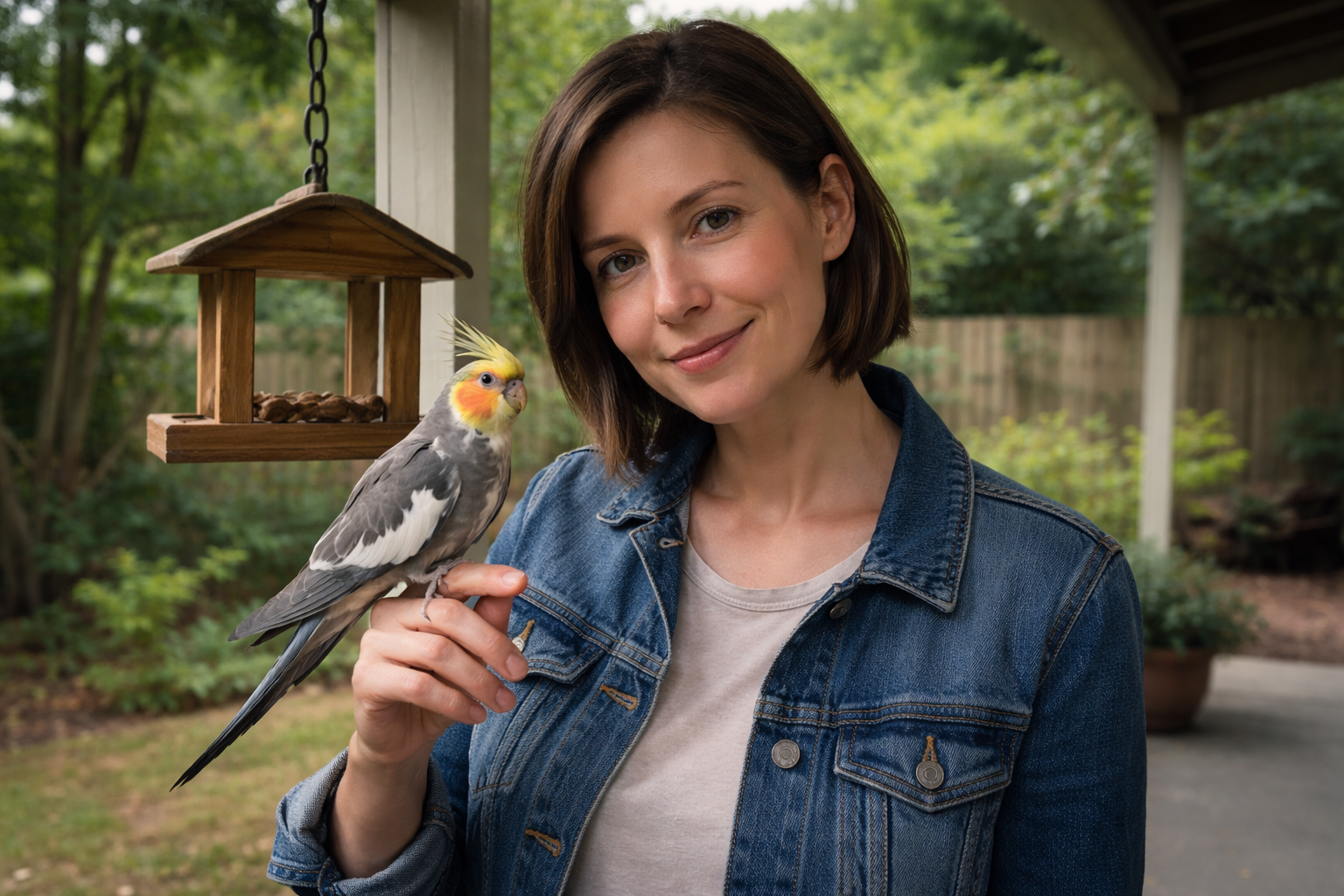
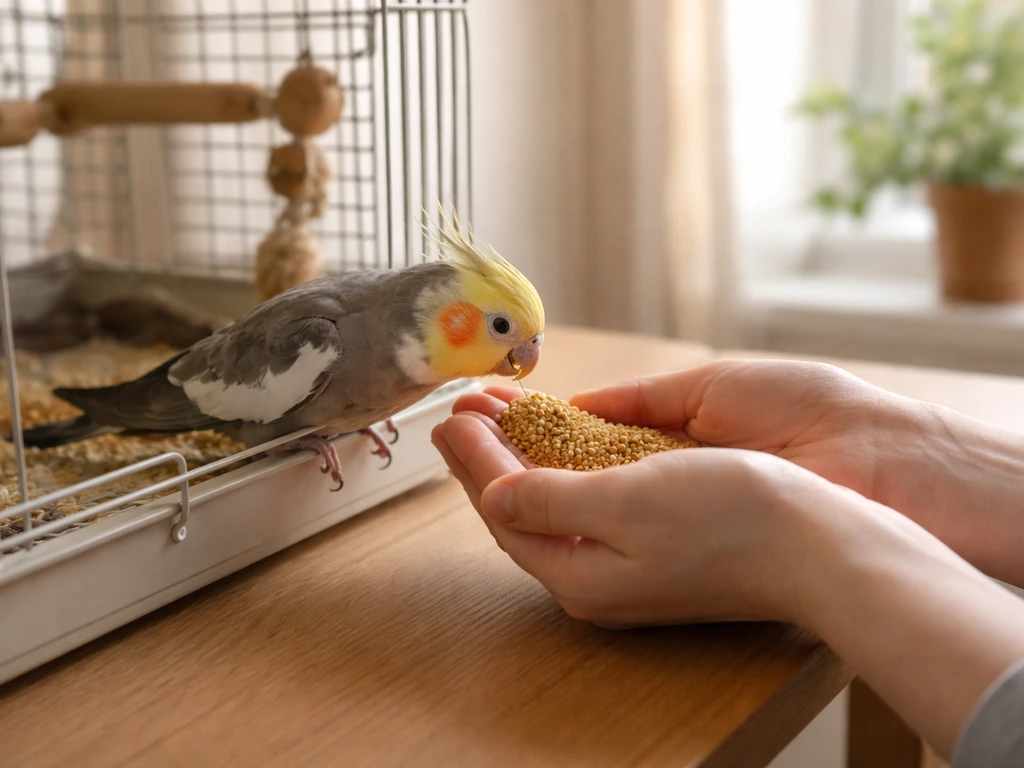
Cockatiels are naturally curious but can be skittish, especially if they came from a pet store with minimal handling. The crest is your best real-time feedback tool: flat and relaxed means comfortable, raised and fanned means alert or alarmed, slicked back tight means frightened or aggressive. The same treat-and-approach progression works well, but cockatiels often respond especially fast to millet spray, which you can hold close to the cage initially and gradually move to offering by hand. Many cockatiels become comfortable with gentle head scratches before they'll tolerate being picked up, so you can use that as a trust-building milestone before pushing toward step-up training.
Budgies (Budgerigars / Parakeets)
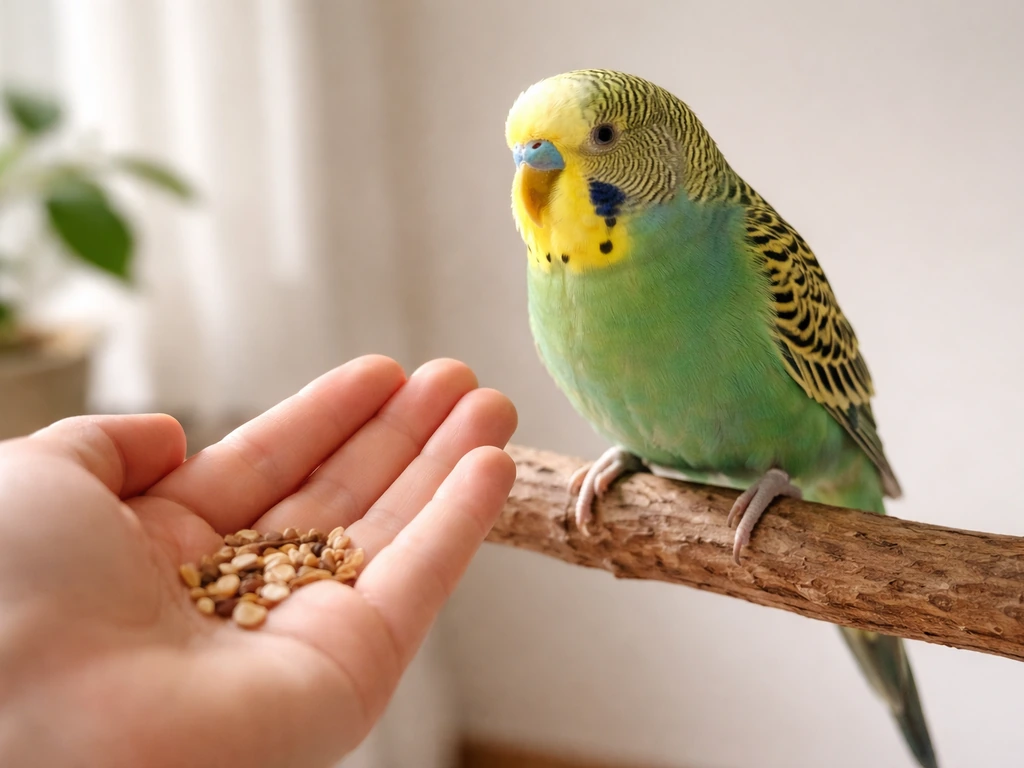
Budgies are flock birds, which means they watch each other constantly for safety cues. If you have multiple budgies, one confident bird can make the others easier to tame, or one fearful bird can make the whole flock harder. For a single budgie, the best approach is to keep the cage in a busy but calm room so the bird gets used to normal human activity. Millet is the gold-standard treat. Hold it just inside the open cage door for short sessions, five minutes at a time, and wait for the bird to approach you rather than reaching toward it. Budgies are small and fast-moving, so keep your movements especially slow and deliberate. It's normal for a budgie to take two to three weeks before it voluntarily steps onto a finger.
Finches
Finches are a different case entirely. Most finch species (zebra finches, society finches, gouldians) are not birds that will sit on your hand or seek out contact the way parrots do. They can become comfortable with your presence and may even eat from a spoon held near their perch, but full taming toward regular handling isn't a realistic or humane goal for most finches. The better aim is habituation: reducing their fear of you so that cage maintenance, feeding, and health checks cause minimal stress. Move slowly around the cage, avoid sudden noise, and handle finches only when necessary (such as for health checks or emergencies), using a soft cloth or cupped hands to minimize stress.
Taming Wild Birds in Your Backyard
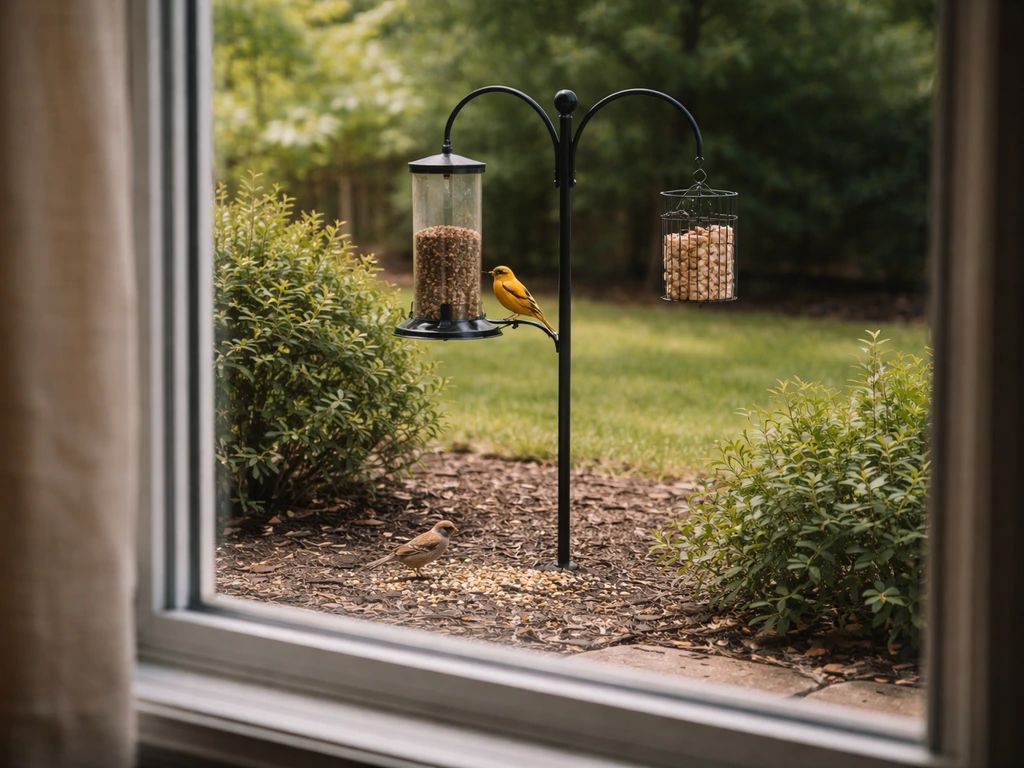
Wild birds can become remarkably comfortable with a particular human through a process called habituation, where repeated non-threatening exposure gradually lowers their flight distance (the gap at which they stop and flush). You're not aiming for a bird that sits on your shoulder; you're aiming for birds that feed calmly while you're nearby, which is deeply rewarding on its own.
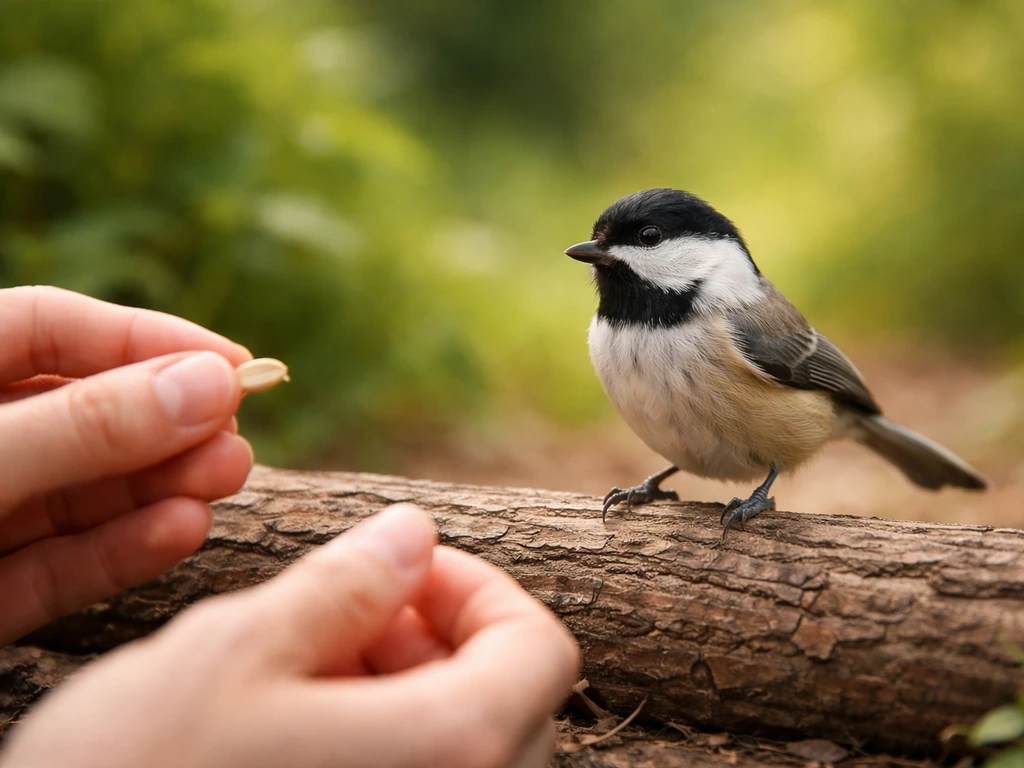
Start with a consistent feeding setup. Place feeders where you can observe them from a window or seated position nearby. Offer species-appropriate food: black oil sunflower seeds for most songbirds, nyjer for finches, suet for woodpeckers and nuthatches. Keep the feeding schedule consistent, ideally refilling at the same time each day. Once birds are visiting regularly without you present, start sitting quietly nearby at a distance that doesn't disturb them, maybe 10 to 15 feet away. Over days and weeks, gradually reduce that distance. Some species like chickadees, nuthatches, and certain sparrows habituate much faster than others and may eventually take seed from an open palm if you stay completely still. If you're specifically trying to tame a sparrow bird, use the same step-by-step habituation approach, but keep sessions very quiet and slow.
The key ethical rule for wild birds is to never create dependence that removes their ability to survive independently. Supplement their natural diet, don't replace it. Keep feeders clean (scrub with a diluted bleach solution monthly) to prevent disease. Avoid feeding species that are already invasive or overpopulated in your area, and never feed wildlife in ways that bring them into unsafe contact with people, roads, or domestic cats.
Handling, Step-Up Training, and Your Daily Practice Schedule
The step-up cue is the foundation of safe handling for any pet bird. Teach it by placing a finger or hand just below the bird's chest, making light contact, and saying 'step up' in a calm, consistent tone every single time. According to PetMD, using the same tone of voice for the cue matters because birds key in on vocal patterns. The moment the bird steps up, reward it immediately with a treat and a calm verbal marker like 'good.' Keep each session to just a few minutes, and only practice when the bird appears relaxed, not when it's puffed up, crouched, or showing any of the fear signals mentioned earlier.
The RSPCA frames step-up training as consent-based: if the bird shows any sign of distress, you stop. Reddit’s r/parrots thread on stepping up similarly emphasizes that if the bird shows frustration or aggression during practice, you should stop and keep sessions light and engaging blank" rel="noopener noreferrer">if the bird shows any sign of distress, you stop. If a bird refuses a step in step-up training, go back to the previous step and start again. Dr. Laurie Hess at PetMD echoes this, noting that signs like leaning forward, dilated pupils, puffed feathers, or a slightly open beak before a step-up attempt are signals to back off rather than push through. Forcing contact when a bird is showing these signals is the most common reason people get bitten, and it also erodes trust rather than building it.
Here's a realistic daily practice schedule you can follow:
- Morning (5 minutes): Sit near the cage or feeding area, speak quietly, offer a small treat. No demands, just positive presence.
- Midday (5 to 10 minutes): Open the cage or move closer. Offer a treat from your hand. Attempt one or two step-up cues if the bird seems relaxed.
- Evening (5 minutes): End the day on a positive note with calm talking and a treat. Avoid training if the bird seems tired or agitated.
Consistency beats intensity every time. Three short daily sessions will outperform one long weekly session by a wide margin. Track your progress loosely: note what distance the bird accepts your hand, whether it takes treats readily, and how quickly it settles after being startled. These are your real metrics.
Troubleshooting Fear, Biting, Flighty Behavior, and Setbacks
Almost every taming problem traces back to one of three root causes: moving too fast, ignoring fear signals, or inconsistency. Here's how to troubleshoot the most common issues:
| Problem | Likely Cause | What to Do |
|---|---|---|
| Bird refuses treats from your hand | Too close, too fast; bird not hungry enough during sessions | Back up a step, try offering through cage bars first; train before meals when motivation is higher |
| Bird bites when you attempt step-up | Ignoring pre-bite warning signals (puffed feathers, open beak, dilated pupils) | Watch for signals and stop before they escalate; never punish biting, just back off calmly |
| Bird was tame then regressed | Stressful event (vet visit, new pet, loud noise, schedule change) | Return to an earlier stage of trust-building; give extra calm time without demands |
| Bird flies away every time you approach | Flight distance still too high; approach angle too direct | Approach from the side, slower, at bird's eye level; increase habituation time before attempting contact |
| Bird screams or lunges through cage bars | Territorial behavior, especially in parrots; hormonal periods | Avoid approaching the cage head-on; wait for calm moments before interacting; consult an avian vet if persistent |
| No improvement after 4 to 6 weeks | Underlying health issue, past trauma, or approach needs adjustment | Rule out illness with an avian vet checkup; consider consulting a certified parrot behavior consultant |
If biting is a persistent problem, it helps to know that a biting bird is almost always a scared bird. Punishment makes fear worse. The RSPCA advises staying calm and avoiding fast hand movements, and that applies especially in the moment after a bite. Don't yank your hand back sharply, as the sudden movement reinforces the idea that biting works. Instead, keep your hand steady, say nothing, and calmly end the session. The related topic of taming a bird that bites goes deeper into managing bite prevention step by step, which is worth reading if biting is your main obstacle. If you're specifically dealing with biting, you can follow a bite-prevention routine and practice step-by-step to reduce the urge to lunge taming a bird that bites.
For birds that are generally scared rather than defensive, the approach for taming a scared bird focuses specifically on reducing baseline anxiety before any training attempts begin, which can be a useful companion read if your bird seems frozen or chronically stressed rather than reactive.
Ethics, Legal Considerations, and Humane Goals
If you have a pet bird, you already have legal ownership, but that comes with responsibilities. Parrots, cockatiels, and budgies are not domesticated animals in the way dogs or cats are. They retain strong instincts, complex social needs, and the capacity for significant psychological distress if kept improperly. The ethical goal of taming is not compliance, it's a genuine two-way relationship where the bird has opportunities to say no, to retreat, and to express its needs without punishment.
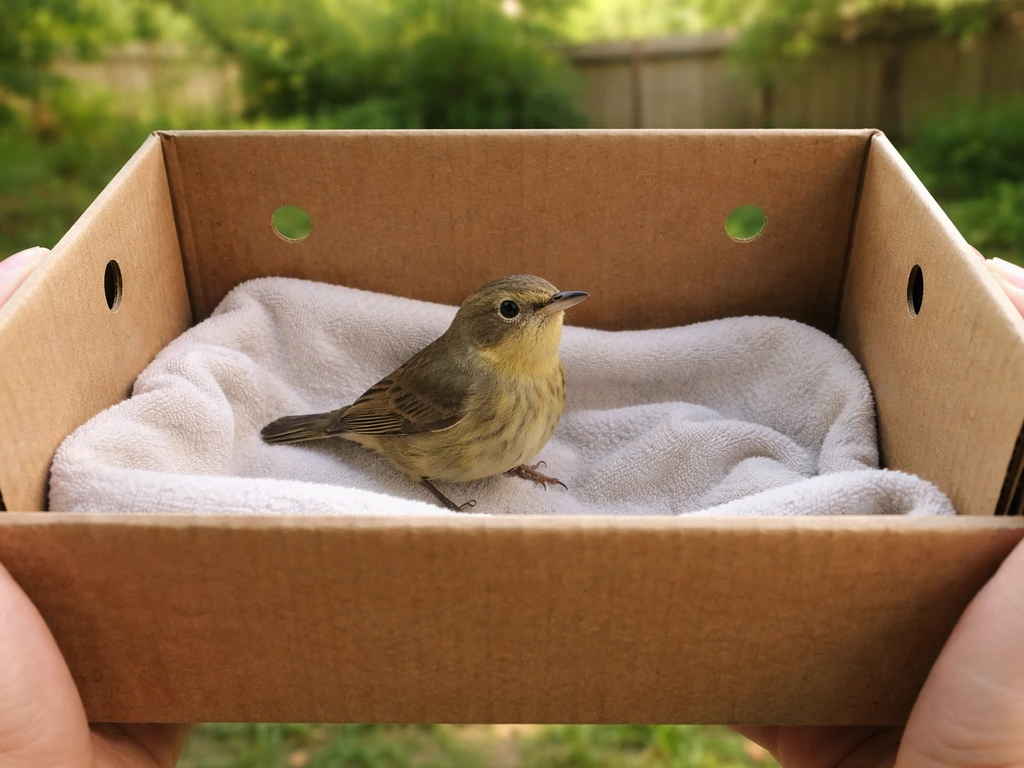
For wild birds, the legal landscape is important to understand. In the United States, the Migratory Bird Treaty Act protects most native wild bird species, making it illegal to capture, possess, or handle them without a federal permit. This means the only legal and ethical path with wild birds is habituation from a distance, not capture or hand-taming. If you find an injured wild bird, contact a licensed wildlife rehabilitator rather than attempting to care for it yourself. Feeding wild birds is generally legal, but local ordinances vary, especially in urban areas or for species like pigeons, so it's worth checking your local rules.
The humane end goal for any bird you work with is a life with low stress, adequate stimulation, and the ability to express natural behaviors. For pet birds, that means a cage large enough for full wing extension, daily out-of-cage time, mental enrichment, and social interaction. For wild backyard birds, it means clean feeders, natural cover like shrubs and trees, a clean water source, and a yard that's as cat-free as possible. Taming is just one part of that bigger picture of care.
FAQ
What should I do if my bird is calm one day but panics the next day during taming sessions?
Treat it as normal variability, not regression. Pause the session when fear signals appear, skip any step-up or handling for that day, and return to lower-pressure goals like staying nearby, offering treats through the cage, or letting the bird approach at its own pace. Also check for triggers like loud guests, cleaning sprays, bedtime noises, or a changed routine (feeding time, room lighting, who is present).
How long should it take before I see progress, and when do I reconsider my approach?
If you are consistent and following fear signals, most pet birds show noticeable change within a few weeks, but not always in the same milestone. If after about 4 to 6 weeks you cannot get the bird to take treats from fingers or at a threshold consistently, reduce the challenge level (more distance, side-on approach, shorter sessions, higher-value treats) and avoid introducing new steps like step-up training.
My bird will take treats but refuses step-up. Does that mean it is still too scared for handling?
Often, yes. Treat-taking can build trust without guaranteeing that the bird accepts physical contact. Try to separate the goals: practice resting a hand near the perch without touching, then teach “step up” only on calm moments. If the bird crouches, stiffens, or shows a partially open beak or rocking head, postpone step-up and go back to non-contact rewards.
Is it okay to force step-up briefly to “get it over with” if my bird is resisting?
No. Forcing contact is a common reason bites happen and it also teaches the bird that its warnings are ignored. The safer choice is consent-based training: stop when distress signs appear, end before the bird escalates, and resume later at a lower difficulty (closer treat placement, less time, calmer positioning).
What is the best way to handle setbacks after a bite?
After a bite, do not punish or abruptly pull away. Keep the bird’s body language in mind and end the session quickly but calmly, then restart later with lower-pressure steps (treats without reaching, or hand resting near the cage without asking for step-up). In the next session, shorten the time you ask for anything and rebuild gradually so the bird does not associate your approach with sudden contact.
How do I choose “high-value” treats without accidentally encouraging bad habits?
Use small pieces of your bird’s favorite food, but keep treats limited and cut them into tiny portions so the bird is motivated yet not overfed. Avoid giving treats that make the bird rough or food-aggressive in your hand, if that happens (some birds get grabby with certain textures). If you notice chasing or lunging for treats, switch to slower delivery and require calm behavior first.
Can I tame a bird using only one long training session instead of daily short sessions?
Daily short sessions are usually more effective. A long session increases stress and makes fear signals more likely as the bird tires or habituates to escalating intensity. Aim for brief practice when the bird is relaxed, then stop while it is still tolerating you rather than pushing until it becomes reactive.
How do I tame a bird if it hates when I open the cage door?
Treat the cage door opening as a distinct trigger to desensitize. Do not immediately reach inside after opening, instead open briefly, speak softly, and offer a treat at the threshold or through the bars. Gradually increase the time the door is open before you attempt any contact, and approach from the side rather than looming from above.
Are there species-specific expectations I should adjust for finches and other small birds?
Yes. Many finches are not realistic candidates for regular handling or step-up like parrots. Focus on habituation, keeping noise and sudden movement low, and restrict touching to health checks or emergencies. If your finch starts showing extreme freeze or panicked flutters, step back and reduce handling attempts.
What should I do if I have multiple budgies and one is fearless while another is extremely shy?
Use the flock effect carefully. The confident bird can speed up habituation, but the fearful bird can also be a “signal source” that makes the whole group more vigilant. Separate challenges when possible, keep the room calm and busy but predictable, and offer treats through the cage so the shy bird can learn without being pressured by chasing behavior from the others.
How close should I sit to wild birds during habituation, and how do I know I am too close?
Start at a distance where birds feed or rest while you are present, often from a window or several feet away, then reduce distance gradually only when behavior stays calm. If the bird repeatedly flushes, stops feeding entirely, or shows alarm behaviors, increase distance again. The goal is reduced flight distance, not eliminating it all at once.
Is it ethical or safe to try to hand-tame a wild bird that seems used to humans?
Usually no. Even if a wild bird is approachable, hand-taming can create dependence and increases risk (predators, traffic, domestic cats). The safer approach is habituation from a distance, allowing feeding and health observation without capture or hand contact, and using a licensed wildlife rehabilitator if the bird is injured.
What legal or safety step should I take before feeding wild birds regularly?
Check local rules, since feeding can be restricted in certain cities or for certain species. Also set up a hygienic feeding routine, clean feeders regularly, and place them where birds can access cover and avoid unsafe approaches. If domestic cats are common, you may need to change feeding areas and timing to reduce harm.
Humane, step-by-step guide to build trust with pet or wild birds, with safety, species tips, timelines, and legal guidan
Humane, trap-free steps to catch a wild backyard bird safely, minimize stress, contain it calmly, then release or reloca
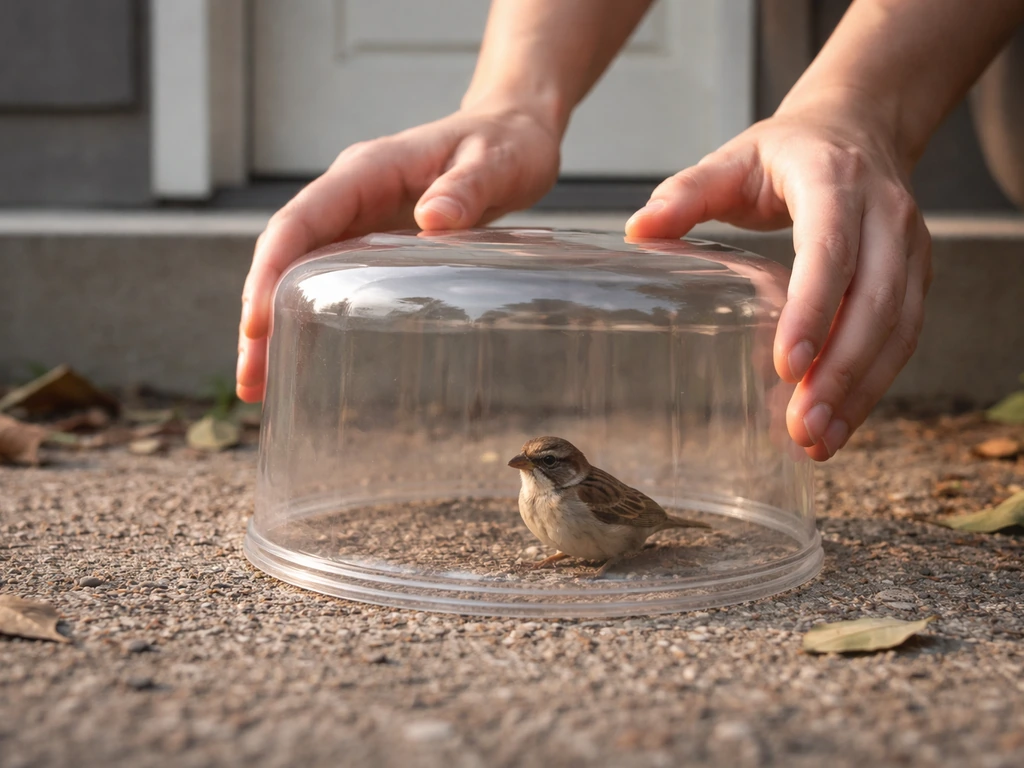
Humane, safety-first steps to catch a bird with a bottle or cover, plus safer alternatives and what to do after capture.