Getting close to a goldfinch, whether you want to attract one reliably to your yard, safely handle one that needs help, or build a trust-based relationship with a pet bird, comes down to patience, the right setup, and low-stress technique. For wild goldfinches, the most effective 'catch' is earning their comfort through food and habitat, not a net. If you genuinely need to physically catch one, such as an injured bird in your yard, a simple soft net, minimal chase, and a ventilated box will get you there safely. Here's the full picture.
How to Catch a Goldfinch Bird Safely and Humanely
Clara Hayes
20 May 2026
First: are you dealing with a wild goldfinch or a pet?
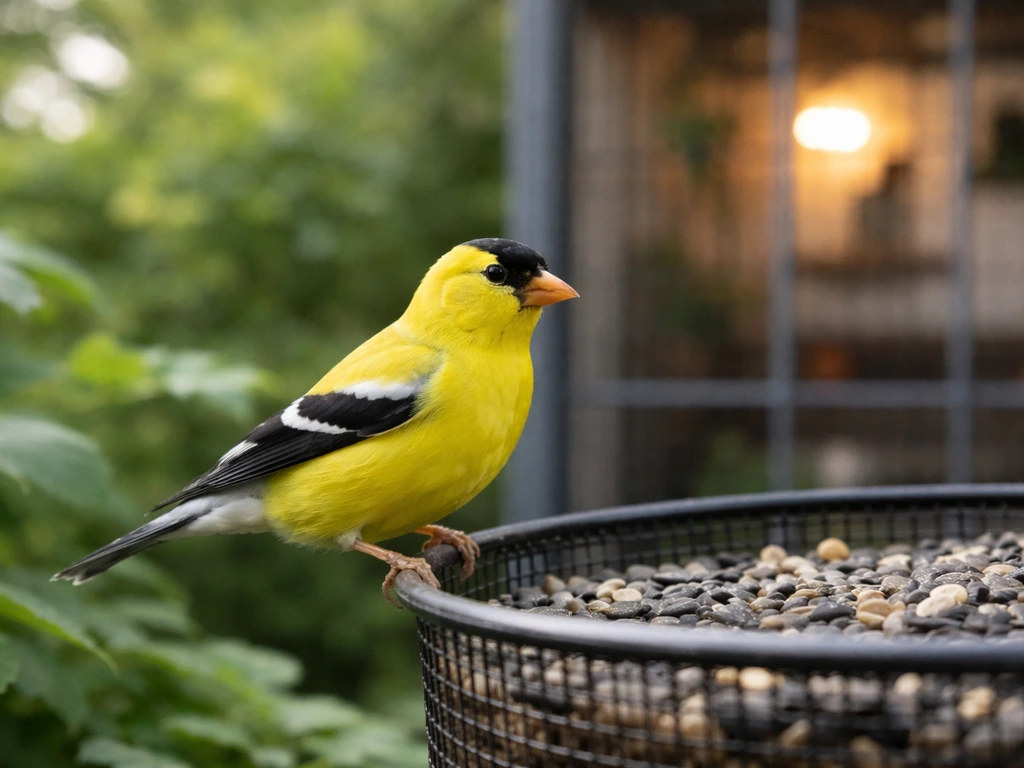
This matters a lot before you do anything else, because the approach is completely different. American Goldfinches are small, lively finches. The breeding male is hard to miss: bright yellow body, black cap and forehead, and black wings with two bold white wing bars. The female is a softer olive-yellow with the same black wings and white wing bars but without the black cap. Both sexes have a white rump patch that flashes when they fly. If you see streaks on the back or breast, you might actually be looking at a Pine Siskin, which visits the same feeders.
Once you're sure it's a goldfinch, ask yourself what your actual goal is. Are you trying to attract goldfinches to your yard and get them comfortable enough to watch up close? Do you have an injured or grounded wild bird that needs temporary handling? Or do you have a pet or breeding goldfinch that has escaped or needs taming? Your answer changes everything about the steps below.
- Backyard birder wanting more goldfinches: focus on the feeder and habitat setup section below.
- Injured or grounded wild bird: skip to the humane capture section and plan to contact a rehabilitator.
- Escaped or pet goldfinch needing taming: the trust-building section is your main roadmap.
- Breeding bird in an aviary: standard low-stress handling principles apply, but check your permit situation first.
Legal and ethical basics, read this before you try anything
In the United States, American Goldfinches are protected under the Migratory Bird Treaty Act. That means you cannot legally trap, possess, or transport a wild goldfinch without the proper federal and state permits, full stop. The only exception that applies to most people is temporary, emergency handling of an injured bird to get it to a licensed wildlife rehabilitator as quickly as possible. Keeping a wild goldfinch as a pet, even temporarily, is not legal without a permit. If you are in another country, check your national and local laws, but similar protections exist across Canada, the UK, and much of Europe.
Ethically, even when handling is legal and necessary, less is always more. Every time a wild bird is chased, grabbed, or held, it experiences real physiological stress. Capture myopathy, a condition where extreme stress and struggling causes muscle damage, can kill a small bird within hours even if it looks physically fine. Your goal in any handling situation is to minimize time, minimize movement, and maximize calm.
- Do not chase a bird around a room, yard, or cage. Corner gently and scoop.
- Never squeeze. Hold a small finch loosely enough that it could pull its head free.
- Limit handling sessions to under two minutes for wild birds.
- Wash your hands before and after any contact.
- If the bird is injured or you are unsure, contact a licensed wildlife rehabilitator rather than attempting extended care yourself.
Attracting goldfinches to your yard: the best 'catch' there is
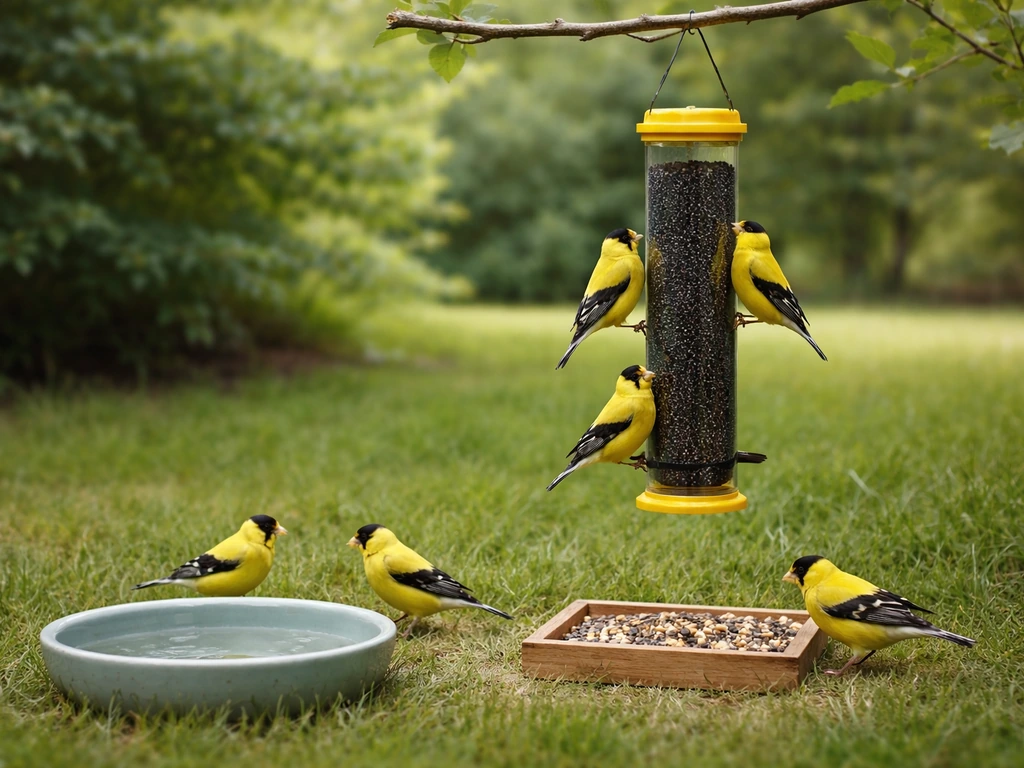
If your goal is simply to see goldfinches up close and regularly, attracting them is far more rewarding than any capture attempt. blank" rel="noopener noreferrer">Goldfinches are feeder birds that move in flocks for most of the year, so once you get one, you often get ten. The two things that matter most are the right seed and the right feeder style.
Seed and feeder setup
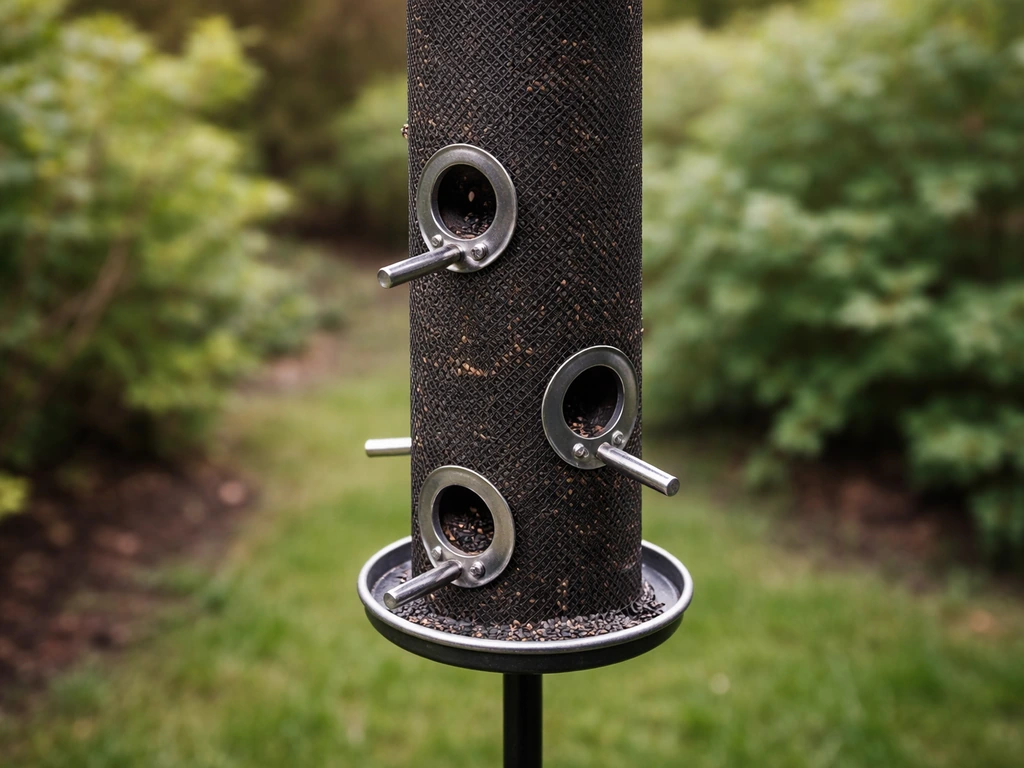
Nyjer (also called thistle) is the single best seed for goldfinches. Use a tube feeder with small ports designed for nyjer, or a mesh sock feeder, either works well. Black-oil sunflower seed is a strong second choice and will also pull in a wider variety of birds. Avoid mixes heavy in milo or millet if goldfinches are your primary target. Keep feeders clean and nyjer fresh because it can go rancid quickly, especially in warm weather, and goldfinches will reject stale seed.
Placement and habitat cues
Place feeders near, but not directly in, shrubby cover where birds can stage before flying in. Open areas with a nearby perching branch work well. Goldfinches are also strongly attracted to native plants that produce seed heads, particularly coneflowers (Echinacea), black-eyed Susans, and thistles if you can manage them in your garden. Leaving seed heads standing through fall and winter dramatically increases visits. A shallow birdbath nearby is a bonus since goldfinches drink and bathe regularly.
Timing: when goldfinches are easiest to attract
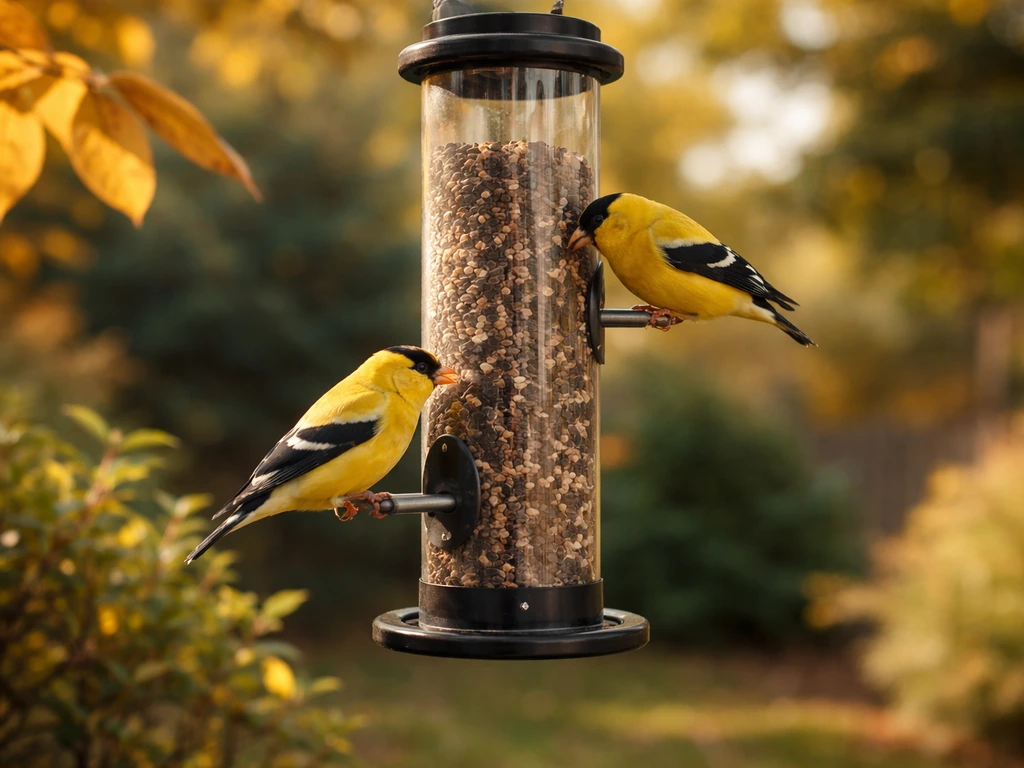
Goldfinch feeder activity peaks in late summer through early spring. During the breeding season, which typically runs from late June through July in most of North America since goldfinches are famously late nesters, adults spend more time foraging in natural areas and feeder visits may dip. Keep feeders stocked consistently, even when traffic seems low, so birds form a habit of checking your yard. Early morning is the most active feeding window.
How to physically catch a goldfinch humanely
There are really only two situations where you should attempt a physical catch: an injured or grounded bird that needs immediate care, or a pet/aviary bird that needs to be handled for health or safety reasons. If you are instead trying to figure out how to catch a robin bird, the safest approach is still to prioritize calm handling and follow the legal and ethical steps for wild birds injured or grounded bird. The same principle of minimizing stress and using a calm, targeted approach also applies when figuring out how to catch a kingfisher bird safely attempt a physical catch. If you are dealing with a magpie calling bird, the same low-stress, goal-based approach applies, but use methods tailored to the species you are trying to catch how to catch a magpie call bird. The approach is the same in both cases, just calmer and more deliberate for a pet bird that is already used to humans.
For an injured wild bird
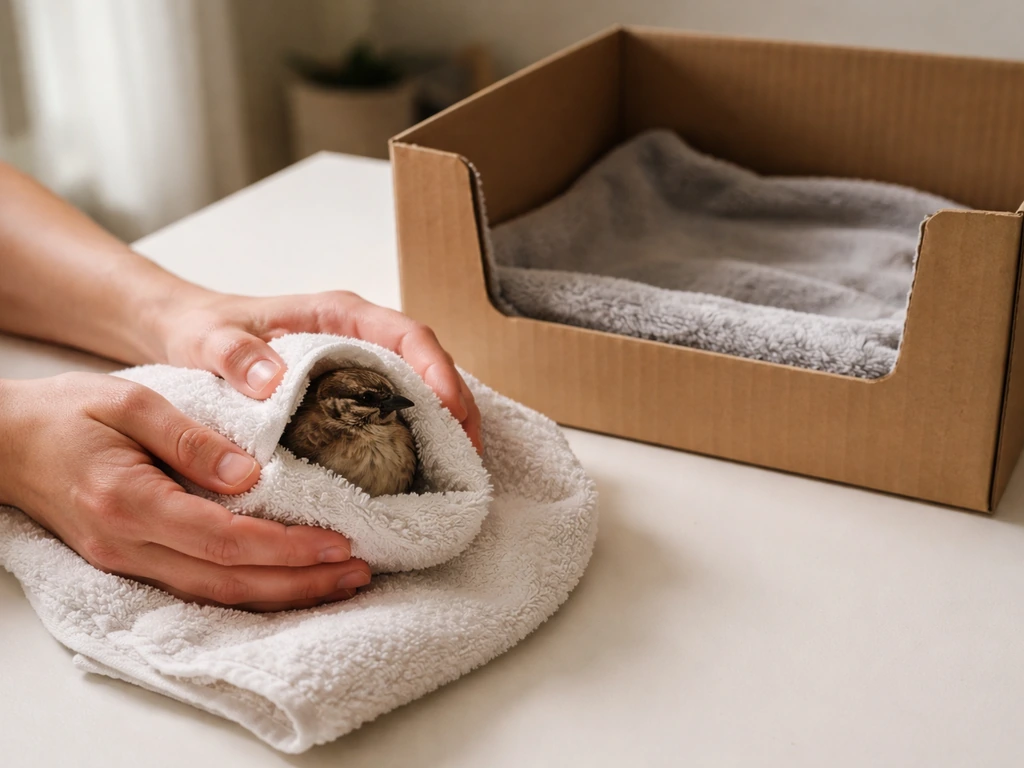
- Approach slowly and quietly. Lower your body posture and avoid direct eye contact, which birds read as threat behavior.
- If the bird is mobile, use a lightweight hand net with a soft mesh bag (a butterfly net works). Sweep in a smooth, unhurried arc rather than a fast jab. Fast movements trigger panic and increase injury risk.
- If the bird is grounded and barely moving, simply place both open hands around it like a loose tent and scoop gently upward. Do not grab or squeeze.
- Once you have the bird, immediately transfer it to a ventilated container: a shoebox with several air holes punched in the lid, lined with a paper towel or small cloth. A goldfinch does not need a large container; a snug space actually reduces thrashing.
- Place the box in a quiet, dimly lit room at room temperature. Do not offer food or water until you have spoken with a rehabilitator. Attempting to feed a stressed or injured bird often causes aspiration.
- Call a licensed wildlife rehabilitator or your state's wildlife agency right away. The goal is to get the bird into professional hands within a few hours.
For a pet or aviary goldfinch
With a pet bird, take your time building up to hands. Chasing a pet goldfinch around a cage is counterproductive and will set back taming by days. Instead, dim the room lights slightly to calm the bird, then use a slow two-handed cup method the same loose tent approach used for injured birds. Once you have the bird loosely in hand, keep your grip relaxed and speak softly. Limit the first handling sessions to 60 to 90 seconds. Let the bird step or hop off your hand rather than releasing it by opening your hands suddenly.
Trust-building and taming once the bird is reliably close
Whether you are working with a pet goldfinch or a wild bird that visits your feeder regularly, trust-building follows the same basic arc: presence first, then proximity, then contact. Rushing any stage resets the clock.
The step-by-step trust timeline
| Stage | What to do | Realistic timeframe |
|---|---|---|
| 1. Comfortable presence | Sit near the feeder or cage quietly, no sudden movements. Let the bird eat and go about its routine while you are simply there. | 3 to 7 days |
| 2. Approach without reaction | Move a little closer each session, stopping well before the bird shows alarm (fluffing, freezing, moving away). Stay below the bird's sight line when possible. | 1 to 2 weeks |
| 3. Hand near food | For pet birds, place your hand flat in the cage near the food dish. For yard birds, place seed on a flat surface closer to where you sit. Do not reach or grab. | 1 to 3 weeks |
| 4. Bird takes food from your hand | Offer nyjer or sunflower seed on an open flat palm. Stay completely still. This step takes the most patience. | 2 to 6 weeks depending on the individual bird |
| 5. Perching on hand (pet birds) | Once the bird eats from your hand reliably, introduce the 'step up' cue by pressing a finger gently against the lower chest just above the feet. Pair with a calm verbal cue each time. | 4 to 8 weeks total from start |
Wild goldfinches at feeders will generally plateau at stage four, eating from your hand or near you without fleeing. That is a perfectly satisfying outcome and well within reach with consistent effort. Full hand-taming to the step-up level is realistic only with pet or aviary birds that were ideally handled young. Do not expect a wild bird to perch on your finger, and do not push it to that point.
Troubleshooting common trust problems
- Bird stops coming to the feeder: check seed freshness, feeder cleanliness, and whether a predator (cat, hawk) has been in the area recently.
- Bird takes food but flies off immediately: normal at first. Stay still longer after offering seed. Consistency matters more than duration per session.
- Pet bird bites or lunges: back up one stage. You moved too fast. Spend another full week at the previous comfort level.
- Bird seems interested but will not approach your hand: try a different seed (nyjer tends to outperform sunflower for encouraging goldfinches to approach closely), or move to a quieter, less-trafficked part of the yard or room.
- Progress has stalled for more than two weeks with no improvement: consider whether the environment has stressors you have not identified, such as noise, reflective surfaces, or other pets nearby.
Health and safety checks: stress, injury, and when to call for help
Goldfinches are small and physiologically fragile. They can go downhill fast when stressed or injured, so knowing the warning signs is important whether you are dealing with a wild bird or a pet.
Signs a bird needs professional help right away
- Sitting on the ground and not attempting to fly when approached.
- Feathers consistently puffed up, eyes partially closed, or tail bobbing with each breath (a sign of respiratory effort).
- Drooping or asymmetrical wing.
- Head tilting to one side or circling (possible neurological injury, often from window strikes).
- Blood visible on feathers or skin.
- Vomiting or wet droppings that are not the normal white-and-dark combination.
- Unresponsive or limp when picked up.
If you see any of those signs, do not continue handling or attempt treatment yourself. Place the bird gently in a ventilated box as described above and contact a licensed wildlife rehabilitator immediately. Tufts Wildlife Clinic also advises using a net to capture the bird and placing it in an appropriately sized ventilated container like a shoebox with air holes while you arrange help from a licensed wildlife rehabilitator Place the bird gently in a ventilated box as described above and contact a licensed wildlife rehabilitator immediately.. You can find your nearest one through your state's fish and wildlife agency or through national directories like the Wildlife Rehabilitators Network.
Quarantine and basic safety for pet birds
If you have brought a new pet goldfinch home, keep it in a separate room from any other birds for at least 30 days. Finches can carry diseases that show no outward symptoms in an apparently healthy bird. During quarantine, watch for the signs above and schedule a vet check with an avian veterinarian early in that window. Wash your hands thoroughly before and after handling, and use separate food and water dishes, tools, and perches for the quarantine bird.
After any capture or handling session
Once a handled bird is released or returned to its enclosure, give it time to settle before checking on it again. Stress hormones take time to normalize. For a wild bird you caught and released after handling, watch from a distance for 10 to 15 minutes to confirm it flew off normally and is perching and moving without difficulty. If it is not recovering well within that window, the situation may be more serious than it appeared and a rehabilitator call is warranted.
Getting close to a goldfinch, in any context, is genuinely one of the more satisfying experiences in backyard birding or small-bird keeping. The key is matching your method to your actual goal, moving at the bird's pace rather than your own, and keeping safety, both yours and the bird's, as the non-negotiable priority throughout. If you have found a bird that needs more help than you can provide, passing it to a professional quickly is the most useful thing you can do. For everything else, patience and nyjer seed will take you a long way. The same low-stress, legality-first approach is also the right starting point when you need to catch a sparrow.
FAQ
How can I tell I’m dealing with a goldfinch and not another finch before I try to catch it?
Before any attempt, confirm the bird is actually a goldfinch. Pine Siskins and other small finches often visit the same feeders, and using a nyjer feeder and handling approach for the wrong species can increase the odds of chasing or stressing the bird unnecessarily. If you are unsure, wait and compare wing bars and the white rump patch when it flies.
What should I do if I find a goldfinch on the ground but I’m not sure it’s injured?
If a goldfinch is grounded but not clearly injured, use a “no chase” response first: dim movement near the bird, keep pets away, and place a ventilated box or carrier nearby with a familiar perch. Only attempt a physical catch if it cannot right itself safely or is in immediate danger (traffic, predators, or extreme weather).
What’s the safest plan if I’m trying to catch a wild goldfinch for emergency care?
For wild birds, do not attempt to keep them contained longer than the emergency you are rescuing them for. The article emphasizes quick transfer, so the practical next step is to line up the rehabilitator before you start (call ahead if you can), so the bird does not sit in a box while you search for help.
What should I do if my attempt to catch the goldfinch goes wrong and it flies off?
If the bird escapes during a physical catch, the safest move is to stop pursuing. Keep a ventilated box or carrier open in the same area, reduce noise and shadows, and let the bird settle. Chasing again can stack stress quickly in small finches, and it can also delay contact with a professional if the bird was injured.
Should I expect a wild goldfinch to step onto my finger after I catch it?
If you are targeting hand-taming, do not skip the earlier trust stages. Goldfinches commonly plateau at close, low-flee feeding rather than stepping up, and pushing toward finger perching is both stressful and often fails. A good decision aid is to wait for voluntary, repeat feeding within a few feet before trying any contact.
What handling mistake most often causes harm when you catch a goldfinch?
To reduce the chance of stress injury during capture, avoid compressing the bird’s body, avoid gripping harder “to secure it,” and keep handling time short (first sessions for pets should be brief). Use calm voice and keep the bird’s head and body supported with a loose cup so it can relax rather than struggle.
Why might goldfinches stop coming to my yard even if I’m using the right seed and feeder?
If you want the “catch by attracting” approach to work, treat feeder freshness as part of capture success. Nyjer goes rancid quickly, so rotate seed and clean ports regularly, otherwise the birds may disappear even if your feeder placement is ideal.
How should I set up quarantine for a new pet goldfinch beyond just separate food and water?
For quarantine, plan to handle last, and use separate tools and dishes as described, but also isolate airspace as much as possible (different room, not shared ventilation). That additional step helps reduce cross-contamination risk between finches during the 30-day observation window.
What signs after release mean I should call a wildlife rehabilitator right away?
If a handled bird seems “okay” at first, still use the article’s check window. Watch for delayed recovery like normal perching and coordinated movement during the 10 to 15 minutes after release for wild birds, and contact a rehabilitator if it is not stabilizing.
How do I adjust my approach after the goldfinch seems more skittish than before?
After you catch or handle a bird, change only one variable at a time for next steps, such as time of day or proximity, not both. Rushing resets progress, so if the bird flinches more than before, scale back to the last calm stage (for example, from near-feeding to staging cover) before trying anything closer.