
You almost certainly don't need to physically catch a robin, and in most cases trying to do so will hurt the bird more than help it. American Robins are wild, fragile, and protected under federal law, so the safest approach is almost always attracting one to a spot where you can observe it closely, or, if there's a genuine emergency, containing it calmly with minimal handling. Here's exactly how to do either one, plus what to do if your robin is injured.
How to Catch a Robin Bird Safely and Humanely
Clara Hayes
13 May 2026
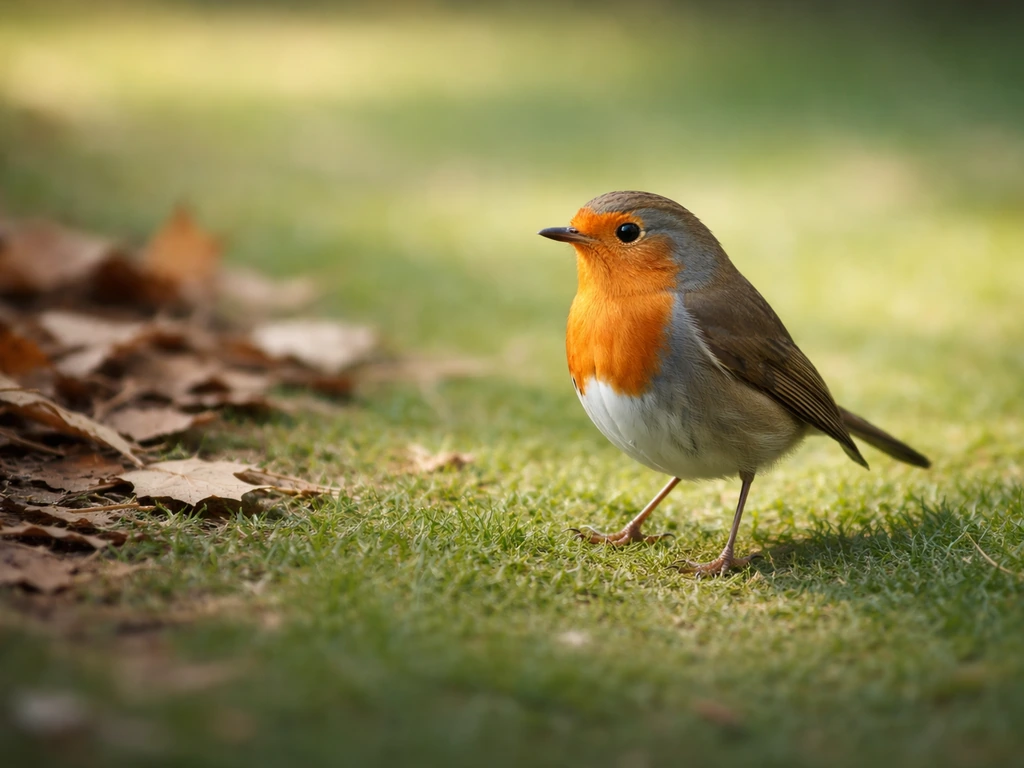
Quick reality check: why grabbing a robin can go wrong fast
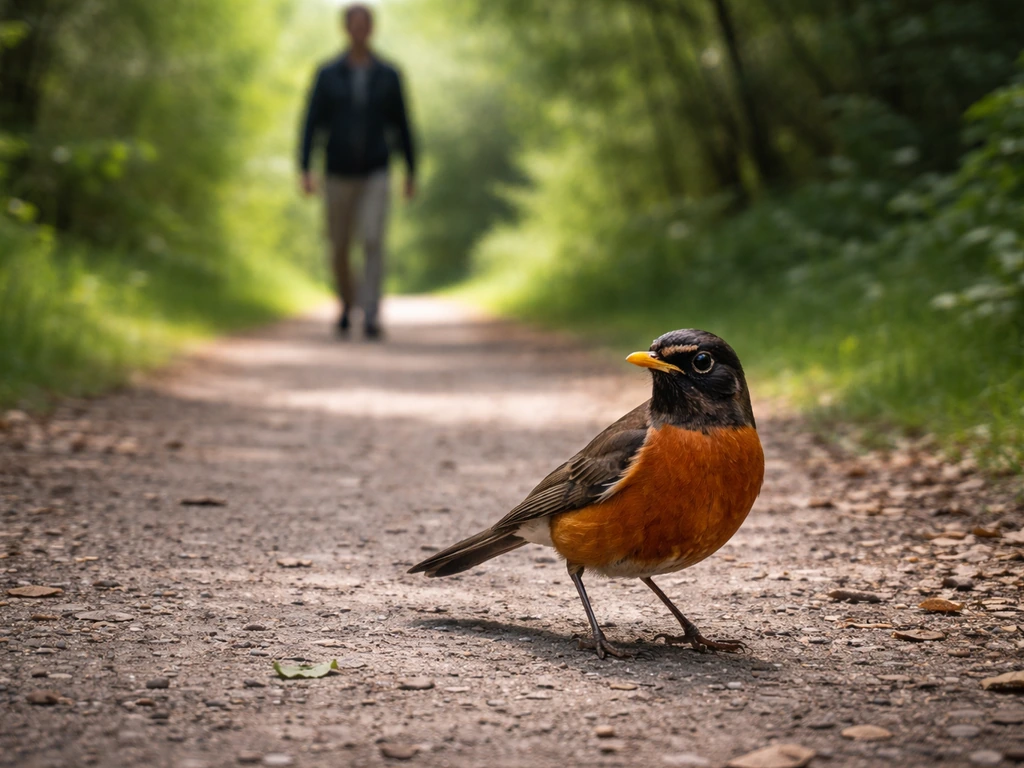
American Robins are migratory birds, and that matters legally. The Migratory Bird Treaty Act (MBTA) blank" rel="noopener noreferrer">prohibits capturing, possessing, or disturbing protected migratory birds without federal authorization under 50 CFR Part 21. That means chasing a healthy robin around your yard with a net or your hands isn't just risky for the bird, it's potentially a federal offense. For example, NPS law-enforcement material on the Migratory Bird Treaty Act includes terms and prohibitions related to taking, capture, and possession, which helps explain why chasing a healthy migratory bird can be unlawful blank" rel="noopener noreferrer">potentially a federal offense. The one clear exception is if you find a sick or injured bird: federal regulations at 50 CFR § 21.76 allow you to briefly take possession of an injured migratory bird for the sole purpose of transporting it to a licensed wildlife rehabilitator or veterinarian. That's it. No keeping it, no rehabilitating it yourself.
Beyond the legal side, there's a real physical danger to the bird called capture myopathy. When a wild bird struggles, panics, and thrashes during a capture attempt, the extreme exertion can cause serious muscle damage, shock, and sometimes death. It doesn't have to look dramatic from your end. Even a few minutes of frantic flapping inside a towel or a box is enough to trigger this. The Pennsylvania Game Commission lists capture myopathy as one of the leading causes of death in wild animals handled by people. The lesson: minimize struggling and handling time in every scenario, healthy bird or not.
How to attract robins to you (so you never need to 'catch' one)
If your goal is to watch a robin up close, photograph it, or just enjoy its company in your yard, the best strategy is making your space irresistible to robins so they come to you. This is safer, legal, and honestly more rewarding than any capture attempt.
Food robins actually want
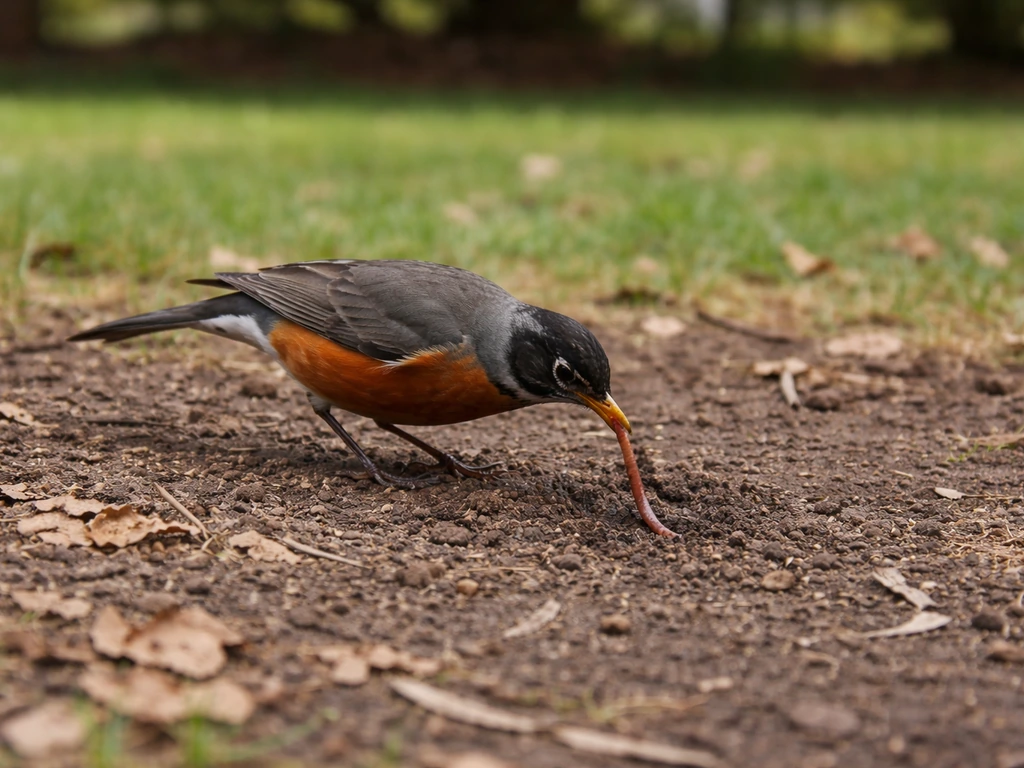
Robins are ground foragers. They run across open lawns, stop, tilt their heads, and pull earthworms from the soil by sight, not sound. They also eat insects, grubs, and berries, shifting toward fruit more heavily in fall and winter. Because of this, they rarely visit traditional seed feeders. To bring them in, focus on the ground level. Skip the seed tray and instead offer mealworms (live or dried) in a shallow dish placed directly on the ground or on a low platform. Planting native berry-bearing shrubs like serviceberry, holly, or dogwood gives them a year-round food source they'll return to repeatedly.
Yard setup that makes robins feel at home
Robins love a yard that mimics a forest floor. Leave patches of bare soil or leaf litter where they can forage. Avoid thick mulch covering every bed, and mow a section of lawn shorter so they can see and access earthworms easily. A shallow birdbath (about 2 inches deep) is one of the single best ways to draw robins in consistently, since they bathe and drink frequently. Place it in an open spot where you can watch it but where the robin has clear sight lines to escape if startled. Clean the bath every day or two because robins are fussy about water quality.
Window safety matters here too
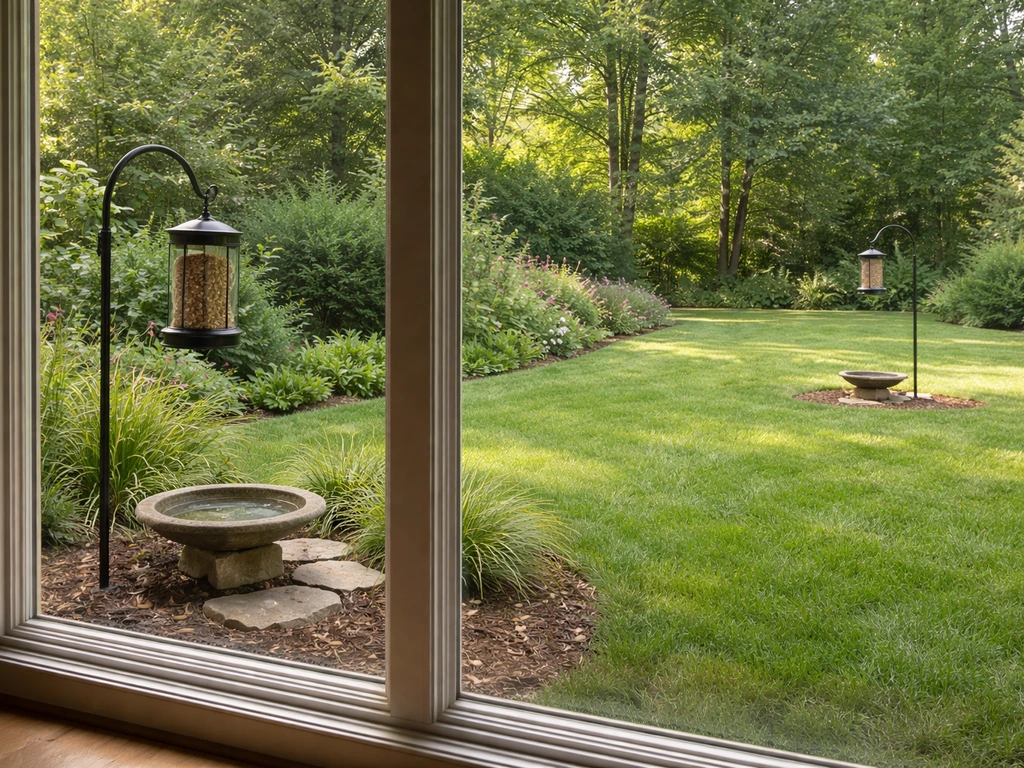
Position any feeders, baths, or food stations either within 3 feet of your windows or more than 30 feet away. The dangerous zone is in between: a bird that takes off from 10 to 20 feet out has enough flight speed to hit glass with fatal force. If your setup is in that middle range, add window decals, cord curtains, or anti-collision film to break up the reflection. Robins in particular can be confused by glass that mirrors sky or trees.
Best times to watch
Early morning is prime robin time. They start foraging at first light and are most active on the ground in the first two hours after sunrise. You'll also see them out in the late afternoon. Midday activity drops off significantly, especially in warmer months. If you sit quietly near your birdbath or mealworm dish around 6 to 8 a.m., you'll have the best chance of a close encounter without the bird ever knowing you planned it.
If you genuinely need to move or contain a robin
There are real situations where brief containment is necessary: the bird is trapped inside a structure, cornered near a cat, or injured and needs transport to a rehabber. In those cases, the goal is calm, fast, and minimal contact.
- Dim the area if possible. A darker space calms birds quickly because they naturally go quiet in low light. Close blinds, turn off lights in a room, or wait for cloud cover outdoors.
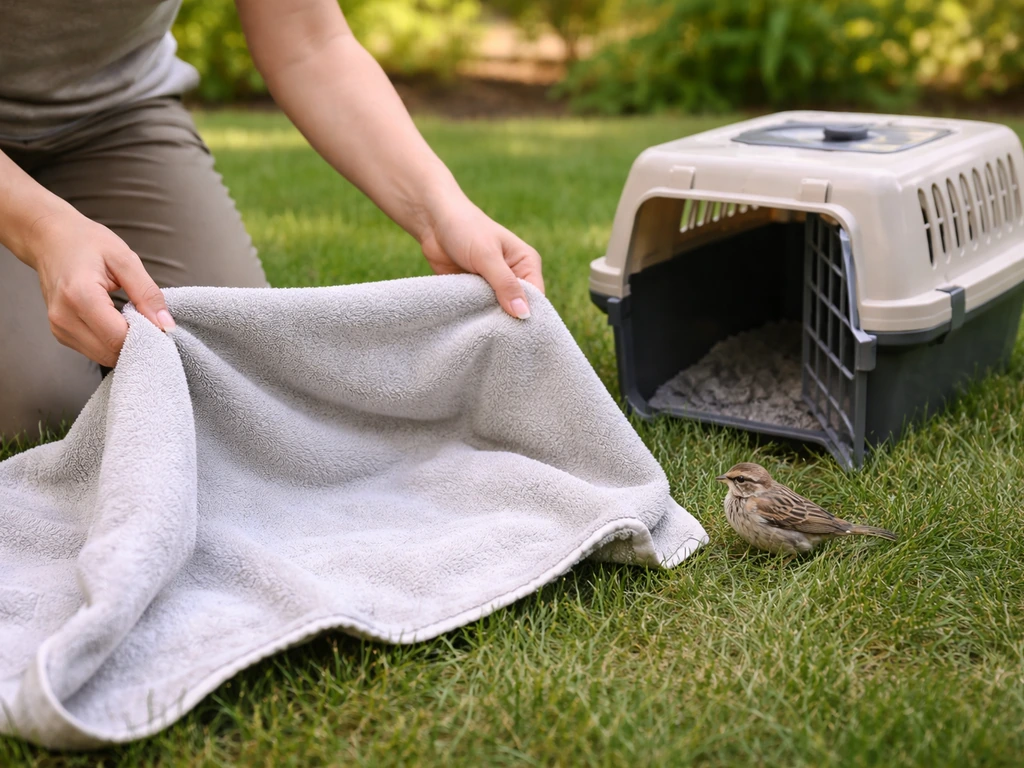
- Use a light towel or soft cloth, not bare hands. Drape it gently over the bird to cover its eyes and reduce its urge to thrash. Scoop it up in one smooth motion without squeezing.
- Place the bird into a ventilated cardboard box lined with a thin layer of paper towel. Close the lid. Do not use a wire cage, which gives the bird something to injure its beak and feet against.
- Guide rather than grab when possible. If the bird is inside a room, open a single window or door and use a large piece of cardboard to gently herd it toward the opening. Most robins will find the light and exit on their own.
- If you need to use a net (for a bird stuck in a greenhouse or enclosed space), use a soft mesh insect net and work slowly. The second the bird is netted, cover the net with a cloth to stop struggling and transfer to a box immediately.
Keep handling time under two minutes if at all possible. The longer it takes, the higher the stress and injury risk. Once the bird is in a closed box in a quiet, dark environment, it will calm down noticeably within a few minutes.
Building trust over time: taming a robin at a distance
Some people want a robin to become genuinely comfortable around them, not caught but familiar. This is achievable with patience, and it's a much better long-term outcome than any capture attempt. The key is consistency and incremental closeness.
- Week 1-2: Establish a feeding spot with mealworms and a birdbath. Put them out at the same time each morning. Don't approach, just let the robin get used to the setup.
- Week 2-4: Begin sitting outside near the feeding area, about 10 to 15 feet away. Sit still, avoid eye contact (direct staring reads as a threat), and keep movements slow and predictable.
- Week 4-6: Start placing the mealworm dish slightly closer to where you sit each day, moving it just a foot or two at a time. If the robin stops visiting, move the dish back and slow down.
- Week 6 onward: Some robins will eventually forage within a few feet of a patient, quiet person. This is especially common with birds that nest in the same yard repeatedly. A few individual robins have even learned to take mealworms from an open palm, but this takes months and is entirely the bird's choice.
Signs you're making progress include: the robin stays on the ground when you sit down (instead of flying off), it resumes foraging after briefly pausing to look at you, and it stops alarm-calling when you appear. Robins that flee immediately every time are telling you to slow down and give more distance. Don't rush this. The species is naturally somewhat bold around humans compared to, say, goldfinches or sparrows, so your patience will usually be rewarded.
What to do if the robin is injured
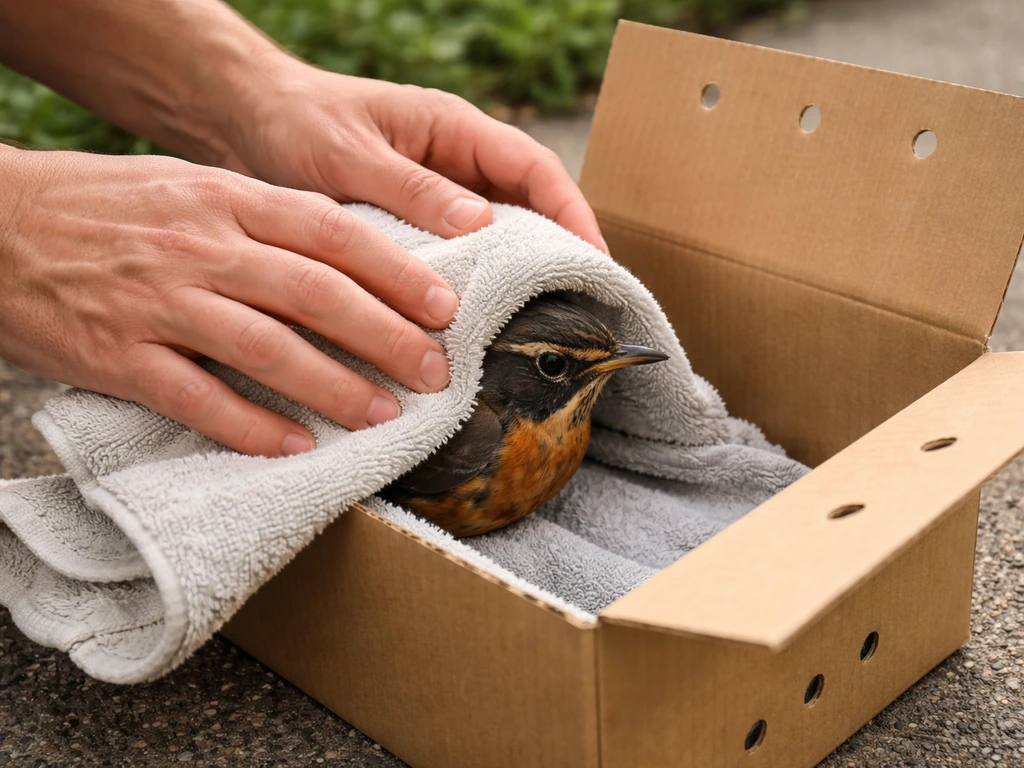
An adult robin that doesn't fly away when you approach, is sitting on the ground with its eyes closed, is holding a wing oddly, or has visible bleeding almost certainly needs professional help. Here's the workflow.
- Contain it gently. Use a towel to cover and scoop the bird into a ventilated cardboard box. Handle it as briefly as possible.
- Do not feed or water it. Tufts Wildlife Clinic is explicit about this: no food or water for injured songbirds before professional assessment. Incorrect feeding can cause aspiration or worsen internal injuries.
- Keep it warm, dark, and quiet. Place the closed box somewhere around 70-75°F. No radio, no TV, no other animals near it.
- Find a licensed wildlife rehabilitator immediately. Search NWRA.net, the Wildlife Rehabilitators Directory, or call your state fish and wildlife agency. Your local vet may also accept the bird temporarily or direct you to a rehabber.
- Transport it quietly. Radio off, smooth driving, box secured so it doesn't slide. Keep the car warm but not hot.
Under 50 CFR § 21.76, you're legally permitted to possess the bird briefly for this specific purpose: transport to a permitted rehabber or licensed vet. That's the boundary. Don't try to nurse it back to health yourself at home, even if that feels like the compassionate choice. Licensed rehabilitators have the training, equipment, and legal authorization to give the bird a real chance.
One important note on fledglings: if you find a young robin hopping on the ground with a short tail and sparse feathers but no obvious injury, it may be a fledgling that's supposed to be there. Parent robins continue feeding fledglings on the ground for days after they leave the nest. Watch from a distance for 30 to 60 minutes. If a parent doesn't show up and the bird seems lethargic or has no feathers at all, then call a rehabber.
Troubleshooting: when things aren't going the way you expected
The robin won't come close
You're probably too close, moving too much, or the food isn't right. Increase your distance by 5 to 10 feet and try live mealworms instead of dried ones (the movement catches their attention). Sit in a chair rather than standing, which reduces your visual profile. Check that cats, dogs, or other disturbances aren't keeping the bird on edge.
It approaches then bolts every time
This is actually good progress: the bird is curious but not yet comfortable. The problem is usually eye contact or a sudden movement right as it gets close. Try wearing sunglasses (reduces the intensity of your gaze), keep your hands still in your lap, and avoid turning your head toward the bird directly. Let it approach your peripheral vision.
Wrong time of day
If you're trying mid-morning or afternoon and the robin isn't showing, shift your session to the first hour after sunrise. Robins are dramatically more active and on the ground early in the morning. A robin that seems absent all afternoon may be right back at your birdbath at 6:30 a.m.
Cats or dogs in the yard
A cat or dog anywhere in the yard will keep robins at a distance or drive them away entirely. Robins forage on the ground, which puts them at direct predator risk. If you have outdoor pets, try running your robin-watching sessions during times when pets are inside. Even the scent left by a cat can suppress bird activity for hours.
The robin is in a dangerous spot and won't leave
If a robin is grounded near a road, stuck in a garage, or in a spot where it's at immediate risk, use the guiding technique before you attempt any contact: open one exit, block other exits with a large piece of cardboard, and slowly walk toward the bird from the opposite side. Robins almost always move toward light and open space when given a clear route. Physical handling should be your last resort, not your first.
Legal and ethical checklist before you do anything
- Is the bird actually injured? A healthy adult robin that flies off when approached doesn't need your help. Leave it alone.
- Are you in the US? American Robins are federally protected under the MBTA. Capturing or possessing one without authorization is illegal regardless of your intentions.
- If the bird is injured, your legal window is narrow: brief possession only for transport to a licensed rehabilitator or vet. Nothing beyond that.
- Do not attempt to keep, feed, or rehab the bird yourself at home. This violates federal law and is usually detrimental to the bird.
- Keep kids and pets away during any containment or handling. A struggling bird can scratch, and kids can inadvertently squeeze too hard.
- Wash your hands thoroughly after any contact with a wild bird. Wild birds can carry salmonella and other pathogens. Avoid touching your face during handling.
- If you're on public land, in a national park, or in an area with additional local wildlife protections, check for any site-specific rules before approaching any wild bird.
- If you're setting up traps, nets, or bait stations for any reason, be aware that this requires proper permits. 'Banding' or systematic capture of migratory birds is only legal under federal banding permits issued by the USFWS.
The approach that works best in almost every robin scenario is the same one: slow down, reduce your footprint, and let the bird set the pace. Whether you're trying to observe one closely, move one safely, or help an injured one, the robin's stress level is the variable that determines the outcome. Keep it calm, keep handling minimal, and you'll both come out better for it. If you enjoy attracting ground-foraging birds like this, the same patient techniques work well with sparrows and other yard visitors too. The same low-stress, observation-first approach can also help you figure out how to catch a sparrow bird safely when it truly needs help sparrows. The same patient, low-handling approach can also help you catch sight of goldfinches without stressing them, starting with the right feeder setup sparrows. Those same low-stress, observation-first approaches can also help with how to catch kingfisher bird without causing harm. If you are also wondering how to catch a magpie call bird safely, focus on attracting it first rather than attempting to grab it.
FAQ
Is it ever legal or safe to catch a healthy robin if I just want to move it from my yard?
No. Using your hands, nets, or traps on a healthy robin is not only stressful and potentially lethal (capture myopathy), it can also violate federal protections for migratory birds. Instead, focus on making the ground and water sources easy to access so the robin chooses to come close.
What should I do if I accidentally end up holding a robin I think is injured?
The permitted exception is for an injured bird only, and the possession must be brief and solely to transport it to a licensed wildlife rehabilitator or veterinarian. Keep it in a ventilated box, limit handling to the minimum necessary to get it to the transport container, and avoid trying to “keep it” for recovery at home.
How can I help a robin get out of a risky spot without grabbing it?
If the robin is intact but grounded near danger (driveway, road, garage doorway, predatory pet access), use the guiding method first: provide one clear escape route, block other exits with cardboard, and walk from the opposite side at a slow pace. Only attempt contact if there is an immediate threat and you cannot create a safe route.
How do I tell the difference between a sick robin and normal ground resting behavior?
Don’t assume the robin is sick if it is on the ground. Robins and other birds can freeze, rest, or investigate on the ground foraging areas. A better rule is to watch from a distance for 30 to 60 minutes, then call a rehabilitator only if it is clearly lethargic, unable to stand or move normally, has visible injury, or parents do not return for a fledgling.
The robin won’t get close, even when I’m quiet. What’s the most common mistake?
Sunglasses and steady posture help, but the key is reducing sudden head turns and direct eye focus. Sit down rather than standing, keep your hands still in your lap, and let the bird come into your peripheral vision. If the robin keeps pausing and watching you, hold your position and increase distance slightly.
Why does my mealworm dish not attract robins consistently?
If the robin keeps fleeing, it is usually about distance, movement, or habitat cues, not food alone. Try live mealworms, move the setup closer to your window or farther away than the dangerous 10 to 20 foot range, and schedule sessions in the first two hours after sunrise. Cats and the scent or presence of pets can also suppress activity for hours.
What is the safest way to set up a robin feeding or bath near my windows?
Window collisions are about flight path, reflection, and timing. If you place a feeding spot in the middle range (roughly 10 to 20 feet), add decals or anti-collision film, and consider shifting the station to be either within 3 feet (so the bird lands nearby) or more than 30 feet (so it has less momentum).
How often should I clean a birdbath to keep robins coming back?
Clean water matters. Robins tend to avoid baths that look dirty or smell off, so scoop and refill daily or every day or two. Also place the bath in an open sight line where the robin can see escape routes, since dense cover can increase how long it stays tense and watchful.
I found a young robin that looks partly feathered. Do I need to move it?
For fledglings, appearance alone can be misleading, some young birds look sparse and short-tailed. If it appears able to move and you are not seeing obvious injury, watch quietly from a distance for 30 to 60 minutes because parents often continue feeding on the ground. If no parent arrives or the chick seems weak or featherless, contact a rehabilitator.
If a robin is trapped indoors, can I just carry it to the yard to save time?
Attempting to “rescue” by chasing or scooping can make things worse by increasing struggling time. If you must contain temporarily, use a calm, fast approach, keep the bird in a quiet dark ventilated box, and focus on transport to a permitted rehabber or vet as the next step.
Next Articles
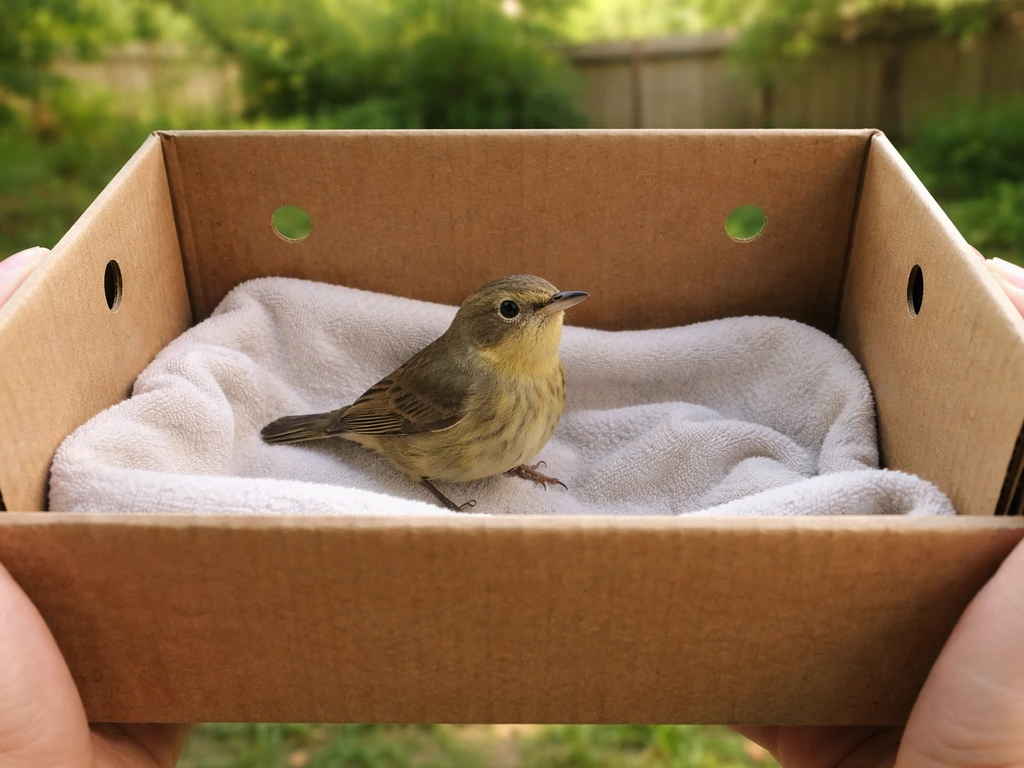
How to Catch a Bird Without Killing It: Humane Steps
Humane, trap-free steps to catch a wild backyard bird safely, minimize stress, contain it calmly, then release or reloca
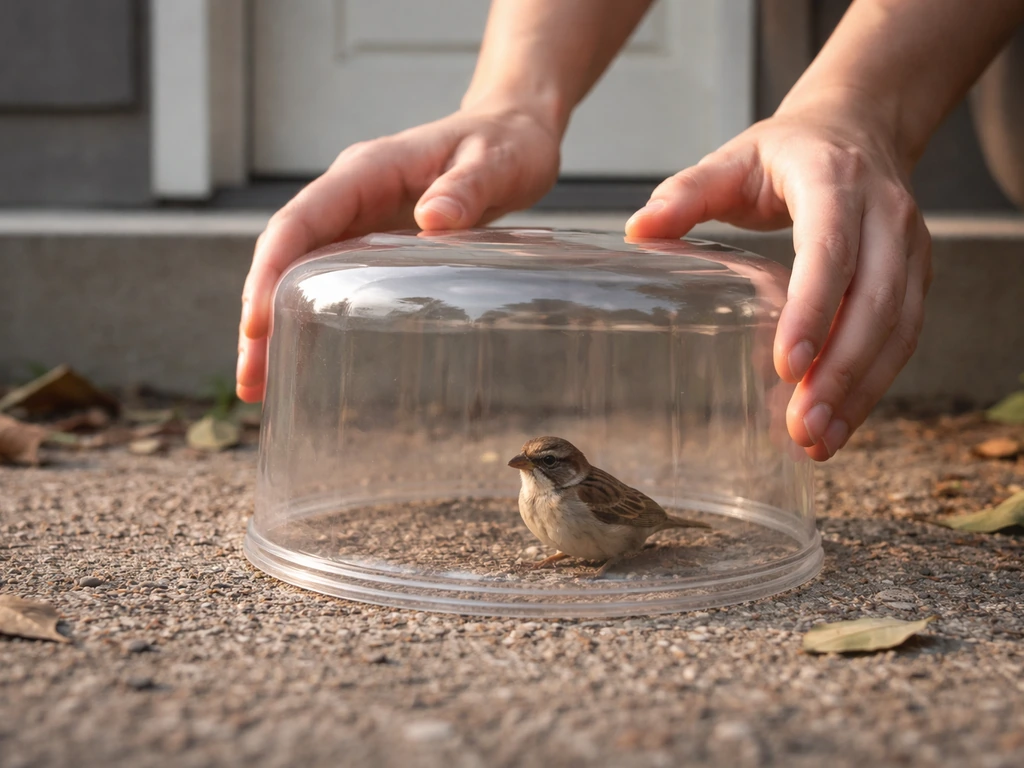
How to Catch a Bird With a Bottle Safely and Humanely
Humane, safety-first steps to catch a bird with a bottle or cover, plus safer alternatives and what to do after capture.
How to Catch a Bird Alive Safely and Humanely
Humane, safety-first steps to catch a live bird for backyard or pet rescue, with stress-free handling and next actions