If a sparrow has flown into your house, seems injured in your yard, or you need to temporarily secure one for a specific humane reason, you can do it safely using a simple box or soft-cloth method: move slowly and quietly, reduce stimulation, guide the bird into a corner or enclosed space, then cover it gently with a cloth or lower a cardboard box over it. The same careful, low-stress capture principles can also help when you are trying to catch a magpie call bird how to catch a magpie call bird. That's the core of it. Everything else in this guide is about doing it right, keeping the bird calm and unharmed, and knowing what to do in the next hour and beyond.
How to Catch a Sparrow Bird Safely and Humanely
Clara Hayes
19 May 2026
Why do you actually need to catch the sparrow?
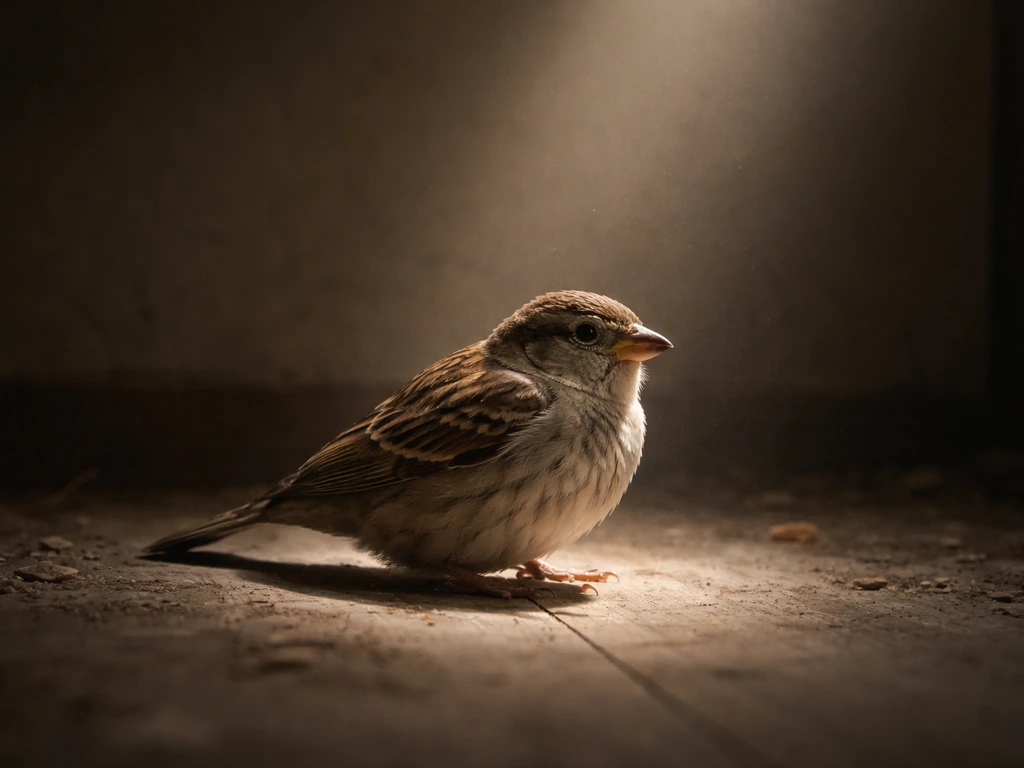
Before you do anything, it helps to be clear about your reason, because that completely changes what you should do next. The most common situations people face are: a wild sparrow that has flown inside a building and can't find its way out, a sparrow that appears injured or grounded in the yard, a fledgling that looks abandoned, or someone with a pet or rescued sparrow that has escaped its enclosure. Each of these calls for a slightly different approach, and some situations mean you should not be catching the bird at all.
It's also worth being honest with yourself if you're thinking about keeping a wild sparrow as a pet. That's a different situation entirely, and the legal and ethical landscape is very clear on that, which I'll cover in the next section.
The legal side: what you can and can't do with a wild sparrow
House sparrows (Passer domesticus) are actually an introduced, non-native species in North America, which means they are not protected under the Migratory Bird Treaty Act the way native songbirds are. This is an important distinction. Most other sparrow species you might encounter in North America, including song sparrows, white-throated sparrows, white-crowned sparrows, and chipping sparrows, are native migratory birds and are fully protected under federal law. The MBTA makes it unlawful to take, capture, possess, or transport these birds without a federal permit. Many states add their own layer of protection on top of that.
In practical terms, this means that if you find an injured native sparrow species, you are legally permitted to do a brief, careful capture to contain it for transport to a licensed wildlife rehabilitator, but you cannot keep it, treat it yourself, or hold it longer than necessary (in some states, no longer than 24 hours). A citizen without a wildlife rehabilitation permit cannot legally attempt to rehabilitate a wild migratory bird on their own. States like Minnesota, Michigan, Washington, and Massachusetts all have explicit rules making this clear, and the same principle applies nearly everywhere in the US.
If your goal is to keep a wild sparrow as a pet, that is illegal across the board for protected native species, and strongly inadvisable even for house sparrows. Wild-caught birds experience enormous stress in captivity and rarely thrive.
When to stop and call a rehabber instead
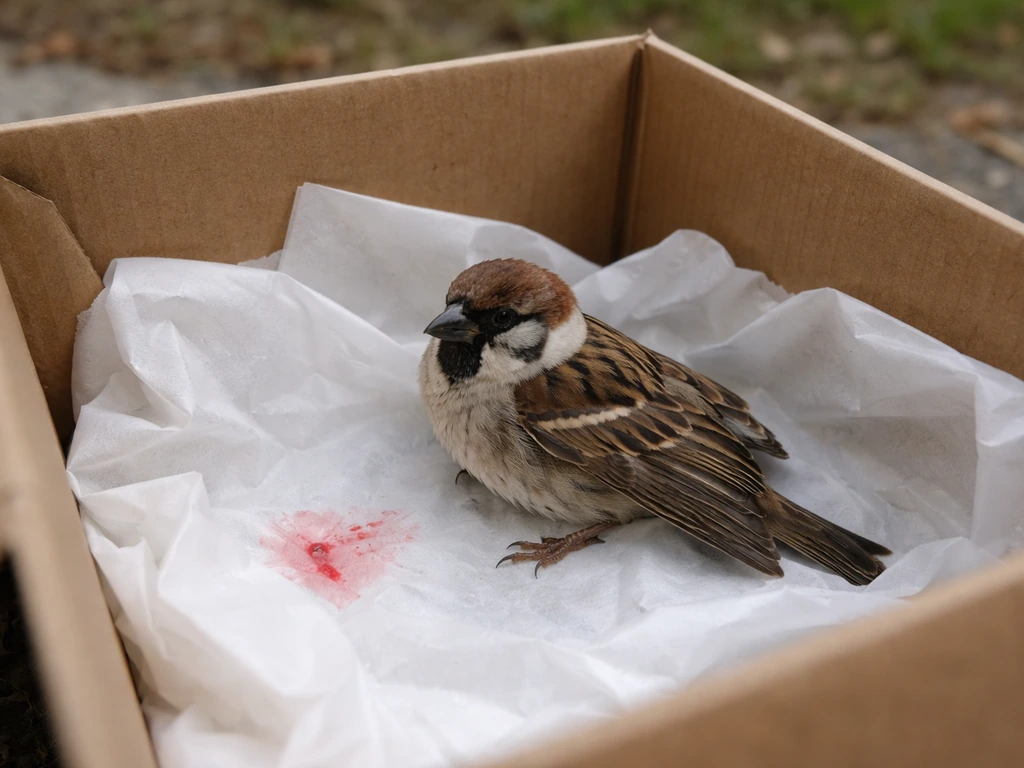
Contact a licensed wildlife rehabilitator before attempting capture if the bird shows signs of serious injury: a drooping or visibly broken wing, blood, inability to hold its head up, seizures, or extreme lethargy. The USFWS advises explicitly not to attempt to trap an injured bird before contacting a wildlife rehabilitator. A quick call takes two minutes and can save you from making things worse. You can find your nearest rehabber through the National Wildlife Rehabilitators Association directory or your state fish and wildlife agency. If you find what looks like an abandoned fledgling (a feathered bird hopping on the ground), don't automatically capture it. Audubon is clear: healthy fledglings on the ground are usually a normal part of their development, and parents are almost certainly nearby watching. Walk away, keep pets and kids back, and observe from a distance for an hour before concluding the bird truly needs help.
How sparrows behave: what you need to know before you move
Sparrows are small, fast, and easily panicked. Understanding how they think and move is honestly more useful than any physical technique. A sparrow's first instinct when threatened is to fly up and away, then seek the nearest dense cover: shrubs, low branches, tight corners. They rarely fly directly toward an open window or exit, which is why a sparrow trapped indoors will almost always exhaust itself bouncing off the ceiling rather than finding the open door right in front of it.
Sparrows are triggered into flight by sudden movement, loud noise, looming shapes approaching from above, and eye contact at close range. They tend to calm down when placed in darkness, because reduced visual stimulation drops their stress response quickly. This is the biological principle behind every humane capture method: reduce stimulation, guide rather than chase, and use darkness and enclosure to your advantage.
- Sparrows perch low (ground level to about 6 feet up) and prefer corners and edges over open spaces
- They flush easily from above but are less reactive to slow, low lateral movement
- Once exhausted or in darkness, they become much calmer and easier to handle
- They hide in dense shrubs, under furniture, and behind objects rather than out in the open
- They respond to quiet: loud voices, clapping, or banging dramatically increases stress and erratic flight
Setting up the environment to guide the bird
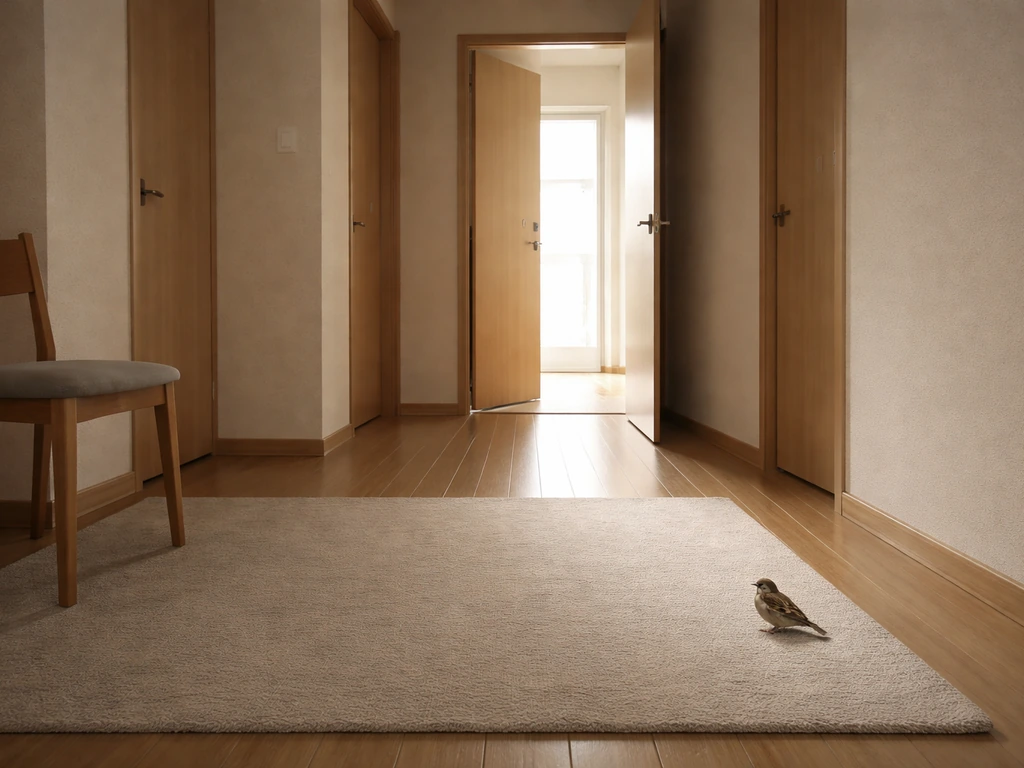
Before you try to physically catch a sparrow, set up the space so the bird is more likely to end up where you want it. This takes a few minutes but makes the actual capture far easier and less stressful for both of you.
For a sparrow trapped indoors: close off as many rooms as possible so the bird is working in a small, contained area. Close curtains or blinds on all windows except one, then open that one window fully and remove any screen. The single light source gives the bird something to fly toward. Turn off ceiling fans immediately. Remove or cover any open water, hot surfaces, or sticky traps. Give the bird 10 to 20 minutes of complete quiet first. Many sparrows will find the open window on their own if you simply leave the room and stop being a threat.
For a sparrow grounded in the yard or garden: use a garden fence, a wall, or even your own body to gently herd the bird into a corner, near a fence base, or under a bush with limited escape routes. Do this very slowly. Think of it less as chasing and more as shrinking the bird's comfortable space a few inches at a time. The goal is to reduce its options without triggering a full panic flight.
Hands-on capture methods that actually work
The soft cloth or towel method
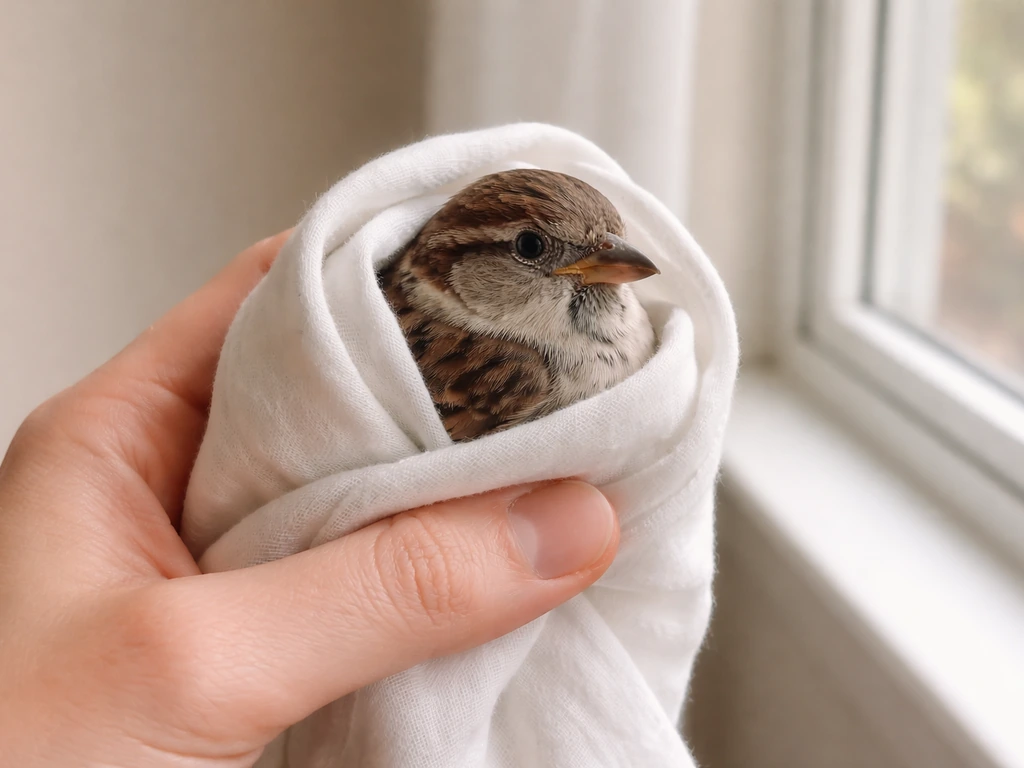
This is the most accessible method and works well for grounded or exhausted birds. Use a soft, ravel-free cloth: fleece, a cotton pillowcase, or an old t-shirt. Avoid anything with loose threads or open weaves that toes can catch in. Approach from the side or slightly from behind, moving low and slow. When you're within reach, drape the cloth gently but firmly over the bird in one smooth, confident motion, then cup your hands around it through the fabric. Don't hesitate or make multiple attempts, as this just adds stress. One calm, deliberate movement is the goal.
Once covered, the darkness of the cloth usually causes the bird to still almost immediately. Keep the cloth loose enough that the bird can breathe but firm enough that it can't flutter free. Transfer it directly into your prepared container.
The cardboard box method
For a sparrow on a flat surface indoors or on the ground, a cardboard box works very well. Use a box with flaps you can fold shut (no holes or gaps the bird can escape through). Approach slowly and lower the open end of the box over the bird, then quickly slide a piece of cardboard or a thin cutting board under the box to close the bottom. Flip the box upright carefully and close the flaps. The Wisconsin Humane Society describes this as a gentle scoop-and-cover approach, and it's effective precisely because it uses the darkness of the box to calm the bird the instant it's contained.
Using a hand net
A small, fine-mesh hand net (the type used for catching fish or butterflies, with a soft mesh bag) can be used for a bird that's still mobile but grounded. Sweep it in a single smooth arc from behind and to the side, then immediately invert and close the net opening with your hand to prevent escape. Transfer the bird to a container as quickly as possible. Net use is more appropriate for temporarily mobile birds that the cloth method won't reach. Avoid any net with coarse or stiff mesh that can catch feathers or toes. This method requires a bit more practice than the cloth or box approach, so if you're new to this, start with the cloth.
Box trap style (for recurring situations)
If you're dealing with a specific situation where a sparrow repeatedly enters a space and you need to remove it, a simple live trap baited with millet or bread crumbs can be used. These are the same small cage-style traps used by rehabilitators and researchers. Place the trap along a wall or fence where the bird has been seen, bait it lightly, and check it frequently (every 30 to 60 minutes at minimum). Never leave a live trap unattended for hours, as heat, stress, and predator exposure can harm a trapped bird quickly. This method is more applicable when the soft-cloth approach hasn't worked or isn't practical.
What to do the moment you have the bird in hand
How to hold a sparrow safely
Hold the sparrow in what bird handlers call the restraint hold: place the bird on its back in the palm of your non-dominant hand, with its head between your index and middle fingers and its body cradled in your curled fingers. Your grip should be firm enough that the bird can't flap free, but never squeezing. You should be able to feel its body but not its bones flexing. Sparrows are tiny and fragile, so less pressure than you think is enough. Avoid gripping around the chest, as this restricts breathing.
Basic health check
While you have the bird briefly in hand, do a quick visual check. Look at the eyes (clear and open is good; cloudy, closed, or sunken means trouble), the wings (both should fold symmetrically against the body), the legs and feet (no dangling or obvious fractures), and the feathers (some ruffling is normal stress response, but bare patches or blood are red flags). If anything looks wrong beyond minor ruffling, that bird needs a rehabber, not a home release.
Container setup for short-term holding
Place the bird in a clean cardboard box lined with a non-slip cloth (paper towels work fine). The box should be small enough that the bird can't build up flight speed and injure itself, but large enough that it isn't cramped. Poke four to six small air holes in the upper sides of the box, no larger than a pencil width. Close the flaps. Place the box in a warm (not hot), dark, quiet room away from pets, children, and noise. Room temperature around 70 to 75 degrees Fahrenheit is appropriate for most sparrows. Do not put the box in direct sun or near a heating vent.
Do not offer food or water. This is a point that Tufts Wildlife Clinic and multiple other rehab authorities emphasize consistently: well-meaning people often cause aspiration, choking, or internal harm by trying to feed or water a stressed bird. Unless you are a trained rehabilitator, the kindest thing you can do is keep the bird warm, dark, and quiet, and get it to professional help as quickly as possible.
After capture: releasing back outside vs. the trust-building path
Releasing a healthy wild sparrow
If the bird you caught is healthy (flew inside accidentally, was a fledgling that parents have now reclaimed, or passed your health check with no issues), release it as soon as possible. Sparrows are diurnal, meaning they're active during daylight. The RSPCA's release guidance confirms that diurnal birds should be released early enough to have plenty of daylight to reorient and find shelter before dark. Take the box outside, open it in a sheltered area near bushes or hedges, step back, and let the bird leave at its own pace. Don't shake or tip the box. Most healthy sparrows will be gone within seconds.
If the bird seems dazed but otherwise uninjured (for example, after a window strike), give it 20 to 30 minutes in the dark box before attempting release. Many birds recover fully from impact shock in that window. If it still seems unsteady after 30 to 45 minutes, contact a rehabilitator.
If you're working toward taming or trust-building
This path is really only appropriate for a sparrow that was already in human care (a hand-raised bird, a previously owned bird, or one being rehabilitated under proper authorization). If that's your situation, the first principle is patience. Sparrows are not parrots or cockatiels: they don't have the same social wiring for human bonding, and most wild-caught sparrows will remain stressed indefinitely in captivity. For birds that are appropriate candidates for taming, the same foundational approach used across species on this site applies: build positive associations through presence before touch, food before hands, and short sessions before long ones.
- Start by simply sitting near the enclosure without interacting, letting the bird get used to your presence at a distance
- After several days of calm coexistence, introduce your hand at the edge of the enclosure with a small food offering (millet works well for sparrows)
- Let the bird approach on its own terms: never force contact or reach toward a bird that's actively retreating
- Keep sessions short (5 to 10 minutes) and end them before the bird shows signs of stress (rapid breathing, repeated alarm calls, crouching)
- Increase proximity and interaction gradually over weeks, not days
Be realistic about timelines. Even a hand-raised sparrow may take four to eight weeks before it's reliably comfortable with handling. A wild-caught adult that came into your care through injury may never become fully tame, and that's okay. The goal of trust-building in a rehab context is a calm, manageable bird that can be assessed and released, not a pet. This kind of patient, low-pressure approach is the same foundation described across species on this site, whether you're working with a sparrow, a finch, or any other small bird.
Signs that the bird needs professional care, not more home time
- Still unable to fly after 24 to 48 hours in your care
- Not eating or drinking after settling in (if you're a licensed rehabber offering appropriate food)
- Continuing to show signs of shock: extreme stillness, eyes half-closed, unresponsive to nearby movement
- Weight loss or visible muscle wasting
- Discharge from eyes, nostrils, or beak
- Feathers remaining fluffed up for hours at a stretch
If you're seeing any of these, get the bird to a licensed wildlife rehabilitator. You've done your part by containing it safely and keeping it calm. The clock does start ticking once a bird is in your care, and handing it off to someone with the training, permits, and resources to help is the best outcome you can give it. The same logic applies whether you're dealing with a sparrow, a robin, a goldfinch, or any other small songbird you find in a similar situation. Capture methods vary by species, but the priority is always the same: keep the bird calm and contact a wildlife rehabilitator if you suspect injury how to catch goldfinch bird. If you’re dealing with a kingfisher instead, the safest way to handle capture is still to focus on minimizing stress and getting expert help quickly.
FAQ
What should I do if the sparrow won’t go toward the open window (it just keeps panicking)?
Keep the space small and quiet, then make sure there is only one usable exit path. Close curtains/blinds in every other room, remove clutter near the open window, and keep all people and pets out of the room. Give another 10 minutes of no movement, because sparrows often settle once they stop seeing threats, even if they initially bounce around.
Is it okay to use a towel that has loose threads or a thick blanket to catch a sparrow?
Avoid loose threads, open weaves, or anything that can snag toes or wings. A good choice is fleece or a smooth cotton pillowcase, and the cloth should be ravel-free. If the fabric catches during capture, you can injure the bird or stress it more than the capture method itself.
Can I hold the sparrow in my hands for a long time while I figure out what to do next?
Try to minimize the time in your hands. The bird should be transferred into a prepared, dark, warm, quiet container quickly after a basic visual check. Longer handling increases stress and also raises the risk of overheating or injury from flapping.
Do I have to offer water or food while the bird is in a box?
No. Do not feed or water a stressed sparrow, because it can lead to choking or aspiration. The safer default is warmth, darkness, and quiet, then contacting a licensed wildlife rehabilitator for guidance.
How warm should the box be, and how can I tell if it’s too hot?
Aim for room warmth (around the mid-70s Fahrenheit) rather than heating it aggressively. Do not place the box in direct sun or next to a vent. As a quick check, the box should feel comfortably warm, not hot to the touch, and the bird should not be panting or showing signs of overheating.
What if I see a sparrow with a slightly ruffled look, but it’s still alert and moving normally?
Some ruffling is a normal stress response, especially right after capture. If the eyes are clear, wings fold symmetrically, and there is no blood, dangling limb, or inability to perch, it may be okay to wait briefly in the dark and then release. If anything looks abnormal beyond minor ruffling, switch to rehab-first.
When should I release a sparrow, and when should I delay release?
Release a healthy sparrow as soon as it seems calm enough to leave on its own. If the bird appears dazed after something like a window strike, give it 20 to 30 minutes in a dark box first. If it still seems unsteady after 30 to 45 minutes, contact a rehabilitator instead of releasing.
If I’m not sure whether the sparrow is injured, should I still capture it to check?
If you suspect serious injury (broken or drooping wing, blood, seizures, inability to hold its head up, extreme lethargy), containment is appropriate, but contact a rehabilitator as soon as possible. If it looks healthy and is hopping or flying short distances, it’s often better to avoid handling and observe briefly, because unnecessary capture increases risk.
What’s the best way to handle a sparrow that’s been caught in a netting or sticky trap?
If it’s stuck, focus on separating it without pulling or tearing feathers, and get it to a rehabilitator urgently. Do not try to free it by force while it struggles, because feather damage and aspiration risk increase quickly. If it is on a sticky surface, use appropriate cleaning steps only if you have training, otherwise prioritize expert help.
How long can I keep the sparrow contained before I must involve a wildlife rehabilitator?
Keep the time in your care as short as possible. For many areas, there are legal limits on holding migratory birds, and the safe practical rule is to capture, prepare warmth and quiet, then call a licensed rehabilitator immediately and follow their instructions.
What if it’s a fledgling that looks grounded, but the parents might not be nearby?
Don’t assume it needs capturing just because it’s on the ground. Healthy fledglings are often still learning and are usually watched by their parents nearby. Observe from a distance for about an hour while keeping pets away. Capture and call a rehabilitator if you see signs of injury, weakness beyond normal fledgling behavior, or ongoing danger.
Is it safe for me to try catching a sparrow multiple times if it keeps escaping my box or cloth?
Avoid repeated attempts. If the bird escapes, pause, reset the environment (quiet, smaller space, reduce stimulation), and try only when you can make a single smooth, confident movement. Each extra attempt increases stress and can injure the bird.
Citations
Federal law (Migratory Bird Treaty Act) makes it unlawful, without a permit, to “take”/capture/possess/transport migratory birds; guidance pages and permit descriptions note that the MBTA prohibits capture/possession without authorization.
https://www.permits.performance.gov/taxonomy/term/5011
USFWS’s migratory bird rehabilitation permit program explains that a permit is required to take, transport, and/or temporarily possess sick, injured, and orphaned migratory birds for rehabilitation purposes; it also notes that species listed in 50 CFR Part 10 require a federal migratory bird permit.
https://www.fws.gov/service/3-200-10b-migratory-bird-rehabilitation
Some states explicitly require a state wildlife rehabilitation permit/license to practice wildlife rehabilitation; for example, Washington DFW states that private citizens are required to have a permit issued by WDFW to practice wildlife rehabilitation.
https://wdfw.wa.gov/species-habitats/living/injured-wildlife/rehabilitation/how-to
Minnesota DNR states that nearly all wild animals are protected by state law and “cannot be possessed without a permit or license,” and that a citizen without a permit may not attempt to rehabilitate a wild animal on their own.
https://www.dnr.state.mn.us/eco/nongame/rehabilitation/injured-orphaned-wildlife.html
Michigan DNR guidance says that, in Michigan, a person must have a DNR wildlife rehabilitation permit to possess (capture, transport, house, treat, or otherwise hold) a native wild bird for rehabilitation purposes; it also notes federal authorization may be needed for federally protected birds.
https://www.michigan.gov/dnr/managing-resources/wildlife/wildlife-permits/wildlife-rehabilitation-permit-information
Minnesota DNR says you may not have a sick/injured/orphaned wild animal in your possession longer than 24 hours, and citizens without a permit may not attempt rehabilitation.
https://www.dnr.state.mn.us/eco/nongame/rehabilitation/injured-orphaned-wildlife.html
Mass.gov (Massachusetts) advises that you should avoid trying to capture wild animals without first seeking advice from a wildlife professional; it also states it is illegal to take an animal from the wild to care for or to attempt to keep as a pet, and that a federal permit is required to care for migratory birds.
https://www.mass.gov/info-details/what-to-do-if-you-find-a-wild-animal-that-might-be-sick-or-hurt
Washington DFW rules state that wildlife rehabilitators must have permits and comply with care/inspection rules; it also emphasizes that the permit does not exempt the rehabilitator from complying with other laws.
https://wdfw.wa.gov/species-habitats/living/injured-wildlife/rehabilitation/rules
USFWS refuge guidance warns not to attempt to trap an injured bird before contacting a wildlife rehabilitator, and notes that adult birds that cannot fly or have clear evidence of injury may be captured by a skilled rehabilitator.
https://www.fws.gov/refuge/parker-river/sick-or-injured-wildlife
RSPCA guidance for injured wildlife emphasizes contacting a wildlife rehabilitator for advice when not sure what to do; it also recommends taking photos/videos to aid triage.
https://www.rspca.org.uk/adviceandwelfare/wildlife/birds/injured
Audubon states that a fledgling seen in your yard should have pets kept away until the bird has left; and Audubon indicates that if a fledgling is uninjured, it may be natural and parents are likely nearby.
https://www.audubon.org/debs-park/about-us/what-do-if-you-find-injured-or-orphaned-bird
Massachusetts Audubon notes that the first thing is to determine if a baby songbird is injured, and highlights that it is illegal to keep wild birds in your possession unless you’re a licensed wildlife rehabilitator.
https://www.massaudubon.org/learn/nature-wildlife/birds/baby-birds-out-of-the-nest
Tufts Wildlife Clinic advises for found injured songbirds: keep the bird in a warm, dark, quiet place and do not give it food or water; it also provides a container-prep approach.
https://vet.tufts.edu/tufts-wildlife-clinic/found-wildlife/what-do-if-you-found-sick-or-injured-songbirds
Tufts Wildlife Clinic’s same page instructs to prepare a container and keep the bird warm, dark, and quiet, and explicitly says not to give food or water.
https://vet.tufts.edu/tufts-wildlife-clinic/found-wildlife/what-do-if-you-found-sick-or-injured-songbirds
Alabama Wildlife Center advises using soft, ravel-free cloth (e.g., fleece/pillowcase/t-shirt) to capture, and says the safest place to house a wild bird is in a closed cardboard box (with flaps you can close, and no holes).
https://alabamawildlifecenter.org/found-a-sick-or-injured-animal/found-an-injured-songbird/
Wisconsin Humane Society advises approaching slowly and quietly (ideally from behind), and then gently transferring the bird to/covering it with a cardboard box (described as a scoop/transfer guidance).
https://www.wihumane.org/resource/injured-bird/
USFWS provides a specific document on humane capture, handling, and disposition of migratory birds; it is titled “The Humane Capture, Handling, and Disposition of Migratory Birds,” and is a primary reference for humane capture/handling expectations when capture is legally authorized.
https://www.fws.gov/sites/default/files/documents/2202_11_TheHumaneCaptureHandlingAndDispositionOfMigratoryBirds_Final.pdf
USGS notes the document “The humane capture, handling, and disposition of migratory birds” was prepared collaboratively (USGS Bird Banding Laboratory, USDA APHIS Wildlife Services, etc.), reinforcing that it is evidence-based guidance for capture/handling of migratory birds.
https://www.usgs.gov/publications/humane-capture-handling-and-disposition-migratory-birds
NWRA-style welfare guidance from WildlifeWelfare.org says (for injured wildlife) to place the animal/box in semi-dark, quiet location, and to not give food or water; it also discusses using heat sources (hot water bottle) depending on need and emphasizes safe short-term containment.
https://wildlifewelfare.org/injured-wildlife
Tufts Wildlife Clinic says do not give food or water and to keep the bird warm, dark, and quiet—core welfare practices to minimize harm/stress during interim care.
https://vet.tufts.edu/tufts-wildlife-clinic/found-wildlife/what-do-if-you-found-sick-or-injured-songbirds
For bird emergencies, the Golden Gate Bird Alliance advises placing the bird in a warm, dark, quiet space (shoebox lined with cloth/paper towel) and not attempting food/water/first aid; it also notes the option of keeping it in the dark box overnight if no rescue is open.
https://goldengatebirdalliance.org/birding-resources/birding-information/injured-birds/
USFWS refuge guidance says adult birds that cannot fly or have clear evidence of injury may be captured by a skilled rehabilitator, and it states: “Do not attempt to trap an injured bird before contacting a wildlife rehabilitator.”
https://www.fws.gov/refuge/parker-river/sick-or-injured-wildlife
Wisconsin Humane Society’s guidance includes “once an animal is injured, the clock is ticking” and advises rapid but careful containment and calling for help.
https://www.wihumane.org/resource/injured-bird/
Audubon states that if a bird does not fly away immediately (in a rescue context), get it into a safe, dark, and dry space and call a licensed rehabilitator (this reflects an intervention threshold).
https://www.audubon.org/rockies/news/dos-and-donts-helping-baby-and-injured-birds
Tufts Wildlife Clinic says keep the bird in a warm, dark, quiet place and explicitly do not give food or water—best-practice interim holding instructions intended to prevent harm during triage.
https://vet.tufts.edu/tufts-wildlife-clinic/found-wildlife/what-do-if-you-found-sick-or-injured-songbirds
WildlifeWelfare.org guidance says place injured wildlife in semi-dark, quiet location and do not give food or water; it also discusses using heat sources appropriately (e.g., hot water bottle) for warmth needs.
https://wildlifewelfare.org/injured-wildlife
Environmental Literacy Council’s article (non-government) describes keeping a bird in a quiet, dark, semi-humid environment with adequate ventilation (e.g., air holes/partially opening box) while discussing shock as a risk; it supports the common “dark/quiet/ventilated box” pattern used by many rehab sources.
https://enviroliteracy.org/what-happens-when-birds-go-into-shock/
Tufts Wildlife Clinic repeatedly emphasizes warm/dark/quiet and minimal intervention; it’s aligned with the general rehab principle of reducing energy expenditure and stress while waiting for a rehabilitator/vet.
https://vet.tufts.edu/tufts-wildlife-clinic/found-wildlife/what-do-if-you-found-sick-or-injured-songbirds
RSPCA release guidance notes timing of a wildlife release depends on when the animal is active: nocturnal animals are released at dusk or later; diurnal animals are released early enough to allow plenty of daylight.
https://www.rspca.org.uk/whatwedo/care/release
Washington DFW rules for wildlife rehabilitators say rehabilitated wildlife will be released as soon as possible (but no later than 180 days) into its proper habitat in the same area as recovered (release as soon as feasible is a welfare rule).
https://wdfw.wa.gov/species-habitats/living/injured-wildlife/rehabilitation/rules
Audubon says if you find a healthy fledgling, you should walk away (parents likely nearby) and keep an eye out; for a healthy fledgling it’s typically best not to rescue/capture.
https://www.audubon.org/news/when-you-should-and-should-not-rescue-baby-birds
Mass Audubon states that it is illegal (in Massachusetts context) to keep wild birds in your possession unless you’re a licensed wildlife rehabilitator—supporting “do not keep as a pet” ethical alternatives.
https://www.massaudubon.org/learn/nature-wildlife/birds/baby-birds-out-of-the-nest
Washington DFW and Minnesota DNR both emphasize that citizens generally can’t legally possess/rehabilitate wild birds without proper permitting/licensing, reinforcing ethical alternatives (contact a rehabilitator vs. long-term holding).
https://www.dnr.state.mn.us/eco/nongame/rehabilitation/injured-orphaned-wildlife.html
Next Article
How to Catch a Kingfisher Safely or Attract One for Viewing
Humane, legal steps to safely catch, handle, or attract kingfishers for rescue, viewing, and stress-free release.