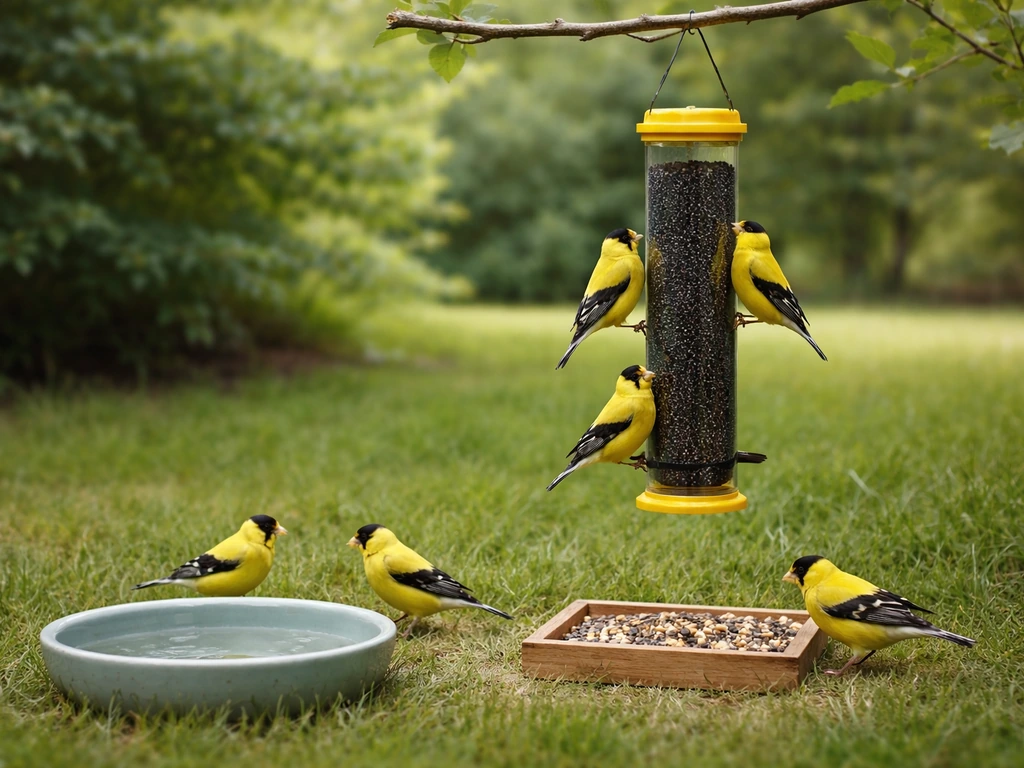
If you want to attract a wild magpie close enough to watch from your yard, the most effective approach is a combination of habitat cues (food, water, familiar perches), patient observation, and learning the magpie's contact calls so you can respond naturally rather than blasting recordings at the bird. If you are trying to attract or get close to another wild species instead, see how to catch goldfinch bird for an adjacent approach and species-specific considerations. You can apply similar humane, observation-based approaches when trying to understand how to catch a sparrow bird, while still prioritizing the bird’s safety and local laws attract a wild magpie close enough to watch from your yard. That combination works better than any single trick, and it keeps you on the right side of ethics and wildlife law.
How to Catch a Magpie Call Bird Safely and Humanely
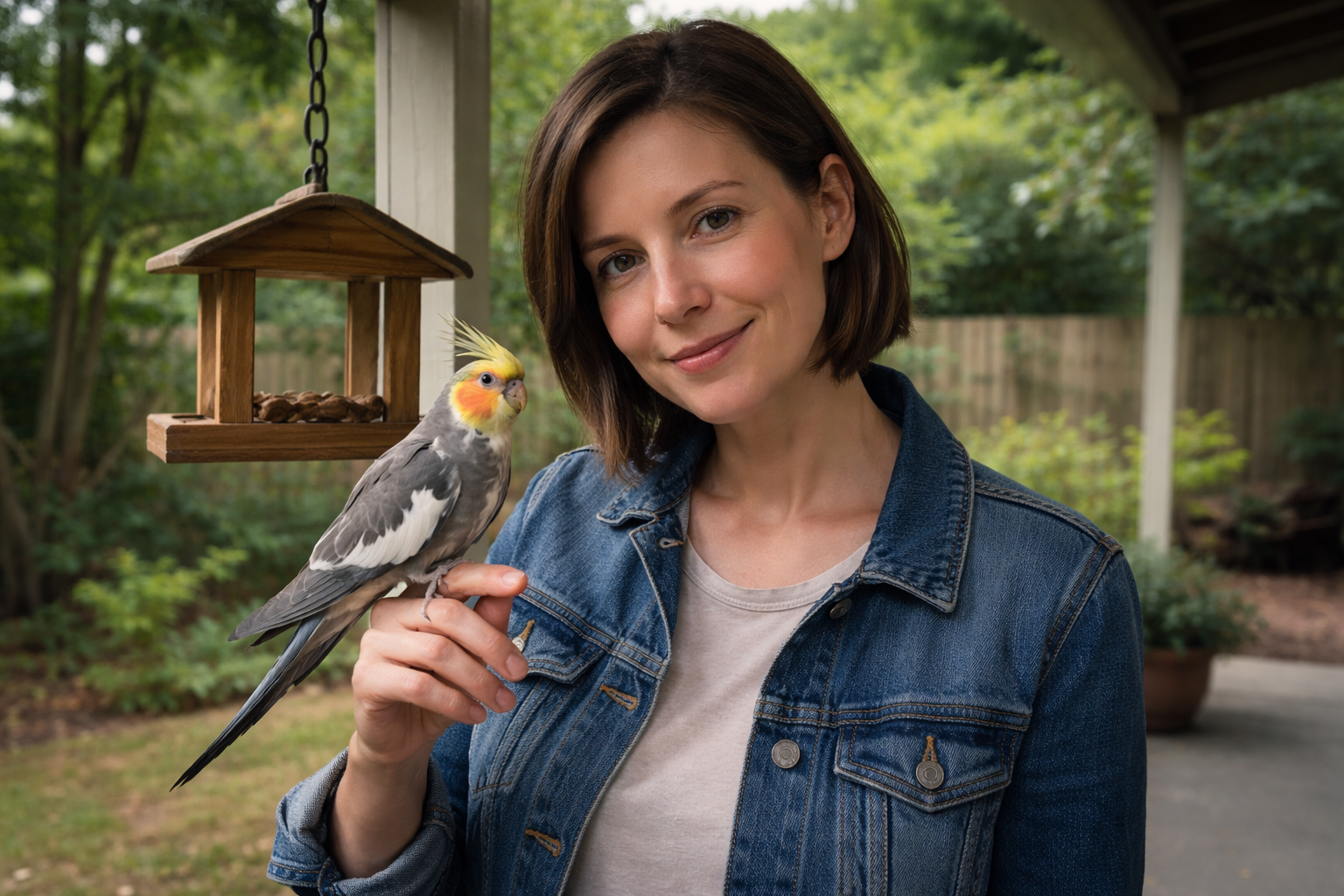
Quick reality check: what 'catch a magpie call bird' actually means
The phrase 'call bird' has a specific, old-school meaning in wildlife management circles: it refers to a previously trapped live magpie or crow kept in a decoy compartment of a cage trap to lure territorial birds into the same trap. Organizations like the Game and Wildlife Conservation Trust describe this method explicitly, and it involves capturing and confining a live bird. Organizations like the Game and Wildlife Conservation Trust describe this as call-bird trapping, which involves capturing and confining a live bird to lure others. That is not what most backyard birders or birdwatchers are after, and in most regions it is tightly regulated or outright illegal without a permit.
What most people actually want when they search this phrase is simpler: they want to know how to get a magpie to come closer, either to watch it, photograph it, or build the kind of loose trust where the bird stops being alarmed by your presence. That is completely achievable, and that is what this guide is about.
Identify the target: which magpie and where are you?
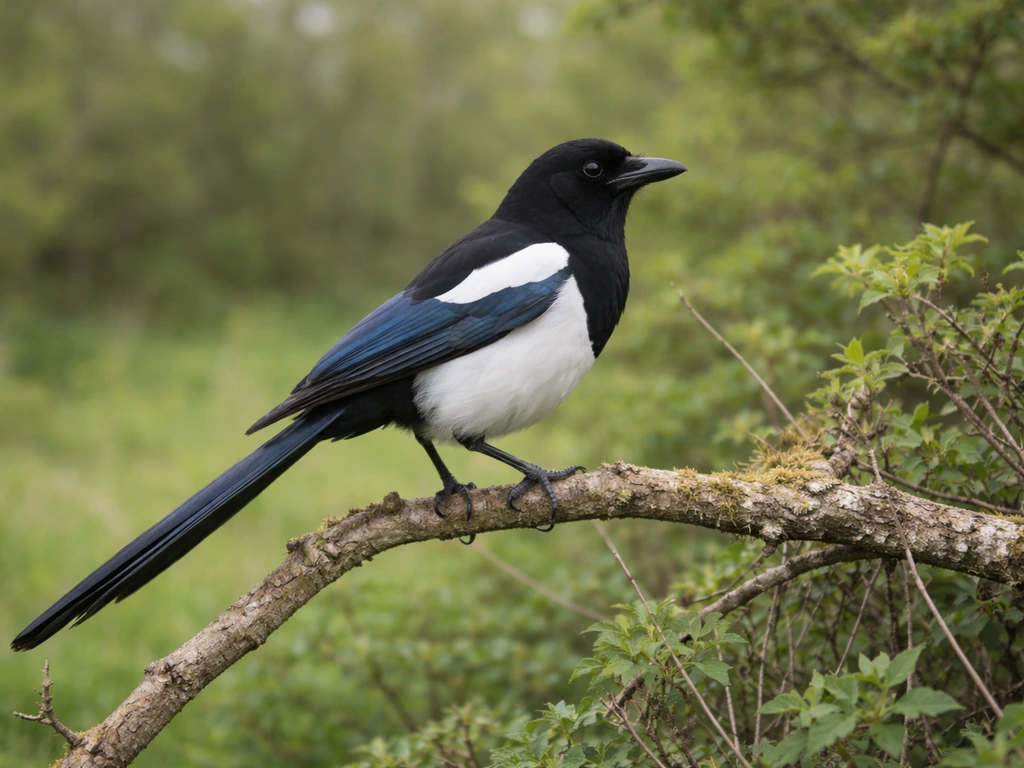
Before you try to learn or use any call, you need to confirm which species you are dealing with, because 'magpie' means genuinely different birds depending on your location, and their calls are nothing alike.
| Species | Where found | Key call description | Notes |
|---|---|---|---|
| Eurasian magpie (Pica pica) | Europe, Asia, parts of North Africa | Rapid, repetitive 'chac-chac-chac' rattle; harsh and machine-gun-like | Most common 'magpie' in UK and Europe |
| Black-billed magpie (Pica hudsonia) | Western North America | Alarm chatter 'ka-ka-ka-ka', sometimes preceded by 'skah-skah' | Similar look to Eurasian; different enough call to matter |
| Australian magpie (Gymnorhina tibicen) | Australia, New Zealand | Rich, flute-like carolling; complex melodic phrases | Not a corvid; entirely different family and sound |
In the UK and most of Europe, you are almost certainly looking at the Eurasian magpie. In the western United States or Canada, you are likely looking at the Black-billed magpie. Australians have a bird called a magpie that looks and sounds completely different, and if you use Eurasian magpie recordings in an Australian backyard you will get zero response and a very confused yard. Confirm your species first by sight: the classic bold black-and-white plumage with a long iridescent tail is the hallmark of Pica species. The Australian magpie has a different patterning and a very different silhouette.
How to listen and learn the magpie call before you do anything else
The single most useful thing you can do before attempting any kind of calling is to sit near where magpies naturally visit and just listen. Notice what the bird sounds like when it is calm versus when it is alarmed. The BTO (British Trust for Ornithology) notes that the repetitive 'chac-chac-chac-chac' rattling call is most commonly produced when Eurasian magpies are agitated. For example, Wikipedia describes the blank" rel="noopener noreferrer">black-billed magpie’s most common alarm call as a “chatter” pattern like “ka-ka-ka-ka” (often preceded with “skah-skah”), which differs from Eurasian magpie call patterns. That is important: if you hear that sound in response to your presence, the bird is not greeting you, it is telling you to back off.
For structured call learning, the Macaulay Library at Cornell Lab of Ornithology is the best free starting point. It hosts species-specific, labeled audio files for both Black-billed magpies and other species, with media notes that tell you the behavioral context of each recording (alarm call, contact call, territorial, etc.). Spend 15 to 20 minutes listening to multiple recordings for your specific species and start building an ear for the difference between the bird's alarm rattle and its softer contact sounds.
- Go to the Macaulay Library or a similar birding audio database and search for your specific magpie species by scientific name.
- Listen to at least 5 to 6 different recordings labeled by behavior context, not just one generic 'magpie call' clip.
- Pay attention to tempo and tone: the alarm rattle is fast and clipped; contact calls and quieter social sounds are slower and more varied.
- Practice recognizing the call by ear in the yard before you ever think about playing anything back. This step alone will improve how you read the bird's mood in real time.
- If you want to try mimicking gently with your own voice (not playback), the softer, lower-pitched conversational notes are the ones to practice, not the loud alarm rattle.
Humane calling methods: what actually draws a magpie closer
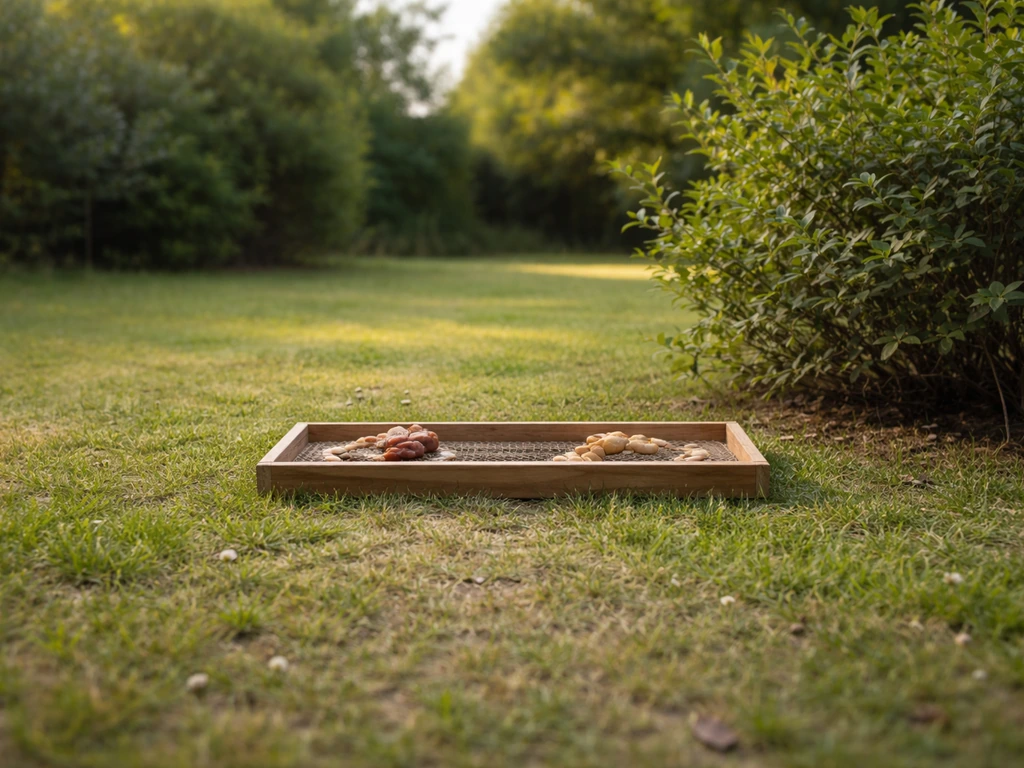
The most reliable way to bring a magpie into comfortable viewing range is not a recording at all. It is habitat. Magpies are curious, opportunistic omnivores with excellent spatial memory. If your yard consistently offers food, a reliable water source, and safe perch points, individual birds will start to treat it as part of their regular territory route. That kind of habitual presence is worth far more for calm observation than any single calling session.
Setting up a magpie-friendly yard
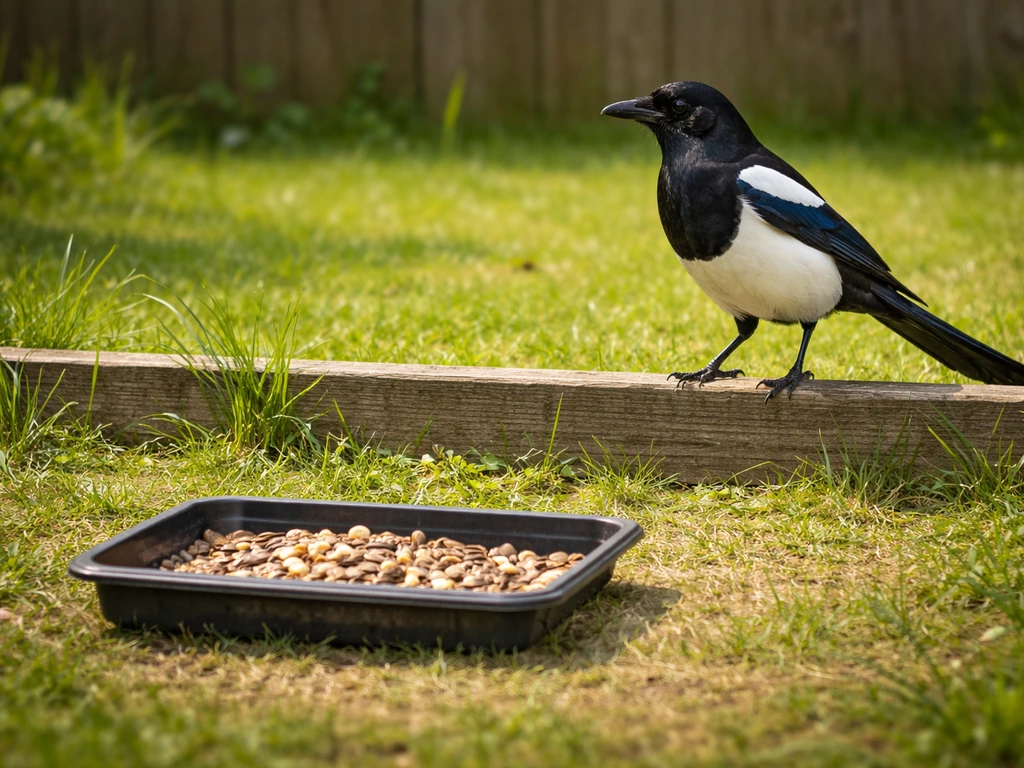
- Offer suitable food in an open area where the bird can land safely and scan for threats: mealworms, unsalted peanuts, kitchen scraps like cheese or cooked meat (in moderation) all work for Eurasian and Black-billed magpies.
- Place a shallow, wide water dish (a terracotta saucer works well) in an open spot, not tucked under dense cover where the bird cannot see approaching predators.
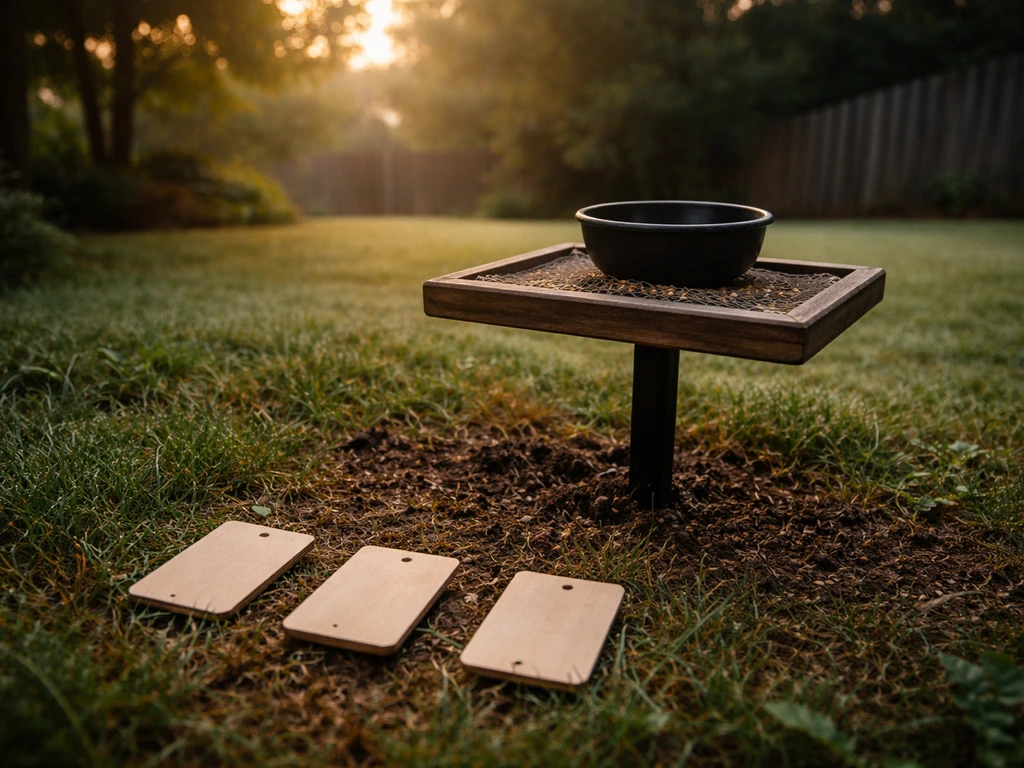
- Position a medium-height perch (a fence post, a low branch, or a simple wooden stake) near the feeding area so the bird has somewhere to land and assess before approaching food.
- Reduce sudden movements and loud noise near the feeding area. Magpies have very good memories for individual human faces and body language, and they will associate your presence with calm or threat surprisingly quickly.
Gentle vocal responses
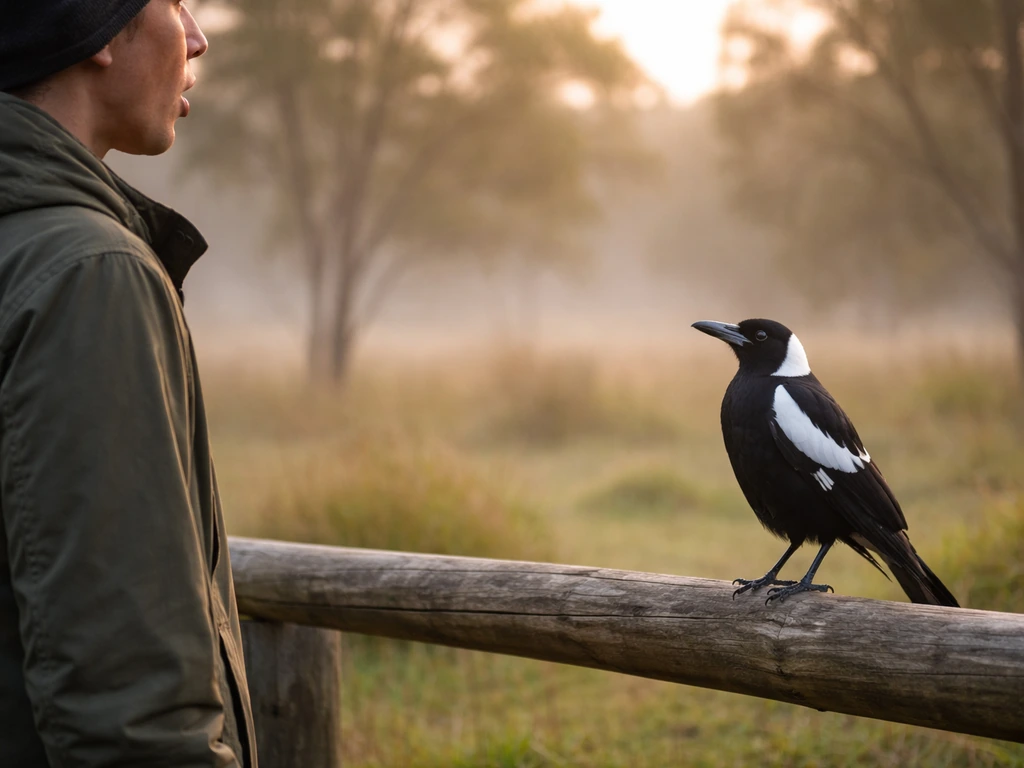
If a magpie is already present and calm, you can try a soft, low-pitched version of a contact-style sound with your own voice rather than a recording. Keep it quiet and brief: one or two soft notes, then silence. Watch the bird's body language. If it cocks its head toward you and continues foraging, that is a good sign. If it raises its tail, fluffs up, or begins the rapid 'chac-chac' rattle, you have crossed into agitation territory and you should go quiet and still immediately.
Using a visual silhouette cue can also help. Magpies investigate novel objects in their territory. Placing a simple black-and-white object (even a printed magpie silhouette mounted at low height) near the feeding station can pique curiosity and draw a bird in for a look. This is low-stress for the bird because it can approach at its own pace and retreat without feeling cornered.
Using playback safely, legally, and ethically
Here is where things get nuanced. Several major birding organizations take a cautious to outright negative stance on using playback to attract wild birds. The American Birding Association's Code of Birding Ethics says to limit the use of recordings to attract birds, especially in heavily visited areas and for rare or threatened species. Audubon's ethics guidance goes further and states that playback of bird calls should not be used for attraction in field contexts because it can distract birds from survival tasks, disrupt territorial behaviour, and harm nesting adults and chicks.
That said, most magpie species are not threatened or endangered, and a brief, low-volume, one-time soft playback in a private backyard is a very different situation from running a recording on loop in a public nature reserve. If you decide playback is part of your approach, follow these rules strictly.
- Check local law before anything else. In California, for example, Fish and Game Code Section 3012 makes it unlawful to use recorded or amplified bird calls to assist in taking birds. Even if you are not trapping, being on the right side of local wildlife law matters. Check your state, regional, or national rules before using any playback device outdoors.
- Use the lowest volume that might still be audible to a bird nearby, not a volume audible to your neighbours. Magpies have sharp hearing; you do not need volume.
- Play a contact-style call, not an alarm or territorial call. Broadcasting an alarm call will not draw a calm bird closer; it will either drive it away or bring in an agitated, aggressive one.
- Limit playback to 30 seconds maximum, then wait at least 5 to 10 minutes. Do not loop recordings.
- Stop immediately if the bird shows signs of agitation: raised tail, rapid calling, wing-flashing, or moving toward you in an aggressive posture.
- Never use playback during nesting season (typically spring, but this varies by region and species). Disturbing a nesting bird can cause nest abandonment.
- Do not use playback in public parks, nature reserves, or any area where it is restricted by signage or policy.
Troubleshooting: when nothing goes as planned
No response at all
If the magpies in your area are ignoring your setup entirely, the most likely culprits are location, timing, and habituation to human noise. Try moving your feeding station to a quieter corner of the yard. Check that you are offering food in the early morning, which is when corvids like magpies are most actively foraging and exploring. Also double-check that you are using the right call for your species: playing a Eurasian magpie recording for a Black-billed magpie is like playing the wrong language.
The wrong bird responds
Corvid calls (crows, jays, rooks, jackdaws) can overlap in perceived quality, and it is common for a crow or jay to investigate a magpie sound. If that happens, simply stop the session. Do not try to 'redirect' by playing a different call, because you will just create a multi-species disturbance. Appreciate the visit and note the location, because where you find one corvid species you often find others nearby.
The magpie gets aggressive
If a magpie starts moving toward you with its tail raised and is calling loudly and repeatedly, you have triggered a territorial response. This is especially common in spring when pairs are actively defending nesting areas. Back away slowly and quietly, reduce your visual profile by crouching or stepping behind cover, and stop any calling or playback immediately. Australian magpies in particular are well known for swooping humans they perceive as a threat to their nest, but Eurasian magpies can display similar territorial intensity. Do not try to continue the interaction; come back another day and approach more passively.
The bird habituates in an unhelpful way
Habituation sounds like success but can become a problem. If a magpie becomes so bold that it enters your home through open windows, attacks your pets, or shows no fear of approaching strangers, it has lost its healthy wariness of humans. That is not good for the bird long-term. Keep interactions calm and at a slight distance. Your goal is a bird that is comfortable enough to forage near you, not one that treats you as a food vending machine with legs. Gradually increase the distance at which you place food to encourage natural foraging behaviour rather than dependency.
No magpies in your area despite effort
Magpies are highly territorial and range across defined home areas. If none visit your yard after several weeks of consistent habitat setup, they may simply not include your location in their territory. Check local birding groups or eBird data to confirm magpies are recorded within a kilometre or two of your location. If they are nearby but not visiting, consider the wider habitat: magpies tend to prefer open areas with short grass adjacent to taller trees or hedgerows. Dense suburban gardens with no open ground are less attractive to them.
When to stop and get help instead
There are situations where the right move is to put down the recording device and contact a professional. If a magpie appears injured (dragging a wing, sitting on the ground and not flying when approached, bleeding), do not try to attract it closer with calls. Contact your nearest wildlife rehabilitation centre or licensed wildlife rescue organization. Attempting to handle a wild injured bird without training risks further injury to the bird and a nasty bite or scratch for you.
Similarly, if a magpie is actively nesting in or near your yard and showing signs of stress at your presence (repeated alarm calls, distraction displays, or repeated swooping), the humane answer is to simply give the nest area a wide berth for the duration of the breeding season. Trying to attract or interact with a nesting bird does real harm, regardless of how gently you approach it.
If you are finding that the bird's behaviour is escalating and it is becoming a safety issue for children or visitors (repeated swooping, food theft, or persistent aggression), local wildlife authorities or a licensed bird rehabilitator can advise on humane deterrence methods. This same principle applies to any corvid interaction that tips from curiosity into conflict.
If your interest in attracting wild birds for calm backyard observation extends beyond magpies, many of the same habitat-first principles apply to other species. If you are looking for how to catch a robin bird, you can use the same habitat-first approach and focus on calm observation rather than risky calling or handling. The patience and passive observation habits you build working with magpies transfer well to other garden birds, each with their own call repertoire and approach distances worth learning on their own terms.
The honest bottom line
Attracting a magpie for calm backyard viewing is genuinely achievable, but it works best when you treat it as building a relationship with a wild animal rather than a trick to perform. Get the habitat right, learn to read the bird's mood from its calls and posture, keep any playback brief and quiet if you use it at all, and respect the signals when the bird says it wants space.
If you want to catch a kingfisher in your view instead, the core idea is similar: focus on habitat and safe, low-pressure ways to draw the bird in how to catch kingfisher bird. Magpies are smart, adaptable, and genuinely interesting to watch. Give them a reason to show up and a reason to stay calm when they do, and the viewing will take care of itself.
FAQ
How do I tell whether a magpie is responding in a friendly way or showing alarm?
In most cases, you should treat the bird’s loud, repetitive “rattle” as alarm and stop calling or playback immediately. If you want to try again later, wait until the magpie is foraging normally, then only use your own voice very softly (one or two notes) and pause if the bird raises its tail or fluffs up.
What if the magpie comes closer only when I am silent, but backs off when I try to call?
Do not use calling as your main tool if the bird only approaches when you are far away. Instead, improve the “path of least fear” by placing food farther from your usual seating spot and gradually reducing the distance over time. Sudden closeness plus any sound cues is more likely to trigger territorial displays.
Is using a trapped “call bird” the best way to get a magpie to come near?
“Call bird” methods that use a trapped live bird as a decoy compartment are different from backyard attraction and are usually regulated or illegal. If your goal is watchability, focus on habitat cues, learn the bird’s natural contact sounds, and avoid any technique that involves trapping, confining, or using live decoys.
What should I do if a crow or jay responds to the magpie call?
If you hear other corvids reacting, stop the session rather than swapping to another call. Multi-species calling can increase agitation and make it harder to identify which species is actually near. Once things settle, start again later with lower volume (or skip playback entirely).
How loud and how long should I play back calls if I use recordings at all?
Use recordings only as a last resort, and if you try them, keep playback short and very low volume, not on a loop. If the bird changes from investigating to displaying (tail-up, loud repeated calling), end the session and back off, then try again another day with no playback.
When is the best time of day or season to try attracting a magpie?
Timing matters. Magpies are often most active and exploratory early in the day, but territorial behavior can spike in spring. If you notice frequent aggressive posturing or repeated swooping, switch to silent observation and habitat-only attraction during the nesting period.
What should I do if magpies ignore my yard even after I start calling?
If nothing comes after several weeks, the issue is usually not your calling skill, it is whether the bird’s territory includes your yard and whether there is suitable foraging ground. Check for open, short-grass edges, reliable water, and safe perches, and compare your setup to nearby areas where magpies are regularly observed.
How do I know when the magpie has become “too bold” and not safe to encourage?
If the bird starts approaching people regularly, entering open windows, or showing persistent aggression toward pets or visitors, you have likely crossed from curiosity into unhealthy habituation. Stop any attraction attempts, keep distance, secure indoor access (close windows, use screens), and prioritize deterrence or professional advice.
What if the magpie looks injured, grounded, or unable to fly?
If the magpie looks injured or cannot fly, do not try to lure it closer with calls or food. Contact a licensed wildlife rehabilitator or wildlife rescue center. Handling without training can worsen injury and can put both the bird and people at risk of bites or scratches.
What if a magpie seems to be nesting near my yard and gets defensive?
If you suspect nesting, treat the bird’s stress signs (persistent alarm calls, distraction displays, repeated swooping) as a clear “do not interfere” signal. Back away from the area for the rest of the breeding season and avoid calling or playback near the nest site.
Can I speed up trust-building without risking the bird’s comfort?
Start with what the bird already offers you. If you want more consistent calm viewing, place food and water where the magpie naturally already pauses, then reduce your presence (sit quietly, stay still, avoid sudden gestures). Only after repeated calm visits should you consider any low-intensity sound cue.
Are visual cues like a silhouette helpful, and how do I avoid causing stress?
If you are using a visual cue like a printed silhouette, keep it simple, low to the ground, and near the feeding station so the bird can approach and retreat easily. Remove or stop the cue if you see it increase alarm or territorial display rather than curiosity.
How to Catch a Goldfinch Bird Safely and Humanely
Humane step-by-step ways to attract or safely capture a goldfinch, handle it briefly, then help it recover or tame.