The answer depends entirely on what you mean by "catch." If you have a pet bird that flutters away every time you reach into the cage, you don't actually need to catch it at all. You need to build trust so it comes to you. If you're watching a wild bird in your yard and want to get closer or temporarily contain one that's injured, that's a completely different situation with its own rules, risks, and legal boundaries. Getting clear on which scenario you're in is the most important step you can take before doing anything else.
How Do You Catch a Unique Bird Safely and Humanely
Clara Hayes
9 Apr 2026
First, clarify what you actually mean by "catch"
There are really three situations people find themselves in when they search for this. The first is a pet bird (parrot, cockatiel, budgie, finch) that hasn't been tamed yet or has become hand-shy. The second is a wild bird you want to attract and observe up close in a yard or controlled setting. The third is a wild bird that appears sick or injured and genuinely needs to be temporarily contained so you can get it professional help. Each path is very different, and mixing them up leads to stressed birds, injuries, and sometimes legal trouble.
- Pet bird that won't step up or be handled: focus on trust-building, not catching
- Wild bird you want to observe or attract: use habitat and routine, not physical intervention
- Wild bird that is injured or grounded and can't fly: temporary safe containment, then handoff to a licensed wildlife rehabilitator
Legal and safety basics you need to know before anything else
If you're dealing with a wild bird, the law matters more than most people realize. In the US, the Migratory Bird Treaty Act makes it unlawful to pursue, take, capture, or possess migratory birds without a permit. That covers the vast majority of wild birds you'll encounter in a yard, including songbirds, waterfowl, and shorebirds. U.S. Fish and Wildlife Service guidance is clear: do not try to capture or transport a wild animal without professional guidance, and it is illegal to take one home as a pet. States layer on their own rules too. Florida, Minnesota, Washington, South Carolina, and most other states require a wildlife rehabilitation permit to do anything beyond immediate transport. Bottom line: if you find a wild bird, your job is temporary safe containment and quick handoff, not long-term care.
On the physical safety side, a few rules apply no matter what species you're dealing with. Raptors (hawks, owls, eagles) are genuinely dangerous and should only be handled by trained professionals. For smaller species, gloves reduce bite and scratch risk. Keep children and other pets out of the space when you're attempting any kind of approach or containment. Avoid chasing, cornering aggressively, or making sudden movements. Stress kills birds faster than most injuries, so slow and calm is always the right approach. If you're unsure whether you can handle it safely, contact a licensed wildlife rehabilitator before you try.
Read the bird and its environment before you do anything
Species identification shapes every decision. A small songbird on the ground after hitting a window behaves very differently from an escaped pet cockatiel sitting in a backyard tree, and both are entirely different from a red-tailed hawk with a damaged wing. Before you take any action, take a minute to assess what you're actually looking at.
- What species is it, roughly? Small passerine, parrot-type, raptor, waterfowl, or something else?
- Is it clearly injured (can't fly, dragging a wing, bleeding) or does it look alert and responsive?
- Is it in immediate danger from a road, predator, or weather?
- How close can you get before it moves away? This tells you how stressed it already is.
- Is this an escaped pet? Look for a leg band, clipped wings, or unusually tame behavior near humans.
- What's the environment like: open yard, enclosed room, dense brush, near traffic?
Behavior cues matter a lot. A bird sitting with its feathers fluffed, eyes half-closed, or breathing with its beak open is already under serious stress. A bird that's alert, watching you, and moving away is in much better shape. For wild birds, the goal is always minimum intervention. For pet birds, behavior cues tell you how far along in the taming process you actually are, which shapes your starting point.
How to tame a pet bird so handling is easy (no "catching" required)
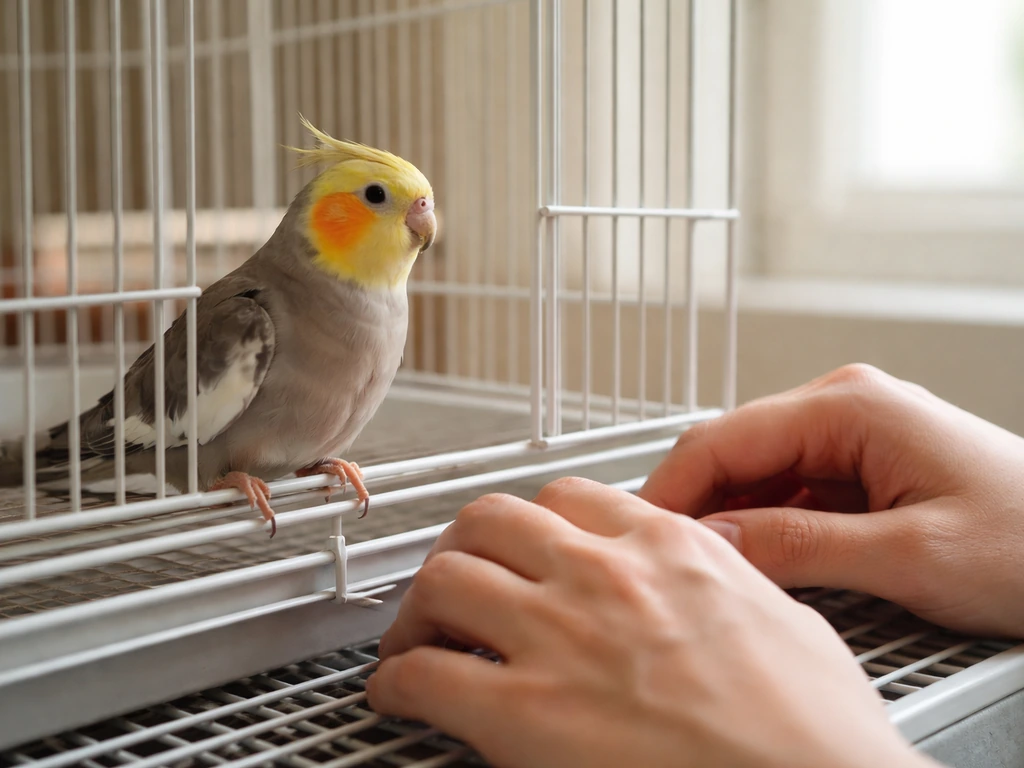
If you have a pet bird that panics when you reach into the cage, the honest answer is that trying to physically grab it is making things worse every time you do it. The solution is to back up and build trust through consistent, low-pressure exposure. Here's a step-by-step approach that works across parrots, cockatiels, budgies, and finches, with some species-specific notes along the way.
Step-by-step trust-building method
- Start with presence only. Sit near the cage daily for 10 to 15 minutes without trying to interact. Read, work on your phone, or just exist nearby. Let the bird get used to your body language and breathing.
- Introduce your hand at cage level, palm open, without reaching in. Do this for several sessions until the bird doesn't retreat when it sees your hand.
- Offer high-value food from your fingers through the cage bars. For parrots and cockatiels, millet spray and small pieces of fruit work well. For budgies, millet is highly motivating. For finches, keep this step shorter since they rarely become fully hand-tame, but they can learn to tolerate close presence.
- Move to open-door sessions. Sit next to the open cage door with a treat on your palm and let the bird make the first move. Don't lean in, don't reach. Let it come out on its own timeline.
- Introduce target training. Use a small stick or the end of a pen. Present it near the bird and reward the moment it touches it with its beak. Once it reliably touches the target, you can guide it to step onto your hand by positioning the target above your fingers. This is the same method used in structured parrot training programs, where the bird learns to move toward a cue rather than being grabbed. It's far more reliable for parrots and cockatiels than any physical approach.
- Practice the step-up cue. Press one finger gently against the bird's lower chest just above its feet and say 'step up' in a calm, consistent tone. Most cockatiels and budgies learn this within a few sessions once trust is established.
- Gradually increase handling time, always ending on a positive note before the bird shows any stress signals (wing flapping, biting, excessive movement).
Species-specific timelines
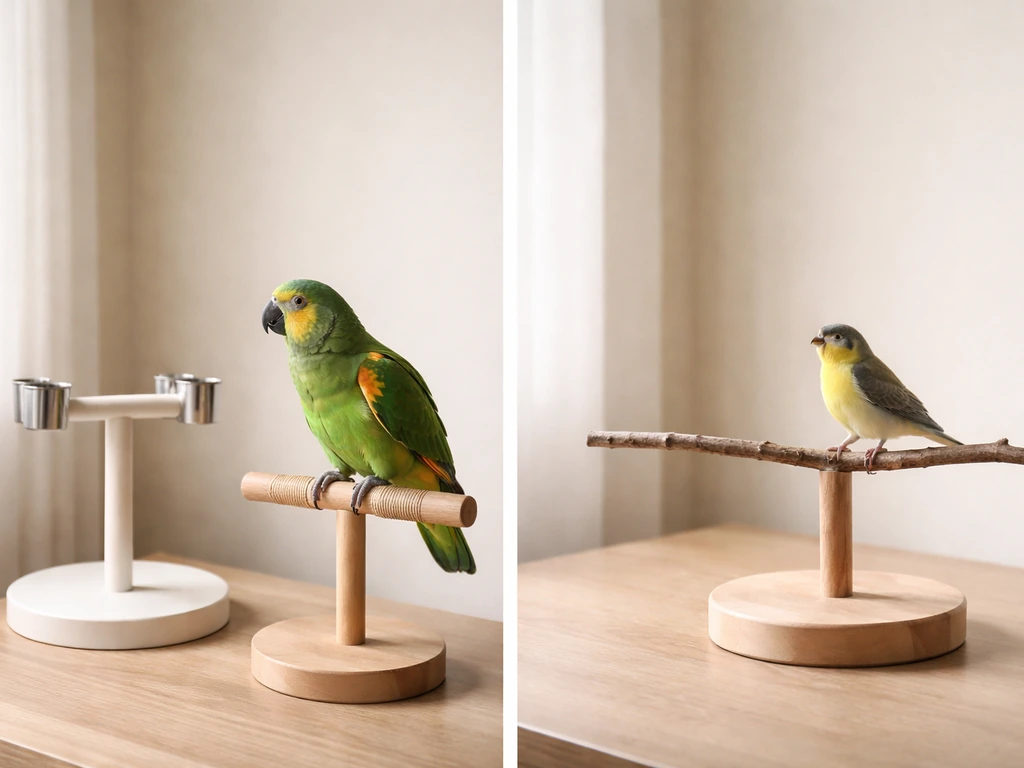
| Species | Typical time to first calm step-up | Key consideration |
|---|---|---|
| Parrot (medium/large) | 2 to 8 weeks with daily sessions | Target training is highly effective; reward with preferred foods and verbal praise |
| Cockatiel | 1 to 4 weeks | Very responsive to calm voices and whistling; stress-fluffs quickly if pushed too fast |
| Budgie | 2 to 6 weeks | Smaller and faster; millet is a strong motivator; multiple short sessions daily beat one long one |
| Finch | Rarely fully hand-tame | Focus on tolerance of proximity rather than handling; some finches stay flight-reactive regardless of effort |
If you've rescued or adopted a bird that was previously mishandled, double those timelines and don't rush. A bird that has been grabbed repeatedly in the past needs more time to unlearn the fear response. Consistency matters more than intensity here.
Attracting a specific wild bird to a controllable area
If there's a particular wild bird species visiting your yard and you want to observe it closely or create a predictable setup, the right approach is habitat and routine, not traps or physical intervention. This is especially true given that ethical wildlife viewing means following guidelines that avoid harassment or forcing animals to flee. Making loud noises, throwing objects, or repeatedly crowding a bird counts as harassment and stresses the animal even if that's not your intent.
Building a bird-friendly, low-stress yard setup
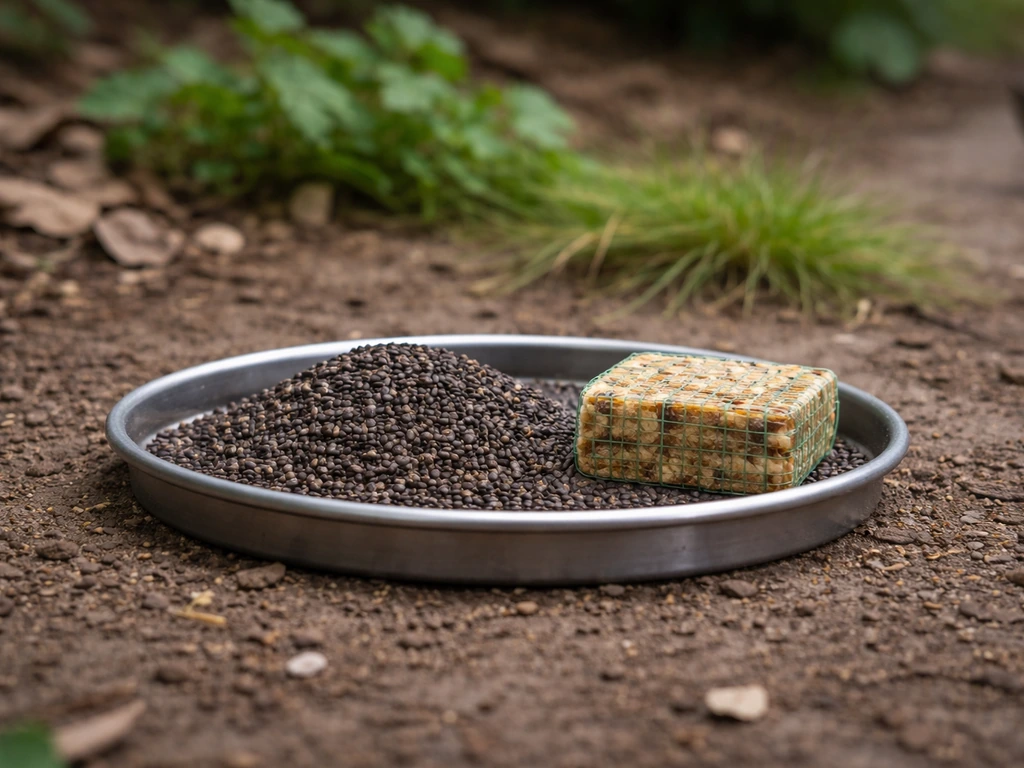
- Identify the species-specific food preference and provide it in a consistent location. Sunflower seed for cardinals and chickadees, nyjer for goldfinches, suet for woodpeckers, cracked corn for jays.
- Use a feeding station at a height appropriate to the species. Ground-feeding sparrows and towhees respond to scatter feeding; tree-clinging species need hanging or pole-mounted feeders at mid-height.
- Add a reliable water source. A shallow birdbath with moving water (a small pump or dripper) attracts more species than a static bowl, and birds return to it predictably.
- Create a consistent routine. Fill feeders at the same time each day. Birds learn schedules quickly and will begin arriving in a predictable window.
- Position yourself at a comfortable distance (typically 10 to 20 feet to start) and remain still. Wear neutral colors. Avoid sudden movements when birds arrive.
- Gradually move your observation point closer by a foot or two every few days. Many backyard birds can be habituated to a calm human presence at close range over a few weeks.
For larger or more unusual species, the same logic applies but scaled to the bird's natural wariness. If you're trying to bring in a peacock that's wandered into your property, for example, food motivation and patience work, but the process is slower and the bird's size introduces handling risks you shouldn't take on alone. catching a peacock bird is genuinely a different challenge from attracting a songbird to a feeder, and it often requires help.
When you truly must temporarily contain a wild bird
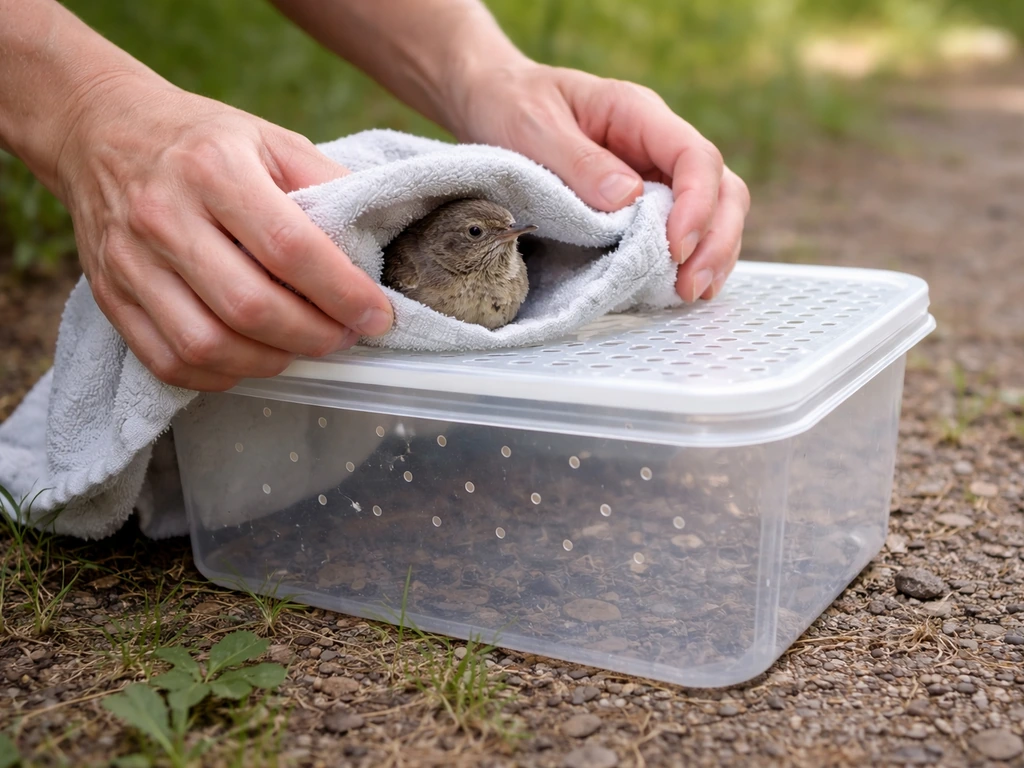
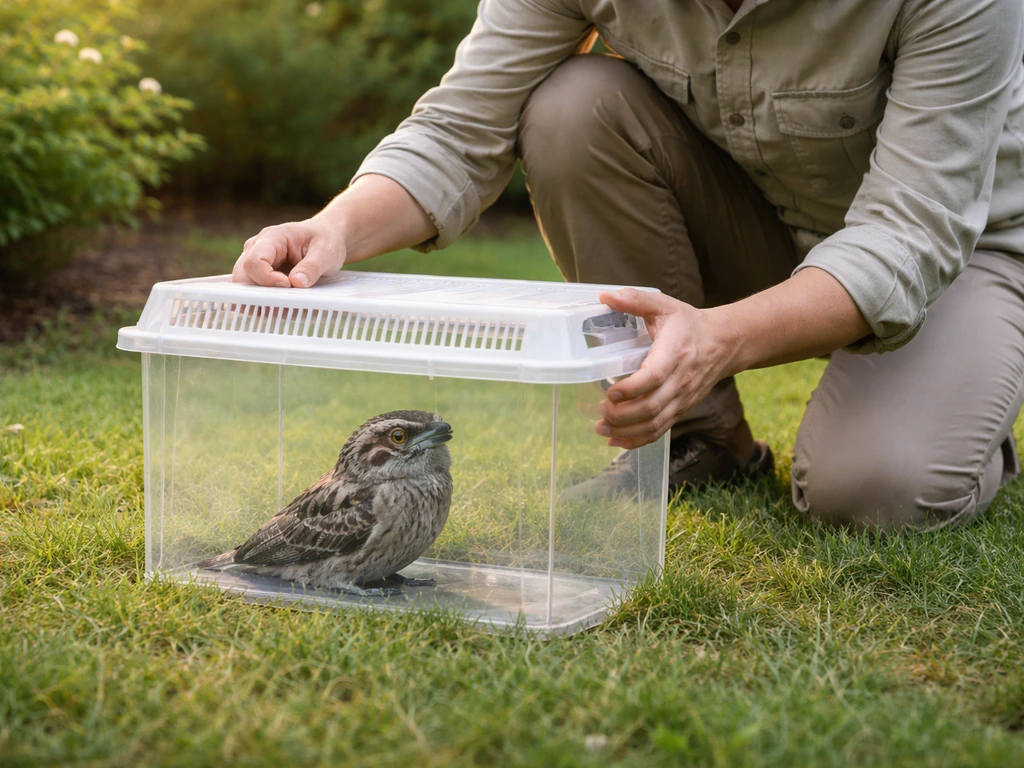
There are situations where a wild bird genuinely needs to be picked up: it's hit a window and is stunned, it's grounded and clearly injured, it's in the path of a predator or traffic and can't move. In those cases, temporary containment is appropriate. The goal is to get the bird safely into a box and then get it to a licensed wildlife rehabilitator as fast as possible. That's the full scope of your role. Do not attempt to feed it, give it water, or treat injuries yourself. Forcing food or water can cause aspiration and death, and attempting to treat wildlife is often both harmful and illegal.
How to safely contain a small to medium wild bird
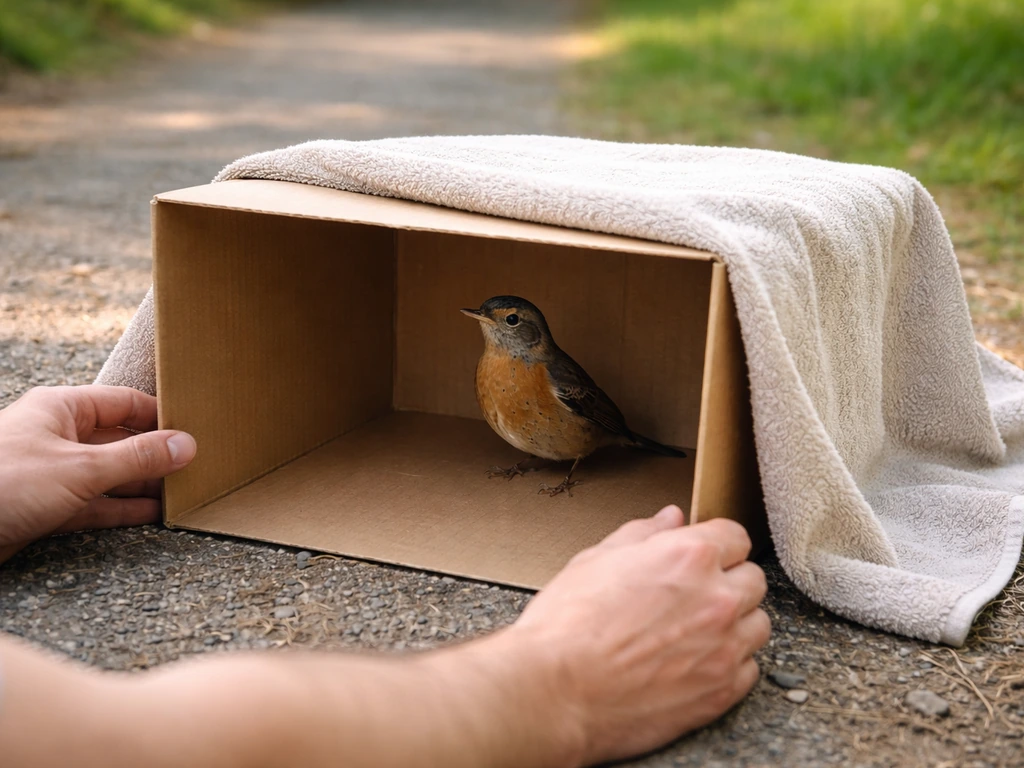
- Do not chase the bird. Chasing causes panic, exertion, and injury. Instead, calmly and slowly reduce the available space by herding the bird into a corner or enclosed area. This is the least stressful approach when capture is unavoidable.
- Drape a light towel or sheet over the bird from above and behind. Avoid covering the head first if possible. Once covered, gently wrap the wings against the body using the towel. Opaque coverings calm birds quickly because they can no longer see movement.
- For small songbirds, gloves are optional but useful. For anything with a strong beak or talons, use thick gloves. Do not attempt to handle raptors without professional guidance.
- Place the bird into a well-ventilated cardboard box lined with a towel or paper towel. The box should be sized so the bird can sit but not thrash around. Close the flaps or cover with a towel. Avoid glass containers or plastic bags.
- Put the box in a warm, dark, quiet place away from children, pets, and noise. Keep it away from direct heat sources and out of the sun, especially in warm weather since overheating is a serious risk.
- Do not put food or water in the box. Do not open the box repeatedly to check on the bird.
- Contact a licensed wildlife rehabilitator immediately and transport the bird as soon as they can accept it. Keep the car ride quiet and minimize vibration.
Avoid nets unless you're trained in using them. Large mesh nylon nets can entangle a bird's limbs, head, and tail feathers, causing panic and severe, sometimes fatal, injuries. The towel method is safer for virtually every scenario a non-professional is likely to face. If the situation is beyond what you can handle safely, stop and call for help rather than risking injury to the bird or yourself. trapping a bird of prey is a prime example where amateur attempts almost always cause harm, and professionals are the right call every time.
Once you have the bird contained, your first call should be to a licensed wildlife rehabilitator. Most states maintain public lists of permitted rehabilitators. Wildlife rehabilitation requires permits, facility inspections, and compliance with both state and federal law. Rehabilitators make the final call on whether they can accept an animal, and they are not funded or employed by state wildlife agencies, so be prepared to reach out to more than one contact. The U.S. Fish and Wildlife Service, your state's fish and wildlife agency (like FWC in Florida or Washington DFW), and organizations like the Humane Society can help you find the right contact quickly.
A note on snares, traps, and mechanical methods
If you've been researching methods involving mechanical setups, it's worth being direct: snaring a bird is almost always illegal for wild species without proper permits and is not appropriate for any of the scenarios this article covers. Similarly, trap-based methods designed for specific game birds, like trapping quail, exist in a specific regulated context (permitted hunting or research) that is separate from casual backyard encounters or pet bird handling. If you're thinking about a mechanical approach, stop and check your state and federal regulations before doing anything.
Troubleshooting: why it's not working and what to adjust
For pet bird taming
- Bird retreats to far corner of cage whenever you approach: You're moving too fast. Go back to the presence-only phase for another week before attempting hand contact.
- Bird bites when you offer your hand: This is a communication signal, not aggression for its own sake. Stop the session, try shorter exposure with more distance, and increase food motivation.
- Bird steps up in cage but panics outside: Expand out-of-cage time in very small steps. Start with one minute in a bird-safe room, then build slowly. Ceiling fans off, windows covered, and other pets out of the room.
- No progress after four weeks: Try varying the reward. Some birds respond better to verbal praise, others to specific foods. Check that your sessions aren't too long (10 minutes is plenty for budgies and cockatiels).
- Finch won't tolerate any hand presence: This is normal for finches. Shift your goal from handling to comfortable cohabitation and close observation rather than touch.
For wild bird attraction and safe containment
- Bird won't approach feeders: Make sure cats and other predators aren't nearby or visible. Also check that feeders are clean and seed is fresh. Stale or moldy seed repels birds.
- Bird flushes every time you come outside: You're too close, too fast. Increase your observation distance and reduce movement. Neutral clothing and a slow, predictable approach routine help.
- Contained bird is thrashing in the box: The box is likely too large or not dark enough. Re-cover the box securely and move it to a quieter location. Resist the urge to open it and check.
- Can't find a rehabilitator to accept the bird: Try your state wildlife agency's website, the National Wildlife Rehabilitators Association directory, or call a local veterinary clinic. Some vet clinics will stabilize wild birds temporarily.
- Not sure if the bird needs help at all: Fledglings (young birds with short tails and some feathers, hopping on the ground) are often just learning to fly and should be left alone unless they're in immediate danger. A parent is usually nearby.
What to do today, based on your situation
If you're working with a pet bird, your next step is to start the presence-only phase today. Sit near the cage for 15 minutes without trying to interact. Do it again tomorrow. Consistency over a week or two will tell you exactly how much trust-building work lies ahead. For a more detailed foundation, it helps to understand the full range of how to capture a bird safely in a domestic setting, including technique variations for different temperaments.
If you're dealing with a wild bird in your yard that you want to observe closely, set up a feeding station today with species-appropriate food and a water source. Give it a week before you start moving your observation point closer.
If you have a wild bird right now that appears injured, do not wait. Get a ventilated cardboard box ready, use the towel method described above to gently contain the bird without chasing it, and contact a licensed wildlife rehabilitator immediately. Keep the box warm, dark, and quiet. Don't feed it or give it water. Your only job is safe transport and fast handoff. If you're unsure about any step, the easiest and safest bird trapping approach for a non-professional in a true emergency is always the towel-and-box method combined with a call to a professional.
One last note: if the situation involves a snipe or similar elusive shorebird in a specific habitat, the identification step matters even more before you take any action. Understanding how to approach a snipe bird safely reflects exactly the kind of species-specific thinking that prevents well-intentioned people from accidentally stressing or harming wildlife. When in doubt, observe first, act second, and call a professional third.
FAQ
What’s the safest way to know if I’m dealing with a pet bird or a wild bird?
Check for clear ownership cues first (leg band, consistent presence near a home, behavior like perching on familiar spots). If you cannot confidently identify it as a pet, treat it as wild and switch to minimum-intervention containment only if injured or in immediate danger.
Can I use food to lure a wild bird closer instead of trying to catch it?
Yes, in most yard-attraction scenarios, the right move is habitat and routine, place species-appropriate food at a consistent location, and avoid crowding. Don’t corner the bird or make it flee repeatedly, and stop if the bird shows high-stress cues like open-beak breathing or extreme fluffed posture.
If a wild bird seems injured, should I offer water to prevent dehydration?
No. The article’s emergency approach is ventilated box, keep it warm and dark, and do not feed or give water, because forcing fluids can lead to aspiration and death. Focus on fast transport to a licensed rehabilitator.
How can I reduce injury risk when I use the towel method?
Use a calm, controlled approach, avoid chasing, and keep handling brief. Place the bird into a prepared ventilated container as soon as it’s secured, because longer handling increases stress and risk even if you’re gentle.
What should the box look like for emergency containment?
Use a ventilated cardboard box, keep it warm and quiet, and avoid anything that could tangle claws or wings. Darkening the box can reduce panic, but keep airflow clear and do not place it where it could overheat in direct sun.
Can I keep a wild bird temporarily in my home until I find help?
Keep it only long enough to stabilize and transport, since laws and permits apply and improper care can worsen injuries. The safe decision is immediate contact with a licensed wildlife rehabilitator and transport as soon as a pickup or drop-off is arranged.
What if the bird is a raptor but I’m sure it’s hurt, can I still try to grab it carefully?
No. Raptors should only be handled by trained professionals due to real injury risk. Even “gentle” attempts can injure both you and the bird, so prioritize containment that does not involve grabbing, then call a wildlife rehabilitator.
Is it okay to try mechanical trapping (like snares or cage traps) for a wild bird in my yard?
Not as a casual backyard solution. Snaring is almost always illegal without proper permits, and trap methods are regulated and can injure animals. For non-professionals, the safer path is observation, habitat setup, or towel-and-box containment for true emergencies.
What should I do first when I find an injured bird, before I even contact the rehabilitator?
Prepare the ventilated box and plan the quickest route, then perform minimal safe containment without chasing. Contact the rehabilitator immediately while the bird is stabilized, so you minimize the time it spends stressed or exposed.
For a pet bird that’s hand-shy, how long should trust-building take before I attempt any new interaction?
Start the presence-only phase now, about 15 minutes per day for a week or two. If the bird escalates with panic during your presence, slow down to shorter sessions and increase consistency rather than intensity, since rushed grabbing reinforces fear.
If my pet bird escapes from the cage, is “catching” the right solution?
Often no, the article’s core idea applies, build trust so it comes to you rather than physically grabbing. Keep the environment calm, remove threats, and focus on luring without cornering, because chasing can turn a quick recovery into a prolonged panic.
How do I handle situations where children or pets are in the area?
Create a barrier-free, low-activity space before you approach. Remove children and other animals from the containment or observation area, since sudden movements and proximity increase stress and can cause bites or scratches.
What’s the most common mistake people make that turns a safe plan into a harmful one?
Mixing scenarios, for example using pet-bird handling ideas on wild wildlife, or trying to treat wildlife injuries yourself. The correct decision path is identify which scenario you’re in, match the approach, and call a rehabilitator for injuries.
Next Article
How to Catch a Bird With Your Bare Hands Safely
Humane, safety-first steps to catch a bird with bare hands or safer alternatives for wild and pet birds.