
Baltimore orioles are absolutely worth the effort to attract, and the good news is they respond quickly to the right setup. Get the food right, place it in the correct spot at the right time of year, and you can have these brilliant orange-and-black birds visiting your yard within days of arrival. Here is everything you need to do, in practical order.
How to Attract a Baltimore Oriole Bird to Your Yard

Clara Hayes
22 Mar 2026
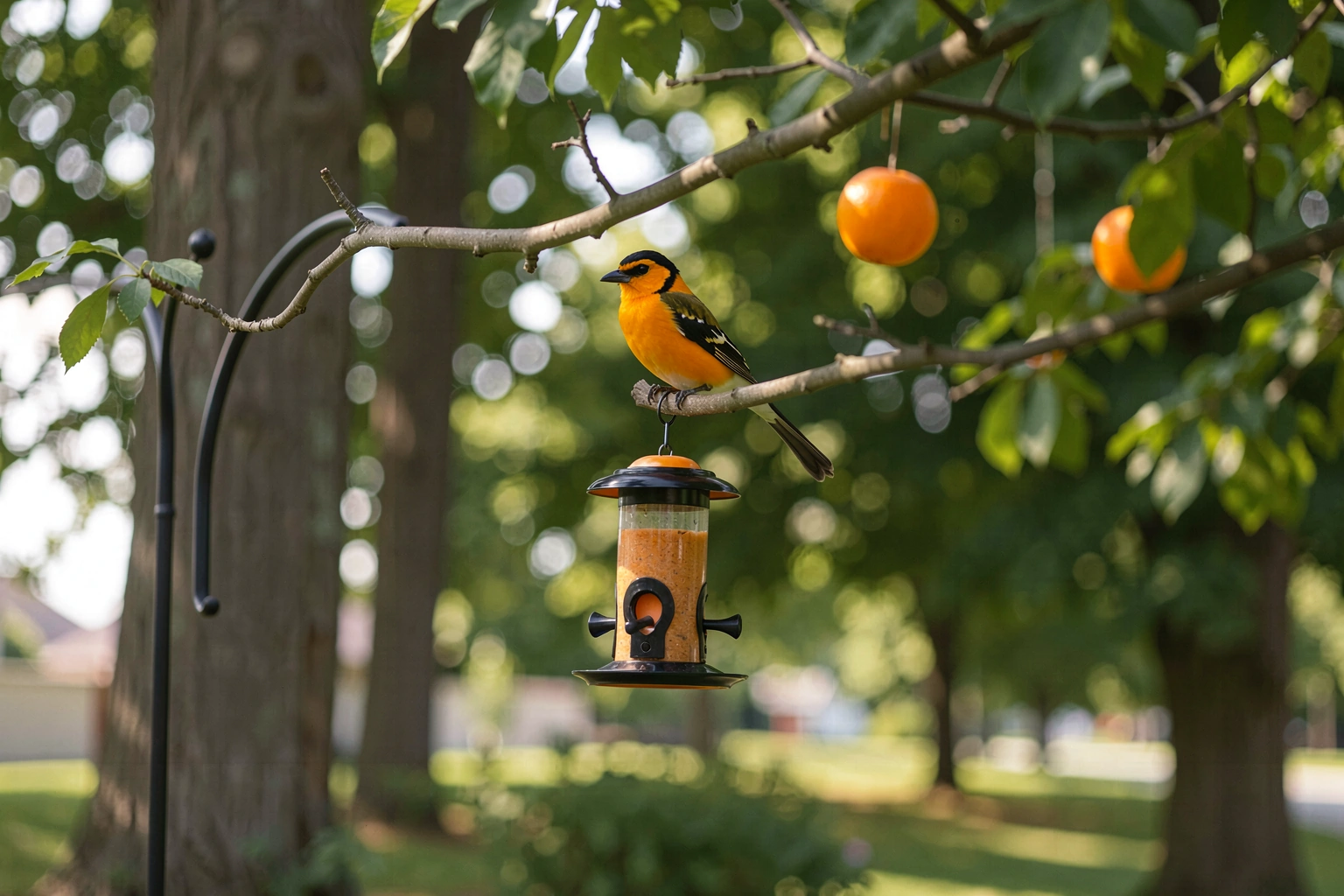
What Baltimore orioles are actually looking for
Baltimore orioles are not picky in the way that makes them hard to attract, but they do have clear preferences that shift with the seasons. During spring migration and early arrival, they are hungry for quick energy, which means nectar and ripe fruit are your best calling cards. Once summer breeding kicks in, they spend most of their time hunting insects, especially caterpillars, beetles, aphids, scale insects, and sawfly larvae, to feed themselves and their young. Maryland DNR also notes that Baltimore orioles supplement their insect diet with fruit and will drink nectar in summer hunting insects, especially caterpillars. In fall, they swing back toward fruit and nectar to fuel up for migration, with a strong preference for dark-colored fruits.
On the habitat side, Baltimore orioles are birds of tall deciduous trees. They nest high up, typically 20 to 30 feet above the ground, weaving a distinctive hanging pouch nest from plant fibers on drooping slender branches. They feel comfortable in suburban and edge environments as long as there are mature trees nearby. A yard that offers food, water, and a connection to that kind of canopy is going to be far more attractive than a bare open space with just a feeder stuck in the middle of it.
The best foods and feeder types to use
Three foods do the heavy lifting when it comes to attracting Baltimore orioles: sugar-water nectar, orange halves, and grape jelly. You do not need all three at once, but offering at least two of them gives you the best chance of a quick visit.
Sugar-water nectar
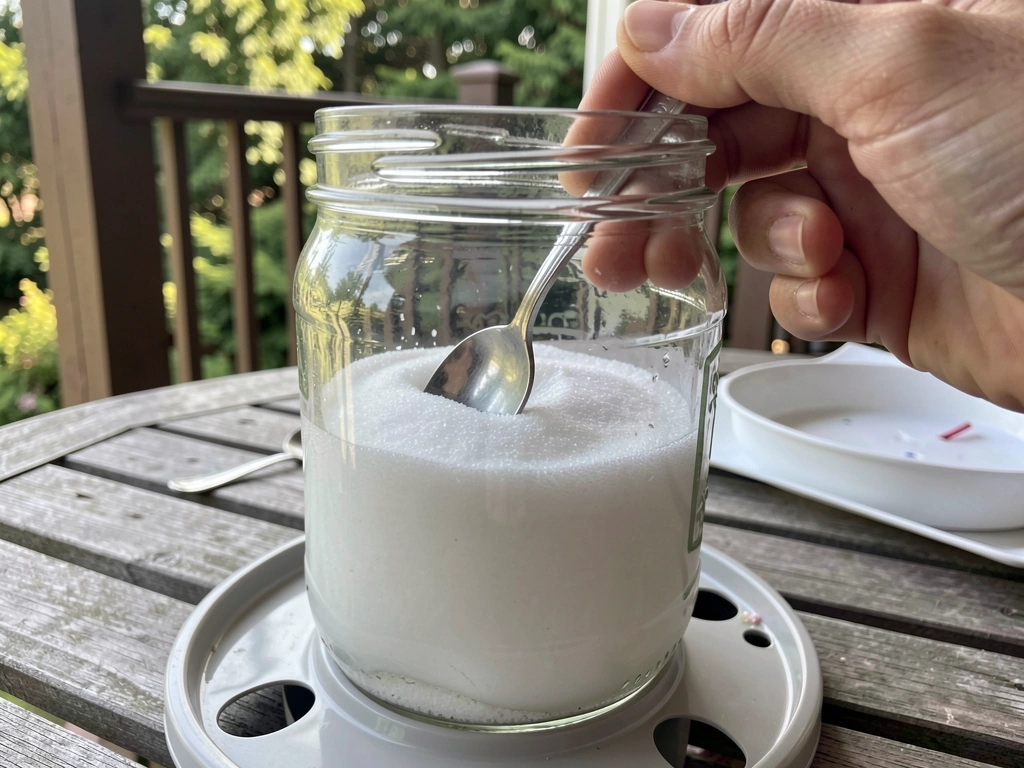
Mix one part plain white granulated sugar with four parts water. Stir or shake until the sugar is fully dissolved, and that is your nectar. You do not need to boil it unless you want to help it dissolve faster. Do not add red food coloring: it is unnecessary and not recommended. Orioles are attracted to orange-colored feeders, not red dye in the water. For orioles specifically, you can also use a slightly more diluted mix of one part sugar to six parts water, which is a bit closer to natural flower nectar.
Use an oriole-specific nectar feeder rather than a hummingbird feeder. Oriole feeders have wider feeding ports and larger perches because orioles are significantly bigger birds. Many oriole feeders are orange in color, which helps attract them visually. Look for feeders with a built-in ant moat, which is a small reservoir you fill with water to prevent ants from crawling down to the nectar.
Orange halves
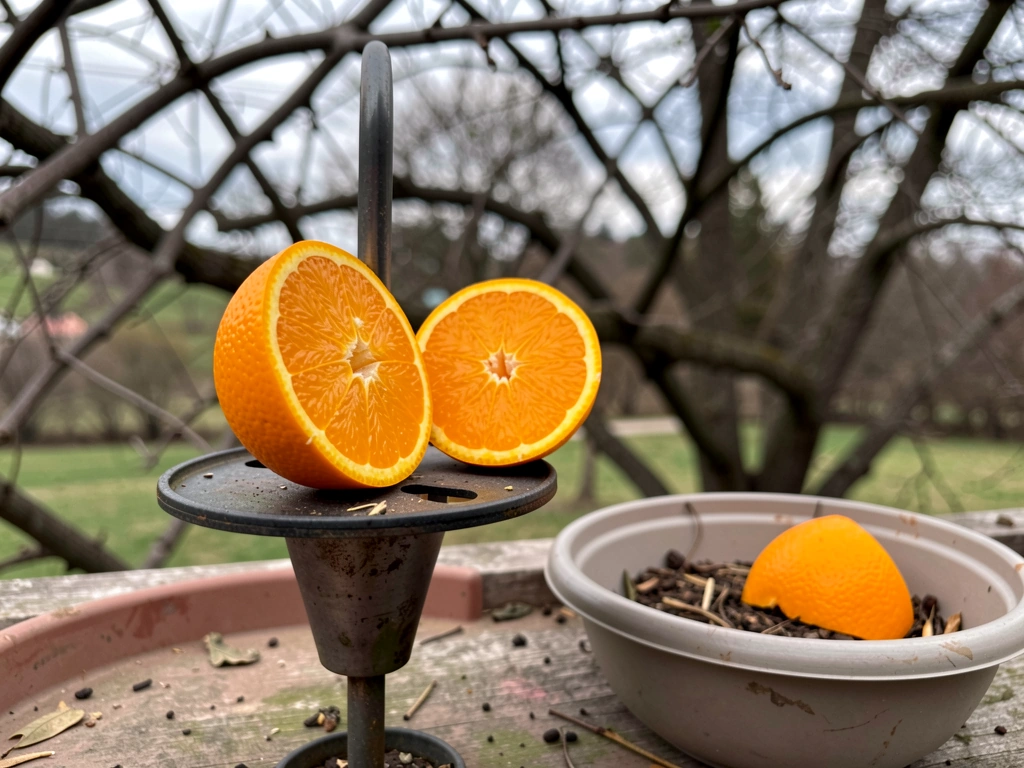
Cut an orange in half and impale it on a spike or set it in a platform tray. Orioles will land and eat directly from the cut flesh. This is one of the simplest and most reliably effective tactics, especially early in the nesting season. Replace the orange halves every one to two days so they do not dry out or grow mold.
Grape jelly
Grape jelly is genuinely popular with Baltimore orioles and is worth keeping stocked alongside your other offerings. Use a small dish or a feeder specifically designed with a jelly cup. Stick to plain grape jelly without artificial sweeteners or extra additives. Replace it every couple of days and rinse the dish each time.
Where and when to put feeders out
Timing is one of the biggest factors people overlook. Baltimore orioles are migratory, and if you put feeders out late, they may already have moved on or established their territory elsewhere. Get your feeders out at least one to two weeks before expected arrival in your region. In most of the eastern and central United States, that means having everything set up by late April. If you are in the Deep South, earlier is better. If you are further north, early May is still valid. The birds are on the move right now in late March in southern areas, so do not delay.
For placement, think about where orioles are naturally comfortable: up in the canopy, perching on branches, moving between trees. Do not put feeders in the middle of an open lawn far from cover. Place them near the edge of your yard where trees or tall shrubs are close by, ideally within 10 to 15 feet of a tree. Orioles want a nearby branch to land on before approaching the feeder. Hanging feeders from a tree limb or a shepherd's hook near tree cover is ideal. Visibility matters too: orioles scout from above, so a feeder that can be seen from the treetops will get noticed faster than one hidden under a dense canopy.
Making your yard genuinely oriole-friendly
Feeders are a starting point, but the yards that consistently attract orioles year after year offer more than just food. Orioles visit flowers for nectar, so planting nectar-producing natives like trumpet vine, wild columbine, or native honeysuckle gives them a natural food source that complements your feeders. These plantings also provide cover and perching spots.
Tall deciduous trees are the centerpiece of oriole habitat. If you have mature elms, cottonwoods, maples, or similar trees with long drooping outer branches, you already have what orioles want for nesting. You cannot rush tree maturity, but you can avoid cutting back trees that already provide that kind of canopy structure. Shrubs at the yard edge give birds a place to perch and feel safe while they assess whether to approach.
Water is important and often underestimated. A birdbath with moving or dripping water is much more attractive than a still basin. Orioles will drink and bathe, and the sound of moving water draws birds in from a distance. Keep the birdbath clean and change the water every couple of days.
One thing to keep in mind: during summer, orioles are spending most of their time chasing insects. If your yard has a diversity of native plants that support insect populations, especially caterpillar-hosting trees, you are providing food that feeders simply cannot match. This is part of why a naturalistic yard with some leaf litter, native plantings, and mature trees will hold orioles longer than a perfectly manicured lawn with a feeder.
Keeping things fresh so orioles keep coming back
The single biggest maintenance mistake is letting nectar sit too long. Use a simple sugar-water nectar ratio of 1 part sugar to 4 parts water, and store prepared nectar according to the Smithsonian National Zoo's guidance nectar sit too long. Fermented or moldy nectar can make birds sick and will cause them to abandon your feeder. How often you need to change nectar depends on the weather:
| Temperature | How often to change nectar | Feeder cleaning frequency |
|---|---|---|
| Below 80°F | Every 4 to 5 days | Every 3 to 5 days |
| Low to mid 80s°F | Every 2 to 3 days | Every 2 to 3 days |
| Upper 80s to 90s°F | Every 1 to 2 days | Daily or every other day |
To clean a nectar feeder, scrub the inside with a bottle brush under hot running water. Avoid dish soap with heavy fragrances, but a mild rinse is fine if you flush it thoroughly. Feeders placed in full sun will need more frequent attention than shaded ones because heat speeds up fermentation.
For orange halves and grape jelly, replace them every one to two days regardless of temperature. Fruit dries out, attracts insects, and grows mold quickly. A quick swap takes about 30 seconds and makes a real difference in whether orioles return.
At the end of the season, when orioles leave in late summer or early fall, clean all your feeders thoroughly before storing them. This prevents mold from setting in over the winter and means you will be ready to put them out quickly next spring.
Why orioles still are not showing up (and how to fix it)
If you have had feeders out for a week or more and seen nothing, work through this checklist before giving up.
- Wrong timing: If it is before late April in most regions, orioles may simply not have arrived yet. Check local birding reports or eBird to see if Baltimore orioles have been spotted in your area yet this spring.
- Feeder placement is too exposed: A feeder sitting in the open middle of a lawn with no nearby trees or shrubs is a hard sell. Move it within 10 to 15 feet of a tree or tall shrub.
- Nectar has gone bad: Even if it looks fine, nectar that has been sitting in warm weather for more than a few days may be fermenting. Dump it, scrub the feeder, and start fresh.
- You are using a hummingbird feeder: The ports are too small for orioles. Switch to an oriole-specific feeder with wide ports and a proper perch.
- No orange or jelly: Nectar alone is good, but orange halves and grape jelly are strong attractors, especially in the first few weeks. Add at least one of these.
- Competition from other birds or squirrels: If other birds are monopolizing the feeder area, orioles, which are a bit wary, may not bother. Try placing an oriole feeder in a quieter corner of the yard, away from busy seed feeders.
- No water nearby: Adding a birdbath, especially one with a dripper or wiggler, can tip the balance for birds scouting your yard.
- Not enough patience: Orioles are not as bold as house finches or chickadees. It can take a bird several days of observing a feeder from a distance before committing to approach. Keep the food fresh and give it at least two weeks before concluding the setup is not working.
The most common fix is simply moving the feeder closer to tree cover and swapping in fresh food. Those two changes alone resolve most cases where orioles are in the area but not visiting. If you know orioles are present (neighbors have seen them, or you have spotted one in a nearby tree), double down on fresh grape jelly and a clean orange half, and give it a few more days.
What to do right now this week
- Pick up an oriole-specific nectar feeder with an ant moat if you do not already have one.
- Mix a batch of nectar: one part white sugar dissolved in four parts water, no food coloring.
- Grab a jar of plain grape jelly and a bag of oranges from the grocery store.
- Hang or mount the feeder within 10 to 15 feet of a tree, at roughly head height or slightly above, where it is visible from above.
- Set out orange halves on a platform or spike feeder near the nectar feeder.
- Add or activate a birdbath with a dripper if you have one.
- Mark your calendar to check nectar freshness every two to three days and swap out fruit every one to two days.
- Check a local birding resource like eBird to confirm when Baltimore orioles are typically being reported in your specific county or region so you know what arrival window to expect.
That is genuinely all it takes to get started. Baltimore orioles are not difficult birds to attract once you have the right setup in place at the right time. If you are wondering how to catch bulbul bird, the same idea applies: choose the right food, timing, and a safe place for them to feed right setup in place at the right time.
If you want more birds to stop by, focus on food, water, and safe shelter that matches what orioles naturally look for attract once you have the right setup. The combination of fresh nectar, orange halves, and grape jelly near good tree cover is proven, and most people who follow through on it see their first oriole visit within days of the birds arriving in spring.
FAQ
Do I need to use red food coloring in the nectar to attract Baltimore orioles?
Use a clean, plain sugar-water nectar and never add red dye. If you already have an existing mix, empty and refill with fresh nectar rather than topping off, because old nectar ferments faster in warm weather and can deter birds even if the color looks right.
What is the minimum food setup to attract orioles if I do not want to provide everything?
Aim for two feeder types at once, nectar plus one fruit option. Nectar supports quick energy during migration, while orange halves or grape jelly add a stronger cue for orioles. If you do only nectar, visits are slower; if you do nectar plus one fruit, response is usually faster.
Can I use a hummingbird feeder, or do I need an oriole-specific feeder?
Yes. Orioles prefer oriole-sized equipment, but you can switch strategies: use an oriole feeder with wider ports when available, or offer orange halves and jelly in smaller dedicated dishes to reduce competition. In general, nectar feeders meant for hummingbirds are harder for orioles to access and can lead to fewer visits.
I put out feeders early, but I only see other birds. What should I change first?
Feeders should go up early, but you can still adjust after you see activity. If you are seeing other species but no orioles, try moving the feeder closer to tree cover first, then refresh food. Avoid relocating every day, because orioles often scout and return when the setup stays consistent.
How do I know whether my nectar is going bad between scheduled cleanings?
In full sun, plan on more frequent nectar changes, often every day during hot spells. A good rule is to treat any nectar you cannot confidently keep fresh as expired, and replace it immediately if you notice cloudiness, smell changes, or visible growth.
What is the best way to stop ants from reaching the nectar?
If ants are a problem, an ant moat helps, but you still need to check for bridges like wet grass or draping feeder wires. Keep the feeder base dry, refill the moat with clean water, and place the feeder so ants cannot bypass it along nearby surfaces.
Should I scatter fruit or nectar on the ground if the orioles are not coming to the feeder?
Do not pour nectar onto the ground or into mulch, it attracts wasps and other insects and increases mold risk. Instead, use an ant-moat feeder for nectar, and keep orange halves and jelly in covered or dish-specific containers so food stays contained and clean.
What kind of water setup attracts Baltimore orioles without creating a mess or algae?
A birdbath with moving water works best, but safety matters. Use shallow water for bathing, keep edges stable, and change water every couple of days to prevent algae. If you notice stagnation or heavy algae growth, clean the basin promptly.
Do native plants really help if I am already using nectar and fruit?
Planting does not replace feeders immediately, but it can extend how long orioles stay once they start visiting. Focus on nectar-producing native plants for the migration season and include insect-friendly natives nearby, because caterpillars and other prey drive summer nesting behavior.
Why might orioles stop visiting after they initially showed up?
If you see orioles once, keep the feeders consistent and prioritize freshness. When orioles stop coming, the most common cause is stale or fermenting nectar, plus fruit that has dried out or started to mold. Swap food, clean the feeder, and keep placement near canopy cover.
What should I do at the end of the season so feeders work well next spring?
In late season, store feeders after a full clean and thorough drying. This reduces winter mold buildup, and it also helps you reopen quickly next spring without a strong stale odor. If the feeder is orange or nectar-stained, scrub until residue is gone, then dry completely before storage.
Next Articles
How to Catch a Bird Without Killing It: Humane Steps
Humane, trap-free steps to catch a wild backyard bird safely, minimize stress, contain it calmly, then release or reloca
How to Catch a Bird With a Bottle Safely and Humanely
Humane, safety-first steps to catch a bird with a bottle or cover, plus safer alternatives and what to do after capture.
How to Catch a Bird Alive Safely and Humanely
Humane, safety-first steps to catch a live bird for backyard or pet rescue, with stress-free handling and next actions