The fastest way to attract birds is to give them three things: food they recognize, water they can find, and a spot where they feel safe. Get those three right and birds will show up, sometimes within a day or two. Get them wrong and you can wait weeks with an empty feeder. This guide walks you through each step in the right order, with real numbers and specific advice you can act on today.
How to Attract a Bird: Food, Water, Shelter, Placement Tips
Clara Hayes
22 Mar 2026
Know Which Bird You're Trying to Attract (and Why It Changes Everything)
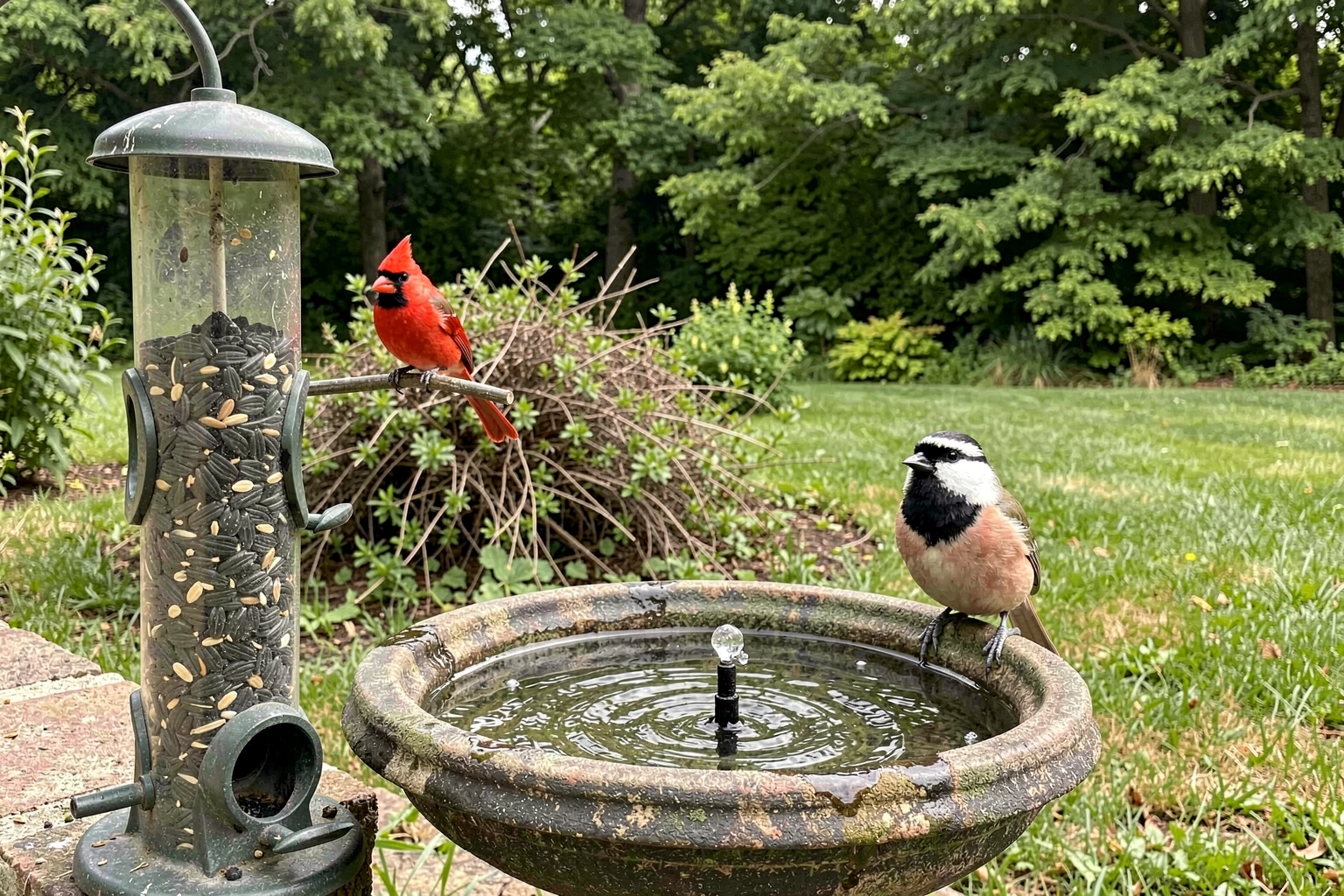
Before you buy a single bag of seed, figure out which birds actually live or migrate through your region. This matters more than most people realize because different species want completely different things. A northern cardinal wants black-oil sunflower seeds in a sturdy hopper feeder. A goldfinch wants nyjer seed in a tube feeder with tiny holes. A woodpecker wants suet hung high on a tree. Setting up the wrong food in the wrong feeder is the single most common reason a new setup gets ignored.
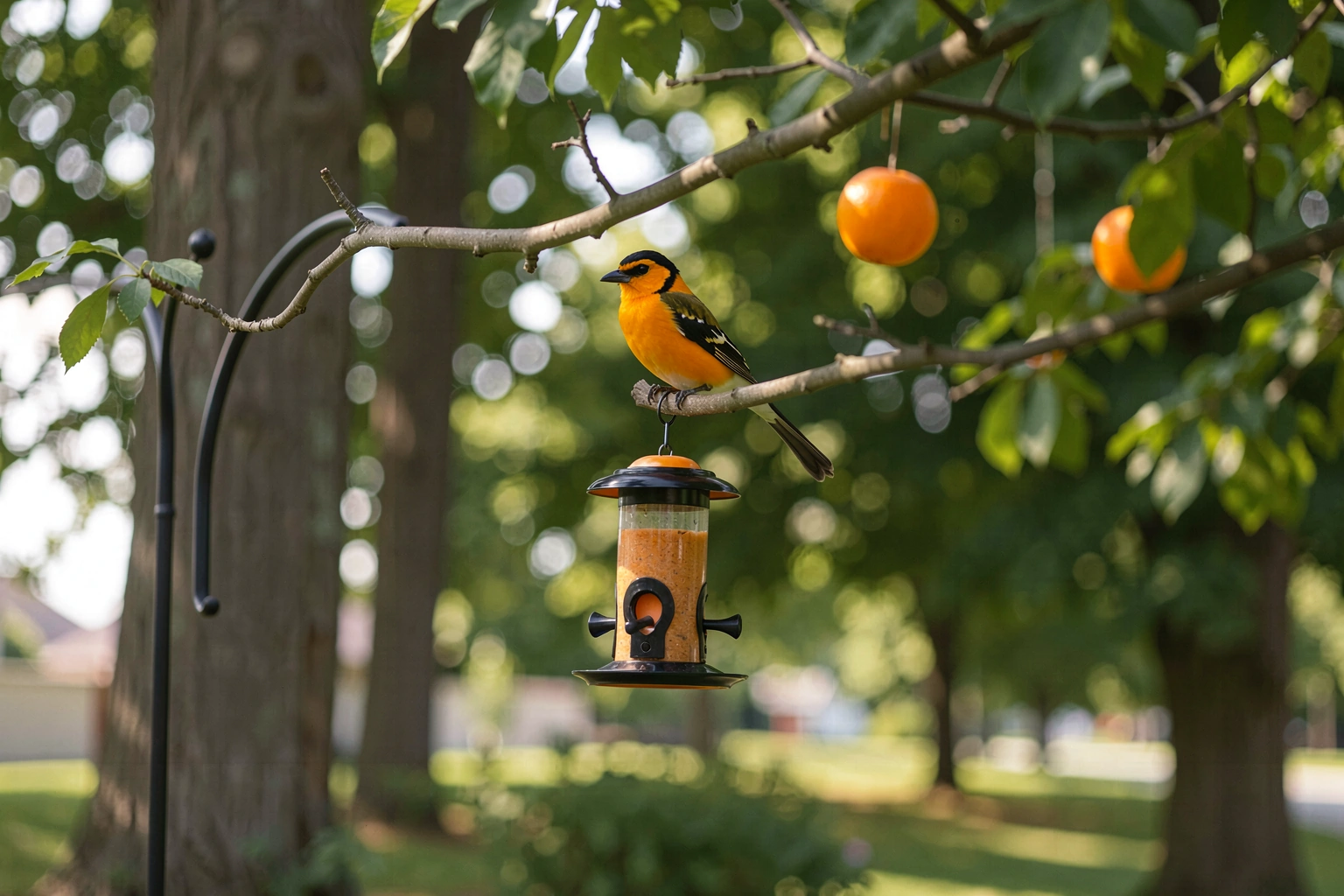
The easiest way to check what's realistic for your area is Project FeederWatch's "Top 25" list, which breaks down the most commonly reported feeder birds by state, province, and region. It takes about two minutes to look up and immediately tells you what species to focus on. If you're aiming for something specific, like Baltimore orioles or myna birds, the tactics shift quite a bit from a general backyard setup, so it's worth knowing your target before spending money on gear.
For most North American backyards, you're working with a mix of sparrows, finches, chickadees, nuthatches, woodpeckers, and doves. Cardinals show up reliably in suburban and urban gardens across a huge range. That's a great starting lineup, and the setup below covers all of them.
Set Up Food the Right Way
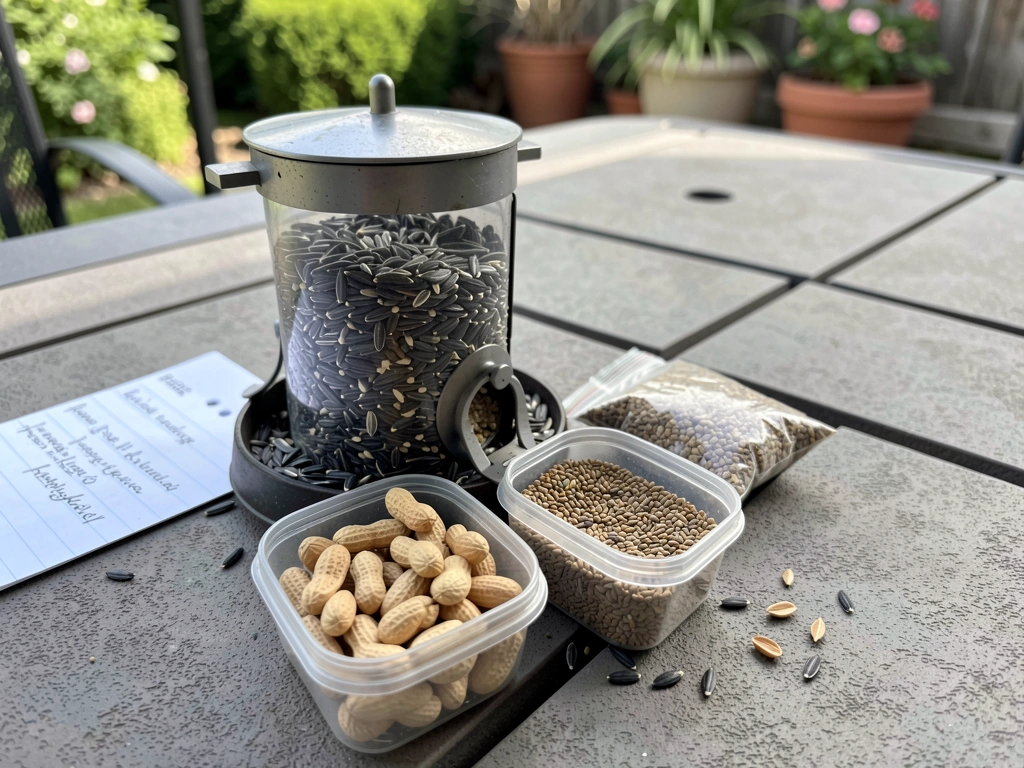
Black-oil sunflower seed is the single best starting point for most North American backyards. It's high in fat and protein, has a thin shell most birds can crack, and is accepted by an enormous range of species. If you only buy one type of seed, make it this one. Beyond that, adding nyjer (also called thistle) pulls in finches, and peanuts or suet attract woodpeckers, nuthatches, and chickadees.
Audubon strongly recommends using separate feeders for different seed types rather than blends. Blends sound convenient, but birds tend to toss out seeds they don't want, creating waste on the ground and competition at the feeder. Separate feeders reduce crowding, attract more species, and actually make your seed go further. Audubon explains that the main reason to use seed blends is to match preferences of local birds, and using different feeder types can help exclude unwanted species like starlings that eat some blend ingredients. Think of it as running a short-order kitchen rather than a buffet line.
Match the Feeder to the Bird
Feeder type is just as important as the seed inside it. Audubon's guidance on this is clear: match the feeder to how that species naturally forages. Ground-feeding birds like doves, juncos, and sparrows do best with tray or platform feeders set low. Shrub and treetop birds like chickadees, finches, and cardinals prefer hopper or tube feeders mounted at medium height. Woodpeckers, nuthatches, and similar clingers want suet feeders hung well off the ground on a tree or post.
A few specific notes worth knowing: nyjer seed requires a specialized thistle feeder, either a tube feeder with very small holes or a mesh "thistle sock," because the seed is tiny and will pour right out of a standard tube feeder. Sunflower hearts or chips are convenient but should not go into tube feeders where moisture can collect, since they spoil quickly in a confined space. Safflower is a good alternative fill for sunflower feeders if you want to deter house sparrows or squirrels, and most other birds still eat it happily.
Foods to Avoid
Skip corn if you can. It is the seed type most likely to be contaminated with aflatoxins, which are toxic to birds even at low levels. Also avoid scattering food on the ground. It works as a short-term lure, but it reliably attracts rodents, which is a problem you really don't want to create. If you want to feed ground-feeding birds, use a low tray feeder with drainage holes rather than loose seed on the soil.
Add Water: Simple, Effective, and Underrated
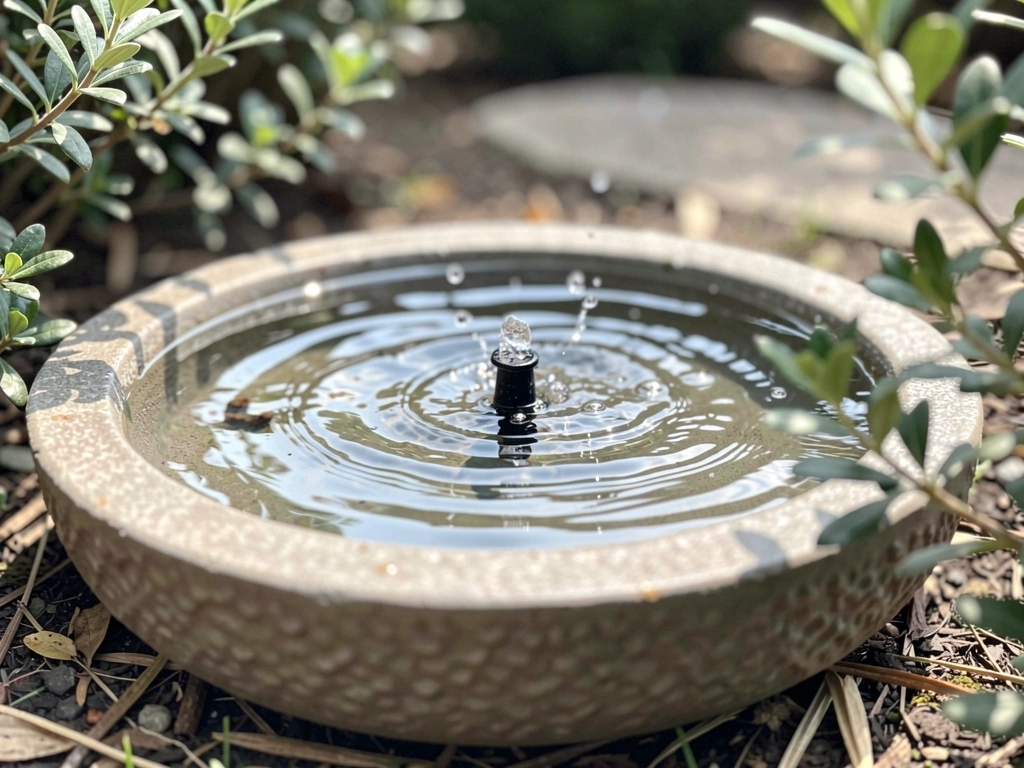
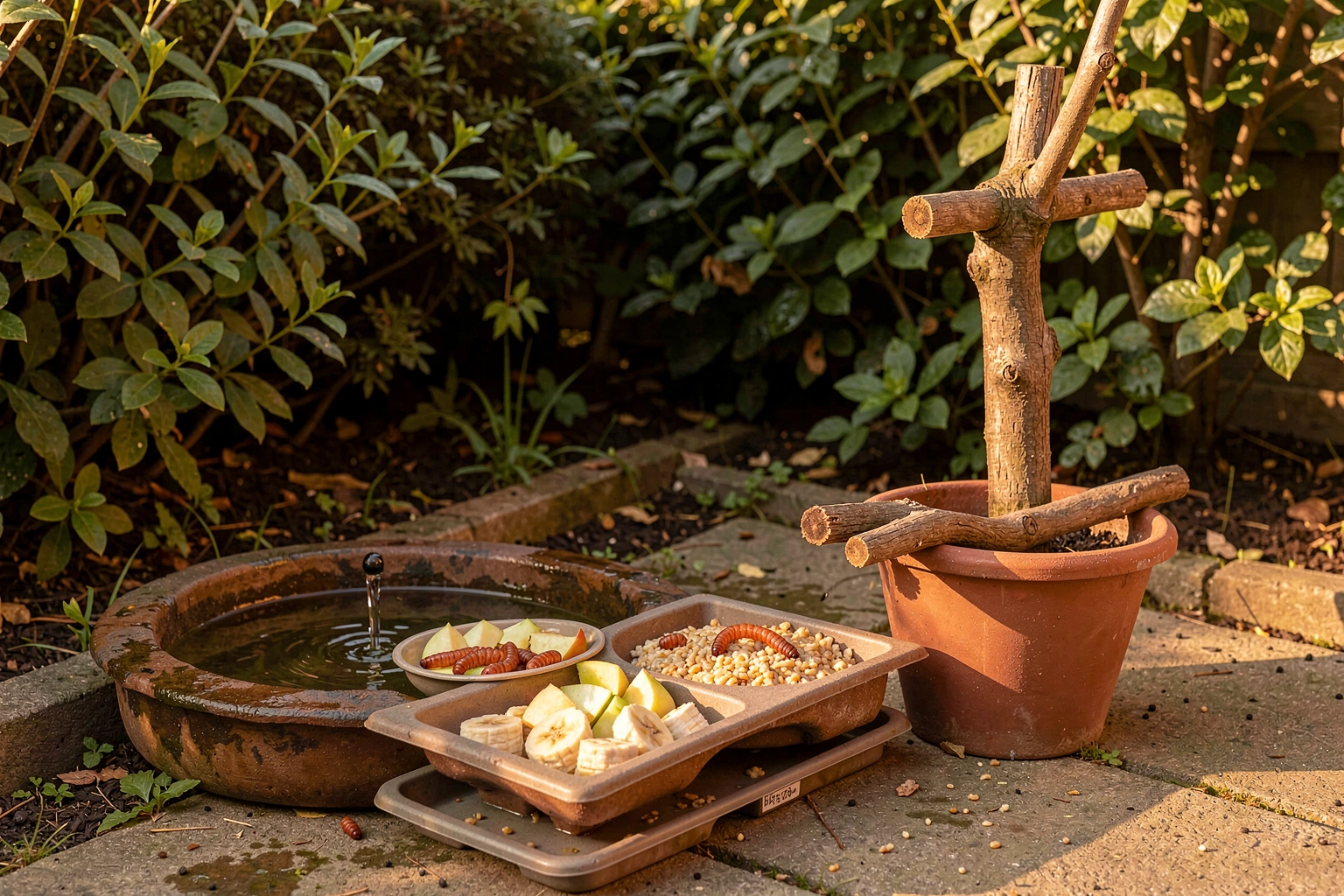
A birdbath will often attract more species than a feeder, because every bird needs water and not all birds eat seeds. A simple, shallow basin about 2 to 3 inches deep at its deepest point works for almost every backyard species. The surface should be textured, not smooth, so birds can grip it. Keep the water fresh: standing water grows bacteria fast, and birds will avoid a dirty bath.
If you want to dramatically increase your bath's effectiveness, add movement. A dripper, mister, or small solar-powered fountain makes noise that birds can hear from a distance and signals clean, moving water. This is one of the highest-return upgrades you can make to any backyard bird setup.
Where to Put the Birdbath
Placement is a balance between two competing needs: birds want cover nearby for a quick escape, but they also want enough open space to spot a predator approaching. The Bird Conservancy of the Rockies recommends placing a birdbath within 15 to 20 feet of shelter or cover so birds have a fast getaway route. At the same time, the Audubon Society of Connecticut suggests about 15 feet of open space around the bath so birds aren't surprised. Aim for a spot that's in the open but close to a shrub or low tree, and you'll hit the sweet spot.
Give Birds Shelter, Cover, and a Reason to Stay
Food and water bring birds to your yard. Habitat makes them stay, nest, and return year after year. You don't need a large property to do this well. A few strategic plantings and one or two structural elements can make a significant difference.
Native plants are the backbone of good bird habitat. Native trees, shrubs, grasses, and wildflowers provide natural food sources (berries, seeds, insects) and nesting cover that birds have co-evolved with over thousands of years. Audubon puts it plainly: native plants provide ideal food and shelter and are among the best things you can do for birds in your yard. For seasonal coverage, serviceberry and cherry produce fruit during the breeding season; dogwood and spicebush support songbirds through summer and fall; cedar and holly carry through winter when everything else is bare.
If you want a quick structural win, build a brush pile. Stack branches, twigs, and pruned material loosely in a corner of the yard. Birds like sparrows, wrens, and thrushes will use it immediately for cover and foraging. It costs nothing and takes about 20 minutes. If you have a dead or dying tree trunk that's not a safety hazard, leave it standing: cavity-nesting species including woodpeckers, chickadees, and nuthatches actively seek out dead wood for both nesting and roosting.
The North Carolina Wildlife Resources Commission recommends thinking in zones: low groundcover near the lawn edge, mid-height shrubs behind that, and taller trees at the back. This layered structure gives birds cover at every height and mimics how natural habitat is structured. The Bird Conservancy of the Rockies offers a simpler version of the same idea: minimize lawn, maximize plant species. Every square foot of lawn you convert to a native planting adds habitat value.
Placement and Timing: Get the Details Right
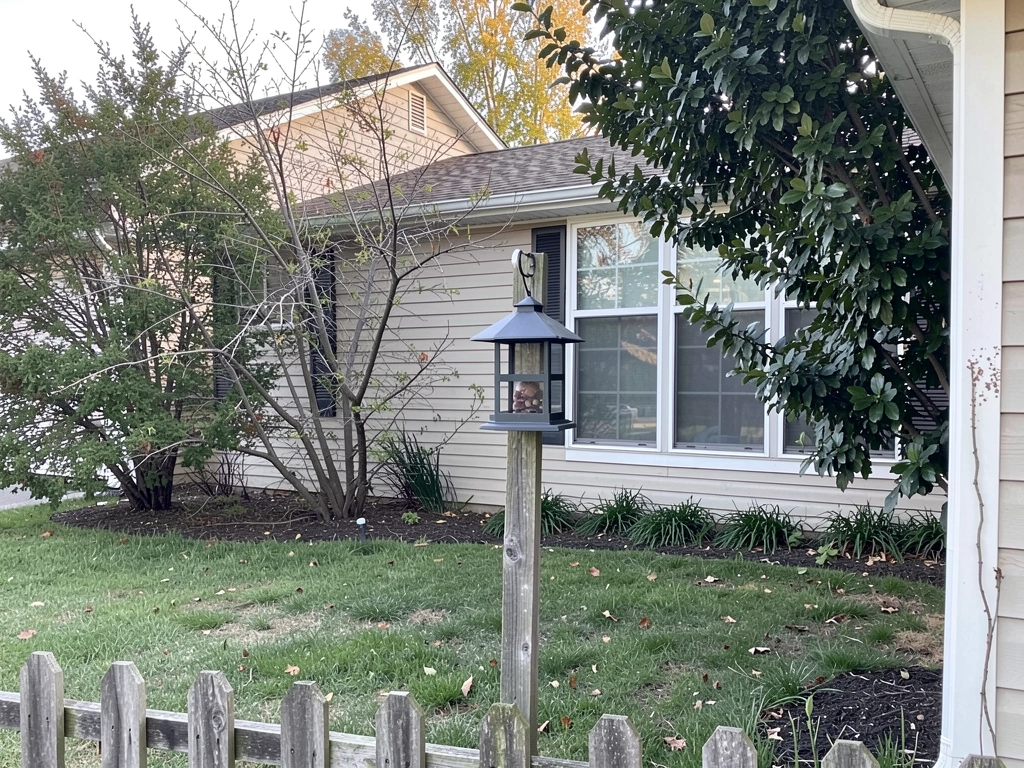
Feeder height and window proximity are the two placement details that trip people up most. Audubon recommends placing feeders at least 5 feet off the ground to reduce ground predator access, and at least 10 feet from trees or shrubs so birds have open space to detect and escape from hawks or cats. That 10-foot gap sounds counterintuitive since cover feels safer, but birds need a clear sightline, not just a nearby tree.
For window strikes, the rule is simple: place feeders either within 3 feet of the nearest window, or more than 30 feet away. The U. S. Fish and Wildlife Service also provides window-placement guidance to help reduce bird collisions with buildings, which can inform where to position feeders in relation to glass [window placement to prevent bird collisions](https://icwdm.
org/wp-content/uploads/2017/02/reducingbirdcollisionswithbuildingsFWS. pdf). The 3-foot zone works because a bird flushed from a feeder that close can't build up enough speed to injure itself if it does hit the glass. Beyond 30 feet, birds have enough space to clear the house entirely.
The dangerous middle ground is 5 to 20 feet from windows, where birds are moving fast but don't have room to course-correct. If you're in that range right now, moving the feeder is worth the effort.
On timing: birds can find a new feeder surprisingly quickly, often within a few days, especially during fall and winter migration when they're actively searching for food sources. Spring and summer can take a bit longer because birds already have established routes. If you set up during late winter (like right now in late March), you're hitting an excellent window: resident birds are hungry from the winter and migrants are beginning to move through. Give a new setup at least two weeks before drawing conclusions.
If Birds Don't Show Up, Here's How to Troubleshoot Fast
Most slow-start setups have one of a handful of fixable problems. If you are wondering how to catch a bulbul bird, use the same basics, but focus on bulbul-friendly foods and nearby cover so they feel safe to approach how to catch bulbul bird. Work through this list before giving up:
- Wrong seed for local species. Check your regional species list and confirm you're offering what birds in your area actually eat. If your feeder has been sitting untouched for two weeks, swap the seed type before anything else.
- Feeder in a bad location. If the feeder is too exposed with no cover within 15 to 20 feet, birds may see it but not feel safe enough to land. Try moving it closer to a shrub or tree line while keeping that 10-foot clearance from dense cover.
- Stale or moldy seed. Seed that has gotten wet clumps together, grows mold, and smells wrong to birds. Dump the old seed, clean the feeder, and refill with fresh stock.
- Cats or other predators nearby. A cat that patrols the yard, even occasionally, is enough to keep birds away entirely. Keep cats indoors, or use a squirrel-baffle pole to raise feeders out of pounce range.
- Too much activity or noise. If the feeder is near a frequently used door, a loud HVAC unit, or a spot where kids play, birds will be deterred. Move the feeder to a quieter part of the yard.
- No water source. Adding a birdbath near the feeder can be the trigger that makes birds notice and visit the whole setup. Try adding one if you haven't already.
- You're in a bird-poor period. If you just set up in midsummer during a heat wave, or in the middle of a cold snap with minimal bird activity, give it time. Foot traffic picks up in fall and spring.
Maintenance: Keep It Clean and Keep It Going
A dirty feeder is actively harmful to birds. Wet seed, droppings, and mold create conditions for salmonella and other pathogens that spread quickly when birds congregate. Project FeederWatch recommends cleaning seed feeders about once every two weeks under normal conditions, and more frequently during warm or damp weather, or when you have a lot of traffic at the feeder.
For cleaning, take the feeder apart completely. Wash it with hot soapy water or run it through a dishwasher on a hot cycle. Then disinfect with a bleach solution of no more than 1 part bleach to 9 parts water, which is the ratio recommended by both Cornell Lab's All About Birds and Clemson's Home and Garden Information Center for eliminating pathogens like salmonella. Rinse thoroughly so no bleach residue remains, let the feeder dry completely, and then refill. Don't skip the drying step: a damp feeder will spoil seed faster than a dry one.
Birdbaths need more frequent attention. Empty and scrub them every two to three days in warm weather, and top them off daily in heat. In winter, a heated birdbath or a simple submersible heater keeps water liquid and can make your yard a destination when every other water source is frozen.
Seasonal Adjustments to Make Each Year
Spring (now, through May): Keep feeders well-stocked as migrants pass through. This is when you'll see the greatest species variety. Add a nectar feeder if Baltimore orioles or hummingbirds pass through your area.
Summer: Many birds shift to eating insects and fruit rather than seeds. You can scale back seed feeders if you want, but keep water going. This is the season when habitat plantings, especially native fruiting shrubs, do the most work.
Fall: Ramp feeders back up as migrants return and resident birds begin building fat reserves. Stock up on suet and high-fat seeds. Clean everything before the rush starts.
Winter: Feeders are most critical now. Keep nyjer, sunflower, and suet available consistently. Check feeders more often because birds can empty them quickly in cold weather when natural food is scarce. A heated water source becomes highly valuable during freezes.
Your Quick-Start Checklist for Today
If you want to implement everything in one afternoon, here's the priority order:
- Look up your regional top species on Project FeederWatch so you know what you're targeting.
- Buy black-oil sunflower seed and a hopper or tube feeder as your starting point. Add nyjer and a thistle feeder if finches are on your list.
- Place the feeder at least 5 feet off the ground, 10 feet from dense cover, and either within 3 feet or more than 30 feet from your nearest window.
- Set up a shallow birdbath within 15 to 20 feet of some cover. Add a dripper or small fountain if possible.
- Add a brush pile in a corner of your yard using any pruned branches or yard debris you have on hand.
- Mark your calendar to clean feeders in two weeks using the 1: 9 bleach-to-water solution, and rinse the birdbath every two to three days.
- Give your setup at least two weeks before making changes, then troubleshoot from the list above if birds haven't appeared.
That's genuinely all you need to get started. Once birds find your yard, the next step is refining things over time, maybe adding a second feeder type, expanding native plantings, or targeting specific species like orioles or myna birds. Once birds find your yard, the next step is refining things over time, maybe adding a second feeder type, expanding native plantings, or targeting specific species like orioles or myna birds by following how to attract myna bird strategies.
But the fundamentals above will get birds coming to your yard faster than any trick or gadget on the market. Once you nail food, water, and safety, you’ll be on your way to learning how to attract bird to your yard consistently.
FAQ
How many feeders should I set up at once when I’m learning how to attract a bird?
Start with a small number of widely accepted items, then scale. A common approach is one sunflower feeder (black-oil) plus one low platform or tray feeder for ground birds, and a birdbath. After 1 to 2 weeks, switch only one variable at a time (for example, add nyjer with the correct feeder) so you can tell what actually increased visitation.
Will birds stop coming if I run out of food or water for a few days?
Yes, but do it carefully. Birds generally tolerate a single short gap, yet prolonged empty feeders during cold snaps can reduce repeat visits. If you travel, fill feeders before you leave, keep water topped up daily, and consider a gravity waterer or an insulated heated bath in freezing weather.
What should I do if my feeder seed gets wet or clumpy?
Wet or moldy seed is a bigger problem than “less food.” Scoop out damp or caked seed, clean the feeder, and replace with fresh dry seed. If you see clumps, odor, or webbing, discard the remaining bag, then fully dry the feeder before refilling.
My window is close to where I want the feeder, what is the safest placement option?
Use the safety distances you can manage, and prioritize window-safe placement. If the feeder must be near windows, use the within 3 feet or beyond 30 feet rule, and avoid the dangerous 5 to 20 foot range. Also place feeders where you can see them clearly, because you will need to clean and refill more often when visibility increases bird traffic.
How can I attract ground-feeding birds without also attracting rodents?
Offer moving water, not wet seed on the ground. If you want a ground-feeding setup, use a tray or platform feeder with drainage holes rather than scattering seed, and keep the area under the feeder clean by checking daily. This reduces rodents that often show up when food is freely available on soil.
Why am I not getting finches when I put out nyjer, even though I filled the feeder?
Thistle feeders are specifically designed for nyjer, the tiny seed. Use only a tube feeder with very small holes or a mesh thistle sock so the seed does not spill. If you use the wrong feeder, you will waste seed and may never see finches consistently.
I changed the seed type but my bird activity didn’t improve, what should I adjust next?
Try adjusting the feeder height and access gap before changing seed. Birds need open sightlines to detect predators, so keep the recommended clearance from nearby cover, but ensure the height supports that species' foraging style. Then clean and restock after any adjustment, because birds may not return immediately to a changed layout.
Should I change my feeding plan by season, or keep everything the same year-round?
Yes, different seasons change what “works” and how full you should keep feeders. In summer, many birds switch toward insects and fruit, so keep birdbaths fresh and consider scaling seed a bit rather than stopping it. In fall and winter, increase high-fat options like suet and sunflower and check more frequently because consumption rises.
How do I know when to clean my feeder sooner than usual?
Use a simple cleaning schedule based on weather and traffic, not just dates. In warm, damp conditions or when many birds are visiting, clean more frequently than your normal interval. If there are droppings, wet seed, or visible buildup, clean immediately even if it is not yet “time.”
How do I get birds to stay in my yard after the initial visit?
Add habitat elements that create security and natural food, not only more feeders. Layer plants by height (groundcover, shrubs, trees), include native fruiting plants for seasonal calories, and add structure like a brush pile or dead wood (when safe) for cover and nesting sites. This helps birds stay after they first show up.
What are the most common reasons people put out a feeder and never attract birds?
There are two common issues: incorrect food for the species and an unhealthy or inconvenient setup. Confirm local species first, then match feeder type to their natural foraging (hoppers or tubes for many perching birds, suet feeders for clingers, trays for ground birds). If your placement is too close to thick cover or in the wrong window safety zone, visitation often stalls.
Can I attract specific birds like orioles or hummingbirds even if I only get occasional sightings in my area?
Yes, especially during migration peaks. If you want to attract specific birds that are passing through, add the correct food at the correct time (for example, a nectar option when orioles or hummingbirds are in your area). Keep other feeders running too, because species may respond at different rates as weather changes.