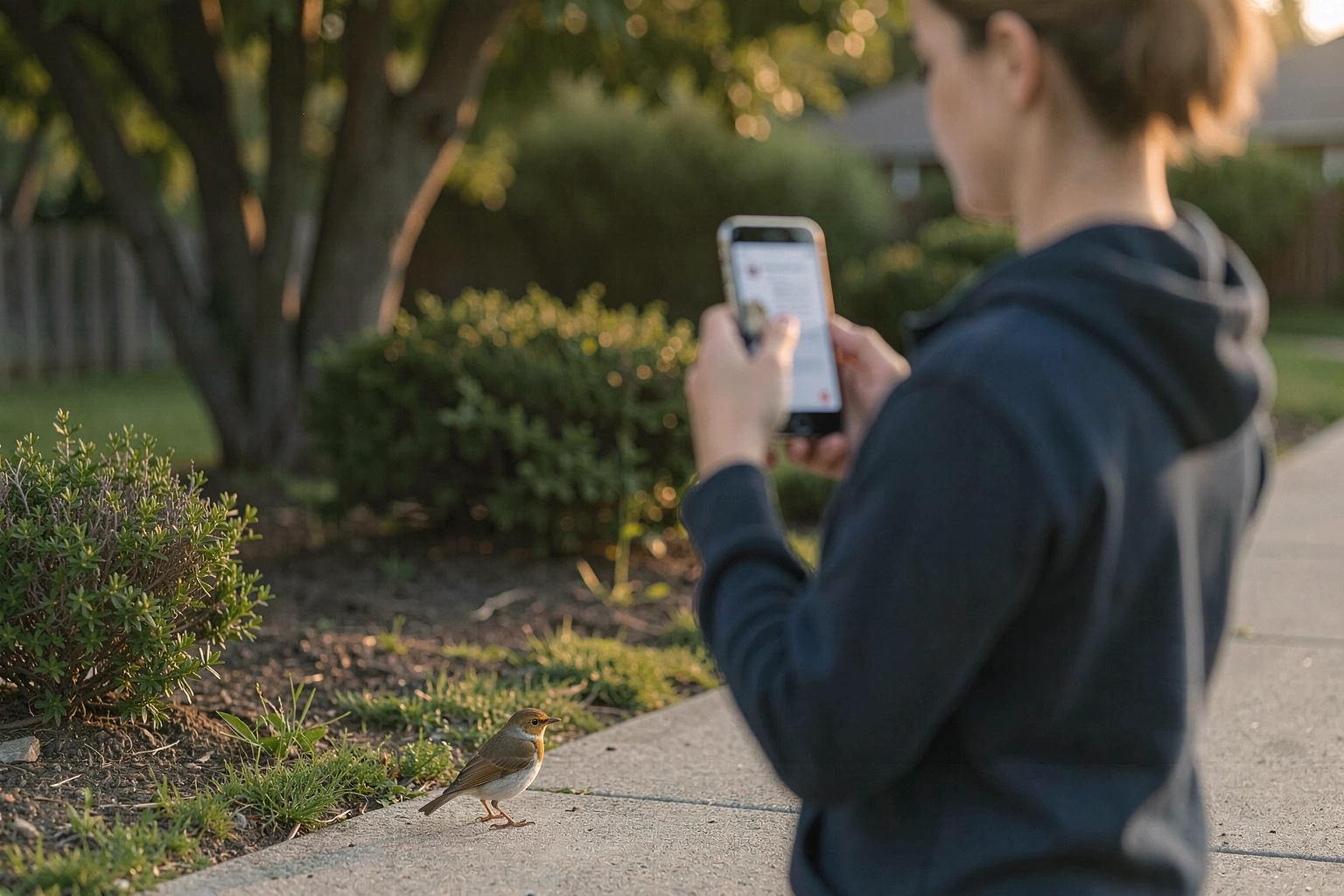
Before you take a single step toward that bird, you need to know one thing: catching a wild bird is almost always illegal unless you have a very specific reason to do it. In the U.S., the Migratory Bird Treaty Act (MBTA) prohibits taking, possessing, or interfering with migratory birds without federal authorization. That covers most songbirds, waterfowl, raptors, and hundreds of other species you're likely to encounter. There are exceptions, but they're narrow. The most practical, legal reason an everyday person would catch a wild bird is because it's clearly injured or orphaned and needs to be handed off to a licensed wildlife rehabilitator, not kept at home.
How to Catch a Wild Bird Safely and Legally Step by Step
Clara Hayes
22 Mar 2026
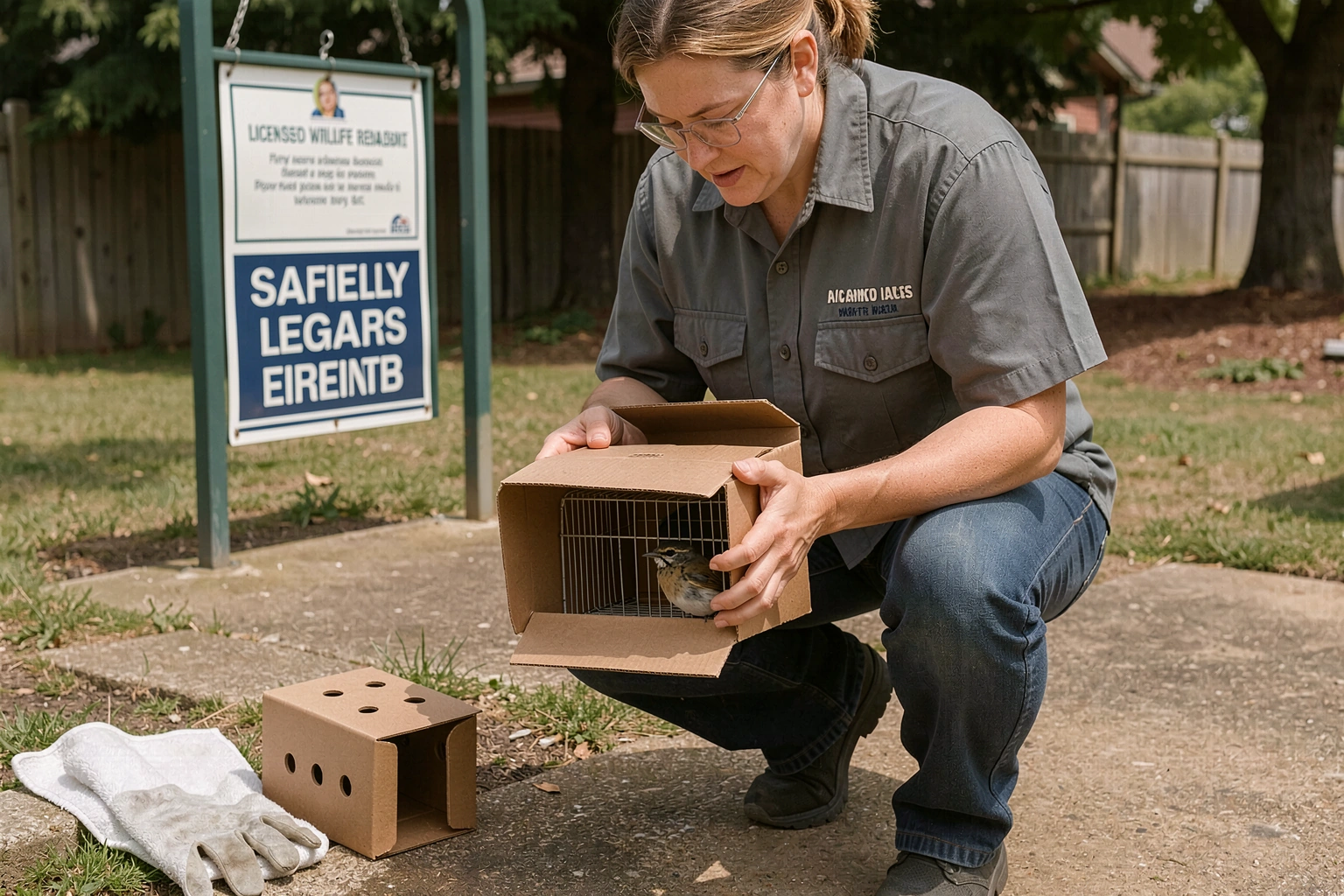
Legality, ethics, and safety before you try
Let's be direct about the legal landscape. The MBTA makes it illegal to take or possess most wild birds in the U.S. without a permit, and this is a federal law, not just a state suggestion. Migratory bird rehabilitation permits under 50 CFR Part 21 exist specifically for licensed rehabilitators, not for the general public. States pile on their own rules too. Massachusetts, for example, explicitly states it is illegal to take an animal from the wild to care for it or to keep it as a pet. Most other states have similar statutes.
The ethical line is just as important as the legal one. Wild birds experience enormous stress from human contact. Prolonged handling can cause a condition called stress myopathy, which can be fatal, especially in birds of prey. The Ohio Wildlife Center warns against chasing a bird of prey for longer than 30 minutes for exactly this reason. Even if you catch the bird without physically hurting it, you can still kill it through stress alone.
On the health side, avian influenza is a real concern right now. The CDC and the California Department of Food and Agriculture both advise against touching sick or dead wild birds without proper protective equipment, including gloves, eye protection, and a face mask. Even if the bird looks healthy, always wash your hands thoroughly after any contact with a wild bird or its surroundings.
So when is catching a wild bird actually appropriate? The short list: the bird is clearly injured (visibly broken wing, unable to fly, bleeding), it's a young bird whose parent is confirmed dead nearby, or it's trapped somewhere dangerous (inside a building, tangled in netting). In those cases, catching it to hand it off to a licensed rehabilitator is the right move. If you want to catch a wild bird to keep as a pet, that is not a legal option in the U.S. for the vast majority of species.
Assess the bird and your situation first
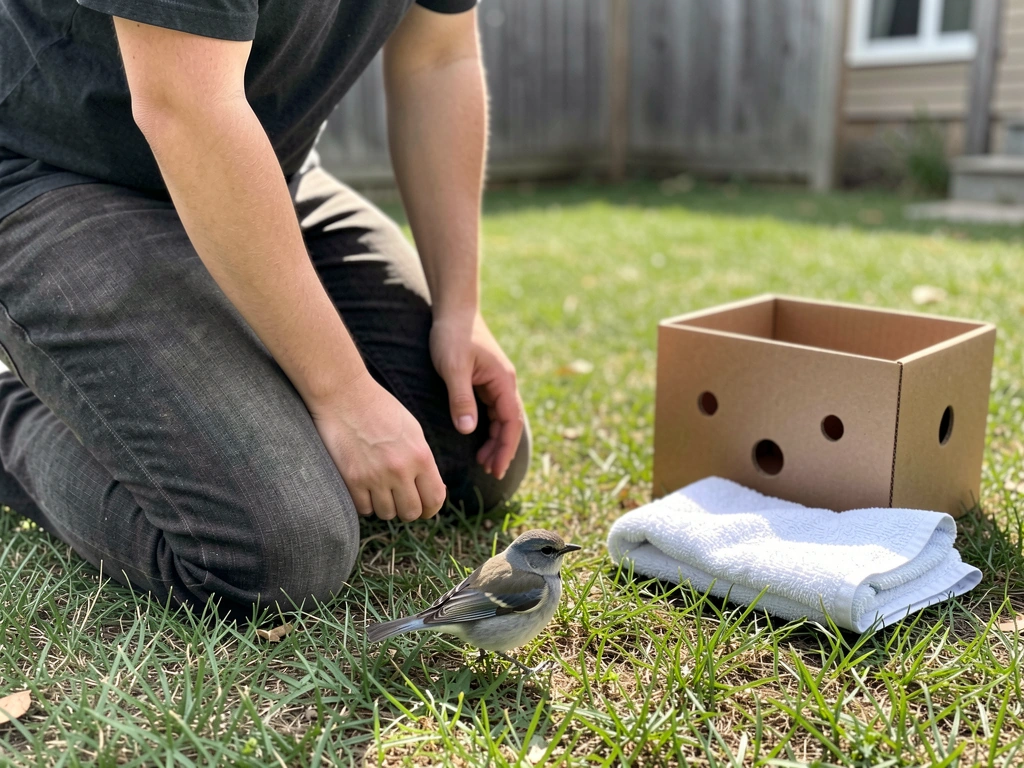
Before you do anything physical, spend a few minutes watching the bird. This assessment saves you time and protects both of you. Ask yourself these questions:
- Is the bird actually injured, or just resting? Many birds (especially fledglings learning to fly) look helpless but are perfectly fine and have a parent nearby.
- Can the bird bear weight on both legs? Can it hold its head upright? Is it bleeding or visibly dragging a wing?
- Is it in immediate danger from traffic, cats, or other threats, or is it in a relatively safe spot where you could monitor it?
- What species is it? Larger predatory birds (hawks, owls, herons) have talons and beaks that can cause serious injury. Small songbirds are far less dangerous but still stressed by handling.
- Where are you? Indoors or outdoors changes your entire approach. A bird trapped inside a room is a very different situation from one in an open yard or field.
- Do you have a box, towel, and gloves available right now?
If you see clear signs of injury or a dead parent nearby, intervention is justified. If the bird is just sitting on the ground looking tired, give it 30 to 60 minutes first. You'd be surprised how often a bird just needs a short rest before flying off on its own.
For larger raptors (hawks, owls, falcons) or wading birds like herons: do not attempt capture before speaking with a licensed wildlife rehabilitator or animal rescuer. The Avian Wildlife Center specifically advises against approaching these birds without expert guidance. Their talons and beaks can cause serious puncture wounds, and they require specialized handling.
Set up a low-stress plan before you move
P|P|P|P|P|The biggest mistake people make is rushing in without a plan. towel-drape technique will thrash, injure itself, and exhaust itself trying to escape. Take two to three minutes to get organized before you approach. This is especially true outdoors, where the bird has more escape routes.
First, call ahead. The U.S. Fish and Wildlife Service strongly recommends contacting a wildlife rehabilitator before you attempt to trap or catch an injured bird. Use Animal Help Now's wildlife emergency locator or your state's wildlife agency website to find the nearest licensed rehabilitator. Confirm they can accept the species you've found before you go to the trouble of catching it. The Center for Wildlife also recommends calling their hotline before handling to discuss avian influenza triage expectations, which is smart practice right now.
Third, gather your supplies. You want: a cardboard box with air holes (or a pet carrier), a light towel or pillowcase, gloves if you have them, and ideally a second person. The box should be large enough for the bird to sit comfortably but not so large it can flap around and hurt itself. Prep the box before you approach the bird so you're not fumbling after you've made contact.
Third, think about your environment. Outdoors, try to position yourself so the bird is between you and a solid barrier like a fence, building wall, or dense bush. The Psittacine Disaster Team describes herding a bird into a corner or blind alley (not chasing it) as the least stressful and most effective approach. Move slowly and quietly. Avoid making eye contact directly with the bird, which many species find threatening. Keep other people and pets back.
How to catch a wild bird by hand
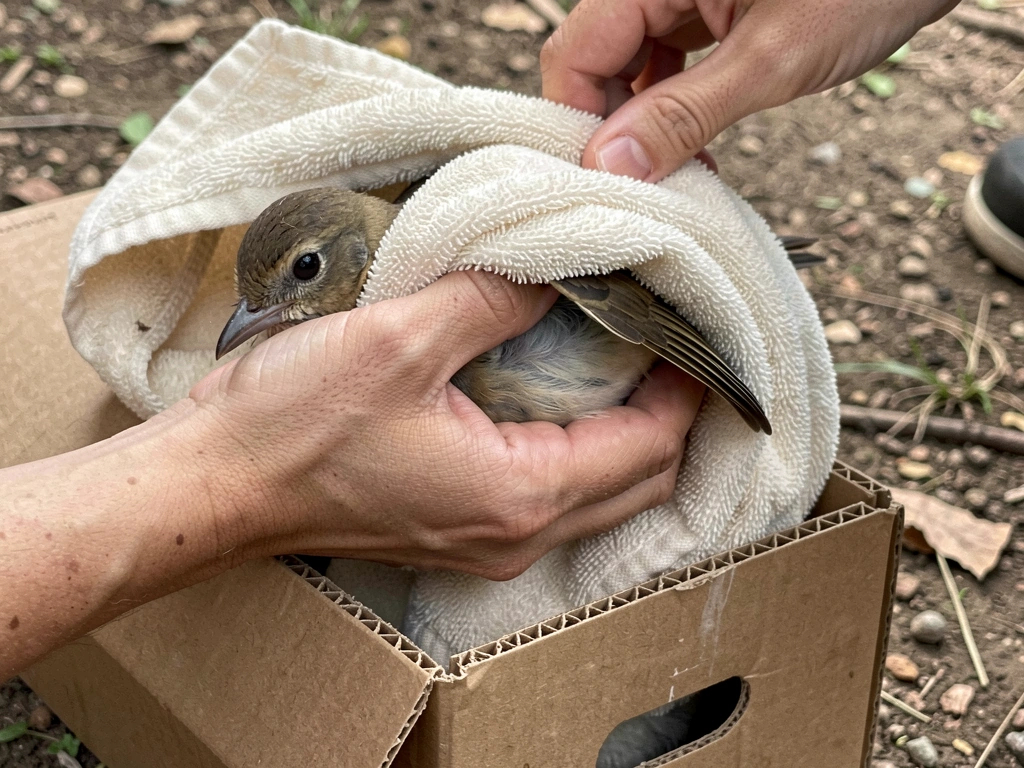
Hand capture is only realistic when the bird is clearly too injured or weak to fly away, or when it's cornered in a confined space. Attempting to catch a healthy wild bird by hand outdoors in an open area is nearly impossible and will cause significant stress to the bird. If the bird can still fly even short distances, move to the towel or box methods described in the next section.
When hand capture is feasible, here is the technique that works and causes the least harm:
- Put on gloves if you have them. If not, a folded towel between your hands and the bird is the next best option.
- Approach slowly from the side or slightly behind, not head-on. Crouch low to appear less threatening.
- Drape a light hand towel or small cloth over the bird's body, covering the head if possible. Darkness immediately calms most birds and reduces struggling.
- Place one hand on each side of the bird's body, over the wings, pressing the wings gently against the body. Do not squeeze the chest, as birds breathe by expanding their chest and you can suffocate them if you grip too tightly.
- Lift the bird smoothly and place it directly into your prepared box. Remove the towel or tuck it in as a liner, then close the box.
- Do not grab the bird by its legs or wings. This is how fractures happen. Always support the body.
The Wildlife Center of Salt Lake describes this towel-drape technique as standard practice for temporary capture. The key principle is: cover first, then grasp around the body. Once you have the bird in hand, move quickly and calmly to get it into the box. The less time it spends in your hands, the better.
For small songbirds, your grip can be very light. For larger birds, you'll need firmer control over the wings to prevent flapping, but the principle is the same. Always support the body weight from below.
Non-hand methods that are often safer
If the bird still has some mobility, or if you're dealing with a larger or more dangerous species, these approaches reduce the risk of injury to both of you.
The box drop method
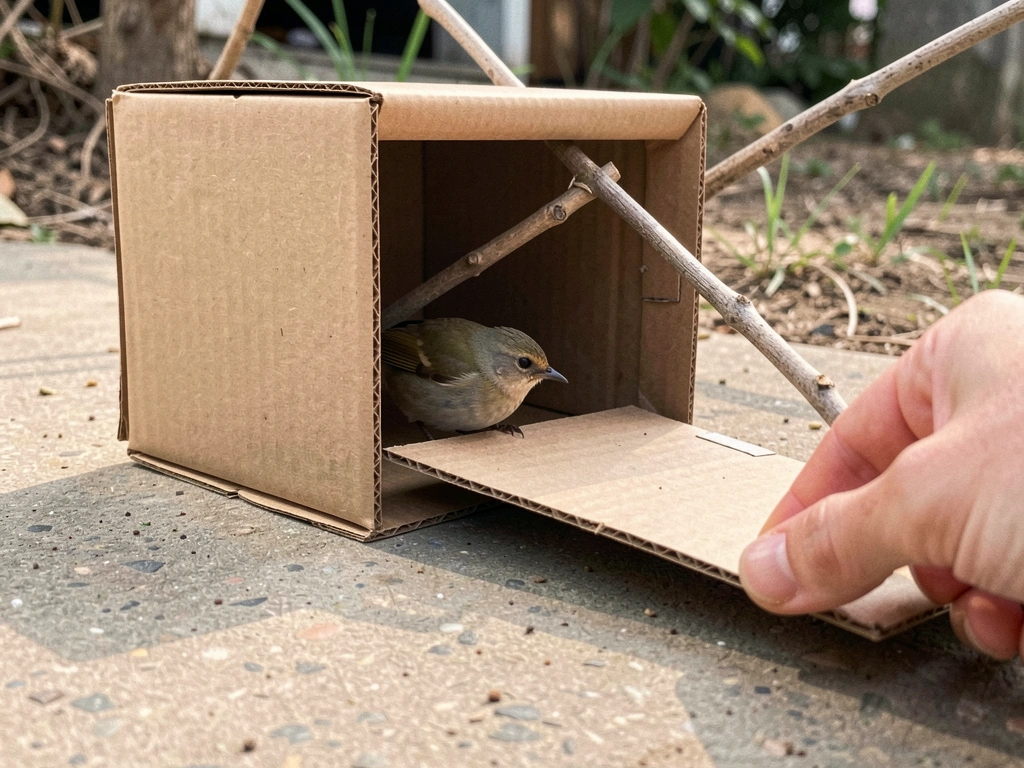
Place a cardboard box on the ground near the bird with the open end facing the bird. Use a stick or your hand to prop one edge of the box up slightly, and use a string or wait until the bird moves under it, then lower it over the bird. Once the box is over the bird, slide a flat piece of cardboard underneath to create a bottom. This works best with a slow-moving or weak bird on flat ground.
Herding into a confined space
Outdoors, use natural barriers to your advantage. Slowly and quietly guide the bird toward a corner formed by two walls, a fence and a building, or similar structure. Use a large towel or cardboard sheet held in front of you like a screen to block the bird's escape routes. Once the bird is cornered, use the towel-drape method described above. Two people working together makes this much more effective, one on each side to prevent the bird from slipping past.
Pillowcase or bag method
For very small birds, an open pillowcase held in front of you can be moved over the bird in one smooth motion. The soft fabric is less startling than rigid materials, and the bird ends up in a dark, enclosed space quickly, which reduces panic. Transfer it to a ventilated box as soon as possible.
When the bird is trapped indoors
A bird trapped inside a building is actually easier to deal with than one outdoors. Close off the room, open one window or door to the outside, turn off lights in the room, and draw curtains on any windows you don't want the bird to fly into. Birds tend to move toward light. Give the bird 15 to 30 minutes to find the exit on its own before intervening. If it doesn't leave, use the towel-drape method once it lands and tires itself out. Columbus Audubon specifically advises against additional chasing in this situation, as the bird is already stressed from being trapped.
What to do immediately after you catch it
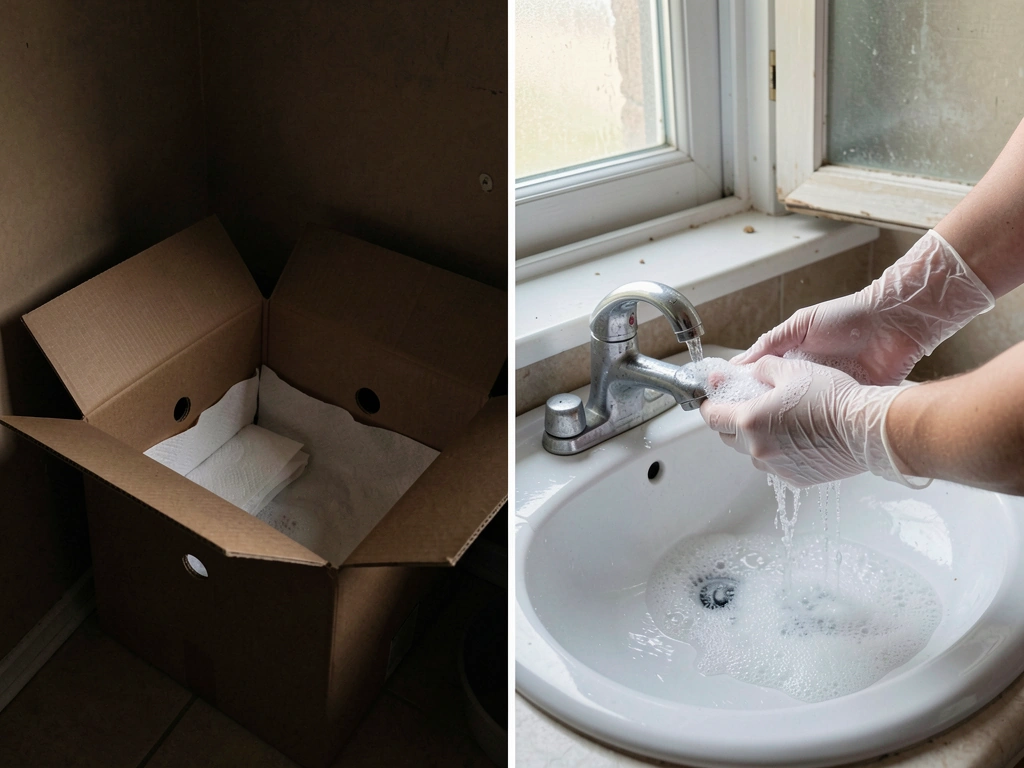
Your job after catching the bird is to minimize stress and get it to professional help as fast as possible. Here's the sequence:
- Place the bird in a cardboard box with a few small air holes. Line the bottom with a non-fraying cloth or paper towels so it has traction.
- Close the box and put it somewhere quiet and dark, away from pets, children, and noise. Animal Help Now specifically recommends a quiet, dark location while you arrange transport.
- Do not give the bird food or water. The American Bird Conservancy is explicit about this: no food, no water. You can cause aspiration or other harm if you try to feed or hydrate an injured bird incorrectly.
- Wash your hands immediately with soap and water. Do this before you touch your face, phone, or anything else.
- Contact your nearest licensed wildlife rehabilitator and arrange drop-off or pickup. Use Animal Help Now's emergency locator or the Bi-State Wildlife Hotline's resources to find someone near you.
- If it's a serious public safety situation (a large dangerous animal, or a wildlife law violation), contact your state wildlife agency or call 911. In Washington state, WDFW advises exactly this for immediate safety concerns.
- If you're in Florida and dealing with a listed species like a sea turtle, panther, or bear, call the FWC Wildlife Alert Hotline at 1-888-404-FWCC (3922).
- Transport the box to the rehabilitator in your car with the heat or AC at a moderate, comfortable level. Keep the box stable and avoid loud music or sudden stops.
The goal during this window is to do as little as possible. No peeking in the box repeatedly, no showing it to neighbors, no letting kids hold it. The bird needs darkness, quiet, and stillness. The American Bird Conservancy recommends giving the bird at least an hour in a quiet, dark space while you line up professional help.
If the bird turns out to be uninjured and just dazed (from a window strike, for example), it may recover within 30 to 60 minutes. When you open the box outdoors and it flies away strongly, that's a good outcome. If it can't fly or is clearly struggling, it needs a rehabilitator regardless.
When the bird won't cooperate or gets away
This happens more often than not, and it's frustrating. Here's how to troubleshoot without making things worse.
The bird keeps moving just out of reach
Stop chasing. Chasing exhausts the bird and you, and can be fatal. Instead, back off completely for 10 to 15 minutes. Let the bird settle. Then try again with a better approach: move slower, get lower, use a towel, and try to work it toward a corner or barrier. If it has enough strength to keep evading you, it may actually be doing better than you thought.
You've been trying for more than 20 to 30 minutes
Stop. The Ohio Wildlife Center specifically warns that prolonged pursuit of birds of prey (and this applies broadly) can cause fatal stress myopathy. If you can't catch the bird within a reasonable timeframe, mark the location as best you can, note the bird's description and condition, and call a licensed wildlife rehabilitator or your local animal control. Many rehabilitators or wildlife officers have experience with difficult captures and the right equipment to do it safely.
The bird flew away but looked injured
Monitor the area if you can. An injured bird often doesn't travel far and will land again nearby. Note the exact location and call a wildlife rehabilitator to describe what you saw. They can advise whether a follow-up attempt is warranted or whether the bird's behavior suggests it's actually okay. Sometimes what looks like injury is just a young bird still learning to fly.
The bird is too large or dangerous to approach safely
Do not attempt to catch hawks, owls, herons, loons, or other large birds without expert guidance. These birds can and will defend themselves, and the injuries from talons or a heron's beak are serious. Call a wildlife rehabilitator, your state wildlife agency, or animal control and ask for help. This is exactly the situation those services exist for.
You can't find a rehabilitator right away
Use Animal Help Now's wildlife emergency tool online to search your area. The Bi-State Wildlife Hotline also directs people to this resource for urgent situations. Your state's fish and wildlife agency website will have an emergency contact or hotline. Most states have after-hours options for genuine wildlife emergencies. In the meantime, keep the bird boxed, quiet, dark, and away from pets. Do not try to treat it yourself.
Quick comparison: capture methods at a glance
| Method | Best for | Risk to bird | Risk to you | Difficulty |
|---|---|---|---|---|
| Towel drape by hand | Injured or very weak birds, cornered birds | Low if done correctly | Low (small birds) to moderate (large birds) | Moderate |
| Box drop | Slow-moving birds on flat ground | Low | Very low | Low to moderate |
| Herding into corner | Birds with some mobility, two-person teams | Low if calm and slow | Low | Moderate |
| Pillowcase sweep | Very small songbirds | Low | Very low | Low to moderate |
| Letting bird exit on its own (indoors) | Window-struck or trapped birds with mobility | Very low | None | Very easy |
| Professional capture (wildlife officer/rehabber) | Large raptors, dangerous species, prolonged situations | Lowest | None | N/A |
For most situations involving a small to medium injured bird, the towel-drape hand method combined with a prepared box is the best practical approach. For anything large, dangerous, or where attempts have already failed, calling in a professional is the right call, not a fallback.
FAQ
If I only want to hold the bird for a short time, is that still illegal?
In the U.S., the safest legal default is to treat the situation as a rescue for a licensed rehabilitator, not a capture for personal care. Even “keeping it temporarily” can count as unlawful possession under federal and many state rules if you are not authorized.
What if the bird seems alive but can’t get up or fly right away?
Yes. If you find a bird that is moving but grounded, that can still be illness or hidden injury. If it cannot fly normally, is bleeding, has visible trauma, or keeps repeatedly falling, contact a rehabilitator rather than waiting longer.
How long is too long to keep the bird after you’ve captured it?
Take it in only as long as it takes to get it into a prepared, ventilated box, then stop interacting. Plan to deliver it or hand it off as quickly as possible, because stress and dehydration can worsen quickly even when the bird initially looks calm.
What protective steps should I take if I think the bird might be sick?
Avian influenza and other diseases are a reason to avoid direct contact, but it is not the only one. Use the least contact possible, avoid touching feathers with bare hands, and do not wipe the bird with household towels that you will later use on people.
If it looks stunned from a window strike, should I still call a rehabilitator right away?
If the bird is uninjured and just stunned, it is often better to minimize handling and allow recovery in a dark, quiet container. If it does not show clear improvement within about an hour, or it cannot fly strongly when released, it likely needs professional care.
How do I tell resting from serious injury without overhandling?
Watch for signs like drooping wings, blood, a visible break, inability to stand, or persistent open-mouth breathing. A bird sitting quietly may be resting, so give 30 to 60 minutes, but do not extend waiting if there are clear injury signs or it is getting harassed by people or pets.
Can I take the bird to a regular veterinarian instead of a wildlife rehabilitator?
Do not bring a bird to a home “vet visit” unless the clinic specifically handles wildlife and is prepared to work with legal wildlife transfer rules. Calling a licensed wildlife rehabilitator first helps you route the case correctly and avoids unnecessary handling.
Should I give water or food while I wait for help?
Avoid water bowls and homemade feeding. Many wild birds have specialized diets, and giving the wrong food can cause aspiration or fatal digestive issues. If the bird is enclosed, focus on darkness and warmth appropriate to the container until professionals take over.
What should I do if I find a baby bird that looks abandoned?
If you find an apparently orphaned nestling, do not assume it is abandoned. Look for signs of nearby parent activity from a distance, then contact a rehabilitator for the correct next steps, because many “orphan” situations turn out to be normal parental care.
What if the bird is a hawk, owl, heron, or other large species?
Yes, scale the approach to the species. For larger raptors and wading birds, the risk of puncture injuries and severe stress is higher, so capture attempts should be replaced by calling for expert assistance unless you have training and proper equipment.
How should I size and prepare the box so the bird is safe during transfer?
If you are using a box, make sure it is ventilated, stable, and sized so the bird can sit without being able to flap widely into the sides. Too much empty space increases movement, which increases injury risk during transfer.
What do I do if the bird keeps refusing the box after several tries?
If the bird won’t go into the box, stop trying repeatedly. Back off, let it settle for 10 to 15 minutes, then try again using the same low-stress setup (box nearby, slow movement, barrier positioning) rather than escalating to more chasing.
How long should I leave a bird alone inside a building before trying a capture?
Start from a premise of minimal interference. If it is in a room or building, confine the space, provide one clear exit, and give it time to find the door or window. Intervene only if it remains inside after a short window or is at immediate risk.
How do I know it is safe to release the bird back outside?
When release time comes, only release if the bird can stand and move normally and then take off with strong, coordinated flight. If it can only hop, shows persistent weakness, or remains on the ground, do not release and instead coordinate with a rehabilitator.
If I can’t catch it, what details should I report when I contact a wildlife service?
Yes. If you are calling for help after an unsuccessful capture, record the species guess, exact location, whether it was injured or trapped, size estimate, and any visible symptoms. This speeds up triage and can prevent repeated unnecessary attempts.
What are the biggest mistakes to avoid after I have it boxed?
Keep children and pets away, keep the area quiet, and prevent repeated viewing of the bird. Repeated peeking, loud conversations, and kids holding the bird all increase stress, which can turn a recoverable situation into a fatal one.
Next Article
Can You Catch a Wild Bird and Keep It? What to Do
Legal options and humane steps for found wild birds, what to do now, and how to get rehab help safely.